Are My Breast Implants Making Me Sick?
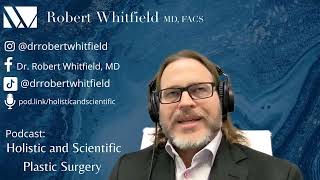
Dr. Robert Whitfield, a plastic surgeon, discusses Breast Implant Illness: symptoms like fatigue, brain fog, and joint pain that can appear months or years after surgery. He explains how to evaluate the cause, mentions biofilm and genetic factors, and notes that many patients improve after explant surgery within three months.
Questions this video answers
May 11, 2022.
Fatigue, muscle and joint pain, headache, brain fog, hair loss, skin rashes, dry mouth/eyes, depression, anxiety, insomnia.
About 60–70% positive contaminants on DNA (PCR) analysis over ~400 tested explant specimens.
Well over, probably ~60% of his cases.
About five patients had fungus detected.
Welcome to the Holistic and Scientific podcast with board Certified plastic surgeon Dr. Robert Whitfield, Austin's natural choice for plastic surgery and the expert in smart laser and energy treatments.
Today we're talking about what BII is or isn't and how would you know if you have it or if your implants could be the cause of any of the symptoms you may be experiencing. First of all, what is bii? As we learned in my other episodes, I first encountered this around 2016 after a lengthy career in breast cancer reconstruction, complicated oncologic reconstruction. Now I've come to recognize it with the basics of I always look for extreme fatigue, muscle and joint pain, headache, brain fog, hair loss, skin rashes, chronic dryness of the mouth and eyes, depression, anxiety, insomnia. The most typical symptoms I ever see are fatigue. That has been dominant since 2016. For me, I key in on that when there's a consultation and someone's complaining about fatigue, I want to know how that's been worked up, how that's been explored to see if possibilities exist that there's an underlying breast implant infection. Whether your implants have been placed for breast reconstruction or aesthetic enhancement. I've seen a very, very wide range in the time frame symptoms may develop. I've had people tell me they develop symptoms within months and that it's taken years for them to get to me. I've had other people tell me they were fine for many many years, 5, 10, 15 years and then they develop symptoms. So that can be a more complicated situation to unpack. I do however see a big uptick in symptoms after someone's underwent exchange or revision. When I hear there's been a revision, then subsequent symptoms or an exchange or something's going on, then I key on on that. I've seen that more commonly, but the range is a few months to several years, over a decade at times. So initially how I thought of or how I in my mind organized what I was looking for was I looked for mechanical things first, things consistent with scarring, things causing pain. So capsular contractures always cause pain. Now capsular contractures can vary in their origin. It can be from placement issues, it can be from fibrosis that the patient was already going to develop. Regardless, some people genetically densely scar. This has been known. It happens around all sorts of devices and implants and people are bad scar formers. Sometimes you can also have an infection. You can have a hematoma. So there's lots of instances. Why you could have a capture contraction, not all of them attributed to bii, what causes bii, or breast implant illness as we're referring to it. So in my personal audit it will vary, but I think biofilm contributes to a large majority of these cases. Well over, probably 60% of my cases are attributable to biofilm. So what is biofilm? Biofilm is a bacterial or fungal contaminant on the surface of the device. What do we propose happens? We propose that inflammation caused by this biofilm activates the immune system and leads to the response that's contributing to more oxidative stress in the individual. I would say in the remaining 20, 30% that I don't find biofilm, we're looking more closely at genes that help them manage oxidative stress, like superoxide dismutase, two things that help them manage glutathione metabolism, things that help them manage methylation. They're going to come to the forefront, they're going to become more evaluated. We're going to do more genetic testing to evaluate these and help further tailor specific treatment plans for patients with bii. BII is commonly consistent with symptom wise Lyme disease. It also has overlap with toxic mold exposure. I recently had a client who had very, very significant cognitive decline, had definitely issues with their breast implants, complicated gut health issues. So we did her explant and over the course of three months she got marked improvement. And then she was tested extensively for other issues like mold and Lyme disease, was found to have Lyme disease. So she's in treatment for that now. So these conditions can be superimposed. It can be very confusing to providers and clinicians of all backgrounds and levels. I am constantly looking and trying to pay attention to both their environmental exposures at work and at home to see if mold plays a role. Sometimes patients with cognitive decline or memory loss that we see in BI mold and Lyme disease, they can't remember the history enough to give you the clues that would lead you down that path. So you just have to have an index of suspicion. Our environments, as I was mentioning, create a great deal of stress in general, whether it's the work environment, the home environment. Say for instance, we're in Austin, Texas. I moved here in 2012. I immediately had a pretty significant problem with allergies. Living close to what they call the green belt here because there's a great deal of cedar, oak and mold. And one of the issues in Austin is it never gets cold enough to freeze, though there's constantly high contents of pollen everywhere. The way to combat this, and I talk to all my clients about this is the air quality in their home. So I have freestanding HEPA filters that filter down to 0.3 microns in my office to both combat Covid and to reduce the basically the pollen count in the air. But even this, to a degree, is not as helpful sometimes as it should be. And I come to work and my eyes are watering, and so I'll use a UVC light box to sterilize both my personal office and my entire working space. And then my eyes will stop watering, my nose will stop running, because I've decreased my environmental contaminants that are leading to activation of my allergies. So consider a client who lives in a home where there's a great deal of mold exposure. Maybe their implants are fine, maybe they're managing that fine. But the mold exposure creates an environment where it tips them over from an oxidative stress standpoint. So they cannot manage. They get mitochondrial dysfunction, they're constantly lacking energy, and this becomes a cyclical battle in their bodies. And they get more and more tired, they're more and more run down, and from overall health perspective, they decline. And when your immune system is activated, the largest immune system activators are gut. I commonly will have clients have complicated digestive problems. So we immediately see somebody who's concerning for bii, and we'll discuss diet and nutrition and try to manage that for them, to help them. If you ran through your symptoms and you feel you have breast implant illness, obviously I'm a plastic surgeon with a great deal passionate about solving this problem and providing solutions that improve wellness and overall health. So identifying first your symptoms and then identifying a provider who can at least communicate with you and either validate or steer you in the correct direction about other things like Lyme or mold, if that's the situation needs to be evaluated first. For me, I do things virtually and in person, so basically anybody can reach out to me and I can help them in that respect. If you have reconstructed breasts unilateral or bilateral, obviously removal of a reconstruction completely with an en bloc technique will leave you with a very thin layer of tissue. Now, tissues can always be fat grafted, depending on the symptoms. I weigh the risks and benefits of doing that at the same time. But that will be more of a mastectomy appearance in a reconstructed patient. Obviously in augmentations, the overwhelming majority are bilateral. Here we're trying to decide how best to offset a large volume change in both breasts that may lead to excess skin, excess glandular tissue, and overall poor shape. Then I will counsel patients regarding explant alone. Explant with a lift, explant with a fat transfer, explant with a lift and a fat transfer. Those are all in play for those patients. For conversely, the reconstructed patient, that is a more. It's a different choice due to the overall lack of volume of tissue from the mastectomy after explant. If you have symptom abatement early, that's great, then obviously that was the case. I see that more commonly than on patients who were overtly infected, in patients who have a really overstimulated immune system. I have seen symptom of baby early. I've also seen symptom abatement month over month. I look at three months as a real benchmark for many of my clients. I see patients at three month intervals after explant and I try to get that perspective of maybe they don't realize how much they've improved, but many of them will come in and tell me, wow, this last few weeks at the three month mark, I really noticed a change recently. I had a patient come in and tell me she really felt better. She had kind of lost this kind of fluid retention or weight that she had that she'd been carrying around. And of course she felt less fatigued, of course she had less joint pain and muscle pain because she was not taxing her body as much by this fluid accumulation that had occurred over time. And those are very helpful in terms of our experience in treating clients who are suffering from breast implant illness or combinations of breast implant illness and mold exposure or Lyme. Because when they have that response, that means the immune system, the gut specifically, I think has gotten better and they're able to manage their oxidative stress, decrease their fluid retention. And they're in what I like to think of as a more anabolic phase of healing instead of catabolic. And their body's not as stressed. From symptom abatement to just laboratory analysis. Once I get the pathology back, I'm obviously looking for any recurrence or cancer, any forms of lymphoma or breast cancer. We always rule out ACL, like I mentioned previously in all my either excerpts or shows. And then if I find on PCR analysis that they have bacterial or fungal contamination, that is reassuring that we've got that out and that's been resolved in the breast. Now biofilm can exist in other areas of the body and I can't eradicate that by doing a breast procedure. We cleanse the pocket, we make sure that that's not an issue for them moving forward. I do not treat people with oral antibiotics afterwards. Doing PCR analysis for patients just reveals what the contaminants or contaminant is. It doesn't tell you how to treat it. If you want to treat something, you would need an antimicrobial sensitivity panel which is not done with DNA testing at this point in time. Over the last 400 PCR tested explant specimens, we have about 60 to 70% having a positive contaminant on DNA analysis. This is typically predominantly bacterial. Only about five people have had fungus, so and no. No other exotics, no mold. So I think, you know, I'm comfortable with the testing and what it's giving me. I believe in its methodology and science. So once I have those out, we don't treat with oral antibiotics because we have no way to know the sensitivity patterns of those. We move forward with them by helping support them with nutrition and supplement advice, genetic predisposition testing, further support nutritionally with a nutritionist if that's necessary, all in an effort to get them feeling better as they move forward in this process. I think initially information that was put out online was meant to be helpful and identify symptoms for clients. I do find problems with people without any background or credentials providing medical advice. Once again, between my training in oncologic reconstruction, breast care, breast reconstruction, breast cancer care, cosmetic surgery, explant surgery, my interest in genetic testing, nutrition supplements, hormone balancing, I'm more uniquely positioned to provide advice. It is a little frustrating when my clients turn to Facebook and Google for advice, so I would be careful about obtaining advice from the search engines or from social media. It is not a credible way to obtain information about a very complicated issue like breast implant illness. I found recently there's an increase in plastic surgeons performing explants. So if you're trying to find information regarding an explant near you, you look for board certified plastic surgeons in your area who either have discussed it, have a portion of their website devoted to it, or more importantly, clients that they've taken care of who can share their experiences with you. Of course I'm always happy to help you and I'm available virtually. I think you have to take your time in this process and have frank discussions with them about your symptoms, their expertise to performing the procedures necessary, and your aesthetic goals afterwards. Of course I'm happy to see you. In Austin, Texas, I use Simplast Health, which is a electronic health record system that has virtual consultations built into it. So even before COVID I would see people around the United States and be able to perform virtual consultations with them. In the advent of COVID I've been able to do that both with my established client base and my new client base, and it's become an invaluable tool for me to establish a connection with a patient, answer their questions, and just be a sounding board for them so that someone will listen to them with expertise about this very complicated problem. Of course, if you want to learn how to get a virtual consultation with me, just visit our Show Notes or go to my website. It's pictured here on the screen. You can start a web chat with my team and they will help you get a consultation scheduled with me. On our next episode, we'll talk about our breast surgery consultation process and explain what it's like so you can think about how to prepare what questions you may have and get an idea of what to expect.
Take a screenshot of this podcast episode with your phone and show it at your consultation or appointment or mention the promo code. Podcast to receive $25 off any service or product of $50 or more. Dr. Robert Whitfield is a board certified plastic surgeon located in Austin, Texas near 360 and Walsh Tarleton in Westlake. To learn more, go to drrobertwitfield.com or follow Dr. Rob on Instagram @drrobertwitfield Links to learn more about Dr. Rob, Dr. Rob's Smart Procedures and anything else mentioned on today's show are available in the Show Notes. The Holistic and Scientific Podcast is a production of the axis T H E A X I S IO.







