Breast Explant Surgery: A Candid Discussion withTiffany Blackmon and Dr. Robert Whitfield
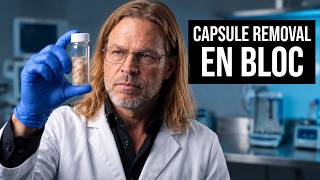
Tiffany Blackmon had breast implants removed in 2023 after years of unexplained illness. Dr. Robert Whitfield found bacteria and early-stage cancer on the capsule, and connects biofilm inflammation to her symptoms. She's now in a year-long recovery program and sharing her experience publicly.
Chapters
Welcome, everybody, to the show. I'm back from a meeting in Scottsdale, Arizona, and I have a special guest today, Tiffany Blackman, a patient of mine who's over a year out after her explant. But she has a very special story that I want you to hear. Tiffany, a unique patient that I know that there's more patients with her specific problem, and it's not just associated with breast implant illness or symptoms of breast implant illness, but it's the thing that always worries me, breast cancer. So having had my sister recently pass away from breast cancer, I've always been uniquely positioned in my career to take care of those patients and be obviously sensitive to the. All the things that come with that actually been called my. My sister when I was in medical school about it. So that's a whole separate story. But welcome to the show, Tiffany. I'm very looking forward to our conversation.
Well, thank you so much for. For having me. And, you know, I. You saved my life, and you changed my life and saved my life. I say that so many times to you and thank you.
And I don't do a really good job of acknowledging that, and I thank you very much for that. I've never been one to accept compliments, especially in the face of doing what I always considered, which was my job, taking care of patients with cancer. So for everybody listening, I did almost 20 years exclusively of practice devoted to cancer care and trained for another nine years before that. So it's a fair number of years taking care of patients who needed oncologic reconstruction or help with a problem with surgery after cancer or complications from their treatments. So let's get into it. Tiffany had breast augmentation in 2011. And I want her to tell what I feel is not an uncommon story in a sequence of events that can play out in a patient getting a breast augmentation. So, Tiffany, tell us your experience with breast augmentation. Maybe why you had that versus a fat transfer, if that was even discussed, and maybe had placement of a device. Was that discussed with you, like above or below the muscle and the ramifications of that?
No, actually. So 2010, 11, I decided to do this. I was on the fitness circuit and just thought that that would help me and for the wrong reasons, obviously, I can say many years later. But I did interview a few physicians and no, under the muscle, over the muscle wasn't deterrent. It wasn't talked about. The big buzzword in 2011 is from what I was hearing from the surgeons I was talking to was gummy, gummy what am I trying to say? Gummy.
So let's pause just for the audience. So before that, the filler, the silicone filler could have been more like syrup, less like jello. So they came up with the term, coined the term gummy bear.
There you go. So I didn't know, I didn't know anything about size. I just didn't want to be massive at the time. But anyway, we went through with the surgery and when I had the surgery, I was obviously very large when I came out, but it was a swelling and everything, of course. But then one encapsulated pretty quickly and so went back. There was no fat transfer, talk of that. I mean, the first time I heard about that was through you and your, and your organ, your office. But went back for the encapsulation and I said, you know what, let's just not do this. This is just not what I wanted. And this was in months. And, and the surgeon said, you know, if, if I, if we don't put them back in, you will look, you won't look, right? You, you won't. You just can't do that. And so I, I believed him. And so we did, we went smaller, had the reconstruction at that point. And it's interesting, right after that, I started feeling poorly. And I mean, I'm an athlete. I was training, I was in great health food, and just the wheels just started falling off and it was, oh, you're in perimenopause. So let's.
For a moment, everybody has to understand this is key. You need to understand when you started feeling poorly. So then you can relay that to someone like me. If you're coming to see me, I'm going to hear that. I'm going to hear you had a revision. I'm going to automatically think this is infected.
Oh, yes, yes. So immediately I, I mean, I had this done, recovered, and then started back in my training. And it was back pain, it was joint pain. I couldn't sprint like I used to. I just, just after the other, just falling down in the kitchen floor with, with sciatic pain, which was unexplained because I was perfectly healthy. I had a, a neck surgery in 94, but it was lumbar and joint and feet and then just started. And I lived in Austin, so, you know, the allergies and I mean, it's just, I mean, you just think, oh, it's just allergies.
All the things there.
That's what we said today. It's just allergies. But yeah, it was just, it was very soon after I just, it was inexplicable of things going wrong with my body. And again, never put two and two together. Never even thought about having an infection or a reaction to my implants at all.
And so like, for everybody listening. So this has taken me many years to have the ability to sit here and listen to that even brief history she just gave and really know for a fact that what we're going to talk about later was what happened at that revision. So I guess I should start this way. I think there's this. Oh my God. I spent all weekend at a meeting discussing how mold is not in implants. All right, so I'm gonna, that's. I'm gonna mythbust right here. Number one, like, mold is not found in, in an implant. So the only way that could even potentially happen is if it was a saline filled implant. And I know that's how the Internet works. Like it's got to be a moldy saline implant. So we've tested, and I test every single device. The scar caps around the vice gets tested, as was Tiffany's, and then everything gets it for pathology. Those are very distinct, you know, processes that we have followed for the entire time I've done this procedure. But it is uniquely important in Tiffany's case. But when I hear her story of a placement revision and then a lot of symptoms, I immediately think she has a problem with an underlying infection. And so now she's going to go through probably a prodromal phase where she doesn't develop a red breast or red chest, but she does not feel well and has a lot of symptoms that all are akin to chronic inflammation. Those, I'm sure, are going to become very interesting.
Very interesting. You know, the pain, the pain was first, but then the GI issues. I mean, again, here we go again with chronic GI issues. And I would treat it and then it go away for a year and then it come back with a vengeance. I mean, the GI was the GI and the joint pain was the worst. And then years later, I test positive for an ANA marker with autoimmune. And so. And that was in 2020. So all those years later. And I don't know if I had autoimmune when I, when I had the implants in, but it peaked its head in 2020. But yes, I mean, just very. I mean, I'm, I'm telling you, I'm a very healthy woman and one of the healthiest I know and eat well and eat clean and. But then what happened? It was so odd. So odd. And I didn't even think about what had happened to me until I found you in 2023.
So everybody listening. That's a long period of time to cope with what is a chronic inflammatory process. And we'll get into the science behind that. So, you know, when I have a patient come with Tiffany's story, I, I've already in my head, I like okay, so this device clearly probably has bacterial contamination underlying infection. However, we're going to describe that the next steps are, you know, what can we do in a sequence of events. So I recently published my book Sharp about our process regarding recovery that can be used for all sorts of surgical procedures, including orthopedic surgery, cardiac surgery, cosmetic surgery, plastic surgery, breast cancer, reconstruction surgery. It doesn't matter what type of surgery you're having. The program is really set up to understand how someone detoxes through their genetics. Then look at their toxicity burden coupled to other things like gut health, food sensitivities, hormone balance, and now we've added metabolomics. And that really sets up my detox team to help work with Tiffany in this instance regarding, you know, that plan, a surgical plan and supplementation plan. The supplementation plan is very specific in my patients to up level a series of things that I've identified in your genetic code as it relates to detox. So we get our patients started as soon as we can on those programs because I never know when someone like Tiffany is going to be able to travel and come stay. She brought her daughter and got everything organized and you know, I'll let her detail, you know, our, our, her experience with our process. But that's how I think about there's three things that I have to do plan wise for each patient.
When I did reach out, I heard you on another podcast because I actually had a explant scheduled in Fort Worth and I was being treated for collagenous colitis and I was on steroid treatments for, for three months. Went in for my pre op and the surgeon, bless her heart, said, you know what, I can't do this to you because you're taking steroids. You have to be off for X amount of time. Devastated. I was like, I want these out so badly because I had another that had gone to her and so I was just devastated. So then I started digging and I found you through another podcast. But I'm so blessed because of what happened to me and what you found because this surgeon, that's not her expertise is explanting and she was not taking the capsule out so there wasn't an end block in her. In her protocol. I did a query online with breast implant illness expert, and on Monday morning, Megan called me, and she went through the diagnostics. And I was in your office in July, and when I saw you, you were. Do. Have you been around mold? And I don't know if I really shared my story about the encapsulation at the time I saw you in July, but you asked if I'd lived on a lake and if. If my house had. I had mold. Yes. We had a flood, and we lived on, you know, near Lake Travis. When you said that and talked about what you needed to do or what your team needed to do, you're like, okay. I remember looking at you going, you said, we can do it Halloween. I went, what? And I knew you were booked, but it was your process of getting me prepped for surgery as well. Correct? I mean, it was. It was going to take a while, right?
If. And it depends. I mean, we have hired another surgeon now, so Dr. Chung is here to help offset what is a delay, you know, sometimes in getting on the schedule. And for everybody listening, Tiffany has a very unique story. But what's more unique was her mindset going into it. She has a very clear understanding of her expectations, and that's what you have to do. Like, we're not. We're not talking about the elephant in the room here, but everybody who is seeing me to have this done really doesn't want to have surgery. So nobody comes to me wanting to have surgery. And I always say this when I speak internationally, nationally, locally, regionally, whoever's asking, you know me in person, online. I don't tell anybody. Get an explant.
Yes.
That's not my job. My job is to explain to you what I understand and what the literature shows, including literature I've recently published and. Or what I clearly understand is contributing or may be contributing factors to chronic inflammation of which the breast implant is a part of. But if I hear her story, I immediately have and feel more aligned with what I can do to help. And when we say prep phase, Tiffany's talking about starting supplementation. Many people need to adjust their diets. You're gonna come on board with me. You're gonna pause your supplementation, because although I appreciate it and don't want anybody to throw their supplements away, I really don't care about who's providing them. They are not aligned with exactly what we know regarding problem. So we have a very specific setup for this problem. We run it for a year and then, so we get started with that. Then we have testing that takes, you know, it can take two to eight weeks to turn around all the different tests because these are not blood tests. Some are DNA tests for through saliva, urine, stool. So there's different testing done to build out a picture for you. And, and much like we'll give a shout out to Dr. Hyman is doing with Function Health, the. The thing is you're trying to take what is being missed by standard laboratory testing to understand why Tiffany or any of my clients are experiencing so many symptoms. And we can dive into exactly why that is happening, because I have plenty of information regarding that. And then we get to surgery. It's purely. Anybody can have an explant. Anybody can typically have an explant in a lift who's had children, has breast sagging, excess skin. The nuances come after that with fat transfers. Fat transfers get a bad rap because the Internet's undefeated and most people on the Internet are stupid. So I'll just say that out loud because you don't know what you don't know if you haven't done a fat transfer. You shouldn't talk about a fat transfer if you never actually implemented that in your practice as a plastic surgeon. I'll just give everybody listening something to think about. As a surgeon, I've done thousands of fat transfers for cancer patients and cosmetic patients. They work extremely well. Your problem is you don't understand the physiology of the patient you're taking care of. The closer the patient is to 20, the easier it is to take care of that person. The closer they are to 80, the more inflammation they have, the more limitations they have. Hormone imbalances, gut health problems that will breed variability in your results. So that's a long way of saying is it's nicer to do it earlier on, you know, a certain, you know, patient. In this instance, when their hormones are normal, probably less things going on, haven't had children. That's why the Brazilian butt lift is such a popular thing, that nobody's having an uproar about the butts getting fat. But you know, for the, for the breast, you know, it's some like, oh, my God, we can't do it, or it's not going to work, or like, why? What are you talking about? So once we get a supplement plan, surgical plan, and detox plan, that's really when you turn over the hourglass and the sand starts running out to when we can actually do a case. And then once the case is scheduled, we run a specific eras Protocol, which is enhanced recovery after surgery. It's a certain group of prescribed medications I use to control nerve pain, decreased inflammation, decreased nausea, and you'd start that the night before surgery. So that when I come to see Tiffany, the date of surgery and mark her, she's had a good night's sleep, she's not nervous, you know, and she's got a great mindset. Some people obviously are very nervous. So we're, we're all in alignment with the way you go into surgery. Is very, very resident of how you come out of surgery. So if you come in and you're all stressed out, then typically your wake up is not going to be as calm. So we want everybody, they'll do a block in recovery before we ever go back. So we have a much different program than most people. I'm super fortunate. I recently interviewed our president of Anesthesia that we use and they've done a great job, you know, helping our patients. So with all that being said, we'll let Tiffany chime in here and then I can go over kind of some findings and clarify the picture.
Right. You know, in the protocol before the testing we did determine, I have, you know, parasites, toxic mold and heavy metals. I had all those things. And I knew at the. I, in my mind knew that there would. I was not going to come out and just be perfect. Like I wasn't going to be healed and fixed. And I have heard there's people that way. But I, I have to say I'm, I'm very honest and I was hoping I would wake up in surgery and go, okay, I'm done. I feel fabulous. But it took time and it took work and it, I did, you know, it came out and of course I'm out of, you know, anesthesia and everything and, you know, just had my implants taken out. But yeah, the, the work ahead of time and the post work and you know, I'm always telling that I've, I've talked to you on my podcast in. I'm still working on myself. I mean, still not quite a year out, and I'm still trying to get cell core done and all those things. And I know you'll talk about that, but the expectations that when I saw you In July of 2023, I understood perfectly the task. You know what I mean? I understood.
Yeah, that's a, that's the, you know, I will say and I've, I've talked about it and it's the hardest thing that, you know, we work with is people have a lot of limiting Beliefs, a lot of, you know, trauma and other things they don't deal with before they, you know, come to see us, obviously. And then now I've, you know, we have this very, you know, image altering, body altering procedure. That's why I say I don't tell. And I let everybody know. I don't tell anybody they need anything. I'd listen to you. And in Kif and Tiffany's case, it's very like, to me, it's like open, open and shut. Like, what's going on? Unless you practice head in the sand medicine, it's pretty simple to hear her story and go, oh, well, you had an implant for every listening. That's foreign body, right? Your body encapsulates that. About 29% of those will have bacterial contamination. That means somehow bacteria gets on the device, and that stimulates your body's reaction to the device. So when I explant someone, I'm always trying to take out all the capsule material. And this goes back to being someone who did and mostly worked in the cancer space. So if we're taking out cancer for everybody listening, I don't take it out piece by piece. So we want to take it out like an undisturbed Easter egg is what I tell everybody. I don't want to see the candy inside. I just want to take it out and not break the shell. Now, that's not always feasible. In each case, the thicker the capsule, the easier it is, the more feasible. That is Antivity's instance. We get all the material out. And so everybody listen, have very specific process I follow. So I'm trying to take everything out intact all the time. And then once we're done with the procedure, whether it's explant, explant and lift, explant and fat transfer, or explant and lift and fat transfer, whatever. The combination of things I'm doing is I'll go to the back table and we'll do a little set of still photography and then a video. The thing that's unique in Tiffany's case is when I was taking out one side, the right side, I felt like little unicorn projection was not normal, didn't feel right. So I just took all of it out together with the capsule. And it was very deep and posterior, in fact, on her capsule. And we took it all out. I have a great picture of it. It looks like a little unicorn sticking off of the capsule. Little unicorn horn, Sorry, not the pony, but the horn. And I said, well, you know, we'll send this back. And I. I told you like I, I took this out and it's in here and I don't know what it is. And, and then we send a thumbnail piece size piece off for PCR analysis by MicroGenDX. We'll give them a shout out even though I don't shout out companies. Then we, you know, have a one to two week period of in office work where most people who travel from Asia and Europe, they're going to stay two to three weeks because long hauls are very difficult for acclimation before surgery, then surgery, then recovery, and then travel back. So my patients who come that distance, they're going to stay here two, three weeks. So everybody listening from out the country, that's the program in the country. Because our country's so big, it, it's our stance that you need to stay about a 7 to 10, a 7 to 10 day window just to take advantage of everything I have in the office, which is hyperbaric oxygen lymphatic massage with flopresso. I have three of those, no waiting on those. And then we have red light therapy, we have nanov, we have all the things that really expedite recovery as well as a great relationship with a restaurant called the well. It's gluten free, dairy free, no seed oils. And then you got to work on your rest. I know it's hard when you're, you're away. For everybody listening, I just got back at 2am from a meeting. So I'm well aware of being gone and how sleep gets disturbed. You got to prioritize your sleep during that time frame. I don't have the results that I'm going to discuss now about Tiffany. And then usually at a designated time between like three and seven days, the pathologist will call me when they're freaked out about something. So this call came and you know, they're like, hey, you know, we see breast cancer on this slide. I'm like, okay, well I, I'm pretty comfortable that I took all of it out, but until you tell me that it's not out, I don't, I don't know that. So for everybody listening, I don't get excited until I have all the information and then I still don't get excited because all that matters is, is Tiffany's health and not my excitement. So the pathologist always gets like very hyped up when they call me and I'm like, okay, well I told you I knew there was going to be something on this. So let's just, you know, let's hear what it is and get it sorted out. So. So we have that, you know, in the background already going on. And so that's the report I always get back first is a pathology report. And people will ask me, like, why do I, you know, send this to pathology? Well, everybody listening, this is why you send it to pathology. Because Tiffany had adductal carcinoma, Insight to a breast cancer. And so for her, I guess we can bring up two things. There's health span, then there's lifespan, things going to end your lifespan is a heart attack, stroke, cancer, so we don't want to have those things happen. And the cancer, you always want to identify it super early because the earlier you identify it, the more treatable it is. And so that's how everybody mindset should be. And so we found this, and this was a very deep cancer in her breast, which is always hard to identify, very close to the capsule, which is why I identified it on removal of her capsule. So she's had all this screening, she's in good shape. So that's the most important aspect of this, is to. To one have found it, two have, you know, cleared it for her. And it's completely cleared and now she's surveilled, so she's on the right track with that. And then about two weeks later, I get this fancy PCR report back and all of her trouble, if you remember, was on the right side. So let's read her report here and her report, which of course my screen clears off. So on the right side, her PCR analysis showed Staphylococcus epidermidis and cutie bacterium. Agnes. So in the beginning of this year, we'll say January of 2024. So we timestamp this, we mark this, we know this. A scientist published a paper and it showed that Staphylococcus epidermidis readily produces biofilm, which we already knew, but it's found in higher concentrations on patients with symptoms of breast implant illness. It's found in their bloodstream at a higher concentration, meaning, I'm sorry, the staph EPI is found on the capsule, just like we're going to talk about yours and the interaction between the bacteria. So the staph EPI interaction with your breast tissue creates a molecule called oxylipin tenholt. They've shown that this molecule is higher in patients experience symptoms like Tiffany was, and they can inject that little molecule into a rodent model and reproduce symptoms of fatigue. So that's called translational research. It's the first Time ever. It's been shown it's a very, very cause and effect paper. Fast forward now. I apologize for the delay in publishing our paper, but we set the incidence of this at 29% in explant specimens. Because we recently published my series of over 694 samples, I believe, because I do this for every patient since 2019. And it's a small sample of my patients, but it took forever to get written and published. So I apologize. So what does that mean, everybody? Well, I told you as soon as I heard her story, I anticipated that her device was contaminated. So it's, it's most important for Tiffany's long term health that this get performed, perform properly. So that one, and then this, this is a very, this is probably the best example I can find of this in my practice where there's a deep lying cancer that's associated with the capsule material. So this is why I take them out. And I really don't care whatever other people say about this. That's not, that's, this is a nonstarter for me. Like I do this for every patient. My sister was a breast cancer survivor, recently passed away this year. So I would never not do this in a case because that's the way I was taught in terms of. This is the most oncologically sound principle to follow. So when we found, we found a breast cancer that is off the table because she's taken care of for that. And then two, this was clearly a device that had bacteria on it. And for everybody listening, mold is not a thing in devices. I published this huge paper about this to stop this nonsense about mold. So if you have two bottles of, you know, Pellegrino filled with water and you replace one of the bottles water with silicone gel, okay, you really can't have mold in the silicone one. All right? So that takes away that whole group of patients. The only time you could have if you're saying mold or mycotoxins in it is in the saline filled device. But that saline filled device is filled with sterile saline that you get your IV drips through at your vitamin bar or your wellness place. And you go in there and get that, no problem. So in the operating room we have sterile technique. And it's my feeling that this, this, this mold thing is, is much to do about nothing other than trying to get views, clicks and scare the crap out of people. It's not a thing. So I don't know how many times my paper is published in Microorganisms. It's open Access, we'll put links of it in the show notes, you can go to my YouTube channel, you can read about it. These things that I'm talking about are based on, solely on evidence through either patients scientific laboratory research and or specimen analysis. Like there's no way to make up what I'm talking about. So this is not, these are the facts and I'm happy to debate anybody who wants to sit and chat with me about it. But there are no other things in this thing. These are, you know, cause and effect has been identified. Staph epidermidis, cutobacterium, acnes readily produce what's called biofilm, which makes it hard for your body to clear. And the interaction between that and your breast tissue, specifically the oleic acid, creates this molecule, oxylipin tenhome. And before you send me a thousand DMS about, can I test for this? The short answer is no. That's a research tool right now. But we're going to work hard to get that into a platform for testing.
Amazing, amazing.
So obviously, you know, I had to call Tiffany right away after surgery and tell her like, this is what I anticipated. There's nothing at this point more to do other than wait till we get our final pathology. And then I spoke to her breast surgeon and it's, it's never a, for everybody listening. It's not an easy conversation to have with someone who you're taking care of. And it creates a lot of obviously anxiety and concern amongst themselves and their family. But the most important thing is how you do this. And then, you know, I, I spoke with Tiffany and, and tried to have a very clear discussion with her about my feelings about this and how we should, you know, tackle this problem if it became, you know, more of a problem.
Right, right. You know, and after, when you did, I did, you were saying, you know, you said, I didn't get excited. Oh, I was excited when I saw that word on the pathology. But, but of course we, we very quickly found an oncologist, breast oncologist in Dallas. And that took care of me. But you know, now it's just, it's, it's, I'm high risk, obviously. And so it was an MRI in December and a mammogram in June. And that's just my life for, you know, which is fine. But I have a question for you. Two months before I had surgery, I had surgery November, November 9th of 2023. Two months prior I had a full mammogram and was tested and they didn't detect any of what you found. And I've had a lot of people question me, ask me why it wasn't found. It just wasn't detected. So what do you say about that?
Yeah, so, you know, when you're doing mammograms, are looking for micro calcifications and this is right up against a, you know, capsule. So that's the problem with yours in particular. And they've shown in study after study that it really doesn't change the, if someone has breast cancerous implants, it really doesn't change the staging when it's, when it's found. Because, you know, Most of the MRIs and, or ultrasounds and or mammogram combos, however that works out whether you have easily imaged breasts or you have dense breasts. Now, there's a culmination of ways to identify it, but it's, it's been published for many, many years that it doesn't change the incidence. But so in your case, it wasn't clearly, you know, visible based on those techniques. And I just found somebody, you know, recently who basically had a few cells of cancer, so that's never going to be picked up. So in breast cancer, you got to look for ductal calcifications. So that's how they pick it up on mammogram. Yours is more like that little unicorn horn. So it's very like just kind of isolated off to the side. And I knew it wasn't normal because obviously I've done thousands of cases. And so, you know, when I feel those things, I'm like, oh, yeah, we got to make sure that we handle this slightly differently and adjust. And obviously, you know, we can do that with my, my team in the or. But I think in the future of breast imaging, my friend Dr. Jen Simmons in Philadelphia will give her a shout out. She's leading the charge to change to something called QT imaging, which is a high resolution ultrasound technique that gives better imaging. And I feel like that's, that's the future of imaging. And our country's so big, you know, sometimes I wish our country was smaller. It'd be a lot easier to do things. But so that's. She's an incredible entrepreneur and advocate for women's health. Former breast surgeon, really, that's her whole mission in life, is to get that imaging on board to reduce exposure to radiation from all the other imaging techniques. And so that's probably overdue in terms of adding that next layer. But it's not obviously easy to do any of this. And we still have to screen patients who have had breast cancer, had mastectomies and have implants and because about, we'll say 94 to 96% of the tissue is removed that could cause a cancer, but obviously that leaves some there and so many times they're still getting mammograms for that. For the very reason you're describing. Because it's rare, but it can happen and be missed, right?
Absolutely, absolutely. Well, I'm still working on myself to say the least. I think I'm just a project.
So that's probably, that's a great way to. Then I, I appreciate you saying that because although many of my patients go on the different platforms and they're immediately in recovery feeling better. So I'll, I'll clarify why I think this happens. So everybody understands. So everybody has a genetic playbook which we look at in the beginning and then two what is your toxicity burden? And then how have you been doing things? Now that's a big complicated. Environmental stressor, emotional stressor, psychological stressor, what you put in your body, how you sleep, how you eat, what's your hormone balance? Just because I do an operation to take out a device and in Tiffany's situation it was in, you know, quote unquote, bacterially contaminated, low grade infection. However we're going to describe that, that's a big driver taken away from her immune response. But it's not the only thing driving her immune response. So we look at toxicity burden very carefully. She's already a very good student in terms of the quality of the food, the fluid and the air that goes into her body. So people wonder why, like I harp about sleep and I harp about food and I harp about that. Don't drink out of a plastic water bottle. Like don't come into my office with some smart water or Fiji or anything. Like either get a, we'll give path a shout out or anybody who, who's using recycled aluminum or use a yeti or a stand, whatever, I don't care. Don't come in here drinking out of a plastic water bottle because the phthalates in the plastic get into the water and can affect a woman's hormonal balance. We'll just put it that way. So phthalates are a common problem in my patients as well as glyphosates, which are how our food gets treated to avoid, you know, pests and you know, that gets stuck on the food and that gets in your system. So there's all the things that go on and then air quality is kind of My, I got my guy Michael here, who is a CEO of Jasper Air Filters in Austin. And I have a Jasper on the other side of me right here. I can hear it running. And so, like, these are all the things that you have to be consciously thinking of. And they're. If you ignore one and don't address the others, it's not going to, you know, advance in the way that you want. And we want everybody getting well, and I want everybody getting well as fast as possible. The book and my recovery program, Sharp, is based, you know, on these fundamental core principles we discussed. And there are some things that are going to come in the future. But much like Tiffany said, an explant is only part of the process. And to me, the work really gets done through my team, led by my patient and detox practitioner, Chelsea. And she's my lead detox person. Shout out to Chelsea. Everybody loves Chelsea. And it's gonna go on for a period of time. And I just, I want everybody hear the number a year, like, give yourself a break. If you had a problem since 2011, like Tiffany, I'm not going to solve it in an hour or two in the operating room, so please don't think like that. Get yourself ready, prepared, mentally, physically, emotionally. Get your. Your spouse on board, your loved ones, your partners, your. Whoever's going to support you, because it's. It's not a sprint. It's definitely a marathon, you know, and.
I want to add to that too, because after surgery, January, I started my, you know, we went through that shock and in January, started cleaning up my gut and then started cell core. And it just. My body was. Was not quite ready. And I'm still, you know, I mean, but you know what? I'm going to finish that cell core. But it's just tough. My body. My body's just not reacting like I would like. But I know that I still have work to do. But, you know, I just. Again, it wasn't. You did get the inflammation out, the cancer out. But then I just keep telling people that come to my platform is like, why aren't you better? I'm getting there. I feel bad. Oh, gosh.
Everybody listening. Tiffany is better? Yes. Like, when you take cancer out of your body and you take something infected out of your body, you're. You're better. So the, the degree with which she, she recovers is, you know, to. To, you know, her credit, her pace. She's a bio individual. So everybody listening. This is why I don't advocate for what, you know, many of my, My, I have wonderful patients, but they'll go on. And like many patients do around the country, I feel, you know, all these things in the first day or the first week. And, and it sets up a really unhealthy expectation in clients who are going to go through, like everybody's going to go through their own journey about this. And we built a whole program to help with this. Before, I did not understand this clearly, but now we're learning and growing with our patients and developing, you know, what we feel is best in class and programming to help them in this process afterwards.
Right. You know, and I highlight because with, with the help of what you have helped me, and then I'm starting to help people as well on my platforms. I highlight just, you know, month after month or after week how I feel. But it's very important that I say this is how I am recovering. And we're all different. We are all have a different footprint. So it's. And, and I just make that perfectly clear. Do not feel like I was working out faster than y', all because, you know, everyone's different. So.
Exactly. So I'll, I'll summarize it this way. I, you know, we set up the program to help patients. We've increased our ability to do and provide more surgical care. And then we're expanding our detox team as well to accommodate obviously new patients as quickly and efficiently as possible. But it's not just about doing an explant surgery without all the other aspects of the program. And you'll probably, if you talk to me, understand that I know you've met with or sought out help for this because many patients do. I'm just going to have you do what I know works, which is run our program like Tiffany is running. And we'll support you through that process. So I want to thank Tiffany for coming on the show, but I want her to actually give her information. So if you want to follow her story, you can do that and find her on all the fancy platforms.
All the fancy platforms. I'm Tiffany C. Blackman on Instagram and Facebook and Pinterest and all of them. And my podcast is my so called fabulous podcast. Podcast. We're on all platforms. We're five years old and, and just trying to solve problems. But. And I'm going to say this one more time to this man. He's so humble. He saved my life by. I accidentally found him and I praise that I found him and he can save yours too. So thank you.
You're welcome. And everything happens for a reason. Everything counts. Every second matters. And everything you put in your body makes a difference.
Absolutely.







