Breast Implants Don't Get Rejected - But Capsules Act Like They Do
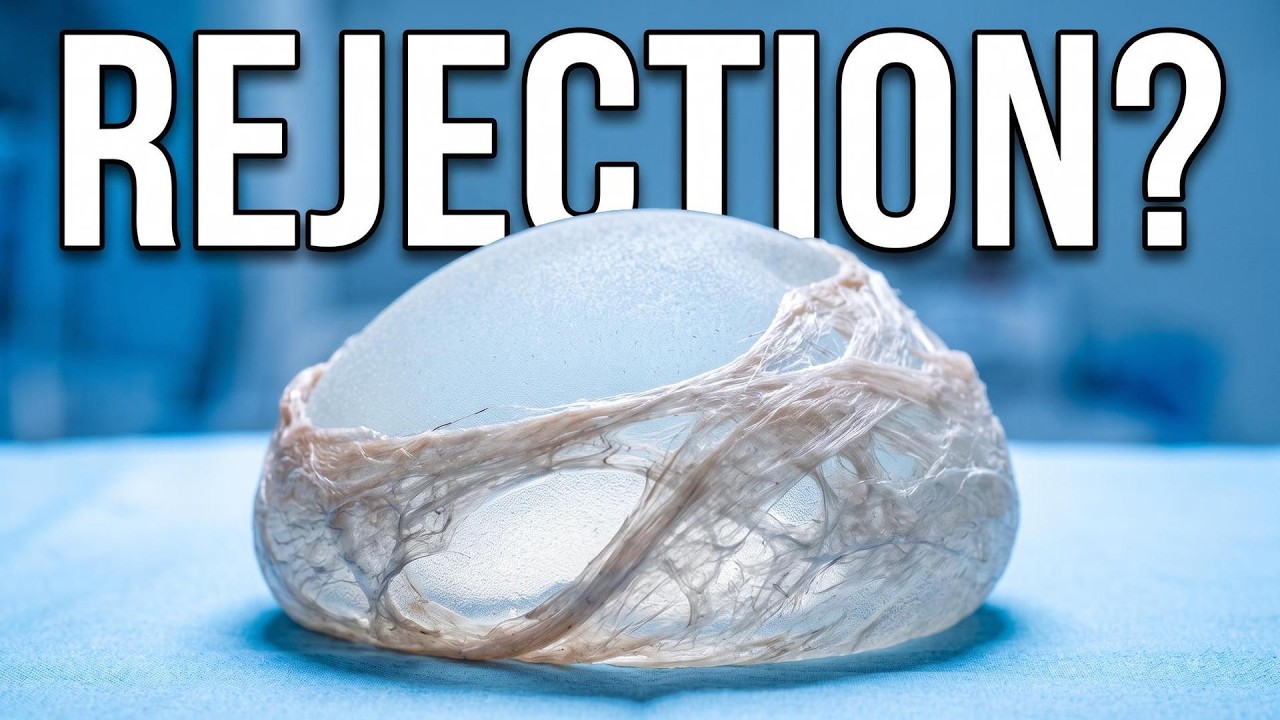
Dr. Robert Whitfield reviews a 2025 Danish study finding immune-rejection-like signatures in breast implant capsular contracture tissue. The research identified 1,500 differentially expressed genes and bacterial DNA in 29% of explants, but Whitfield cautions against over-interpreting the findings as proof of infection or rejection without further spatial and single-cell studies.
Questions this video answers
Dr. Whitfield recommends against further implant placement; instead consider explant with fat transfer (or DIEP flap for cancer patients) after comprehensive work‑up including genetic, toxicity, gut health, and hormonal assessments.
Dr. Whitfield acknowledges many patients have mold exposure but it does not consistently correlate with contracture; more research is needed.
Dr. Whitfield advises that prolonged drain use increases infection risk and is unnecessary.
He states BII appears to be a chronic inflammatory state where implants may play a role, but definitive HLA mapping or biomarkers are lacking.
He says there is no evidence linking GLP‑1 agonists to contracture rates.
Chapters
2 weeks ago, I gave a talk about my paper that shows that 29% of the explant specimens that we examine using PCR analysis in my single surgeon series have bacterial contamination, predominantly with Staph epidermidis and Cutibacterium acnes. And then what we did last week, last Thursday, was discuss Dr. Mathun Sina's paper And it's a great paper. It talks about oxylipins interacting with the bacterial biofilm, and in their study, it was predominantly Staph epidermidis that readily produces biofilm. It's been known for a long period of time, discussed in the literature about Staph and biofilm. So tonight we're going to concentrate on the next step. So we talked about PCR testing in my study. And continued PCR testing and evaluation of other experimental modalities in Dr. Sina's paper. And now we're going to talk about when we look at the genes and look at the transcriptome. So the transcriptome has to do with the RNA. So good evening, I'm Dr. Robert Whitfield, and tonight we're looking carefully at the 2025 study by Larsen and colleagues out of Denmark. It's titled Transcriptome of Capsular Contracture Around Breast Implants Mimics Allograft Rejection: A Matched Case Cohort— I'm sorry, Control Study. And so it was published in Plastic Surgery Journal, the White Journal, and that was in last summer. And I came across it preparing for a talk that I was giving about Capsulectomy, capsular contracture. And this was a fascinating paper when I read it. So this is obviously educational only. It is not to be used as personal medical advice. The study does not, it's not a study that you can use to tell any individual what to do based on the data within the study. If you have implants and you're concerned about symptoms, you may have symptoms of firmness, tenderness, Malposition, all those things. Please discuss that with your providers with the appropriate history, exam, imaging, all the other testing that your provider can help you with. So let's get into the paper. Okay, let's begin with the problem like we discussed is after breast implants are placed, the body normally forms a layer of scar tissue and it's a capsule. So a capsule by itself is a normal biologic response to the implanted device. Capsular contracture is different. In the capsular contracture, the capsule becomes abnormally tight, firm, or distorted, and some patients may experience discomfort. Not always. And they may experience changes in the breast shape. Implant can change in its position relative to the nipple complex, and you can get, like I said, increasing firmness. And severity varies, and the reasons one person develops a contracture while another does not are not completely fully understood. Researchers have studied many possible contributors, including surgical factors like bleeding, inflammation around the device, implant characteristics, other mechanical forces, the host biology, and microbial factors. Those categories are actually overlapping, many of them, and the importance of each One may differ from patient to patient. This is important because a complicated condition should not be forced into a single kind of cause and effect story. So the Larsen study adds a detailed look at genetic activity in the capsule tissue. So the scar capsule, for everybody here, I have an implant on my desk as usual. And so If I wrap it in this little whitish towel, that kind of mimics your scar tissue. Sometimes scar tissue looks very white like this. I did a couple explants today, and the scar tissue was whiter and thicker in one versus another. And so, the key technology here is RNA sequencing, often shortened RNA-seq. Genes are instructions stored in our DNA, of course. When cells use those instructions, they produce RNA transcripts, By measuring RNA across the tissue sample, the researchers can estimate which biologic programs are relatively more active or less active at the time the tissue was collected. The complete pattern of measured RNA is called the transcriptome. Think of it as a snapshot of cellular activity in mixed tissue samples, not a permanent identity card and not a direct movie of everything that's happened before or after the That distinction matters. Transcriptomics can reveal patterns associated with immune signaling, metabolism, tissue remodeling, and many other processes. But a transcriptomic pattern does not automatically establish the trigger that produced it. Similar immune pathways can be activated by different exposures. The sample also contains multiple cell types, so the measured signal may reflect changes within cells and differences in which cells are present. RNA-seq is a powerful tool for generating and refining a hypothesis, but it is not by itself the, the proof of causation. I think we've talked about that before on my show. I try to put together the best evidence so we can follow the evidence and see where it's going to take us. Now, to their study design, the investigators used a matched case-control approach comparing capsule tissue from breasts with capsular contracture to comparison tissue without contracture. Matching is useful because it tries to make the groups more comparable on those selected characteristics. Even so, matching cannot eliminate every difference between groups, and an observational case-control study can identify associations only rather than prove that any measured pathway caused the condition. The reported cohort began with 51 breasts from 50 women. The RNA sequencing was performed on 48 samples. 4 samples were then identified as outliers and removed from the transcriptomic analysis, leaving an apparent final analytical set of 44 samples. Those different numbers describe different stages of the workflow, and they should not be blended together. The initial clinical sample size is not the same as the number contributing to the final RNA sequencing comparisons. Quality control is a standard and often necessary part of high-dimensional data analysis. An outlier may reflect sample quality, technical variation, different biology, or another source of difference. Removing the outliers can make patterns clearer, but it can also affect results, especially in these modest-sized numbers. The relevant questions include how outliers were defined, whether their approach was specified consistently, and how robust the findings are to the analytical choices. Outlier removal is not automatically a flaw, but it is part of interpreting this dataset. The investigators report approximately 1,500 differentially expressed genes between the study groups, 873 with higher expression and 627 with lower expression in the contracture comparison. Differentially expressed means the measured RNA level differed between groups under the study's statistical criteria. It does not mean that each gene caused contracture. It does not mean every patient had the same change. These are group-level findings generated from the tissue samples and analysis methods used in this particular study. When many genes change together, researchers often examine pathways rather than interpreting one gene at a time. Pathway analysis asks whether sets of genes associated with known biological functions appear more prominently than expected. The Larson team found patterns that resembled allograft rejection. An allograft is tissue transplanted from another person of the same species. Breast implants are obviously not allografts, so the phrase mimics allograft rejection refers to similarity in gene expression programs. It does not mean that an implant capsule is literally a transplanted organ rejection. Gotta pause for a sip of water here. A useful way to understand that language is think of molecular vocabulary. Different conditions may use some of the same immune words and sentences. If two tissue states are sharing signals involving antigen presentation, lymphocyte activity, inflammatory communication, or immune cell recruitment. Pathways software may recognize an allograft rejection-like pattern. That similarity can be biologically informative while still leaving open what initiated the response, how long it has been present, and whether it is actually driving contracture or just accompanying the contracture. The study also reported signatures consistent with several immune cell populations, including B cells, plasma cells, CD4 T cells, and macrophages. Now, B cells participate in the adaptive immunity and can develop into plasma cells, which produce antibodies, which is important. CD4 T cells help coordinate immune responses. Macrophages can participate in inflammation, debris clearance, wound healing, and fibrosis. And if you all remember from the last talk I gave, Dr. Mathew and Sinha showed that there's macrophage polarization due to changes in the T-bet and Th1 pathway. These cell types are versatile. Their presence or inferred activity does not have a particular universal meaning. And the same cell categories can include obviously different functional states. Because this was transcriptomic analysis, cell signatures should be interpreted carefully. Depending on the method, They may be inferred from combinations of gene expression rather than established by counting every cell directly. So a signature can support the idea that certain immune populations or programs are represented in the tissue. It does not necessarily prove the exact number, location, activation state, or antigen target of those particular cell types. Follow-up work using methods such as spatial analysis, immunostaining, flow-based approaches, or single-cell sequencing can help refine this picture. The macrophage finding is especially relevant to discussions of implants because macrophages are part of the body's response to foreign materials and tissue injury. So every time I take out implants, we send them for PCR analysis and pathology. On pathology, the number one thing we find is a histiocyte response, which basically are macrophages. Okay. The macrophages can promote inflammation in some contexts and support repair or resolution in others. Their signals can interact with fibroblasts, the cells that actually produce the collagen and other components of scar tissue. Understanding which macrophage states are present, where they are located, and how they interact with the fibroblasts may be informative rather than just simply saying they were detected. Similarly, the B cells and plasma cell signatures, which is very interesting to me, Raise just different questions about the adaptive immune activity. They do not on their own identify a specific antibody, prove a reaction against the implant, or establish an autoimmune disease. However, that is an interesting finding to me. An immune signature in local capsular tissue should not be converted obviously into a systemic diagnosis of autoimmunity. To make that leap, obviously we would need more research. We need additional evidence showing relevant targets. reproducible clinical associations, and obviously more appropriate ways to validate it in independent populations. The CD4 T cell signals also deserve a different evaluation. CD4 T cells include multiple subsets with different roles like we discussed last week. Some can amplify inflammation, some help B cell responses, and others help regulate immune activity. Bulk RNA sequencing of mixed tissue may suggest T-cell-associated activity without resolving all those subsets. The study therefore offers obviously, um, it's great, of great interest to me, like this, this whole like series of immune programs, um, but it doesn't obviously give you a final analysis. This is the first paper like this, uh, that's ever been published to my knowledge. Now, let's address the bacterial response pathways because this is a common point of confusion. A tissue sample can show gene expression pathways associated with how the immune system responds to bacterial components. That finding does not establish that living bacteria were present in the sample. It does not prove a mature biofilm. It does not diagnose an active infection. Remember from my talk 2 weeks ago, we talked about PCR analysis versus cultures. Cultures have to grow something and show it's alive and then look for antibiotic resistance patterns. In PCR analysis, we're just looking to see if it was actually there. I think I lost all the people on Instagram. Y'all share this around. Everybody should be learning tonight. All right. To establish whether or not there's viable bacteria, researchers generally need, obviously, the methods we designed or discussed previously in my talks, such as cultures, And then the sensitivities, obviously. To establish biofilm, they need evidence appropriate to organized microbial communities, like we discussed previously, ideally considering location, structure, contamination controls, and reproducibility. To diagnose infection in the patient, your provider integrates obviously symptomology, your exam, any imaging findings, operative findings, pathology. And although we separated and don't do micro anymore, we do PCR analysis. Yeah. it gives us more information. Certainly, a pathway label would help from transcriptomic perspective if we had that. We don't have that commercially available yet. And also, the reverse is important, saying this study does not prove live bacteria does not play a role is not accurate. It means that this result just has limits. The exposure, the bacterial products, prior events, contamination, sterile inflammation, tissue damage, or shared signaling pathways certainly produce host responses that can overlap in this environment. Distinguishing among those possibilities requires more experiments. Good science obviously is not choosing the most obvious dramatic interpretation of results. It is matching the claim obviously to what the methods can actually show. So what's the most important things of this study? First, it supports the view to me that Established capsular contracture was associated with measurable biologic differences in the capsular tissue. So we hadn't seen that before. To be honest, it was a little— it was very subjective, honestly. And so this was super exciting to me. Secondly, it points toward a more coordinated immune program rather than only isolated gene changes. Third, It identifies cell types and pathways that can be investigated more precisely. These findings can help researchers form better questions about immune-fibrotic interactions, patient susceptibility, timing, and potential subtypes, if there are, of contracture. The study may also give us a more better idea on how to model this. Fibrosis is not simply just too much scar. It can involve communication among immune cells. Fibroblasts, blood vessels, extracellular matrix, mechanical forces, and tissue injury signals. A capsule can change over time too. I see a capsule contracture in my clinic multiple times a week typically. The biology present when tissue is removed, it may represent, you know, how things were initiated, progression, or adaptation, and the results of which can be immature contracture. I think what's interesting is when I operate, The correlation between the exam in the clinic versus in the operating room is different, especially in implants behind the muscle, because it can be more difficult to ascertain a capsular contracture than above the muscle. So the timing of our tissue sampling is one of the limits of these tissue studies. Researchers analyze the capsule after The contracture had already developed. So it's not a continuum. And the surgery was provided, obviously, to access that. If an immune pathway is higher at that point, it may have contributed to the condition, maybe responding to it, or maybe maintaining it. Longitudinal human studies, although challenging, would be obviously more valuable for distinguishing early predictors from the final late consequences. The sample size and setting also matter. This is a complex study. It's a low sample size, but not super low. So, I always, you know, one of the reasons I published my study was to have a much larger study in the literature. And so, we published a series of 694 consecutive samples. If this study was done on that number and they showed this type of variability, that would be impressive. The number of genes measured is very large relative to the number of samples. And so statistical correction and pathway-level consistency help, but you have to independently replicate these results. And if the same signatures appear at other centers, different patient populations with various different types of implants, capsules, and different clinical grades and durations, that would lend it more support. Prior operations, implant pocket, implant surface, rupture status, time since implant, radiation, smoking, medication, systemic health, and reasons for revision all influence capsule biology. Obviously matching can address selected variables and statistical models can adjust for some others, but there are always gonna be some confounding factors. That does not erase, obviously, these findings I think are super interesting. Another question is always like the tissue differences. A capsule is not uniform from one location to another. So today I was taking out capsule and the posterior capsule was super thick and the anterior capsule was super thin. Now I've done several thousand of these and I can say uniformly there's pretty good consistency about thickness. With the caveat that textured implants certainly can create more tissue reaction. Future studies that map multiple locations and preserve spatial information could show whether immune signatures cluster near the implant surface, around vessels, in fibrotic bands, or in specific areas. So this study does not establish a, like, transcriptomic test for capsular contracture. It does not give about a blood test or other screening threshold or a way to predict which patient's going to develop contracture. It does not show any of that. It does not show that testing individual capsules' RNA will select the best treatment. It does not obviously demonstrate that antibiotics or anything else, supplements or immune system modifying drugs, are going to help it. It also doesn't compare any Treatment strategies is a way that tells us which operation or medical therapy would be better. And treatment decisions certainly can depend on symptoms, contracture severity, implant condition and position, imaging, what the patient's goals are, tissue quality, medical history, and the risks and benefits of the options. And those obviously belong between patients and providers. No one should start or stop anything based on this. They have to have that discussion with their provider. provider. And I'll just say today I operated on somebody who had, had had multiple operations and it was, you know, a little bit more difficult than normal for me. And that's saying something because I've done several thousand of these explant cases. And so more surgery is not necessarily gonna solve a problem with a capsular contracture. And it might be Quite the opposite, actually. For patients, the overall message is we don't have enough information to say that your body's rejecting this. It is interesting that the response is so varied. So it demands certainly more investigation. And the— I mean, the future is exciting. This— if you're experiencing increasing firmness, a change in shape, pain, swelling, redness, warmth, Anything like that. Obviously, you got to see your provider, get an evaluation in person. If you need imaging, get imaging done. I posted something yesterday that got me in a bunch of trouble. I favor a breast MRI as the most sensitive and specific tool for rupture. I was asked specifically about QT imaging, and neither of those technologies can really tell you about a posterior rupture. And I've had all of those types of studies sent to me for evaluation. So that's just my preference. So I got to wrap this up here. A thoughtful evaluation obviously includes your implant history, your surgical history, timing and progression of any symptoms with relationship to capsular contracture or any other imaging or testing. And the workup is going to vary based on the patient. Not every firm breast area has got a capsular contracture, and not every, obviously, symptom is caused by the device. So the goal is to evaluate the whole patient rather than forcing one study or one theory, obviously, onto everyone. I shared this information tonight because I thought it was a fascinating paper. It's first I'd ever read like this. So I'm going to shut it down there. I've talked a lot about this paper. I think it's a good paper. I think my bottom line is the Larson and colleagues paper identified a substantial gene expression difference between contracture and the comparison capsule tissue. They looked at these 1,500 genes. They reported signatures involving B cells, plasma cells, CD4 T cells, and macrophages. It definitely supports further study of coordinated immune biology in capture contraction. It does not, obviously, and cannot support an allograft rejection picture because it's not an allograft. But its mimicry is interesting. I think as we learn more with these molecular techniques, we're getting closer to understanding why patients experience some symptoms more so than others. And then if I had Dr. Dempsey on tonight, she would want to talk about mast cell activation at the tissue level, which I think is a really important factor. It was not looked at here. So I think this was a very valuable paper, and I thank you all for spending time with me. We're gonna go into Dr. Rob's Circle. So it's drrobscircle.com. It's free to join. We'll take questions in there. I'll pop a question off of each platform here after I get some water. Man, I stayed on time. 6:30. Wow. All right. So go to drrobscircle.com. For the Q&A. All right, take a question off Instagram if someone's got one. Heal with Bree thinks her CAPCON is caused by SIRS from mold exposure. Certainly, I have a lot of folks who have a lot of mold exposure, and that does not correlate with every one of those patients having CAPCON. Helena says, have you ever had experience with inflammatory breast cancer with an incomplete caps removal? I've had explants four years ago with capsullectomy, but not confident 100% cleaned out lately. The sun is causing breast pain, swelling, and deep inside swelling with ten minutes of sunshine. Helena, that's in in the breast, and so you have no reconstruction now. You have a flat flat closure. Is that correct? All right, let's do a TikTok question. Is BII serves? Yeah, I think BII is a chronic inflammatory condition of which implants play a role. No, I probably have the largest genetic experience with explants, and we don't have the HLA mapping on that. Yeah, I got asked about generation of electricity, and. I, I have no idea about that. Somebody's asking me about retained capsule. Only way I can look at retained capsule is to reoperate. All right, I'm gonna go into the circle if y'all don't have anything else on IG and TikTok because I have people waiting for me in there. So it's free to join, head over. So Jay says, All right, Jay. So I went 10 years, no issues. I noticed at year 10 a change on my left. Then after revision, it came back within 2 months. I had 2 more surgeries and now it came back worse than before. My surgeon just continues to tell me to get it replaced. Yeah, I don't think that's gonna resolve that in my experience. So you have a couple options and I think as I stand, you know, before my, my simple way to do this is to do an explant and fat transfer with or without a lift. And that's how I'd resolve that problem, Jay. I wouldn't use an implant anymore. And if you're a cancer patient with implants, I would do bilateral DIEP flap reconstruction typically, and that would resolve it. So that's how I would do it and then augment with fat to, to help you. And this is a low-haul surf girl. She's thanking me for answering her question. She's found topless surfing helps with pain after going from 32A to triple D. Well, that's a big change. That's a lot of change for sure. All right. What other questions do we have here? Yep. So I had Helena. Is that all we have? Okay. Let me just turn this on here. So. Jay, just so we have this in the chat, I don't recommend repeating implant placement if you've had multiple capsular contractures. I would do an explant and a fat transfer after I do a workup that includes genetic testing, toxicity burden testing, gut health, food sensitivities, hormonal imbalance. That's also what I wrote in my book, The Sharp Method. And, um, I think that helps best with these situations. Yes, Lori, you can do that. We have a setup for patients who want to do testing, both genetic testing, toxicity testing, gut health, and food sensitivity. So yes, you can do all that testing. It is part of our, you know, wellness package. It's a, it's Good options for patients who are explanting elsewhere. And we have other programming to help as well. Maureen, did you have a fat transfer? Is that why you're asking about fat necrosis? Yeah, 16 mL is obviously not a lot of fluid. And just so I'm clear, did you have an explant or the implant exchange for capsular contracture? Yeah, I understand Canada is very difficult right now. I have a lot of clients from Toronto and Vancouver, and I just had a client the other day reach out from Montreal. So I think, you know, it's difficult in Canada. I don't know what the conflicting opinions are. If you keep having capsular contracture, then I tend to think it's gonna be hard to break that cycle, and there could be a number of factors involved. I would, in a cancer patient, if that kept happening, do an explant and a flap reconstruction to stop that because your body can't reject or have a reaction to your own tissue in that manner, provided all the microsurgery is done properly. And then in the cosmetic patient who's had CAPCON multiple times, revisions, etc., I would try to do an explant and typically have to do some version of a lift at that time. And if I can, I'll augment with fat. If they're not in a good position, I can do it later, obviously. Yeah, Maureen, I think that's hard because when you do an implant exchange and fat transfer, I mean, it's a lot of variables there. You can do it, obviously. Any fluid in a pocket is the problem, and you know that's just just part of it. It's a very frustrating problem, though. Is the member in this chat the same person? I'm just trying to. I don't want to say the wrong thing here. I'm just trying to make sure. Jay, I think fat transfers do really really well when the patients are prepared properly. I've did several live streams and talks about this, and I think. Preparation is key for fat transfer success long term. So what I try to do is get everybody's inflammation lowered to the best of our ability, to get their toxicity burden lowered, gut health improved, food sensitivities under, under wraps, under check, and then look at their hormonal balance, optimize what we can obviously, and then get them prepared for, uh, if we're doing a simultaneous explant and a fat transfer. I'll do that in that I have a specific set protocols for different things we encounter, particularly mold. So that being said, the way I gauge success is I look at your BMI pre-op. That helps me help patients with lower BMIs, and then also help guide patients post-op because fat transfers, I think, are very viable, but you have to maintain your BMI or improve your BMI in a healthy way by improving lean muscle mass, by improving in a healthy way, your fat or body comp, which I think that's important. I think too many people are paying attention to a number on a scale rather than measuring their resiliency. Lori, there's no reason to leave a drain in for 2 weeks. It's a source of potential infection. Tammy or Dara, do you have any questions? I'm sorry, I misunderstood your question. I believe you're asking if semaglutide or tirzepatide can contribute to capsular contracture. Now, capsular contractures have been going on since implants have been placed originally in 1962 above the muscle. And then the rate only went down after they switched position and went behind the muscle. So GLP-1s really have, to me, nothing to do with capsular contracture. So anybody who wants to come to Austin, you know, for us is You spend about a week here in Austin. If you're coming from a longer haul flight, it's better to spend a little bit more time. So if you're, you're coming like a 6 to 9 hour flight, I would prefer you stay, you know, a good week to 2 weeks. People coming, you know, from out of the country spend 2 to 4 weeks typically. And then, in my office, we have a vertical hyperbaric chamber. We have, uh, Joovv red light therapy. We have lymphatic massage devices for treatment from New Zealand. The device is called the Flowpresso. We also have NanoVi therapy, and we have a device called the Human Regenerator to help with getting you into a parasympathetic state. Um, we have a full, uh, our schedule is not a problem in terms of booking. We have our own surgery center. So it's more about getting on the schedule for a call with my team and figuring out a time for us to discuss what works best for you. You can also get to it from the circle. It's on the resource page. I definitely would recommend, you know, watching several videos so that you learn as much as possible. Making any conversations you have with me more meaningful because we've done 180 podcasts easily and, uh, over 4,000 videos. Um, yeah, all the things. A couple books. Wrote a book about breast implants, explant surgery and breast implant illness, if anybody's interested. Promote my book. Sweet. All right, y'all. I'm gonna shut it down. I am, uh, done for the night. I appreciate everybody hopping on. It's been great. Thank you. Thank you.