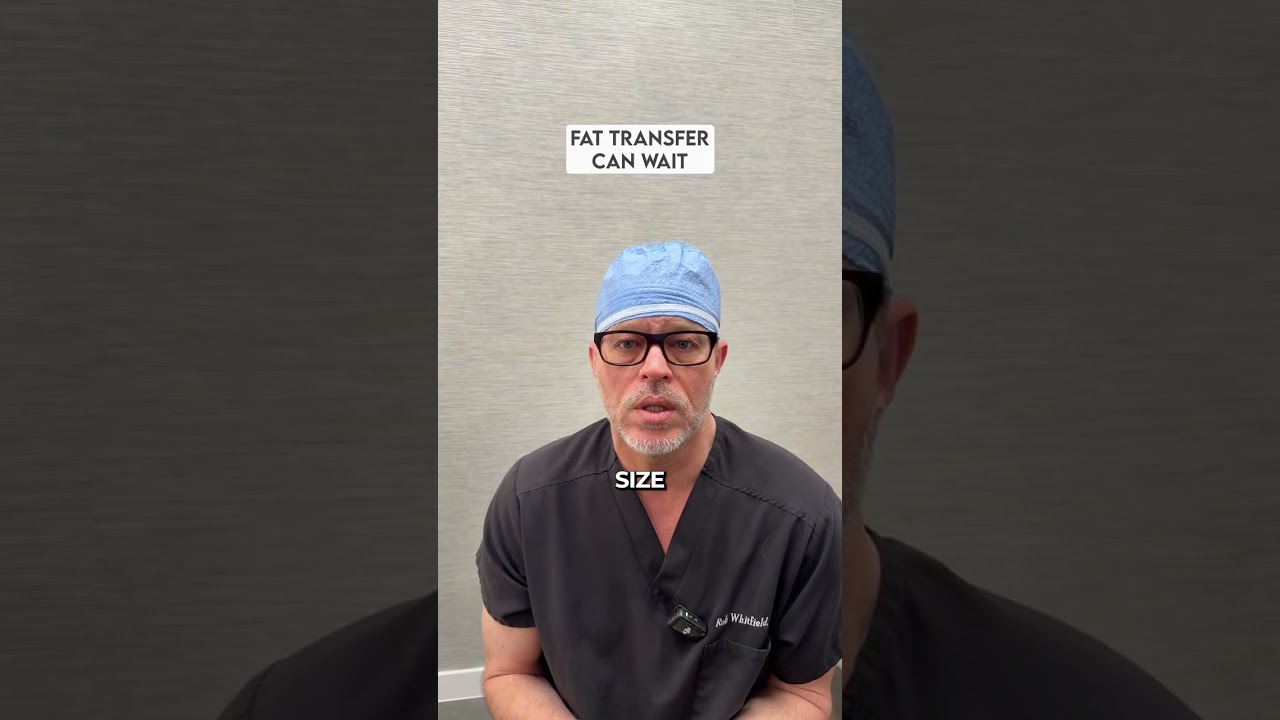
A patient who got breast implants in 2016 describes her decision to remove them after developing health concerns. Plastic surgeon Robert Whitfield MD explains breast implant illness as a chronic inflammatory response and uses a bucket theory to show how implants combined with other stressors can trigger symptoms.
Chapters
And you know, I think fortunately it seems like a lot, a lot more people are talking about it today. I will say in 2016, when I got my implants, gosh, 2016. Yeah, almost nine years now. Hard to believe it's been that long. But I knew there were some potential health risks and I said for me at the time it was worth doing. If it were today, I don't think I would have made the same decision. But back then I was like, ah, you know, but I've learned so much more in the last year or so and I want to keep learning and I will get them out at some point.
This is a close to home subject because as a plastic surgeon, I've taken care of patients with implants, implant related problems from a number of surgeons. So neurosurgeons, cardiac surgeons, orthopedic surgeons, obgyn, colorectal, whoever places any kind of implant has called me one time or another to help take care of their problem, which is a problem with an implant. And the way I look at breast implants and breast implant illness specifically is it's a chronic inflammatory process of which a medical device, in this case a breast implant, is playing a role. If they had known now what they didn't know back then, they would have got an implant.
An implant is not compatible, it's not biocompatible. It's a foreign thing you're putting in your body. But we also believe in bucket theory and that maybe the body can be resilient to a few stressors here and there, but then, you know, you get too many, or depending on genetic predispositions, that bucket can overflow and create illness and symptoms.
So if you just keep adding up hits and people use the bucket analogy, like your bucket becomes full and you can't manage it anymore. And then I always say the same things. You can't pick your parents and you can't outrun a bad diet. You can't, you know, you can modify it and say other things that are very, very true. Like if you don't get enough sleep, you know, quantity, quality, you know, regularity and the timing. Like Dr. Matthew Walker talks about in why We Sleep, you, you don't have much of a chance.
But circling back to like some of the, well, I guess kind of like the bucket theory, like I feel like I have biohacked so many things like my nutrition, my sleep, my stress, you know, I've done all the things and I'm like, I think I could feel better. And that's why I'm on this journey.