Dr. Pompa on Still Feeling Sick After Explant: Breast Implants & Detox Lies with Robert Whitfield MD
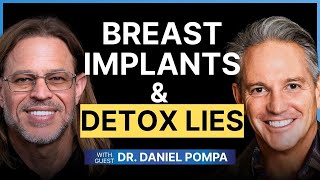
Robert Whitfield MD and Dr. Pompa discuss why some people stay sick after breast implant removal. They cover chronic inflammation, heavy metals, biotoxins, and how the immune system gets stuck responding to toxins even after explant surgery.
You know, 10 years at least. You know, 20 to 30 million women have been implanted, and of that, at least a third have an infection.
Yeah, biotoxins just drive massive inflammation.
They're not actually melting their implants. They're causing leaching of the chemicals in the implant shell.
I got my breast implants out. I'm still sick. I got my silver amalgams out. I'm still sick. I moved out of the moldy home, spent all that. I'm still sick. No, this is the norm now. You have to get it out of your body.
This doesn't feel. I've done thousands of these.
It took me years pulling mercury out of my brain. It's taken 30 years of accumulation to bring you here. To think that that's going to come out overnight is absurd. Fifty years ago, 2% of children had chronic disease. Today, 66%. What the heck is happening? The views and opinions expressed by guests on this podcast are solely their own and do not necessarily reflect the views, opinions, or medical guidance of Dr. Robert Whitfield.
Never met me. Unless you had a jaw cancer, breast cancer, a sarcoma, something like that. Because my whole career was just basically doing reconstructive surgery for cancer or if you got hit by a car, whatever, something super bad had to put you into a tertiary setting to have met. Met me. So in, I think it was 2005, I had a patient, you know, come and they had had a breast cancer reconstruction done with expanders, converted to implants, which was, you know, very commonplace, still is today. And she had just a very consistent problem with what you would probably look at and go like. Or any of us would be like, this looks like a lot of histamine release. Like they're. They're flushing all the time. But she had tightness and some shortness of breath, and she just was uncomfortable. And I said, well, I can convert this to a microvascular breast reconstruction. There's a tissue from the lower abdomen that's usually discarded and tummy tuck. And once I take all that out, if that's quote, unquote, just a response from foreign body, that will just go away and the tightness will go away. Scar tissue will be off the rib cage. And I did that for her. You know, now we're circa 2005. That was not in the era of, you know, the gap between the moratorium and, you know, 92 on devices, the reintroduction of devices to 2006. And there wasn't a lot of, quote unquote, social media about breast Implant illness. At that point I, I didn't even know about that. And then I just kept doing that type of work, getting patients sent to me wherever I was in the country for similar implant related problems. And then de novo cancers of patients having mastectomies and doing reconstruction. And then in 2016 we had a cancer patient here in Austin come to me and wanted to go flat and I took everything out like I would normally do and sent it off. And she had an E. Coli infection so she put me on a Facebook group and then I just had people start calling our office about breast implant illness which I didn't really still wasn't any know what it was. So then now, yeah, now it's kind of top of mind.
Well because just like anything else it takes time in most cases now it's becoming a big, big bigger deal. More implants, more time equals more problem. So it's kind of where we're at, right? It's, you know we've done some webinars with this topic and my gosh, I mean thousands of people coming like could this be why I don't feel well?
Yeah, we can talk about more specific numbers now because I just published a big series last year about it. And then the statistics although of how many implants are placed are just really a function of surveys. They're not really the numbers. So it's a much bigger problem than is probably appreciated. Right. So I mean that's the basic crux of anything is like what are the real numbers. So when I was president of the research foundation for a society I testified the FDA hearings in 2019 that we try to apply funding for research around breast implant illness and only the manufacturers know how many implants are sold and they don't actually ever tell you why. It doesn't from a reputation standpoint they sell implants to non plastic surgeons. So if you're a dentist you could buy an implant and put it in. If you're obstetrician you could buy an implant, put it in. Not knowing anything about placement of a device, having ever used a device in training, learned anything about it, you could be sold that device. And that's why from an because the implant manufacturers know exactly how many place how many implants are sold annually. But when you do a survey of the plastic surgeons around the world from a society, they can give you a number and the number is 2.2 million are placed annually. Now that's extremely low because you know a survey has a response rate and that's going to be low.
Of course.
So you're now saying, okay, the bare minimum is 2.2 million get placed annually, and then you amortize it over 10 years. We'll say 10 years to get, as we're going to talk about later, you build up so much toxicity over time, plus you have a device and now you reach a limit and you can't handle it anymore. So then you get symptomatic. And then there's this, you know, talk about like, why at the cellular level, things are so off in those patients and why there's so much, you know, as you've talked about cellular inflammation. So that's kind of the. I guess I would give you the Cliff Notes version of, you know, what we know right now. So I feel very comfortable that in a third of the patients, it's basically a low level of bacterial contamination that contributes to immune dysregulation then. And the others, we have a working hypothesis right now that is aligns many, many times with what you say about different chemical exposures and toxicity over time. So, like when you do a detox protocol, say for breast implants, or a patient has breast implants, how do you feel like they are able to cope? And do they get well sometimes? Do they remain symptomatic? What's been your experience? Cause it's a difficult one.
It is. Well, I think it's difficult because of what you just said, right, that there's an immune reaction going on, you know, depending on how filled someone's bucket is, is part of the factor, right. Meaning of how they may be these bacteria that are opportunistic that you're referencing, you know, that come from our normal skin. I mean, they're are obviously on that area of the skin being brought into the cavity, I'm sure more than one third end up with maybe 100% end up with those bacteria in there. Right. Why is only 1/3 approximately affected? I would argue part of that is the distraction of the immune system, meaning their toxic buckets already challenged, which their immune system is already challenged. Right. And then that one third is, of course, affected. You know, when you look at breast implants, you're talking about heavy metals, bacterias, hidden infections. I is what I just reference it, right. Because there could be a lot of things, right, that are allowed biofilm production and then potential biotoxins. Right. Which we can talk about. So, I mean, these, you know, this is very complicated because when I reference the three things that make people sick, unknowing and aren't really dealt with correctly or Even identified breast implants. Check all the boxes and.
Yeah, because you brought that up recently. We were talking. You recently did a webinar and, like, and I told you, like, my story of, like, how it, like, evolved in my. You have to be problem aware. Like, when did you become more problem aware about.
Yeah, I mean, I. I would say. I would say 10 years ago. All of a sudden, people are coming to you. Look, one of the things that I dealt with when I was dealing with a lot of clients myself, right? And of course, I've trained doctors for 20 years. So, you know, you have these conversations. I'm always saying, look upstream for the causes, and it's typically a perfect storm, meaning three stressors come together. Someone ends up with a mysterious illness of sorts. Autoimmune, everything. You know, you mentioned earlier, even just symptoms, fatigue, anxiety, brain fog. What the heck's wrong with my life? I have no energy anymore. I've tried everything. I've changed my diet. You know, it's like, perfect storm. Look for it. And then it became evident to myself and the doctors that I trained that women with breast implants, there's. There's a connection, right. Sometimes you get the stories that nothing's been right since I've got these in. Yeah, that's, you know, typically not the story. There's a time gap. Everything was fine that it wasn't. Maybe the other storms came. Maybe that person that didn't feel right already already had a perfect storm going on, or they were just waiting for that one more storm. And the breast implants, the infection, whatever it is, became that. That last storm. And then, boom, catastrophic storm. The genes get triggered. Now all of a sudden, you're manifesting conditions, symptoms, diagnoses that you didn't bank on. But yeah, so hearing that, you know, putting those things together, looking upstream, asking people, digging for people's perfect storms, breast implants became one of the things that we became suspicious about. And then you have this happen enough times where they get them out, and all of a sudden everything changes, right? It's like. So it, you know, you don't need a lot of scientific literature to go, okay, there's a problem here, right? Look, I come from a premise that anything foreign in the human body can potentially and typically cause us a problem eventually because the body knows it's there, right? I mean, for years they said, well, these, you know, implants, whether it be in a hip, shoulder, knee, whatever, they don't cause problems. Well, they realize that they're forming biofilms, right? And the biofilms attract a lot of different pathogens, et cetera. So, of course, now the push is making them more ceramic, less biofilms. But, you know, yet we were told there wasn't a problem with these foreign things in the body. And now we're learning there is a problem. We deal with that with titanium implants in the mouth. You know, that there's major problems in biofilms, and it's immunosuppressive and allows infections that would be other places in the body not causing a problem nowadays. So, I mean, so it was no surprise that we were dealing with this with breast implants. But again, it's only in theory until you see enough cases of people getting sick and people getting better with removal.
And with your own history. You talked about mercury toxicity, and you were on the Skinny Confidential with Lauren, who's my patient, and Michael, who's a very supportive spouse. And those two are a handful together.
Yeah. Oh, yeah, yeah, yeah. That was fun. That was. That was a really fun interview. And my wife was off, as she is now to the side because we traveled together. And it was like she was pulled into the conversation.
I saw you kept queuing up her for the lid to the tank answer. The thing with Lauren was she had the most heavy metals I have ever found in a patient of mine. And we do a urine test to just evaluate metals. And you can have problems with. Have a host of them. Tidin, cadmium, platinum, all the things. And she sat in a barrel sauna and me an ethics violation because they're like, you can't say that someone is melting their implants, Rob. And I'm like, well, that's correct. That's an incorrect statement. They're not actually melting their implants. They're causing leaching of the chemicals in the implant shell.
Well, of course, that'd be easy to prove. Heat would do this, right?
Just like if you drank out of a plastic water bottle, it had been superheated, and the phthalates go water. So they got offended, meaning plastic surgeons got offended by what I said in that conversation with Lauren. Not because they were concerned about patient safety, but they were concerned about phone calls to their offices. Now, so in reality, I've told all my patients who are interested in or the DM us about an explanation, not do a sauna, whether it's a barrel, which is quote, unquote, dry heat, or it's an infrared. Because no one can tell you anything about the danger associated with doing that with the device because, of course, that was never tested. And that Pisses a bunch of people off, which I don't care about either, but hers in general. When I did her case, which went extremely well, Couldn't have asked for anything better. That gal woke up like she had not had surgery, like she woke up. So I wanted to do selfies with me in recovery. And I typically think, well, they're just high. They've had a bunch of drugs. That was not her case alert. And then the next day, you know, and we haven't had you over to my office. I have a great team. And she would come in every, you know, loves Lauren's, like, life of the party. Comes in super, you know, gregarious and fun and, like, totally with it. Yeah, like, not a problem at all. And then all she did in terms of detox was take her family and go to Italy for the summer. Didn't do anything I told her to actually do. Came back, and we did her repeat tox test, and all that stuff was gone. So she wasn't superheating herself anymore. So she wasn't causing leaching of chemicals into her.
Yeah, she stopped the inflow.
And for everybody listening, I send every single scar tissue, which is your collagen sac, if you will, that you form around a device for PCR testing and pathologic testing. So PCR testing looks for any kind of bacterial or fungal or mycobacterial contaminants on your scar tissue, not on the implant. So don't get confused about that. I did that, and I stopped doing it. It's your scar tissue. That's what matters. And then I send the rest of it to have the pathologist look to make sure you don't have a breast implant associated cancer or a breast cancer. For now. Her implants, when I took them out, were slimy. Now, I always get worried when I feel this kind of sliminess on an implant. I think it's infected or I think it's degraded, meaning it's leaking silicon gel out right now. Nobody can tell you one way or the other. That. Right. But I fortunately have a lot more access to research tools than most people. And I send it off, and I'll call the scientists and I'll say, look, this doesn't feel right. I've done thousands of these. He's like, okay, call them and have them run it again using my scientific protocol. And the scientist is Muthoon Sinai. He's the one that published the work about oxylipentinone. Fabulous scientist. Really has opened up the gateway to better understand this problem. And so they Ran it once my way, and then they ran it with his protocol, no bacteria. So that further codifies what we said. Like, this is breaking down the exterior shell and it's leaching into a system. And just like you had mercury problems and it made you neurologically have difficulty, you know, 10 is a huge problem and cognitively affects you. And when you take it away, people magically get better. So, like, just anybody who likes to take the piss out of me about this, this was a real problem for this patient. It was not made up, fabricated. Like, these are real problems affecting women all the time. And talk about something that can dysregulate hormones. Like, you've. You've talked about how. Go ahead and speak to how having 19 heavy metals in your system can dysregulate your hormones.
Yeah. You know, and it. Obviously, we understand certain chemicals can mimic hormones, but heavy metals block hormones many different ways. They drive massive cellular inflammation. And your cells, this is where the antennas, if you will, that your hormones have to attach to to actually work in your cell. Right. These are the receptors. They're on every cell. And heavy metals damage those receptors. They drive inflammation in and around the cell. That block the receptors, drive inflammation that simply blocks their receptors. So now we're hormone resistant. So a lot of people that just don't feel well are generally just hormone resistant. Of course, the thyroid, we call it the canary in the coal mine because it is the most sensitive. It is for multiple reasons. And, you know, the canary in the coal mine is, you know, they used to bring canaries actually into coal mines. And if they would die, the miners had to get out. They had. They had a little bit more time because the canary was that sensitive. Well, that's the thyroid. So we have thyroid becoming resistant at the cell. Heavy metals bind and drive your own body to attack. The thyroid itself, the receptor itself. I mean, many places, autoimmune, thyroid, all thyroid conditions have just exploded in the last 20 years. You know, what's going on. And we know that toxins are at the root of this. Even people that we would look at and say, these are healthy people. Typically healthier people, though, today are people who are driven to health because they don't feel well, meaning they're, you know, they're interested because they have issues. Right. So. But they have. So many of them have thyroid conditions. You know, even in, like we're at the seminar here, it's, you know, so many have thyroid conditions.
And especially the female.
Yes, especially the female and more men.
But I mean, predominantly, I see Predominantly females. But, like, they've tried, like you would imagine, every single parasitic protocol.
Yeah, they've done it all right.
Protocol, thyroid things. They've. And we've gotten very specific now. I won't operate on patients anymore without meeting certain criteria. And we have this very specific testing protocol that looks at genetics, because I want to know how someone genetically detoxifies so we can get a better sense of that and how they. You know, from a exposure standpoint. Like you said, they've had exposures over time. And people get super triggered if you tell them they have mold. Like, they freak out about mold in their house or anything. Like, people just get super offended. So I'm just like, you know, you just need to understand this could have been from where you grew up or where you work.
Yeah, absolutely.
But you have to rule out, because you spend so much time at your home, and a lot of people post pandemic work from home, so they may spend all of their time literally in a mold environment or a humidity.
Mold is deadly. Biotoxins are arguably more toxic than heavy metals. As we're discussing, you know, heavy metals disrupt hormones. Biotoxins. Right. I mean, it's one of the things we have to rule out. Like when I said earlier when I'm training doctors, if someone's sick, you can't figure out why there's still a hidden stressor. What does their environment look like? Could they be in mold? You know, biotoxins just drive massive inflammation, and. And it does it from the top down. I mean, so do heavy metals. When I was sick, I had all kinds of hormone disruption, you know, weird anxiety, all of it. And realizing that something's wrong with my control tower of my hormones. Pituitary, hypothalamus, two areas in the center of the brain, if you will, that take in information from your body of what we need more or less of and communicate that to the thyroid, the adrenals, and everything stays in this nice balance because of this control tower. I realized after, like, two years of trying to address my thyroid, my adrenals, like, what is going on? I had every symptom, even though my blood work was normal, There's a reason for that. And I realized it was the control tower. Something was wrong. And it wasn't until I realized I had mercury toxicity that I realized so much of it accumulates in the control tower. The pituitary hypothalamus. Biotoxins affect the hypothalamus and the receptors to hormones, meaning the things that feed back into it. Yeah. Biotoxins block that. So a lot of confusion is here. And people are down here trying to take more hormones, do more hormonal things, trying to get well. And these major neurotoxins like biotoxins from mold, heavy metals, they affect up from the top down. Right. And of course they're affecting the cell too, causing resistance. So you can see how confusing this.
Is for people to identify. Like the, the, like in mercury that you had, which is sometimes harder in blood levels.
Yeah, I can't look at it there. Well, I mean, testing for heavy metals and biotoxins is a challenge. And I, I think it's a challenge. Yeah. Well, because reasons for that. Right. So we like to measure heavy metals in urine as well, but we like to use water soluble chelators to pull it out. Right. Because what you notice after doing this for so many years that some of your sickest people, you measure it in the urine. Hair. Nothing like the autism study when they realized autistic kids actually show oddly, no heavy metals. That's odd. Healthier kids would. Right, because the hair represents your body's ability to get rid of it. So you can't just look at heavy metals in hair. Very confusing. Urine is very similar. It's going to be in the urine to some degree. What is normal is debatable, but fact is, if your body's good at getting rid of it and you're getting some exposure, you're going to see it in the urine and you could be not sick. Right. But if you chelate it out, typically that's getting at least what's trapped in tissue. That said, it still doesn't show what's trapped in the brain. So we're not reflecting what's in the brain. And I make the argument that most heavy metal toxicity is the people that have it deep in the brain and the nerve tissue, causing neural inflammation. Yeah, exactly. And. And it's deep in the mile a lot. What's that?
We see that with mold a lot.
Yeah, no, exactly. Right. So again, so heavy metals are not easy to test for unless you're willing to biopsy the brain, who is? And then biotoxins, the same thing. So today they're measuring biotoxins in urine. What we have found in my doctor group is that there's very little correlation. It's measuring mostly mold from food. So mold in food or the mold toxins in food. So you can get a more accurate test if you go a day without food or have someone go two days without food. But even then it's still not perfect.
Yeah, I think in our specific population, when we audit the results, we have about 83% who have a lot of challenges in genetic detox pathways. And that may be why were able to see it more easily. Because I'm only seeing patients who've come to this endpoint where they have a device and a ton of chronic inflammation and they are already so burdened. I like to say that we're seeing it more and more and more and.
I think the already burdened patient is more important even than the genetic pathways. Look, I don't mind looking at those things because they give us ideas of people. Some of the pathways are genetically not up to speed. That said, when I started down that road, Maybe it was 15 years ago, it became something. Every five years it was like, oh gosh, we knew nothing. Every five years we knew nothing. We knew, oh, it's not so complicated. It goes around this. Snip, it goes around this. So I still think we're in that pattern of gosh, I don't know what we know. But what we do know is that people who've had other large exposures, physically, chemically and emotionally, again looking for that perfect storm, their pathways shut down. One of the frustrating things for me in our space is, well, there's a few things, but the way we look at detox is completely not right. It's not that simple to just sit in a sauna as we're saying, or to do. Right. It's not, it's not that simple to take the 10 day cleanse, this juice cleanse, that juice cleanse. But people do that and, or hey, I did a heavy metal cleanse with chlorella and et cetera, et cetera. If it were only that easy, right. It's would I'd have gotten well a lot sooner and many other people. It's not what happens when we're exposed to all the toxins that we are today. Eventually, and I agree, you know, genetics play some role here, but the fact is, is that our cellular pathways that its job is to get rid of toxins day in, day out of the cell gets worn down. And look, if it didn't have these pathways, we'd be dead. But the fact is, is that they're overwhelmed. And once that happens, now toxins start building up in the cell. Now you have problems. Now genes start getting turned on because your DNA is in there as well. Oh, your mitochondria where you make energy that's in the cell too. Oh, no, that starts to get affected, and as energy starts to go down. It's called the Gibbs free energy equation. Energy drops. Well, guess what? Glutathione drops because it's energy dependent. Okay? And then inflammation rises. As inflammation rises in the cell, it's less energy. So it's this nasty feedback, and then more genes get turned on. The point is, this is that our cells are being overwhelmed. This is where real detox is. So if it were only so easy to sit in the sauna. But we have to fix that. And that's just part of detox, of course. Then. Then what do you use for binders and chelators to make sure the stuff's brought out of the body? You know, this is really what I've dedicated my life to teaching is that process that's not so easy.
Right.
But anyway, the point, though, is full circle in the conversation. The amount of heavy metals people are exposed to today from, yeah, it could be from your breast implants, but from just eating a diet that you know of. Massive amounts of glyphosate, other chemicals on the food, other heavy metals falling out of the sky, because literally, they're putting aluminum and jet fuel to make it efficient. It saves billions of dollars. However, we have exposure to aluminum in our food and water that we've never had. And then we're using aluminum foil, right? It's like to wrap food in and, you know, cover things. You know, not smart. Oh, then it's in our deodorant. Right. So the bow. And then we have fluoride exposures that are off the chain. Hopefully, that's changing. You know, the point is, though, and then we have plastic, and then we have. All these chemicals are overwhelming us at the cellular level. And here we are as humanity wondering. And you've heard Bobby Kennedy use these statistics. He said, 50 years ago, what's changed? 50 years ago, 2% of children had chronic disease. 2%. 50 years ago. Today, 66%. What the heck is happening?
Yeah, I'm glad you brought that up, because we talk and focus predominantly initially about food, and I have a great segue to that because I had a patient come to me, and I don't have to take on any clients. I'm fortunate. And if you can't follow and engage in a pattern that's going to be healthy in terms of how you eat and how you rest and fluid do take in and, you know, managing, we'll just call it overall stress better. I had a woman come and she had five kids or her husband's deployed in the military a lot. And you know, like you said 50 years ago, things were markedly different. She clearly had not been taught by her parents about choices about food. And maybe they didn't understand it or maybe it was less complicated then. And she told me that her children ranged in age from 7 to I believe, 13 and they drank energy drinks as part of their diet and they had, you know, candy as part of their diet and they had, I don't want to throw any particular chip brand under the bus, but chips that weren't great for you that you would buy at the, you know, convenience store, the gas. Gas station.
Yeah, that's pretty much all of them. Yeah.
And so I said, so I was like, you know, you actually can't be my client until you make these changes. And I just gave her a strategy. And it's not a perfect strategy, but I said instead of you can't give a 7 year old an energy drink. Right. That's. That creates the problem you're talking about.
Which is they're common, but I just.
Did they call it attention deficit disorder. That's not from an inherited.
The amount of sugar, artificial sweeteners, colors, caffeine. They're all known to cause ADD ADHD in children. Attention deficit it, you know, absolutely. Other problems, of course, I mean just.
Well, we just gave her some strategies and like hey, you know, you don't give them that stuff and this is not a perfect solution, but just sub those out for Zevia, which is not perfect, but it's way better than a energy drink that is loaded with taurine and chemicals and other things. And you know, we have a very famous chocolate company here, Human Chocolate, that you know, in their sale to a larger company had in the contract not to change the ingredients because they didn't want them changed because in general chocolate is good, it's not a bad substance. And the other was. And I don't know if they preserve the ingredients in siete chips, but they're made with avocado oil and there's. None of these are perfect, I'm just telling you. Yeah, we had to make some like adjustments for them. And you know, she sent us a note, a very sweet note after surgery, which I did get her sorted out and was able to take care of her and do her explant. But her kids are much better behaved now of course, and she feels much better and. But the point is like they don't know. Like you've done a lot of social media about food and the problems with food and you Know, we probably not you and I take it for granted, but it's just part of our habitual lifestyle that you eat real food. Maybe just say a few words about, you know, I made those changes for her. And people say, well, I can't cut out gluten or dairy or I can't avoid seed oils that I won't have anything to eat.
Which is. Yeah, people are ludicrous. Yeah, that is ludicrous. Yeah. Yeah. Well, they say that because everything they're eating has it in it. So what would I eat? I would eat now. They don't realize there's easy alternatives now. But look, when you look at the mass. Amount of toxins in food, if you look at what's in our water, forget it. It's another subject. But, you know, you realize that it's not the same in other countries. You know, you go to other countries and they've outlawed glyphosate. That's the chemical that they're spraying on most of our food supply. Obviously it's a pesticide, herbicide. But they also use it for something called desiccation, which to harvest. They spray it on it before harvest and it causes a dehydration, a shriveling, and it makes harvest much more plentiful and a lot easier. So when the company who makes glyphosate, Monsanto, came up with that, I mean, they, you know, billions of dollars was created because. But the problem is, is this process of desiccation puts a lot of this chemical way more even in the. The use of it for, as an herbicide, pesticide, onto the food, into the food. And we're ingesting it, and it opens up our gut barrier, our blood, brain barrier, and makes us even more toxic. It allows the toxins that we have bioaccumulated in us to go deeper into tissue, which Stephanie Seneff, senior scientist at MIT 2012 study, showed that it is allowing things like aluminum and mercury to go deeper into the brain, which she feels is leading to so many of the neurodegenerative conditions that we're seeing problems. I mean, all of it. But the fact is, is that all of this, you know, the chemicals. And then there's one more problem that you brought up. It's the oils that changed in the last 50 years. Yes, right. It's like, so we went from saturated fats, you know, people cooking in natural tallow, lard and things that our grandparents did to, oh, that causes heart disease. And we need to switch over to vegetable oils, canola oils, different seed Oils, and it's so much safer for your heart. And we bought in. Well, humanity bought in. And it is a big, big problem. The reason that stuff accumulates in the cells, because your cells are made of fat. And most of the seed oils, they're very high in omega 6, which is one of the parent fats, meaning omega 6 has a bad rap. But arguably it's the most important fat because it is so important in the cell membranes and for our hormone receptors. So therefore, if you're getting rancid omega 6, which all these oils are, it's going right into the cells. I used to say it's there a half life of three, four months. Now newer studies are showing two years half life, two years of cellular disruption. I already said that. This is where toxins go. Toxins make their way into those fatty membranes, driving inflammation, blocking our h. Keeping the good things, the nutrition from getting in the cell and the bad stuff from coming out. So inflamed cells or hormone resistance? Inflamed cells are building up toxins, triggering your bad genes. And we have toxins and these bad fats driving that. If people want to ask what's changed in the last 50 years, that's what's changed. So then it begs then the opposite, okay, if you want to get you and your family healthy, I would argue focus on those two things. Stop the bad oils. But the problem is, if you go into whole foods or health food store, you still have loads of these bad oils in processed food, so you have to avoid them. To your point, though, it is not. I have nothing to eat. No, you just have to just avoid them. It's not hard. It really isn't hard to avoid those fats, but yet it's a big deal to the health of you and your family. The toxins, okay, I'll give you that. You know, you're going to need some of these apps that, you know, Right. My kids created one, you know, that you put on the thing and it shows you everything that's bad and good. And, you know, it's like, so it's getting easier, right?
To your point. I had a patient recently. Her name's Alexi Pana. She has a great following, and she came to me with the most favorable urine tox test I'd ever seen with nothing registering, even, like, basically in the moderate category. And I was like, well, Lexi, I've never seen anybody have this.
That might be a red flag, actually.
And I asked her, I was like, what did you do? And she's like, well, we Wanted to start a family. So that about 2015, I used one of those apps and every time I'd go to the store, I would just scan the barcode. It would tell me like, we'll just say thumbs up, thumbs down. So you have a better idea.
Yeah.
And so she made that adaptation, though, in 2015, which is like super far ahead of the curve, as you and I both know. That's not really, you know, you're, you know, preachers to the choir with us, but that she took that upon herself to do the same thing because she wanted to have that for her family. And much like my other patient who just didn't know that option or didn't understand that option, or like when you explain to a patient who maybe is explanted and not doing well, like some, some more cellular detox or things to work on to open up drainage pathways, which we haven't really talked about, but all those things play a role in helping at the cellular level restore the cell voltage, increase electron transport, which helps mitochondria, which helps apt heat production, which at a cellular level leads to how we express and behave and be present and all the things. And we haven't really obviously talked about that. I mean, I've operated on thousands of patients and I've, during the procedure, seen tons of inflammation and see physically what it looks like, which probably, for lack of a better word, maybe something that translates. It would be like more tissue swelling or like if you had a swollen ankle after you sprained your ankle. So there's inflammation, that's probably easier.
That's the way people think of inflammation. But it's definitely more cellular that causes the problem.
Right. So people always ask me, like, what do I find? And like, I see scar tissue, which is obviously blocking lymphatic drainage and making it difficulty at difficult at the cellular level for repair or regeneration. So maybe, and we're going to have probably divergent pathways on how we recommend detox, because all I do is explant cases and you're dealing with a more larger group of a diverse population. So after explant, if someone's struggling, maybe what would you recommend through what you think is best? And I'll chime in on obviously what we've seen, explained, experienced.
Yeah, I mean, I'll make it as simple as I can. I. I mean, we talk about someone's bucket filling up of toxins. It starts from the womb. And by the way, that's the number one exposures that start the process happen in the womb. Right. Mercury, the Number of fillings in a woman's mouth is proportional to how much they find in the baby's brain. That's the dirash study lead number one, toxicity, because it comes out of bone during pregnancy, and that's where most of it's stored in utero. Then we start accumulating. And genetically, some people have bigger buckets, some people have smaller buckets, right? As we pointed out. But that's filling and filling and filling until one day it overflows. And that could be when you got the breast implants. That could be 10 years ago, you got breast implants, you were in a moldy home and you had silver fillings in that contained 50% mercury. That could be because you've eaten nothing but non organic food. And you know, my point is, is that bucket is filling, right? And it overflows. So to answer the question is, what happens even post explant is you have to start emptying that bucket. And the only way to do that is you have to fix what's broken. And that's the cellular pathways. Because that's really. If you look at the 50 to 70 trillion cells that we have, look at those as 50 to 70 trillion little buckets. We have to get those functioning again. And then if you start removing the toxins from the cell, then you better open up those downstream pathways, the liver, the kidneys, the gut, you know, open that up, the lymphatic system to exit you. This is where we do use chelators and binders to prevent redistribution of those toxins. So it's, I can simply say, great, fix the cell to get well. And that's my saying. But more specifically, we have to detox the cell to get well, start moving the toxins from the cell and then assist them out of the body with chelators, binders, opening it up. Okay, that's a process that I've taught for 20 years to doctors. I'm now literally bringing that process directly to people looking for answers. Why? Because humans are ready for that now, right? Meaning that they're going around their doctors, they want to learn, they're able to learn the process. And it's been more effective, frankly, than teaching doctors the process to teach to them. Teaching people the process directly has worked much better. And that's a program that I started called Pompa Program. But the point is, is that post explant, you're better going, you're going to have to go through that process. But there are those cases that when they get a silver amalgam filling out Right. Like me, people go, oh my gosh, life comes back, they get rid of a source. And this could be the same thing that happens oftentimes in explants. You get rid of a source and the body just starts cooperating and doing its thing.
So this is the unicorn rainbow moment on the Internet that might tell my patients not to post about because it's very frustrating.
It is true for other patients. Yeah. And it's frustrating for doctors because then what happens is, well, they hear that and they say, that didn't work for me. I, I got my breast implants out, I'm still sick. I got my silver amalgams out, I'm still sick. I moved out of the moldy home, spent all that, I'm still sick. No, no, no, this is the norm now. You have to get it out of your body. These toxins bio accumulate. That means they store up over time and they mess a lot of stuff up in that process. The immune system, now that's not able to clear bacteria. Right. And so now you're in this autoimmune state with low immunity and the wrong high immunity, all at the same time going, what the heck happened in my life that needs fixed? These toxins are now deeper into the tissue, into the brain, into your nerves, and you're going, what is wrong with me? Right. Well, if you remove the source, the body will heal, but you have to get it out of those tissues. So that's the norm, is that, yes, you have to get rid of the source. If you don't get rid of the source, you're going to remain sick. If you're living in a moldy home and you're doing the best detox in the world, and you're doing the best diet and you're doing the best supplements and hormones, you're not going to feel well until you get out of the home. Some things may get better. So I'm not saying don't do that by any means. I'm not. You know, but same with the breast implants. Right. While those are in your body has a major problem from a neurological standpoint, from an immune standpoint, from a toxicity standpoint, often what we find is while the source is there, the body kind of locks up in a cellular danger response, as we call it. And when it's in that state, you have to get rid of the source, and then you have to clear what's accumulated over time. And then life comes back. Here's the problem. It's years, not months. So. And that's what people Often don't want to hear. When I switched my program to a virtual program, it became we teach people the process so they can do it long enough to matter. Because it's frustrating to me in our space, I said there's several things that frustrate me in the alternative space, this is another one that we do a detox with someone and it's like, oh, that's done. Move on. It took me years pulling mercury out of my brain, right? That where it accumulated. See, scientists get it. It's taken 30 years of accumulation to bring you here. To think that that's going to come out overnight is absurd. Right? You didn't accumulate amount of mercury in your brain that harmed you in three months. Doesn't work that simple, Right? It's this accumulation all of a sudden. And I would argue that most people, it's not just the breast implants, right? Meaning I don't know that they're good for anyone. I don't think silver fillings are good for anybody. But it is this accumulation through our life. So therefore, if it took time, then it takes time to get rid of and clean up your life.
Brought it up that way because, you know, we took the book I wrote Sharp about our methodology and helping people recover. And we have a whole team now running that concordant with just surgical follow up. So we see people, you know, we may see them in the best case scenario, six months before surgery because of logistics and timing. And then we work with them and get more of a preparatory phase done. And that helps much of what you're describing, get them in a better situation, you know, prior to surgery. Surgery, I'm the number one promoter of inflammation in this room. I cause a ton of inflammation. Surgery.
That's right, of course.
And then I try to right after surgery get that temp down and we have a human regenerator which helps restore electron to to the system. So that helps with the cell in terms of recovery like you're talking about, we leverage lymphatic drainage. I don't use drains at all in patients because I don't want to promote another opportunity for an infection. We use hyperbaric oxygen therapy post op because obviously that's a hypoxic environment when you create a wound. None of this is rocket science for everybody listening. This has been borne out time and time again. And we use red light therapy and ANAV therapy. So we have a lot of things for the immediate post operative period. We don't use a lot of narcotics in our program. We try to really minimize that and use local anesthesia whenever we can to leverage just pain control for patients. So they're up, they're mobile, they're doing and participating in their recovery process. And that's why people come from all around the country and the world now just to, to partake in the program. But like you said, it's not a. Like just because I exploit someone, they're not going to be better the next day, the next week, or the next month, or even the next year for that matter. That's a ongoing process of habitual change. Because you're talking about making. And we're, we're talking about the same things. We're just doing it slightly different. Like, you have to make these habitual changes, and then they become habits that stick. And then over time, rinse and repeat and they'll get better and you'll feel better. And I always tell patients, like, slow progress is better than no progress. That's basically, you know, what, we're describing it somewhat differently.
But yeah, and you have to take responsibility for what you can. What I tell people. Good. Look, you can learn my cellular detox. Anyone can learn it. You should. And I believe everyone needs it today. That said, what can we do today? We can stop the influx. So think of a bathtub upstairs, right? It's. The drain gets blocked slowly, slowly, slowly, with hair or whatever it is, and all of a sudden it's going to go up, up, up, up to one day. And by the way, as it's climbing, there's no problem. We're down here and we don't even anticipate there's a problem, right? And then one day it overflows. The mistake that humanity makes is they think the problem started the day that the bathtub overflowed, right? No, the problem started when the drains were blocked at the cellular level. Downstream detox pathways slowing down over time. Accumulation, accumulation, accumulation, and boom, the bucket overflows. Okay? So your responsibility is you can turn off the faucet at least, okay? At least you can slow the faucet down. And then it gives us a chance to empty the bathtub, Right? So the first thing we can do is minimize what's coming in. People always ask me this question when I'm interviewed. What is the number one thing that people should stop, you know, that they can look for in their home? Fragrance. And now when I say that people think of plug ins. You should never put a plug in. And they're toxic with all kinds of neurotoxins. Don't hang the Christmas trees. In your house. Okay, don't do that. Or in your car. I mean, but fragrance is more about what's in your shampoo, what are you washing your dishes with, what are you washing your clothes with. God forbid you use fabric softener. Because I can walk down any street at any given day and go, this house, this family has hormone challenges. Well, how do you know? I smell the fabric softener pouring out of their dryer vents and it reeks. Oh, and it reeks on them. I can smell these people. And so I say that to say that fragrances are one of the most toxic things that are in everything that we are utilizing. Why is fragrance so bad? Because they're protected by IP laws. To wit, they don't have to expose their ingredients. And IP laws, intellectual property laws, give them the ability to not expose their formulas. And therefore they're using in most of these formulas banned chemicals that are known cancer causers, hormone disruptors. They've been banned for many years and yet they're still allowed to use them. That's the problem with fragrances. They're not just toxins, they're super toxins. And it's easy to avoid them. Start washing your clothes and dishes and non fragrance everything. Non fragrance. Unless it's an essential oil. Right. So if it says 100% essential oil, okay, fine, that gives a natural fragrance. But anything else, no go. So I'm just saying, though, that you can immediately make these changes on what you're bringing into your home, what you're putting on your body, what you're putting on your food, and that's your responsibility. And that can start today.
I often say the most corrupt industries are both the supplement and the skin care industry. Plastic surgeon. I've had every skin care imaginable. Pedal.
They bring it all to you.
Asked about it all the time. And should I do this and should I do that Every time I'm at a function, it's like, I'm signed up to do this. Dr. Whitfield, is this going to be okay? And I'm like, no. No, it's not. Doesn't work.
Yeah.
And they're like, but they told me it does. I'm like, I don't care. Yeah, it doesn't work.
Yeah, well, see that, that's kind of my feeling. Right? It's like, oh, my gosh, these things. If my wife buys one more thing. No comment. Over there. One more thing that is. She's going to put on her skin and not work and end up in a drawer somewhere that when I move five years from now. You know, it's like we're unloading all these things that I'm. I see thousands of dollars. And now it's the devices. Now it's this device, that device. Right.
It's like they're clearing all these things now for home use and things of that nature. But I wanted to go back. So the fragrance things are very important.
So let's be clear, because you're the expert there, not me, on what these things don't work.
Yeah. A lot of the things that you get peddled to increase collagen in the skin or to tighten the skin from a. A topical standpoint or a device treatment standpoint, don't have good data. And depending on how you picked your parents and what diet you have, and things that are a little bit more out of your control, you can't eat like trash, not get sleep, not take care of yourself and expect to put a product on your face that's going to magically make you look 10 years younger. But everybody wants that.
Yeah.
And no swelling or downtime, basically for free. That usually is what I get asked about. And those things don't happen in my world.
Yeah.
So I always tell people the same things. Basically, what we're talking about from a foundation is eating better.
I agree.
Sleeping better.
Again, cellular inflammation.
Right.
If you're inflamed, you're going to see it on your face. I mean, it's. That's true.
That's the. That's the whole point is to avoid that. And you, you had brought up the fragrance standpoint, and I think it bears going back to. So if you have a really poor glutathione metabolism pathway, we'll say you're going to be incredibly sensitive. I'm sure, like you are. It's a fragrance or mold like I am as well.
Yeah.
So it's. It becomes very, you know, when you walk into the room, you're like, oh, this is not good.
Yeah.
So that's definitely our body, you know, takes that pathway to bind up the chemicals that you're talking about. And I see extreme examples, and one in particular sticks in my head always is atrazine. When I see atrazine on a test, especially my clients who've lived on or near golf courses or agricultural areas that got sprayed, that is a very difficult chemical to get out of the system.
You know, let me. For your viewers here, let me tell them. I mean, atrazine, it's a chemical sprayed on our food. It's affecting our young generation. Horrifically to the point. I believe it's confusing them. Meaning that. What's the gentleman who did the study? Tyrone? Gosh, Tyra. Anyways, scientists that the company hired that makes this chemical, they hired him to prove safety. Well, what happened was, is that in the lab, he realized that it was making male frogs female. When this is a true story. Not my opinion. Yeah, so they were spraying it on the frogs during development and they turned female. And so when he brought this to them, instead of saying, oh, wow, let's change our chemical, let's do something to make it safer. This is really bad. Well, no, they just bashed him and they fired him. And then on social media, they made him seem like a lunatic. But, you know, others have shown that it absolutely is causing an effect in males. It's causing an effect in females too. But the fact that it disrupts hormones to that degree should be a concern. Again, I believe another reason why we have to stop the influx into the bucket, into the bathtub. One of the things we need to do is either eat all organic. Okay, I know it's more expensive, so at least don't eat from the dirty dozen. Google it. You can eat from the clean 15, right. Where you're minimizing these chemicals. So I think everyone needs to make that step because. Yes, glyphosate, the one that opens up the brain barrier and the gut barrier and is causing autoimmune. Oh, yeah, you see it on tv. Because Roundup, the chemical, it's the active ingredient in Roundup. Yes. It's cause in peop, Billions of dollars have been awarded for the cause of cancer, Non Hodgkin's lymphoma, and it's being linked to all kinds of different problems. Okay, so we have to stop that influx. Atrazine, Same thing. You wonder why. You know, we have a generation and there's multiple reasons for this, but part of it could be physiological that they are confused on gender. Well, we have a chemical that we're spraying on our food and our kids are eating. It's like, my God, it's like they don't have a chance. Today.
Let's highlight that for sure, because glyphosate came out as something to be removed from our food supply in the Maha report. And then Vonnie Hari, who is the food babe on Instagram, has lobbied on behalf. I'm sorry, advocated on behalf of these chemicals and lyphosates to be removed. And RFK has come out with this report, and I don't. I'm really over the whole weaponization of politics and health, that's ridiculous.
Who cares what side you're on? When we have statistics that we have 1 in 31 kids on the autism spectrum today, is that political or is that a problem? Sounds like a problem to me. That can be solved. Yeah, exactly. That can be solved. The fact that our kids, you know, ADD ADHD, you're talking 1 in 5 kids with learning disabilities and we're, we're the only country in the world using dyes and all these things that we know. Cause it, that's a, that's not a political, That's a problem that can be solved. Right. So we need to put our politics aside and we need to team up and make America healthy again.
Yeah, I appreciate the emphasis on it now. And she's put in a ton of work over a decade, just like you have in bringing the topics to the forefront. And you know, for us, in terms of how we view it with patients, like, obviously, I take care of everybody and we want to promote the best health for our patients. So we try to get them obviously to eat things, as we discussed, that are, I mean, I'm sure everybody tells you how clean they eat. I kind of get part of that.
Everyone eats healthy.
Oh my God, it drives me nuts. So, you know, I, I try to phrase it in a way that I hope makes sense to you too. I said I want you all to improve the quality of the fluid and the food and the air and the things that you put on your skin or just put into your body.
Here's the problem with that. Here's what? Yeah, yeah, yeah, yeah, yeah, yeah. Everyone agrees. Everyone agrees, but no one does anything. Right?
Well, that's, I mean, to get your bucket less full, as Dr. Pompa says, you're going to have to start by changing maybe one thing.
Look, get the bad oils out. Get the canola oil, the vegetable oil, the soybean oil out of your diet. Right? The sunflower oils. Look, you can, A seed oil could be healthy because the fact is that if you've cold pressed it out of the. That's healthy. It's when you process it in a food that it becomes bad. So if it's in a list of ingredients, it's bad. Just get it out. As simple as that. Start reaching for the avocado oils, the butters, the coconut oils. I mean, you know, there's healthier oils today. Lard, tallows.
Absolutely. Well, you've built a massive platform and loyal audience. And obviously I'm in the operating room all the time seeing this product play out, you know, on a day to day basis, you know, with our perspectives, you know, where, where do you think would be a good way to steer the conversation in the future? Where should we go next?
Well, I, look, I, I think we have an opportunity right now, like no time ever to change health. There's a momentum. Right. One of the things that I keep finding myself saying is what part are you going to play? You know, you going to play? You know, I mean, because I, first of all, I think it's an interest to me. Women are really leading this way and that doesn't mean men, that we don't have a responsibility to support our women, but even our in ourselves. But I think that women see what's happening with kids and that's the scary part and they want to do something about it. Right. So right now I think that we have a great opportunity and I think that if we look what's happened in the last 50 years to health, it is the oil change that was put upon us starts with the change, the way we think about that. It is the toxins after World War II that went. And so those two things, what I've learned is it becomes so complicated that people do nothing. So if you can simplify the message and I think that's what I've done with Maha and I've been a part of the first film Maverick look for, to get the film Toxic Nation. It's the first film in this series of four that's coming out yet Jeff Hayes produced it. Yeah. And you know, my message really is, and I think the message of this film is this whole thing of two things happened that made America sick. The change in oil and fat and the toxic overload.
Yeah.
This one. Yeah. You can learn my cellular detox. Right. You know, because that's what's going to get the bioaccumulated toxins out. However, we can stop right away the toxins going in this one. The fats change the oil start going back to the tallows, the butters, the, you know, the olive oils, the coconut oil, the avocado oil, the ones that take heat better. And that's where you start. Because if you don't give someone two simple things to do, then they go, they do nothing. So that's, that's the, we have an opportunity right there. Look, I think Bobby is doing some great work in that. I know the vaccine thing is very controversial. I know that there's two sides to every story. I know all of it been around a long time. With this. But Bobby's goal is to do two things. Number one, people don't realize this is vaccines. They are the only drug that you can't sue the government for or bad react. I'm sorry, the government that drug companies for. Meaning if you're damaged, then any other drug you can have legal action. Not with vaccines. That was changed in 1986. And the second thing is, is that they have to do double blind studies. It's the only drug where you don't have to. If we change those two things, we're going to change absolutely the safety. And then there's not this debate of are they healthy, are they. You know, it's like, look, we just need to change those two things. And therefore it's going to force drug companies to make a safer product. We need to get the bad oils out, we need to get the toxins. And even if we line with more of what's going on in Europe in that movement, you know, then we are going to absolutely make America healthy again. And we have an opportunity to do that. So that's. On the surface. If we just did that. We just did that.
I agree with that.
I don't think, again, politically, even pro vaccine, everyone should agree with that. Right? I mean, everyone.
Better data.
Yeah, exactly. We want better data. It's like we want better studies or studies period. Right. It's like we want to be able to actually have, you know, a company liable if they are. Who would disagree with that. Right. Okay, so great, so all the vaccine debate is gone because everyone would disagree with that. I mean, I'm sorry, everyone would agree with that. The oil thing, there is no doubt it has affected, you know, humanity and we need to go back to the way of old and the toxic thing. I think most people agree with that too. So let's line up there.
Yeah, I don't think, you know, obviously the. And I was at an event the other night and Callie was speaking and from somebody who had never been stuck in a political environment before, he was very honest about the pressure involved and the money involved with that environment, because that's what it boils down to. And for the report to come out and identify, you know, removal of some of these toxins and try to really enhance better data, it's, you know, quote unquote, governmental inertia. Right. It's a lot of bureaucracy and things that hold back, you know, progress when, when it. It shouldn't be as complicated to identify and perform better studies and fund them. In this country especially, it shouldn't Be that complicated. But there's too many unfortunate special interests involved. Applying pressure.
That's what it is. So that's, I mean, even glyphosate, Monsanto has a major, major foothold. You know, they, they have a lot of power. You have all these countries that have outlawed it. Mexico, Europe. It's like, well, what's going on in this country? Well, it's just, it's not what. It's harder than you think when money's involved.
100.
Look at the fluoride debate right now, right?
Having so much fluoride.
I would love to pull, if we had a way to pull the audience. Like, I would love to hear of, like. Because in our circle, everybody thinks fluoride's bad, right? But that's not. Probably most of the world. I don't know. But this debate's gone on for how long? Because there's so much money involved in this, in these industries now. So things like this just don't go away. People have to understand that, you know, that there's a lot of people who tend to lose a lot of money. So it's not going to change overnight. But let's look at some of the facts. The facts are it lowers iq and there's study after study that shows that it does. Facts are that more and more studies have come out over the years that government bodies have lessened the amount that they consider safe. I mean, it's like, you know, it's gone down, down, down, down, down. Why? Why? Because of more studies coming out going, oh, wait, okay, you can say it's safe at this level, but how do you know how much water this, this child is drinking and other sources from the dentist that they're getting?
So it's like there's no levels, right? Yeah. They create this fraction of a level which is supposed to be safe, but you really don't have a way to quantify what each individual is doing.
That's the problem, isn't it? I mean, and hold on. And what bioaccumulates, meaning it's like, so hold on a second. This amount of mercury is safe, okay? But what you don't realize is that this child or human bioaccumulated from the womb because the mother had eight fillings in her mouth. 50% mercury. And that's the study I said leeches into the child in utero, right? It's like. And so this child already slowed down his or her pathways to that mercury. And now I've accumulated it. Now you think that amount of the. Our government says Is safe is good for that child? The answer is no. So you don't know how much you've accumulated. And so that's the point is we just. We have to realize that what is considered safe may not be safe, especially for you, and we have to minimize these amounts that we're exposing.
I'm glad you said that, because each person is basically their own end of one. So when we look at studies and I hear people criticize, they're being critical of recommendations, and they spew a lot about pseudoscience and things of that nature, because there's not a randomized controlled trial, which, of course, I mean, I'm a surgeon. There aren't any, quote, unquote, great randomized controlled trials. We started doing laparoscopic gallbladder surgery because it was observational, and we reduced the hospitalizations, became an outpatient procedure. Is that safer than an open gallbladder? I can tell you it's not. Not by any stretch, because in an open procedure, you're looking right at it. So you can't confuse anything. You can't misinterpret what you're seeing from a screen. But that's not, you know, that's not what's talked about.
Yeah.
And then when you come to drug studies where you're supposed to have, like you said, a placebo randomized controlled trial that shows efficacy, that's what you want for a vaccine trial. Right. You want that. So you. You see safety and efficacy, and then that's the criticism of the MRNA vaccines and how they wane quickly because of mutations, etc. Etc. So I, you know, we all should be in agreement upon wanting the best evidence.
Exactly. Yeah. Look, it's very complicated, these topics. Right. But if we change those two things, I think everyone can line up on that. And I think that's part of Bobby's big goal, is if we can change those things. I think he's doing a good job, too, of saying, what does my opinion matter? It's like, let's look at the evidence. Let's get more evidence. Because right now we have no evidence, or the evidence that's out there is not good evidence. But let's get more evidence, and then we can make educated decisions based on that evidence and make it safer for children. So that's the goal.
I think that's an awesome place to end. I really appreciate you coming on the show. And if folks want to go find you, where should they go to learn more about your program?
Yeah, I'm the program. Go to pompaprogram.com and matter of fact, if you watch, there's a great. It's free. It's a class that I taught. I used to teach that to doctors. And at the end, there's an inflammation test that they can get cellular inflammation where we're looking at melanaldehyde. It's a great place to start. Do you have cellular inflammation? Because if you do, that could be why your hormones aren't working and you don't feel well and have anxiety, etc. So that's a good place to start. And then, of course, my social media is out there.
Just.
Dr. Dr. Pompa, thanks for coming on us.
Yeah, I appreciate it.
Yeah. Thanks for having me.
All right.







