Dr. Robert Whitfield & Dr. Tania Dempsey: Mast Cell Activation, Implants & Chronic Inflammation
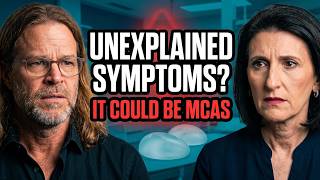
In this interview‑style conversation recorded on June 4, 2026, plastic surgeon Dr. Robert Whitfield hosts mast‑cell expert Dr. Tania Dempsey to explore Mast Cell Activation Syndrome (MCAS) and its relationship to breast implants, chronic inflammation, and a wide spectrum of systemic symptoms. The dialogue begins with a personal back‑story of Dr. Whitfield’s surgical training and his recent encounters with patients presenting with implant‑related illness. Dr. Dempsey defines MCAS as a multi‑system inflammatory condition affecting up to 20% of the population, especially post‑COVID, and explains how mast cells act as first‑line defenders that become chronically “leaky” in MCAS. They enumerate the most common symptom clusters (fatigue, anxiety/depression, migraines, GI dysmotility, POTS/dysautonomia, hypermobility/EDS, skin eruptions, chronic pain, and mitochondrial dysfunction). The conversation then shifts to triggers—environmental mold, organophosphate pesticides, hormonal fluctuations, insulin resistance, biofilm‑forming bacteria on implants, and chronic infections. Dr. Dempsey describes diagnostic work‑up, including consensus criteria, laboratory panels, and emerging biomarkers such as oxylipins. Treatment strategies are reviewed: antihistamines, nutraceuticals, GLP‑1 agonists (which bind mast‑cell receptors and improve insulin resistance), hormonal balancing, sleep hygiene, stress reduction, air‑filter use, and targeted removal of triggers (e.g., capsulectomy). The hosts discuss research evidence, including mouse models showing mast‑cell‑dependent weight gain and human capsular tissue studies revealing plasma‑cell‑rich, organ‑rejection‑like responses. Practical considerations for anesthesia, POTS management, and patient counseling are highlighted. Finally, Dr. Dempsey shares how patients can access her expertise via Instagram, her website, the Mast Cell Matters podcast, and an expanding clinic team.
Chapters
All right, welcome to the show, Dr. Dempsey. We had this, um, I, I hit you up on Instagram and then we met last night at Dave's conference and we were just chatting about our patients. And so Dr. Dempsey is a mast cell expert and I've had this ongoing thing with mast cell activation syndrome. And as we talked about last night, it was not a factor in my training. So I trained from '96 to '02 in general surgery. A lot of things changed then. Yeah, laparoscopy came into, uh, like standard of care, we'd say, and sentinel lymph node biopsy for, uh, lumpectomy, deviating away from modified radical mastectomy and axillary dissection. All that stuff happened in the span that I was training. I started one way Got very good, and then kind of halfway through, everything was adjusting and changing. And it wasn't until 2012 that I even got introduced into the concept of— like, I talked to you about eosinophilic esophagitis myself.
Yeah.
And then now there's not just EOS, there's all this mast cell activation, POTS, all these things that I get asked about all the time as a plastic surgeon because I explant you know, patients for breast implant illness. So that's a kind of a long-winded segue into this, but you were talking to me about how you work your patients up. And maybe for everybody listening, like, what does mast cell activation look like when it comes into your office? Because I've always, you know, interviewed people, they tell me clinical diagnosis, but you turned me on to some other things. So I wanna hear all about that.
Okay, okay. So let's start with mast cell activation syndrome is a multi-system inflammatory condition. And it looks like at least 17% of the population has it, maybe more, closer to 20 or even more after COVID and the vaccines and all that, right? So I think it's rising. That's number one. They're coming to me 'cause I'm an expert. So they're coming in with a variety of symptoms that don't, makes sense to the conventional doctors, right? They have symptoms that involve many, many different organs and systems that theoretically wouldn't happen, again, based on our medical training, right? So they're often gaslit, they're often told that it must be in their head, right? And the reason this happens is mast cells are really, they're your first line of defense. So anything in your environment on the outside, in your environment on the inside, they're gonna react to. They're the soldiers that are going to protect you. And so they're actually, they're really necessary. Everyone has them. And when you get an infection, they'll come out and fight. If you have something internally like an implant, they'll come out and fight. So they're fighters. But, you know, the problem really is when it becomes a syndrome, mast cell activation syndrome. So regular people, They get some, they have regular mast cells, they get infected, the mast cells come out and fight, but when the infection is done or the assault is done, they'll come back and they'll kind of hang out at baseline and wait for the next assault. People with mast cell activation syndrome have already a low-level amount of activation of these mast cells. They're leaking at baseline. And there's probably a variety of things that have happened over the course of their lifetime to bring the mast cells to that state. And then they get implants or they get exposed to some major infection or they get exposed to an environmental chemical. And those mast cells, which were already abnormal and already ready to fight, they fight really hard and they fight and they release all these mediators, these chemicals that are really inflammatory and wherever they're being released, they're gonna cause a problem. But they're everywhere in the body. They're literally every— they're in the veins, they're in the arteries, they're in their digestive system, they're in the respiratory system, they're in the skin. And so really, and the genitourinary system, the uterus, the bladder, the vagina.
Is there a particular system that has a higher concentration or organ system?
Not that we know of. And I think it may differ from patient to patient. But basically, anything that's an interface with the environment is going to have a lot of mast cells.
The surface area of the gut is going to be outside of the skin, probably the largest surface area.
Probably. I mean, I would guess that that's true, and which is why we see a lot of gut issues, which we can talk about. About, the nervous system is the other place. They literally line all the nerves.
Yeah, harder to quantify the surface area of the nervous system.
Right, exactly. So, you know, so— That's pretty tough. Yeah.
Okay.
Yeah. So the issue is, right, patients come in with these variety of symptoms involving multiple organ systems, and it can really vary. You know, some patients have milder symptoms and are more functional, to the other extreme where they are definitely sicker. And sometimes bedbound. So the spectrum is a syndrome, not a disease, right? So you can see a lot, really a large variety of presentations. But if I have somebody who comes in with what sounds like mast cell activation syndrome, sure, there's the clinical diagnosis. So I'll say, "You know, I think this could be," but I like to prove it.
Before you do that, let's do the top, like your top, 10 most commonly your patients have symptoms. Like, I have a whole, like, top 10 list. And I'm curious because I'm sure some of it's going to overlap quite a bit. But for everybody listening, what are the top 10 things that your patients are presenting with that really are limiting their activities, lifestyle, and making it complicated for them?
Yeah. Okay. I think top 10 would be anxiety. And/or depression, migraines or chronic headaches. Chronic GI issues, bloating, diarrhea, constipation, you know, difficulty tolerating foods, food sensitivities. Those would all be like in the GI realm. Definitely things like POTS or the static intolerance or some kind of dysautonomia, very, very common. Not always, but, but commonly associated. Many of the patients have hypermobility, so they have joint issues, they have connective tissue issues that may be associated.
That's an interesting—
Okay, so that's like the triad that we sometimes refer to: MCAS, MCAS, POTS, and hypermobility syndrome, or EDS, which we can talk more about. And then, you know, then we see a whole host of these other symptoms. Skin is very common, itching, Hives, eczema, psoriasis. I can throw that all into the skin bucket. And then other common symptoms. Pain is a really common symptom.
And it's chronic. Like fibromyalgia.
Yeah, it can be like that. I do believe that fibromyalgia is in fact MCAS. So they have often been labeled, you know, so they have this chronic pain. It could meet the criteria for fibromyalgia or it just could be that they always say that they're in pain, their body internally feels pain. So pain is tough because of the nerves and the mast cell relationship. So I don't know if I got to 10, but, you know, that's—
Well, a lot of ours overlap. Certainly, I think for us, fatigue is always number one.
Oh, fatigue. I should have mentioned that.
Absolutely. That is overwhelmingly. So we have so many people with mitochondrial dysfunction.
100%.
Yeah. And/or from lots of, a variety of reasons. Certainly anxiety. All the GI things like you mentioned. That's why there's so much overlap in this now. Um, the hypermobility thing is interesting. Uh, yeah, I was just curious because, uh, like we talked about before, like the symptomology has— they overlap a lot with the patient populations. And I see more and more patients who have been given the diagnosis of Mast Cell Syndrome and have implants. And so they're trying to like take things off their plate and away from them that could trigger them. And I recently had a patient with POTS and POTS was extremely frustrating because I don't have a lot of experience with it. Right. And then of the patients we've taken care of, there's been like a very limited amount of sample size to draw any conclusions from responses. So I had one patient with like a moderate response and I have one patient who's like, oh my gosh, my blood pressure is fine now. And I'm like, well, I don't know what to do about that. That doesn't really solve the problem.
No, but it does seem that there's a good subset of patients with POTS who have MCAS. There are other forms of POTS, and I'm always careful to say that because I know sometimes the audience gets a little frustrated because there may be people who have POTS who don't have MCAS. Possibly, possibly. And there are other reasons that you can get POTS, but generally in my patient population, I'm, you know, they're coming to me because they have symptoms that resemble MCAS, and, and if they have POTS, I'm assuming that there's a correlation. And so, uh, for some you can definitely target the MCAS and their POTS can get better. If the, if the MCAS, if the mast cells are driving that because they're in the nervous system, they're in the vasculature, so if you calm them down, that a lot of them get better. Sometimes they still need treatment directed at the POTS because often it's because there's maybe still mast cell activation happening because there's something in their body or outside like mold or whatever that is continuing to spur on the mast cells. And so like we always go back and forth, okay, they need like a Band-Aid for POTS, but I'm still working on their mast cells, but there's something else that's making their mast cells continue to activate.
So now you're going into like the triggers. Yes, we have a lot of patients who— I've lately— well, I had a number of patients come who were nurses who had implants and had been given the diagnosis of mast cell syndrome. And we're going to talk about how you have quantified that, but they didn't have any— there was no laboratory analysis done. It was a clinical diagnosis, which based on their constellation of symptoms and what was going on makes, you know, right sense. And then I was in my anesthesia team, which everybody's worried about anesthesia for obvious reasons. We have a great team, so they work really hard to eliminate triggers, right? Basically. So maybe like give us some ideas about triggers. I know the diet's a big trigger.
Yeah, yeah. And the triggers can sometimes be really difficult to isolate for some patients, right? So I can imagine. So we You know, we think, you know, I always go through the common things, but there are things that happen internally that we can't control. So, you know, outside triggers, mold is very, very common. A lot of patients are living in mold and they get almost like a sensitization where they're sick, but they don't even realize. They can't smell it. They don't realize that there's something in their home.
But you think cognitively they start having a lot of trouble?
Yeah, yeah, yeah.
And I think that is the case. The mold thing is— really difficult to talk to a patient who has a bad mold problem. They just don't, like, retain. Yeah, they can't really synthesize connections. Yeah, yeah, it's very— I found that to be extremely challenging.
But yeah, yeah. So, right, so that's a huge trigger, right? And if I can't get the patient out of their home or office or wherever this is happening, that's going to make it really, really difficult. Other triggers, you know, people who live near golf courses where they're spraying pesticides. I've seen that as a big trigger. These are big things.
Organophosphates for everybody listening.
Organophosphates are huge. Yeah, yeah. And then now linked to Parkinson's, right? So, which I would say is probably related to mast cell activation syndrome too. But the reality is, again, there's lots of these external triggers. Stress is a huge trigger and traumas and things like that, we know. Internally though, hormonal changes, Imbalances, hormonal changes for women in puberty, in perimenopause, menopause, those times can be really tricky for women. They often are, you know, flare if they have MCAS. So getting the hormones under control, insulin resistance is a huge trigger for MCAS and vice versa. MCAS is often a cause of insulin resistance. And so there's a bidirectional relationship there. And that, so blood sugar regulation is often can be triggering.
So now you're going to get the— do the GLP-1s help mast cell activation syndrome?
Yeah.
Because they decrease insulin resistance.
But they also bind directly to the mast cells. Mast cells have GLP receptors and GIP receptors. So it's literally just binding and sending a signal, stop. That's actually helping the insulin resistance as well because now the mast cells are not activated. It's really fascinating. You know, they did the study in mice. I like to talk about it because it's just like, it's mind-blowing to me. They had two sets of mice. They had mice that were raised free of mast cells. So I don't know how they do that, but they're rats with no mast cells and then rats with mast cells. And they fed them a standard American diet, high-fat Western diet.
McDonald's diet.
Yeah, pretty much. I don't know what you do for rats, but, or mice or whatever. I think they were mice. So what happened was the mice without mast cells did not gain weight. And the mice with mast cells gained weight.
So they genetically altered a group and removed their mast cells.
Yeah. And so what they were trying to prove is that you need mast cells to be insulin resistant and to gain weight.
Yeah, I didn't, I didn't know that paper had been done. That's very interesting. Yeah. Okay. Yeah. So if that goes hand in hand, that will explain a lot then. And certainly that goes to how poor the food supply has been over the last of increasing over the last several decades.
Oh my gosh.
And all the glyphosate, I'm sure.
Right. So glyphosate, then we have to think about parasites. We have to think about other chronic infections, viruses, vector-borne infections, Lyme, Bartonella, Babesia. I mean, these are all triggers that just keep the immune system revved up.
Yeah, it sounds like we share exactly the same avatar. Mine just happens to have gotten device, which most people don't understand. Like, a device has a lot of surface area to interact with your tissue, and if it's smooth, that's the least amount of surface area. If it's textured or microtextured, when you look at it under a microscope, it's like looking at the, you know, the Rockies, right? There's all this surface area to interact with your tissue, and some patients really have an upregulated response. There was this paper done last year in Denmark It's fascinating because just like the mice paper, this was a paper that had never been done before. And it was actually done in humans. And so what they did was examine patients who had tighter or thicker or firmer scar capsules around the implant. And they found at the tissue level, when looking at RNA and protein, they had upregulated plasma cell, B cell, and T-cell response. Now, the traditional response is upregulated T-cell response, foreign body reaction. Sure. Histiocyte formation. All these things are standard. Splinter in the finger, get a bump, look at it in a microscope, you'll get giant cell histiocytes. All the standard foreign body reaction. Okay. This is very different. This mimics organ rejection.
Wow.
So in a certain subset, and we talked about this a little bit, and I always believe that You can't pick your parents and you can't outrun a bad diet. So there's going to be certain things that from an inherent standpoint are going to make you more susceptible. Yeah. Yeah. And some things we can work around, others are going to just put us at a little bit higher risk for some of these things. And I always like to tell the story of Joseph Murray, who did the first kidney transplant. He did it in identical twins, Siamese twins, because you needed no immunosuppression. They didn't even have immunosuppression in the '60s, right? So then the next step was to do non-identical twins. And back then you had ionizing radiation. Not a great source of immunosuppression because it causes other problems. So they obviously got rid of that when they could. And then the final step was a cadaver kidney. And he did that. So he launched transplantation and really immunosuppressive therapy with— they had azathioprine and prednisone, I guess.
Oh yeah.
But the point is, like, your thymus teaches the T cells to recognize self. And everything else is considered foreign. And so the genetically identical twin, obviously, Siamese twin, just exchange parts and hook them up and they work. Everything else requires immunosuppression. So the devices, and I'm speaking about a breast implant, so the titanium and all the other things are very different. I get asked questions all the time. Is this happening with every device? And we can't compare a silicone elastomer shell to a titanium hip implant.
It's just— you can't compare, but that does pose a whole different set of problems.
This particular one, its relationship to breast tissue that's hormonally active, that has, uh, we talked about a lot more fatty acids around it in the form of oleic acid. So That study is fascinating because it is showing that you're having this upregulated plasma cell response. So that creates— plasma cells create antibodies. And so everybody's always asking me, can these cause an autoimmune reaction? Well, autoimmune means your body's attacking itself. But if these things are creating antibodies, it's going to mimic probably that kind of response at the tissue level. Absolutely fascinating stuff.
It's— that's great. I would love if they could stain, use a CD117 stain for mast cells on that and figure out what the mast cell relationship with the plasma cells is, because we know that mast cells do interact with the adaptive immune system directly and indirectly. So they can actually send a signal, make these antibodies, don't make these antibodies or whatever. So I wonder how much the mast cells are recognizing this as bad foreign, etc. And then, and then, and then spurring the other.
Soon seen at Indiana University, wrote an R01 for this purpose. Okay. Not specifically mast cells, but like I had read this paper preparing a talk for capsulectomies because there's controversy about capsulectomies. So I don't believe there's controversy. It's just folks want to make controversy. And I sent him a message like, oh, did you read this paper? And he's like, oh yeah, I already already read it and submitted a grant because that's the next phase. So I'll message him after we get done that he should be looking at that.
Yeah, happy to talk to him.
That marker, because if it's going to be that pivotal, he should look at it. And he's more— he's the one who found oxylipin tin home. So he's the person who discovered oxylipin tin home from biofilm interacting with the oleic acid in the breast tissue. So the This is probably going to be that Staph epidermidis, Acutibacterium acnes. And so I don't know if it's mediated through a mast cell response. I don't remember that from this paper. It activated T-bet and changed macrophage polarization. So that ended up stimulating and giving you many of the symptoms that we both hear from our patients in that group. And so it's not a commercially available biomarker, obviously, because that was done in a research environment. But it's oxylipin tinham. And he profiled a whole series of oxylipins, but this one is the one that they found the study was highest. Interesting. In the very— how it correlated to symptoms, I don't remember exactly, but it was the most elevated. So it makes sense. You have the interaction between the biofilm and the oleic acid that gives you the downstream change in macrophage polarization. That leads to more symptoms. And then this new paper shows that certainly some patients have a much more vigorous response at the tissue level, which makes sense because we're all very different. Of course. So bioidentical diversity leads to some differences. And we are always taught that thick, firm, the collagen sac that forms around it with secondary problems with like bleeding, or infection, of course, or, you know, they used to tell us some people just form more scar tissue. But, and that's basically a biologic diversity.
But you know what, but what helps in terms of forming fibrosis and scar tissue is mast cells are involved in that process, right? So that's why you have to look—
So is that like an HLA problem that we don't know about?
I don't think it's HLA, you know, and that's, I think, what we need to study. I think we need to understand the genetics better. But right now, I think there's some susceptibility coming from somewhere, right? That's what we don't understand completely. But there was a paper by Dr. Eva Nagy, who's in Sydney, Australia, and she has an interest in this as well. And I would love to connect you because she published a paper that showed increased numbers of mast cells in the capsule on removal. So, you know, be interesting to see like how she had— she had the pathologist, she worked with a pathologist to get that information. And so, you know, that may be something that's a next level here that needs to be done.
Well, you know, there's this— we'll bring it up again. There's this capsulectomy controversy.
To me, it's not really a controversy.
So all of these things, are not autologous, so they're not your own tissue. Your body forms scar tissue around it to eliminate it from contact, but the collagen sac that it forms is not impervious, so signaling happens. So if you were to leave debris from the shell, which has got a whole host of heavy metals and other, you know, products in, in the curing process, your body's still going to interact with what's left. And if it's ruptured and left behind, or if it's got biofilm, or a combination of those factors, then the signaling that we're talking about is still gonna happen, right? It's not going to change, right? And if you have those folks who have that upregulated response to the device, or the debris, or the whatever, I mean, you have all these T-cell receptors everywhere to protect you for a reason. And I don't think that it should be that controversial. It seems a bit odd to me that it's such a controversial topic.
I agree. It just makes— it's common sense, right? You would think so.
Yeah.
Well, but I think there are some people who like to, you know, invoke controversy.
Well, I've been told, you know, it's too much surgery or it's too— It's unnecessary. They— the, the funny paper that they quote has like 30 patients or something, and I was like, oh my gosh. So like 300,000 people get implants in the United States annually, 2.2 million worldwide annually. So we're going to base a decision on 30 subjectively followed for symptoms? No, I mean, that paper that we published 6,694 PCR-tested samples, of which 29% had bacterial contamination. And so that's roughly, you know, we'll say 1 in 3. And previous papers had been published and they said it was up to 48%. So I thought that was way too high in my experience. So we published our experience and I did not do the data analysis. The third-party lab testing company, MicrogenDX, out of Texas does our PCR, has done all of them since 2021. Okay. They did the analysis. I mean, I don't know the analysis.
They did it.
And it is what it is.
I don't—
I have some people like want to argue, but I'm like, I don't know. What do you want to argue about?
Right, exactly.
I mean, I didn't— this is what it is. We take them out, we send a sample off sterilely, and they analyze it. It's not that complicated. Right. And, um, when we talk about mold and people are super concerned that saline implants have mold inside of them, and we tested all of these devices, and in the first 1,000 cases I did, we had a handful of patients have fungus, mostly people from Houston and, um, people who did strange water-related activity. Were soil-related things.
Okay.
Like they did Spartan racing or they did triathlete competitions.
Right. So they were systemically exposed.
They get in and out of water.
Yeah.
Running on the ground, getting micropunctures. I mean, there's all sorts of reasons people can get stuff, but on an everyday basis, it's always those Staph epidermidis and Cutibacterium acnes. Really high concentrations of those are in our skin. And then people always ask me like, oh, how is this happening? Is it happening when I get them? And the short answer is no. Like, every device that's placed in the United States— and I'll speak for the United States— is double packaged. So the staff in the operating room could potentially contaminate it by somehow breaking the outer package and the inner package. But like, if the outer package is damaged, they immediately don't use that implant.
Oh, I see.
So they know there's a problem, or they suspect there's a problem, so you would not use it. Then if you gave it to a surgeon, somehow the surgeon can— could contaminate it upon placement. Those are super low now because everybody's got a protocol, right? They change gloves, the skin's protected, the orthopedic guys are wearing spacesuits. I mean, everything's like Obviously, a lot of precautions are taken. People are worked up for pre-existing conditions or MRSA, and they're, they're treated with, you know, sometimes Cibiclins or, uh, Bactroban treatment, all sorts of things to help reduce the potential one-time issue when it's, you know, the, the initial operation. It's like, I'd like to say, you know, Dr. Gipsy, the thing that causes this is is this 4-letter word. It's called life. And the longer you live, the more exposures you get over time, the more opportunity you have for pneumonia, urinary tract infection, GI problem, skin infection. That's how you get bacteremic. So blood gets in the— bacteria gets in the bloodstream, you become bacteremic. And because this is, you know, like my cup, foreign, it sticks to it.
Yeah.
And your body can't surveil it. Because it's not you, it's not self, it's not recognized as self, it just hangs out. And Cutibacter magnus and Staph epidermidis readily form biofilm. So biofilm is just like the plaque on your teeth, a bunch of little bacteria hang out and they can signal back and forth to the tissues, and that signal turns on all the things, maybe including mast cell activation. And then you get what you get, which is a chronic inflammatory process of which a device is playing a role, but it's not the only thing. And I tell everybody it's not the only thing.
For sure.
So don't ever think that I'm going to solve all the problems. But we have a big program to help those patients. So we have a whole functional medicine team in our place. And, uh, you've got to walk around a little bit. But, um, well, what, what would be like some takeaways that if people are concerned about this, they could start doing now, and certainly we'll tell them how to connect with you, but what can they do like on a day-to-day that's maybe simpler for them to try to see if they can help lower their baseline inflammation?
Without removing the implants, you're saying? So they have implants.
Well, we'll do yours and then I'll do mine.
Okay, so my patients, some have implants, some don't, okay? But I do have my share.
Oh, I bet you do.
Of course. And some of them are, are, are scared or nervous or, you know, whatever. So if they do have implants, we have a conversation, right? And with any patient where I know that there are still triggers, so it's either the implant, that implant, or it's an implant. I have a patient who keeps rejecting her hip replacement, the titanium. She's a young woman in her 30s.
Oh my gosh.
And she's rejected this hip so many times and she needs surgery again. And the surgeon's worried it's not going to take. So this is part of the problem we've had. You know, we've seen like mesh move across the body from like a hernia repair. The mast cells are trying to attack, but some patients have chronic infections or they're living in mold, right? So it's a constant conversation about eliminating triggers. We always talk about what can we do? What are the low-hanging fruit that we can remove? Because some of these things are bigger, right? So whatever you can do on a daily basis to remove the obvious triggers, right? That's what we work towards. And then we, you know, ideally I'm diagnosing them officially according to our paper that was a consensus to criteria and they have a diagnosis. So now we're going to— and some of them don't get a diagnosis. I still treat them if they're clinically, you know, looks like they have MCAS. Okay. So I'm not going to exclude them. But if they have the diagnosis, maybe I have more options, let's say. But basically, you know, I am gonna trial them on a number of things while I'm also always thinking about root cause. I'm always thinking about what is, you know, spurring these mast cells that can constantly react. So it's a little bit of a dance is kind of how I describe it. You know, we go after the mast cells and we try to calm them down. Sometimes they're antihistamines, sometimes that's pharmaceutical, sometimes it's nutraceutical, sometimes, right, there are a number of things that you do to send that signal to the mast cell to calm down. Right. GLP-1s are turning out to be incredible, mind-blowing, in fact. I've just never seen a drug work so well in so many patients because I use a lot of things in these patients. And that's like the one thing that I can say, you know, we had, you know, a large number, like 89% in our paper, people who responded to GLP-1s. And we had 47 patients, a small, small case study, but still. So I'm thinking with each patient, what makes the most sense with trialing while we work on the big things that I know is making it worse? I think the important point is that a lot of these patients will continue to have mast cell activation syndrome. I'm not saying that so people lose hope. There's so much hope, but it doesn't change. Their immune system doesn't change. We just want to get it less reactive. So that they can live a full life and be able to tolerate things in their environment like they can't. But to understand that it's always there, we're just removing layers and we're getting them into a good place where they may not realize they still have a mast cell problem. A lot of people are like, "I'm cured." That's amazing, but it's really rare. It's usually that they get to a point where they're in remission and we've eliminated all the stuff that's really— Driving it.
I think that's a great explanation because the, you know, the avenue that you arrive at when you come to us is you've done those things and it's still a problem and you've had the conversation or another provider has or the client's just come to the conclusion that they have to do this part now. And so I get asked a lot, you know, what are the basic things? And I always go back to sleep and trying to get people out of the high cortisol states and try to sympathetic—
the high—
they have so much overdrive.
Yeah.
That, you know, sleep and getting up and maybe getting some real sunlight, not the fluorescent kind, helps with their cortisol. And then just concentrating on things that go in and on their body., you know, their, their food and their fluid intake. And you mentioned mold, but we haven't talked about air filters. I'm a big, like, air filter person.
I am too.
Yeah. So those are the, the ways we start. And, you know, just like you have a book coming out, I've written a couple books, and we have a bunch of shows, and people can find us on the shows that we've done or our shows. And yeah, none of that costs anything. It's just ways to begin. Like, it's hard. Like, I'm sure people just get caught up in, like, so much stuff to do and try. And if they really are stuck and needing an expert like you, how can they contact or find you to learn more and maybe interact with you?
Yeah. So, you know, I'm pretty active on Instagram and social media, so they can find me just, you know, @drtonyademasiMD. My website, Dr. Tanya Dempsey. I have a lot of information about our clinic. Right now, I'm not taking on new patients for the short term. The goal is actually— I've hired some people, I've hired some nurse practitioners. So hopefully, you know, I'm hoping in the next 6 months I can start taking on new people. But right now, I have another doctor in the office, Dr. Larry Afrin, who is one of the, you know, world's experts in mast cell activation syndrome. He and I have published almost 12, I think it's 12, that we're having our 12th paper released in the next few weeks. And so he's an amazing expert on MCAS. If it's an MCAS-only type problem, if the patient needs more functional medicine, then I have another nurse practitioner who's really well-trained. So we're expanding, we're trying to take on more people. I have a podcast, Mast Cell Matters, which we're gonna have to have you on for that. Because it's really an educational tool. A lot of people love that information. And yeah, I think, I mean, I think that's it. But the reality is I want to help everyone, right? Which is why I do these things because I have to educate because there are going to be people who can't come to see me.
Right. Yeah. Yeah. We'll have all those in the show notes. Great. But I think the most important thing is this to obviously, where you continue to try to make a difference by appearances and speaking because you got to spread the message.
Yeah, 100%.
And I'm very glad that I got your Instagram, uh, I know, post because Dr. Dempsey was coming to Dave Asprey's meeting, who's my client and friend and has been in my clinic, and we've done a bunch of different things for him. And she said, "I'm going to be at Dave's meeting. So anybody wants to talk to me, like, send me a message." And it worked out.
I love that it did. Yeah, no, this is a great synergy. And we're obviously, you know, trying to help the same types of patients. So we should support each other.
Yeah.
Thank you so much.
Thanks for coming.







