Fat Transfer Optimization with SHARP
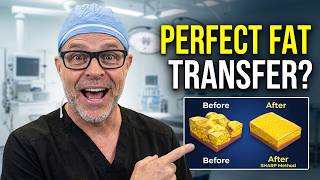
Dr. Robert Whitfield presents SHARP, his fat-transfer methodology that prioritizes pre-operative patient health (nutrition, sleep, hormones, gut status) alongside surgical technique. He uses single-sized cannulas and a gentle pump system for even placement, then combines hyperbaric chambers, lymphatic massage, red-light therapy, and targeted supplements to maximize graft survival.
Chapters
Hey everyone, we're live. Um, it's Thursday night. I know it's a World Cup night. I know the US is playing. It's halftime of the Netherlands, uh, Tunisia game. So if you're on Instagram or TikTok, please chime in. I don't think those are working right now, so I'm going to go live on my phone. I Hey everyone, we're just getting started here. I know it's halftime of Netherlands-Tunisia if you're watching the World Cup, and, um, the US plays at 9 PM Central, so in less than 2 hours now. So I'll, I'll keep tonight's talk on track. We'll let everybody hop on. We've done two talks this week, one in my private community, uh, one yesterday. And, uh, tonight we're gonna go through something I think that's important to share with everybody. So I'm Dr. Whitfield MD. I'm in Austin, Texas. I'm a board-certified plastic surgeon, authored a couple books, I think 15 papers, 4,000 videos, 170 podcasts. So we're gonna try to give you the heads up on what to expect for surgery of any, uh, type. And then specifically, because I do a lot of cosmetic surgery, and tonight we're going to talk about fat transfers as it pertains to how I think about them, what I think is the optimal way to approach a fat transfer. I get a swig of water there. All right, how many people do we have? Everybody's watching the World Cup. All right, share this with your friends, get it spinning around. Let's go. I need a sound check too, so let me know how I sound. Anybody in my community? Anybody online? Oh, Leah, you're not a sports fan. Leah Cormier, you have to reach out to, uh, or we should have you reach out to a patient who has a lot of trouble with their hands like you did. Um, really, you could probably give her a lot of encouragement. If Kaylee hasn't reached out to you, just hit me in the chat and, uh, get it situated. In fact, I got to make a note to myself to remind, uh, Kaylee to do that. Uh, Is my patient, uh, Hallie, on here tonight? I told her I'd be doing a live stream and that Leah would be in our community. Um, I had a great patient who's had a really tough time with a bunch of autoimmune problems, tons of trouble over a number of years, but, uh, we're gonna help sort her out. Okay, thank you, Leo. Appreciate that. Okay, I will, Leo. I, I just sent it to Kaylee. I, I thank you. I've been so busy here. We got the new surgery center open, so I've been there Tuesday. And most of today into the, uh, back at the office in the afternoon. So, all right, how many people did we get on? Let me see. Yep, share it with your friends. We're going to discuss optimization of fat transfer, and we can do it for natural breast augmentation, we can do it for explant, we can do it for breast lift. Yeah, whatever y'all want to do. We're going to do a talk here and then go into my private community, drrobcircle.com. There you can ask whatever questions you want. Um, obviously we'll take some off of Instagram, TikTok, all the platforms, and then go inside the circle. All right, everybody get on, share it around, share it around. We'll try to close— open and close some loops for y'all tonight. At least that's what the kids say. Oh, got a dry throat. I was trying to get a nice backdrop tonight, but I got here too late. I got done with work late, and I got home late, and I got back to the office late, so It's all right. Spread it around, share with your friends. We're going to talk about fat transfers, prep and optimization, do it for natural breast augmentation, breast lifted fat transfer, explant fat transfer, explant lift fat transfer simultaneously, all the things. Now y'all know this is my live stream, but you asked me to co-host. I don't understand. Very odd to me. It's funny. Appreciate y'all asking to co-host with me. I don't know you, so I don't know how I would do that. It's all right. Share this with your friends. Get everybody involved. Come on. Leah's always told me, one of my patients, is eventually, uh, this will be so hard and raucous to deal with, I won't want to do it anymore. So take advantage of it now. It's free. I'm here spending my evening to explain a very fundamental misconception in plastic surgery. So Hi Donna. Hi Francis. Hi Elizabeth. Some of these names, can't. Nurse Abby, FNP. Hi Nurse Abby. Hi Mary. Hi Pili. Hi Lillian. Carol, Lane, Tiffany. Messed up my phone there for a second. Sarah. Oh, Kimber, awesome. Kimber, I used to do, uh, 100 to 150 deep flaps a year. Did that for a large majority of my career and Obviously, you know, doing a deep flap, you need contouring afterwards, and that's what we did, uh, 100, 150 times a year. Also, hi, McCall! Almost opened an office there in, uh, Brentwood. Brentwood, Franklin, Nashville— lovely places, really, really nice. Uh, all right, all right, let's get some more people on. You guys got to share it. We're going to talk about some interesting things tonight. We're going to lay a framework so how you think about fat transfers will make more sense. Good question for everybody: can you do a fat transfer between Siamese twins? Or twins in general. What do you think? Should we do it? Yeah, Nadia, you can do it again. Sure. Thank you, Elizabeth. Share it some more. Y'all gotta share this around. No reason to start the talk without several hundred people on. Let's go. I know it's World Cup night. It's halftime in Netherlands and Tunisia. Tunisians going home and, uh, Netherlands are moving on. The US has already won their group, so at 9 o'clock they're gonna play, uh, Turkey A. Um, yes ma'am, I understand. All my Turkey A friends, I'm sorry, but Turkey is, uh, Turkey has not been good this World Cup. They've had a tough time. Hi Cindy, uh, hi Reggie, hi Kimber. Thank you for reposting, Kimber, I really appreciate it. Yeah, y'all need to repost this. Let's go. Oh, I'm sorry, Missy. Hi Cindy, y'all. If you repost it, we can get some more people on here, have a worthwhile discussion, then people can roll into my private community. Yeah, Hog, I did 9 years of residency if you want to think of it that way. So I don't know how many you've done, uh, and that was before there was work hours restrictions. So consider yourself fortunate. Yep, I understand, Missy, for sure. I was taking care of this problem before I knew what the problem was by doing deep flaps for people with problems with their breast reconstruction with implants. You can talk about that as well. So, all right, you guys can repost and share. That will help get more people on. Let's go. All right. Okay, oh well, I think we're— oh my gosh, is this Mary from Tokyo who, uh, posted for us? Mary, is that you? Oh, Mary is super sweet. Oh, awesome. Y'all don't know how special it is, but Mary follows us on YouTube in Tokyo. Super sweet. Thank you so much, Mary. She's had breast implant illness in Tokyo and they don't believe her, so she follows us on YouTube, which is, uh, interesting because YouTube has censored me for talking about breast implant illness. I don't know if y'all know that. It's kind of embarrassing, but it's the truth. Lisa, we're going to talk about fat transfers. Hey Danielle! I have Danielle on two channels here, so I get to see her on my chat on The Circle and I get to see her on Instagram. Awesome, let's go share it around, y'all! Should share the fact that I get censored on YouTube and somebody in Tokyo still managed to find me on YouTube. So there you have it. You can try to censor quality information as much as you want, and eventually it will be found. Thank you so much, Mary. You are one of the main reasons I keep doing this. You and Leah and Danielle certainly have motivated me to keep going. I appreciate it. Oh yeah, everybody's asking where I'm located. I'm in Austin, Texas. Austin, Texas. For all of you in our country for the World Cup, Spain fits inside of Texas. So why, why am I wearing a hat? Because I operate for a living. It's a surgical hat. I have really long hair. I can take my hair down, then it'll distract everybody. So we're going to keep it focused here, all right? Let's go. You can share it around. We're going to talk about it. Y'all should go on my YouTube channel and support Mary and Martha 518, uh, 5198. So Mary and Martha 5198, they're in Tokyo and they follow the channel from Tokyo, and they, uh, have a tough time getting support um, because it's, it's not widely believed there is a problem with breast implant illness. Kayla, all the lives get posted in my community. They are not all put on YouTube. No, so you have to be a member of the community. All right, I'm having too much fun here, so we're gonna get started. All right, so we're going to start with something very simple. Most surgeons don't typically want to tell you that most fat trans fail more often than they should, and it's not because of a surgical problem, meaning the surgeon didn't quote unquote do something wrong, and it's not because the patient did anything wrong. So what do you think happened? I think everybody should understand that if you don't prepare for a procedure, just like if you weren't prepared as an athlete to come here to play in the World Cup in the United States or Mexico or Canada, you're gonna get found out. And you may be of lower quality, but if you prepare really, really well, you'll have a better outcome from a performance standpoint, and that is no different for surgery. So, patients often ask me, did I get a good night's sleep before surgery? Because that's important to them that I'm prepared. But what we try to do from the very, very beginning of our encounters with patients is get them prepared. Because I've done thousands of the procedures, whether they're explants, fat transfers, breast reconstructions, and the difference between a result that holds for years in terms of fat transfer, a result that disappears in a few months or 6 months, it doesn't really boil down to the technique alone. It comes down to what happened before you got to the operating room, before you got to on the operating room table. So whether it's 2 weeks, 2 months, 2 years out, many of my patients take several years to get here. If it was Mary in Tokyo, she would have to make a very elaborate plan, like many of my patients who come from Asia, to get here and stay here. And I'd rather have her come here to see me because when I go west, I can't, I can't sleep. It's a problem for me. So I love Mary to come visit me here. Um, so tonight we're going to walk through how I approach fat transfer optimization from the beginning to the end. We're going to use a very specific framework that centers around what we call SHARP. And by the end of this, I hope you really have and embrace the concept of SHARP. It's our methodology. It's what I wrote a book about. It's what we practice for all of our patients. So let's get into it. For anyone who is I guess newer to the topic, we'll just give you a little overview. So fat transfer, and for all my folks in Europe right now, that's lipofilling. So it's a procedure where we take fat from one area or multiple areas from your body via liposuction cannulas specially designed for fat transfer. There are different types of instrumentation. We have specific instrumentation designed to just remove fat in the best possible way. So we harvest it— excuse me— process it, and then we have to put it back. So the most common uses are probably worldwide would be buttock augmentation and then breast augmentation. And now with those Zempik face and all the things that the GLP-1s, for all they're good, they have kind of caused a little facial problem. So all the facial people were super busy. So facial volume restoration. So the reason it has become, um, so popular to me personally is it's a natural way to augment an area. So it doesn't require an implant. So there's no foreign material. It's just your own tissue. It's your own, you know, biology, if you will. There is a catch. Fat is not a filler that is like Restylane or Juvederm or any hyaluronic acid, you know, filler. There's tons of them in Europe and in Asia. So The percentage of the fat that takes, the actual fat that survives, really depends heavily on how you start. So I think the classic example is if you operate on someone younger in terms of age, you would typically think it'd be easier for them to heal. And that makes sense. That's because, you know, a lot of things haven't happened to them already in terms of life. The wear and tear of, you know, work or the stress associated with work and family or the problematic issues we have with food today. You can't sue chemical companies, basically. So the ones who are spraying our food supply all the time. So anyway, so all these things taken into consideration, you are a function of obviously your diet, your genetics, your exposures, the things you put in and on your body, the air you breathe, and the fluid you drink. And that's where SHARP comes in. All right. So, you know, the, the program to me is, you know, it begins on the surgical side, fat transfer optimization. Optimization starts with, you know, how I'm gonna harvest the fat. So I use all single-sided cannulas. I use the same size cannulas all the time. I use the same pressures all the time. All this has been worked out over decades through multiple research studies, multiple clinical studies. You know, when I was coming up in the early 2000s in practice, There were debates over how you harvest the fat, how you spin the fat, what should you do with the fat, should you put it in, um, subcutaneous tissue above the breast but below the skin, um, should you do it in the buttock, where should you put it in the buttock. And the important part is you want to be gentle with the cells, you want to control the processing, and then when you put it back You want to have consistent placement. And so when we were all taught, we had to harvest one way, process, and then put back. Typically, we'll go to the putting back part with a syringe. So you had to be really good at placement with a syringe or you got clumpy. Now we have a very sophisticated mechanism where it just gently pumps it back, so it's a much more controllable, even distribution of the fat. And that allows us to, you know, place it back, inject the small amounts across multiple smooth layers. That allows the fat to revascularize in the, probably the most efficient manner. And so that technique does matter. Those instrumentation improvements do matter. And so, you know, the acquisition placement, All that makes a ton of sense. But before we operate on anyone and perform a fat transfer, you know, the biggest thing for me personally is like, what's going on with each of you? Because I know what I'm doing in the operating room. I've got, you know, 30 years of experience, thousands of cases of fat transfers or breast reconstructions or breast reductions or breast lifts or, body contouring or whatever you want. At this point in my career, I've done, uh, an ample number. So what keeps changing is the patient. And so the patient starts out, uh, in a state of health and wellness, and we always want to improve that. So we look at their genetics, we look at their toxicity burden, their gut health, food sensitivities, hormonal balance. And so we'll talk a little bit about toxic burden. So heavy metals, environmental chemicals, PFAS, these accumulate in fat many times. So when the fat gets harvested, you can disrupt and redistribute these and raise the levels in someone's system. So we want to, in a gentle way, do what we can preoperatively to lower that burden. And once again, we have different modalities in terms of protocols for specifics. There's a medical protocol or holistic protocol almost for each of the things we encounter. We look at nutrition. Now, I'm a big proponent of higher protein diets, and I don't care what protein source, it just has to be a good quality protein source. So for our, you know, choice of protein powders in my office, it's just a pea protein, which is easy for everybody. To manage, but you want to get enough protein in someone's diet to put them into what's called a positive nitrogen balance after surgery. So if you don't do that, they stay swollen longer. It's very hard for them to get out of that hypercortisol state that I put them in from surgery. So it's important in terms of both recovery, graft survival, that they have proper nutrition. So I want everybody to, you know, think about, you know, what we've talked about. All right. So we talked about getting prepped. And so we look at toxicity burden, gut health, food sensitivities, genetics, hormonal balance, try to get as many of those things lined up, especially as it relates to toxicity before surgery. And then we want to really reduce the the window for recovery. So we can prepare people, and then the day before they typically arrive, 1 or 2 days before depending on where they're coming from, then we'll go over all the surgical planning. We'll get them accustomed to our clinic and our new surgery center. And then in the office, we have a vertical hyperbaric chamber. We have the Human Regenerator from Germany, which really helps put everybody into a parasympathetic state. Lymphatic massage, uh, from Flowpresso, combined with NanoV therapy and a 6-foot-tall Juve red light. And those are just our in-office modalities. So we are trying to stimulate a couple of things, right? We're going to get you into, um, a positive nitrogen balance as quickly as possible. We're going to lower your cortisol as as possible. And those things allow you to be more efficient in recovery. So the, the recovery process as a whole, you know, there's a lot of, I think, simple mistakes made. And some of it's a little dogmatic. In plastic surgery, we're all taught about compression. Compression is really a static therapy. It's like wearing a pair of tights so you don't swell too much. But in reality, what we want to do is get the fluid out of the tissues in the most efficient manner possible. So we do that through consistent compression of the extremities, the trunk. And we do that with lymphatic massage, via these devices called Flowpresso. And then we combine that with NanoVi, which helps with protein synthesis. So, obviously, we utilize compression, but we don't rely on compression garments. Um, we have a very guided return to exercise program. The main exercise I encourage after this is just walking. That's easy. In terms of, you know, oxygen, we prefer hyperbaric oxygen and we use a vertical chamber. Many of the patients we operate on are having breast surgery, so we like them not to push and pull and be upright, so that's better in that environment. Um, we control, like I said, as much as possible the big burst of cortisol, try to get that lower as quickly as possible. So you let your rest and recover at night. So here's the big hack. Here's one of my big hacks. Pay attention. So 3, 2, 1, stop eating 3 hours before bed. Gotta say it again. Stop eating 3 hours before bed. Stop drinking 2 hours before bed, and then stop screen time an hour before bed. Why? So you need to get in the right state to go to sleep. You don't want to have to get up in the middle of the night and pee. That's why you stop drinking 2 hours before. And that last drink, make that filtered water with some protein, not aminos. Do some protein and then get yourself sorted out for bed. We rest and recover when we sleep. Gotta sleep 7 to 9 hours. Quality and depth are important. Get up. Now you can have water again, electrolytes. Amino acids, proteins, whatever the mixture. And then you start your day, get your breakfast. If you're coming to see us, we open at 10 in Austin. You're going to come in and do treatments. Walking is our exercise during that time frame. It really reduces any problems with high blood pressure, um, high heart rates, because walking is perfect exercise. Go back to my interview with Mark Sisson. He gives a great take on walking. So, uh, one of the two, uh, things too, when you get up, obviously go outside, get some sunlight. That helps reset your cortisol. All right. What else do we have to add for the program? Um, I think one of the bigger things that I have, if we're talking about X-plant and fat transfer with or without lifts. I have on my team multiple people have had X-plant, so it's easy to get support through the team. My clinic, if you read our reviews, I encourage you to, my team is highly rated. If you're not a fan of mine, that's fine. Never say anything bad about my team. They're awesome. And if, you know, we can do anything to help, we always try to do that. It's, it's a big deal to come visit us. So we appreciate and really admire everybody who can make it to visit us in Austin. We're trying to open up our programs more and more and more. The Sharp Method is now ran remote, so you can jump into our group programs as well. So if you want to learn more about that, you can hit my website or go to drrobcircul.com after this. We can have a chat. So I just talked to somebody actually who's recovering a month out from fat transfer. So one of the things about fat transfers you've got to know is think of density in a glass of water. So a glass of water, and we'll say, we'll just say for argument's sake, it's salt water, like would be in a saline-filled implant. If you poured olive oil on top of that, that oil would stick at the top. If you then put some popcorn on the top, that popcorn would stick on the top. The lightest goes to the top. That's popcorn. Think of that as the fat. The oil is next. And then if it was taken, you know, from the body, there'd be like a little bloody fluid there. And then all the, the saline that we use. And so saline is dense. Think of like implants that are saline filled. They're very hard to compress. Then silicone is softer, easier to compress. Fat is the softest. So that tells you that fat transfers can't make you too big. They can't make you too heavy. They can't look unnatural. So those are the types of things that you have to, you know, think about and help with your mindset if you're getting a fat transfer. They're never going to give you the projection or the upper pole fullness that an implant would because That's not natural. Okay, enough of that. Um, so we covered all the high points: sleeping, nutrition, testing, supplementation. We use liquid liposomal supplements because I prefer those for absorptive purposes. I don't over-supplement. I supplement according to genetic pathway analysis from our patients, and they need vitamin D3, K2, glutathione, methylated B, vitamin C. We use carnitine and some mag. Okay. All right, so I'm going to take questions at drrobscircle.com, so it's free to join. Please feel free to hop in there. I hope Mary and Martha from Tokyo hop into the circle because I want to actually have y'all come in live there, and we'll take your questions. I'm going to put it in here so everybody can see it. I spelled it correctly. Woo! Take that. All right. I still have no idea how to do this on TikTok, but I'll try. I think I can write something somewhere. I don't know how to comment on anything, but I'll try. See if I can make a comment. I'm so bad on TikTok. I'm awful on TikTok. Can I make a comment? Uh, So bad. Shoot. It's terrible. I'm terrible on TikTok. Oh, I'm gonna make a comment. There we go. Dr. Rub's circle.com. All right. I know halftime's probably over for the Netherlands and Tunisia. And we're playing at 9. Y'all got to support the home team. If you haven't been to a World Cup game or watched a World Cup game, watch it tonight. Support the team, okay? I went to the home opener in Los Angeles with my family at SoFi, or Los Angeles Stadium as they're calling it. It was a bucket list moment. I got to take my family. If you go to social media and look on my Instagram, it's pinned to my grid. Uh, nothing more important than my, uh my family, my, my team, and my patients. So head over to drrobcircle.com and I'll take your questions live there. Thank y'all. All right, all right, all right, all right, all right. We are in the circle, so did Mary and Martha 5198 join the circle? That's my only question. I gotta see if they're joined. Oh, I don't see them. Oh no, oh no. All right. Shoot. Okay, all right, bye Mary and Martha. So I'm gonna shut down the streams in, um, Rumble and Facebook and LinkedIn and X and Substack. Oh Lord, what am I doing? Hi Danielle, I'm trying to see what I did wrong with one of my players. I've not done a good job about posting the videos, so I'm getting in trouble a little bit from the community. Hmm. There we go. No. When are you coming in to visit us, Daniel? There we go. I left the YouTube on for now because Mary and Martha from, uh, Tokyo were on. Ah, and I did not want to leave them out in the cold, but I'm gonna shut that down now. Oh, I wonder why. She says she can't join the circle. That's weird. Oh, you came by on the Friday— the Friday I'm out of town in the last 6 months. Oh my gosh, I'm sorry, Danielle. I'm sorry. I'm a little confused. Mary and Martha can't join the circle. I don't know why. That seems weird to me. I wonder if it has to do with, uh, them being in Japan. I don't know. It's unusual. I don't know why that would be a problem. Oh, they say they joined. Perfect. Let's just see if I have Nope, I don't see him. Well, let's see if they're in the chat. We're going to see if Mary from Tokyo is in inside the chat. I can, I can see that. Well, they said they got in. There might be a big delay though. You can't see me? Why not? Why can't you see me? Right here. Huh. Yeah, I refreshed the screen because the— there's the follower from Tokyo who were— they were having trouble getting in. I didn't know if that, um, that was the problem. All right. I don't— we're going to see if they can log in and log out. Okay. Do you all have any questions, Ms. Danielle, Ms. Leah? And I'm sorry I missed you when you were here. Aaliyah, sorry about that. I have too many windows open on my computer and it's causing a ruckus. That's all I got to say about that. It is causing a complete ruckus here in my, uh, system. And I moved— there it is. I did by refreshing it. Sorry about that. Yeah, I wasn't trying to— I was just trying to help the folks and see if they were able to get in, um, to the to log in. I think that was what I did. Sorry. 3 sets of implants. Oh my gosh, Danielle. Danielle's been hiding this from us. She's just been waiting to drop it on me. All right, all right, it's okay. Well, welcome Mary. I cannot see everybody in the chat. Let me see. Let's see. I don't know what time it is in Japan. I should look. I hope it's not horrible. It is. Oh my gosh, I don't know what it is. I have too many things open right now. Tokyo. Tokyo is Oh, it's 9:46, uh, in the morning, so it's not bad. It's early there. Awesome. Um, okay, well, do y'all have some questions for me? Yeah, yeah, I thought it was, it was, thought it was a weirder time, but that's like a perfect time. Uh, it's not like super early and it's not like midday, so it's not like a big mess. Mary, can you hear us? Uh, are you able to join us on the live? I left the YouTube running and, um, I, I believe you're still on YouTube. I don't know, I don't see them now. Maybe they had to log off, I don't know. Okay, I'm gonna end the YouTube stream.







