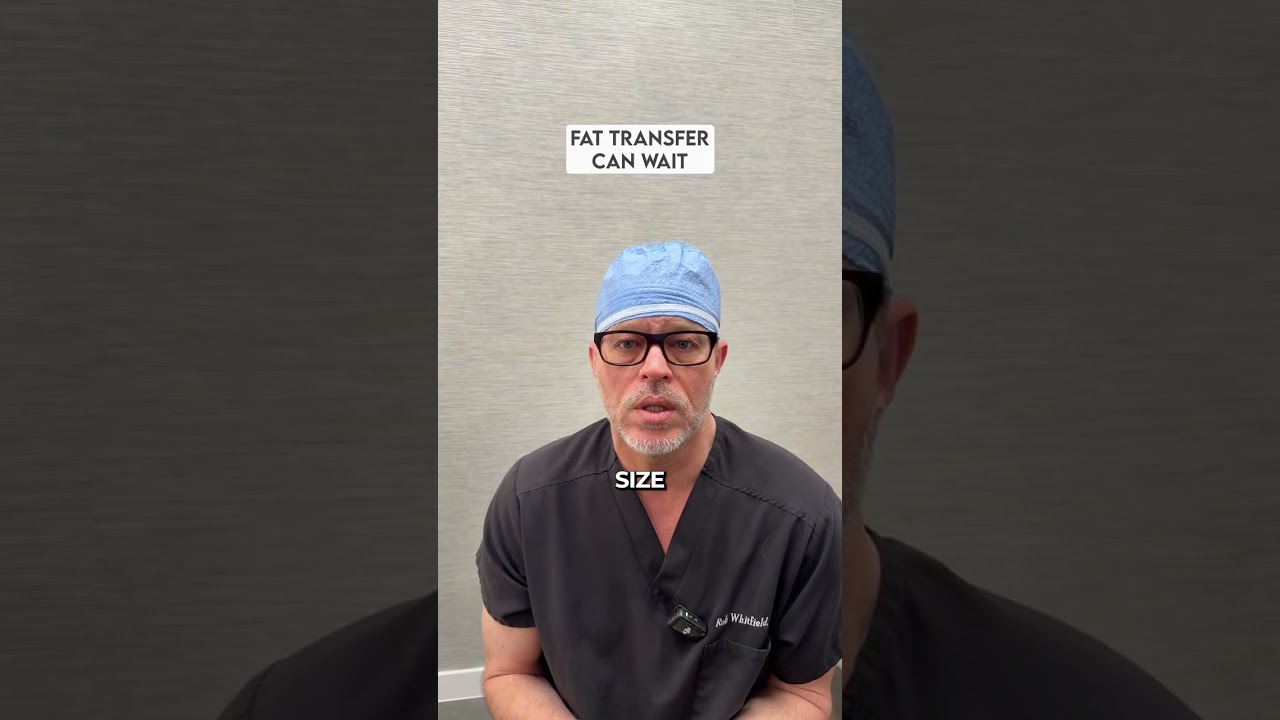
Dr. Robert Whitfield explains fat transfer for breast augmentation: the harvested fat goes into the subcutaneous layer beneath skin, not inside the breast itself. Success depends on respecting fat as living tissue that needs blood flow, plus post-op nutrition with enough protein to support healing.
Chapters
The acquisition of the fat, the processing of the fat and the placement of the fat back is actually relatively straightforward. Fat is a living tissue, so when you remove it, it has to heal into position. So always put it back in the place where it belongs with other fat. So I don't put it in the breast and I don't put it in the breast pocket. So when we take all this out, we don't then put the fat back where we just took this out of. I think there's a somewhat of a misperception about that. So the skin that covers the chest covers the fatty layer. So we put the fat in that layer. So it's beneath the skin above the breast tissue. It is beneath the skin in the fatty layer above the breast, not in the breast. So the acquisition of the fat, the processing of the fat and the placement of the fat back is actually relatively straightforward. We want to reduce their systemic inflammation, really try to get them feeling better, optimize their nutritional status whenever we can. I'm a big proponent of higher protein intake. I don't think in general we get enough protein in our diets.