Her Lymph Node Swelled to a Golf Ball Every Month. Doctors Had No Answers. | Heather Buckley
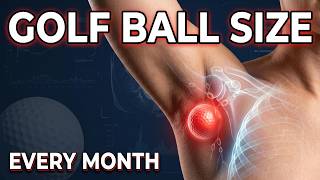
Heather Buckley's lymph nodes swelled to golf-ball size every month for years after breast implants, with no diagnosis. After her daughter died of cancer in 2017, she explanted and worked with Dr. Robert Whitfield on detox and recovery protocols that addressed her genetic detox challenges.
Chapters
I trusted blindly. Had I known then what I know now, I definitely would have much rather have chosen a lift and just kind of rocked that look without putting foreign objects into my body. Of course, I would have a lymph node in my left armpit, and that came probably 7 to 10 years after the implants. So it would swell almost to a golf ball size, and so that was alarming. She just said, well, I guess this is just what your armpit does now. 2017, I end up losing my 13-year-old daughter to cancer, and that was absolutely devastating in every sense— emotionally, physically, spiritually. That was definitely the emotional root of a deep dive into a wellness journey. It stopped me in my tracks. I looked at my awesome, supportive husband and I said, I need to get these breast implants out.
I have Heather with me. We've been chatting offline. This is a wonderful patient of ours who's really graced us and is going to share her patient experience. So welcome to the show, Heather.
Thank you. Thank you for having me.
Now Heather's really close to me, but I don't get to see her very much because she's, she's in Houston. But if anybody knows Texas, there's a little bit of distance between all the cities here. It's, it's somewhat of a challenge. But for, for Heather, I mean, she shared her experience online and It's a unique one for sure. I haven't had one specifically like Heather's. And Heather, can you kind of tell us as you were growing up, 'cause I'm always fascinated by the stories about development and like either appearance changes or what tipped people to think certain ways about appearance or what they saw visually and how they either got to an augmentation with a device? Did they ever hear about a fat transfer? Were there other things explained to them? I'm always interested in the conversation around everything.
Gotcha. Okay. Growing up, I was very small-chested. I was a gymnast, very sporty, and I was fine with that. That's all I knew. So I never dreamed of having breast augmentation. Fast forward to my 20s. You know, like a lot of women, my decision for breast implants came from a very normal season of life. I had children, and during pregnancy and then breastfeeding, I went from that small B, maybe small B, maybe A, to a full D. So that was drastic. And then, as you can imagine, after that season, I looked a bit deflated, droopy, and that's when I wanted to address those concerns of just the way that looked. And so the standard answer back then, that was 2011, seemed to be breast augmentation, breast implants. I was never offered a lift, and I definitely didn't know about fat transfer. So, I trusted blindly, you know, that standard answer. Had I known then what I know now, I definitely would have much rather chosen a lift and just kind of rocked that look without putting foreign objects into my body, of course.
Right. And, you were very, very probably low BMI at that point.
Yes. So I don't even know that fat transfer would have been an opportunity for me, you know? Yeah.
Yeah. I was trying to make sure everybody understands it. Like, so when I was seeing patients, if they wanted more of a cup size change, I would discuss obviously back then if it was a reconstructive case, the options, and then if a cosmetic case, same thing in terms of options. If it was like a cup size was fine, And, you know, that also could be done in combination with a lift. That was a nice solution, you know, for that problem because it's an autologous reconstruction. And we're going to discuss later some new literature that came out to further support that kind of thought process. But that's a, like, low BMI patient wants a change in volume, didn't, you know, like you said, from a sports standpoint, just didn't really probably develop that much and always had a really low BMI from what you were doing.
Correct. Yes.
Okay. So you get an augmentation done and I've, Heather, I've had people tell me right away they didn't feel well. I've had people tell me over time. That length of time could change, you know, as little as that first year. To up to, you know, 10, 15 before people start really experiencing what we're going to call symptoms of chronic inflammation.
Right. So mine was years later. I think I had some subtle signals, but I didn't connect the dots at the time to breast implants. But what I do remember experiencing, the ones that stood out, was I would have these vague periods of feeling unwell. Generalized aches, almost as if I was getting the flu, but I would never get the flu. And so that was just interesting. I would notice that I had also— now looking back, I did have the brain fog that women describe as brain fog. Now that my mental clarity is, is back after removal, I do understand that I did have that. And then the one that was a bit more of a red flag, I would have a lymph node in my left armpit almost— it would swell predictably as my cycle approached each month. And that came probably 7 to 10 years after the implants. So it would swell almost to a golf ball size. And so that was alarming. And I went to get it checked out. They did ultrasound. They looked at it many different ways, saw a couple of different doctors, and they— they walked away with, with zero answers. And she— I think she just said, well, I guess this is just what your armpit does now. And so I just kind of left kind of puzzled about that.
Um, but that's very large, right? You said it got really swollen.
You could— yes, I could pull my skin back, and that's when you would see almost a golf ball size swelling. It would go away. It would go away each month, but it would come back. So I don't know if it was hormonal, connected to the breast implants, but it is gone. It has since vacated my body since removal. Yeah, that's wild.
That would be very concerning.
That it was very concerning.
Yeah. I would not be— that would really bother me. You know, I know you know this about me, but I get extremely curious about things like that and I don't—
Yes.
There was this rule in training I had, uh, to not miss cancer. My mom had passed away from cancer and my sister recently passed away from breast cancer. And I had this fundamental fear in training that I would miss like a colon cancer, pancreatic cancer, or breast cancer. One of the first patients as a medical student I ever saw was a woman in an emergency room, and it was a very busy day. They didn't have enough beds. She was in the hallway, Heather, and they asked me to go see her. It was, it's like one of my first things, a big hospital, and, uh, or to me, a bigger hospital with an emergency department. And I went and, you know, asked her, you know, the dutiful questions. And, and she, uh, she said she was in so much pain she couldn't move.
Oh.
And I just sat there and I was like, okay. And I, you know, really young man, like, what is going on? And I went back and talked the consultant, the emergency room physician consultant, and he said, did you do a breast exam? And I'm like, she's in a hallway, in a room. No, I didn't do a breast exam. Did you do a, you know, he asked me all these different exams. I'm like, no, she's in a hallway. And I basically asked her questions and I listened to her heart and lungs and I, and I You know, checked her abdomen. It's like, okay, he's just like fed up with me. I was like, all right. And so they, uh, he said, you know, let's do these basic things. And an X-ray showed that she had these little dots that, uh, on X-ray they look moth-eaten, and these were metastatic breast cancer lesions. And so she couldn't move because she had these in her ribs and spine. She had a lot of pain from it, and they actually did something that's very rare, which is called the radiation oncologist, who then came. This is the only radiation oncology emergency really there is, or one of the very few, um, where they could radiate it, relieve her pain so she could, um, you know, uh, move with— without so much discomfort. And, uh, it was one of those things where, like, You just don't know what you're missing. And he rightfully so is like, you know, you know, you could have checked for adenopathy. And honestly, at this point, I can't remember if I did. I was so like freaked out. Like she wouldn't move. She just kept telling me she was in so much pain she couldn't move. I was like paralyzed, you know, by that. So the long story short is like when you have those findings, there's a reason for that finding. So your body's responding to something. You know, in that case, is it a, you know, your device on that side, was it somehow creating that response? And I would always have to say, I would worry that that's the reason. I just didn't, I wouldn't know why that was the reason. So any device can cause acute inflammation and then obviously chronic inflammation the longer it's in place. And I'm just looking at your older results to make sure there's nothing specific there. And there isn't.
Yeah, I didn't have any, yeah, I didn't have anything alarming that you found, but nonetheless, you know, that was there every month.
Yeah, that's a disconcerting finding. I wouldn't have liked that. If you've been listening to this podcast, you know I take these conversations seriously. And some discussions simply don't belong in short clips. Public comment sections. That's why I created Dr. Rob's Circle. It's a private community for those who want a deeper level of education and dialogue. Inside Dr. Rob's Circle, I share extended clinical insights, structured guidance around surgical planning and recovery, and conversations that go well beyond what I post publicly. This is a more focused environment. It's more thoughtful, more detailed, more direct. If you value careful evaluation and want access to a higher level of discussion, I invite you to apply to join us. You can learn more at drrobscircle.com. I look forward to continuing the conversation with you inside. And so now you have that, like, how, how— I mean, that's, that's always in the back of your head, obviously, right?
Right. And, um, so I mean, fast forward 2017, I end up losing my 13-year-old daughter to cancer. And as you can or can't imagine, that was absolutely devastating in every sense— emotionally, physically, spiritually. So 2017, that was definitely the emotional root of a deep dive into a wellness journey, basically a mother's pursuit for understanding for myself, for my other children, not solely from fear, but from love and responsibility. Um, I needed to know what was within my control when it came to health and prevention. So I just immersed myself in learning and I read constantly. I listened to podcasts, I think audiobooks back then, and then podcast came later.
Yeah.
Um, so I just became obsessed with reading and listening about cancer and the body. I think that's when I came across you eventually on, um, it was The Genius Life, Max Lugavere and Dr. Nate Winter's Metabolic Approach to Cancer.
I have to give Max some credit. I always give him a hard time when I see him and say, Max, I did your show and it really didn't like move the needle.
But, um, that was probably the one that moved the needle for me. I remember it stopped me in my tracks. I looked at my awesome supportive husband and I said, I need to get these breast implants out.
Oh, yeah. Well, that's awesome. I always, I give Max a ton of grief when I see him. It's like, man, I don't know about that. Like, because I had to fly out to LA and do this show. You know, every time I leave town and leave my business, it's a big deal because it compromises, you know, what we can do for patients. So I take it very seriously when I go somewhere to do something. I don't, I don't want to leave, you know, our team and our patients behind.
Right. He's, he's quite successful. I would say his podcast. Yeah.
He has to give him a little grief though.
But yeah, what I heard you say, your philosophy, everything around the whole approach, your recovery team. I mean, all of it, it just made sense to me. You weren't promising any certainty, but you were offering agency. And taking control of your own health. And I just made the decision then.
Yeah. And I often say, Heather, you know, I don't tell anybody to explant. That's not my job.
Right, right.
My job is obviously if you've made that choice, which you did, and you choose to, you know, come with us and participate in our programming, the SHARP method, and spend time with our team in our clinic. Like, we're definitely going to be focused on, you know, you know, taking care of you. And I try to let everybody know, I don't tell anybody in X files, really not my job.
No, you don't.
Yeah, everybody understands what's going on to the best of my ability, and then everybody formulates and makes their own decisions based on that. When people, you know, should I do this, like, that's not I don't decide that for you.
Yeah.
That's probably part of what got you into this situation is someone didn't really explain everything and you came to a conclusion on your own. And then the rest is, you know, becomes problematic if you don't feel like you said you have enough agency over what's going on. That's definitely not good.
Absolutely. Especially this in particular, the surgery.
Right. This is not nothing easy about this. Easy about this. So Heather did come and spend time with us and have surgery. And because she is such a fit person, I'll let her describe, you know, her experience in recovery because everybody's going to be, you know, very different, obviously.
Right. So, I mean, I remember waking up. Your team was amazing. I was in some pain when I did wake up, but that went away pretty quickly. And then, I mean, amazingly, I did not have any more pain. And I know this is not the case for everyone, but every day after that— I mean, the first day was a little rough, but every day after that, I was waiting for the pain to return, and it never did.
So let's pause and talk about that. So part of it is the, the length of time it takes us to do a case. And now You know, we've worked really hard with anesthesia to do these ultrasound-guided nerve blocks before surgery. And so that patients go back and there's less of the stimulus from surgery to the nervous system and go off to sleep. And then as we're working, we add more long-acting local anesthetic. The problem is if I get done quicker than all of that has had time to work long enough, then you need more support in the short term. But what Heather's describing is once all that medicine is actually on board and working, you typically don't feel much that first week depending on how much work we did. But that's We have that under control. It's just the time frame it takes for me to get the case done. If it goes pretty quick, then, you know, what Heather experienced, you need a little bit more support in the recovery room, right?
Once I left the recovery room, I was, I was fine. I mean, I talked to my family. I did everything you said too. I prioritized protein, drank the aminos, the electrolytes, did the ice packs, and I was good to go. I I probably did a little too much more. I think your functional team was on the phone with me a few days later saying no squatting. And I was in the middle of doing slow squats on the phone with her. I was like, oh yeah, sure. You know, I was, I was excited to get back because I didn't have any pain.
Yeah.
Slow air squats.
Yeah. And so everybody like Heather gets the, what can I do with my arms? You know? And so we do a lot of muscle repair things, a little bit more. Focused on, you know, repairing that cleavage area. If I can do that, I try to help with that. And then I just tell everybody, you know, keep your arms out at 90 and you can do your hair and all the things, but you can't plank, push-ups, all that stuff. The muscle takes time to heal. And in the United States, since the mid-'90s, predominantly implants were placed behind the muscle. Even earlier, in fact. Right. So we just have to you know, kind of navigate that. But obviously your arms and legs are fine, so walking is a great exercise, you know, doing the walking, fine, all the things. Just everybody should understand that for, uh, long-term health especially, is we want to maintain strength. So thigh strength's super important. And, um, Heather's probably heard me talk about this, like, I'm not a fan of HIIT. Or interval or cardio or, right, cycling long distances or running long distances because that's not going to help you maintain your, your lean muscle mass and it's certainly not going to avoid osteopenia for you.
Completely agree.
Yeah, I, I, I have to have that conversation like every single day with everybody. It's just, you know, get enough protein and do these things to increase your muscle mass, maintain strength. That'll be— make you more resilient.
Yes, absolutely. Yes. I'm just now 6 months out. So I just now am able to start adding in the chest exercises. So I did, I did listen on those, on those instructions. But yeah, I mean, I've had a wonderful recovery, honestly.
Well, I think it goes to how you started too. I mean, you were, you were very fit to begin with. Um, some patients, you know, they start off with a lot of, um, wellness issues, health issues, really a lot of complex things that we have to work with. I did a series of, uh, episodes about mast cell activation syndrome, mold toxicity, um, gut problems, um, Lyme disease, which is— oh my gosh, all the things. Like, there are so many things that, you know, kind of bubble up and really contribute to how, um, someone starts the process. And probably listening about the Lyme doctor, you know, I can send you to somebody who will help with that. We have specific protocols for patients, you know, facing problems with mold, but parasitic infections, because, you know, we're in Texas. I'll go to Cabo on vacation, like, it's It's a real problem, right? It's a toxic world.
Yeah.
Yeah. It's a, if, if you've been down there and got some diarrhea, so to speak, Montezuma's Revenge, you got a parasite. Well, I am glad that you're doing, you know, so incredibly well so soon. And I hope that for as many of our patients to recover as quickly as possible so they, you know, get feeling better. Heather's an extreme rule follower, which I appreciate. The only way not to know what we want you to do is to not ask. We're pretty communicative. I have a great group of caretakers, providers, you know, concierge, just everybody, you know, we have a wonderful team at the office.
Oh, it's amazing. Your team and you have surpassed my expectations. The whole process has been a health upgrade as to where, you know, I was just needing my implants removed, but it's been a complete health upgrade as to where most surgeons would remove the implants and say good luck.
Well, I think what's going to happen, you know, we're going to open our surgery center, so we'll provide places for patients to get surgery. And that'll be mostly, you know, a aesthetic center. But the Sharp Method, the book we wrote, the, you know, program we run now is available as a patient who may have surgery elsewhere. And they can run the program like you're meeting with the teams. And they do it remotely. And That's probably the easiest way we can help more patients. Not everybody can get here. Obviously, we had that discussion earlier. You know, times are not, not the easiest for everybody to travel and families and work and all the logistics. So, right, we created CHARGE to run as a remote program to help more patients.
That's brilliant. That's great.
That's the goal. And then obviously, you know, we help patients with testing. We feel like we've— we continue to remain curious and try to figure out, you know, better and better options for testing to identify opportunities for healing for patients and improve that way. So the Sharp Method is really more of a like a wellness program now.
Yes. I love that part of it.
Yeah. I guess when I wrote the book initially, I was like, I felt like it would work for lots of different, you know, like surgeries. But if you say, take a step back, it just works in general. Because you're not really—
Absolutely.
You're not really having to do or recover from a surgical procedure to utilize methodology.
So, yes, I agree. It's just, it's just good in general.
So what, so you're 6 months out, what next steps are you looking at doing or what's coming up for you?
Just in general? Yeah. I mean, well, I've started kind of like this Instagram of Living Healthy with Heather. Um, so where I share workouts and recipes and wellness tips. And so I'm just kind of wanting to share with the world what I've learned, um, in my deep dive after losing Chloe to cancer. Um, so yeah, I just want to share my knowledge and some tips for other moms. Um, but yeah, I just continue taking care of myself and my family. And I'm still doing, you know, your Cell Core program. You're, I think, in phase 4. Um, so yeah, I've learned a lot about my health, other areas of my health with your program that needed upgraded.
Have you done well with, uh, Cellcore? We've used that for detox now over the past couple of years.
Yes, I mean, I discovered I've got the MTHFR gene, you know, I've got a couple of those detox pathways that need help. So I continue with your B complex. My D was pretty good already, so I only do that sometimes. And I do the glutathione. Um, my daughter even does some of it, so Yeah, I love it.
And Heather lives in Houston. I always say folks in Houston face a lot of challenges just based on where they're located. It's a very complex environment to, I think, live in outside of, I guess, Florida.
It's very polluted. I mean, it's, you know, refineries, congested.
So, you know, yeah, that's always like, I've, I've found the complexity of patients who come from that area to be significant and trying to navigate that for them and impress upon them that they really have to be diligent about their own personal environments, whether it's their homes or their— where they work. You really have to try to, um, be even more, uh, I don't say careful as, uh, you know, I think air filtration there.
Yes, air quality, water quality. Control the controllables. I mean, just kind of assess what you can control.
Yeah. Cause y'all have so many things going on there.
It's a really, it's a really busy, it's a busy city.
Yes, it is. And it's a big city too. There's over 4 million people, I think, in Houston, at least.
Yes. Our goal is actually to make it back to Austin where my parents are within 10 years. So.
Well, Austin is growing leaps and bounds here, but, um, next Gulf, so we're a little bit more protected. We do have our cedar mold oak thing going on here all the time, which always gets me from time to time. Yeah, we, uh, we're gonna be here for the foreseeable future. So Ken, let's, uh, let's make sure everybody can find you and follow you so they can see your journey on Instagram and learn from you. Where, where can they find you?
Sure. I'm mostly on Instagram. My handle is Healthy with Heather.
And do they, um, so they can follow you and do you have any other additional, like, do you do like a little group for them? Do they have like other opportunities to interact with you?
I don't yet, but I do plan to add things like that for sure. But yeah, for now I'm just starting off with the recipes, some workouts, a lot of at-home stuff for moms, wellness tips, Botox life kind of, kind of things. Yeah.
Awesome. Well, thanks for hopping on. It's been great to have you on. And I'm glad you're doing so well. I look forward to seeing you in Austin soon.
Absolutely. Thank you for having me.







