How Essential Oils Reset Your Nervous System in 1 Second with Jodi Cohen
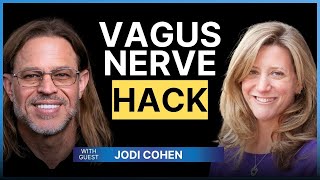
Jodi Cohen explains how smell can reset your nervous system in about one second and describes which essential oils activate your parasympathetic system. The conversation covers practical uses for lymphatic drainage, scar healing, and post-operative care, plus lifestyle habits like walking and breathing exercises.
Questions this video answers
January 8, 2026.
2024 Enterprising Women of the Year.
Essential Oils to Boost the Brain and Heal the Body (published by Random House).
vibrantblueoils.com.
Chapters
Foreign.
Is a best selling author, award winning journalist, functional practitioner and founder of Vibrant Blue Oils where she combined her training in nutritional therapy and aromatherapy to create unique proprietary blends of organic and wild crafted essential oils. She has helped over a hundred thousand clients heal from brain related challenges including anxiety, insomnia, autoimmunity and calming the fires of inflammation. She was recently recognized as one of the the 2024 Enterprising Women of the Year. Her number one best selling books, Essential Oils to Boost the Brain and Heal the Body published by Random House and Healing with Essential Oils synthesizes decades of leading scientific research to help explain how essential oils can work to support the body and the brain. Jody, explain to me how the nose resets your nervous system in three seconds or less.
One second or less. Basically your nose brain cells, no cells are brain cells and smell is the fastest way to get things into the brain, specifically the part of the brain that kind of controls your safety gauge. And so as we know when you think you're in danger, your body allocates resources towards survival and downregulates your ability to detoxify post op to support immunity. And so what we need to do, as we're doing everything else, we need to make sure that people are in that parasympath, rest and digest state of the nervous system. And the easiest way to get them there is safety signaling sense or using oils topically on the vagus nerve to activate your parasympathetic nervous system.
I think that's important because I am the number one instigator of cortisol in my patient population, right. Because I operate on patients. So for me, you know, just by seeing the people get ramped up, you know, they're automatically it's anxiety provoking to come, you know, visit us at Austin and have this surgery which is complex in its own right. And we wrote, as you mentioned before, we hopped on a new book about breast implants, explant surgery and breast implant illness just like lower the temperature. So the reason, you know, we put out books on the sharp methodology that we use and the new book about breast implant illness is so that along with our videos and guests we interview, we're just trying to help people get a better understanding of what's going on and how we can get into like to your point of parasympathetic state so people can heal more quickly. That's all I care about. I've put a ton of effort into our programming and really trying to get everybody to appreciate how important it is to do These things to heal more quickly.
Yeah. Your heart centeredness and your integrity comes through so loudly and so clearly in your book. This is excellent. And what I really love about what you're doing is you're really setting people up for success. Right. You're making sure that the terrain is ready to help people heal. And so what does that mean? That means that once they get these implants out, they explant them. Their body is then able to process any extra toxins that are in the system. So you're supporting lymphatic with the flowpresso, helping them regulate their nervous system. You're helping them with their nutrition. I love everything you do. And I think where people don't realize oils can be a nice adjunct to that is you're helping them heal from the inside out. Literally. You're taking things out of them, you're feeding them good nutrient dense, dense whole food products. And then you can also help them, you know, they go home and they need kind of home care. And so smell and oils are the easiest at home tool you can send them home with. You know, just topically applying the lymph oil, which helps lymph flow and lymph drain, you can put it on the neck. You know, what people don't realize is that lymph drains. 100% of the lymph goes through the clavicles at one point or another. Think of this, you know, you're driving from point A to point B. There's always that point where there's a traffic jam because there are just too many cars. This is where there are too many cars in your body. And so if you're kind of gently feeling here and there feels like congestion, that means that things get backed up, that the fluid gets backed up into the breast tissue where it needs to kind of release. And so if you can just open up this bottleneck and you can do it, it doesn't need to be hard. You know, you come home from surgery, you maybe don't feel great. You have a bunch of instructions, let's not make life harder. You can just roll this on and it helps to move things. We can also give you some oils that can help you heal the scars faster so that they aren't interference fields. It's just kind of a nice adjunct to what they've already done either in advance of surgery so that you're, you know, prepaything for everything to heal or after to expedite healing.
And does that allow. And also with the improvement in drainage, is it something to. If they're doing like light touch lymphatic massage on their own because our therapist helps educate about that. Is that something they can do that with as well?
Yeah, there are a lot of, actually all of the lymph practitioners that I've talked to love oils because it helps with the glide and it also helps, you know, it's. Oils are derived from plants. Right. And plants have medicinal qualities. And the main quality is it just gives more space, it helps to vasodilate, it helps, it moves with your body. So it's almost like biking, you know, with the wind at your back down the hill as opposed to up the hill in the rain. It makes it easier.
Right. I feel like I spend a fair amount of time and I always, I will defer to patients and certainly we know that your product works. I usually tell them because I have people such sensitivities after experiencing problems with breast implants that I'm always really careful and I always preface every conversation with please use something that you're familiar with on your skin. That way you don't react to something. And I know you know this about patients like I take care of with, you know, maybe a little bit. Some may have pots, some may have mast cell activation syndrome, some may have just really, they degranulate, release histamine very actively. Some are, you know, experiencing lots of like almost neuropathic type symptoms all the time. So there's, there's a lot of, of anxiousness and fear about, of, you know, products. So I always, you know, I appreciate the fact that you have something that's very hypoallergenic and easy to apply and non toxic because my patients are obviously, for good reason, very, very concerned about that.
No, I completely understand that and I, and I love that about you. And one of the things that I love about castor oil is great for lymph too. But the bottom of the feet are really the best place to apply anything because they have all of the reflex points for the entire body and the skin is really thick. So if you' to react somewhere, it's unlikely that it is the bottom of the feet. But to your point, it's good. Yeah. You don't want to, I know you're a scientist and you publish papers, so you want to be really clear about what the variables are. So that's a good point. It's a good idea to, you know, pre op like maybe open your lymph and open your drainage pathways so that when there is more fluid to clear, it's already working optimally. And that way, you know, your body's already, you know, used to it, so it's not a new variable post operation. That's a great idea.
Yeah. Our patients, they have a lot of drainage problems. That is a very, I find it a concerning, you know, for the patients because they don't know quite what to, to make of it. They have had this problem and then we do the surgery and like I said, I, by virtue of operating, create this big jump in cortisol production which causes more fluid retention. And we try to get that worked out as quickly as possible. We have them come the next day and they do the lymphatic massage like you mentioned with lopressa. And then we have them do hyperbaric treatment and we have them do red light therapy and something called the human regenerator, which helps increase parasympathetic activity by using cold plasma technology. So we're trying to get them calm as quickly as, as we can because it's a lot right to come and have things done. And then, you know, then they, within their bodies have to go through all those experiences and try to get themselves feeling better. And it's obviously, you know, I'm in Austin, so unless you're local to us, you're flying in and doing all the things. And it makes it even more of a kind of a mental hurdle.
You know, One thing I loved when we were talking offline, just kind of the tests that you have them take in advance, like, you really are setting these people up for success. So I'm a runner. I used to run marathons in my youth. I was really rigorous about training for the marathon. So when the day arrived, I was good. You know, I was really well prepared and I could do this. Recently my daughter has started running and I kind of jumped in at the last minute and decided to join her on a half marathon. That was a dumb thing to do because I wasn't prepared. So there recovery after was much more intense. And so I wonder, just because you're so rigorous in the tests, you know, like helping people going in, like really setting up their lymph for optimal success so that when this big stressor hits, they're a little prepared and then it's easier to fall back into that routine after. And just for the patients that are listening, it's, I think everyone. I think in this weird post Covid world, everyone has lymph challenges.
Yeah. I have experienced many patients after the pandemic who have complained of long Covid problems, who have complained of problems with reactions and in our experience, many of them have methylation problems. We've looked at different genetic problems. Many of my patients have a lot of genetic detoxification issues, just in general, more so than we would find typically in the general population. So we're working to get a study done on that so we can publish a paper about that to better kind of shed a light on that. Because it's not probably easily understandable. The genome project made it so that obviously we could look at everything. And then now that the costs are starting to come down with the whole genome sequencing and with a project like Eric Topol did where he looked at a population of older patients who had aged without any chronic diseases and showed that there wasn't a specific like gene sequence. Well, to me that's super important because I know that my patients have those problems. So what we're trying to do is create a project where we compare our patient's data to that welderly data set that he published. Because if you got all the way to your 70s, 80s, 90s with no chronic diseases. I'm not going to go out on a limb here, but I speculate that your genetic detox pathways work pretty fucking good.
Yes. Well, and you know, in fairness, my genetic detox pathways are not good. But I have figured out the workarounds. Like, I know what to eat. I know what to, you know, like you, I do not do gluten. I should probably get rid of dairy too. That would probably be an excellent choice. You know, and I do daily lymph rituals and I do a lot to support my liver.
Right. So that's, you know, we always put folks on what it seems like a super restrictive diet. It's gluten free and dairy free and we avoid seed oils. And that's complicated depending on where you are in your journey or where you are in your geography in this country. So people that ask like, what can I eat? Well, there's lots of things you can eat. You know, fruits and vegetables are all gluten free and dairy free. And then I'm in Texas, so, you know, it's not really hard to find a animal protein source. If that's your choice. I don't care what your protein source is. I just want you to get enough of it. So you could be a vegan, vegetarian, pescatarian, you could follow a Mediterranean diet. I don't care what you do. The point is get enough high quality protein in your diet. Now I will say vegan is the hardest because there's just not a lot of protein that's easy for them to consume in enough quantity in their diet. So we have a vegan based protein for that purpose because I don't want anybody complaining about they can't do, you know, enough protein because really for recovery. And I'll make this point because most people don't really understand this. When I operate on people or when someone has a traumatic event or an injury or whatever, the thirst center is turned on in the brain and that automatically makes you want to consume fluids. The only thing I ask patients to do is add either an amino acid powder or a protein powder to the fluid they're consuming. Because just by way of our discussion about lymphatic drainage, you'll actually make yourself puffy and puffy and more puffy the more fluid you consume, if in fact it doesn't drain out. And so there's a concept as you so oncotic pressure dictates everything in fluid balance and that's controlled through your liver, your gut, and we'll just say your blood vessels and at the capillary level, if the concentration is not high enough, the fluid just leaks out into your tissues and you get just swollen like a wet dish sponge is what I say. And once the body senses that you have enough, we'll say protein in the blood vessels. Then it acts like a sieve and draws it in to the vessels and you can filter it and urinate it out. And that the trick to make everybody recover more quickly. So when I, I go on about protein, that's why I go on about protein and, and folks who come in drinking their, you know, spring water and, and liters at a time, I'm like, it's not going to help you, it's going to make it worse.
You know, I love that because, you know, as you get older and you put on the menopausal weight, everyone says to eat protein. I wonder if that is part of it. I wonder how much of the menopausal weight is just extra fluid. And even, I mean, lymph drainage has been huge for me since I kind of entered that chapter. I also love, I think you do such a great job kind of talking about the biofilms and inflammation and systemic inflammation and how that really contributes to discomfort, a lot of symptoms. And also it plays a role in healing. And that's another thing. Essential oils can really help with inflammation. And it can be just topically applied on the bottom of the feet before bed. In fact, my daughter and her friends love it because it gets rid of pimples but it gets rid of systemic inflammation too.
So now you hit the pain point, right? So the young people don't realize what's going on. But when you get a bad diet, a lot of stress, you're a young woman, you start menstruating. That is a very evil mixture that will give you bad cystic acne. And then for everybody listening, don't put your kids on Accutane. That's an awful, awful drug. And it's not the right choice. It's not fixing the problem. The problem is what they're putting in their mouth, the lack of rest and proper nutrients they're putting in their body. Plus, if you have toxic amounts of estrogen in the form of estrogen, it's leading to or contributing that problem. There's, there's lots of very holistic ways to take care of it. You could reduce bad estrogen with dim or something very simple. And I find there's this quick, you know, knee jerk thing. Go to the dermatologist and get put on Accutane. I hear it, I'm like, there's no chance in hell my daughter would ever get put on Accutane. There's just no way that's happening. That is not going to serve you in the long term. Have long term ramifications with gut problems like leaky gut. And it's just, that's, it's not what I would do.
No, nor I. And we are a quick fix society. And that's kind of why I love it when we find easy, easy sustainable things. You know, we don't have to run a marathon every day to maintain our health. But as you pointed out, it takes like two seconds to smell an oil. You can drain your lymph in less than five minutes. It's not hard and it's easy.
Change your whole mindset that way. Like there's so much power in just using smell and breathing and controlling those. I love that. That is. And I don't, I, we don't leverage that enough at all. And I, I just, I want to add, you know, the sound and the smell into the practice because those are things I haven't leveraged. Sound healing is very powerful, just like the sense of smell. And those are really underappreciated in terms of. And I'll get in trouble for this, saying things like energy healing.
Well, no, and you know, here's. I was thinking about it like kind of your cortisol inducing experience. Something I learned because I was really prone to panic attacks. Panic attacks are the right frontal Lobe over. Activating. I learned this from functional neurologist. And so if you plug your right nostril and smell anything through your left nostril, what that's doing is it's stimulating the left frontal lobe, balancing the two hemispheres, and the anxiety goes away really quickly. And that's something. It can be essential oil. It could be coffee. It could be. You know, the oils come from the peels of citrus fruits. You can peel an orange and smell it. It doesn't matter what it is, but it's a really great, immediate way to kind of calm your nervous system and get you back in the moment.
Yeah, I feel like there's so much. You know, there's so much headway that can be made, and none of it's that we're not talking about something super expensive to do. It's not something that's complex to do. You know, whether it's adding an essential oil or just doing a little simple breathing exercise. You know, breathe in through your nose and out through mouth. Like, these things are all powerful tools.
They're so easy and they're so underutilized. And, you know, I think that it gets a little overwhelming when people. I mean, it sounds like you have the most amazing equipment at your facility, but people might think, oh, I need this, you know, complicated, expensive device. And, you know, the most best device you're carrying already around on your face. You don't need to look elsewhere for it. And if you're able to walk outside, you can smell flowers. You know, you can smell your garden.
Glad you mentioned that. Because the number one exercise, so that everybody listens and follows me, knows that I encourage is walking. Yeah, listen to Jody. She told you to go outside and have a walk. Now I'm in Austin today. It's really hot and humid, so just do it early and don't overheat yourself and. And create a problem after surgery. So walking is fine. People ask me, like, what can I do? What can I do? What can I do? Like, you can walk as much as you want. Nothing bad will happen. It's all good.
Yeah. Well, you know, it's interesting. I have a friend who's, like, starting these longevity clinics, and what she found is that the people that walked aged the best. And I think it's because walking naturally moves your lymphatics. It's so gentle. It's not like running, so it doesn't spike your cortisol. But it. You know, we used to think lymphatics don't have a pump, so you have to like put your arms above your head or actually move to clear them. And it's also great I did that bone density scan, you know, because I'm in my 50s and I'm like, let's just check this out. Mine's great. And I think it's just from walking.
Absolutely. Like I had Mark Sisson on the show and he gives a wonderful talk about walking and its benefits. And there's really not what you would consider to be a risk. I will say this. I think our footwear to his point because he promotes basically fingertoe shoes. He, he owns paluva with his son and I have paluvas and I have Vibrams and I go barefoot as you know, a ton when I can and even more meetings together. Jody sees me and I'll be barefoot. But the point is, you know, so that you're in touch with and grounded whenever you can be. Of course, like we're, I know you're getting to that, but we're going to say the choir part out loud. It's, it's fine to walk, it's fine to be barefoot. All those things are normal. They're not abnormal. You know, wearing large odd shoes with 1 inch soles is abnormal.
Yeah, that's, that's my favorite thing about COVID I wear sneakers almost everywhere. And you know, it's interesting, like one of the things like you were kind of saying getting outside, I have dogs that are discerning. So we tend to go early in the morning or later at night when the temperature is cool. But I feel like oils are a little farm to table. Right. You know, they're basically picked at their prime and cold pressed so that you can keep them. So if you can't get outside, if it's either too hot or too cold, you can bring nature inside.
Absolutely, absolutely. Well, I think this has been a fascinating discussion. I think application of essential oils like Jody has, are and, and should be incorporated more and more and more. So I encourage my, you know, clients and team members that I have our listeners to engage with Jody. So Jody, where can they find your products and, and take a peek at them?
You can find me@vibrantblue oils.com if you want to just. We have a blend for lymph, but spearmint is a good one to use. Anyone who's ever had a garden, you know, it's hard to kill spearmint, so you don't need to worry. It's usually, they usually don't require pesticides to grow, so that's a pretty safe one.
That's wonderful. Well, I appreciate you coming on. I really look forward to sharing this with our patients and talking to you again soon.
Thank you.
The information I share on this podcast is for educational and informational purposes only. It should not be considered medical advice and does not establish a physician patient relationship. The concept may not apply to your individual circumstances. For personalized medical guidance, please consult a qualified healthcare professional. I disclaim any liability for decisions made or actions taken based on the information provided in this podcast.







