Is Your Health at Risk? Breast Implant Illness with Petra Furst and Dr. Robert Whitfield
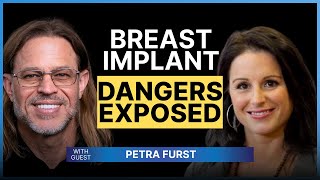
This YouTube interview (Oct 17, 2024) features Dr. Robert Whitfield and patient Petra Furst discussing Petra’s history with breast augmentation and explantation. Petra recounts early body-image influences, a small fat transfer, then multiple silicone implant surgeries (initial 250 mL silicone implants, later replacements and textured implants) leading to complications including capsular contracture and progressive symptoms (sleep disturbance, tachycardia/panic, hair loss, fatigue, stiff joints). Multiple physicians initially found no cause; Petra discovered discussions of breast implant illness online (Tim Gray/Dave Asprey networks), sought Dr. Whitfield for a holistic pre-op optimization program (inflammation reduction supplements, genetic/tox tests, diet), underwent explant and adjunctive therapies (hyperbaric oxygen, lymphatic drainage), and reports significant recovery (improved sleep, hair regrowth, reduced pain, better well-being). Dr. Whitfield outlines diagnostic/therapeutic options (fat transfer, DIEP flap, tissue expander strategies) and emphasizes testing, inflammation control, and perioperative protocols to improve outcomes.
Chapters
Hey, everyone, it's Dr. Whitfield, breast implant illness expert. And today on the show, I'm happy to welcome Petra first, one of my patients who came from Europe and spent the time here to get better in Austin with us and have an explant surgery. And she has a very unique experience, both as someone who's a very avid, you know, follower in certain principles of biohacking and taking care of herself. So I wanted her to come on the show because unlike, you know, some of the things I talk about that are kind of novel, she knew all those things. And when I first spoke to her, it was quite easy to have a conversation with her because she was already doing many of the things that we do in our athletic. So welcome to the show, Petra. I'm so happy to have you on today.
Thank you so much for inviting me. I'm happy to share my story.
Yes. So let's go back, if you will, to, you know, maybe what I do often ask, like, if someone was entertaining implants. And I had somebody tell me recently they started thinking about implants when they were six.
Oh my gosh.
So I thought that was unusual. I hadn't heard that before. So tell us or share kind of your story of, you know, how you came to have implants.
Yeah. So, you know, I grew up in the 80s and Barbie in the 80s used to have really big breasts. So that was, you know, that's how we were imprinted. And then there was Baywatch and Pamela Anderson. And that was for us when we were like young girls. That was like the ideal body, the ideal female body. And I remember when I was around like 10 years old taking the bus, a public bus to school, and there was a woman, like an adult woman getting on the bus and she was very flat. And I remember I was so young, but I looked at her and I felt sorry for her. I really thought, oh, my God, this poor woman, you know, she's not very attractive. But then when I turned 14, 15, my breasts didn't grow much. So I always had like a size A. And that was okay until I had my first child. And after breastfeeding, my first child and I was in my early 20s, I had no boobs left, really, just skin, saggy skin. And when I was lying on the side, it was just hanging and there was just a little nipple on saggy skin. And it was so depressing that I sometimes would just start to cry when I looked at my breasts. And I was in my early 20s, but at that time I couldn't afford Implants. And I didn't know much about it. All I knew is that I was totally unhappy with how my breasts looked like.
Yeah, so that's a lot of imprinting at a very, very early age. And for everybody. Petra grew up in Europe. So at that point, when you were younger, where were you living?
I lived in Austria, in the south of Austria.
South of Austria. So you have all those visual cues and then you see the adult get on the bus, and then you go on to have a child and breastfeed. And after breastfeeding, a lot of things obviously change. And depending on how large the breasts got during breastfeeding, coupled to, I won't say as much to length of breastfeeding, although that can probably play a role. Everybody's skin is different, etc. Then you'll have postpartum involution after breastfeeding is over. And then what Petra is describing, obviously, is a lack of tissue. And when we're younger, we typically don't have as much tissue. And then as we age, we can obviously put on weight and have more tissue. But at that point, I feel like I've heard, you know, a lot of different stories, and this one relatively, you know, early on experiencing that. Do you think any of it had to do with being postpartum and suffering? What people talk about with postpartum depression, was that part of it as well?
I had postpartum depression, but I, like the situation I'm referring to was much later. Okay, was much later, you know, during, like, right after birth. I wouldn't think so much about that. It was like, really when my child was a little bit older. And then I wanted to go to the pool and I just looked at everybody else's breasts and like, everybody had nicer breasts than me. And then, you know, it was just. I don't know, I was. I think I was pretty much obsessed actually with my size, for sure. You know, I was maybe overly focusing on just that one part of my body. But, you know, it like when you have something like that become an obsession. And it was such a. You know, and it was so important to me because, like, you know, I was such a big fan of Pamela Anderson. It was. Was watching the show every week.
And I think that is amazing because I think back. So I grew up in Las Vegas, and I mean, prostitution was legal until the time I was actually, I think, in elementary school. And then they made it so that their street walkers and prostitutes were not on the actual corners of streets. It was all moved off and became more in the background. But anyway, yeah, I mean, you see a lot of that where I grew up. And certainly that will make a big impression on young people, young women, and certainly in magazines as well. It's reinforced. So at that point, that starts the journey to getting implants.
Yeah. So what I first thing I did was getting a fat transfer, but I was also very, very skinny. So skinny. It was like I was like 48 kilos. It's like, I don't know, 90 pounds or something. And so I was super skinny. So I got like a very small fat transfer. And in order to get that, I didn't have money. And I felt so ashamed. So I went to the bank to get a small loan. It was like it was €5,000 back then. And there was only one person in Austria doing that. And I don't know how good it was. You know, it was just. Yes, that was the first option. So I went to the bank and I told them that I want to buy a horse and I need money to buy a horse. And everybody's like, oh, yeah, sure, we're going to finance your horse, you're going to finance your hobby. But actually I was taking the money, going to get fed transfer.
Oh, boy. Yeah, I've never heard that one before. That is the first SO one she was actually given advice to get a fat transfer, which is super uncommon. So I think that, you know, you could obviously drill down into that choice of her implants. But then to. And I think I hear, you know, this quite a bit. I say this quite a bit, too. If someone has in their head, in their mind that they're going to get implants, it's not ever going to be possible for me to discuss it in a way that's really going to change their mind if that's what they've decided upon. I just have to do my best to inform the person making the decision of the consequences of that decision. And for everybody listening, I did oncology or cancer reconstruction for the better part of two decades. And anything that can go wrong with any kind of implant almost anywhere in the body, I help take care of. So if it was the neurosurgeon taking care of your brain cancer and you got radiation therapy, I would have to help take care of the radiated bone if it died or if the plate they used to reconstruct your skull got exposed or infected, or I did all these things for neurosurgeons, orthopedic surgeons. If you had an open heart surgery and your sternum got infected due to the Wiring, I would end up being the one coming in there to help close that. So. And for orthopedics is, you know, knees and tumor resections and all the, all the things, like all the stuff. So we always had very, very, very long conversations and I didn't talk to anybody as young as you're describing about implants because that's not the people, breast cancer. So in a, in a scenario like you're describing one, obviously discussing fat transfer, I would have discussed, but it's hard to get more than a cup size change in someone. You know, when you're describing how young you were and how fit you were, that's always going to be a challenge. So to your point, it would have limited visual change. It would help, but it wouldn't, you know, be a big change.
Yeah.
And then so you have that done, which is obviously more surgery than, you know, just placing an implant because it's, it's more than one site. I presume they did something like your tummy or your love handle in someone your size at that age. I have no idea where they're even going to get fat if they had to go to more places.
Yeah, I mean, you have to imagine this was like 30 pounds less than I am now. So that is like, I don't know, like. And it's like he did his best and I don't know how good was the technology back then in Austria, you know, you don't know, he, I mean, he, he did his best and then, you know, like. But it was small, it was a, it was a change. I was happy about it. But then, you know, like the obsession didn't go away. So that is, you know, it is like, this is a lot of it is, I don't want to say like just mental, but I was still obsessed because, you know, I had a little bit bigger breast so at least I could buy a br. You know, I had a little bit of cleavage. So. But, you know, I was still not, I still was not as pretty as Pamela Anderson, for example, you know, as some other women, you know, so.
Right. Because the pervading theme at that time was to have a much larger cup size. Whereas. Whereas now it's really not that now it's much more acceptable to be both smaller and. God, I'm going to age myself here, dare I say, like Kate Moss. Small. It's fine.
So happy that has changed.
Yeah, exactly. It's totally different, but it's cyclical. So, you know, who knows how long it'll take to get back the Other direction.
Can I ask you something? I have a friend here, she had breast cancer or she still had. She's still going through chemo and she had a double mastectomy. So she. And now she wants to get implants. And I couldn't tell her not to get it because she, you know, she has nothing. And I don't know, can she get a fat transfer or what can you do now?
Yeah, so there was. Interesting. So in Belgium, there was a group that used to present a lot of data about doing fat transfers, or lipo filling, as it is referred to in Europe, in a staged approach after placement of a tissue expander. So tissue expander for everybody listening is a temporary device that you can fill through a port and that expands the skin and the tissues there so it stretches it out. And then you can put fat in between the skin and the capsule that forms around that device. So that was a method that they had been talking about since the first time I went to Barcelona in 2000, maybe five. And so we would use that technique not to the degree that they did because they had more flexibility to say, okay, Petra wants to just have a fat transfer and that's the only method she chooses. So we're going to place the tissue expander and then slowly withdraw the fluid over time and replace that volume, if you will, with another fat transfer. So they would do it every whatever six months or something in the office. And they were in Belgium, so they had different rules and standards for an office based fat transfer, which we could never do in the United States. We would have to do it all under local or you'd have to have credentialing for your office, but none nonetheless. And they don't have to deal with insurance. So all the things that make it easier, but. So that's one method. I have had patients also choose to do the DIEP free flat breast reconstruction. That's what I used to do predominantly, which is taking the tissue, the skin and fat of the abdomen that's normally discarded in a tummy tuck, preserving the blood vessels and the nerves to it and then transferring that. And you can make them sensory so you'll have more sensation. Many groups do that in Europe, both in Germany and Belgium, and I don't know all the groups around, but it's practiced routinely. And then finally somebody can have an aesthetic flat closure and fat transfer which adds more volume. So there's not any sunkenness. Many times mastectomies are not even side to side and that's a function of the size of the Breast or the mastectomy itself. And those are ways to accommodate that as well.
Yeah, I'm gonna share that with her because I really don't want her to recover from cancer and then get sick from the breast implants.
Yeah, I think the way we used to talk about it for delayed reconstruction, which is what she's. You know, that's what you're talking about is the options are still depending on the skin, what the skin is doing and what therapies they've had. Some people have to go on and get radiation, which changes the. The algorithm, if you will. But those are the discussions to have to help with the aesthetics.
Yeah. Yeah. Thank you.
Yeah. So going back to your story, and you went and ahead, and so now you had a fat transfer. Still not happy, you said. Obsessed with a larger cup size.
Yeah.
And tell us from there what ended up happening.
Yeah. So then I called the doctor again for another fat transfer. The same doctor, but meanwhile he had become so famous that he tripled his prices. So I went there and he was like, now it's 15,000. I was like, what? It was just 5,000, like three years ago and now is it. It's 15? Yeah. Like, I'm the only one. I'm the specialist. And I was like, I cannot afford that. Like, at that time I couldn't. I wish I had saved up the money and just did another fed transfer because in the end I paid way more for the implants because I had them replaced three times. And then all that pain and like, all the things I went through. I wish I had saved up the money to do something properly, but back then, you know, it was urgent. And so I had a friend, she had breast implants, and she's a doctor herself. And she looks amazing with her implants. And, you know, she looks a bit permanent, you know, but skinnier and darker. But she looks. She's a perfect body, you know, And I was like, I want to be like her. So then I went and got an appointment to get my first implants. And that was. The first ones were silicone. 250 milliliters. And. Yeah, so. And when I woke up right after the surgery, I was in so much pain. I felt so uncomfortable. It felt so weird and so strange and I was not happy. And it was so weird to have these hard balls on your chest, you know, but then it was already inside and I was like, okay, you know, now you have it. And so.
So Petra's describing something that's. It's not uncommon because the devices, they are silicone devices are pre filled. So there is a volume set and that's what the device is. So the discussions always have to be had about, you know, size. I typically hear that people are unhappy with the size that come to me because they feel they are too big and then they're now uncomfortable with how big it is and they're trying to now hide the size. The other is if you have a saline filled device now, when they fill that device, it's always going to be firmer because the filler is not soft like a gel. It's, it's dense, it's water. So the stretch is different, the feel is different. And that's always, you know, a challenge. The shells are all the same. They're all made out of the same structural components. The fillers are different. So now you have the devices, you're not comfortable with them and now you have to recover. That was a totally different process in terms of recovery. Now how long did it take you to recover from that initial placement?
It was many, many weeks. I thought it would be quicker because the fat transfer. I recovered much quicker even though it was painful. But I felt different. I felt better after the implants. I. And like, you know, like that's a question many people ask, like when did the symptoms start? I do believe that they started right away, but, you know, subtle, slowly a little bit. But I, you know, I just, I felt, you know, looking back, I felt very stressed all the time afterwards.
Yeah. I think obviously we have a different recovery process and we have spent a lot of time working on it, but it all was born out of like there very. Some of it's observational, like what definitely helps. And then seeing patients who recover at different rates gives you a clue that obviously we're not all the same. So like, what could we have done, you know, then that we do now? Obviously if someone's got a lot of muscular type issue, you give them something to relax the muscle and that usually calms down the majority of it because usually it's muscular. Obviously if they're behind the muscle, if they're above the muscle, it's usually the swelling of the breast is going to go down relatively quickly. You, you start experiencing, experiencing symptoms relatively soon. And then now you go through a series of surgeries and tell us about that. That's gotta be unnerving to say the least.
That was horrible. So I think it was one and a half years later I noticed that one breast was getting really hard.
Okay.
So I had a capsule contracture, right?
Yeah, yeah.
So I had that on one side and it was so weird. And my breast was like standing out in a weird angle, you know, it totally uneven. And it was hard and painful and I couldn't do, like, when I was doing yoga, it hurt. I couldn't lie on my stomach and it got all weird. And then, then I had to, like, I was researching what to do. There are some treatments that might help, you know, with massages and ultrasound and whatnot. But nobody promised that they could really heal it. So I went back to my surgeon and he said he's going to replace it and then everything is going to be okay. So I went there to get the replacement. Like, right before the replacement, I was already thinking, should I get smaller ones? You know, because I, I kind of didn't like the size. I thought it's a bit too big. And, you know, I. It felt it. It doesn't fit my body type. It really doesn't. You know, my natural breasts fit my body type, actually. That's my. You know, I was born with them, but it didn't fit. So I was thinking about getting smaller ones. But my, My boyfriend, he was like, no, he has a nice. And the size and. And the doctor also. Doctor is really nice. He became a friend. He's. And he's like. He said, like, yeah, it's going to be hanging a little bit if you want smaller ones, if you're okay with that. And I was not okay with hanging breasts, of course. So I took the same size again. So I got this second set of silicone implants and I had another capsular contraction one year later.
So again, so for everybody listening, capsular contracture in many instances can be just tracked back to contaminants or bacterial biofilm development. And the more surgery you have, I always tell everybody things are not going to get better with more surgery. Having done cancer surgery, I had to operate on patients repeatedly for different problems from cancer. It never gets easier and it always gets a bit more challenging, certainly on the patients in terms of recovery and trying to get them to heal and not have like. Petra is describing a new problem. You know, the same thing happen again, so to speak.
So, yeah, no, it was horrible. It's absolutely horrible and so painful. And you. So, you know, you're so stressed out and you don't know what to do and like really ever go away. So then I went to another doctor. This time I felt like, okay, maybe. I don't know, I was just. I felt like, I'm going to test someone else. And then I found someone and he said he can't do that, but he is going to use textured implants because he says then you don't get the capsule contracture and then you're going to be fine and they are much better and all that stuff. And. Yep. So I went again, you know, and I. Or like now I'm at the point where I already paid more then the 15k for like another fed transfer. So I was like way above that. And also all the downtime you had and the pain and everything I was going through. So. Yeah, so I went for my third surgery. I cannot, like, not telling you the story. I'm like, oh my God, you know, what did I do?
It was like, I think I used to have this in full disclosure because I had done so many cancer operations and dealt with so many problems. If you would have came to me, you know, 10 years ago and said, oh, you know, I keep having these capture contractures, I would have developed a surgical plan to help you in a similar way, because I didn't quite understand, you know, the. The issue. I would have felt I could have solved it for you because I was so used to solving it in cancer cases. And then I finally felt like that taking on other surgeons and other patient surgical problems just led to me having more problems than to take care of in the future. Because eventually that same thing that happened to you and repeated itself again and again is going to repeat itself. And no matter how good I do it, I learned this the hard way. I'm obviously not infallible. So all of us who operate are going to have problems unless you don't operate for a living, because that's the case. You can't take care of people and do surgery and not ultimately have, you know, complications or outcomes that obviously nobody wants to have. So at this point, you've had the three surgeries and fat transfer, and you feel. You said, you know. Now in retrospect, you said symptoms probably started relatively early. So you have symptoms and there's probably a period of time where you're trying to sort this out. So maybe enlighten us with what that was. Like, what.
What do you mean?
Trying to figure out the symptoms or the symptoms.
So I had no idea that it has anything to do with the breasts. I thought it's just basic stress. So what I had, you know, like, was sleeping problems, heart racing. That got like, after the third implants, I had the most symptoms right away. There was a huge difference between the first two sets and the third surgery after that. I was. You know, I felt like I never recovered. I was constantly tired and exhausted. I couldn't sleep at night. My hair was falling out and not growing back. Like, even, you know, my whole hairline was moving back and on the sides. It was really, really bad. Then I had anxiety attacks all of a sudden, and I didn't even know what's going on. So I got checked. I went to the cardiologist. I said, like, do I get a heart attack? And he's like, now you're perfectly fine. You have panic attacks. I was like, why do I. Why am I having panic attacks? I'm happy. I don't understand. You know, my life is okay. I don't know why I have panic attacks. So that was the first thing. And then other things that occurred were, like, very stiff joints. Then, you know, like, not being able to move easily. Totally weird. I would sit down with, like, I had my second child, then I would sit down on the floor with her to play. And when I get up, I was like a grandma. Like, I couldn't move my body, and my joints were stiff and my knees were hurting and stiff. And I was like. I felt like my body is 20 or 30 years older than I actually am. So it was.
So when you started experiencing that, I think women are very adept at understanding. Like, that's not right. And then they start, you know, like, you went to the cardiologist, and then eventually you're going to get tired of hearing that nothing's wrong with you, and then you're going to try. Starting trying other things. So what other things, you know, did you start trying on your own? Because I know where this story goes.
I mean, I went to, like, four different doctors in Austria.
Yeah.
And they tested me for all kinds of things. And everybody said, now you're okay. It's just your age. And it's like, you know, and hormones and stress, you know, like, that's what I mean. Like, they don't know.
Say that, too. Goodness.
I mean, you know, they put me on this. These. These bicycles. You know, like, you have to go on the bicycle and they measure everything. And I was, like, doing that, and I was. I'm fit, you know? And they were like, are you super fit? I'm like, no, I'm not. I feel like I'm dying. Now you're okay. Go home. And it's like, no, help me. I did all kinds of things. Then I, like, I found, like, a doctor in San Francisco, and then she let met. She made me do speed tests, and I was Sending my speed from Vienna, Austria to San Francis. So then she said, oh, you have adrenal gland fatigue, right? I was like, okay, you know, that sounds like something. At least something.
Now we have something to work.
Exactly. So then I worked on that, you know, with like. Yeah, I mean, coincident. I was always interested in health and nutrition and fitness. My whole life has always been there. And I've always. I have tested everything, I think. And so that was like my, you know, my. My go to was, you know, trying supplements, nutrition, meditation, all kinds of things. It did get a little bit better, but not really. Not really. And then I discovered, like, one of the biohackers on Instagram had a reel where he said, like, your breast implants are making you sick. And I was like, wait a second. And I watched this reel like five times, and it was like the breast implants. And then I started researching breast implant illness, and then it all made sense.
So was this Tim Gray or was this Dave Asper's reel?
It was Tim. It was Tim.
So he did that reel and that popped up on my feed and I sent him a message. And obviously back then he didn't know who I was. But we've connected since then, so that was helpful. And obviously it made an impression on you. And then obviously, you know, we've tried to put out content just like we're, you know, doing this show together now to just to help people understand and just have the conversation. I mean, I tell everybody that I don't. Everybody has this. This kind of, from an outside in view that I'm convincing people to have an explant. And the way I. I tell everybody, Petra, is no, nobody wants to have surgery, and they certainly don't want to have this surgery. So when they come to me or when they talk to me, it's not because I have to convince them of anything. They've already convinced themselves that this is the option, this is the right time for them. And ours is simply to try to help give the best surgical plan, supplement plan, detox plan, and experience overall for them to help them along on the way in the process. I certainly am not deciding anything for anybody. So like you this process now, and you can describe how you arrived at it?
Yeah, yeah, yeah. So I started researching and then it all made sense, you know, and also, like, one of the symptoms I didn't mention is like, my face looked so old and so worn out and tired. That was really, really crazy. And then when I looked at all these, you know, there are a lot of support Groups on Facebook, there is pages where people share their stories, and they're all describing the same. And I was at the point where I really thought, I'm dying. I said to my boyfriend, I said, like, I think I'm going to die. There's something in my body totally wrong. And he, like, again, nobody believed me. He was like, what you're saying? I was like, I'm going to die or I have to remove the implants. So then, you know, for him, that was like, it was not easy for him to accept actually that I'm going to change physically. And I said to him, you know what? Like, if you don't like my new body, like, you can go. I don't mind, because I rather live. I rather want to live. I want to live a long and healthy life. You know, I don't care anymore about that, so I don't care more about my cup size. And then, you know, I also follow Dave Asprey, of course, and I really appreciate all his content. I think he's really brilliant. And so then you were on a podcast with him. So, yeah, so then I discovered you.
And.
But I was also looking for other surgeons. I was just, you know, like, I always do that. Like, I. I search, I talk to people, I make appointments. Even though each appointment costs you $500, but, you know, you need to talk to them first. I don't want to just like. And I was. This time I was sure, I'm not gonna rush it anymore. The last surgeries, I was always like, ah, I quickly want something fixed. I quickly want this done. I didn't research much, but I learned my lesson. And I, like, this time I'm doing my research.
Well, I think I did that show with Dave early in 2022, and then April 20th of 2022, it was released. And shortly thereafter, a client of mine, Lauren Bostick, who hosts the his and her podcast, the Skinny Confidential, I was on her podcast because she could no longer answer the questions on her DMS because she kept saying something in her stories about this that I had done her explant, and they were like, whoa. So she has obviously a very large following, just like Dave does. So I think collectively, you know, those two shows helped raise a lot of awareness.
Yeah, definitely did. And then, you know, like, I. I had to decide for one doctor, and I have chosen you because of your biohacking background and the whole support that I got, you know, like, that you did all the tests six months before the surgery, that you have the special supplements to reduce inflammation that you gave me a special diet to reduce inflammation. So like, that was the thing where I thought, like, you know, this time I want to do it right and like, I want to invest in my body, I want to invest in myself because it's such a big thing and it was scary.
Right. I think, you know, what you're describing is our ideal situation where we have time to work beforehand and on proper supplementation. And you know, Petra's describing how we lower inflammation through using liquid or liposomal based supplements for glutathione and vitamin C and vitamin D3K2 and for the methylated B complex, we try to limit how many tablets or pills someone's taking because it's, it's a challenge. And knowing how we started initially and how much people easily suffer from pill fatigue, which is totally understandable. And some people can't swallow stuff easily. So we, we try to make this really simple to build both trust. But we, we want you to do this because we know it works to lower inflammation. And then the testing process through shore is ever expanding to look at your genetics. So we know how Petra detoxes. We look at her toxicity burden through a urine test and she had quite a bit we can go over and then gut microbiome and then food sensitivities and hormones. And you know, when someone's suffering from what Petra is describing, where they don't feel well enough to even go on, so to speak, those are pretty extreme examples of what I see with really chronic inflammation coupled to the breast implants. And really when you start looking at toxicity and immunity and how those really combine to create a very difficult situation for someone like Petra. So Petra has a lot of limitations in detox genetically. And then her tox test had several mycotoxins from mold and several heavy metals. So there are a lot of reasons for her not to be feeling well. And you know, when you look at her hormone levels, she had some really suppressed hormone levels as well. So I think from a, a testing standpoint, and we're going to add some different tests that you didn't have initially that I just am learning about because everything is going towards something called metabolomics where they're looking at not the blood markers that have been around since I've been alive, just pretty bad, to even more specific end products of metabolism. So that's exciting to us because we're learning more and more about how biofilm interacts with the implant to give the body different products that can cause like you had more fatigue.
Yeah.
So if we can measure that because people always ask me if I could measure or do I have a test specifically just for breast implant illness. And you know how I, how I spoke to you was. No, I don't. But I do have all the testing that helps me build out the program works because we know where we're starting from. We get everybody on proper diet and supplementation and try to get their sleep correct and their air correct and their fluid intake correct and have a detox plan for them. So it's not just, you know, coming to have surgery. In fact, I don't even operate on people like that anymore. It's not, I don't want to be in that, that's not my lane, so to speak.
Yeah. And I like that holistic approach. It makes so much more sense. And I, I'm still taking the supplements. I just ordered another set because they make me feel so much better. So when I, like between like the first appointment we had and the surgery was six months and I took the supplements, I did the anti inflammatory diet and everything and I already improved massively. So that it was.
So that's particularly a longevity play. So obviously, you know, we have, and you follow Dave, he's a client and friend of ours and everybody's interested in lowering inflammation. Well, inflammation is the thing that will limit your longevity or promote aging. So we all want to reduce that. So if genetically we know how to reduce that with supplementation, then yeah, that's a long term play. So that's the long term play in longevity. And that's what my, my book is about. Utilizing what we just discussed with Sharp, and that's our process and methodology to reduce inflammation prior to surgery, to enhance recovery after surgery so that anybody undergoing a, a treatment like we're describing will, you know, recover more quickly. But if you're just using it as now Petra is using it as a longevity tool, it will reduce inflammation. So you're promoting longevity.
Yeah, yeah. And I feel fantastic now.
Well, now we'll get to the nitty gritty. When you came and spent time with us in Austin. So everybody listening? Anybody who's coming from Europe or Asia, they have to spend about two to three weeks here just because they have to acclimate from a long haul flight and then have surgery and then recover. And still travel is super. Oh my gosh, travel's a mess. And I just came back from Europe recently and just the flights, the flights are a pain in the butt. Let us know how you felt on that journey.
Yeah, so I, you know, like, since I work online. I can live wherever I want. So that was very convenient. And I just decided to move to Austin basically for six weeks. And I rented a nice Airbnb and I brought my daughter and I had a friend coming over with her child and I brought my dog. And so we actually, we had like a very nice, you know, nice living situation. And Austin is beautiful. I liked it a lot there. Yep. And then we had the surgery and I was so scared. I remember the day before I was crying and I was scared and I was nervous. It was really hard.
Well, I think, you know what you describe both, you know, some people get that way. We just travel and general, which is how I feel when I travel. Getting here though, you know, our team is in place to hopefully reduce much as much of that as possible.
Obviously. Very nice.
We have a very experienced group who take great care with all of our patients and you know, pre op we're really trying to reduce the sympathetic response to get people into a parasympathetic state. So you know, I give, you know, everybody the guidance and a gift card to go to the well and have some gluten free, dairy free, pseudo free food to get them in the right frame of mind, so to speak, and then get them off to sleep with some nausea medicine and anti inflammatory and something just to calm the nervous system. And the next day you'll do a little bit more of that. And then in the operating room we're even doing more nerve blocks than we did at the time we did your case anesthesia providing even more support for us now so that people are waking up and we want everybody to be able to go within half hour to an hour having a little pain. Fine. Nobody should be in extreme discomfort at all. And then I've often thought my best case scenario, which I don't have right now, is to have my office and surgery center connected so that I would just take the patient from the recovery room and stick them in the hyperbaric chamber.
Yeah, yeah, yeah, that, that would be good. Yeah. So then, then we drove to the clinic. 4am in the morning. Yeah. And then it happened. Everybody was super nice and like, I don't remember much. You know, there was like the, like your colleague who gave me the anesthesia.
Yeah.
And like he just talked to me, said like, yeah, the calm down. And I was out. I was out so quickly. I don't know. And then when I woke up from the surgery. Right. Like right the moment when I woke up, I was so happy. Every cell in my body I could Feel it in my whole body. Every cell was so happy. It was like my whole body was like so relieved. It was like I cannot even describe how it feels. And I was just happy. I was just happy. And I knew it was the right thing.
Yeah. And I talked to Petra and a lot of people can't remember me talking to them. But what she's describing, how she described her wake up and then the next day, you know, she's in the clinic getting in the hyperbaric chamber and doing lymphatic massage and red light therapy. And she said the same thing. And you know, I've had a handful of patients have this kind of epiphany type moment. You're one of them. Lauren Bostick definitely was. And I think the more you have heavy metals in your system and when I do an explant, it seems like that's the situation now. Lauren had the most heavy metals of anybody I've ever taken care of of because she was using barrel sauna constantly. And I think she was just leaching chemicals and metals and things into her system. So were you doing an IR sauna at that time? I can't remember.
I was sometimes going to sauna, but not so much because my breast implants got so hot in the sauna that it was uncomfortable.
Okay, barrel or was it IR infrared?
It was a normal sauna. Finished sauna.
Yeah. So they get up to 220 or exactly. Yeah. So that's for everybody listening. Nobody has data on saunas. I probably have the two cases in the world that show the most heavy metals because she's using the finished sauna barrel, basically, or a walk in that gets up to 220 or 212. Probably the example I have of Lauren Bostick where she was just constantly in this thing for over an hour at 2, at about 2:12. So, you know, when I basically like you said you felt so much better, I don't discount that at all. I think that's a real, you know, specific finding for you and for Lauren. Lauren was wanting to take selfies with me after surgery in the recovery room. And I was like, okay. I mean, that's great that you, you know, obviously feel that much better. And I always, I try to take that with a grain of salt and say, okay. I mean, there's a lot of drugs on board here. So I'm just like, okay, well we'll check tomorrow and see how she's doing. And today you were feeling great. And I was like, well, perfect. I mean, we don't ever Want anybody to be under the impression that that's going to be the situation in every single case. Because that's not going to happen.
Yeah, yeah, yeah. I read stories from other people. Some people have that. Some people feel absolutely amazing and some don't. Yeah. I don't know why. Why is that?
Yeah, you know, it's funny. I have to do a show about the saunas and I was reading, you know, and exploring, you know, how to approach that. That's, you know, not going to be a. It's. I want it to be super educational because I don't want it to be like I'm attacking the sauna people because I'm not. Not at all. I use my IR sauna at home and then, you know, after explant, we have people use sauna about 90 days out. And you would recommend using, you know, a binder when you get in and not starting off like full force sauna, you know, not 170, maybe like 150 in an IR sauna. And I don't know like when the right time to get into a 220is. That would be, you know, or maybe like a short period of time, a few, you know, off slow type of thing. So you've had your surgery and then are you going to tell everybody about what you did afterwards, where you went up north for a little while? In my country, yeah.
That was like four or five weeks after the surgery. And I went to do the 40 years of Zen retreat in Seattle. I did it for the second time because the first time was so amazing. So. And I thought, you know, like, when in the US then just do everything and it's really because you work on your emotions, you know, you do a lot of trauma healing there, so a lot of forgiveness process and meditation and it is so healing. And I felt like it would be great after the surgery to heal the parts of me that made me so obsessed with my body image, that made me do all the surgery, like forgive myself for what I have done to my body and how I have. I mean, I haven't ruined my life because now I'm so healthy and so happy. You cannot imagine, like my face looks so much younger, like I'm sleeping well, I have no more pain, my hair is growing back. This is fantastic. I never thought that I could feel like this ever again. So. Yeah. And then.
Well, that's the thing. We talk about all the things that, you know, we help patients with, but. But we're still always trying to add to our program and programs like the 40 Years of Zen. That's Dave Asprey's program. There's something that we're working on, the Gupta program. All these things are meant to help with your emotional state, because we know that's super important. We know it's very important to have supportive friends. And like, you had a very supportive friend you. And like you described stay with you. And you had your daughters as well. So that was probably a big little teaching moment for everybody. And then to then go and work on yourself. You know, everybody's got to do more work on themselves, themselves. And that always helps us. I always find it very, very difficult if there's not support or if people are really unwilling to take steps, like you're describing, to do more. Not just self care, but, like, work.
Yeah. Healing. And I mean, I did everything because I thought, you know, this time I really want to get it right. And I'm. This is like a once in a lifetime situation explant. So, I mean, you might as well be super prepared and follow the steps. So, like, I went to your office and had hyperbaric chamber three times a week and lymph drainage three times a week. And then you guys told me to, like, eat a lot of protein, So I ate 120 grams of protein. And I'm still doing that. And it's amazing. Yeah. And it's like. Yeah, it's wonderful. So, you know, and I'm doing all that, you know, I did, like, whatever I can. And I'm still, you know, like, focusing on health way more than I ever did before, but in a more relaxed way. I'm not, like, I'm not trying to look in a certain way. I'm now focusing on how I feel.
I want everybody to remember that she's not worried about how she's looking because she's worried about how she feels. And that's when you're trying to have the longevity play. If you're taking great care of yourself, the looking, if you will, is going to follow that. So you're going to look the way you want to look. You'll be fit, you'll feel better, and the aesthetics will be what they are. That's just. It's fine.
Yeah.
All right. Well, I want to thank you for coming on the show. It's been so fun to have you on today, and I look forward to visiting in Austin. We have so many biohacking meetings. I know you be coming to some of them, and we'll have you out to dinner when you're in town.
Yes. Would love to. Thank you so much for inviting me. It was a pleasure to talk to you again.
All right.







