My Approach to Healing [Candice Barley’s Story - Part 4]
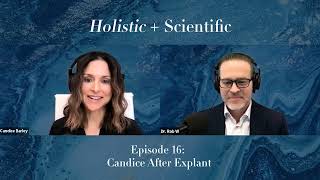
This YouTube podcast episode (My Approach to Healing — Candice Barley’s Story, Part 4) is a conversation between board-certified plastic surgeon Dr. Robert Whitfield, patient Candice Barley, and another speaker about recovery after breast explant surgery, detoxification strategies, and surgical considerations. The patient describes post-explant healing steps (liver-supporting herbs, binders, sauna, Mediterranean-style diet, avoiding gluten/dairy, vitamin shots), functional improvements (resumed sweating, resolved gut issues, restored strength over months), and work with naturopaths and thyroid specialists. Dr. Whitfield discusses clinical observations (implant-associated symptoms like anhidrosis, cold extremities, capsule variability), the importance of nutrition and hormone balance before procedures, risks of repeat surgeries, fat transfer techniques, and lift options. The episode closes with a promo/clinic info.
Chapters
Welcome to the holistic and scientific podcast with board certified plastic surgeon, Dr. Robert Whitfield, Austin's natural choice for plastic surgery and the expert in smart laser and energy treatments.
So after, after explant, after, you know, the eight weeks, I knew it was important to just let my body recover from surgery. So then after the eight weeks when my liver enzymes and everything had balanced and my other symptoms were starting to pressfully get better, that's when I started going, okay, maybe I need to look into doing some liver cleanses. And eventually I discovered liver supporting herbs and teas and supplement lines. And so I definitely went that route and worked with a naturopath too. I did vitamin shots for a while and then I began doing saunas. So I would take binders. I have a personal sauna at home. And that really accelerated my, my detoxing and my healing. So that, that's been really incredible in my, in my detox and healing toolkit. Again, nutrition, I follow mostly a Mediterranean style diet. I don't eat processed foods. I really don't eat gluten at all. I have the celiac marker, but not celiac. But I don't want to activate that. I don't do dairy. I have zero gut issues anymore. I used to bloat pretty much the entire time I had implants. Even before, way before I ever had sibo, I would bloat. Everything upset my stomach. I don't have those issues anymore. And I'm able to exercise. I didn't have the endurance. I had muscle weakness. That was something else that was surprising to me and I wasn't expecting was the, the healing that it took. It took me a good nine months to really heal my pectoral muscles and almost two years before I could do push ups. But it does heal, so that's really incredible. Even though I had muscle atrophy and my pectoral muscles are quite a bit higher, I can still do all of the pull ups and push ups. That's really wonderful. I think also has to do with a surgeon that addresses that at the time of explant. So.
Well, you had this interesting condition. You know, you basically had anhidrosis, which is your inability to sweat. But it was induced, it wasn't natural because now you can sweat. And although I've seen a lot of extremely strange things with patients who have breast implant illness who undergo explant, I haven't had that as a specific constellation of symptoms. I've had people complain of dry eyes, dry skin.
Yeah, I didn't even know it was A thing like I didn't even hadn't sweated in so long that I'd never even thought about it until I started sweating again. I didn't think of it as a condition. I didn't know it was not a good thing that you're not sweating because that's how your skin is able to detox. So now that I'm able to sweat, I recognize how severe of an issue it truly was.
Well, I'm sure Candice has actually done a great deal on her own to help herself in terms of internal healing. So she's changed her diet and balanced herself out, I guess. I mean there's lots of books written about just correcting Hashimoto's with your diet. So I'm sure the majority of what you've done with yourself, you know, over time you've used food to heal yourself and as well as protocols and supplements and things of that nature.
Right, right. Yes. I work with a thyroid specialist and so I, I take very few things. Many of them are just supplements and other low dose medications that are just good for reducing autoimmune reactions. So I feel great and I don't struggle with it anymore. So that's really, really good. I get my labs checked again in a few days. But hormones are a little, you know, I'm 45, so those kind of fluctuate. So we're always riding the wave on those.
Yeah, I feel that, that recently, you know, we've, we've really honed in on hormones as well as we had always been pretty strict on our nutritional parameters and as you highlighted, many women on those forums have tried to adhere to those. And it's not that they're missing the mark. I think all of it needs to be taken into consideration when they're, when they're trying to do that and.
They.
Would get a better outcome.
Well, I mean you're going to spend so much anyways to get fat transfer. But if you want to have the best outcome and results, you need to make sure these other things are balanced. It just makes sense so that you aren't stuck in a situation where you have to do it, balance those things and then do it again. Because ideally one round is, that's hard.
To do things the second and third time for sure. Your case is complicated as I've talked to you privately about for the audience. As a surgeon, I would say the best time to do something is the first time. And so each and every time I have to operate it gets more complicated just because of the things we've highlighted your blood flows to those regions where you operate or have to operate. They don't get better with surgery. Fat transfers are a little bit different because they're providing, as I mentioned, a environment because of the stem cells around the fat cells that actually get transferred. And there's been so much research done about this. It was one of my research focuses when I was in an academic job. You can get some really profound results. There are some guidelines, and almost like your own internal rules, you follow. I have a certain set, and I just try to, in summary, clean out what I consider to be the variables. So if I eliminate food sensitivities and balance a diet higher in protein, and we can say higher in fats, which is fine, and my patients don't have other toxicities, or we're addressing those toxicities and their pathways for detox actually work and they're methylating. Then we put them in the most favorable position to both have a successful explant and fat transfer, which I do a lot of at the same time. I know that's not necessarily the most popular thing around the United States, but I do a fair amount of them.
So ideally, that's, you know, what I would have loved to be able to do. But. And I know many people just by that point, you're just like, I want to be done so Right. But it has to be someone that understands that has a high success rate at doing that and has also checked all these other protocols and issues that you do beforehand. So I think that's why you're able to do it, for sure.
Yeah. I think, you know, I haven't been really fortunate, but I was trained by people who are the folks who basically came up with how to keep people alive with IV nutrition and little neonates. And so they forced us in our training program to learn how to take care of all different sizes of patients and how to do that and calculate their protein, calories and everything. So I give them a ton of credit. I think we all get taught to a certain degree that is necessary. How much we implement that in our own practices or if that's our own interest. I have a great deal of interest in nutrition. I'm very gluten intolerant. So is my daughter, so is my son. And it's a genetic thing. So everybody's got their own personal reasons why they do things, but very close and near and dear to my heart. So I understand when someone comes in and they're like, I don't feel good when I eat this. So we'll hash all that out and you'll wonder why the plastic surgeon's asking you about your diet, but that's why.
Right. And I had to do my own. Well, working with the niche path and stuff that then we. Where I discovered that I had the MTHFR issue. So that. That answered a lot of questions, but just, it's great to have, like, one place that you can go and have all of these instead of always having to be your own detective, which I learned a lot that way.
And I know you've become a health coach.
Well, I had to get better. I. One of my favorite quotes is, I didn't come this far to only come this far. It was like, I am going to get better. I'm going to get my life back. I got this part done. I know that there's answers out there, but. Yeah, it's just really refreshing to be like, oh, a doctor that understands that.
Well, the other reason we did it, too, is I had a couple patients make themselves really ill doing detox on their own and then call me. You know, really they were unwell, and I would ask them what you were doing. And they had got a detox protocol and started it with a practitioner, or maybe not a practitioner in instances, and that they'd become ill. And so I was like, oh, wow, I don't want to do a treatment or a procedure and then have my patient go out and get sick afterwards. Because then we couldn't help them with the next step. So we started using different practitioners. And then Covid happened, and then we lost a lot of those practitioners. So I became the practitioner for all of that. So that was a byproduct of COVID.
I don't know that this has anything to do with BII or anything, but I was always cold, which can be thyroid, and. And it did affect my thyroid, but my implants were always cold.
Yeah, now, that is very common. I get that. Either cold hands, fullness of the breast. That's always something that, for lack of a better term, I equate to what's going on. And a lot of times I've found in my practice folks who have infections that are occult or hidden. Your body shunts and tries to protect you, and it takes blood flow from your extremities, and that's very natural. And a. You'll see people who are really ill. They'll lose blood flow or they'll have diminished blood flow on their extremities or when we're giving them medicines to help keep them alive. Essentially, those Medicines cause constriction and reduce blood flow in their extremities. And then like you said afterwards, what happened after your explant with that problem?
Well, I still continue to have very restricted blood circulation in the area. And I, I attribute that to having had five surgeries. And now.
Well, not in the area but your extremities in your hands.
Oh, in my. Oh yes, all of those things completely. I, I did no longer had numbness in my hand. I would have where like my fingers would get really cold and very numb at the ends.
Right.
Burning the, all of that completely resolved.
I'll point that out for the audience. So she's basically reiterating what I just said. So where she was operated on, she had reduced blood flow because she had surgery and had surgery multiple times there before. So I always tell my clients, each time I operate, I don't improve things. Right. I don't improve blood flow, I diminish blood flow. That's part of the process. And then by removal of what I presumed was a problem for her, either with an occult contaminants or what have you, that her body was always trying to take care of, she shunted towards that, towards her chest and that made her extremities cold. And now after surgery that NIDUS or that occult problem with inflammation is gone. So the body relaxes, if you will and improves blood flow to the rest of the extremities. And then of course the area that you're talking about is your chest. So what, you know, if you feel comfortable explaining kind of the process that you had to go through for that, I'm sure that was a difficult one in terms of having the previous surgeries and then this surgery.
Yes, for sure. I talk to a lot of women as well. We don't really get nervous for the implant surgery, but when it comes to explant, it's very, very nerve wracking and it has to do a lot with what am I going to look like. And so I have to say that was very surprising. I had thin capsules, very thin capsules, which I don't understand all the reasoning behind that. I've heard some different things with collagen synthesis and that sometimes women that have thinner capsul capsules tend to have like higher toxicity and the thicker capsules help a little bit more. Have you seen anything like that? I'm curious.
Yeah, I mean it's all really anecdotal, the thickness or the thinness. So what does that really portend for the patient? And you know, I don't ever really subscribe to. It's just one thing that causes any given, you know, problem. There's got to be lots of things or issues that lead to what you're experiencing. So you had a lot of different surgeries. That always makes me nervous. So from the time I would have met you, having had three surgeries, at that point, it would have been like, oh, yeah, I expect you to have a problem and your symptoms would make sense. I would consider, like I do now, all the things that, you know now, because I already go through those now, and I look at food sensitivities and hormone imbalance, endocrine abnormalities, gut microbiome issues, toxicity issues with mold and heavy metals and environmental toxins, because those play a role. Like, you're an actress. You've used makeup for many years, and makeup is very toxic. There's a lot of phthalates in makeup, so I find that extensively in patients. And those are carcinogenic in some instances. So we haven't even talked about genetics. But, you know, just listening to some of your story, you know, lots of patients don't methylate well. That makes their detoxification process more complicated. So I just. Thick or thin, if it's implants from the 80s, usually they're ruptured and leaking and have calcified capsules. So they're. They're hardest or the thickest of all. And then it's everything down to basically something that looks like cellophane. And if you're like that, it's harder for surgeons. So I think, you know, in your instance, if you had a thin capsule, what does it portend? Give credit to your surgeon for trying to get all of that material out for you. And then, you know, cleanse the pocket so that whatever's affecting you, if it's in the pocket, is gone. And that's what I think's important. And I. I try to.
Yeah, wonderful. Well, I opted at the time not to get a lift, which immediately I was like, oh, maybe I should have gotten a lift. That would have probably made them look better at this time. But as time passed, I was glad that I did not, because I have such limited breast tissue, and the only breast tissue that I have is at the base of the breast, which is where a lift is. That area is triangled out, right, and brought together, or so it depends.
I think, really, when you look at the four basic lifts, and there's a crescent lift, which just helps adjust nipple positions of one slightly asymmetric versus the other, then there's what's called a donut or a periareolar lift. And that's really just to concentrically tighten towards the the nipple complex itself. And so in a smaller breast with just a little bit of excess skin, that's more suitable. And then if you have a wider breast or a really wide implant that's really hyper expanded the envelope, then you would use more of a vertical, which is you would take out a component in the bottom and narrow it and lift it vertically. If it's just a skin excess issue, then you can still do the vertical, but you're really not taking breast tissue out because as soon as you take that skin off, you're basically looking at the patient's implant capsule.
Wow. Okay. Well, that's interesting. I know that there are a lot of surgeons who even with a reduced amount of breast tissue like you're a cup or smaller, still cut out that tissue to sew that together. So you're just literally a pancake if it's super wide.
If you don't do that, then you have a really floppy skin.
Oh. Then you have kind of the rectangular.
Yeah. You'll have a think of it like a really empty breast at that point. If you have say a larger implant and very limited breast tissue and it's really stretched you out. You started from an A and you went to a D. So that is going to leave a whole nother problem if. If you don't do something with the skin. So it's a little bit of damned if you do, damned if you don't for us and my profession. So all we can do is is be too big or too small.
Yeah.
Too loose or too tight.
Yeah.
That's all in the client's perspective.
Right. It worked out well because with time I was very surprised at how much the skin does try to retract and does try to. To heal. So that's.
Take a screenshot of this podcast episode with your phone and show it at your consultation or appointment or mention the promo code. Podcast to receive $25 off any service or product of $50 or more. Dr. Robert Whitfield is a board certified plastic surgeon located in Austin, Texas near 360 and Walsh Tarleton in Westlake. To learn more, go to Dr. Rob or follow Dr. Rob on Instagram @DrRobertsWitfield Links to learn more about Dr. Rob's smart procedures and anything else mentioned on today's show are available in the show Notes. The holistic and scientific podcast is a production of the Axis T H E A X I S IO.
Sam.







