Recovery Following Breast Implant Removal [Part 1]
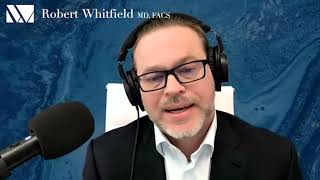
YouTube podcast episode in which Dr. Robert Whitfield (board-certified plastic surgeon, Austin, TX) explains recovery after explant (breast implant removal). He emphasizes preemptive measures beginning the night before (anti-nausea medicine, Celebrex, a neuromodulator), multimodal intraoperative nerve blocks, and immediate postoperative comfort strategies (ACE wrap plus ice). He explains avoiding drains (prefers progressive tension sutures), uses a low-pH pocket irrigation rather than antibiotic-only solutions, and runs PCR testing (claims it screens ~150 microbes) to evaluate microbial stimulation. In his experience roughly two-thirds of cases involve biofilm; he also discusses genetic and environmental predispositions to symptoms. Routine follow-up schedule: 1 week, 1 month, 3 months, 6 months, 9 months, and 1 year.
Questions this video answers
Celebrex
An anti-nausea medicine, Celebrex, and a neuromodulator (per transcript).
About 150 different types of bacteria, fungus and mold (per transcript).
Roughly two thirds (per his experience over ~500 cases).
One week, one month, three months, six months, nine months, and one year.
Welcome to the holistic and scientific podcast with board Certified plastic surgeon Dr. Robert Whitfield, Austin's natural choice for plastic surgery and the expert in smart laser and energy treatments.
Today we're talking about what happens just after explant surgery or breast implant removal surgery. Your implants are out now and we're on day one of recovery, not just from surgery, but from having the implants themselves. Everybody's really concerned about both the length of surgery and how are they going to wake up. I think this has really been shaped by experiences in the past that patients have had. I will tell you it stems from how I was trained. I was not trained to take preemptive action so that the wake up or recovery from surgery is as smooth as possible. In full disclosure, I was told basically to go to the recovery room for patients many, many times and just write a prescription for narcotic and leave. That's how I was taught. That's entirely different from what we want. We want you to feel as comfortable as possible when you wake up. That all starts the night before with our specific protocol. That's different. We want you to not have nausea, so we use an anti nausea medicine that you start taking the night before surgery. We want to decrease inflammation which helps with your wake up process. We have you take Celebrex the night before surgery. We don't want you to have what can be a little shocky type electrical signal coming from the nerves that sometimes we will irritate when we operate. I have patients take a neuromodulator the night before surgery. It also decreases anxiety. The wake up process is already being manipulated by me before you ever go to surgery. Then during surgery, as we've alluded to in other shows, we do a block and the block is for multiple areas and tissues. Obviously we want to block nerves that could stimulate you. We want to block the intercostal musculature because as I elevate tissues off the rib surfaces, those will be sensitive. We want to block the incisional points we use. Whether we're doing something through the fold around the areola complex or a lift that's down the front of the breast. So all of those things are addressed in the operating room. Now I have one more little trick that I'll let you in on. The number one anti inflammatory in the world is ice. Many times what I do is I gently wrap folks with an ACE wrap, but we'll get some ice packs and actually put it gently over the areas where we operated. That will wrap that when you're waking up, it's a little bit before you're completely awake. You're breathing on your own, everything's fine. But once again, you're going to be really comfortable when you wake up. Because if you don't wake up in discomfort, if you don't wake up with sharp, say incisional pain or nerve pain or something else, you're probably not going to need much in the way of narcotic, which is, we're all trying to avoid this for you because narcotics make you groggy. It's difficult to just be interactive with your family and friends, hard for us to communicate with you if you're too sedated. And basically the number one reason I want you to take narcotics or any more than you have to is constipation. I trained as a general surgeon where I took care of all sorts of GI tract issues. And you know, one of the main things we want to avoid is that that problem for you as well. So I want you to wake up comfortable as we get you, you know, gently from the operating room table over to the recovery bed and take you into the recovery room. So that different type of process. And so when I'm in consultation with clients, they're very concerned about the length of anesthetic. Are they going to wake up in pain, are they going to have nausea or vomiting? Because they've experienced all these things in the past. And I would like to think that we're far, far ahead of the game in terms of how that's going to be and what it'll be like for them and their significant others. Because I have many, many husbands and significant others, boyfriends, girlfriends that have to take care of these folks. And they're nervous, they don't want to do anything that's going to be potentially making matters worse. The one thing you could always do is ice the patient for me. So 30 minutes on, 30 minutes off, you can't hurt anybody. It's a great pain reliever, it's a great anti inflammatory. The most famous, highest compensated athletes in the world get injured and what's the first thing they do for them? They know this. I've had five knee surgeries myself. I'm very versed in how ice therapy helps. So that is like now I've told all of my really complicated secrets and the biggest one is the use of ice. So, you know, from the time you leave, you should feel comfortable when you get home and get situated. I try to tell everybody who's helping take care of my clients, you know, if you just want to prop them up a little bit, it's fine. My clients all can use their arms. There's this kind of strange myth about holding your arms like a Tyrannosaurus rex, which I find interesting. My clients, often, after taking the deep dive in that very critically vetted resource. Facebook, often tell me that having T. Rex arms is recommended. And so, in full disclosure, I did an entire year of reconstructive surgery so I could do more oncologic surgery. Within that year, I replanted limbs, fingers, repaired tendon injuries. In my career, I've taken care of people who had their extremities burned and had to be released. Compartment syndromes. And those folks, they don't use their arms and hands very well after surgery because they've been operated on. But here we're operating on the breast. Although the breast is connected to the chest, which is connected to the arm, you can use your arm freely. Because I didn't operate on your arm. I know that may seem complete heresy after you read something on Facebook, but I assure you, you can use your arm. The whole concept of waking up without discomfort, complete use of your limbs because you had breast surgery, not arm surgery. I like to point that out. I think it's super important that we do and start active stretching, which is part of my recovery process. That makes you get back to doing your activities of daily living sooner. I'll let you know based on what I found in the operating room in terms of lifting and picking things up. So I put this, this simple restriction on, and I'll explain it in detail why we do it. So basically, you can pick up a bag of groceries, and then of course, I get asked if there was a toddler or something else. Now, that gets to be a little complicated because they're not static, they're dynamic. Toddlers move and you can't control them. So I would refrain from that right off the bat. The reason we don't want you lifting heavy things is exertion or straining creates fluctuations in blood pressure. When you cough or sneeze or strain, your blood pressure goes up. Things that weren't bleeding can now bleed because the pressure is so much higher. We don't ever leave the operating room with things actively bleeding in the first week. Those are the things that we want to control as best of our ability with compression and ice. But the heavy, heavy lifting is because of that. And then I see my clients at a week, and if it's my clients out of town who then travel home, we'll do A video call, which is very straightforward. And we'll go over these things again just so that there's not, you know, further questions. If it's an in person exam in a week, I'll check everything and make sure it's fine. Many of my clients will have a little bit of a puffy abdomen, not from constipation, but because I don't use drains. And you know, I know it's heresy. Again, when you read Facebook and Google about not using drains, but you should also look up something called a tummy tuck. They don't use drains and tummy tucks either. And it's because of a novel, not really a technique called progressive tension sutures. So I haven't used a drain for a tummy tuck without liposuction and I don't know, five years. So I don't use drains in breast surgery. If you look at every study done with drains and breast surgery, you have more infections with drains than without drains because you have a tube sticking out of you that comes in contact with the environment. And if anybody wants any in full disclosure knowledge about your environment, it's not cleaner than an operating room. So I always want to close everything, seal it up properly, and then really that's to protect you from your environment once you leave hours in the operating room. So, you know, moving forward day by day, you're going to have that little puffiness that's going to go down. It's totally fine. And so our whole program is working as hard, as quickly, as efficiently as possible to get you to heal. So I have this very lovely device in my office now called a balancer probe. And it enhances lymphatic drainage. So I can further get the fence or fluid or your body to heal more quickly using this. And so, you know, each thing is designed to make your wake up more comfortable. Less fluid accumulation, less inflammation. Everybody's going to go through their own detox process. So I'll talk with you individually about that because everybody starts from a different place with that. And detox is quite Pandora's box, if you want to try to generalize it so it's more of an individual thing. So as you're kind of getting ready and getting sorted to go home and then you're at home and you're trying to get comfortable and we've already instructed you on your diet, you should hopefully understand all of your food sensitivities. If you've been part of my complete program. Your blood work, your hormones are balanced, so you're all set to recover as quickly as possible. And that's what we want you to do. So when I see you at a week and we're able to go over test results like invariably, your pathology is back in a week. So I'll be able to tell you without any hesitancy. Is there a problem with something like alcl? Is there a problem with breast cancer? Are there any inflammatory things that we have to worry about that was seen on the pathology report. But mainly that report is to rule out malignancy because I found two people over time with cancer, and that's two people that were taken care of properly, that have no other issues. That's what I want for all of my patients. My sister's a breast cancer survivor. I would have never wanted her to do anything and have an incomplete oncologic resection. So I treat all these cases the same so that we will not run into that issue. So as we get your information back, many are very, very interested in my PCR testing. This looks at 150 different types of bacteria, fungus and mold, even mycobacterium. And so once we have this information back, we'll look at it knowing that I've already sterilized the pocket at the time of surgery. But this informs us as to what may have been stimulating your immune system more. You know, I have and have always used basically a ph driven solution over the past several years to control the pocket. We don't use antibiotic solution anymore because antibiotic solution doesn't treat everything. The standard solution used in plastic surgery doesn't treat fungus. So I don't use it. I use something that no matter what type of microorganism it is, microorganism, it could be bacteria, a particular fungus, a mold that's going to get taken care of by a lower ph solution. So we don't need to put you on an antibiotic. It helps us provide closure in that discussion about is this stimulating the immune system? And then folks will ask, well, if it comes back with nothing, was this not the right thing to do? And my answer has uniformly been the same over the last 500 cases. I would say, in my judgment, in my experience, roughly two thirds of these cases are caused by biofilm. It's enhancing and activating the immune system. So that means there's a little bit of bacteria, a little bit of fungus, mycobacterium, mold, whatever, it's on the device that stimulates your immune system. But if you get a report back that has nothing, what does that really entail? What does that really mean. Five years ago I only had a hypothesis. It could be a genetic predisposition. There could be a defect in your pathway. Many people have heard of MTHFR and they understand a little bit more about methylation. I myself have a defect in mthfr. I don't methylate well. So if I took a normal B vitamin I wouldn't derive the nutritional benefit of that B vitamin. I take methylated B vitamins and so I'll take you down the path of genetic predisposition and how it relates to bii. If you are missing a methylation pathway or if you're missing glutathione metabolism pathway, or if you're missing a cellular detox pathway like superoxide dismutase, that coupled with your physical stress, psychological stress, environmental stress becomes too much for your body to deal with. Conversely, if you don't have one of those, say that makes you really susceptible. But you could also have one of those and have super high copies or function of one of them and that will stimulate your immune system as well. So your environment, the foods you eat, your exposures to other things, say for instance mold, Lyme, your genetic predisposition. I'll dictate how you're going to respond to the device. It's not just the device itself. And I've always typically taken a little grief because I don't blame the device, I just understand the purpose of the device. And now you can see there's a lot of things that go into this process of evaluation, treatment, surgical therapy, the recovery process and understanding everything that we're testing for and why people look at the doctor, patient relationship. And often when I've seen somebody in consultation, they may have had a breast augmentation or a breast augmentation with lift and seen their doctor once or twice after surgery and then that was it. Providing the level of care and the difference in care that we provide is we see everybody either physically or via video in a week after surgery I can know things are on the right path. Then subsequently I've just adopted the system of seeing folks at a month and then at three months after surgery and then three month intervals. So that's a week, a month, the third month after surgery, six months, nine months and a year. So that's our commitment to you up front to provide you the best care and make a difference in your recovery process. And so I know what's going on.
Dr. Robert Whitfield is a board certified plastic surgeon located in Austin, Texas near 360 and Walsh Tarleton in Westlake. To learn more, go to DrRobertsWitfield.com or follow Dr. Rob on Instagram @DrRobertsWitfield Links to learn more about Dr. Rob's smart procedures and anything else mentioned on today's show are available in the Show Notes. The Holistic and Scientific Podcast is a production of the Axis T H E A X I S IO.







