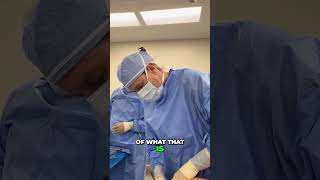
Robert Whitfield MD explains ERAS protocols that cut post-surgery pain to 2-3 out of 10. Patients take gabapentin and Celebrex the night before, get ultrasound-guided nerve blocks during surgery, and the surgeon injects local anesthetic into the surgical site. Ondansetron prevents nausea.
Questions this video answers
The night before surgery.
Celecoxib (Celebrex).
Ondansetron (Zofran); speaker says it 'helps' and also remarks 'Zofran is for nerve'.
Around 2–3 out of 10.
Chapters
We do a eras, which is enhanced recovery after surgery. Use gabapentin the night before celebrex, really good cox2 anti inflammatory, and then Zofran to help. Really, we want to reduce as much nausea, inflammation. And as Zofran is for nerve. And then in surgery, our anesthesia team is providing peripheral nerve blocks. So we're trying to really address, before we ever do anything, blocking the pain for people who haven't had a nerve block before. Can you quickly. Sure. Give me the overview of what that is? Yeah. So I've had it and it seems pretty effective. Yes. If you just think of the spinal column on our vertebra, your ribs pop out, come around from back to front. There's nerves out of each level below the rib vein, artery, nerve. And they can, under ultrasound, go back, block that area so you get wraparound coverage. And then on the sides, they'll block a little area near the serratus anterior and latissimus boise on the front. That helps give more coverage here. And then we're actually doing the surgery. Our exposure is really good. And I use a lighted retractor so I can see the pocket like you're looking at a cave with a headlight. And then I will inject directly the tissues where I've been operating. So we get really good dense anesthesia before folks wake up, because we want everybody in a kind of a 2, 3 zone when you wake up. Out of 10, we.