She Couldn't Open a Water Bottle — Until This Changed Everything
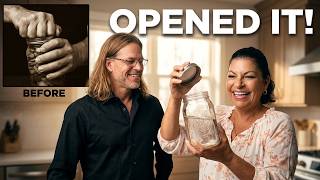
Leah Cormier spent ten years declining after getting textured breast implants in 2006, developing eosinophilia, asthma attacks, chronic pain, and progressive hand weakness. After learning her implants had been recalled but she was never notified, she had them removed at Dr. Whitfield's clinic. Within weeks she could open a water bottle again, a simple act that marked the return of grip strength and the start of real recovery.
Chapters
Welcome everybody. I have a special guest today, Leah Cormier. I love that. I have called Leah lots of names and she's corrected me. She is a fabulous patient of ours who has, I think, a tremendous story to share. And I'm not gonna give away the details. That's what they call the tease. And then we're gonna have her introduce herself and let us know Kind of how she arrived at the conclusion maybe to just come see us and talk about whether it's explant or breast implant illness or just learning about implants in general. Because once again, our programming is all educational and full stop. I don't tell anybody to do anything. People come to us and they want to learn what we understand about their problems and we try to help give them the best possible guidance to make their informed decisions. So welcome to the show, Leah.
Thank you. Thanks for having me. I'm Leah and I'm 59 years old. I have 4 grown adult children and 5 grandchildren. And I had my implants put in back in 2000. 2006, and everything was fine. They were a study implant, silicone, and I never had any problems until about 3, 4 years later, around 2010, 2011. I started, um, becoming symptomatic. Had I known that it was the implants, it would have saved me many, many years of horrible illnesses. Um, so in 2018 is when it got really bad, and I started to just have a lot of nerve pain and muscle pain. And I was an avid exerciser. I did Zumba 6 days a week. Mm-hmm. And ate decently healthy, not like I'm doing now, but, you know, I would— not a heavy drinker, not a smoker, all the things. And all these things were just going bad, wrong. So I had surgeries from 2018. I had a ruptured brain aneurysm. Mm-hmm. And I survived that. 2020, I had a full-blown hysterectomy. And then 2022, lumbar spine surgery because my spine was deteriorating and I had scoliosis that I never knew about. But as the years went by, it just—
Mm-hmm.
You know, my health was declining, declining, declining. In 2023, I had a bunionectomy. My whole foot was going like arthritic and just my toes were fracturing for, you know, no reason because they were getting deformed from everything just being weak. And deteriorating. Um, then in 2024, I had cervical spine surgery because my spine, all the discs were like bone on bone, and it— I was just having a lot of issues health-wise, pain-wise, always tired. I got to the point where I was thinking to myself, okay, I'm forgetting everything.
Mm-hmm.
I didn't want to do anything. I wanted to just stay in bed because I always hurt. So I'm not a pill popper. So I pushed through as much as I could push through. And this past year I was losing my fight. And I hate to say that and admit it, but it's true. I was losing my fight. Um, I was scrolling through my Facebook one day and I ran across an old friend that used to be a lacrosse coach for one of my daughters, and she was very ill. And she had spoke to 19 doctors and they told her she was crazy, it was in her head, there's nothing wrong with you. And so she just started posting, well, I'm dying, I'm gonna die. And it really does feel like you're, you're going to die because nobody's listening to you. And one of the greatest things that happened to me is when she posted that she had implants and she got them removed. And I went to my med spa and I asked my med spa nurse, do you have— do you know of a surgeon that knows about BII? Yeah. Because I did. I'd never heard of it ever. And she's like, actually, I do. And that's how I found Dr. Rob and his team. And for the first time in over a decade, I was heard. We scheduled a consultation and he listened. It was incredible. And then after the team talked to me afterwards and My specific implants had been, um, recalled, but we were never notified because we lived in California at the time. They don't go chasing for you. They send the letter of recall to the address you lived in— to the address you lived at when you had them put in.
Yeah, let's pause there for a moment because that's something super important. And the recall is really to the, uh, from the manufacturer to us, and then they notify you, like you said, via mail. But it's the last, or what they know is the last known address, because there's an implant tracking form filled out by either the hospital, the surgery center, or we'll say the doctor who's responsible, and it says, okay, this is for Leah, this is the information, and there'll be these series of stickers you can put on that tracking form. And then it's supposed to say, you know, the business address for me, the surgeon, or the business address for your surgeon, plus where is your current, you know, residential address or mailing address. And because obviously we move, we don't live in the same place for 30 years typically, that gets lost and there's not been a way to contact, you know, Leah and others who have this device from Allergan and it's specifically the texturing, the biocell texturing which is the problem and we can go into that later but I just— I wanted everybody to understand that because Honestly, Leah, I was called about this in 2019. I was on a call with the manufacturer and they said, yeah, we need to recall these. And we all kept waiting for like, well, how are you gonna help the patient? And there was no how to help the patient. There was only, okay, if you surgeons want to switch out implants for say Leah or another patient of yours, We'll give you a smooth implant. And then we're like, oh, okay, then they're gonna have some kind of stipend to help, you know, the patients get that taken care of.
Nope.
Nope, that's not gonna happen. So that immediately told us the usual problem, right? So then it becomes a problem for, the patient and the, the surgeon to figure out collectively. Because you know what a manufacturer will do is simply write off the product as a loss. So that just gets moved on the balance sheet to a loss. And, um, that's probably all you need to know about a pharma company. Mm-hmm. You just got written off as a loss because that's not what they're concerned about.
But they would have found them if I owed them money. I'm sure they would have found me.
Always. Yeah, everybody's gonna come for, you know, the, the money. Um, but you know, now like that kind of leads into why you were having and experiencing kind of what you were experiencing, and maybe just go through what was a pretty long list of things that I think a lot of patients get, you know, really confused about because, I mean, it's not a short list. So why don't you give your list of things that were bothering you? And I know you already talked about what is a really, uh, I try to remember all your surgeries when I'm talking to patients because I say, you know, and our patient Leah, who's been in our group and online, she's had so many of these surgeries because folks didn't exactly know what to do for her. So maybe kind of what symptoms led to, you know, those therapies?
Well, it started when I had I had an infection somewhere, so my, my— it's a blood type, it's called eosinophilia. My eosinophil count was very, very high, and we thought I just was— had, you know, the flu. But then I started not being able to— I had like asthma symptoms, and I don't have asthma. And so we kept going back and forth to the ER, back and forth. They're like, oh, she's just sick, she's just sick. And I was like, no, I'm not sick. So by the 4th time at the ER, my husband Tim says, I'm not leaving until you figure out what's wrong. Something's wrong. So that ER doctor must have had a red light go on and, and took blood, and they saw that my eosinophils were attacking, like my body was attacking itself. So I was getting like asthma-type symptoms.
They—
Mm-hmm. They washed my lungs. They took a sural nerve out of my ankle. They thought I had some sort of autoimmune disorder. One was called Sjögstrauß syndrome. They sent it to the Mayo Clinic and it wasn't that. So they just basically treated it like asthma, but I didn't have asthma. And once they put me on a high dose of steroids, everything calmed down. So they kept me on the steroids. Mm-hmm. And unfortunately, you know, after being on the steroids for so long, my adrenal glands shut down. They went to sleep supposedly, but they, they still haven't woken up, you know, 10 years later. And, um, I'm now steroid prednisone dependent. I'm down to 5 milligrams, but that— Okay. Is also not good for my bones and everything to be on that medication for so long. But here we are. And then, you know, just over the years I was getting random weird sicknesses and everything hurt every day. I was fatigued. I wanted to sleep all the time. My brain fog. Mm-hmm. I thought I was getting Alzheimer's or dementia because I was forgetting a lot of things. And it was really scary because I was terrified that— I do hair, I have clients, and some of their parents have these diseases, and I was like, I don't want to be that person.
Right.
So, but I never— again, I never heard of breast implant illness. So I didn't even think about it. I did think about getting them removed after 10 years, but they weren't giving me problems, so if it's not broken, why fix it, right? So I thought. But, um, yeah, I just haven't— I wasn't sleeping well. I was— had a lot of anxiety, a lot of depression. My blood pressure was up and down because I was always feeling ill. And then we started, when I started the SHARP program and started doing the pre-surgery detox, I started feeling different. It's not an overnight cure. And it's not an overnight cure after you start detoxing and after you have your explant. It's, it's still a journey and I know it's going to be a journey, but at least I know now that I don't have what everybody was telling me I had. That was fibromyalgia. And to me, fibromyalgia is— I don't know what's wrong with you, but here's your diagnosis. And I never believed that that was a true diagnosis. So when I started doing this detox and eating differently, taking out the gluten, taking out the dairy and all the things, I actually, before I even had my surgery, started feeling different, right? And, um, another thing too is I gained 20 pounds in the past 3 years, and I've never ever had a weight problem. And I am deflating because all of the inflammation is calming down in my body, and I could feel it. I could even feel if I eat something that isn't on my meal plan I feel kind of like hungover the next day. And then, you know, it really helps with not making poor eating choices thereafter.
Can we just stop there? Because I think most people don't appreciate how important it is on a daily basis, Leah, to do what you just said, right? It's Tiny habits make big differences over time. You said the right thing where it's not an overnight, you know, phenomenon where you start to feel better starting the program. The program is set up to help, you know, make small incremental change that has a big, big effect at the end. And both you and your husband have made the changes, which is simpler because you're doing it together. Mm-hmm. But the thing that's important is how you guys, you know, support each other, and that makes a big difference. And then you can— it's easier. So if you're not— one of y'all's not wanting, you know, Whataburger, and, you know, the other wants to eat at The Well, it's not a struggle, right? So it's harder to make those choices if in fact they're not being supported. It's harder to make the choices if you don't have the counseling or guidance or have been given a little bit of a blueprint of what to do. But, you know, going gluten-free, which I've been, you know, principally for a decade now, or— and I don't really eat dairy. Haven't had, you know, principally— I didn't eat eggs for like a couple years because eggs were a big driver of histamine release for me.
Mm-hmm.
And that's just a specific thing on my sensitivities. So, you know, knowledge in this situation helps you make a lot of better choices. And that's, you know, basically what you're saying is you, you and your husband are making different strategic smarter choices so you feel better instead of having a food baby or a food hangover or waking up the next day, you know, feeling like, oh, shouldn't have had that for dinner or whatever. So I just want to, I just wanted to like say that that's a really important aspect. I'm glad you brought it up that way.
Yeah, and you don't, you don't magically feel perfect right away, but you start listening to your body, stops fighting against you, and you start conversing with your body and your body conversing with you instead of your body fighting you constantly. And that's a huge, huge thing to, to grasp and get used to because you're always— my body was always in fight or flight mode, you know.
Right.
I knew if I got hurt, if I fell, that it was going to open all the pain gates and they didn't know how to close. So if I say I fell and I'd suffer for like 2 or 3 weeks after a little fall because my pain gates didn't know how to close. And I just feel like my, my body was just attacking its own self and I didn't know why. Because— and when I—
Oh.
When I commit to something, I've always been good at sticking with it. And it hasn't been easy, but I feel so much better. And I feel like my body was whispering to me to, you know, you're doing too much, you're doing too much, you know, we're in here, but I can't help you. And then when it started screaming to me, then I had to figure something out because I didn't want to be like that. I wanted quality of life back. And boy, I'm sure getting it back, it's like I said, it's not overnight, but I feel like there's light at the end of my tunnel.
Right. I feel like that's something that has been not abundantly clear from the information given on social media. So there are, in my mind, a group of patients who, like, you can have some really short-term gains that are huge. Like, we can go into it later, but— The bottom line. Yeah, in the first, like, 3 months or 90 days, I see people who have infections or ruptures or leaks or, or some kind of really overactive immune response get better. And then there's the folks that take the next, you know, 3 to 6 months to get feeling, you know, better. And then there's a whole group that takes another 3 to 6 months to get feeling better. And that's— the programming is set up to help make that time to feeling better shorter. But everybody starts at a different point, everybody has a different set of circumstances. And obviously, um, I think our group— our nurse practitioner Violet's had an explant with us and done the program. Chelsea, our lead detox practitioner, has had an explant with us and done the program. Gina Also on the detox team, has explanted with us and done the program. So there's a lot of support for women. Um, obviously that's not me because I haven't had the surgery. I, I do the surgery for everybody and built the programming, and they really execute and support everybody afterwards in terms of having had the experience to help patients through the process, because that's a different situation for each person.
Yeah, and your team is amazing, and the support you get after is absolutely phenomenal because like you said, everybody has different phases of recovery. And sometimes it's like, oh shoot, you know, I'm already 8 weeks, I shouldn't be feeling this, that, and the other. And then we have our support work group call, and there's women that have been recovering for, you know, 6 months and they still have little setbacks. But what we have to remember is that it took 10+ years for me to become this broken. And yeah, we took the culprit out, but it's like a, a reset on your entire being. And it's not going to change overnight. So we have to be patient. And those calls with hearing other women's experiences are truly, truly helpful.
Yeah. Well, let's talk a little bit about— you did the program beforehand. You came here the day before, which everybody does. We do our night before surgery treatment. Not so much a treatment, but it's a ERAS or enhanced recovery after surgery protocol we run that starts the night before about use of gabapentin, something you're familiar with where others wouldn't be. And then an anti-inflammatory and something for nausea.
Mm-hmm.
Now, the next day is really, you know, the day that becomes, I think everybody focuses on. They're nervous about coming to have surgery, of course. I see everybody, I mark them, and then our anesthesia team does an ultrasound-guided nerve block to help really reduce the signaling of the body back to the brain to really let them, the body know that they're having surgery.
Mm-hmm.
And then when I'm in the operating room doing the case, I'm trying to further diminish signaling by adding more and more local anesthesia in the form of long-acting liposomal bupivacaine or Expro, which it's, it's called. And then when you get to recovery, everything should be, you know, relatively calm. And then you, obviously your husband was there and, and I went out and spoke with him afterwards. And then you went home. I mean, you're local to us basically. And then you came in the next day. So maybe, I guess a lot of people are rightfully so concerned and anxious about obviously surgery, but maybe you can help them a little bit with that part.
Well, being that I've had my share of surgeries, I was never given the regimen that I was given the night before my explant surgery. And I went in, I wasn't I was calm and everybody was— let me just say this, Dr. Rob and his team has a very, very well-oiled practice. It's top-notch. From the minute we walked in the door and they checked me in until we left, there was always a tremendous amount of support.
Mm-hmm.
And I went in there, didn't feel nervous. Next thing you know, I was out and we were on our way back home and no problems at all. Got home and I honestly was up and moving the next day, no problem. Went in and did all the treatments, the spa treatments, the red light therapy, Flopresso machine, uh, Human Regenerator, and what's the last one?
So we have the Juve red light and the hyperbaric chamber. So the Human Regenerator is the big one you lay on, and then we like to follow that with the Flowpresso and the NanoV at the same time, so you get that really nice combination effect before going to the hyperbaric chamber and then the red light.
Yeah, and those were amazing. And it did, it made you feel good. And after that, we go home and then just take it easy. But it is really, really hard with that nerve block to sit still because you feel like you, you want to go and do things. Um, it was hard to keep me down, but It's very important that you stay down and take it easy. Going back for the 3 treatments was— it was just— I have no words. It was great. It really helped. It helped my mind. It got me up. It got me going. And then I go in and then leave there and I felt good. I felt really, really good. I did. I can't honestly say my own personal experience I had I was uncomfortable a lot because I wasn't.
Right. I mean, the goal is really— and we talked about it, but I'll just break it down. Like, when we have someone have surgery, they have a lot of cortisol release. And even though you're So for you, you've had this problem with your hormones for a while, but the standard response to surgery is a big cortisol release. And so all the programming, Leah, is really meant to help diminish that so that then the day after, you know, you've hopefully got your rest and you've got yourself back on track by getting up, getting some sunlight, going and, and getting your circadian rhythm reset because that's going to help your cortisol level drop, and then come to the office and do all the things we're talking about to further drop it. Because as soon as we can get that lower, the quicker, the more efficient you're going to recover. I don't ever spend a lot of time like completely breaking it down that way, but that's essentially the story. Like, we're trying to control the amount of cortisol someone has to manage. So it's not as complicated because it's a big deal to have that done, obviously.
Yeah.
So after surgery and after, you know, having the treatments and everything, I think the remarkable thing you told me that you can share is how your hands felt.
Okay. So prior to surgery, I was to the point where I couldn't open a bottle of water. I couldn't take the lid off a jar. Opening the door to get in and out of the house hurt. Everything, it just hurt to close and open my hands. And about, it was about a week or two after my surgery, My husband and I were just sitting watching a movie and I was looking at my hands because part of the BII was it kind of accelerated the arthritis I have and my hands are starting to get deformed. And so I'm looking at my hands, and all of a sudden I realized I was opening and closing my hands. And I was like, wait a minute, that didn't hurt me. So I looked at my husband, I was like, look, I'm opening and closing my hands. And he says, no way! He jumps up, he runs to the kitchen, grabs a bottle of water, and he said, open this. And I opened it. So he ran to the garage, gets a bottle of Clearly Canadian, and said, here, open this. But we were so excited that I could open it and it didn't hurt that my hands got sweaty and I couldn't open the bottle. So we dried off my hands and waited a minute, and I can open the bottle. And we're like, oh my God, it was just amazing. I wanted to drop to the ground and just scream. I was so excited that I could open a bottle and I can open a, a jar and the door and it doesn't hurt me. So I didn't realize how much that— how much my body had taken over and I wasn't able to do so many things. And now I'm starting to be able to do a lot of things. And my mind is clear. I tell my husband all the time, I'm going to be smarter than you now because no more brain fog. But yeah, and it may not sound like a big deal, but that was a huge, huge, huge aha moment for us.
Yeah, I think that when you told me that, it highlights something I think is is concerning to me because the amount of inflammation that someone can experience varies and you don't know what somebody's going through and I don't, you know, everybody kind of gets to their— Yeah. You know, level of dealing with and coping with like pain and tolerating things. And yours was your hands, and you just got used to not being able to do stuff. And now you can. So I mean, that's a— obviously, that's a huge win for you and for us that you can, you can do those things because your grip strength, your, your balance, those are things that we want to preserve, enhance for your longevity. So, I always talk to patients about like the things to do that are important are, you know, you have to be able to work on your balance and your thigh strength and things like—
Yeah.
Probably I, I could speak more about grip strength. I'm always thinking about like balance and thigh strength because I don't want people falling. But yours is extremely important because you're talking about something that's maybe not top of mind to everybody, which is your grip strength, how you can grasp something and get it off or, or create pressure to get it off. And, you know, the other night, um, My wife had a similar problem and she was frustrated because she just couldn't get something open. I opened it. So we want to work on preservation and improvement of grip strength, thigh strength, and balance because those are things that are, you know, in the long run, we don't want to become more frail ever. So I really applaud you for, you know, that's an awesome win for y'all. I think— I was very took by that because I hadn't heard it, and then you had said it when the Biohack Yourself film crew was here filming our audience, and we just did a little brief interview, and you said that, and I didn't know that.
So— Mm-hmm.
That's a huge—— like, it's not even a milestone. Like, that's an incredible, like, thing to regain. That's how I would talk about it.
Yeah. I mean, it was to the point where before I had the lumbar surgery and I was— I couldn't walk 100 feet in front of— it was terrible. I had to be in the wheelchair for playing. If we traveled, it was a wheelchair and we'd have to have one of those motorized cards waiting for me when we got to our destination. And I, I can't help but feel like a lot of these things that I've gone through the past 6 years wasn't contributed to the implants because, uh, I just feel so much clearer um, in my mind, my body, everything. It feels like me again, and I haven't felt like myself for so many years that I almost forgot who she was because all it was was this person that hurt all the time and wore the mask so that nobody knew. And then when it got hard to hide it is when we dug deeper and found you.
Well, I think that's a very eloquent way of putting it. It is a very, very, probably extremely lonely place. And once you get isolated and lonely, it becomes more difficult. And when somebody can't really, uh, when the doctors that you go see can't really explain it or understand it or give you guidance, that's got to be even more frustrating, obviously.
Yeah, because you feel like you're, you feel like you're going crazy. Like, it's like, oh, it's all in your head, you're just tired, you're stressed. And it's like, no, nobody, you know, no one's listening. Somebody needs to listen. And I hate being the squeaky wheel because then I feel like something, you know, they're going to do something worse to me, and then I'm going to be really messed up.
No, I think you have a phenomenal story, and you say it very, um, it's easy to understand, and it's a powerful story. The one that, you know, obviously we'll share it on this channel. I've told you you should share it on, um, Facebook. I think it's a really great story. Because, you know, you were kind of living in isolation, getting, you know, further and further kind of down the, the, the hole of frustration, if you will, about the whole situation because you couldn't get an answer and you kept having different surgeries. And like, you rattled off that list of surgeries. I remember when I first met you and I was like, oh my gosh. Mm-hmm. What is going on here? Because you're not— you're a younger, you know, person. You shouldn't have had the need to have all those things done, you know, barring like an accident or something, you know, some traumatic event. Those are just things that were done to quote unquote help you.
Yes. But yeah.
But they hadn't really helped you.
No. I think that's the big problem. Yep. They hadn't helped me, not much at all.
What is that list? What number of surgeries you had, barring the, the one I did? What's that number at?
6.
Right.
So I always have this, like, from 2018 till 6 years later, every year it was something. Every single year. It was horrible. But, you know, it's just, I think what was worse for me was getting the setbacks. You know, I start feeling good and then, okay, here, have another surgery and sit on your butt for another 6 weeks. And I finally went to a personal trainer this past year and I saw him for 1 year and he was this, what caught my eye was that they had an ad and it said for women over 50. And I thought to myself, wow, that'd be a good place to start, to start getting back into working out a little bit and getting my strength back and my balance. You spoke about balance and my balance was horrible and I had no, no upper body strength, my legs, just because of all these setbacks, I never got back into a routine of exercise aside from walking.
Mm-hmm.
Well, um, I started with him and I could barely squat a 5-pound weight. So, um, he started me with just my own body weight, and then we moved to 5 pounds and then 10 pounds. And fast forward about 6 months, I could squat 20-pound weight. And I'll do all the things that he had me doing, but— and I was eating better, but I could not lose a pound. I think I was losing inches, but never a pound. And then I fell, um, and I hurt— I hurt my arm. And so he had to back it up and modify me. So that's why I never got to go in the group I always was just one-on-one because he always had to modify Leah's routine. And so then we got past the arm injury. And when I left him before my surgery, I was squatting 25-pound weight and I was doing push-ups and I was doing all these things that I haven't done in years. Wow. And so my balance got better, everything got better. So I felt really, really, really good going into my surgery because I had been exercising. I started the detox and eating better, all the things. And here we are.
So those are the points though, right? I have a lot of folks who try to train their way out of something, and you can't, like, fool your body. Your body is far more clever. And I've seen people try to starve it out of themselves. I've seen people overtrain it. I've seen people take a bunch of different medications, um, not limited to, you know, antidepressants, anti-inflammatories, steroids, something called a biologic, to no avail really. And it's not like this is— and I never touted it to be the thing that solves the entire puzzle. Like, I think everybody who knows me at this point has listened to me over like the 30 million views on YouTube or the 160 shows we've done or the books we've written is It's just the component of a much more complicated problem. And so the methodology is set up to find those root causes. I know that's a cliché term now, but your genetics, your toxicity burden, gut health, food sensitivities, hormonal balance are things that we have to pay more and more attention to, to help You and everybody who's, you know, you haven't said it out loud, but just stuck.
Mm-hmm.
And we need to help people get unstuck, basically. That would be an ideal outcome for all the effort that, you know, we've put into the programs or the recovery or preparing patients because I don't want any patients to, you know, experience what Leah had, but I know they are. I know that's still happening. And there's a lot of suppression of information. There's a lot of quote-unquote censorship or, um, shadowban, whatever the terms are going to be used to describe what's going on currently, uh, with our content, which has been, you know, uh, hard to find. I would say at this point. So I encourage obviously Leah to share her story, you know, publicly and on platform because me sharing it is not going to be the way that more people learn about this. That's not going to happen. So whether it's in the Facebook forum that she's on, I think that's a great tool because those people ask a lot of questions and They need a lot of help. Facebook is not for medical advice, but sharing information that can help somebody is certainly— I'll always be on board with trying to find a way to help, you know, patients. And then if someone needs something, they of course can reach out to us and we'll try to provide, you know, guidance however we can. Thank you.
And when you, when you talk about, um, exercise on your talks, you say it perfectly because everything you recommend as far as walking and not, you know, not trying to do heavy workouts and things is exactly what I did— was taught at my training for that whole year is just making your own person stronger, even if it wasn't with weights, even if it's just using your own body movements.
Right.
It's, it, I mean, it's what you recommend is perfect. And what I was taught prior to, you know, meeting you. So—
It's a really underappreciated approach, which is just— and my wife tries to get me to go walking all the time. And you know how my days and nights end up being sometimes, so it's very challenging. But it's a great exercise. And using your own body weight is a really underestimated tool. So if you— like, I have really poor knee joints from a lot of knee surgeries from cartilage issues. And I don't really like forward lunges, but you can do side lunging and you can do reverses. And that's fine. And I feel fine doing that. And that's a great way to improve thigh strength and your balance. Those are all absolutely fine. They don't cost anything. Right? Trying to sleep better doesn't cost anything. Going for a walk doesn't cost anything. Choosing to drink water instead of sweet tea, Dr Pepper, Coca-Cola, Pepsi, C4, Red Bull, uh, whatever other garbage you can come up with is not expensive. And, you know, the harder thing that we talk about is air quality, and we use Jasper and IQAir and then the food is always the most challenging, like you already know, but you can keep it really simple. And when I say cut out gluten and cut out dairy and, and you don't utilize seed oils, people are like, well, what can I eat? Well, there's these things called fruit and these things called vegetables. And depending on your protein source, whether it's a plant or an animal or You notice I don't really emphasize one of those over the other. I just say you got to get quality protein in your diet and enough grams so that it makes a difference in your healing. That's all I really care about. Like, I'm not here to police your eating habit.
Mm-hmm.
I'm here to help you just make better choices so that I have less of a problem helping you get better over time. And the more Like folks understand that it's not us telling you to become a pescatarian, a carnivore, or a, you know, vegetarian. I don't care what you do. I just want you to eat enough protein so that you heal and recover and feel better, feel better as quickly as possible. That's the game plan always.
Right, right. And finding a doctor and his staff or her staff that is so willing to educate you and give their personal time to educate whoever wants to learn is— it's just amazing. I just— You know, a lot of times you get surgery and you see the surgeon before and your family member sees them after, and then you may or may not see them at your post-op.
Yeah.
Is— it's just you feel kind of like abandoned, and you know, it's like they hype you up to You know, you need this surgery. You have to have the surgery. You're going to feel so much better. And then they give you the surgery, it's successful or whatever, and then that's it. You never get to converse with the surgeon again. It's only his team and behind-the-scenes people, not him anymore. And that, that has been such a huge, huge, huge blessing to me. Mm-hmm. To have the support, the continued support that you and your team have provided to me because it's not easy. And, you know, with my own personal history, I don't even want to talk about the next catastrophe that I'm going to have because I could just see people rolling their eyes like, oh God, what's wrong with her now? You know? Yeah. And I never one time felt unheard with this experience.
Yeah, I, I think traditionally, obviously, we know that surgery itself. Because I did so much work in the cancer environment. It was just a different situation. And so I always had a lot of in-person contact with patients, maybe more so than what was traditional. And I've always kept the same follow-up pattern. So, you know, we obviously see everybody through in-person or virtual engagement, and then we see everybody pre-op in person, then we see everybody post-op in person, typically at that 1 week, and then it varies by where you are. So obviously you're, you know, local to me in Austin, so I've seen Leah a bunch in my office. Like I always tell the joke, Leah, the only way you can't hear from us is choosing not to contact us because if you contact us, you're going to hear from us.
That's right.
Nobody can get on the, you know, the, the keyboard warriors who are undefeated in this can never get on there and say they didn't, they didn't respond to me, they didn't listen to me. Now you can go on and talk a ton of shit about me. What you should never do is talk about my team. I can take all sorts of grief, but never say anything about the team. The team is great. Or your bouncer. Extremely hard.
Don't talk about your bouncer either.
Yeah. Don't talk about Leah, she's the bouncer. She's gonna hurt y'all. But, you know, it used to really bug me that people would go on and just say things like that. You know, they'd be, 'cause everybody can, you know, choose to be positive or negative. It's a choice, right? If you don't like us or like what we've done, that's fine. You can, you can say that. But it's not because we didn't try to help or be there or listen or try to support you in whatever way we could from a team collective. I have a great group of team members that they really work hard to help patients. And once again— Thank you. The only way not to get help from us is to actually not ask for it or not communicate or, you know, get lost in your own headspace or go off the reservation. Because like, once again, I tell everybody I'm not a psychiatrist or a psychologist, so we can help everybody, but some things are beyond our scope.
How many doctors do you go to where they hand you pills and say, here, take this, this is going to make you feel better. And Dr. Rob's team says, here's the supplements and here's a video to tell you exactly why you're doing this supplement, what it's going to help, and— a tutorial on what you're going to put in your body. And I thought— I think that is so amazing because we always leave our doctor's office and have to look up, you know, okay, what is this going to help? Does it interact with the other pills I'm taking? Is it going to make me sleepy? Is it going to make me nauseous? And we don't know. Even when you pick it up at the pharmacy and she goes over the side effects or what, how to take it. It's not the information that I've gotten with anything that I'm taking from Dr. Rob's office and putting in my body.
We try to keep it super simple too, to your point. Like, you don't want to take a bunch of blends or proprietary things if you can help it. So everything that we have, you know, we've utilized over a number of years and we've, you know, made adjustments and tried to keep it very, very simple. Like, this will help you methylate better, or this will help your vitamin D metabolism, or this will help your wound healing by helping you with your collagen synthesis, or this is gonna help you with your detoxification through your glucuronidation pathway. Big fancy words, but everything's got a specific, uh, role. And I think Leah's had enough surgery to know that most surgeons stop all supplements 2 weeks before, including anything for or related to aspirin or other anti-inflammatories to prevent problems with bleeding. Now, we have a very specific supplement stack that we've used for care over the last several years, and I never stop it for surgery at all. Because I'm not afraid to operate on patients taking what we've, you know, curated for them to take because we understand what it's doing, why it's doing, um, that specific role for each patient. All I ever ask patients to do is not do other things in addition to what we're doing. That way we don't get too many antioxidants, which ultimately affect your platelets, which also makes you more susceptible to problems with bleeding, which is what everybody wants to avoid. So it's a long way to get there, but that's the— That's the short answer. What's, in the roundup, in summary, is there something like you would like to add that we haven't covered or you feel like is important that other patients would maybe get something out of? I know we've covered a lot of ground. I know we talk about, you know, the program. Sometimes I wonder if, I guess you have to sort of be in it to understand it, 'cause it's a little hard outside in to appreciate. And if you hear all the stuff we talk about, they're like, "What is that doing in an office?" Or, "Why does he have that?" Like, you know, I could hear, you know, people say that out loud, probably like, "Why does he have that?" in his office.
Like, give me another example.
Well, you know, for you, you've kind of traveled the doctor routes and not gotten an answer. And it wasn't until your, uh, small person said, oh yeah, this guy does explants. Like, otherwise you would have no idea, right, that I existed.
Right.
That is literally like throwing, uh, something against the wall to see what sticks. Well, and that's where a lot of people are probably frustrated, Leah. They don't really know the next step.
Mm-hmm. Well, a lot of it is self-research too, you know. Um, I feel like if— I don't know, everybody has different, um, like for me personally, I was begging and pleading for answers of, you know, why is all this happening? And walking into your office and getting greeted the way I got greeted, and everybody was so warm, and they, they stopped and they listened, you know. Do you, do you need to use the restroom? Do you need a drink? Are you, you know, how can— is there any— are you cold? Do you need a blanket? You know, all the things. Um, not to mention it's beautiful inside and clean and everybody has smiles on their faces. And you go to so many offices and it looks like people just rolled out of bed and they hate their job. And I've not been into Dr. Rob's office one time and felt that somebody was having a bad day. So whether they were or they weren't, it was very well hidden. Thank you. But everybody's smiling and they're happy to be there. And they're all there every single time I go. It's never like, you know, somebody at the front desk pissed off because, you know, so-and-so called out or whatever. They're always all there. And, um, even after, you know, we have access to the team via, you know, our, our, um, portal or whatever, and someone— it doesn't matter who you're after— someone will get back to you, and it's within an hour to maybe 2 hours, if that. Um, I love that. I, I really, really love that. And you can go back to talks and, you know, maybe you're not at that level and you're getting to the point where you're going to be at the next phase or what have you, and I could go back and I can read different talks or, or, um, the notes that they took, and they're always happy to explain and educate, and I really like that because I can listen to the talks over and over and over, and I still learn something different every time.
Yeah.
And it just, it helps me that I'm so supported. I feel like it's not all in my head, that this is really happening. I'm really, really, really, I'm gonna get better, better and better every day. And I know I'm gonna have those setbacks and it's okay, you know? Well, it's really not okay, but it's okay.
Well, everything is going to have moments where it's better and moments where it's not. Collectively, over time, that's going to continue to improve. And it's what we started on, so what we'll end on is like small changes end up to big outcomes. And that's, that's basically the way to focus on it and not get frustrated or impatient. And many people don't have enough support, so you can find that through our groups. You can find it through drrobscircle.com. You can find it through our private Facebook group. You know, don't be afraid of the keyboard warriors. Leah is a very, very good bodyguard and protector of you. So just— Uh, hang in there. So I want to thank Leah for hopping on. I really appreciate her time today, and it's been our pleasure to help, uh, take care of you.
Yeah, thank you. Thanks for having me, and have a wonderful weekend.
All right.







