The Perfect Storm: When Implants Become a Band-Aid for Deeper Wounds with Kristi Sager
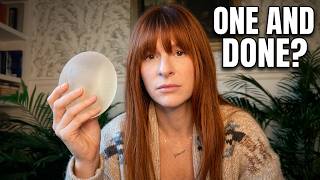
Christy Sager got breast implants in 2017 to rebuild confidence after divorce and pregnancy, but developed cystic acne, joint pain, chronic fatigue, and mood swings within months. Dr. Whitfield explains how bacterial biofilm in implants triggers inflammation; Christy's explant surgery and detox protocol restored her energy and digestion. She now coaches other women through the BREAST Method, a five-step healing framework.
Chapters
I felt like I had lost a piece of myself, and instead of going in and doing all this internal work, I wanted to fix myself outwardly. The big decision to get the implants in was actually me finding out that I had a lump in my right breast, and I thought, well, if we're going to take that out while we're in there, let's plump them back up. I really had no idea that There were supposed to be multiple surgeries throughout your life, right, to maintain these things. So I'm thinking like, I'm just going in for this upgrade and, and I'm done. One and done. I was sick for 2 weeks because my body had so much toxic burden and toxic overload in it. And she said, hey, there's a girl on here that I listen to, and I think you might have breast implant illness. And my body lit up in chills. So it was really important to me to heal and take care of myself so that I could also be there for others, my kids, my family, and not be a burden because I didn't take care of myself.
All right, everybody, I have Christy Sager, and she will testify I did not drag her out of her house to take her implants out. I've just been using this offline recently.
So yes, I, I can attest, uh, you didn't call me up, you, you didn't threaten me with every inch of my life and a scalpel blade to to get me out of my house to remove my implants.
Oh my goodness, yes, it's quite, uh, funny. Well, you know, Christy and I were joking about something that was said about me recently online, and, um, you know, I consider breast implants and chronic inflammation, breast implants, from breast implants and breast implant, you know, illness to be this kind of larger continuum of inflammation. And it's very challenging for someone, especially in Christy's situation, to completely, uh, get better without removing that. And we know that's a big component that was affecting her based on her history and everything she could tell us. So I'll let her, you know, kind of give you all her story, and we'll just have a big conversation about what we did for her.
Yeah, great. Um, well, I really wanted to just kind of talk about this perfect storm. That's at least that's what I'm calling it, um, back in 2017. All the perfect conditions that led me to get my implants in. Pregnancy was a big one for me, having 2 children. You know, I breastfed. Breasts went definitely from a very large size back down to a very small size. In 2016, I had gone through a divorce. So by 2017, right, everybody wants to start the year off right. New year, new me.. And so I'm looking at my body and I'm like, this is not who I used to be. So pregnancy, divorce, I had always had larger breasts. I look back at it now and I'm like, huh, big breast energy. You know, that's, that's what I wanted to lead with. That's what made me feel powerful. That's what made me feel confident is the outward appearance that I had really just made me feel, you know, like me. So going from the— this giant breast size down to the small breast size, I felt like I had lost a piece of myself. And instead of going in and doing all this internal work, I wanted to fix myself outwardly. Um, so had all these perfect conditions. The big decision to get the implants in was actually me finding out that I had a lump in my right breast. So I go get the lump checked out and that breast surgeon, she says, hey, you know, this is bothering you. You have a history of breast cancer in your family. You know, we can go ahead and take that lump out because it was painful. It was affecting, you know, my workouts. It just was this annoying thing. And I thought, well, if we're going to take that out while we're in there, let's plump them back up. And she had a friend of hers that was a plastic surgeon here in Austin, Texas, and she reached out to him and he agreed to do both at the same time. So what really, you know, hit home for me was this justification of a medical surgery. That's how I justified, I'm going to get my breast implants put in.
So it's funny how that gets navigated.
Yes, exactly. Um, and you know, in the beginning, yes, I'm, I'm feeling my big breast energy, I'm feeling great, until I wasn't.
And you know, when you had the consultation with the plastic surgeon— and I, I go here for a specific reason— was there any consideration given to using your own tissue, so a fat transfer or a lift or combination? Did you ever hear anything discussed like that?
We didn't talk anything about fat transfer. What I did get sold was these gummy bear implants that were supposed to be the safest on the market. Um, they were kind of newer at that time. They were natural, you know, they had really good results with them. So we— that's what we talked about. Um, yeah, and, and, and really, you know, looking back, I, I was talked about one surgery. I really had no idea that there were supposed to be multiple surgeries throughout your life, right, to maintain these things. So I'm thinking like, I'm just going in for this upgrade and, and I'm done. One and done.
Yeah, I think that is a little bit of a challenge in that is the discussions I have with patients is kind of a limited, uh, solution for that problem. So you, you breastfed, had the standard breast involution, or what we call after breastfeeding, and each time you do that, the, the kind of skin will stretch and tighten only a certain amount, and then, you know, it is more and more of a, you know, kind of deflated appearance. And then the tradition is, how can you replace volume? So there's always, you know, your own tissue, which is, um, and we'll say a, a cancer situation, autologous reconstruction. So there was, for the long period of time, developed in the '80s really, the tram flap. Now that's an older operation that utilizes the tummy tissue but, um, disconnects the, the one of the six-pack muscles to recreate a breast in a cancer situation. And then as I was, you know, training and coming up through the, the ranks in the '90s and early 2000s, there was more and more emphasis placed on what was called the deep flap reconstruction. And I actually went to many, many meetings overseas in Europe and, uh, other regions to learn more and more about that because that's what I wanted to do because it preserved the muscle. So that operation preserved muscle and nerves and used the tummy tissue that was discarded in a tummy tuck and you hooked it up to the blood vessels underneath the sternum and that made a natural breast reconstruction. And so as long as you hooked up the blood vessels, that would work, it would be fine. The other way to do reconstruction is with an implant. And so when you do an augmentation, obviously you can use an implant, but the other less often discussed, which is why I brought it up, is your own tissue. In this instance, not using the tummy tissue and doing microsurgery like I did for cancer reconstruction, but using fat from areas of the body and doing, you know, I, I termed it a holistic mommy makeover, and I would just take fat and I would revolumize the breast. Now it works when patients want a, a, I would say, a more conservative change, not like 2 and 3 cup size change, which most of my patients didn't want that. And then they, you know, come and they're like, I never wanted to be this big, and all the, all the, you know, uh, things around that. So I bring it up, so I just don't think people get informed that that's a choice. And then obviously, you know, when I I do offer fat transfers in certain instances, and I try to do them simultaneously because it ends up providing a better solution for volume at one time than I, I can do otherwise.
Yeah. And, and I think, you know, at that time, I mean, I can't, I can't really speak for him, but my body was a lot smaller than it was right before. I had been a little bit more voluptuous growing up in my teens and sort of my early 20s. And then, you know, having children, I lost a bunch of weight, and so my body slimmed down, and I really didn't have a lot of fat on my body at that time. But even then, you know, if, if it had been brought up to me, at least it would have been another choice. It would have been something that I could have considered, right?
It's just to make sure that you have all the information so that you make an informed decision. I get asked all the time, Christy, you know, I have a daughter, and they're like, oh, what if your daughter came to ask you if she could have a breast augmentation. Well, first of all, my daughter is a Leo like me, and you're not going to tell a Leo anything once they've decided what they're going to do. They're just going to do what they're going to do, just like any— it's very hard to change somebody's opinion, especially a young person's opinion. They don't have a lot of, you know, experiences to draw upon to, you know, make a different decision, and they're not necessarily going to listen to a bunch of people. It's more that you get presented all the information and then you kind of go back and and have time to make that decision. So, because this is not a rush, I mean, you can do it at your discretion. So it's not a— it's like a choice. And I feel like the better informed— that's my responsibility. You have to understand all the options.
Yeah, information is key. And really the cultural conditioning for me as well was I'm 42. So, you know, I grew up mainly, you know, in '90s, big breasts were really, really in at that time. And so my cultural conditioning along with like wanting to get my spark back, you know, I had lost myself, I had lost my spark, and I'm thinking that this is gonna be the answer. This is the key to me getting my spark back.
Right. So that's, and I've heard that from many of our patients where it was a societal norm, or you saw it through, you know, in the, in the '90s it would have been magazines or on, you know, the television. Yeah, I was gonna say MTV. Yeah, took the words out of my mouth there. All right, so Christy said that, you know, MTV just went off the air.
No, I didn't know that. Yeah, I didn't know that.
Finally just went off the air. And, um, You know, that was the— oh my gosh, all the glamazons of the '90s. Yep.
Oh yeah, yeah, oh yeah. With, you know, yeah, with their big breast energy, right? BBE. That, that's literally super tall and yeah, yeah, big, big breasts. Yeah. And so, you know, they worked for me until they didn't. I, I would say that looking back and tracing my timeline, I get my implants in in May of 2017. And at the end of 2017, that's when I start noticing sneaky symptoms, right? But of course, I don't know that that is tied to breast implants, but I start getting cystic acne and I'm like, whoa, where's this cystic acne coming from? I'm getting very interesting rashes on my legs, like little pustules, right? So I'm like, is it my laundry detergent? So I go to free and clear, you know, I start having food sensitivities. I've not had food sensitivities before. So I start seeing a skin specialist and they're like, well, you know, maybe just after your babies and where you're at, like, cut out dairy, cut out gluten. So I go paleo. I start noticing mood changes. I'm more anxious. I feel, you know, mood changes of I'm happy one minute and the next minute I feel depressed. So I go see a holistic practitioner, and this is in— this is around 2018, 2019. I'm getting my lab work done, um, things are coming back normal-ish, and my E2 is a little high, and my thyroid levels are still within normal limits, but I'm kind of borderline hyperthyroid. So I get put on this whole regimen of vitamins. Okay, well, maybe you're in perimenopause, like You know, but I'm in my 30s. Okay. So I'm like, really, how am I in perimenopause? I'm a healthy individual. I'm hiking. I take care of myself. It's just very interesting that these things are starting to show up, but it's getting blamed on perimenopause. Okay. And so then I'm, I'm, you know, IV bags and I'm getting NAC. I'm on DIM. I'm just doing all the things. And 2020 comes around. Of course, pandemic hits, there's a slowdown. So, guess what I start doing then? I start sauna, cold plunging, okay? Because I'm like, I'm mental health, physical health, I start getting into that level of biohacking. And I'm good for a short period of time, like actually feel better than I felt in a while. But I'm saunaing like 3 days a week, like maybe 4.
And then how did you feel when you did a sauna?
So right off, like in the immediate, I would feel amazing. But then days after, I would kind of get this like hangover-ish type feeling when I, you know, and I, and I'm just like, oh, my workouts are super hard, you know, so I'm really taking care of myself during that time. But really, it isn't until 2021 comes around that I do start getting sick more often than not. And I think, like, I start really noticing that the scales are beginning to tip in the other direction of I was feeling really amazing and now I'm starting to not feel so amazing.
Well, we have a lot of— obviously, I get you know, I raised the red flag about saunas and implants and I take a shit ton of grief about that, which is fine. You know, I had Lauren as an example because she had both a barrel and an IR sauna. But, you know, and I don't know if it was the combo. I don't know if it's the barrel. You know, she had the most heavy metals I've ever seen on any, any patient. And, you know, the things that she was doing outside of the norm were really, really aggressive sauna sessions. I mean, really aggressive, you know, sometimes in a barrel up to 212 for 90 minutes. And not just her husband, you know, Mike will talk about it. And I was like, well, you know, leaching chemicals is nothing new. I mean, everybody's heard of the example of the plastic water bottle increasing the phthalates when it's heated in the, in the water and then you drink it and you get more phthalates. I mean, none of that's that complex, you know, but I get a ton of criticism of, of, you know, you can't superheat those things and cause a problem. Well, that's an interesting statement, but it's never been studied. Like, you can say all those things, but you have no data to support what you're saying. And then they criticize me because I have the patient with the data. I can only tell you what exists. I'm not making anything up. And patients, they get asked, they ask me like, well, should I just stop? If you sauna and you don't feel well afterwards, yeah, that's a sign. I would not keep doing that because if in fact you're having a Herxheimer reaction because you're detoxing or causing a problem for yourself, then you should just hold off. Yeah, it's not, it's not helping you.
Yeah, exactly. If anything, yeah, more inflammation. And, and I'm, I'm very sensitive as a natural redhead. I didn't learn this until you were sharing this, you know, specific gene that redheads have. It makes sense to me now, um, being extra sensitive to medications, being extra sensitive to anesthesia, it, you know, just things that I, I feel things deep deeply, even like emotionally, more than other people. I'm just a sensitive individual. And so it really didn't take much for me to have these Herxheimer reactions. Even starting the inflammation bundle, I was sick for 2 weeks because my body had so much toxic burden and toxic overload in it. And I'm like, that makes sense to me. Getting out of the sauna, I'm stirring up so much stuff in my body. My blood is pumping. It raises your blood pressure, you know. And no wonder I'm just sending these chemicals throughout my body and it's raging, you know. So really, I didn't even— I didn't connect the dots on the breast implants and really until 2024, even though in 2021 it still blows my mind. I was doing a 200-hour— it was like a 6-month trauma-informed training and I was in a group with a woman who was telling us how sick she had been. And she said she had been diagnosed with all these different autoimmune disorders. And she finally found out that it was her breast implants. This is in 2021. Okay, whatever reason, my brain did not want to accept that as truth. I wasn't ready to hear that yet. And so even though here's a breadcrumb, that's coming in for me, I'm obviously not ready to hear that yet. And it isn't until 2024 that my best, my best friend sends me a link to this Breast Implant Illness Summit that they were doing. And all these people came together to talk about that. And she said, hey, there's a girl on here that I listen to and I think you might have breast implant illness. And my body lit up in chills. And so I knew here's the thing that I have been avoiding for years. I looked at everything else. I biohacked everything else. And I really at that point was like, I have been an ostrich with my head in the sand. And so I, you know, here you are, you're not dragging me out of my house, but I find you because I see an acquaintance that had been to your clinic and had gotten her implants out. And I was like, I think this is where I'm supposed to go, even though I had— I had visited the original surgeon who put my implants in and he said, well, you know, he didn't agree about the breast implant illness. He said, I can take them out, but I am not taking your capsules out and I am not scraping ribs and giving you a pneumothorax. And I was like, interesting. Okay, well, thank you for your time. I think I'm going to go see this Dr. Whitfield guy.
And let's pause there for a moment because I get this all the time. This is a lot of, you know, unnecessary action basically in that discussion because number one, doing the capsulelectomy, which has been done for decades— once again, decades— in plastic surgery without, quote unquote, increasing injury or risk to the patient, has been done in cancer reconstruction predominantly, and certainly it's been done in cosmetics. So what everybody should understand is the original implant placements, um, that started with Corona— I'm sorry, Cronin and Giroux in the '60s from Houston oddly enough, here in Texas. They were placed above the muscle, and then due to capture contracture, which is firmness, tightness of the scar tissue around the device, basically the device was moved behind the muscle. So that made it more or less, um, I want to— I don't know that it changed the incidence or the frequency of capture contracture, but it made it harder to figure out. So in our country, since that period of time, most of the implants are behind the muscle. Now, when they're above the muscle, obviously it's a very, you know, uh, I won't say it's a more straightforward surgery because you're just, you're taking the tissue away from the breast on the top, if you will, and on the back side you're taking away from the surface of the muscle. And that makes recovery easier, of course, because you're not doing anything with the muscle. You know, now I'm always trying to make sure that if I can get the muscle back to its original position as I can. So there's a recovery period for that. But out of several thousand, you know, we've had a handful of patients with the scar tissue kind of unroof the area where the lung is now. You're not hurting the lungs. So like, everybody needs to understand, you're not hurting the lung. That's the cavity with where the lung is. So if you open that cavity, you have to get air out and close it. These are tiny. It's not some huge, you know, deal. Patient's not gonna suffer ill consequences from that. They're not going to be needing to go to the hospital or all these things. Like, it's just a bunch of unnecessary, uh, you know, The standard language is fearmongering, but it's—
that's what I would say.
It's just portraying something that's, you know, if someone's worried about that, you know, from an operator standpoint, then they just shouldn't be doing it.
And that's fine. That was my takeaway. Oh, okay. Well, you're, you're not my guy because obviously you're really skilled at putting them in, but taking them out, you've told me you've taken out, you know, I do take them out, but let me just tell you, you know, most of the time women come back and they want their implants back in.
And okay, which is not the case either.
Well, yeah, and, and I'm like, well, that would be for me to decide, right? This is like implanting more information into me, which in the beginning was fear, and then you're going to want to come back to me and get this done. So, you know, like, no judgment. I just was like, this isn't for me, you know? Okay, clearly this isn't where I'm supposed to go. And so I'm gonna go check out Dr. Whitfield. And, you know, the first, the first thing you asked me when you came in, so, hey, Christy, hello, I'm Dr. Whitfield. So tell me what's going on. And I said, what's not going on? And you laughed, you know, and it was, you listened to my story, you know, I, hey, this, these are the things that have been going on with me. This is what I noticed. And it's like, okay, well, you know, I'm not here to tell you to get your implants out. But I think that, you know, you can feel a lot better. We can help you feel a lot better because we do have all these different things here that can support your body. But that you put them in, you got to make the decision if you want to take them out. Right.
I, you know, I've tried to make the point to everybody, and this is the misperception, like, I'm not telling anybody to get an explant. That's a big decision. I don't, you know, I try to, as usual, give as much information. You know, we published a big paper about biofilm bacterial contamination implants, about, you know, 29% in our, you know, long series of over 694 patients— or I'm sorry, 694 specimens. Uh, that's a high rate. You know, 29% is a high rate. And then recently there was a great paper out of Denmark which is absolutely fascinating. So it shows that patients who are having Uh, you know, I mentioned capsular contracture. So patients who are having more tightness, firmness, thicker capsule formation, which is the patient scar tissue, they're experiencing more of an organ transplant rejection picture when you look at it using genetic analysis. So long story short is many people have heard us, you know, talk about, uh, in plastic surgery, breast implant-associated cancer. So there's B-I-A-L-C-L, and there's B-I-A-S-C-C. So there's a lymphoma and there's a squamous cell cancer. And predominantly the lymphomas are T-cell lymphomas, but there are rarely B-cell lymphomas. So long story short is it was always thought that the, the response was more of a foreign body response, and that's usually more of a T-cell driven response. But in this setting, they were able to show that it's not just T-cells, but it's also B-cells and something called plasma cells. So those are more involved with forming antibodies. So then you get more of this organ rejection picture. So it's not like a splinter being stuck in your finger, which is more of a foreign body reaction and chronic inflammation, which certainly happens. But think of it like this. So if 29% have bacterial contamination, so that's a big, um, stimulator to your immune system., and then that goes on long enough that you start to develop this more of a, you know, antibody reaction. That's really complicated for someone's immune system to cope with. And, you know, we're learning more and more about the immune system, but I, I don't think any of us should be so boastful that we know exactly what's going on in all these cases, because the evidence seems to be mounting more and more that, you know, in these cases where patients are experiencing more and more inflammatory symptoms, there's a lot going on.
Yeah, yeah. And even though my capsules weren't positive for the biofilms, you know, right, I've been on this detox and I can attest there have been a lot of biofilms coming out of my body. So it just— for me, I, I was obviously having a reaction to the breast implants themselves. By the time I saw you, I was so sick. I was an avid hiker. I surf. I'm just a very active individual. And when my teenagers were like, Mom, you like, what's going on? You're sick all the time. You can barely get out of bed. I can't even go on hikes anymore because my joint pain had been so debilitating that I could barely get out of bed on some days. You know, there's something obviously very wrong. That is, my body is screaming at me like, you know, like, you are inflamed. I know it shows up so differently from everyone, but, or for everyone. But even then, I can tell you detox has proven to me that there was a lot in my body just over time from years of having these implants. And, and really, you know, for me, like, I bought into the belief that if FDA-approved meant biocompatible. It wasn't biocompatible with my body. Yes, they may be FDA-approved, but that doesn't mean that my body is not going to reject them, right? Let's—
yeah, we have to be careful here because the FDA is, is not determining somebody's biocompatibility with a device, obviously. So, you know, the, you know, each device, hip, knee, you know, dental, breast implant. I, I think, you know, the— first of all, anything that goes in you that's not yours, not your own tissue, yeah, can certainly become contaminated and or infected, and that can lead to a bunch of problems. Everybody's, I think, aware of that acutely. You know, what we raised here is like Chrissy didn't have that on, uh, the test we did for her scar tissue capsules, which is great. But it also then sparks the discussion about what I just mentioned about more of an antibody-type reaction. So if that was being experienced in Christie's, you know, uh, situation, that more than explains why she was having, you know, more and more symptoms. Now, there's not a commercially available, uh, test that I could do. You can imagine I'm, I'm really excited if something becomes available because that would help me further explain You know, in, in these cases that are more difficult, you know, when I see on the PCR test someone has bacterial contamination, I'm like, okay, well, that's, that's at least very reassuring to us that that was playing a role. We don't know how much of a role, obviously. Now, if we could, you know, get the technique or the cost or the combination of those factors resolved so that we could just send to a commercial lab someone's scar tissue and have it, you know, checked for these other, um, we'll say, uh, it's not a PCR test, it's going to be looking more for transcriptome, which is more of an RNA analysis, which is difficult. It's different and more complex. But at some point, we're going to get there so that this is, is better understood. And that's really, I mean, that's the point.
Like, you just want to know what was going on. Yeah, exactly. And, and the thing that was concerning to you when you took my implants out is you said my capsule, like, was like cellophane. I didn't have thick capsules. And so, you know, especially on the right side where they had removed that lump, it, it looked like my capsule had just never really fully formed around the implant. So then, you know, I've got this direct contact is going into my bloodstream because the capsules are supposed to be there to protect your body and mine just never fully formed.
Yeah, it's a good, uh, it's a good point. Um, and I'm looking at your pictures now. The, the thing with capsules, and it's a little confusing, right? So your body forms this collagen sac, which is the scar tissue capsule, and it's not like a bomb shelter. It's not impervious. I, I think of it more like a, uh, like something that's quilted. Like, if you stretch it, it expands and you see the openings, so to speak. So it doesn't block the interaction between the implant and your breast tissue, or the implant and your other tissues. And that's probably poorly understood for the most part. So thick or thin, I don't get really excited about. Um, I would like to know from an analysis standpoint between the thick and thin? Are there differences in those genes and those products being produced? And what are those levels? Because that would be interesting to determine, because I've had patients with, just like Christie, with thinner capsules who are experiencing a ton of symptoms. When I do their explant over a period of time, give it Christie will be at a year in February. So everybody, you know, kind of runs their, their race, and it's not a sprint, it's more of, you know, a marathon, if you will. And you just got to take your time and go through the process, and everybody's going to— I like to say, you know, reset is, is kind of the way I think about it. Uh, once your body can reset, and I think Christie will attest to gut health is a very important component of this, and trying to get that reset is the most difficult reset.
So I'll let her segue there because that's probably the most challenging component of all this. Yeah, the— my, my gut was so compromised. I mean, I had lost so much weight from chronic diarrhea, I wasn't holding on to any of my nutrition really. My hair was falling out, my nails were brittle, you know, it just— my, my gut was chronically bloated even from water. Um, and so I knew like, okay, you know, I'm, I've got the implants out,. And I actually do feel better. Like my joint pain, I, for me, went away within a couple of days. I, it blew my mind. Um, yeah, fingers weren't swollen anymore. So it was like, oh, my body had this big sigh of relief, but then the real work came, right? It's time to detox the body. And really a big shout out to Chelsea, um, your functional nurse for just being so supportive to me, um, during this time, because Phase 1, easy for me because I'd already been on the inflammation protocol. But when it came to Phase 2, to working on my gut, it made me sick. I mean, my body was detoxing. It was doing what it needed to do. So I didn't want to make the detox wrong for what it was helping my body do. But it, it was difficult. And there were days that I wanted to give up, but I didn't. And I said, you know, even if it takes me an entire year to get through every single one of these boxes, I am, I'm going to do it because what I don't take care of now is going to, you know, I'm going to have to take care of it later. So let me just, let me keep going. And we had to do pulse dosing, which was like ramp up the dose, slow down the dose, ramp up the dose, slow down the dose, because there was a lot of discomfort that came with that. But I knew the only way out was through.
And now you can eat and drink and things are getting better.
I mean, for me, I love bread, I love Italian pasta, I can eat sourdough bread again. I'm— I can eat— I eat— I mean, I eat very clean. I don't eat seed oils, you know, I, I call it that. But, but my quality of life has improved so much I don't get bloated from drinking water. I mean, blew my mind. I had a croissant the other day and I'm like, no issues. But really it's because, you know, the working on the gut health, then going into phase 3 to more of like a whole body, you know, working on mold. I'm going to be getting carboxy. So that was my recent call with her is like, oh, wow, I think you're ready to move to the carboxy, the binder to help start working on that mold that was in your body. But for really, you know, any women who feel like, hey, I'm feeling a little bit better, I got my implants out, and they want to stop, it's like, don't, don't stop there.
Keep going. I'm glad you said that. It's interesting. I think in our experiences, it's like that, right? People feel a little bit better and they want to like discontinue the the series of things or, or processes that made them feel better, which is— it's counterintuitive to me. So I'm glad you brought it up like that, because if, if as much energy was put into, you know, pushing and getting a little bit better and making— I always—
you may have heard me say this before, but like, slow progress is better than no progress. Yes, yes. And I think like it's because you start feeling better, you felt like crap for so long that it's like, I get this glimmer of hope and I'm feeling better. And so these things that I'm taking make me feel bad, but they're not— they're there to help you. You want to get these things out of your body. So keep pushing through. I mean, really, from 2017 all the way until now, This whole experience has been one massive spiritual awakening for me because it has wrung me out from the inside out. I've had to really dig deep on my discipline on, yeah, if I say I want to take care of my body and I'm here and I work with clients and I'm a coach, like, I better be in integrity with what I say I'm doing. And so it was really important to me to heal and take care of myself. So that I could also be there for others, my kids, my family, and not be a burden because I didn't take care of myself.
So I owed it to me, but I also owed it to the people around me. There's a lot of— and certainly, you know, our patients feel a lot of pressure. They put a lot of pressure on themselves, and that also creates just a ton of other problems, as you know. And I— you bring it up, but so I try to get everybody to engage in self-work and— Yes, important. —things that will help them. And, you know, we're— I don't have any mental health folks on my team. We're working to try to expand options for patients. And we know it's a big deal. I ask people to do that and we've had occasion to direct some people to resources. So, maybe just mention that a little bit more, expand on that.
Yeah. The work mentally, emotionally, spiritually that this also cost me because it actually did have me dig way deeper on my self-love, on my sovereignty. Getting the implants out, yeah, it's a big change. The body takes time. To heal, even the skin, right? It's like, don't get attached to what any of this is going to look like until at least a year. But I really leaned in on mirror work. I really leaned in on working through my grief and my anger and all of the things that I thought I could fix outwardly that I hadn't yet looked at inwardly. And there wasn't any fixing. I wasn't broken. It was just There were so many circumstances in my life that had me going, oh, I'm not going to look at that. Oh, I'm not going to look at that. I'm going to, I'm going to keep going. I'm going to keep seeking external validation to tell me who I am and how worthy I am until I really started going in and looking at all the things that had me feeling empty, that had me feeling like I had this hole. And so that was getting my spark back, is really digging deep and loving myself. Inside and out, loving every flaw, loving every stretch mark, you know, my body changing from having children to then, you know, getting to my 30s and then my 40s, loving every wrinkle and knowing that if I want to, if I want to physically look smacks, as all the kids are using these days, you know, where is that coming from? You know, because it's okay. Like, we all want to, like, look and feel our best. But to what end? You know, to what end? So the mental, emotional, spiritual piece is, is been really also a part of my healing and of, you know, the protocol on top of what you've given me physically is like, okay, now I got to dig deep on these other things to help me heal, like in a whole holistic way.
Yeah, I mean, the amount of pressure It's too much. Um, trying to work on yourself is— although it seems— I don't know, maybe it's just like, where do you start? I always tell people, like, the simple thing, uh, it's just not breathwork in the hyperventilating breathwork, but just like simple breathing exercises. Yeah, people like hold their breath all the time. There's constant tension, and we see it all the time when patients come in. They're anxious to see us. And, and, uh, you know, for everybody coming to see us or talking to us, like, I'm very straightforward. I'm not, uh, very cryptic. Just like Christy says, I usually will, will greet people and, you know, just tell us what's going on and try to— we'll listen and, and help as much as we can create the best plan for you and help guide you through that process. We're not applying more pressure to do anything. We're just trying to make it a safe place safe space to be heard.
Yeah, yeah. And that, that's where, you know, my— the BREAST Method, you know, that I, that I created, that I really want to help other women understand and really dive into, just like give them a map, right? Like we have a map. And the first one is break free and breathe. Just take a deep breath and just accept where you are in the moment, you know, The R is reconnect, rewire. There's a lot of work you're going to have to do in there from the programming or whatever conditioning you had growing up. Right. The E is the embodiment that, that is the discipline that comes with getting healthy from the inside out. The S is the self-love and the sovereignty that comes along with all of this work that you do. And then the T is for thriving. The thriving is like you get to share your message. You get to share what you've gone through and help other women or other people who also are trying to figure out how to heal from the inside out. So it's like what one person is like the ripple, right? It's a ripple effect. We're here to share our stories.
We're here to help each other. So one, that's great. And I always want everybody, certainly that we take care of, to share their story. And, um, that just helps patients. I, I always find it very, um, useful if someone comes in having heard your story, or someone comes in, you know, by a friend referring them, or something like that. That, that ends up being, you know, uh, very powerful to us. Um, many people see us, you know, doing, you know, videos maybe like this or others, and then they'll, they'll come in. But the, the connection between, you know, previous patients informing others and/or sharing stories is the most powerful tool. So, um, well, as always, this has been fascinating. I want to make sure that if listeners want to follow your methodology and learn more about, uh, breast, tell them where to find more information about that.
Yeah, you can find me on my Instagram at Be Your Breast Self. I also have a website at thebreastmethod.com. You can also find me at christielise.com if you want to know just a little bit more about me and how I got to where I am today. There's a lot of information there. But yeah, thank you so much for having me on your podcast, Dr. Whitfield, and thank you for all of the support and for everything that you do. I really am so appreciative, and my husband, my family, my community, also appreciative that you are doing this work.
Thank you so much. I appreciate you hopping on today. And everybody reach out to Christy to learn more. She has a great story. She did everything that obviously we asked and continues to do everything that we ask of her.
So until we talk again. Yeah. Thank you.







