"The Toxic Truth About Artificial Turf: What Every Parent and Athlete Needs to Know"
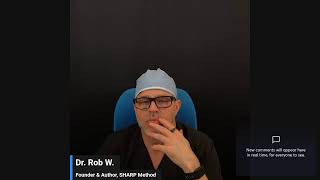
Dr. Robert Whitfield explains how artificial turf fields expose athletes to hundreds of chemicals from shredded tires, including lead, arsenic, and PFAS, through inhalation, skin contact, and ingestion. He connects these exposures to brain fog, fatigue, and immune dysfunction, then walks through practical steps like showering after play and his SHARP protocol for assessing toxic load.
Chapters
Hey, good evening everyone. Just getting this started. Gonna stay on time tonight. Livestream's rolling. I'll put the comments up when I go into Dr. Rob's circle.com. Let's log in. All right, we're live in the circle. Okay, so everybody's gonna hop on. We're gonna discuss artificial turf tonight, near and dear topic for a number of reasons. I have my own soccer player and, uh, he's actually coming home next week from Europe. Okay, everybody hop on. It's an important topic tonight. All right, all right, everybody hop on. Remember to share the stream with your friends. We're live on Rumble, YouTube. Instagram, TikTok, Facebook. Do the first 10 minutes live across all platforms and then go into drrobcircle.com. So make sure that in your browser you can get to drrobcircle.com. You can join, you can go there now and watch me livestream there. And that's where I'll be after the 10-minute talk to answer questions in person, do live Q&A. Perfect. All right, just making sure everything's functioning. Everybody hop on. Remember to share the stream with your friends, family, so that we know, uh, that we're doing our best to help everybody. Hi Rhonda, hi KK, hi Pete, Jacqueline, Bobby, and Chanel, Ellie, Erin. Hi, Leah. Hi, Miss Wendy. I just did a livestream with Wendy. Wendy, do you hear my audio? Let everybody know. Wendy and I did a livestream, but we had trouble with our audio, but we recorded everything nonetheless. It's up in the circle. So if you want to hear me talk with Wendy Fortino, just hop in the circle. Awesome, everybody hop on. If you have a kid, boy, girl, teen, tween, 20-year-old like I do, 21-year-old actually, playing soccer, this is something that you wanna hear about just to be aware of. Everybody hop on. Keep joining, keep joining, share the stream. Let's get it across a bigger and bigger audience. Awesome. Pamela. Hi. All right. Okay, awesome. Good turnout even though tonight is the NFL Draft and then many of you just want to start watching the draft. First pick is going to be Mendoza, IU guy. I trained at Indiana University Medical Center. They won the national championship in football this year, which I thought was— never would happen. So that was pretty amazing. So awesome. Well, at 5 after, we'll get started. Okay, everybody hop on, share the stream, keep sharing. Let's get as many people as possible on here. It's a big topic. So many people be affected by this. If you've ever driven around your towns or cities or anywhere, artificial turf is literally on every field. Every high school field in Texas, just about, um, every rec field. So this live is about artificial turf and toxicity. One of us, that's what it's about. Hey, Dr. Andre. Hey, Katie. Come on, gotta spread it around. All right, let's get to it. It's 5 after, let's roll. So I'm Dr. Whitfield MD, board-certified plastic surgeon. Tonight's topic is artificial turf toxicity, the hidden health costs of playing surfaces. So, um, for many of you who who don't know, uh, we're extremely data-driven here. Last week, uh, we did a whole 3-part series on golf and toxicity and its relationship to increased incidence of Parkinson's. I wanted to carry, um, on the theme in sports, and because of the FIFA World Cup, the NFL Draft, which is tonight, um, we're going to talk about artificial turf. And, you know, something that affects millions of athletes, children, and families every single day It's the environments where they, they train, they compete, and specifically in this country and Europe, it's artificial turf. Over the last two decades, we've seen a massive shift away from natural grass or natural playing surfaces to synthetic playing surfaces, and the appeal is obvious. They're weather resistant. You can use them year-round, and of course there is less upkeep, right? Because there's, there's not watering. But as a surgeon and someone who specializes in evaluating toxic burden and systemic inflammation, I look at all these things with the lens that what are they potentially causing? I look at the data, we look at the peer-reviewed science, and what is it showing us about these plain surface surfaces that we don't really see? And You know, uh, just so everybody's clear on this, I've been around and on these. I'm not trying to fearmonger or anything like that. I've walked all these fields for many, many years with both of my kids who played soccer growing up and one who still plays. Tonight I want to break down exactly what artificial turf is made of, what the research shows about chemical exposure, and most importantly what you can do to measure and manage your own toxic burden. This isn't, uh, once again, I'm not trying to be an alarmist or strike fear in anybody. It's just about being informed so you can make really good decisions with the most amount of information. So what is artificial turf actually made of? Well, it's not just a piece of plastic grass stuck in a mat. It's a complex multilayered system. You actually have the plastic blades that look like the grass, the backing that holds them together, but the infill, the loose material that provides the cushioning. So that's really the problem, right? That's the most common infill is this crumb rubber, which is really made from shredded recycled end-of-life automobile tires and a single professional size field and contain the ground-up remains of 20,000 to 40,000 tires. So I think everybody would, uh, understand this, that tires are obviously not made to be, uh, safe for, uh, human contact or consumption or anything like that. They are manufactured with a massive array of chemicals to make them durable on the roads, right? We drive high speeds, long distances. When they are ground up into crumb rubber, those chemicals don't disappear. So a comprehensive analysis of these will show hundreds of different types of chemicals in the turf components. And what are we, what are we really talking about? What are we looking at? So we're talking about heavy metals, things like lead, arsenic, cadmium, and zinc. VOCs, so volatile organic compounds, and PAHs, so polycyclic aromatic hydrocarbons, which include carcinogens like benzene. So just take all that in. That's a lot of concerning chemicals already, and we haven't even got to PFAS. So the, the forever chemicals, which are often used in plastic grass blades and the backing, and then something, uh, called 6-PPD-quinone. It's a highly toxic degradation product of a common rubber antioxidant which has recently gained intention for its effect on salmon. So we have PFAS, all these other chemicals. So let's talk about the routes of exposures. How does it actually get into the body? If you remember from the previous week, we talked about golf and how toxins get into golfers. So through the, the skin, right? It's absorbed through the skin. So like on their legs, which are exposed if they wear shorts, arms of course, hands of course. So the question isn't just are the chemicals present, but how do they get into us? There are 3 primary routes of exposure for athletes and children on these fields. So think about it. Now, kids, little ones, are built low to the ground. They're always falling down, so they're going to be down, up and down, off the fields all the time. They can inhale, obviously, and many times these fields exceed 160°F, especially in Texas in the summer. The heat causes synthetic materials then to off-gas more VOCs and microplastics, which the athletes will breathe. That will get into them more easily because they're exerting themselves or taking deeper breaths from cardiovascular exertion. Then of course, like I said, through the skin. So there's dermal absorption. Athletes are constantly in contact with surfaces like we talked about in soccer, sliding, tackling, falling. Little kids fall all the time. And some of them, when they slide especially, they'll create abrasions or these turf burns. If you've ever seen these things, They're one, like a rug burn, you can get a turf burn, and it's just a pathway for these things to get embedded in the tissues or get absorbed into the tissues, into the bloodstream. And then, so let's talk about these, uh, routes. Plus, I'm sorry, we talked about the routes, but these crumb rubber pellets are notoriously difficult to avoid. I remember our kids coming home and they have this stuff in their socks and their shoes, all over their bodies. And of course they're going to get it in their mouths. Little kids, they're constantly picking things up and, you know, touching their face. So you can see how these things, uh, would definitely, um, affect them. And then obviously the goalkeepers are the ones who are on the ground the most, typically. So they're going to get the highest rate of exposure overall. And so, you know, sometimes it takes a longer time for the science to catch up. The studies being published, like in the Environmental Pollution Journal, and reports from organizations like the Breast Cancer Prevention Partners highlight, uh, really significant concerns. Uh, we know many of the, the chemicals found in turf are definitely going to affect our endocrine system. So for everybody, just think of like your thyroid hormones, your adrenal glands, your sex hormones. So many things will get thrown off, and if they're affecting our endocrine system, all sorts of things will go off. We know that the PIHs and the heavy metals contribute to more oxidative stress. So cellular stress is, is oxidative stress. Your cells are working harder and harder. That leads to more cellular damage. And while large-scale human epidemiologic studies are still catching up, the, the data and the laboratory models clearly demonstrate biological activity of these substances. So what can we do? How can we connect the dots? And so, you know, in our program, when we look at toxic burden, I'm always looking at someone's genetics. Their toxic burden, their gut health, their other sensitivities through diet, other triggers, and the hormonal balance. And so the Sharp Method, which is what we wrote the book and how we practice our methodology of prep and recovery patients, brings us to the core of what I see in our practice every day. You know, the health issues rarely stem from a single one-time exposure. It's from a chronic cumulative, uh, level of environmental exposures over time. Those environmental toxins, heavy metals, and inflammatory triggers over time, those build up, and then we exceed our capacity to cope with it, and that becomes the tipping point, right? Whether it's from an implant, a mold exposure, Lyme disease, um, being exposed to these chemicals from sports or on the golf course like we talked about last week, when your toxic load exceeds your body's ability to detoxify, you're going to experience systemic inflammation, and it's going to be a chronic type of systemic inflammation. It may lead to brain fog, fatigue, cognitive issues. And we've talked about immune dysfunction that we see in our patients. So this is exactly why I developed our SHARP methodology. We wrote the book about it. It's what we practice clinically. It's how we treat our patients and care for them. And we feel like it's very important to measure and test these things. We want to always test and retest because we want to see levels. And then through, um, the methodology, proper sleep hygiene, supplementation, nutrition, um, whatever practical detox methods, whether they're homeopathic or medical protocols, are used, we want to test and retest those to make sure that the, the toxic load is going down. And some things are much more difficult to get out of people. Um, from the artificial turf, I haven't seen things like atrazine like I've seen on golf courses. Those are much more difficult. But once we have the data, we just don't do, like I said, generic things. We have different protocols based on what we find. We have different ones especially for atrazine, which is difficult to get out of patients. And then we have different protocols for mold, They're going to be different protocols to deal with PFAS and these other environmental toxins. And, um, you, you want to get your— think of it like this— you want to get your liver working better and better to help get these things out of your system. They store many of these toxins in your fat. You want to be able to mobilize that and get that out of your system. So what are the things that we can do You know, today, if we're concerned about this, um, the easy thing— if you or your children are constantly on artificial turf, there are some simple steps you can take to reduce exposure, obviously. And the number one thing is always going to be hand washing, you know, whether at the facility or not. And then once you're home from the facility, They basically gotta leave their stuff outside or get it off in the garage so they don't track all that stuff in the house. And then, you know, get them cleaned up, have them take a shower, get all that stuff off. If they've got abrasions, you gotta cleanse those things and get them treated. Turf burns, like we talked about, can be problematic. You wanna clean any of those and keep them cleansed. If at all possible, And this is very hard in Texas and the southwestern states, is not play when it's so hot. So the little ones always typically would play earlier so it's not as hot out, and the older players would have to kind of deal with it later in the day. But for afterwards, make sure from an equipment standpoint you get the Rubber out of your cleats, off of the clothing, get the clothing washed. And if you're— you or your, your child, your, your athlete is experiencing unexplained symptoms, chronic inflammation, things that just concern you, or you simply want to understand, um, better if there's a toxic burden that you should be addressing, the simple test is a Total Tox Burden test. It looks at these environmental toxin exposures. It's measurable and is reproducible. And we can reduce it. I find, um, that to be one of the most valuable things we've added to our practice, and we've had it for several years now. But doing, um, environmental toxin testing, mycotoxin testing, heavy metal testing, I think is critical to understanding these things. It's key to the SHARP Method and how we help measure and then help reduce your burden over time. So, um, we're going to go into Dr. Rob's Circle. So you can go to drrobcircle.com. Um, if you have trouble, you can go to my main domain, drrobertwhitfieldmd.com, and then click to join. Um, if you just want to, you know, go to look at a test, you can go to my, uh, store or through the domains drrobsolutions.com, or click on one of my profiles, uh, They'll have links in my bio to all the, the stores or the opportunities to get testing, work with our team if that's what you want to do. We now have patients who don't have surgery with us but just want to run our program across the country. So we work with patients remotely. And I really think that's the biggest thing we can do for patients is offer a methodology. I want to thank everybody for joining me tonight. Please stay informed and proactive. All right, we're going to head into the circle. Let me just, uh, type this in here. Head into drrobscircle.com. There's no fees to join. Just got to make sure I typed it correctly. And I still don't know how to do this on TikTok. Monica, we're going to go into the circle. If you want to go there and ask me questions, then I'm happy to do that. Well, all right, all right. Hola, Leah. Good evening, Danielle. All right, we're going to shut this down and just go into the circle. Need you all to head over to the circle. Let's go, make it happen. Go to my bio, click the link, go to the circle, please. Gonna shut these streams down. You can ask me anything you want in the circle. Okay, head over and join now. All right, all right, how many people do we have? Who made it? Who survived?







