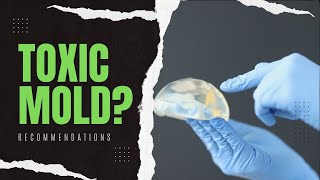
Plastic surgeon Robert Whitfield tested over 1,100 explanted breast implants and found fungi in only 6 samples. Most mold exposure in symptomatic patients comes from homes and food, not implants. He recommends air filtration and urine toxicity testing to guide detoxification before and after surgery.
Questions this video answers
Over 2,000 explants.
Almost 1,100 PCR-tested samples.
Approximately 6 samples tested positive for fungi.
Filters that can filter down to 0.003 microns.
Chapters
All right, Good morning. So Dr. Rob, we put a request for a show out on our social media platform at breast implant illness expert on Instagram and we chose to answer the following from K A R I N a M N M N and it was high mold toxicity in women with breast implants. I think there's been a lot of disinformation regarding how many patients with breast implant illness suffer from mold either in or around the implant. I've done over 2000 explants with over almost 1100 PCR tested samples. So polymerase chain reaction tested samples. So those take and examine the DNA fragments of 150 types of bacteria, fungi and Mycobacterium mold is a fungi. So in those approximately 6 of those over 1100 PCR tested have had fungi. And so, you know, do the math. Obviously that's an extremely low number who actually have fungi. And typically there's a one off explanation for that. One of the examples was it was a triathlete and they swam all the time. They got out of their swim in their competitions and they ran barefoot up a platform or what have you. Typically you would get a puncture in your foot or something of that nature. Everybody has to understand that water contains a lot of bacteria, fungi, viruses, and that's how that happened in that person. The other example was somebody who did spartan races. So there were just different examples of that in, in my experience. So back to the nature of this question. I think it's more important is I see a lot of patients with breast implants who have mold exposures. And mold exposures to me most commonly come from, you know, the environment, whether it's in the air or the food. And there's lots of examples. Everybody's heard of black metal, that's Aspergillus. But in things like food and wine, ochratoxin is commonly placed in wine all over the world. In the European Union there's very specific guidelines about how much ochratoxin can actually be in wine in this country. There aren't. So I will let you take that information. Decide what you want to do. In terms of drinking wine in the United States, I would be cautious. You can explore are things like dry farm wines, organic type wines. And those would be, you know, probably in a more sensitive person like I'm describing better options. The coffee that we drink you have to be careful about because just the production of coffee is inherently just riddled with opportunity to get exposure and development of mold. So you want to be careful and look for mold free coffee. I want to give a shout out to Dave Asprey, who started this with Bulletproof, Bulletproof coffee and then ultimately with his new brand, Danger Coffee. There's other options, Kion coffee, but you can look at the number of mold free coffees and then you obviously want to be very careful with your, your food, different grains and, and think of cereals and things, they can have mold as well. So, you know, it's a culmination of factors that lead to this in many of my patients. And then of course, I live in Austin, as everybody knows, and we've recently, over the past three to four years have had increasing weather in the winter with ice storms. And when you have ice in an environment where the, not only the grid, but the homes are really not suited or built to tolerate temperature changes like that, you'll have pipes breaking, you'll get water leaks. And I had this actually happen where I lived and I got exposed to mold this way. There's a number of factors that can lead to it. And if you are really concerned and sensitive to, and already know maybe that you're, you're sensitive to mold, I encourage getting an air filter that at least filter down to 0.003 microns. There are different options on the market and I think it's best to explore those. The Philips system, the IQ air system, the Jasper system, there are other systems, but you have to be careful that they can filter things down extremely well because the, the mold spores themselves are very small, they're much larger than bacteria. So you have to protect yourself that way as well as your family because genetically, if you're sen to that through limitations in your glucuronidation pathway, you're going to have trouble with that. People are routinely like, okay, why do you know all this? Is a plastic surgeon. So we understand the genetics of women with breast implant illness extremely well, but we also understand their toxic burdens very well. We get urine toxicity tests and we typically would use a glutathione challenge from my inflammation support bundle. And what we try to do is get all this expressed in the urine so that we can learn what is your burden. You know, what are your genetics? What things from your, your diet or fluid intake are affecting you? What about your air quality? You know, look at your gut microbiome, look at your food sensitivities and really try to lower your inflammation. We know that doing this even preoperatively, just using our inflammation, inflammation support bundle will lower your chronic inflammatory score when checked through specific urine markers. So we feel strongly that Controlling as much the quality, the fluid, food, and air intake into your body will position you better to lower your inflammation. And most of what that looks like is understanding you have only so much ability to detox. That's genetic. And then the more you get faced with it, that system becomes overloaded. Many times it's referred to as a bucket that's overflowing. And then you become more and more symptomatic as a patient with breast implants. So mold, to summarize, is not what I find on implants, and I have more experience than that than anybody around. And then two, the most common ways to get exposed to mold are certainly through air, you know, the actual food intake, and for that matter, you know, wine and coffee. And then how do we, you know, address that? There's going to be different protocols based on what we find on your toxicity testing. So that's more individualized to the specific findings and the patient and then their tolerance. Obviously, I have a lot of patients who have lots of sensitivity, so we'll have to go and gauge how best to do their detox in each situation. All right, I want to thank all the folks who submitted questions for me to answer, and I look forward to answering more on my next show.