Robert Whitfield MD discusses three questions to ask before breast surgery: implant size for your frame, placement options, and surgeon experience. He addresses breast implant illness recovery, which involves assessing toxicity, genetics, gut health, and hormones beyond surgery alone. He also critiques cosmetic fillers as often unnatural while favoring neuromodulators and microneedling instead.
Questions this video answers
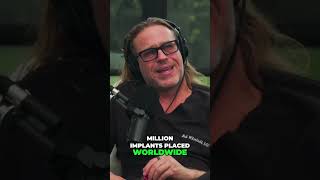
2.2 million implants placed worldwide annually.
Chapters
What are the top three questions that they should be asking a plastic surgeon to see if they're a good one?
What size fits my frame?
Okay, what size fits my frame?
And then for the placement, they're going to recommend behind the muscle because that's going to help hide it. And that's, you know, later on, if I or someone has to do the explant, that's a harder explant to do.
So do you recommend getting it in front of the muscle?
The short answer is a smaller one above the muscle. When the situation is right, is, is probably the easiest. You'll have a lot of people who don't like having implants right away after having them. And that's, you know, can you imagine you, you built this thing up in your head and you go, have it done. And then you're like, oh my God, I don't like this. Yeah, not easy to go and, and, and get a redo, a do over what?
And then the last question, if we're doing three questions to make sure your surgeon's going to be good.
Yeah, I always like folks with a lot of experience and some experience as it relates to cancer or go out on a limb and say they're a little bit more empathetic and understanding. Maybe not so quick to make recommendations without going through a pretty lengthy discussion. Anytime I had a cancer discussion that related to reconstructive techniques or what options we could have those things. Hour, hour and a half long. I think that's the, the issue. Are they going to take time to speak with you or is this just be like, oh, we're going to talk to your coordinator, we're going to get you hooked up and you're on the schedule.
How many women do you think are walking around with breast implant illness that have no idea?
Annually, there's 2.2 million implants placed worldwide. I can't give you the exact time it takes to develop BII because as we talked, it's different. But you just do that over 10 years, 30%, you're looking at 6 billion people.
What happens when somebody takes their implants out with the explant surgery and their symptoms are still there? What are you finding is going on typically in those situations?
So that's why we developed our program. I think if you don't know their toxicity, burden or their genetics and how they detoxify and their gut health, mood sensitivities and hormone balance, I don't think you have a shot in hell of actually taking care of them. You're, you're just doing a surgery to do a surgery, and you're not really completing the loop.
So it's rare that that would happen because you're doing all of this stuff on the front end to. To see what's going on with them. Okay. Botox, filler, or neither.
There's already too many unnatural people in the world, so filler looks stupid most of the time. Botox works because it relaxes muscles. Xeomin works it relaxes muscles. Daxify works it relaxes muscles. I prefer things that actually make impact, so I'll do more microneedling and or micro coring.
Do you think most men can tell if a woman has had Botox or not?
No. Men are stupid.
Thank you. So I went viral on Twitter for saying that. I said men. Most men cannot tell if a woman has had Botox.