Toxic Perfectionism, Burnout & Environmental Triggers | Dr. Robert Whitfield & Kate Middleton
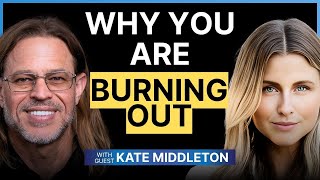
A recorded conversation (YouTube/podcast-style) between Dr. Robert Whitfield MD and Kate Middleton ("KB"), a toxic‑free lifestyle advisor and host of the Toxic Free with KB podcast. They discuss how to reduce everyday toxic exposures without becoming paralyzed by perfectionism, emphasizing small habitual changes (baby steps), education, and personal agency. Kate shares her personal health journey (Raynaud’s, autoimmune issues, repeated mold exposure) and practical tips—product/app recommendations (Environmental Working Group, Yuka), travel hacks (packing supplements, protein/greens, mineral broth, electric kettle), and lifestyle habits (sleep hygiene, walking, reduce late eating/alcohol, resonance breathing). Dr. Whitfield connects these to clinical practice (tox testing, inflammation, biopsychosocial model) and behavioral guidance for patients and parents (children's diet, energy drink substitution). Overall tone: solution‑oriented, pragmatic, and encouraging incremental change rather than toxic perfectionism.
Chapters
Another travel hack that I like to do is to keep your immunities up. Try to find places that have like turmeric shots or ginger shots that you can always douse those down. The second thing is I think people need to simplify more. Okay, there's we live in a world where, as you said, wearables. There's so many gadgets out there. Try this, try that, eat this, eat that. You know, do this skincare, do that, skincare, whatever it is, buy this, buy that. Our houses are just storage systems at this point. Foreign.
Today I have Kate Middleton, better known as kb. A toxic free lifestyle advisor and a passionate advocate for clean living. KB is the host of the health, wellness and lifestyle podcast Toxic Free with kb, which is born out of her personal journey of health advocacy and healing. Growing up in Kansas City, KB experienced firsthand the toll that environmental toxins and toxic relationships can take on the body and the mind. From repeated exposure to toxic mold and chemical laden foods, to navigating dysfunctional relationships and battling autoimm diseases, panic attacks and chronic illness, she spent years searching for answers. After countless doctors simply prescribed pills. Without addressing the root causes, KB took her health into her own hands. What started as a personal healing journey has now become a greater catalyst for change, helping others lead healthier toxic free lifestyles. Through her podcast Toxic Free with kb, KB empowers people to make informed, healthier choices by reducing their toxic exposures in everyday life. Whether it's safer cleaning products, non toxic personal care, sustainable food choices, or fostering positive relationships. She shares expert insights and practical tips to help listeners create a cleaner, healthier and more nourishing environment for themselves and their families. Welcome to the show kb.
I'm so psyched to be here. We just had the best time down at the Health Optimization Summit down in Austin and like what a whirlwind. I'm like still on a high from that. So thanks for having me.
Yes, I didn't once we so KB had me on her show when she came to Austin to the Health Optimization Summit. And then I feel like we spent a lot more time that day than we did at the, at the show. The show was very busy. It was a wonderful gathering to be honest. Tim Gray did a great, great job. Shout out to Tim and in any event the I just, I wanted to have you on because from a like our programming is about what you discuss and the conversations we have are aligned with, you know, what your show and your life and everything has evolved into. But I was going to ask you because I saw A show recently, I don't want to give it too much airtime, but they had a scientist PhD arguing with an MD about toxins and things like trying to decrease toxins in the, in your everyday environment as well as groups like the environmental Working Group kind of throwing them fair amount of shade and trying to eat organic through a lot of shade on that versus conventional eating and or product use. I mean the whole thing was just very, not confusing but just very antagonistic. The whole conversation was super antagonistic. Like you can't avoid it, chemicals are here and there's nothing you can really do about it. And then versus well yeah, there are some things you can do about it, choices you can make, things you can actively do you to. To maybe I guess I should pick the words not insulate yourself. That's probably not the best to just decrease your, your actual number of exposures. I mean.
Yeah.
For all intensive purposes. So I thought it was interesting we're gonna talk about this, but I was getting revved up just listening to the, to the show as these two were arguing about stuff and I was like, man, this just seems too polar.
Yeah, like what do we do? Right?
Like that was the whole thing. The host was just like, well, what should we do?
Well, I think it's like I don't know if we can cuss on the show, but it's almost like one of those moments we live in. It's almost like you're damned if you do, if you're damned if you don't. You know, it's like what can you do, what can you eat, what can you expose yourself to? And I think like if you become over perfectionistic with anything that you do in life, that's toxic in itself, right? We live in a toxic world. We get it. Everything is completely overwhelming as it is. My whole thing is you're doing your best and your best is great. Small baby steps create a huge catalyst.
Of change overall and tiny habits, just making small changes. That's the whole.
Yeah, doing better with what you know. And my whole premise, being a toxic free lifestyle advisor, being an advocate for my own health, being an advocate for other people's health, is that I'm here to educate people, right. Bring experts on like yourself, yourself, thought leaders, storytellers, people that share stories in community, right. That helps the whole tribe. And we are a tribe here. So if you go back into the fear mentality and the fear mongering state, like you're not going to get anywhere in life. And that's kind of a little Bit tangent out there, but I think baby steps with everything along the way. Baby steps paired with education, real education. Right. Remember what that was like, my husband and I this morning, we're just talking about how there's a decrease in, you know, teen pregnancies, teen alcohol usage. They're becoming more frugal than ever, but they're more isolated. Right. So it's one of those things where it's like, where is the education in the world? Where is the human connection and the world? There's so many things that are lost. Let's bring it all back together. Let's, you know, reconnect the body, the brain, all the body parts back together and really say like, all right, like what is my life all about? What am I going to do about it? You know, making choices, making really educated choices that work for your body.
You know, I was not feeling like these. So I'm 55 and these were both people much younger than me who were saying this like, and I was like, well, one in particular seemed, you know, to be, we'll say mid to late 30s. I may be effing that up, but that's fine. I'm like, okay, you, you, like you said, you don't want to be paralyzed by everything around us. It's got something that could be potentially harmful about your choice making. And I have a 16 year old daughter and you know, she has all of her friends and they're all kind of coming into that age where they're running into problems with their hormones and choices. They make things, they eat, you know, how they perform in terms of academics and sports and that bleeds over into everything else where there's all the emotions around. I hate to say this, even appearances and all of the things, right? That's the, you know, and I, I try to be super mindful about that. And a thing where, you know, you can't go and tell them like that is such a short period in your life that will ultimately mean very, very little in totality. But it seems super hyper magnified at the time and everything's overwhelming and when it's not, but it's. We let it become more and more overwhelming. I was giving a talk for that matter, and I walked up to. It was another meeting I was at recently and I was giving a talk there and they said, oh, you're a speaker, Aren't you nervous? I'm like, I operate on people for a living. So no, I don't get nervous. That would be a bad trait. But just like, you know, being calm or like getting calmer and controlling your emotions and not being overwhelmed and that promote more anxiety and get more stressed out. And I think part of your whole thing was like dealing with your. Your basic life issues and traumas, and then that helps you, and then you can, like you said, move forward and take small steps with the rest.
Yeah, I think, you know, you put forth a really good example with the teenage girl. Let's use that as our picture. You've never been a teenage girl. I have. I have a teenage girl as well, so I can definitely relate. Anything that you tell them is going to be wrong. Right. But also that's a really great example for someone in just the normal world. Typically, a lot of people are listening to biased opinions out there, but until you understand from experience on your own terms of what's going on, maybe life experiences. You mentioned something as simple as doing the work yourself, Figuring out what works with you, you know, what works with your body, what works with your lifestyle. Right. What works with your nutritional needs, your environment, the relationships, the traumas that you've been through. It all goes back to be being, you know, radically authentically yourself and moving through life with intention. That is everything that I live and breathe. And I think if you realize, if one person realizes or practices those traits, they'll. They'll be like, wow, life is like, so much easier, you know? Right. Truly.
A lot less work.
A lot less work, for sure. A lot less pressure.
Yeah. I don't really, how do I say, Even when I was younger, I realized that I'm a Leo for everybody listening. I don't take advice very well, and I never valued anybody's opinion of me over my own. So you could never, like, it's hard to put one over on me or make me feel a certain way based on your behavior. Just never cared about what you thought. It was not really something that affected me that much. And then as I got older, it affected me a lot less. And I wasn't very good at controlling. I thought you were trying to take the piss out of me or pull one over on me. I was very apt to be unfiltered about that when I was younger. And it took me a while as I got older, when people were being passive aggressive or trying to take the piss out of me, I would, like, lose it. And that's not good in terms of training and dealing with patient care settings. So I had to get better at that. And basically, and this may be something for everybody to understand, is it's far scarier to have someone Stay silent in an argument and just take it in and not respond versus have an emotional outburst. People expect that. They don't really know how to cope with anybody who's super calm in that situation. And those are the persons, or how would you say, people you should fear the most, because they already know how to control their emotional state while you're losing yours. And so when people would make mistakes, which always happens, they would call me, oh, Dr. Whitfield. I did so. And so I'm like, okay. They would expect to get yelled at, but I wouldn't do that. It did no good. They're used to that. They've been that. That's been done to them their entire life. So it was far worse when I showed up, because if you had done something really bad, I would make you fill out an incident report and describe what you had done badly in detail and then sign it so everybody knew about it. But I would never yell at them because all that would do would get you in trouble, or specifically me in trouble with my boss. And then, you know. But I learned, you know, early on not to. It doesn't do you any good. You're not going to get anywhere in life. And you certainly can't build rapport or team that way. So the sooner you learn that lesson, the easier things become. I just. And I feel bad for young. Young folks. They just don't. Sometimes they don't have a lot of help in that and understanding that.
Right. I totally agree. I mean, I think it's like, goes back to composure. Yeah. Like, certainly, like, speaking your truth on that. But the composure of. It's almost like a meditative state to get that. Like, if. If you want to, like, jump into that. But it's almost like a meditative state of, like, being aware, like, emotionally aware, you know, instead of reacting. Yeah, totally.
I mean, people get, like. They don't know what to do. They get emotional, and they start raising their voice, and the octaves go up, and that never solves anything. Then you have two people raising their voices.
You're like, what's going on here?
Ultimately amounting to nothing getting accomplished. So, like, it's. It's a. Yeah, definitely. Just like that whole show I was describing, they just kept raising their voices. I was like, the host has to, like, control this because it's not. It's not productive. One's just trying to talk over the other. And I was just like, oh, my gosh. All I'm trying to understand is like, is there anything worth taking away from these two Like I'm sure they're very passionate about their positions but like I can't tell if it's, if it's a worthwhile discussion or not yet. Yeah, I was just like, okay, well I mean I'm having KB on tomorrow. Like, you know, I mean I've certainly in my opinion tried to guide folks to use the Environmental working group, especially as it relates to products, to help identify things that could be more harmful. And certainly between skin care and supplements, I don't know which is more of a corrupt industry. So I always try to point people in a direction so something gets third partied and looked at because Lord knows they're not doing anything to safeguard what's going on. You know, there's no regulatory body really.
No, I mean I think the EWG is for anyone that does not know about environment. Environmental. It's hard to say Environmental Working Group. They are such a strict and beautiful outlet because they will not let anyone in that has not passed their approval. Right. Strict guidelines. And there's some really. They do have an app now. So if you're Consumer Shopp for personal care, beauty care, you know, things for your baby, you know, all of those items, the household products, you know, that's a really good resource. Another really great one, if you haven't heard, is the Yuka app. I think that's a really, really great, I mean I have so much fun. It's like a video game to me. You know, the gaming culture right now with the kids. This is like a video game to me. My husband will go to the market and I'll be like, let's check it on the, check it out on the Yuka app, see how it passed the test, you know, because you can really get some solutions with that. My whole premise is to solution oriented, right? Instead of saying, no, you can't have this, no you can't do this, this is going to kill you, whatever. Because they're all like, it's going to give you cancer, you know, in the end saying, okay, well what can I do? What can I have? You know, me, part of my story is I've gone through a lot of restrictions in life. You know, I've, I have been dealt with, you know, celiac, which we all know you cannot have bread, you cannot be around those things. So instead of just saying, oh, oh my God, this is my life. Oh well me, you know, going to, okay, what can I have? Like what can I substitute in for this? And I think those are really important messages to kind of put out there. To just the whole community, you know, the world. Like, let's kind of like reframe the mindset, because that's also an element of life, right? The mindset.
I think the Yuka app. And I had a patient and she said she was using that really early. I'm talking like 10 years ago. Which startling that someone would start to make those choices in 2015 when really wasn't on the radar, so to speak. And she wanted to start a family and she had just decided she was going to start doing this. So she started adjusting her home care products, she started adjusting her personal care products and taking things out. And KB is familiar with my program, so we do a tox test and it's a urine test and looks for environmental toxins, things like phthalate levels and glyphosate levels and mycotoxin levels and heavy metal levels. And she had the least amount of things show up on her test and nothing in a moderate to severe category. It's the only person in the history of my practice I've ever tested who had breast implants who didn't have any of those elements on their test findings. But it was all conscious decision making, like you've described in your show and discussed on my show about making choices. And she just did that for such a long period of time. So when people say you can't do that, well, I of course have examples of, obviously you can. Once you're problem aware, you can make choices. And then those small habitual changes, like you said, those become actionable and they make a difference. So I know you didn't go on to have breast implants. We talked about it previously. But that particular patient, in addition to all those other things, has this extremely supportive spouse and a great family. And she KB just cruised through the.
Surgical process because of her lifestyle beforehand, right?
So I always have this inside my head thinking, I need three to six months of Runway with these folks to help get them into a better position. But not really someone like that, because they've been doing that for years. Not just meeting me and. Or meeting you and be going, oh, well, that's something I should be doing now. I should be checking these things, right?
I think totally preparation. I mean, we could even talk about this with like, you know, the reproductive system, right? Um, you know, husband, wife, whatever they want to. That's just one example. They want to have a baby, right? And one of the wife's like, I'm having fertility issues, something's going awry. And they think, oh, my gosh it's me. But then also it's, guess what, maybe the Mr. As well. And so it's like, how do we prepare? You know, the leeway? You have to actually clean those vessels up. Right. You know, you. You both. It takes two to tango, right? Um, you know, I know you and I started talking about that a lot on my show, and we really didn't get to, like, jump into it about, you know, how the male is actually another huge health element to the females.
Yeah, yeah, for sure. I would say, you know, obviously I'll be biased because I take care of predominantly women, but I don't choose to take care of men because typically they have. They're not as prone to listen to what I have to say. They're not going to follow instructions. They have low pain tolerances, typically, and I just don't have any bandwidth for that in my career anymore. So I predominantly take. Take care of women. But the issues are the exact same short of the reproductive system. And, you know, foreign bodies can be in men, too. Knee implants, hip implants, predominantly, they may have other things. The, you know, all this kind of sitting at desk is terrible for people's backs. So many of them already have problems with their back at a younger age and maybe suffering from inflammation. So basically what KB is not saying that we'll just say out loud and talk about is everybody has a certain amount of inflammation, and that inflammation is what creates a lot of problems with a lot of things. And fertility is one of them.
Yeah, 100%. I mean, diet, nutrition, lifestyle, all of that comes into play. Right? So. And, you know, I. I was told, gosh, it was many, many years ago, pre Covid. It was a rainy day. I was walking from my office, I don't know, get a coffee, whatever. But there was this old man that just came up to me. I didn't even know who he was. And he handed me this, like, newspaper clipping, like a little cartoon, right? But then it had a quote on it, and it says, I'm going to totally butcher it. But it said, you know, of all the decisions that you have to make, remember that each decision that you make makes you in the end. So for every decision that you have to make, each decision makes you. So it goes back to. We'll use food as an example, right? Someone that says, oh, but I can't do this. Oh, but I can't do that. Yes, but you can. You have every control in your body to make the decisions. You know, you get to put the fork in your mouth at the end of the day. Right. So for everything that you get to do, you get to do the preparation. It's your body, it's your vessel. You can do what you want with it. You've been given this amazing gift, you know, but it also goes back to another thing that you mentioned was support. I think support with anything. With any lifestyle change. If someone wants to, like, start cleaning up their life, support is a huge thing. You know, if you don't have your team right there with you or this is. Yeah. Do you. Great. Then nothing's going to change.
Yeah. You know, both my wife and I used to, you know, we'll say drink more. We would have, you know, like more of a happy hour type vibe at our home. We would have, you know, we. I'd make handmade, you know, margaritas. I was like, notorious for it at my home and, you know, I guess became more interested in not. Not feeling, you know, run down or tired the next day. Because if you drink a little bit before you sleep, sleep or a little bit too much before you sleep, your sleep really tanks. And last night we went out and met folks at a happy hour. But I just had some mocktails. It was like a, Like a. It would be like a mojito without the alcohol. It was good.
Yeah.
Sugar. They did a nice job with it. I just had a couple and then I, I don't. I like cut fluid intake off at a certain time because I don't want to be, you know, someone has to wake up and go to the bathroom middle night or anything like that. They're all just conscious things I do. And I'm not having a bad time. I was having a good time with everybody just, you know, chatting it up. But I. And having a drink and the, you know, the folks who were there, there's no judgment. I mean, most of the guys were drinking beer, bunch of carbs. You know, it's just not going to serve you well. It just won't.
Yeah. You know, and it goes back to. Everyone's going to have to. The teenage effect. I'm going to call it the teenage effect. Living from experience. You know, there's going to be a certain amount of repetition that someone's going to wake up and be like, God, I feel like crap today. You know, Gosh, I wasn't. I didn't make my 6:30am workout like I told my friend Billy I would, you know, I just. You just keep falling off. And they have to learn from experience, you know, and yeah, certainly they may change. They may not change. And they may want that better life, right? They. Whatever their goal is. You know, everyone's different. But you have to learn from experience, I think. And it isn't until you are sick of. Tired of being sick and tired that you're probably not going to make a change. Right? And that's usually what happens. And that's what happened in my life, I know, definitely with so many different cases. And that's why I am here and what. Why I do what I do today.
Because yours was Reynolds. You had a problem with Reynolds.
Yeah, so I have. I was diagnosed with Reynolds at a very young age. I was. I think my first instance. I was. My first major flare, I should say was, oh, gosh, I was a junior, end of junior year in high school. The first onset that I should say was probably eighth grade. And that was in a form of, like, an extreme migraine, though. So that probably should have been the first indication that I had some trauma stuck in my body that just systemically wanted to get out. And it was very interesting because my thumb, I will never forget. I was in a fibers class in high school, and my thumb literally swelled up so big, like, for people that are not on the YouTube. Like, I'm literally showing, like, a size. And I didn't know what to do with myself. I was an athlete in sports, but I had so much extreme stress in my life that that definitely was a kicker of the flare up. My parents were getting divorced, you know, almost a senior in high school. What are you going to do next? All the stress and pressures of high school. Swimming, you know, all the sports. There was a lot going on. But it's so interesting. There's that amazing book called the Body Keeps the Score. And. And it's not until you realize, you know, you get older, what, I'm 37 now, and you realize, oh, yeah, the body does keep this score. So with Renaud's, you know, I had these doctors. You know, my mom was a functional nutritionist, so we lived a pretty clean life for living in the Midwest, you know. But these doctors didn't know what to do. They're, like, throwing pills at me. Pills that, like, literally tore up my stomach, dampened my mood. And, you know, I just. I am such a sensitive being that I was like, I don't want to live this life. So I kind of dedicated from there on out to kind of just be an advocate for my own health, especially going into, you know, my early 20s, too. No one's ever going to tell you, but your 20s suck. Maybe some people have like a lot of fun, but it's like not the best time, like self discovery of like what to do with your body and like what to do with your lifestyle and stuff. But I had to be an advocate for my own health. And you know, I think through the independent research that I did, you know, hours and hours and hours at night, just figuring out how to feel better, how to feel more comfortable in life for, for anyone that doesn't understand what Reynolds is, it's when you have really poor circulation in your fingers and your toes and the littlest things can set you off and make you feel really uncomfortable. It could be wind outside, it could be an oncoming rainstorm coming on. It could be the heat going through your house that's drying your skin up. It's a really interesting thing because people would look at me and they'd be like, you are literally you. You're glowing. You look like the epitome of health. But for someone that has chronic illness like that, they don't understand what the feeling is. So when it comes to living a toxic free lifestyle, you have to be very diligent about every choice that you make in life. You know, is this gonna serve me in the end? So then, Dr. Rob, we go back to those tiny habits, those tiny habits in life, you know, whether it's, who am I associating myself with, are they draining my energy in life, is that a toxic boyfriend that I dealt with? Yeah, I've dealt with those for sure. We can go on that if you want to. I'm totally open to that. You know, dysfunctional household upbringing. The foods that you're putting in your body, are you putting chemicals in your body? You know, are you, are you, you know, putting foods in your body that are actually lighting you up? You know, we are biophotons, you know, we are made of light giving you energy. What are you consuming audibly, visually, on the daily basis, the news, all those things, these all get stored in your body's memory system. You know, the environment that you live in. Do you have clean airflow, right? Or are you living in a moldy, toxic environment? I've definitely gone through mold three times. You know, we get it, you know, and like workplace environment, that's a huge thing too. Who are you associating yourself in the workplace? Do you, do you have joy in your life? Do you feel like you have purpose in your life? And then we go back to personal care and beauty. Right? You were just mentioning that is so under regulated in our world and going Back to. I'll call it the Teenage Effect. You know, they're using everything on their body. The things they wash their hair with, you know, the makeup, all the scents, all the fragrances, everything is getting stored in your hormones. You're. They're becoming hormone disruptors, endocrine disruptors, you know, so these are all things that, through baby steps, through being radically self aware of your body, your life, how your body works, what you're sensitive to, what you. What sets you off, what throws your central nervous system off. I think that's step one, getting quiet. You gotta get quiet with yourself. Listen. Listen to your body. So in a nutshell, there we go.
Things we talk about. When folks come abruptly, you know, why they come to see me. Nobody really wants to come see me in Austin, but when they come to see me, it's really, you know, people are 100 miles an hour. They just want to get stuff done. And that's not typically the right time because they've not done anything. You just said so, you know, in. And you said that very eloquently. And now finally, in the world I've functioned in for a long period of time in Western allopathic medicine, which obviously takes a beating these days, but they finally come around to what's called the biopsychosocial model of pain, which is basically what you're describing. Like, there's all these biological factors, there's psychological factors, and there's social factors. They're finally giving, I guess, a voice to that more so than and ever from when, you know, I learned and trained and I've just been more curious and hopefully more adaptable than most when it comes to listening to those, you know, from my patients, always impart everything. I always say if you just listen, they'll tell you exactly what is wrong. If you just listen long enough, they will spit out the trauma of the, you know, childhood or the boyfriend or the spouse or the partner or the workplace or whatever it is that's also contributing to and giving them so much more dysregulation. Just, you know, if you. Like you said, they're not. They come in my office in like a storm, like an emotional storm. And, you know, I'm just like, you've met me. I'm just super calm. I don't. Nothing really bothers me. I'm just like, okay, you know, just. I'm here to listen. Just tell me what's going on and I'll listen. And if I can, you know, guide you, given my, you know, almost 30 years of experience and taking care of patients. I will definitely guide you on what I think is best. But like I tell people all the time, just like you said is like, if you don't do any work on yourself, there's not going to be any way I solve that problem with surgery because I'm not going to make that better. I'm just going to dredge up all the shit you hate already and make it that much worse. Because your hormones are going to go through the roof when I operate on you. So I don't, you know, I'm the number one driver of cortisol in my building.
You are? Yeah, for sure.
Not. You know, I just tell everybody that I'm just not going to magically get better because I operate on somebody. So, like, showing up thinking that I just. I immediately, like, I put that into perspective as I can. So how did you, on your own, kind of learn from reading and researching to make your own Renaud's heal either through, like, you know, improvement in your diet or sleep or other holistic, you know, options you use.
So I. I still deal with Renaud's not as severely, I would have to say. I think getting smart and doing things, I mean, as simple as people. Okay. It's very interesting because people are like, just put on gloves. Just put on gloves. But it's. Yeah, it truly is something internal and it's very systemic, I think. And this might sound a little woo woo, but one of the things is doing deep work and being honest with myself. Every woman in my family has Renaud's. I, for some reason, have it the most severe. And I think when you go back to childhood traumas, this is. I'll go back to your question, but when you go back to childhood traumas and ancestral traumas that get passed down through utero. Ultimate talk through female. Like, I truly believe that me being in the dynamic that I was and being the smiley face of the family, trying to hold everything together, everyone together, everyone's okay. We got this. I think that does a number to the body of being constantly in fight or flight. Right. And so I think through work, I work with a therapist constantly. And I think, you know, there's a lot of people that say, I don't need a therapist. I think therapy is amazing. And it's not about going and like, spilling your life every time. Sometimes you just have to strategize the next step or just tighten the bolts in your life. Right. But Dr. Robbins, you know, if you have someone there listening to you, and then you can just Literally, kind of like spill it out to them. Things start spinning, and the client or your patient will start to figure out the solutions of what they need themselves. It's just that thing about the young child, right? You put your baby to sleep at night, they start crying. You could run in there and save them, right? Or you could let them figure, this sounds horrible, but you can let them figure it out and sell. Soothe themselves and say, well, what's really going on in here? You know, am I okay? It's like putting the dog in the kennel. The dog's okay, you know, Let them. Let them calm, let them relax, let them figure it out. So by me doing all this research, finding out, okay, I could try this, I could try that, I could freak out and try this modality. I said, okay, what does my body need from where it's been right now? We'll use the inner child concept, asking that little girl, what do you need right now during this freakout? Your body's freaking out. It's gonna have a flare up, you know, it's gonna have a flare up tomorrow because the kids were crazy today, you know, and you've already felt stressed out and you're gonna have maybe a flare up tomorrow. What can you do right now to make you calm? All right, Go back to the tools in my toolbox. What did I experiment on myself. That worked the last time. Might work this time, might not. Maybe it's a bath. I know, right? Something that just totally calms you down. Maybe it's going for a walk around the block. Maybe it's going for a hike. Get out into nature. Nature is so healing. We are so connected, but disconnected right now in the world. So putting your feet on the grass. Grass, right. Feeling the earth touching a tree, you know, petting your dog. And I think, you know, as I mentioned before, we have been given this awesome gift of a vessel of ourself, our body. We can experiment on it, you know, through cellular healing. Right. I. I'm so obsessed right now with cellular healing, getting to the root cause of things. And I think for people that don't understand even what that is, I think it's understanding your genes and how they work, you know? So you put an example out there about supplements, too. People think, oh, supplements can help me, they can save me. Yeah, but certain supplements are not going to be absorbed in your body if you have certain genetic methylation markers. So how can you, like, rewire your body and make it work for you? So there are so many different modalities and people People can certainly chime into my DM and, or chime into my Instagram DM me and ask me specific questions. But I think, you know, some things that I learned at 37 now that, like, getting quiet first thing in the morning is really important to me, so I can listen to my body and my brain. Because if not, as you said, those people that come into your office and they start squawking, you know, like crows, and they're like, I have to do this, I have to do that. They don't get the time to filter it out. The rumination just constantly will go and go and go. And that's what it exacerbates, stress in the body overall.
Trying to get everybody to, you know, concentrate more on their getting calmer, especially at night. There's all this, like, I don't know that it ramps up, but I prioritize this. And then people who say, you know, they sleep whatever, four hours a night is so stupid. Like, y' all have never worked. And I hope you never have to work like I did in training, which was all the time up all night doing these long shifts and working the next day and all those things terrible for you, your. For your body. It's definitely aged me. But the military has done all these studies where performance drops after six and a half hours of sleep. You reduce it below that, your performance drops. And they did this with, of course, snipers because they can measure their performance on the range, and it just drops after that. So I always try to give patients this range, like seven to nine hours. That's your range. That's where you know and you may be different. I may be different? Am I trying to not over influence people with wearables? I'm always getting asked to trial a wearable and use the wearable to track sleep so that, you know, I can convey what I know to patients, not to create anxiety about tracking those things, because that's another whole nother problem that wearable anxiety or whatever. But trying to get calm at night, you know, don't eat late, don't drink fluids late, have a little cooler room, dark room, not a lot of light sound. If you need it to be super quiet, make it super quiet. If you need a little sound machine, have a sound machine. Like whatever it takes to get you in the right place. And then resonance breathing is this concept. Leologos is a PhD who wrote a book about HRV that I like. You know, it's not breath work in that you're getting rapid breathing and all that stuff. This Is more belly breathing like a baby. In through nose, out through mouth, you know, holding counts of four, you know, dropping your diaphragm, expanding it more, getting more airflow in just to help with your hrv, which is really, you know, one of the best estimates of recovery. And that's why we look at it. So I briefly try to explain, like, you're going to start making these small changes and not drink out of plastic, try to use ceramic and stainless and glass and not reheat things plastic, not eat processed foods, things that have too much sugar or too many preservatives in them, and just try to do these simple things. And I always want people putting more protein in their diet because women and the western diet in general just doesn't have enough good protein in it. So it's always kind of a struggle. And my vegan clients have the most trouble just because of a dietary perspective. So we have a vegan based protein. So we're trying to do all these basic behavioral things and everybody should hear, I didn't say anything about surgery yet because I'm never going to start with a surgical plan because that's. I know how to do that. I don't need to bring that to the table to start with. Like, I'm going to make sure that just like Katie's talking about, all these other things are in motion and you're trying to learn and grow from them so it could be easier for you.
Yeah, everything comes into play in the end. And I think, you know, I think it goes back to like understanding yourself, like truly understanding yourself, connecting to your body, understanding what your health needs are. Because we're so quick to, especially in the Western medicine world, we're so quick to jump on the bandwagon of saying, the doctor told me this. Does the doctor live with you every single day? Does the doctor live with your mindset and like all the things that are telling you you can't do something or you can do something, or you intuitively are feeling this. Like a good example, yesterday I was like, for some reason I hadn't had walnuts in a long time and I was like, I really feel like a walnut. And we'll talk about cortisol, right? My cortisol has been a little high lately. And for some reason then later that night I, I was like, I was looking up cortisol reducing foods and walnuts was one of them. So that goes back to intuitively knowing what your body needs, listening to that. Right. That's just a little example.
You gotta be calm to be able to do that, though most people, there's a lot of noise in their lives and listening to themselves is, it's very challenging. I get these who come in and they are struggling and I try to get them, they don't know how to make choices. I guess that, that seems like an odd thing, but if they didn't, if they weren't taught properly or that was, that little bit of wisdom wasn't imparted on them on how to, how to choose and they struggle to make choices, that makes it hard for their kids. And things are already hard enough. You don't need to make them any harder. That's, you know, these, these crazy sugary drinks and snacks and I was just like, wow, okay. Well, you know, there are, there are things like, well, we'll say this. So this would be a take home for everybody. So I had this patient, lovely patient, really. Kids have some concentration problems in school, behavior problems at home. And she disclosed to me they drink energy drinks at home. Youngest person in the household is seven. Oldest is in the early teens. And they eat a fair amount. Their snacky thing was chips. And then they like kids, like candy. Okay. You know, I was a kid, I like candy too. I said, well, there's a couple things. Like, first of all, everybody listening should know this. I won't take you as a patient when you eat like that. I can't help that person. So I said, if you want to be my patient, we're going to help you make some choices for yourself and your family. And so you're not going to have energy drinks like a monster or a Red Bull anymore. And you know, if you're an adult, I can give you a mold free, highly tested, toxic free coffee suggestion. And then they're like, well, I like to put a bunch of stuff in my coffee. I'm like, that's not why you drink coffee. Coffee is a source of caffeine, not a source of sugar. To dress up your coffee, that's a whole different problem. You just have an addiction to sugar if that's, that's what you want. So, you know, that's just changing that behavior for them and then for their kids. Although I don't endorse this product, I have no relations with it. I said, instead of getting them those things, just there's at the store you can buy them Zevia. It's not a, you know, it's not perfect, but it's a better alternative than what you're doing. And it's still got that sweetness that kids Are, you know, after. And I said, you know, there's an Austin company, Human Chocolate. It's. It was sold, but the. The carp families in Austin, that's where it's from. Anyway, I said, you can get this chocolate and take away whatever Skittles and eminence, whatever the sugary stuff was. And you're just substituting these. These things. They're just higher quality, better for them in certain amounts, not like, exhort. You know, it's the choice thing, right? You're just making a choice to do something. Is it perfect? No, I'd love that person just to drink, like, mineral water or filtered water.
Yeah.
You know, have the chocolate. I actually like human chocolate and dark chocolate. That's. That's something I like.
I mean, there are such. There are. Okay. For all the parents that are listening out there that are maybe like, I don't know, but this is what's being advertised or marketed to me, so I guess I'll get it. And my. My kids want that, Want that, and I want to make them happy. I want to please them. I don't want to deal with conflict, you know, like, deal with the conflict now, because later on in life, trust me, like, if you're saving your child a lifetime of diabetes or obesity or, you know, overwhelming health care costs, guys remember, they may not think it's a problem today, but later on down the road, trust me, me, it will be like. And I'm just gonna say that totally, honestly, totally bluntly, you know, I. I think also going back to the parents, there are a lot of hacks, right? It's not like being like, all right, energy drink one day, plain water the next day, you know, it's about slowly moving the addict because those kids are getting addicted to those things, right? These are basically. The Internet's gonna come at me for this one. They're basically gateway drugs to other things. Like, I am a huge believer in that, because they're messing up their stuff. Sleep cycles, they're messing up their hormones, their moods are dysregulated, right? So if someone. If you have a child that's screaming at you and has attempted attention deficit disorder, look at what their gut microbiome is ingesting. Because your gut is your second brain. Your brain is your second gut. It's a big old cycle here, right? And so this goes back to the education piece, right? Like, what are the hacks that you can use in life, right? So if you're moving away from, let's say, let's use a milkshake as an example. Example. You know, you drive through, you go through, drive through, you get a milkshake, okay? Why don't you say like, hey kids, let's make our own milkshakes at home, right? What can you put in there? Get a date, you know? Well, but it's better than some other things, right?
You know, they don't know that. But that is a very sweet fruit.
It is very sweet and it has carbs. But, but you go through the drive through and you get one thing right, highly processed, and you get something else that is used in other cultures as such a stabilized stabilization factor for energy. Right. You know, so there are some other things that you can slowly build the building blocks. And also parents. Oh my gosh. Can I tell you, you don't even have to like preach to your children about eat this, don't eat that, lead by example. If you are, you know, like at the end of the day, you know, just throwing in the towel and just, just, you know, whatever. Gosh. What's an example? You know, like drinking a bottle of wine. Sorry, I'm gonna use that example. Just drinking a whole bottle of wine. How do you and your kids are seeing that as self soothing your emotions from a quote unquote hard day, you know, what are they gonna do at the end of the night? Okay, let's go eat a pint of ice cream. Right? Because that's the only way that they know how to reciprocate for them or interpret for them, them that same emotion as a child. So you have to think about what your actions are showing the kids. That was a pretty drastic one. But it's truth. It's truthful.
Made me laugh about what I do because I stop eating so early. Like people think I'm like this super old person now because I, I stopped eating at like 6. I love it because I don't. Eating late really bothers my sleep. So I just, I get up so early. So. But I agree, like those self soothing things are just their coping mechanisms. Whether it's food or alcohol. Alcohol or something else. People want to go to the gym and exercise at night. Which also will wreck your sleep if you do it too close to when you go to sleep. Because that's their stress relief mechanism. They got to go run or they got to do whatever and you know, then you're over training. Women over train all the time anyway. But like it's super disruptive.
Yeah, I'm such, that's a great. I'm such a. I over train. Like I totally overtrain because I've been an, I've been programmed as a child. I've been an athlete my whole life. So I've been in organization, organized sports. So it almost gets to when you get older to life, you're like, what do I do? Like, gotta go for my trail run. Gotta go to my yoga class now. Okay. Gotta go walk the dogs. It's like programmed into your mind. So I'm actually at this age trying to work on. Okay, what can I do for my meditation today? Like right before we got on, I put like my red light panel over my face and just sat there and, and was breathing. I was just like, I'm just breathing, you know, slowing down.
Yeah. Overtraining is a huge problem in my patients. You know they'll come and want to do say for instance a fat transfer. Like I think we talked little bit and I told you like they'll be cycling and doing interval training and running or doing hit or something. Like these things make no sense to me.
CrossFit I like I can't, oh, I can't fathom CrossFit. Don't get me started.
Can't help you if that's, you know. Yeah, that adjustment like you said to walking and lifting and like walking's a great exercise. Walking outside and the my wife always, you know, wants to go and, and have a nice walk in the evening. Austin's a little bit challenging sometimes with the heat, but we try to do that. And when you, you do it more frequently because it's a great exercise. What I tell my patients to do, walking is always 100% Dr. Rob approved. That's the exercise after surgery, never going to get a no. If you ask me to go walking, it's always going to be a yes, of course, totally fine. So you travel a ton. So like all the things you're doing, like what are you doing to keep yourself balanced when you travel and maybe like something you've discovered that's really helped when you travel to keep yourself in balance.
I love this my time toxic free travel hack. So I as I started traveling a lot. I mean I go internationally in Indonesia. All the things I have basically my travel pack that I always have ready to go. So whether it's my go to supplements that I have, fish oil, probiotics, all the things that I need. But then also I think it's really important I have like greens powders, green powders that I put in my, my little bags. I take my protein powders that I I actually on long distance flights because I really would never. I'd never eat airplane food. Absolutely hard. No. For me. So I pack my own snacks, right? I always pack like an apple, some veggie, maybe some nut butters. But I also make out of my protein powder. I use an Amazonian protein called sacha inchi. Yeah, Talk about it. It's literally has omega 3 sixes and nines, and it so amazing. And I make a nut butter with my greens powder and a little cinnamon. I know. It's like so much in the airplane I have. I ask them for a cup and I just add a little water and you can literally make a nut butter right there. And then you have all your snacks with you too. That's one travel hack. The other thing is, when I'm on the road, the place that I'm staying in, I make sure that is. It is an environment that I will feel comfortable with. Because you have to make sure that, as you said before, you're getting the sleep that you need. Right. So also, I live. I don't drink coffee, but I do drink a lot of tea. So I pack my tea bags and I do the research before I travel to the area. I'm going now, can I have an electric tea kettle in the room? If I'm staying in a hotel room where I can make my tea every day, that's one hack. The second thing is, do they have a yoga mat in their gym? Right? Do they have a gym? Do they have an environment around there? Like, when I was in Austin, I loved it because I'm a swimmer. I went to the Barton Springs and I. I swam like every day. And just connecting to the earth, something that could calm me down and keep me in my routine that I'm used to. I think anything that keeps you in your routine. Another travel hack that I like to do is to keep your immunities up. Try to find places that have like turmeric shots or ginger shots that you can always douse those down. I pack those quicksilver ampoules of. They're like. They're like really concentrated sea mineral water. Yeah, you've got to check them out. I'll have to send you some, but they have, oh, gosh, like all the trace minerals, magnesium, boron, potassium, all of those elements that need to go through our bloodstream and keep us hydrated on the go. Really great to take in an airplane as well. But also something that is kind of interesting. What people think is I always go and buy a. I don't eat animal, but I buy a mineral broth. So in a jar. You can find them at most grocery stores. And I either heat it up in my electric tea kettle in the hotel room or I just sip on it. Mineral broth keep those immunities up. Right. So there are so many more things that I could probably jump out there. I mean like I go to the point where I'm like, do I have a bathtub in my room? Can I go buy some Epsom salt and take a bath during the nights? I typically do that as well. So I don't like your cortisol gets raised so much. When you travel, you're in radiation from the airplanes, all these things, things. So if you have the ability to do or have the time to do services even when you're out there, explore the city, maybe get a lymphatic work while you're out there or wherever you're going, go for a walk, move your body. But I think movement is key and getting sleep and not over trashing your body and being like, well I'm out of town. Because yeah, there's going to be probably a lot of like dinners out there and you have to, to consistently. I don't know. Seriously, Dr. Rob, I don't take a break from my lifestyle. I still live the same lifestyle. I don't say like, well I'm going to, I'm out of town. I'm not in my like normal routine. I'm going to change it. No, like when I order out, I still kind of order the same way I would order at home or pretend I'm in my kitchen. Right. Whether you're getting takeout or room service, try to create something that you would create that's healthy in your kitchen. So they're just a couple.
I mean we do the same things. I was just at this meeting and I wouldn't go to a dinner meeting at 7:30 or 8 because I was like it's too late, it's just not. So I just go eat and you know, I'd stop by and you know there's just things that are not negotiable and those are part of them, you know, nowadays. So I appreciate you sharing all those things. Are any last like tips or tricks you think that, you know, 100% they should start maybe doing today that would really help them lead a more toxic free lifestyle starting today.
Oh my gosh. I think the first thing is, and this just came to my mind, well two things saying no. More like honestly saying no because that grows such a strength muscle within yourself. We are born to be people. Pleasers, right? I, I know at least I was a people pleaser and it harmed me for a lot of my life. And I think even if we're talking about toxic free relationships, relationships, showing someone who you really are in the beginning and just saying, like Dr. Rob, you said, I don't eat after 7 or 8. No, I don't. No. That's just part of my lifestyle. And if someone else has a problem with it, that's on them. Right. But you have created such a great life for yourself, so say no more. Right? Do you need to go to bed early? I'm sorry, I cannot go out tonight. I need to go to bed or I'm sorry, I cannot go to dinner tonight. I really need to take a bath. I can literally feel that, that I'm burnt out of life. You know, those are just some examples because I know everyone's going through it. The second thing is I think people need to simplify more. Okay? There's, we live in a world where, as you said, wearables. There's so many gadgets out there. Try this, try that, eat this, eat that, you know, do this skin care, do that skin care, whatever it is, buy this, buy that. Our houses are just storage systems at this point. You know, simplify, simplify, simplify your routine. You don't have to go here, you don't have to go there. Say no. You know, see what that does to your mental health. I think I'm such a huge advocate for mental health. I've gone through a lot of junk in my life and I think, you know, mental health is everything and if you can understand what thinking clearly and moving throughout a day with choice, you know, okay, if you have not a full, you know, schedule on your plate because it's simplified, or you don't feel rushed to get to the next thing, don't feel rushed to get to a yoga class, like if you feel rushed to get somewhere, then that's probably not the right decision in your day. But simplifying your life, right? Simplifying your friendships, right? What are the quality friendships there? What are the quality foods in your life? What are the quality items in your home environment? What are the quality products that you're using in your life, right? So there we are.
Well, thank you for coming on. I, I appreciate, you know, all the wisdom and tips and tricks and, and we look forward to seeing you in Austin again soon.
Yeah, I think I'm going to be back there very soon. I'll give you a ring for sure.
So much.







