Unlocking Health Potential: Peptides and Nutrition with Regan Archibald
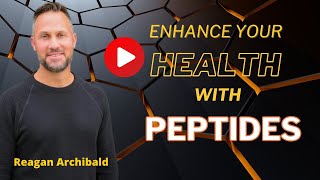
Podcast episode (Dr. Rob Solutions) featuring Robert Whitfield MD interviewing Reagan Archibald, founder of East West Health, about peptides, nutrition, and health optimization. Topics include protein intake and meal prep, personal clinical history (Hashimoto’s, recovery), peptide types and uses (GLP-1 agonists like semaglutide/liraglutide, exercise-mimetic and regenerative peptides such as thymosin beta-4, sermorelin, CJC-1295), microdosing vs. high dosing, clinical considerations around surgery and fat transfers, behavioral effects of GLP-1s (reduced appetite, less fast food/alcohol consumption), and practical wellness mottos and activity-focused outcomes.
Chapters
Hey, it's Dr.
Rob. This is my Dr. Rob Solutions podcast. And today I have Reagan Archibald, founder of East West Health and he's been in practice for over 20 years and his focus is on peptides. Now obviously this is a hot topic and things that are said about products like Semaglutide, which is kind of Ozempics product, then we have WeGovy and we have Mongoro. And so we're going to dive into that and it's really great because a few months ago when Reagan had me speak at an event of his in Austin and we said, oh my gosh, we have to have each other on our shows. And I've looked forward this to this for several months now. So welcome Reagan.
Yeah, good to be here, Rob. Thanks for having me. And yeah, it was really fun meeting you in Austin. You and I also met at DaVinci50. I heard you speak on your, I mean, the non cutting, what do you call that? The non cutting Facelift.
Yeah, the no cut facelift. Everybody's always. And how we can do a facelift without a knife.
Yeah, I was just like, this guy's brilliant. And then you talk about cleaning up all the mycotoxins in the body and making sure the terrain is healthy. So I was like, this is a, like you're just such a radical thinker when it comes to plastic surgery, but from so many levels. But that's, I think that's where we resonated because we both agree that the terrain is what is important for the healing to begin.
And so I'll, I'll have, I'll pick Reagan's brain about how much protein he eats every day. So we just start with what's fundamental and everybody is your diet. So what goes in your mouth, what is your food intake, what's your water intake and what's your air quality like? Because that just paves the way for the rest of it, right? Yeah.
Yeah. Yesterday was a heavy caloric expenditure day because I was hiking all day at Jupiter bowl at park city. Had about 12 inches of great powder up there. The lower mountain was warmer, so the powder wasn't as good. So we just hiked to the top lap after lap. So yesterday I got about 215 grams of protein, which is pretty. I try to get 180 to 200 every day. And my secret is I just. We pre plan meals. My wife's like this macros expert and I just.1 pound of meat is roughly a hundred grams of protein. And so I just try to have like Bins with specific amounts where I know I'm going to get 50 grams of protein from this serving of meat. And then I may add in some other things as I go. But yeah, every day 180 to 200 grams of protein is typical for me.
And I'll let my audience know. So Reagan had impact on me by saying this with his wife meal prepping. So now I get those on Saturday or Sunday, either lamb or venison or bison, and I cut them up and I just make little basic protein bites and I carry them around with me. Like I got my little Pyrex in my bag and I just carry stuff around the surgery centers. I operate or know my office and I don't really want to. And hopefully most of us don't have to order things out a lot because we get a lot of things in our diet that way that are not great for us. Depending on where you live and what access you have. Without knowing it, Reagan had an impression on me because I'm always very curious about how everybody else is either hacking something or doing better to get not just fitter but better nutrition. Because if your gut doesn't get nutrients, your brain doesn't work, just so everybody understands that. So with that we'll say let's discuss what your main passion is, which is peptides and how can everybody learn what you know or access care from you or your clinic and just be. Have a better understanding of peptides? Because there's a lot of things, as we just discussed before the show, that are being said about different peptides that are not. They're weighted a particular way and they're not fair to the audience because they don't have the understanding you have. Sure.
I think the foundational piece is my training is in originally I was at the University of Utah just studying pre medicine, was getting ready to go to medical school at the U and ended up getting really sick. Yeah, my, my skin started to flare up, I had massive psoriasis flare ups. I was achy all the time, my hair was falling out. And after five misdiagnoses from doctors up there, I was referred over to a naturopathic doctor who was also an acupuncturist. And he said, he ran my labs and he said, oh, you've got Hashimoto's. My thyroid peroxidase antibody is like 680.
Okay.
And so I was like, oh, finally I had an answer. And so I was, this was 25 over 25 years ago and I was gluten free before it was Cool. It was, I was following a very strict diet with him. I was vegan at the time and, and also exposed to a lot of chemicals on the farm I grew up on. And so it was just a perfect storm. And then you add in a little bit of stress from school and, or whatever it was, and that just completely threw me into a thyroid storm. But it was that doctor that helped me recover my health. And then I ended up going to Hawaii and studying more integrated medicine there. But when I was there, I learned both eastern and western medicine and I just grew a love for finding solutions that work really easy for the body. Because biology, I think we try to over complicate it with medicine. We try to intervene when maybe intervention is not necessary. We try to put too many inputs in when really what we need to do is remove interferences, just like you and I are talking about, and then build up deficiencies. So if an interference is chemical exposure, get rid of the chemicals. If there's an infection present, get rid of the infection. If you've got a protein deficiency, and especially those of you with hypothyroidism, you need your protein more than you can, could ever imagine. And when you're on a vegan diet, you pro, it's really hard to get good levels of protein in. And so it was a perfect storm. And when I look at peptides, once I discovered those, it was about 10 years ago, a little longer, when I met Dr. Holtorf, Kent Holtorf, and I heard him talk about peptides and I was like, what are these things? And then I started realizing, like, oh, I've been using some of these. Like I was using like CMAX because I was so into nootropics and I was using all the brain peptides, cerebral lysin, Dihexa. And then I realized there's this whole world of peptides that he opened up to me. And then I just started taking a deep dive and realized that peptides are natural structures that already exist in the body and they're a deficiency. So it's just we have interferences that turn off the signaling properties so that our cells can't communicate. And so by using peptides, you can actually fine tune that communication pathway. And that's one of the reasons why I love peptides, because they're just simply turning on genes that you want to express and turning on gene, turning off genes that express disease.
Well, let's go back to the gut brain axis because you said something extremely important. So as a surgeon, a lot of people are a little critical about And I've been asked why nutrition is so important. It should be like the paramount first thing for any surgeon to discuss anyway, because you can't actually heal a wound without proper nutrition. I think for everybody listening, I was taught by extremely talented people, just like Reagan was. They made sure I was a very good doctor. And I understand it, understood all the foundational elements of nutrition in order to care for very ill patients, because that's basically what surgeons did before there was critical care. Surgeons only took care of their patients. I was never allowed to ask another physician for help outside of a specialist in endocrinology for a thyroid problem or something like that. They never cared for our patients. They would provide advice and guidance, but ultimate control of the patient's caloric intake was our responsibility and monitoring of that so we could heal. And as I've gotten further and further along, like, you know, almost 30 years into my career now, being vegan is extremely hard for me to take care of a person following that diet because their dietary protein intake, it's usually extremely limited. And we make as many inroads as we can with that. You know, we have purified pea protein in the office. We use basically free aminos and powder form. So I just want every understand what Reagan's saying is a critical thing. When he was vegan, he was probably, certainly from a protein standpoint, not getting enough protein calories into his body. And that certainly probably contributed to the way he felt. And when you're going to entertain any kind of intervention, you got to understand that the providers, whatever they're doing for you from a treatment standpoint, need you to help that process of caloric intake. And you gotta ask questions like if you don't, if your provider's not asking you, you gotta, like, speak up and say, hey, do I need to adjust my diet? I don't get a lot of protein in my diet. And you gotta advocate for yourself because assumptions are always gonna be made. I don't make any. I just tell you what I want. So if I say, you're good, Reagan, we're going to do this, and you're going to need to up this to 2 grams per kilogram of body weight per day. So that's going to get you. Reagan already eats about 200, but I'm just basically telling him that's it. That's the baseline, that's what I need. And then I put that either through maybe Reagan uses my fitness pal or something that counts as macros just to help him better understand that. But you got to Just have that as a baseline. In terms of our recovery programs after treatments, whether they're surgical or non surgical, it's makes no difference to me. That's what I, that's the benchmark that you have to start with.
And you see the recovery because you're actually caring for your patients. That's an interesting insight, Rob, because I've always respected plastic surgeons and especially what you do because you guys have to operate and then it's the physical appearance. So you guys have to be that much more talented in your surgical skills than like an orthopedist who you uncouple a knee and you put the replacement in and you don't necessarily see the tissue structure, but you guys have to be very careful. Do you see that people who are under, undernourished, they just don't heal as quickly from the, the surgery. Is that the biggest thing or more infections, I'd imagine.
I think if you look back through the course of our surgeon's career, certainly in mine, I can highlight people who I didn't really appreciate why they were taking so long to heal. But now through a lot better understanding of genomics, nutrition, toxic burden plays a huge role in whether it's peptides or stem cell activation or exosome formation and you know how that relates to malignancy or any surgical treatment. There are things that when I was in med school or you were in training that are really different nowadays. So you have to like, you have to be curious, just like you've always been curious and certainly learning about what your passion is with peptides, ours is making sure that through our surgical recovery programs that we prepare you and highlight what's going on before you ever have or work with us. And people have to be completely bought into the system. I'm not here just to do surgery. There's lots of people surgery. Ours is to make sure that your preparation, your surgical treatments and your recovery process that we follow people for a year, it's a long time. If you're not getting better, it's not because we're not trying to get you better. There are factors and you have to address them and be accountable in your care plans and work with us and we'll get you better.
Man, I love that. Well, and it's the same with peptides. Like a lot of people. Just think, man, I read about VPC157 or thymosin beta or whatever it might be, and all I need to do is add these peptides in and that's going to make me healthier but if the foundation's missing, it's kind of like if you have a traffic jam, which you guys get plenty of those in Austin there. But if you have a traffic jam and you think, oh, all I need to do is turn the light green. And once they turn the light on green, then the traffic will suddenly disappear. But it doesn't work that way with peptides. You've got to have a foundation where your body can actually start to recognize those structures and get the clear signal. And this is. This probably goes back to how you open it up with some of the GLP1. The most popular peptides right now are the GLP1 agonists, because people are losing ridiculous amounts of weight. Diabetes is getting reversed, cardiovascular disease has improved, kidney function is improving. And. But now there's the backlash of people in the natural world saying, well, nobody's ozembic deficient. And it's like, well, well, what is ozembic? I mean, I guess we should define. So people just kind of the work that it takes for pharmaceutical companies to do the research on the peptides. And I think of all people like Rob and I are some of the most skeptical of the practices of the pharmaceutical companies. So don't take this the wrong way. But on the flip side, the positive that they bring to the world is they do an enormous amount of research, and there's dedicated doctors who are looking for molecules that can save lives. And billions of dollars go into this every single year. And so one of the ways that we learn about peptides is through some of these pharmaceutical research grants and studies. And semaglutide was not an Easy1. The GLP1s were not an easy one to discover. Liraglutide was the very first one. And liraglutide is something that needs to be taken daily. What they notice is it's a GOP1 agonist. And so that a GLP is a glucagon like peptide. And when you get more of glucagon in your body, you have better insulin secretion from your pancreas. So it actually pulls sugar into the blood, so you get a little bit of lessening of some insulin resistance. But at the same time, one of the things that these GOP1s do is they delay gastric emptying. Rob, you and I have seen a lot of clients with sibo, and if you delay gastric emptying and someone already has an infection in their gut, you're going to see a massive exacerbation of those symptoms. And I don't know about you, Rob, but I don't see any of those doctors who are prescribing these medications. And massive doses, by the way. It's not we do microdosing in our clinic, but massive doses. And then people are having side effects. And so now you have this big push to demonize GOP1s. But what's the positive benefits you've seen with your clients using some of these?
Ours is very different. So just like you get asked quite frequently about the use or the negative impact it may have, what we're getting or what I get prompted on a lot because I do a lot of fat transfers. So there has to be a very specific environment to both do a transfer and to maintain a transfer. So there's gotta be a delicate balance between your toxic burden, your genetic ability to detox, your hormone balance, your diet, your food sensitivities, anything that can disrupt. And obviously, I'm taking care of mostly females, so it's very easy. Just like you experience a disruption through a chemical exposure to disrupt a woman's endocrine system. So for us, I get queried like, oh, you know, can I take OIC after? Because I want to lose a little bit of weight. And I. I tell everybody up front now, so if you're entertaining using that, I'm totally fine with that. But you have to have used it, be done with it, and be out several months with a stable weight, because we can't take care of you and put you on the foundational nutrit diet that we want for you and then keep that up consistently and have surgery and then recover and maintain it. And it's one of these things where as humans, we get, like, onto the next thing. Like, we're very like, what's next? Let's do the next thing. And if you want me to make or create a result for you, you have to be bought into the accountability it takes to make and create and maintain. So it's a little bit more complicated for us with fat transfers. I just tell everybody, like, that's a no go for us right now because it's hard enough to get this balance right. And then if I have somebody who didn't have that, who struggles with weight, then obviously our recommendations would be to use it. But we do not follow that guideline of starting out at really high dosing and getting the unwanted side effects of any of those which, you know, anything that can give you otitis. For those who are listening, I trained in surgery first for six years, and we were the referral center for Pancreatic necrosis in the state of Indiana and surrounding areas, for that matter. So the number of patients I took care of with necrotizing pancreatitis who were overweight, had problems with insulin resistance. It was difficult to care for them because when your pancreas doesn't work and or you start developing necrosis of your pancreas, you're in a bad way. It's not good situation right there. A really high mortality, in fact. So for us, we don't much like you've mentioned, microdosing makes perfect sense to us. And when I have somebody come in who's been on any of the GLP1s, we gotta do a symptom inventory. Did you have nausea, vomiting, diarrhea, abdominal pain? Are you exacerbating anything else? If you had diabetes, is it under control? Gone, Getting better? What's it doing? I think it adds another layer now to any practitioners, basically symptom survey that you have to do all the time. I actually hold if we're going to do it in relationship to a fat transfer. And then people ask me, do I put people on peptides a lot in the recovery phase. And I don't for a number of reasons. Mostly surgery is very complicated in terms of compliance. And I already have a very specific program to run. So once you get them further out, it becomes more acceptable to do that and you can discuss your compliance with specific peptide therapy and what it requires on the patient side. So everybody understands from your perspective.
Yeah, well, and I think it's interesting because the GLP1s, one of the things that they've done is there's a. Now there's a $25 billion transfer of assets out of fast food companies, because out of people surveyed, I believe it was Morgan Stanley who surveyed people on the GLP1 peptides, and they found that 70, they ate out at fast food, 77% less. So I mean, that in and of itself is. That's a big win because it all starts with the food. We're very aware of that. And people are thinking that, you know, These peptides, these GOP1s, are just. It's like all people need to do is make the choice to eat better. But biology is so strong that it's nice to turn off that mechanism in the brain so that a person isn't consistently hungry and seeking after food all the time. So the second thing that I think is interesting is if you look at the dialysis centers, there's a study where I think the biggest dialysis center right now Is, it's. What is that big dialysis center? It's DaVita, I think. Yeah, it's DaVita. And DaVita is. Their stock price went down like 35% because of these GLP1s, which, yeah, they're frustrated because they make money doing dialysis. But Rob and I have seen many of our patients end up in dialysis. And it's, there's no quality of life. I mean, when you're getting your blood pumped out, you're spending five, six hours a day doing that most days of the week. And your lifespan and health span are just completely diminished. And so GLP1s are great. We've seen it with PCOS. We've seen improvements there. I have clients who have kidney disease and we're seeing an improvement in their GFR and their creatinine levels and their boon levels even. There's some neuroprotective benefits of the GLP1s. And yes, there's side effects with anything, but. But this seems to be a really promising area and in my opinion is probably one of the best treatments that the pharmaceutical companies have produced. The downside is the dosing. It's. They want their patients, they want doctors to be prescribing this forever. They don't want patients to get off it, and they want them on a higher dose. We want to get our clients on 90 days, take a month off, get back on if they need to. But once you get to your set weight, there's other peptides that are phenomen funnel. So we'll use like 5amino 1mq as opening up the NNMT pathway for better fat burning, less fat storing, so it, it reduces that hypogenesis. The other thing that we're finding is that if you use some of the growth hormone releasing peptides like sermorelin, CJC 1295, sarcotropin, while you're using some of these GLP1s, you just respond much better because you don't lose muscle mass. Because anytime you're losing weight, right, there's going to be a massive amount of muscle that you can lose if you're not doing some resistance training. And so this is where we have our nutritional advisors, we have our fitness advisors that are putting together very specific strength training programs and nutritional programs for our clients on these beautiful peptides.
So that's hot. Let's go back a moment because that's extremely, extremely important. So you have an industry that takes a ton of criticism because the pharma industry does, and most of the Time is pretty deserved, but they have created something that does. It's pretty magical because it modifies behavior. Yeah. And that's always been the hardest thing to do. And it doesn't matter what version of medicine you practice because everybody's been told to follow a better diet, everybody's been told to exercise more, everybody's been told to sleep better.
Right.
These are just fundamental things.
We don't have a deficit of information, that's for sure.
This Reagan, it changes how they perceive like crazy. Modifies it so that you said the behavior. Right. Less fast food. How many times told a patient you need to eat better and the first thing it does is you start out all processed foods. Well, anything that comes in a bag from a store that wasn't bought with a grocery bag and carried out, that was a whole food, is probably processed and bad for you. So you can just eliminate that. Doesn't matter what chain you go to, what you think is healthy. No, that's a non starter in this discussion. You can't buy it on the perimeter or it's not a protein. That's actually from a source that we've discussed. Probably not going to be great for you. But just that change in behavior and Reagan discussed it very eloquently. So in other countries that aren't as fortunate is this one with resources. Many people die who need dialysis because there are no resources for dialysis. So imagine this in a country with very limited resources who develop what's called diabetic nephropathy and they go on to have kidney failure and need dialysis. But in many instances those people just die. Yeah. So now you've created something that prevents to a degree that long or end stage renal disease of diabetic nephropathy, which we saw all the time. And the last surgeon to win a Nobel Prize is Dr. Joseph Murray, who did the first kidney transplant on Siamese twins. He demonstrated technically you could do it. And the rest of transplantation developed out of that and immunosuppressive therapy. So anything you can do to prevent end organ damage is huge. You know, you just described, we kind of blew over it. But that's one of the biggest things you would ever see at a hospital. People with end organ damage to their kidneys.
Yeah.
Livers, hearts, lungs, et cetera. And you know what happens as a byproduct when you stop them from eating things that are so processed or have too much salt, their blood pressure goes down, which is another huge thing that undoes us from a end organ damage standpoint so if you take somebody who's really high risk for kidney disease, they're diabetic, they got high blood pressure, they're overweight, didn't pick their parents. Right, whatever. So you're going to continually whittle away at their weight so they have less insulin resistance. From a functional standpoint, their body's working better. From a brain standpoint, their behavior has been modified just enough. And then if you can get your nutritional coach, your physical trainer, hell, you can do this on an app most of the time. Now there's a little workout app for everything. So it's not as costly as it once was to actually both be, modify behavior, hold yourself accountable, and change completely how you've been living.
Yeah, it's such an exciting time. And some of the other behavioral modifications, because you don't get the same dopamine rush from food when you're on GOP1s. And they found that alcohol, people consume 30 to 40% less alcohol, which, once again, there's like, an amazing benefit to getting rid of alcohol. They're looking at studies for cutting out cigarettes and smoking, and any kind of addiction is kind of mitigated. I mean, it's phenomenal. And if you throw that in, you say, okay, now somebody's actually. They feel like they have control over their biology. Because never in the course of human evolution have we had access to food 24 hours a day, seven days a week. We've never had the capability of turning on lights and staying up all night and completely disrupting our circadian rhythm. So, yes, it is nice to have the capability of actually putting the right habits in place. And I think the criticism, and rightfully so, when people get off Ozembic, the weight comes back. And that's where everyone's like, see, we knew it. We knew this was a scam. It's another money grab because Novo Nordic is making a pile of cash on this. I mean, it is disgusting how much money. I mean, this is the biggest moneymaker around, because 60, 70% of Americans are overweight or obese. And so they're just like. It's just like fish in a barrel for them. But. And so, of course, we need to be skeptical, but this is where working with compounding pharmacies and working with functional medicine, doctors, integrated clinics, who are using peptides in the right way and is going to give you a lot more benefits in the long run. Because what we find is when people come off of it, they're now used to eating their diet a specific way. We've Got their protein consumption dialed in, we've got muscle mass built up and then once we get rid of that interference, which is called the obesity or inflammation from excess adipose tissue, once you get rid of that, then the person does much better when it comes to age reversal because that's really where we can start working on the cineolytics, we start working on improving the liver function, the hormones. Everything seems to work better once you get rid of that excess 20, 30 pounds. And not only that, but how many of you, you look in the mirror and you love what you see. There's just something magical about the confidence that you get when physically you're healthy and you look good, you feel good. And I'm excited about this because I think the next peptides that you're seeing come on the onto the market are the exercise mimetics. It sounds kind of funny because now we have a way of getting your weight where we need it to be and bring in exercise medics. But I've been using these for over a decade, like Mod SC SS31 is a newer one that I've been using, Ara 295Amino One MQ. But these are peptides that actually stimulate some of the same pathways that exercise does. You're getting some of the same benefits from these peptides. And what I found is that I enjoy moving my body more because a sedentary lifestyle, I don't care if you eat like, like a hundred percent clean, if you sit in front of a TV all day, you're going to be fat, you're not going to feel good, you're not going to be an expressive human. But once you start moving your body, doing those enjoyable activities, that's when the magic really happens. And if you can get more out of it. That's why I like thymus and beta 4 because I don't get the muscle soreness. Like I felt great today. I'm a little sore from the miles of 10,000 foot elevation hiking in the snow. But, but man, with the thymus and beta 4 you recover faster so you want to keep moving your body. I think that's one of the keys if we're going to live long, you got to move.
Yeah, let's talk about that a little bit more. So in addition to obviously losing weight and I have very both good friends at the, the professional level and patient level who are taking and or being prescribed and are prescribers of this and I don't think we put enough emphasis on what you just said about movement and lifting heavy Things we'll say. So we start becoming sarcopenic after age 30. Our muscle mass is going down, not going up. Our collagen elastic composition, our skin is going down, not going up. That's how we physically appear to be aging and then feel aging. And if we don't, to your point, move, we're sedentary. Despite counting macros or eating well and resting well, it's a whole different thing. Just like before our show, I got up, I went to the gym at 5:30. Yeah. Spent an hour there, came back here. I'm sure if you could pan out, I only have about 100 supplements on my desk right now. Down a little bit. So there's far more input now. Like you got to do more. Yeah, I'm going to be, you know, 55 in August, so I want to do more and feel better. I have a 19 year old, 16 year old. I definitely. Well, she's not 16 yet. Close, but I want to be around. And we'll use the Dan Sullivan number so we're 150 so that we can see how they grow and their families and their kids. I mean that's the fun stuff. I mean it's a lot of effort now, but if you don't start doing some of these things, you can't quite imagine getting there. I think now if we think about it and vision it, you can see it's far more attainable than it was before. And things like this have certainly made it. From my perspective, having seen people over a number of years like you have, who get ill and pass away at a young or a young age, many of these things are involved in that that we've been discussing. And if we can reduce inflammation, which ultimately the end game is damaging your organs, if you can reduce all that, then you're going to live a longer, you're going to have a longer life. And if you take better care of yourself and your diet, your fluid intake, your air quality, that's the best situation.
Yeah, well, and I have three kind of core mottos, you know, number one is no death by neglect. Don't be ridiculous. Get the diagnostics ran before they need to be ran. It's like, when's the best time to plant a tree? It was 20 years ago. And so if people take the time to get the right tests, the second one is when health improves, everything improves moves. And so my best days are days where I'm moving my body, where I can get in flow state. Mountain biking, snowboarding, skiing, hiking. And to be able to do those Activities with my kids. Like, I was skiing with one of my sons, and then the other son got him. And we were playing basketball yesterday. So it was like a. It's just a super fun day. But we always do physical things together. And that's something that. Yeah. In my 80s, 90s, hundreds. Like, why stop? Because that makes everything better than. The third motto is making your best, your next decade, your best decade. So imagine you arrive, you'll be 55. So imagine. What do you want to have happen when you're 65, Rob, in order for you to arrive in a healthier condition than you are now? Like, if you put it through that lens, it's, oh, yeah, I could actually be healthier at 65 than 55.
And definitely now that. That attitude, I see, unfortunately, a lot of people who have, you know, mindset is Reagan, it's a big problem. It's a big. Is understatement. So if you don't have the proper mindset, all of the things we're discussing seem unattainable. But, you know, getting yourself in the proper mindset, that you can do something, you know, counting your wins every day because you have them. Irrespective of what they are. You have them. Yeah. Showing yourself gratitude. If you have to journal it and write it down, then do that. But you have to get the right frame of mind. And if you need help doing that, get yourself out of bed at five in the morning and go for a walk. You don't have to go start lifting weights right away. That. Just start by getting out of bed and moving around and going to have a walk. Hopefully, you know, it's not super cold. If it is, just go in your house, walk up and down stairs, do something, move. Yep. And build upon it from there. And I'm sure other practices like qigong or yoga or other things that help with your mindset and get you in the right frame of mind help. They help me. They help Reagan. So everybody listening. There are lots of things you can do that don't require any amount of money or influence to get yourself started in the right direction.
No, no doubt. And I find that it's. That creates some momentum, and once you have momentum created, then it's, like, easy to keep it going. And yeah, there's so many great things about movement and activity, but when you look at some of the science that's going on, just like we're bringing in GOP1s to help people overcome their biology temporarily so they can get new protocols in and a new lifestyle, there's also so many great things that you can do with peptides to help increase your enjoyment with physical activity. There's. Do you mountain bike, Rob?
I don't anymore. I almost got hit on my mountain bike in Austin, so I stay in my car.
Well, maybe if you're out in Park City, there's no cars. We're a small little redneck community out here. Safer, but much safer. But there's a hill called Puke Hill, and so every year, this is. Yeah, it's up to the. The Wasatch Crest Trail is probably one of the most gorgeous trails in all of northern Utah. Southern Utah, we have Moab and St. George, and it's ridiculous down there. So beautiful. Yeah. But northern Utah, this one, you're riding across the top of the Wasatch Range, and you can see down big Cottonwood Canyon. You can see the Park City side. But in order to get up to 10,000ft, you got to climb 2,000ft, and you got to climb straight up to get to this hill. And at the top, everybody's puking. And what I started doing, because I do it every year, several times, and I time myself, but I started using these exercise mimetics. And I found in the past, I would just be huffing and puffing and barely make it to the top and then get to the top and be wheezing. And not. I've never thrown up, but I've seen dozens of people throw up. Sure. But using the peptide stacks, I always tell my friends, I'm like, hey, I just want to let you guys know I have an unfair advantage. I'm using these peptides, and then they see me just kind of breeze up the hill, and I get to the top and I can just keep going. But. And it's great. So I look at that, and I think of all the benefits that can come if we can get people moving their body more. Eating. Yes. Eat the right food. But I can tell you there's some magic in being able to move your body in a free way. And whether you like dance. I don't care what you like. Not everybody likes mountain biking. And they're probably like, I have no desire to. To do the activities Reagan's doing. That just sounds miserable. He's hiking in snowboard boots and ski boots. And then he smell like that. No, thanks. It doesn't matter if your thing is like, hey, I just like to go swim, then you can do that better and actually enjoy it more. And imagine if every year, the activities you love now get better and better. How Good. You're going to feel. We have a patient of ours, and her name's Tony, and you'll see her on our YouTube. But she came in with severe neuropathy about a year ago. Like, she could barely move from her couch to her kitchen without being in severe pain. The gabapentin just numbed her brain. And she talks openly about this. And she was just, like, ready to give up. Her life was pretty miserable. And so we started working with her, and her goal was to hike Sunset Peaks. So there's this gorgeous peak. And next time you're out here, I'm be happy to take you on the hike. It's phenomenal, but you end at close to 11,000ft. It's not an easy hike, but she always said, man, I wish I had one more shot to get up to Sunset Peak. And this is a woman in her 70s. And so the chances of her. She could barely walk 10ft without pain. And. But she did all the work. She cleaned up her diet. We had her on the right peptides, we did the right regenerative therapies. And the crazy thing is our fitness team, our health coach, Andy, so we had Andy, Tristan, and Nikki, and they, she. They got her ready to hike that. And last fall, at the end of the fall, they took her up and she made it to the very top of Sunset Peak. And it was like the coolest video because she's sobbing. Her husband's there with her, he's so proud of her. And. And every time I see her, like, she just looks better and better, younger and younger, and it's so cool to see because she was somebody who, you know, if she would have kept going on the path she was going, she probably. Well, there's no. No question she would not have made it there, but she probably would be, like, close to, you know, dying because it's that of life is where people fall off a cliff and they're essentially just waiting for death to come, you know, take them out. And the way I want to go is through a concept called compressed morbidity. So in Chinese medicine, they say if you live a really healthy and vital life, then when you get to the end of life, you die really fast. So my goal is to live really healthy as long as possible, and when I die, I want to die really fast.
Yeah, I think the. The unfortunate thing, growing up in a really traditional surgical environment and seeing those last days, weeks of someone really going through a difficult time and their families and everything else, it is a awful kind of ending, you know, to an existence. Certainly the concept of compressed morbidity for those folks. I'm sure they all would have said yes had they had an opportunity to learn from you and others who really embrace the importance of peptides and their VAT and value. And then we have to give a little credit to the folks in the pharmacy industry for bringing this to market because it is going to help a lot of people despite what things are being said, just like anything in a more moderate dosing pattern as Reagan suggested that we've used. Haven't seen issues with it and certainly I don't think it's going anywhere. It's here to stay and help our patients. So I want to thank you for coming on today. Please let the audience know where they can reach out to you and find you and move from there.
You can go to our website, accueastwest.com or just email me directly. Reagan R E G a n@accueastwest.com thanks.
For coming on today, Ryan. I really appreciate it.
Thanks for the great work you're doing, Robby. You guys are revolutionizing the space of looking your best and I appreciate it.
Thank you.







