What are the Symptoms of Breast Implant Illness?
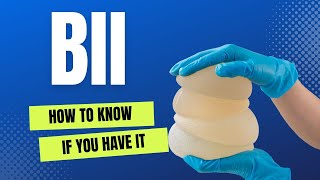
Dr. Robert Whitfield (Austin, TX) presents a podcast defining "breast implant illness" as a clinically observed inflammatory process linked to a broad constellation of symptoms (brain fog, anxiety/depression, palpitations, shortness of breath, rashes, joint/muscle pain, fatigue, recurrent infections). He discusses diagnostic challenges and misdiagnoses, recounts a 2016 reconstruction patient with an occult E. coli implant infection that influenced his practice, and outlines his evaluation and treatment framework (testing, gut/hormone optimization, EEG, explant/en bloc capsulectomy, individualized care and support).
Chapters
Hi, everyone. Welcome to my podcast. This is Dr. Robert Whitfield. I'm a private practice plastic surgeon in Austin, Texas. And this is my breast implant Illness podcast. So, in full disclosure, there's been quite a bit of controversy around breast implant illness. And let's start by defining what I think breast implant illness is in my six years of taking care of patients with this and over 1100 explants. So to me, breast implant illness is kind of a inflammatory process that is no longer able to be checked by the patient's, you know, own body. And it can manifest itself in a lot of physical symptoms. And, you know, we can go from head to toe. You may have brain fog. And when I first was confronted with patients telling me they had brain fog, I didn't quite understand it. So I'd ask a lot of questions like, you know, what does that mean? What happens? And it. It could be as simple as they just kind of forget things. Simple things even. They may misplace their keys. They may not remember their children's names. And these were, you know, very concerning. People think, oh, my gosh, you know, I'm. I'm developing, you know, early onset Alzheimer's or something like that. They can have anxiety and, or depression or both of these things, you know, coexisting. And that's disconcerting. Obviously, if you've never been an anxious person, you may develop respiratory symptoms, shortness of breath, tightness in your chest. You may have cardiac symptoms like heart palpitations. My breast implant illness advocate had full body tremors. You may have skin symptoms like incredibly bad rashes. You may have large outbreaks of cystic acne all over your. You may not be able to sleep. You just wake up multiple times a night, whether or not it's to go to the bathroom or you just can't, you know, stay asleep. There's a constellation of these, you know, symptoms really, and the patient doesn't know what's going on. And their traditional physicians don't know what's going on. They may have seen their plastic surgeon or another plastic surgeon to have their, you know, exam to see if there's anything wrong with the implant. Could that be the case? And many times there's nothing wrong, nothing that the doctor can find. And they, you know, do lots of blood work. I have folks come from all over the United States see me, and they have fistfuls of papers, blood work, and. And there's nothing that's really revealed. And so, you know, it's like they become very suspect of the doctor. Which I completely understand because doctors are trained to recognize patterns and then, you know, they, they can reach a conclusion in conjunction with, you know, laboratory testing, exams their, you know, experience over time. And, and part of the problem with this issue, breast implant illness issue, is it's confusing on physical exam if in fact findings don't really match up with, say, a badly contracted implant or a really painful implant or redness over the chest on one side indicating an infection or referred to as cellulitis. It creates challenges for the practitioners of all levels, whether they're, you know, patient's primary doctor, maybe it's their ob gyn, maybe they have a functional medicine practitioner, or like I said, their surgeon, their plastic surgeon. They don't know what's going on. So it's often confused with things may be told they have fibromyalgia, they may have signs and symptoms consistent with autoimmune disorders by having a positive AA on their blood work. Maybe they've seen a rheumatologist and nobody kind of knows what to do with them. So, you know, the, the actual quote, unquote, diagnosis of breast implant illness can be very difficult for the, the providers and obviously very frustrating, disheartening for the women suffering with the issue. The, the way I look at it now is going back to 2016. I had missed this, and I missed this in a, you know, a way that I had never had that happen before. So a patient came to me and wanted to be flat. She'd had a breast reconstruction for cancer. And my sister's a breast cancer survivor. She had reconstruction with implants. She was not a candidate for autologous tissue reconstruction with something like a diep free flap, which I was known for doing in the United States for a long period of time. And so this patient came to me and she said, Dr. Whitfield, I just, you know, I don't want my reconstruction anymore. And that was a big decision. She came to. I went through all of her history, her labs, her physical exam was normal. She had no evidence of capture contracture. She had no skin changes. She had, had not had radiation therapy. And so I said, yes, you know, I can help you, you know, take care of this. And then she asked me to do what's called an en bloc capsulectomy, which is a pathology term and a term, a term that we use in cancer surgery. And because I had done many, many years of reconstruction for both breast cancer, head neck cancer, and sarcomas, which are rare tumors of bone and muscle and fat, I was very familiar with the term. And she said, can you do that for me? I said, sure, it's not a problem. And I explained how I do things in conjunction with that. So we always send things off to make sure there's no evidence of recurrence of cancer. We always make sure that there is no bacterial or, you know, micro bacterial contaminated in there. And, you know, we do that time surgery. So, you know, I. I took this patient to the operating room once again, was asymptomatic, just went to reconstruction, taken down. I did everything in the manner discussed, did it as an en bloc capsulectomy per her request, and did cultures of the pocket, took portions of this to send off, I'm sorry, to took the entire capsule and then sent it off for pathology. And about a week later, everything comes back and pathology was negative, which is always paramount in any cancer case. You want to make sure there's no evidence of disease or recurrent disease. Then I went through her microbiota, microbiology report. I hardly say it these days. It still bothers me. So she had greater than a hundred thousand colony forming units of E. Coli on this report, which means she had an E. Coli infection on one side. And I was like, okay, how did I miss this? And so I went back through all my notes and her labs and, you know, I couldn't figure out how I missed this. So this was an occult infection. This was not a biofilm of low grade amounts of contamination. This was a true infection. So going back in her history, she'd had a lot of issues with fatigue, which many, many patients have after cancer treatment with chemotherapy. And so that had been worked up by her oncology folks. And nothing had been, you know, determined from that. So based on her symptom of fatigue, it correlated that with this implant infection. And I put her on the appropriate antibiotic because at that point that was, you know, a standard of care measure. And she got better, her fatigue went away. And it was like a moment for me where, like, I missed this. And I believe this woman appreciated, you know, how I cared for her. And she put me on, I believe, a Facebook group and said I would, you know, perform an en bloc cap select to me, and I would listen to her and understand her concern and, and just take care of her. And so I started to have people just, like, show up who wanted explants, which was obviously a little new because my practice has always been caring for cancer patients and to a small degree, cosmetic patients. So I think this just started a trend for people to see me, and it has set off really in me a lot of curiosity about this as a problem without a lot of data around it. So fast forward, you know, the time I spent in leadership of the Aesthetic Societies Research foundation, we kept trying to figure out ways to advance research for this. And when I was president of that foundation, after I testified at the FDA hearings in March of 2019, as President elect, we wanted to fund research for learning more about breast implant illness. So we did that. They did some psychological studies, they did the first randomized controlled trial and some basic sty. Basic science studies around breast implant illness. And obviously I've done over 1100 explants and I have quantitative PCR data about biofilm on these and I've presented that. So the issues for us are there's this kind of breast implant illness, which is not an actual medical diagnosis. It has limited amount of research behind it, but it's a growing amount of research. And it's probably a little difficult on the practitioner side because of these allopathic methods. Don't really identify this as a problem. So when you look at how we approach it, I look at functional genomics, total toxicity testing, hormones, hormone evaluation, liver and kidney function as basic things. Biomarkers for inflammation, food sensitivities. And so these things all together help me feel comfortable in. When I hear the story, I recognize the pattern. And to me that makes more sense when I hear somebody has those symptoms of brain fog, anxiety, depression, shortness of breath, heart palpitations, joint and muscle pain, rashes, chronic problems with maybe infections, sinusitis, bacterial vaginosis, UTIs, dry eyes. It all just kind of like, okay, yeah, this is a pattern I recognize because I see this routinely now. And people seek out attention from me because I understand it very well and have programs and processes around helping them from, you know, a neurologic standpoint. We check everybody with an EEG who has any complaint of brain fog, and we try to do them in general. We certainly want to make sure that we're helping, you know, their gut health by improving, you know, their diet through checking for food sensitivities and checking their DNA analysis of their stool so that we can help work on healing their gut, gut. Brain access is extremely important in reducing things like anxiety and depression, improving energy levels. I always try to, to balance out hormones and, you know, the genetic component is the, the, the end game. So I want to treat everybody as you should treat them as an individual. And based on your genetic material, you'll understand better why these things are so, so difficult for a patient to handle. Who has breast implant illness because of their limited, probably immune pathway function, decreased ability to detox things. So it needs more and more research as a real medical condition. And the more that's done, the more accepting it is there won't be, you know, from a client standpoint, this worry to come into the practitioner and explain these things and say, you know, hey, Dr. Whitfield, do you feel like I have breast implant illness? And, you know, after listening to the clients for so long over the past six years and really developing a program around, you know, testing for these things, as I discussed, I feel very confident that we'll be able to help them. And that's really what the women who are suffering from this need is, you know, obviously, acceptance that there's a problem, reassurance that you can develop a plan that will, you know, individually take care of them and set them up for success before, during, and after surgical and surgery and into their recovery period so they can go back to leading, you know, their best life. So for me, breast implant illness, in summary, is obviously a routine medical issue that I see of women with implants, either from reconstructive reasons, from cancer, or from cosmetic reasons. You know, if someone's got brain fog, anxiety, depression, muscle and joint pains, fatigue, gut issues, rashes, shortness of breath, heart palpitations, like, those things have to be looked at critically and make sure that you don't have another medical diagnosis, of course. But then they have to really be supported emotionally around the diagnosis of breast implant illness and then given a program implant to really help them overcome this and get their life back on track. I want to thank everybody for taking the time to really listen to my podcast. Please feel free to share it and see if you can help somebody. We're in Austin, Texas, and of course, I do a lot of work around the United States remotely with Discovery Sessions, and we have practitioners within our program to help from emotional support to gut health. And we look forward to helping as many people as we can.







