When Enhancements Backfire: One Mom’s Journey from Shame to Healing | Regina Steele
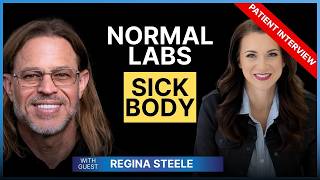
Regina Steele got breast implants after pregnancy, but they caused back pain and hormonal problems. She had them removed and entered an integrative recovery program with hyperbaric oxygen, lymphatic compression, and targeted nutrition. Her surgeon never mentioned alternatives like reduction or fat transfer, highlighting how cosmetic procedures lack regulation and transparent patient communication.
Chapters
I started developing at a very young age. I was like nine years old. When you're in high school and you even have old men staring at you because of how big your chest is, you're like, grossed out. I was always uncomfortable in my body. Before I went in for surgery, I kept having these dreams where I came out with no chest at all. I've never seen myself with no breasts. I've never seen myself with nothing there. And it really freaked me out. So I got on the phone with Alex and she was like.
Welcome to the show. Today I have Regina Steele, who is an integrative health coach and author of Mother F. The Anti Perfectionist Guide to Surviving and Thriving in the Chaos of Modern Motherhood. After years of unexplained fatigue, anxiety and hormonal imbalance, Regina chose to undergo breast explant surgery, a decision that became the turning point in her health journey. Today she helps women rebuild hormone balance, energy and confidence through integrative nutrition and holistic healing. Regina blends science with sarcasm, making wellness relatable, real and doable for modern moms. She's the creator of the Mom Reset program and the host of the Steel Truth blog, guiding women to reconnect with their bodies, release perfection, and find balance again. I have Regina Steele with me today, wonderful patient of ours and the author of Mother Father. We love that title. We didn't say the full term.
Me too. It's my favorite. That's why I chose it.
I know, you know, when you and your husband came initially to visit us and it was a great, like, appointment for a number of reasons, but when you came back and you kind of let me know about the program and the book and I was like, oh, this, this is going to be good. So I'm glad we were able to connect and get you on. On the show today.
Yeah, I'm glad to come back. It was actually, I have to give Rick credit where it's due. Like, he gave me the title Mother Effed. So, I mean, it was supposed to be a really funny Instagram account, but I don't have time to do social media, so it turned into a book. It was a great book, though. I love.
Is. Yeah. Oh, social media. In any event, we were talking a little bit offline about one of our patients and you said something very poignant about as a, as a gal, you see someone and you want to look like them. And one of our patients was very heavily influenced by Baywatch because of where they lived and maybe share why or what influenced you to think or Consider, you know, breast augmentation.
Yeah. Well, it's interesting because I grew up in the 90s, which we were, you know, heavily infiltrated by magazine covers of supermodels and everything like that. But, you know, we didn't learn until we were older that they all had eating disorders and they were spray tanned and even their abs were like sprayed painted on them for the photo shoot. Like, we didn't know that. But, you know, it was funny. I. I didn't really have, like, self image issues, like, in that retrospect in high school. For me, it was. I tried to cover my body as much as possible. I started developing at a very young age. I was like nine years old when I started developing. So by the time I got to high school, I was a 32F. I was uncomfortable all the time. And when you're in high school and you even have old men staring at you because of how big your chest is, you're, like, grossed out. So I always tried to put on sweatshirts, hoodies, didn't want to be looked at. So in that mindset, I was more so like, please, please make this smaller. Like, I was massive. And of course, when I got older, you're just surrounded by women wearing certain clothes that you're like, I can't wear that because I look like I came out of Louisiana, whorehouse type of thing. Like, I can't. Like, I just. I was always uncomfortable in my body. And then of course, after I had my own kids, I grew even more because I was nursing. I was pretty mortified with how large I got after that point. And it wasn't just like feeling uncomfortable with what I was wearing because I always felt like I it other either felt like I was wearing a tent or I felt like I was falling out everywhere. And just watching other women feeling confident in what they were looking, I feel like that was more my reaction with the self image type of thing. So for me, it was more so like wanting to kind of look more normal than it was to actually wanting to enhance my chest as much as other women. I know that's more of a common thing, but for me, I do like to express that because there are a lot of women with massive chests that are like, very uncomfortable with what they're wearing because of how other women are approaching it and how other women look. So appearance has a lot to do with it. So when you see other women and how they look, it's really tough to not compare yourself with it. So for me, it was that and just the pain that My back was going through and just. I think I had back pain issues since I was in high school. So for me it was really like, like, what am I going to do? And that whole experience was really interesting because when I went to go visit with a surgeon, the sole purpose for me to go to the surgeon was. You could probably say the proper term. I call it an abdomoplasty. Is that what it's called where you get your abdominal wall sewn back together?
Yeah. When they do rejuvenations that involve rectus diastasis. So you're narrowing that down because that gets separated. The abs separate out after having kids. Then they, when they go ahead and align them. That's called an abdominoplasty with a rectus plication and then the, you know, the, the late term tummy tuck, you know. And then when we do an enhancement, it would be with or without a lift. Be a mommy makeover.
Yeah, yeah. And that's kind of what I was doing because, well, my doctor at the time was like year after two years postpartum. It didn't go back together at all really because my children were massive and I'm tiny little 5 foot 3 frame. So the fact that I had 8 pound babies didn't really help me. And so close together. So having. That was the consultation I went into. And while I was in there, I'm like, hey doc, while you're in there, can you like make me smaller? That would be great. And the scary part was that whole conversation, this is where I would be like, man, if I knew then what I know now, like conversation to impart on myself. That was. I was mad at myself. But even more so now I was really mad at the surgeon for not telling me that there were alternatives to implants. Because the whole angle that he kind of manipulated around it was again, myself, you know, not feeling very confident in my appearance was. He saw that and he said, well, you're going into your 30s and you want to feel confident with how you look. The only way we can achieve the result you're looking for is to put implants in you. That was the only conversation.
And then you had always struggled with size to begin with. So yours was more of probably a discussion around a reduction.
Yeah.
That would narrow and lift the breast. Not a. So many times I have patients tell me that they were kind of steered away from a lift and. Or lift and fat transfer to a augmentation to accomplish the lift. Is that kind of the discussion?
Yeah, that was literally the only discussion that Was there was was no chat about natural lift. That was not even part of the conversation.
Right.
I didn't even know what a fat lipid transfer was until I actually heard your podcast before I went in for a surgery with you. That was the first time I ever heard of that. But yeah, that whole conversation I had with him was pretty much, let's get an implant put in you to give you the lifted appearance. And for me, I was super confused because I was like, well, I'm trying to get smaller, so why do I want to put an implant in? But just going off of like, you're a surgeon, you know what you're talking about. Okay, I'm going to go with what you said type of deal.
Yeah, there's this, there's this conceptually when someone's trying to increase the size, there's a quote unquote principle of do you do an implant with a lift? At the same time you're in a different situation because you already had more than enough tissue. Yours was more of like, do we need to reduce and lift to give improvement in shape due to being postpartum doing to, you know, having a loss of volume and increase in probably just the skin stretch, which is normal.
Yeah. Yeah. Okay.
So you, you have a tummy tuck and an augmentation. Now yours is through basically the circle. And now you're even much bigger than you were before.
Yeah. Which was funny. I mean, I did shrink down, but what my goal was was to be a 34D, which would have been fantastic, which is exactly what I am now. And I'm happy with that. But I ended up being, I want to say a 34 triple D, which to me, I was like, no, this is still really big. And I mean, you saw when I had my consultation with you, like I have divots in my shoulders that, you know, just. It's like you're carrying around heavy weights.
Right. I always liken this too. So if you're, if you develop quickly like Regina did, you have larger breasts and you're always struggling with that, you're getting neck and back pain. Many, many studies were done that show breast reduction helps relieve that neck and back pain, especially that upper back pain. And it also helps increase certain components as you, as you look at your. Just your respiratory capabilities. So breathing is easier because there's less weight. Your neck and back are not being strained as much. So conceptually, these are all very simple. A breast reduction helps. And so what I try to explain to patients is if I'm doing an explant surgery. Basically I'm doing a reductive surgery. In your case, that's what you basically wanted initially, right?
Yeah.
And so then I, I did that and now you're, you're in a better situation now. But certainly I find those discussions like I had with you and others that were, it wasn't really a, A complete discussion is how I think about it. I don't think all of the alternatives and other, you know, risks because certainly there's more risk would have a device versus getting a breast reduction, so.
Oh yeah, big time. Well, and it's funny too because you say it's all the simple things we don't really think about on a daily basis. I actually had two practice new posture after I got my explant surgery because I was so used to like hunching forward because of the weight. So for me it was like reestablishing my posture, which of course like domino effect on everything else. My breathing improved, like everything else happened. My back didn't hurt so much anymore. Thank God.
Right. Because you already a smaller frame person like you said, you know, that that's just. Yeah. I mean that is a. Unfortunately too common story. I would like to hear. You know, and we've tried to create as, you know, more education around doing, you know, fat transfers for augmentation and doing, you know, lisso fat transfers as part of a more if you want to say, holistic mommy makeover. And I've done different things where you don't need to. Certainly if a repair is not required of the abdominal wall, then you can avoid a lot of the. Incisional type things have to be done in a tummy tuck and then all the recovery for that. So there are other options if in fact you meet someone who will explain, you know, like I can a lot of different, you know, options. And it's like anything, I mean it's always a function of like who the converse. Who's having the conversation with you basically.
Yeah. And that's, you know, honestly I, I mean even after I've had surgery, I've had women come up to me and say I want to get an implant. And it's like I'm not a person that's going to tell you don't do it. Like I'm not that person. But I will say, well, there are alternatives. Have you ever heard of X, Y and Z? And it's like we'll have a conversation around that. And for me, like just having gone through the last 10 years of in depth study of everything that has been targeted at women and just absolutely pisses me off that I can say that right now because I know so much about it. But it's like just having known that women are the biggest target for product marketing, that it's just, it's disgusting and vulgar and it's like, you know, there are holistic alternatives that are very basic and easy and most women don't know all of their options. I definitely didn't when I went in for mine, my first one, you know.
Yeah, it's not going to get any. It's so noisy. It's not going to get any easier. And then as time passes, I don't know that. And maybe this is where some. Something takes over, where it's a bit less one person's opinion versus, okay, this is a kind of global set of things that can be done and then through a, a different form of search or research or discussion or group discussion or listening to something, you know, like we're doing now just helps people better sit back and go, oh, okay, there are some other things, you know, that we can do. And oddly enough, somebody like was sent me a message and, and wanted to know where there was an additional episode of something I was doing about fat Transfer. And I haven't filmed it yet, but there. So there are other people, you know, following along who are interested in learning more and yeah, you know, I always say, like, it's funny how such a, you know, fat transfer in some circles gets a bad rap. But say like, in the BBL world where they're doing all this fat transfer to someone's butt, it's totally fine, right? Yeah, it's like. And then now you have the Ozempic face epidemic and they're going to be sticking fat in people's faces. They're going to be sticking a bio stimulator, like sculpture. I mean, they're going to be doing all these things that are, you know, they're going to utilize fat and fat always will. Will typically work in the face, probably the best place. But you have to be very careful with how much you're using. And in the butt, like you can just use as much as you want, basically.
Yeah.
Breast, you can't, because there's not the same amount of space.
Yeah. So my favorite line in my book is the regulations for anything pharmaceutical, cosmetic, anything. It's almost as, you know, useful as a screen door on a submarine. Like, it's really like, what are you actually keeping out? Like, there's no regulations whatsoever. I mean, I wasn't gonna plug Rick's new company. But it's like, it's funny because he literally just went through hell to create a super clean skincare line. Like, and they just launched it. But it's so funny because watching that process was painful because I knew all the crap he had to go through to get that done. But it's like he actually got fired from a factory in America because they were going too clean. They said we could no longer work with you. So it's like you think of that. That was just for men's skin care. But it's like what women are marketed in today's world is absolutely barbaric. And it's like the cosmetic surgery world scares the heck out of me. I mean, I don't necessarily want to go down rabbit holes in the cosmetic world because I know there's many you can get lost in. But, but even just looking at the basic things like fillers scare the crap out of me. Like we don't even know exactly. I mean, we kind of know what's going to happen in 10 years time when you get fillers in your body. Like we already know. But it's, you know, women are still just out there doing it because it makes them look pretty. And it's like, okay, but, but what's it going to do to your health down the road? Like, that's where I kind of get to a part when women are telling me like, I want to get implants and I'm like, well, there's alternatives, there's healthier, opt for you to do. And then women tell you, oh, well, I don't think it'll affect me. I know all these people that have them and they don't have any health issues. And I'm like, I guarantee you they do. They just are not aware that they have health issues.
The I, I get the usual kind of interaction is I'm, I'm considering, you know, an explant surgery or I'm, I'm not quite there yet and I don't.
Have.
Symptoms, I don't have problems. Which is always a little curious to me because most of us kind of deflect and avoid and, or displace problems. Like we just kind of compartmentalize them and move on. And I think my clients, who are obviously all women, they are very good at that. Like just displacing, deflecting, compartmentalizing and avoiding what's going on. And then when things are proverbially the hits the fan, so to speak, then it's a problem. But then it's like. It's usually very far down the road. And that's the. So when I hear the, oh, I don't. I can't. I don't think I have symptoms. And then they start listing all the stuff, and I'm like, well, yeah, I mean, that's. That's basically, those are the symptoms. You know, if you have, you know, memory loss or brain fog or light sensitivity or sound sensitivity or difficulty swallowing or dry eyes, you know, the.
Well, and most of us, we just push it off to the idea of, oh, it's perimenopause, or I'm just aging. That's what happens when you get older. And it's like, actually, no, that's not. It's not normal. That's why it's. It's kind of interesting because when I work with women, or even if somebody comes up to me with an issue and they're like, I don't even know how to fix this problem, or they're not even saying it's a problem, and they're telling me that these things are happening over and over again, I'm like, do you own a notebook? No. Well, go get a notebook and start writing down all of your behaviors and patterns that you do every single day. I guarantee you will see a pattern, that there's something astrue that's not working out for you. And it's so funny, because that simple little tool of a notebook, like what you will discover about what the heck is up. And I guarantee within six months, you'll figure out what's wrong with you quicker than a doctor with a bunch of labs that have done like they've done on you. You'll figure it out. You'll be like, oh, okay, either I'm eating this, and this is happening all the time after I eat that, or maybe this exercise, because I do this exercise at this time during the day, is impacting my sleep right here. Like, you'll see patterns. And it's crazy because the people that typically say I don't have issues that actually start taking notes and logging throughout the day, they start to recognize, like, oh, I am only sleeping, like, four hours at night. That's kind of weird. Like. Like, oh, yeah, that's. That's problem.
Yeah, they. You know how I am about that. The number one thing I try to impress upon, you know, everybody, and you remember this is you have to rest. You don't recover if you can rest. So those. Then I have the folks who, you know, everybody's on the Ozempic manjaro, all the GLP1s now. I mean, I literally had to put in my paperwork. Have you taken it? Because people don't consider it to be anything and they're not telling us. And obviously I have to have people who can eat to recover. But if you're not interested in eating because you're taking one of these medications, that's a problem. I mean, there's just all sorts of, like basic things.
I've had somebody tell me that they've had a fat lipid transfer and then started Ozempic and obviously the fat lip, it didn't keep. It fell apart because it eats away at the fat. So it's like. Yeah, so that's a problem. Like.
So that's why, you know, I, I work as, you know, with a group of really susceptible individuals and if they don't feel well, if they feel like they're still having problems with inflammation and somebody pedals this, you know, to them, because it obviously does have a wide range of effects that are definitely positive, no question about it, but is also very effective at doing its job, which is to help get rid of fat.
Right.
So if I put fat in you, or alternatively I do something to your face, your breast, your body, and you're not telling me about a peptide like tirzepatide or semiclutide or whatever you're taking that's a GLP1 agonist, there are going to be consequences out of my control.
Yeah.
And potentially harming you, like making you age faster. If you're doing it to your face, making the fat transfer we did for your breast basically go away and disappear. Because these drugs, semiglutide, tirzepatide, the GLP1, agony, they all work.
Yep.
And when you say microdosing and this is bothersome to me, I'll tell you, I, I know this happens is during the compounding, you know, situations when there was a shortage and the compounding pharmacies were helping out, you know, just like your husband's doing, you know, clean products. How much third party testing was done on the, the strength or concentration of the compounded Right substance you were getting like, you know, it could be half as strong.
Yeah.
The right strength, it could be 10 times and you would have no idea.
Yeah.
And the FDA finally sent something out like, and busted somebody for using peptides that said for research only, which is what you use in the lab, not in humans. And I was just like, you know, people always ask me, Regina, they're like, hey, can I take this? And I'M like, well, first of all, take a picture of it and send it to us and then take a picture of the back so we can see what it says. And, you know, let me send me some. It says research only. I'm like, no, no.
Yeah, screen door on a submarine.
That's just crazy. You don't do any of that. Right? And then if you're getting something compounded, I tell them like, hey, I cannot advise you on a compounded substance. I haven't gotten any information or testing back on that compounding pharmacy. So I honestly, I don't know. And. And we don't. Certainly in a case where we're doing a fat transfers, we don't want anybody taking that drug.
Absolutely not. No, that's not a great idea.
If I'm doing your face or doing your fat transfer, I don't want you on a GLP1 because you're going to burn potentially facial fat. You're going to loosen up your face and your neck. And I've had this happen, and I'm just like, you got to be kidding me. You didn't even talk to me about it.
Well, that's what I love about you and your team because you guys are very, like, blunt and to the point of, like, I'm gonna give it to you. This is exactly what can happen, and this is the high potential of this happening. So there's no surprises. And it's. It's just funny to me that people still withhold, like, certain things, especially when you're going into surgery. Like, why would you not tell your doctor what you're on? Or the potential of you possibly taking something after. It's like, just, you know, if you're dealing with a doctor that's super transparent, you should be transparent, too. Like.
Yeah. Then people get angry at us. I was like, hey, come on. What do you want me to do? Yeah, you. You. You are taking something that is literally. In my time as a doctor, I thought there would never be anything that changed behavior. I thought we were always stuck with the same problem. Because I could tell Regina what to do and she'd be like, yeah, yeah, whatever, man. And just do her thing. I say exercise. I say eat better. I say sleep better. Yeah, yeah, whatever. But, you know, this drug actually makes it so you don't want to eat more.
Yeah.
And you don't want to drink more. So, like, it affects alcohol use. It affects binge eating. So the. The folks who have the. Like, for instance, y' all have been to Austin, and I went to go get something on a weekend. And I went to the smoothie place, Juice Land here, and I. I got a smoothie, and I was like, I'm gonna get a coffee. So I go into Starbucks and I was like, this is gonna suck because it's always busy. And I go in there and it's just dead as a doornail on a Saturday. And I'm like, this is weird. That is exactly the effect of those drugs.
Yeah.
Because I. And I ordered a black coffee because I don't get anything in my coffee. And the lady just looked at me like I was crazy. Anyways, like. And it wasn't very good. Yeah. I was like, it wasn't very good coffee. And. Which I knew was going to be the case, but, you know, it costs those industries trillions of dollars because people are not going. And it's not that they're not consuming. They're just not either not going. Not. Not buying or purchasing a mutt as much as they're not craving it.
Yeah.
And the same with fast food at night.
Yeah.
All that behavior and they definitely. From a. Like, I think it's. It's similar with alcohol consumption. You just don't really crave that.
Right.
And, you know, the newer sets of drugs coming are going to be more effective at burning fat.
Oh, yeah. It. It is just the beginning. And it's kind of. For me, the scariest part is there's. While you're on it, there's no education on what to do when you go off of it. Like, to me, that's very scary because, you know, you have all these people that are losing weight super fast, and then this is a temporary fix. Most people don't understand that it's a temporary fix. So, yeah, you'll lose the weight fast, but once you're taken off of that drug or even weaned off that drug, do you know how to maintain that? Like, most people don't. And they just go back to their regular eating ways because they were never integrated into. Okay, you've lost this weight. Here's a course on nutrition. Like, let's teach you how to actually eat proper food and how to exercise properly. Like, there's none of that in between. And that's really scary. Especially if you're going in for surgery, that's pretty imperative that you know how to eat properly, hydrate properly, sleep properly, recover. Right. Don't jump back into exercise so quickly. Like, those are all very important. So it's like, these drugs scare the hell out of me personally. And I've had To help a few people with this just coming off of their drug. Thankfully, they were smart enough to reach out to an integrative health person. So they're like, okay, what do I have to do? What do I do? Like, I don't know how to do this. So I just, I wish more doctors would align it with the education for health while they're doing these drugs because that's what's scary.
Yeah, that's. Yeah. Oh my gosh. It's a whole other problem. Well, you know, having gone through the process now and you ran Sharp before, I had the. Did I have my book all the way out?
You did. I had a book, yeah. It was actually, it was a fun. Because when I had my consultation with you, I think I was booked four weeks after to have my surgery. I don't know. Is that a record? I'm not sure, but I was, I was pretty well set. I was ready to go because I was already checking off a lot of the boxes beforehand. The labs were easy for me because I've done labs repeatedly all the time, so. But yeah, I did the sharp protocol and then I did the post. Post operation protocol, which was awesome. Amazing. Your whole team, I love them. Dr. Luna was amazing. She was actually a blurb on my book.
Well, I think that's the, you know, people, there's been this confusion about, you know, us like overcharging people. So for everybody listening, I have 20 full time employees.
Yeah.
I have a whole crew at my office and over $3 million worth of equipment for recovery, specifically just at our office. So if you're coming to spend a week with us in Austin like Regina did, obviously surgeries, the big kind of elephant in the room component. But everybody spends a large majority at the time in the clinic going through all of the treatment modalities that we feel are the best in terms of the stack for recovery, along with all the things Regina's discussed about sleeping properly and eating properly and hydrating properly. Not over hydrating, but hydrating properly and getting a protein in your diet. Eating at the well. We send everybody the well, which is a gluten free, dairy free restaurant, no seed oils here and in Austin near the office. And we know through your use case and several thousand others that the sharp method we came up with and wrote the book about works extremely well. We want more people, just like you do, to have more of a understanding of the integrative approach like you take and we take with caring for our patients. Absolutely. It certainly would be easy to have a whole ton of you show up that I could take care of. But anyway.
But it is pretty amazing, though, I will say. I even shared your book with people who were not going through explant surgery just so they could look at it. And it's. You know, the modalities that you guys use are incredible. Like, I had never used a hyperbaric chamber before I walked into your office. That was amazing. And just sitting in. I think my favorite was the lymphatic suit that I got to sit in and just sleep while I got it done. But that's the incredible part of it. You include everything with what we do.
Yeah, everybody's a little like, they're like, you, you, You're. You're an expensive, you know, person. And I'm like, yes, yes. But I get that. But it's not really when you boil it down to what we're doing on a day to day basis and over a year. And then we have a whole team running a program to help, which we haven't mention. Chelsea, one of our clients joined the staff, runs our detox program with Cellcore. And then we have a whole team built out just to run that. Now we've made a group program, you know, just for sharp, so that other patients, like you mentioned, you gave it to other patients. We obviously want to help other explant patients, but other patients going through surgery, whether it be cosmetic surgery or other forms of surgery, could benefit from it as well.
Absolutely. And your team's awesome too, because I could even remember before my surgery, I had a little freakout session. And Alex, like, talked me off the edge because I think my whole freakout session. I'll share this story in case somebody needs to hear it because I've been huge my whole life. I've been dealing with a massive chest. And before I went in for surgery, I kept having these dreams where I came out with no chest at all. I was flat as a board. And I would freak out because I'm like, I've never seen myself with no breasts. Like, I never seen myself with nothing there. And it really freaked me out. So I got on the phone with Alex and she was like, you know, girl. And she talked me through it. Your whole staff, like, she was even there when I woke up from surgery. I see you after surgery, all the girls at your office, like, everyone makes you feel like you really are supported in this. Which in a culture of people that make you want to feel like you have to look perfect. I mean, you need that kind of support when you're going through something like this, and it's just incredible to have that. So I would pay anything for that kind of support, and I think people miss that opportunity a lot.
Yeah, we're super fortunate. You know, at every level of the. The clinic, we have somebody who, you know, we've taken care of that you can interact with, who's. Who's been our patient. So, like, our nurse practitioner, Alex, is our patient concierge that Regina is talking about. Chelsea Ward runs our detox team along with Gina, another patient of ours. And Stephanie Bocelli is on the. On the team, former patient of ours, and she's helping with, you know, tough parts are when you call and you want to talk to somebody, you kind of want to understand a deeper, you know, conversation, probably when you're first learning and trying to take and wrap your mind around about what you're going to do, just like. Like you mentioned. So each of those levels of the. Of the clinic now has a person.
Yeah.
Who's. Who's been through the process, understands the process is aligned with the mission and vision of the program and support, supports the patients and certainly supportive of me and everything we do for patients. So I feel very blessed to have all of. It's the best group that we've ever had. They work really hard.
They do. And I even tell people when I get to work with people or even talk with people, and they're like, why do I have to pay so much for labs right now? I can't afford to go to a naturopath. I can't afford to go to a functional doctor. I'm like, do you want to know what your hospital bills will be in about 20 years when you're sitting in the hospital because you're sick with something that could have been prevented? Like, let's compare those bills. That's how I always approach people with it. And it kind of like shocks them into reality of, oh, got it. Now I get it.
Right. We're trying to prevent everything that can, you know, over 30 years of my experience, undo a good surgical result. So we want to prepare, not react. We certainly get a lot of labs, and then we interpret all them. It's not like we hit labs and send them to you, and you try to figure it out. So those things all arrive with costs, as Regina is talking about. And. And my team, you know, is. Is quite extensive at this point. So tell everybody where they can get your book and learn more if they want to work with you.
Yeah. So my book, Mother F, is on Amazon. I actually have paperback, hardback and audible, where you can actually hear my beautiful voice talking to you through your speaker at once. Yeah, my book is available. You can also go to the Regina Steele dot com. That's where I host my blog that I've been writing for about seven years now. Lots of free resources, resources there. I also have my mom reset program I do twice a year for the moms out there that just want to get together with a group of moms who get it. So that's what I'm there for. And yeah, the Regina steel.com I make it nice and easy, not too complicated.
Awesome. I have enjoyed our conversation. I, I thoroughly have enjoyed you and, and Rick, your husband, as clients. So thank you.
We love having you as our doc. Rick really appreciates you. He wanted me to tell you that.
That's awesome. All.
Right.







