Why I’m Getting My Implants Removed (Explant Surgery)
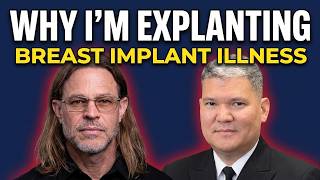
Dr. Robert Whitfield and Dr. Thomas Chung discuss breast implant illness and explant surgery. They explain how implants can trigger chronic immune responses similar to splinters, why full capsule removal and testing matter, and what fat grafting can and cannot achieve as an alternative.
Questions this video answers
May 30, 2024.
Over well over a thousand sequential specimens since 2019.
Cutobacterium acnes (reported as predominant).
Baker grade 3 or 4 capsular contracture.
Chapters
Hey, everybody. Welcome back to the show. It's Dr. Whitfield. Today I'm really excited to introduce Dr. Thomas Chung. He's going to be joining us in Austin, and he shares a lot of similarities in terms of background, both in experience and training, which intrigued me. And then he has a really, I think, a clear and insightful understanding about breast implant illness. So we'll get into all that. But Let me welcome Dr. Chug.
Hello, everyone. It's great to be here and to join Dr. Whitfield. I really appreciate what he does. I love the philosophy and the concept and how he helps people really get back to that wellness state. And it's really a joy to be able to join him. So thank you.
Well, I think the thing that struck me, and we can go back to, we both have done a lot of micro surgery. So if you've done a lot of micro, very few things bother you in terms of surgery. That's how I feel about it. So there's been times in my life when, and I'm sure in yours, when you've been there after four or six or eight or ten hours doing work either designing flaps, elevating flaps, or revascularizing tissue and then closing, where you're just like, wow, it's a big rush. And then at the end of it, you're like, oh, I'm glad the days is done. Just so you give your highlights of your career and then we can, you know, talk about some of them. But I think it's impressive and everybody should know your background, so you share as much as you want to share about it.
All right. Well, thank you. I did most of my training first in the Navy, so I did my internship, general surgery residency. Walter Reed then called National Naval Medical center, but it was a consortium in the D.C. area with Walter Reed. And I did general surgery. And at that time, I actually saw a lot of casualties coming back from Iraq because it was during the timeframe of Fallujah and all these conflicts going on. So we just had tons of casualties coming back. I was the chief of the trauma service, and so we were basically managing a census of 30 to 40 these injured veterans on a daily basis. And then when I finished, I did a utilization tour as a general surgeon and then came back in to do my fellowship at Johns Hopkins. And from there, I launched my plastic surgery career, only to go back to Walter Reed to take care of more of these casualties. So we. It was a lot of microsurgery for flaps for these folks. I can share one story. I Mean, the hardest case I think I've ever done was having to reconstruct an entire abdominal wall because of a suicide bomber being exploded right there. The guy survived and I ended up having to reconstruct his entire abdomen. So that was interesting. But a lot of extremities, free flaps, and then of course, breast reconstruction with deep flaps. And so that's kind of like my career for the first seven, eight years. And then I kind of climbed the ladder in the Navy because when in order to promote, you need to take leadership positions. And so I was climbing that positional tree, if you will, and started getting more executive positions. So chief of surgery and then chair of the medical executive committee, which is like the chair of all the, the committees of the hospitals, and then lastly chief medical officer of the entire San Diego region. So that's where I am. At the same time, I do enjoy plastics and aesthetic surgery. And interestingly, I perform a lot of explant surgery because these patients come to me saying, you know, implants for so long, and now I'm having issues. And, you know, Dr. Rob has explained all of those issues in his podcast, but it's real. I was beginning to really believe that implants has caused more than just mastodynia or breast pain. It's something inherent in the implant that causes more toxicity, that can't really be explained that well in lay terms. But if you get down to the science which Dr. Rob has done, it does actually make sense. And so therefore.
Yeah, so I was going to say, so I've. And this will probably get us in a fair amount of hot water. But so how I think of this is, you know, for everybody listening, Dr. Joseph Murray is the last surgeon to win the Nobel Prize. Another surgeon, Judah Folkman, should have, but he passed away before he could have received the Nobel Prize. But Joseph. So for those folks, Judah Folkman is the person who invented all the anti angiogenesis inhibitors. So, so every drug that ends in MAB came out of his lab. And so he was a good friend and colleague of my mentor, Dr. Jay Grossfeld, who trained me in general surgery. But Dr. Joseph Murray did something that I think we all need to think back on. So Dr. Murray took a kidney out of a Siamese twin and transplanted it into another kidney to begin the transplant transplantation surgery. He showed that there is tolerance. Obviously, when you have the exact same genetics, you can do that. So he showed from a surgical standpoint, you could execute the steps and perform that surgery. But what I think, how I look at any organ transplant or tissue transplant that we've done over time, because I'm sure you did organ transplant as well as a general surgeon as part of your training. So those things work in Siamese twins because your immune system is exactly the same, because the genetic code is exactly the same. And the. The next step, and the next step, and the next step. So if you shared a fraternal twin or if you go a step away and it's a. Another donor, it's a family member, and then it's a, you know, Joe blows the donor. So each of those steps away from a Siamese twin requires what it requires immunosuppression in order to keep that organ from being rejected by your immune system. So when I get patients coming in, Thomas, and they've said, hey, they want to give me steroids and give me methotrexate. And I just think. And it one day dawned on me, I was like, you know, what's really wrong with this is they're just a little scared to give you enough medication, because on the transplant ward, if someone had a heart, lung, kidney, liver, especially, you know how the hearts are, like, they get a huge dose because obviously there's no going back if that's a problem. So all of that has to be blocked in order to keep that organ transplant functional. And the term in transplant surgery is rejection. So they're always looking for acute or chronic rejection of an organ. And Thomas and I both have been on rounds, and we'll say in the kidney world that creatinine, which is your measure of function, has gone down. And they're like, well, we better go get this patient biopsied to prove that, you know, what we suspect is going on. Is it acute rejection? Is it chronic rejection? Is there some other thing happening? And not to get too in the weeds, Thomas, but that's how I think about this, because if some. You think of it like rejection, to me. So in the beginning, if everything goes well, as you and I both know, if things go well in surgery in the beginning, there's a lot less issues. In the first. We'll say 90 days, first year. But if there's any hiccups, any problems, then it's more complicated. And especially in cancer reconstruction, which we both did a number of, it would not be uncommon to get called and say, you know, the patient getting chemotherapy has a red breast, and basically that requires admission to the hospital. If it's not resolved in 24 hours, that requires an operation. So that's just how the cancer world works for everybody. Listening, because those patients are immunosuppressed. So when you're immunosuppressed, you can't mount a natural response to an infection. So then it rapidly progresses and you have to deal with it very, we'll say expeditiously, otherwise there's going to be, you know, far more consequences for the patient. So when I think of these things now, obviously, and I tell patients, I'm like, your symptoms of chronic inflammation can be reduced dramatically if in fact you get an immunosuppressant. But of course, people obviously don't want that. And they. They get really put off or scared, if you want to use that terminology, when the provider, whoever that is, says, hey, let's try, you know, a dose pack, a Medrol dose pack for everybody listening is a very small amount of steroid. And that's literally like throwing sand at the beach to this problem. It will not ultimately do anything. But those people who get put on larger doses of prednisone, they'll have symptomatic relief for a period of time. And then as both Thomas and I know, as soon as that stops, it's going to rebound and come back because your body's in this. It's almost like, to me, I'm not for all the transplant folks. Don't get upset at me. I just look at this like your body's rejecting this device just like it would reject a transplant. And if it was a kidney up there from a cadaver, I could prove my point. But it's not. So it's just a device. And we see obviously a lot of chronic inflammation on histology, which makes sense. But I think I try to use that analogy, Thomas, to help better help people understand what's going on, if that resonates. I think when I explain it that way, people, they get a little bit.
Better sense of that.
So I use, you know, Siamese to win, and then I kind of go to a family member and then a obviously non family member, just, you know, allogeneic donor. Obviously that requires more and more immunosuppression to maintain the function of that transplant. If not, you get rejection. And kind of the way I see the immune system responding these patients is outside of things like natural killer cell suppression and other things that can happen that we've seen in patients of mine like Taylor Dukes, who had a brain tumor from NK suppression. It's really about a ramped up immune respons. And how are you going to resolve that? So, I mean, we can talk about, you know, doing explants and then get into the weeds about capsules and things of that nature. So I like your splinter analogy. Can you give the splinter? Because I think it's great.
Sure, yeah. Because really, if. If you further on that thought, anything that your body doesn't recognize itself is going to be rejected. So just about anything. And I like that splinter analogy because everyone has probably had a splinter at some point in their life where they have a little thing put in their finger and it hurts. After a while, if that splinter doesn't come out, it starts festering, it starts getting inflamed, and you see how much pain it causes just at that little local level in your finger and how much relief you get once you get the splinter out. It's almost immediate effect. So just magnify that with whatever you have inside of you. And your body is treating it the same way.
Right. I mean, ever since you. You said that to me, like, you already have a really good way to explain it, so it makes sense. And I ever, you know, since you said that to me, I was like, you know, that's a perfect, simple analogy for it. And I think I go to the transplant thing because my first year as a resident, I must have spent six months on transplant. It was the craziest. Like, I became a really good medical doctor because on the transplant rotation, the residents were the primary care doctors for the transplant patients. So every admission for an MI or URI or anything, I mean, I was in the ER constantly, so I always kind of go back to that. And. But the, the splinter analogy is like, it's a perfect one that everybody can probably, you know, go, oh, yeah, I know what he's talking about. Like, you get a little thing stuck in your foot or in your finger or what. Those are the common ones, right? You know, the glass of the foot or the splinter in the hand or the, you know, whatever. That's why I tell, you know, Bear, people always come in, you know, having, you know, problems with swollen lymph nodes in their gro. And I'm like, you've been walking barefoot outside somewhere Avenue. I mean, those. Anytime you get micropunctures in your foot, you're going to get swollen nodes on the poplar or the, you know, the. The inguinal region, you know, which is our groin. And so in any event, so. And we have my paper coming out about biofilm, which I have to say, I was never a huge fan of writing papers during my time in training or as a faculty member. And that hasn't really changed to Be honest. We. We've got, since 2019, gosh, over well over a thousand, you know, sequential specimens, capsules, and we've sent them all for PCR analysis. And the. The predominant bacteria is Cutobacterium acnes. In our experience, which is more of a national one, we're not just confined to a local environment here in Austin, Texas, where my clinic is, but we have patients come from all over the country and now from Europe and from Asia. So we're getting a much broader experience that way. And I still, because of my background in cancer, and you can highlight how I used to do this, but when I took down a reconstruction, I was taught to do it a specific way. And do you know, a capsulectomy, Send it all off, check everything. Because the recurrence rate, both in the pocket or in the. Obviously the scar is where the highest recurrence rate is. But, you know, that kind of led me to do the, if you will, capsulectomies very, very much in a intact way, if at all possible. So some are thicker, thin, and you can give us your thoughts about that. But what do you think about doing entire capsulectomies and trying to send everything off and learn as much, as much as we can about those specimens?
So I'll admit I really didn't know that much about implants. And I actually put in a lot of implants, breast augmentation. And I would actually have patients come to me with, we have this Baker classification where, you know, you, depending on how bad your capsule is contracted, if it has a lot of deformity and pain, I would go in and actually take out the implant, take out the entire capsule, and then put a new implant in to start the process all over again. That was one of the indications for having revision breast implant surgery is having a Baker 3 or 4 capsular contracture. So I'd be going in anyway and taking out these capsules. But duh, I mean, I'm basically putting the same thing back in, only for the process to start all over. And then it dawned on me when patients started saying, you know, I just want these implants out. And so therefore, I would just take the implant out with the capsule and then they'd feel a lot better.
So I have this funny story that when I was doing predominantly deeps, people ask me like, oh, you know, didn't you put in a bunch of implants? I'm like, well, I really didn't have time to put in a bunch of implants. So I did three to five free flaps a week. So everybody listening. That occupies usually four to eight hours of each of the work days. And I still had to seek, you know, patients and do consultations and follow ups and all these things. So I had a pretty. I had a pretty full plate, you know, from the beginning. And I remember I had a patient come see us when I was on faculty and she had a big histamine response and her whole front of her chest was just kind of flushed. And they had put her off and on antibiotics and, and said she had, you know, red chest syndrome, all this stuff like. And I was just like, she was in a different community, she wasn't in ours. And she just got referred, you know, to me. She had learned about the flat reconstruction and. And I saw her and. And she had complaints that were pretty consistent with just scarring. She had some mechanical issues with limitations of range of motion, tightness in the chest, firmness, but not, you know, anything, you know, past a grade two. And it was the redness that got me. And I was like, well, she's like, can you do something to, you know, resolve all of this? And I said, well, if I do this tissue reconstruction and take all that material out and all the capsular material out with it, I mean, then it's just light. So then it's just your tissue. There is nothing else involved. And if it's your tissue, you know, we'll test it all, make sure there's no recurrent cancer, make sure there's no infection. So if everybody listening follows, like, I mean, this is circa, like 2006. I was doing this. And, you know, anybody who operates and is in the oncologic reconstructive environment and dealing with implants, whether they're breast implants or breast cancer reconstruction or megaprosthesis for orthopedic reconstruction of the femur or the tibia, or allograft reconstruction of those. Because I did a lot of sarcoma reconstruction or head neck reconstruction with, you know, fibulas and plates. And they can all get infected. I mean, no, anybody who operates and uses a prosthesis knows they can get infected. And for Dr. Chung, who did a lot of wounded warrior work and, or oncologic reconstruction, everybody who worked in that setting knows full well the implications of putting in prosthetic materials and they can get infected and. Or have bacterial colonization. So none of these things that we're describing are new or novel.
They're not.
I used to do that actually a fair amount for people who had what we would call just. They were implant cripples after breast reconstruction, they'd had operations or radiation treatments or chemotherapy, and they were suffering from other mechanical complications, capture contractures, whatever the case may be. And both he and I have experienced all of these things as it relates to the care involved in cancer patients, or like he said, in terms of veterans who've. Who've had to have reconstructive surgery. Because anytime you're doing care on tissues, especially and using a prosthetic, you know, there are a lot of implications to using any prosthetic. It doesn't matter whether it's a breast implant or a biomaterial to reconstruct an abdominal wall, like he said. I mean, because there are some of these things that people are going to die if you don't take care of them a certain way because they've lost domain and you need to reconstruct them, or somebody's leg has, you know, they've lost their femur because of a huge sarcoma. So there these things happen. So, I mean, I get asked all the time, are implants good or bad? I'm like, okay, in the oncologic world where I trained, implants are just part of the toolbox with which to take care of the patient. And every patient has to be explained the risks and benefits. And I think that's probably the underlying issue here is understanding the pros and cons of doing this. And that will kind of transition us into what you and I have both done for a long time, which is fat transfers for patients. So doing deep flap reconstructions, which is what I did predominantly for, you know, better part of 15 years, I did 100, 150 probably fat transfers every year just to refine and improve those results. Because the abdominal tissue obviously is flatter and you shape it, but it's still not shaped, you know, like compressed. You have to add volume and. And you can get reconstructive results that are very good by addition of fat to those results. And almost, you know, the projection, that's very similar to an implant, but not quite, because for everybody listening, implants create pressure that forces tissue away from the chest wall. A deep flap reconstruction or a fat transfer reconstruction cannot apply pressure like an implant can, because an implant's inert. So I will let Dr. Chung discuss why he likes to do fat transfers and why they are a very viable alternative to implants.
Yeah, so that's a great point on the differences between the implant and how much of a push or projection you'll get as opposed to fat transfer, because the fat will Follow along the natural curvature of the breast. And some people have extra laxity in the skin, or what we call the skin envelope of, of where it can push it out. And it's very easier to do that if you've already, like, had children and you breastfed and, or you've had prior implants and now you're a little bit more deflated. So it's almost like the implant or you being pregnant, like, acted as the tissue expander that expanded that skin. Right.
So, yeah, everybody listening has to understand that the fat belongs beneath the skin. So in the breast. He's not putting fat in the breast. I'm not putting fat in the breast. There's a space. And so if you just take off the top layer, which is your skin, there lies the fatty layer beneath. And that's what he's talking about. It goes up and down with weight gain, weight loss, pregnancy, breastfeeding, having devices that stretch out the skin envelope. So that's really what we're talking about.
And but there are some patients that have tight skin. There are conditions where I can pull out this term, the tubular, the, the tuberous breast deformity, where you have actually a lack of that skin that will push out naturally. And so they're a little bit more constricted. In those cases, we kind of had to use an implant because fat transfer won't push it out like an implant will, Dr. Whitfield was saying. So we kind of have to consider every patient and really what they have and what they work with. But fat transfer is very good because it does produce the natural look. It's just going to give you more volume to fill the cup and fill that skin out. But it's not going to give you that same, like projection.
Correct.
That implant will. But it gives you a pretty nice natural look, in my opinion.
Yeah, I don't think, you know, and I always used to say the same things, like if you want more of a cup size change at one time, it's not a fat transfer. So if you're looking to really go A to C, B to D, stuff of that nature, then you're talking about a device. And obviously I haven't put in devices. Gosh, it's over four years now. But the issue like you highlighted is you can get a nice natural result. But the problem is what, in terms of a visual impression does that person want? What's their expectation? Because adding volume may not really be the principal go. It may be projection or upper pole fullness or things like that, which fat transfers like we've highlighted, that is not principally what they're going to achieve. They're not going to achieve upper pole fullness in the way an implant would, because there's no pressure exerted on the upper pole. And then in terms of projection, like you've already highlighted, you know perfectly, that's not what a fat transfer does. It's not ever going to give you the projection that a device would give you, because it can't. It's simply layering out over your existing tissues and the compliance or the stretch of the skin envelope then dictates the rest.
But it does work and I am very impressed. I, I did the same thing when we did best breast reconstruction for cancer. We'd always adjunct this and fine tune the result with fat transfer. And as long as you're doing it. So there's different techniques, of course, but the ideally is you're fanning it out and optimizing the fat take, if you will, and making sure that the fat cells actually blend in with the existing tissue that's there. And if that fat takes, then it's going to stay and give you that volume result.
And glad you said the word take, because I'm about to take a couple shots at people who tell patients that fat transfers don't work or that they work half the time. I will tell everybody listening, if a fat transfer worked less than 50% of the time, then nobody who does oncologic reconstruction around the world would actually use it as a technique. So when people sit across from patients and tell them that fat transfers don't work, that's superiorly irritating. And then you and I have to basically provide the explanation of both why they work, how they work, the longevity. And I'll speak to this specifically how I go about this. So, like, I'll use this as the analogy. If both of us were to fat transfer someone in their 20s who had enough fat, we'll just preface that by they have enough fat. Butt or breast does not matter. It would work universally, upwards of 80% of the time. The take would be upwards of 80% almost universally. And that is very well understood. So then the audience would be like, well, why? Well, because the klepsy. You ordered 20. Everything works better, just honestly, right? Your hormones, your metabolism, for the most part, taking away outliers. Everything is going to work better because you're younger the closer you are to 80. Those things all change because hormone balance is different, metabolism is different. People above, you know, we'll say age 35, who we're talking about who are female, who aren't doing resistance training, are becoming sarcopenic. They may have thyroid dysfunction. They may have, in our patient population, sex hormone suppression. They may have a poor diet, not in high enough, not rich enough, and healthy enough fats. I mean, there is a, like a host of reasons why this can not actually be as effective, but it has zero to do with the technical ability of taking fat, processing fat, and putting it in another place. That's not the problem. So the way I did our program, Sharp, it's basically to identify both, you know, your genetics, to detox, your toxicity issues, your gut health, your food sensitivities, your hormone balance. Why? Why do we do all that? Because we want you to recover better, but we want you to maintain a result. Right? So if you're trying to fat transfer somebody, as Dr. Chung and I both have done, I mean, thousands of times in our career and in an environment where in a cancer patient, for instance, they're being blocked with estrogen blockers, hardest case to do ever, I'm sure, as you will intimate, is to do a case where they're actually having their estrogen blocked. Now that, my friend, is a very complicated fat transfer case. The rest of them, as we know, are infinitely easier as you actually get the patient in a better state of wellness.
That's a good point. With the age differences in the metabolism, there's still a lot about fat transfer that we still don't know. There's stem cell research on what optimizes the fat takes, but we're learning more and more, of course, as we progress. But there is a good amount of take, I'd say for the listeners, there's about a 20 to 30% absorption rate for whatever fat we do inject. Just for whatever reason, the fat does not take with the tissue, and so your body will just get rid of it. So. And then the other thing to point out is it's impossible to completely put in pure just fat. It's usually processed and it has. It's a liquid component too. And that liquid will get absorbed, but that's part of the volume that we put in. So. And that volume initially will look big, but then that fluid will get absorbed. So we do kind of, you know, try to put in as much as we can. As much as your skin will expand, but do expect to have some absorption.
Yeah, the skin expansion, to your point, is the critical factor. If you're doing someone who has very little skin stretch as a young person, you can only expand it so much, and someone obviously is a little bit older. Weight loss, weight gain, pregnancy, breastfeeding. Those are other, if you will, things the skin has experienced that change its dynamic characteristics and allow you to fill it more easily. Well, I think as you joined us in Austin and we both do explants, we both have a lot of experience in fat transfers and reconstructive surgery. I think it works extremely well for me to have someone who's is a very similar background, albeit obviously not the exact same training, very similar experiences. So I think it's obviously fun to have someone like Dr. Chung with such a great, just like he described experience and background. He has a great understanding of the problem and we look forward to certainly having him here in Austin and providing services for both explant and fat transfers. And we'll hopefully have him on the show again soon. Any last thoughts, Dr. Cho?
No, I'm very excited. So it's going to be great to come out to Austin and join you and get great results on patients. And not just like I say, it's not just breast. We want to focus on the wellness aspect, whole body wellness and making you feel great about yourself and making it look great and feel great at the same time. So it's going to be a pleasure working with you.
All right, until next time, guys.
Thanks, everyone. Thank you, Dr. Whitfield.







