Why Losing Weight Is Making You WEAKER (Do This Instead) | JJ Virgin
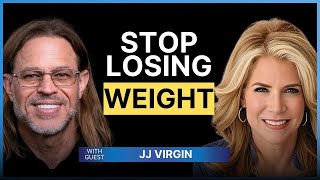
JJ Virgin explains why losing weight without resistance training and adequate protein makes you weaker, not healthier. She recommends never losing more than 0.5 to 1 percent of body weight per week, and prioritizing grip strength and body composition over scale weight. After 30, you lose about 1 percent of muscle yearly, so preserving lean mass during weight loss matters more than the number on the scale.
Chapters
Foreign.
Pioneer in the wellness space. J. Virgin is a four time New York Times best selling author, a celebrity nutrition expert and a leader in functional health. Her work has helped millions understand the powerful connection between food inflammation and mindset and how these factors influence longevity, energy and resilience. In this episode, we dive into links between sugar inflammation and hormone health, especially for women navigating midlife chronic fatigue or recovery after surgery. With so many patients facing systemic inflammation, this conversation brings clarity to how sugar, gut health and immune dysfunction can all intersect, as well as the novel therapies like GL1P agonists. Speaking of which, welcome to a little segment we're calling the Weekly Dose where I touch on something trending in the world of health, wellness or implants behaving badly. The last couple weeks everyone was sending me clips of Kylie Jenner casually sharing her implant size on social media after queried by a tiktoker. Kylie is beautiful, no shade at all. But I want women to be aware of how easily something that seems so light hearted can unintentionally normalize or glamorize medical risks. For example, I think back to my patient Lauren Bostick. She literally thought she was melting her implants, but she was actually causing leaching from them by using her sauna. So note to Kylie, skip the infrared and the dry sauna. Now let's get into the episode. Whether you're rebuilding after burnout or managing brain fog, or simply trying to feel more at home in your body, this conversation is full of clear, actionable insight. The views and opinions expressed by guests on this podcast are solely their own and do not necessarily reflect the views, opinions or medical guidance of Dr. Robert Whitfield. All right JJ, I finally have you to sit and talk about body composition and my female patients who, after I take care of them, they want to know how to resume exercise and get the most out of it. And I talk to them a lot about concentrating on weight training to maintain lean body mass and doing things like walking, doing specific types of workouts and not necessarily running or cycling or things that are going to burn rather than preserve muscle mass.
Do you know what's interesting Rob? They looked at kind of the comparison between a marathon runner and a couch potato potato and they have the same amount of muscle mass. So I love what you said right there is like focus on resistance training, focus on more long slow distance. However, I do think there's a role in there for some short bursts, some short high intensity interval bursts, but you know the overall goal and I'm sure You see this with your patients is to help women make that shift from living their life based on what their scale weight is to stopping to focus on weight and starting to focus on what that weight's made up of. And now like, you know, if you want to look great, look great naked. But more importantly, be super healthy, be healthier longer, be stronger longer. Then it really comes down to optimizing your body composition. And that's very different than trying to get the lowest number on the scale. In fact, I'd say they're the opposite of each other.
Well, I had this patient recently and this was a very poignant moment in a discussion I had with the patient postoperatively. I'd done a fat transfer for them to augment their breast. And she looked at me and said, you know, Dr. Whitfield, I need to go lose 10 pounds. And I said, you know, I'm just curious, why do you think you need to lose ten pounds? She's like, well, I'm not healthy, I don't feel fit. And I was like, well, that's kind of the opposite thinking. So I, and you can, you know, help me, like maybe even better position this for my patients because I say you want to avoid sarcopenia or loss of muscle mass over time. Because as we're aging, I'm above 50 now, I'm losing a certain amount of muscle per year. And then women, because they go through menopause, I want them to avoid osteopenia, osteoporosis. I don't want them to be fragile.
I to want them.
JJ. I had a 90 year old woman come to my office recently. She's had implants from the 60s and she just wants to get rid of them. And you should only keep things from the 60s or like classic cars.
That's very funny, Rob.
And she fell outside my office.
Oh no.
My team brought her in the office and they, you know, let me know she was there. And she had cut her forehead pretty good. And I came in and saw her and I, you know, it's, it's pretty long time since I took E.R. call JJ, to be honest. And so I sutured up her laceration in her forehead and she ended up getting a CAT scan and everything was fine. And this 90 year woman's very, very sharp, very intelligent, communicates extremely well, has no issues. But she tripped because she's becoming frail, not remaining resilient. And maybe you can just elaborate. I know you're super passionate about this and I say it and I, I kind of get the. During the headlights look sometimes. But I want you to. You give what you describe as being resilient and maintaining your muscle mass.
Well, I think it comes down to an. And I'm not sure, like, if you look at the statistics, they. The statistics. Statistics show that starting at around age 30, we can lose up to 1% of our muscle mass a year. However, the bigger loss, it's twice as much strength, three times as much power. And when you really look at, like, brain health, it's correlated to your strength and your power. So people get concerned about muscle loss. It's actually the strength and power. It's the strength and power that caused your patient to fall. She wasn't able to catch herself fast enough. Right. And have the strength to. So it's the strength and power. Now, what's what? We don't know because they say that starting around age 30, this. This process starts to happen. It's up to 1% a year, more like 3 to 8% a decade, and it starts to trip double at age 60. But what we don't know is this. And I think it's probably more this. Is this happening because of age or are we aging because we are not holding on to and building muscle? And I actually think it's the latter. That what happens, like, you think about what starts to happen in our 30s. We have real jobs, we have kids. We're not. We're not playing sports and doing all the stuff we used to do. We're more sedentary and, you know, if you don't use it, you lose it. So I think a lot of this really is more related to lifestyle. And then you couple that with women who have all their life focused on controlling their weight and never paid attention to what their weight is made up of and have done that through cardio because they didn't want to lift weights and get big. I feel super fortunate. Right? I know. I feel super fortunate in that. A. I grew up. I was always the tallest kid in class. So I grew up on the boys teams because there was never enough boys. So the girls, the tall girls, had to go play with the boys, of which it was like two of us. And then in high school, I noticed that the boys had an amazing gym and the girls did not have any gym. So I started lifting weights with the high school football team. And naturally, when I went off to college, I was down at Gold's Gym in Venice. And at the same time, I was in graduate school. And we did a whole semester just on body composition. So it Got drilled into my head that this was not about weight. It was about body composition. And I literally had been working with my clients since, you know, the 80s with body composition rather than weight. But. But I will tell you, Rob, I had a gal come in, and I did a full body comp scan on her. She was 25% body fat. She was normal weight, so everything was fine. But she wanted to lose ten pounds. And I'm looking at her, I'm thinking, if this woman lose 10 pounds, she's not going to be here anymore. She's like, not enough of her here. She was like, I don't know. I think her BMI was like, 19. If anything, she'd be a little on the skinny fat, right? And so we worked together for a year, and this is how long it takes to get 10 pounds of muscle on someone. You know, in a year, if a woman works really hard, she might be able to put on 8 pounds of muscle. 10 pounds of muscle. We were able to do 10. A lot of it was because of newbie gains. And so over the course of the year, she lost 10 pounds of fat, and she put on 10 pounds of muscle, and she went from 25% to 18% body fat. She looked entirely different. Amazing. And guess what she said, just too bad. She said, I want to lose 10 pounds. You're killing me. You know, it's like you just went down two clothing sizes, you know, 7% like you. You're. Everyone would kill to look like you are so much healthier. Because as we know, that muscle, not only is it a metabolic spanx that boosts your metabolism, but it's also this sugar sponge that gives sugar a place to land. And it's this multitasking messenger that every time you contract with force and it has to be hard, it's not going to be just you, like, you know, walking that you produce these myokines that can do everything from burn fat to build muscle, to build bone, to, you know, have a better brain, everything. So, like, having great muscle changes everything. And for the woman who's afraid of, you know, who wants to look better, it's the ultimate way that you can look better is by having muscle and creating that tone that everybody wants. That tone comes from building muscle.
That's a really important point, because you are very tall, and my wife is tall. Her. And she's got a challenge from when she grew as a young person. She grew rapidly, like women do through their middle school years. And they reach usually skeletal maturity. That's why they're Much taller than their male counterparts, typically because boys will mature later and go through puberty later, much later. But if they continue doing the same activities.
Joke, Rob.
Well, yeah, yeah, I'm shrinking. I'm not growing.
I was like, boys will mature much later.
You got this. Okay, I'm somewhat mature now. I'm over 50. The tumbling, the gymnastics, things that are traditionally done really affect women who grow rapidly and get tall and then consequently, if they get injured or have problems later in life from that, it's hard to maintain that strength and work out like you're talking about. And lift heavy. Things you always talk about to me every, every time I hear you speak, you're like, lift heavy. You got to do something to forcefully contract the muscles like you said, and, and put tension through them. And it's a lot of work, right? It's a lot of effort. So when I tell a patient, like, I want you to, you know, concentrate on, you know, lifting weights and walking's a good exercise for us and just do things that involve weight. They look at me like, I don't want to get bulky. I'm like, you have no idea the amount of effort it takes. Yeah, like that. And how you have to eat. And like, there's a reason bodybuilders are, you know, some of the craziest people you'll ever meet.
Well, it's called steroids too.
Right. Are very effective at meal prep and increasing the amounts of protein, you know that, you know, and without the drugs you can do. But what you can do is incredible. But the amount of effort it takes is substantial. To your point. Like those are the types of things I try to impress upon people like you do. And we had an offline discussion about. You've influenced me to go back to doing pull ups and dips and all the things functional compound movements, your body weight is great. Terms of movements like lunges and squats. And I always tell people like, you can just do air squats, you can do air lunges, they help you maintain your balance. I think we didn't really talk about that. But the 90 year old gal who I'm talking about, she clearly lost her balance and to your point, couldn't gain it. She doesn't have enough thigh strength to propriocept and regain her balance. And I didn't bring up the weird footwear women constantly are in, but that's another problem.
Yeah, well, you just, you mentioned a whole lot of things and I want to unpack them one by one because number one, yes, women, especially as they Grow tall. We, because of our hip to knee angle, are set up for problems, especially knee problems. I was one of those. For some reason, Rob, I don't know why I thought this was a great idea, but I was an early in life acrobat, then I was a gymnast. And then I. So gymnastics point, ballet, now 6ft tall, women, that wrong sport. Wrong sport, right. So I blew out my knee, I tore my acl. And then doing acrobatics, I broke my foot. So those have been things that I've had to deal with. Now what I will tell you, and I have a different philosophy about when you get injured. I think that the reason that we need to work out and do hard things and heavy is what's heavy for you. So it's all relative. But I know that one of the ways I was able to put off having a knee replacement for three decades, because I was told in my early 20s I was going to have to have a knee replacement. And actually I thought I was going to have to have it by 30. I didn't have to have it till 52. So two decades was because of the squats and the lunges and the step ups. I did everything to get everything around that joint as strong as possible and take the pressure off the ligaments and the missing ligament. And so, you know when people say they can't do something because of their bad back or because of their knees, they said, no, you, that's why you need to do it. Because if those were strong, this would not be happening. You know, when I was in grad school, we were taught that if you had a bad back, you should only do flexion exercises. Think how stupid this is. You should only do abdominal curls flexion exercises. And I decided to do my grad work in biomechanics and spinal lifting. Biomechanics. Because I thought, you know what, everyone's backs hurt. So I'm going to focus on, on like a big blue ocean thing. And. And I thought. And they're giving all the wrong information. If your back's weak, why do things to make your, the front of you stronger? That will just make your back weaker. It's just dumb, you know, Right? It's so obvious. And I'm like, am I the only person awake here? So you look at all these things, you go, if we want to go through life and we want to be built to last and be able to do these things that in our 70s, 80s, 90s, we gotta do them now. We've gotta be pushing ourselves past where we think we need to be at 90. So if we want to be able to carry groceries up the stairs at 90, like, then do a farmer's carry up the stairs right now with heavy dumbbells. And when we talk about lifting heavy, it's really what's heavy for you. And you know what's heavy for you in somewhere in the rep range of anywhere from like 6 reps to 15 reps. What's heavy so that you feel like if you had to do another one or two, you couldn't do it. Do that. That's gonna be so great. And then do it like you talked about. Do big movements. I go to the gym and luckily I learned early on to keep my mouth shut and don't give people advice. Cause they didn't ask. I got told off, like, early on in my gym career. And I'm like, they didn't ask. But you see people go to the gym and they walk in and they do inner outer thigh machine, bicep curls, tricep extension in an ab machine and leave. And I'm like, just what are you doing? Just come in and do a squat. You'd be better off.
Exactly. I see that. And we were talking, you know, offline about devices that, you know, your body weight's the best thing, but as we age and we don't, like you said in, say in your. Your career or your family, as it grows, it takes away time from what you used to do in terms of, you know, exercise. So using those devices that maybe offload your weight a little bit and allow you to do the dip, the dip again, and the chin up again. You've encouraged me to go back and do that. And I feel like that is a great workout for me. And I do a lot of isometric things with bands because of my neck for almost 30 years of operating is not exactly in the best condition just from positioning over time. But doing, you know, anything that is compound certainly one, it saves time because you're not doing what you just said, the inner outer and all the 19 things. And we've abandoned the hip thrust machine for various reasons. And so to your point, those things, like, are like the carries and. And like lunges. God, there's not a more awful exercise for your. But it's great. Like, it's so challenging to do that and say, do it barefoot or in a. In a way that allows you to really concentrate on putting your great toe down, spreading your foot out and maintaining your balance. Because, like, the person I referenced, you know, came to my office and fell that wasn't because, you know, they, they, it was because they lost balance and they couldn't then catch themselves. Like to your point, with their strength, whether it's their lower leg prep perception, their thigh strength, they just couldn't do anything and they just dove headfirst into the concrete. It was terrible.
I know, but think if they were doing lunges where they're doing a front lunge, a side lunge, a back lunge, right, where they have to catch themselves in all sorts of different directions, stabilize themselves. Like when you think about it, you want to create strength, you want to create power, you want to be super mobile and flexible, so move through great ranges of motion. You want to be able to have great balance and stability. So all these things can be incorporated into a good compound resistance training workout. I mean, everything from. You talked about squats. Think if you did a bunch of air squats and then added some jumps at the end, now you've got great stress on your bones too.
People say they can't do stuff. I'm offering. I often wonder like your body weight, like it's one of those things where like, do you have a floor? Like, okay, do you have, I don't know, a water jug or whatever? I mean there's a ton of excuses of not doing things, but like just doing something is better than doing nothing and complaining about it. So like my, my, my clients that come in and we have these discussions, I think I'm going to transition to what they ask me next, which interested in your opinion because as we know, the advent of these GL1P agonists have really changed how we perceive what's going to happen with diabetes. I think it's going to and already has changed. What we see with long term consequences of having diabetes, like going on to dialysis, all that's going to change. But what it's also going to change is your body composition, to your point, because people are not doing what they should be doing, which is what we're discussing is maintaining their strength. And you're going to see people who are leaner but frail.
So I don't believe that you should ever do a caloric restriction diet until you have tweaked your diet to optimize your protein intake. And, and this is more important, you are incorporating resistance training, compound movements at least twice a week. If you are not willing to do resistance training two times a week and get enough protein to be able to support your body having what it needs to build muscle, you should never go on caloric restriction. Because you will make yourself worse and you will absolutely fall into the statistic of the 95% who gain all the weight back within five years. And the big challenge with that 95% is they lost muscle and fat. 25 to 40% of what they lost was probably muscle then. And I just saw this hypothesis, Rob, and I haven't been, been able to verify it, but it makes a ton of sense. Then when they, when they're through the diet, they've got metabolic adaptation because they've lost muscle. So now their daily caloric needs are lower than they were before and not even where they should be because they've got less muscle and they're more hungry than they would be because their body, and this is the hypothesis I heard, their body is craving getting the muscle back, so it's causing you to overeat. The problem is you're not doing resistance training, so you're not putting back on muscle. You're, you're gaining fat so that lose gain, lose gain, lose gain shifts your whole body composition to higher body fat, less muscle, you become more sarcopenic. And so that's why I say never, ever, ever should Anyone use a GLP1 Agonist or go on a calorically restricted diet unless there's resistance training and protein. And if they're not, if they're, they really have low satiety, like low hunger, then use essential aminos, but make sure you have what you need on board that so that you're building muscle. And you've gotta be managed with a body composition scale, not a weight scale, so that you can really see that you are confirmed that you're losing fat only. And you should never lose more than 1/2 to 1% of your body weight a week because if you do, you'll lose muscle.
Yeah, we've had a bunch of examples where I've had to not offer a treatment based on, on what they were doing because this is not done in the way that you just explained. So it's, it's being done to help a problem without the upfront preparation through, you know, lifestyle adjustment, you know, protein enhancement in the diet, weights, some form of resistance training to get everything else leveled up before they then go and do that. And the drugs, just for every listening those drugs work, they, they have worked so well that I don't think the drug companies actually would ever let them out had they known how well they would work. Because they've done what nothing ever could do, which was change behavior. J.J. i mean.
Yeah. And get them off all the other drugs. So I kept looking at this going, you know, did you realize when you introduced this drug that you were going to lose your whole trade on all your other drugs?
No, they didn't. This is. That industry is not altruistic at all. They are 100% capitalistic. And if they had known what was going to happen and lose a trillion dollars across numbers of industries, they would have not done it. I firmly believe. And the newer ones that are coming obviously are going to be more specific and focused on fat only. I worry about it in the patient who is very lean already. And they do it to your point, that person who wants lose five or ten pounds and then they really cause skin laxity, which is very difficult for me to go about and fix because if you lose your fat, I can't just go find fat and repair the loss in your face or wherever that loss is. And then they have another problem, which is now skin laxity. So I always caution everybody to get some counseling, whether it's from me or someone else who has many, many years of skin tightening in the surgical, the minimally invasive and the non invasive categories, you know, before you, you do that so that you have some idea of the ramifications. Because I've seen folks who, as you have said, you know, kind of the skinny fat person, they're not really, but they, they just want to lose that little bit. But if you lose that in your face, it creates a difficult problem.
Yeah. And as we know, I mean, it's so funny. Both my husband Tim and I always had chubby faces. And all of a sudden we get into our 50s, I'm like, where'd my chubby face go? I want my chubby face back. So it's like you already lose that as you age. And then when you're lean, it's like a double whammy. So. Well, who was that actress that said? I think it was Katharine Hepburn. You can either have a, you know, your face or your butt, but you can't have both.
And I'm like, okay, facial aging is an atrophy of bone facial fat and it's skin laxity. So loss of your elastin collagen ratio or, or mainly you didn't pick your parents.
Right.
And that happens to everybody. To your point. Like it's, it's when you're younger and you see there's no difference between the eyelid and the cheek. And then as we age, there gets to be this difference, then there's this little bag and then there's we look like, you know, candle wax dripping off of a burnt candle, so to speak. So those things are going to happen. And I caution everybody, you know, listening to, really embrace what JJ said about your maintenance of weight before engaging in or using any of those products because they all work. I mean, we're, we're definitely of the same mindset that those things are going to work, but they need to be done both practically and pragmatically in your approach because they'll work. And then if there's a rebound, as JJ pointed out, it can be incredibly difficult to recover from that. And there's all this new information coming out to their anti inflammatory effects. What are your thoughts on those in terms of these GL1Ps and what's coming?
Okay, first of all, for the record, I think GLP1s, I think we're going to find out the most amazing things. It's sort of like that missing link of how did we go from eating carbs to releasing insulin? Well, it's the GLP one step in between. But what are all the other things that it does? And as you start to look at them, this is where I got interested in was actually two and a half, I guess it was a year and a half ago was a year and a half ago. Anyhow, I heard this, this doctor, Dr. William seeds talking at an event, okay. And he started to talk. It was all on weight loss and GLP1s. But at the very end, he started talking about the neuro, you know, the neurodegeneration and what they could do there. And I went, I, I came up to him afterwards and I'm like, so, you know, what would you do in the case? Because I have a son with traumatic brain injury. And so I came home and got my son on this. The difference is night and day, night and day. Because he'd had multiple traumatic brain injuries and he was like basically cognitive decline before our eyes. It's flipped. So that was the first thing that started to happen was we started to see a major shift in him and his mood and affect and everything else. And one of the challenges is, and you think about people who are on psych meds because psych meds, he had to be on psych meds to keep him stable because the last time he got injured, he started to have seizures. And a lot of these things really impact your blood sugar and your insulin. So this, like, this should be a thing you put, especially if someone's on an antipsychotic because it can help with all the blood sugar issues that those medication cause. So that's the first one. Then I started to look at them with kidney, heart, et cetera. Tim has a chronically elevated APOB. Nothing we did brought it down. And he's an APOE 4 4. So I was like, damn, this is not good. You know, started reading all the stuff on GLP1s and we do a smidgy dose of him twice a month. And his APOB went. Dropped right into normal. So there's that. And his LDL finally came down. He was like one of those people who's highly sensitive to everything. I have a weird little autoimmune thing that will trigger and really bad osteoarthritis from doing the wrong sports when I was in my teens and early 20s. And this has taken that pain away. Doing a little smidge. And I will tell you, like, having messed with it, I could never. Like the starting dose was too much. And I do a smidge every other week in order to do it. Like, I did the starting dose and was like, this isn't going to work like this. I feel awful. And I think probably for people, one of the interesting things with these GLP1s is what they do beyond just the appetite stuff. And where I think we're doing it all wrong is we're using them. We're using them at such high doses and you can. You don't really need that much to shut off something like food noise. But especially if you're using for other things like inflammation, insulin sensitivity, it's very small doses. And if you get to the point where your appetite's gone, you've gone way too far. You don't need to go there, you know, so I'm hopeful that we can get to a point like the ridiculousness of where we're at with these and how they're being dosed when they. At very small doses could be really impactful for kidney health and heart health and bone health and muscle health. And all of it is pretty incredible.
So the. Let's go back to Tim. Like you're saying APOE 4 4, higher levels of phosphorylated P tau. So did y' all look at P tau for him and know his level?
No, we have not looked at that, which we should.
So that's something for everybody listening. So, like, there's all this work being done, not on amyloid as it relates to. To Alzheimer's, but now it's shifted to P Tau and P Tau 217 as a biomarker, because what JJ is talking about is a genetic SNP really, in the APOE gene. So P Tau is something that's elevated and can give you a clue. So then it goes back to what she was saying, like, what are the lifestyle modifications? What are the things that you can then work to control? And this is out of specifically my specialty, of course. But all the things we're talking about as it relates to exercise, and we didn't discuss sleep. We all, both JJ and I are very specific about sleep. So getting enough sleep, long enough, deep enough sleep, quality of sleep, of course, and exercise, of course. And we didn't speak about this. But this is something that JJ's great about, both I think, personally and professionally is building a sense of community and belonging to a community, because isolation creates a lot of problems with both depression, mental health issues. And I think since I've known J.J. now for. For several years and she's mentored me, I've learned how strongly she supports, you know, being in community, both professionally and personally.
Yeah. So my little secret to all of that is I am an adopted kid. Kind of always felt, like, mildly orphan, like, really nice. Adopted parents raised me, but I'm not, like, kind of didn't have a place to fit in. So I sort of realized, one of my friends pointed out goes, you just kind of create families wherever you go. So that's. That's the whole thing, you see, is I just want, you know, we get to have our family of choice. So you're in. You're in the family of choice. But it is true when you look at the health, the things that really make someone healthy, I really believe the blue zones, probably the reason people are so healthy for so long, is they're super active. Like, most of those blue zones are on hills. So they're walking up and down hills. They're actually doing all the daily activities of daily living. They still have a purpose. They're still an important part of the community. They didn't just put grandma in a nursing home. You know, they're eating whole foods. I do not believe they're eating vegan. I'm sorry, don't buy it. I've been to a couple of these places, and they weren't. So they're eating whole foods. They have a great community. Right. I mean, you look at it and go, like, let's make sure we stay. We keep moving. We have a reason to be, and we have great friends around us, and, you know, we're eating good food. It's not. It's not really that hard when you get down to it.
No, it's not. I, as J.J. knows, because of my son, I've spent a lot of time in Europe. And they walk everywhere, the food is very good, and they all hang out together. And it's not a isolated kind of lack of community or lack of like, fabric that holds the community together. They do a lot of things together. And you can see it, you know, throughout the weeks you're there or on the weekends especially, like, oh my God, you've ever been around a beach on a weekend in, in Europe, specifically, you know where I've spent a lot of time near San Sebastian. I mean, there's always like a tournament. Families are all there, they're like cooking out and the kids are all playing in the, in the same. Everybody's just like hanging out. It's not.
I know. Or the squares, you know, everyone's out in the square. It's like 10 o' clock at night. You're going, what is going on here?
Well, that's, I mean, that's it too. In the, the, to your point, like, I always think about, like, I walk so much more when I'm in Europe.
I know literally, like you look at. Because I watch my aura ring and it's like I have to fight to get 10,000 steps in here and there. It's like you're always at 15 to 20,000 steps a day easily. Always.
There's not even a choice.
Right.
It's, it's. I agree with you and I don't, you know, the whole zone thing just cracks me up a little bit. And you know, the, the diets, to your point, like, no, not, not. I don't care what you eat, but I don't tell me that that's vegan diets better than anything else. I don't, I don't buy that. Well, we, you know, as we transition away from some of those genetic components and some of those life lifestyle issues, what do you think would be some really good take homes, you know, for my audience regarding maintenance of their body composition, maintenance of strength, avoiding sarcopenia as they age. Because predominantly I take care of women and I, I want you to give them the best advice for somebody, not their doctor talking to them, but somebody who's an expert in health and nutrition and lives one of the healthiest lifestyles I could tell you. I've seen jj. She practices exactly what she preaches.
So I think the most important thing is to operate with the right information. One of the things, like, if I could leave a legacy, my legacy would be that we never use a regular scale ever again unless we're weighing our suitcases. Like that's what you need your scale for. Or, or we just weighed our new Palm Chi dog who's become a tank to see how like I'm like I think we're over feeding her treats. But other than that we're only ever testing body composition which you measure mantra you can improve. I have no clue what I need to do with you unless I know your body composition. So the first thing is making sure you're operating from the right information. Like if you really looked at it, wouldn't it be amazing if when you went to your primary care doctor you came in and you had a body composition assessment, a grip strength assessment so that you could look at your absolute like your grip strength is a proxy for your overall strength. We know people with the lowest grip strength have the highest all cause mortality. Maybe you'd somehow do a VO2 max. That would be amazing. I say that and I haven't done one in years so I need to go do one again. I did a proxy for one but that really is to see like that is the number one determinant of how, how long and how well you're going to age is that is your VO2 max, how much oxygen you can consume, the maximum amount of oxygen you can consume when you're like full out working out. Right. And then, and then you do a jump test for your power and maybe a push up test to see a little more muscular endurance. And then you could do like your blood sugar and fasting insulin. And then you would do a vitamin D test and a, and not just a bone density test but a bone architecture test. I don't know if you've heard of this one. This is the coolest new thing. Did I introduce you to my buddy Gary at the biohacking conference?
Yeah, we had dinner with Gary the next.
Okay. All right. I thought so. So think about you go and do these assessments and everyone's getting bone mineral density, but bone mineral density is a half to story. What you really need to see is bone quality and bone architecture. So think if you had all of those metrics then you'd really know what you need to do and then you would make sure that you're getting your steps in every day. And I got to tell you, when I'm looking at, you know, designing a fitness program for someone, Rob, the very first place I always start is just how much do you move each day? Because it's not going to help Us to have you go to the gym twice a week for 30 minutes and sit on your butt the rest of the time. So first thing is, like, literally start tracking your steps, because then you really will start taking the stairs, moving more. Like every single thing counts, you know? And I found since I started tracking my steps a couple years ago, I will go up and down the stairs way more now because I get points and I'm very.
It's gratifying that I want to go back to what you said for Body Comp, because I asked people to get dexes a lot for me because it helps me because they're widely available in the United States and clients coming from all over. I use it as a. A standardization tool for me to then look at. Now everybody has to understand this too. When you go to get a Dexa or Body comp, a Dexa especially, you got to give them an accurate way. And you could ask them right there, like, hey, I need to step on this. Because they plug it in the machine so that it's accurate. Because I unfortunately just spat one off to this tech who was doing mine, and I was wrong. So it completely throws off the algorithm. If you're not doing. And you can. I don't want you to go out on limb with a certain product, but I use that a lot.
Yeah. And here's the thing with dexa, too. You ideally would do this once a year. I wish we would start these in our twenties when we still are laying down peak bone. You know, this idea that you have your First Dex at 65 is just stupid. It's, like, bizarre. I don't get it.
Like, knowing what your hormones when you were younger.
Yeah. Wouldn't you want to know your hormones when you're at your peak? Wouldn't you want to know your bone density before you hit your peak? So that if you really needed to focus, focus on it. Like, if you find out you've got low bone mineral density in your early 20s, you better step on it. Right. And they'll find that with like, some anorexic, more gymnast, ballerina type people. So. But the dexa, the one thing with it is you want to make sure you do it at the same machine with the same operator, ideally, same time of day, same conditions too. So there's. There's more to it than just that. Um, Right.
You gotta, like, be really consistent with that. So that when I have people coming in from all these places, it's gotta be. There's like, you have to have some standardization for me as A provider to look at it and go, okay, this is what I think I can do for you, and then let that come to fruition in the operating room or in an exam when I see you in person.
Yeah, but at least, you know, it's, it's, it's such a great thing. I'm so thrilled that you're actually doing that because you can actually see where their body fat is if they've got more visceral fat, which they wouldn't know other, like, what's really going on. So you can affect it. And if you are going to take fat, you know, you know where you should be taking it from. Right, right.
So everybody says they're, you know, have a lot of fat. That's in reality far from accurate. So when someone says that, because I deal with a lot of patients who see different things when they look in the mirror or may experience things very differently from what I, on examination can tell and then I can do, there are limitations, obviously, to what I can do. Even after 30 years of operating thousands of cases of all varieties for cosmetic and cancer and explants and all the things. But I try to be as, as careful about discerning that for the patient as possible to help them better understand, like, how I think about the problem, what I'm seeing, so that they can feel better about, you know, potentially, you know, doing something to help a problem area. I really appreciate all the work you have done in the space and how much, obviously you've mentored me personally and professionally. So, jj, where can they find out more and learn more about both what you're up to and what's going to come out in the future?
Ah, thank you. Well, I have a podcast too, which. Did we get you scheduled for it yet? I hope so anyway. Well beyond 40, I have, I did a great, like, longevity podcast that is at jjvirgin.com forward/after 60s, spell spelled after 6, 0. So that could be fun. Which is like all the stuff that I should have started when I was in my 30s and 40s, but there you go, so start it soon. And then of course, everything that we do on social, everywhere. Right. Podcasts and social and all that. But I think I'm most active on Instagram and YouTube and my podcast.
So definitely listen to her podcast and I will get on there and look forward to being on there and discussing all the things that we, we have going on in the clinic. Now we've added in our clinic something called the human regenerator. So when, when JJ's in Austin. We'll stick her on this.
What is that? What is. The human regenerator. I'm coming in soon.
It helps. I need to be regenerated cellular voltage by increase in electron transport.
Wow. All the toys. This is so fun. Sign me up.
Seeing you soon.
All right.







