You Can't Heal a Body You Hate: Mindset, Nervous System & Recovery After Removal
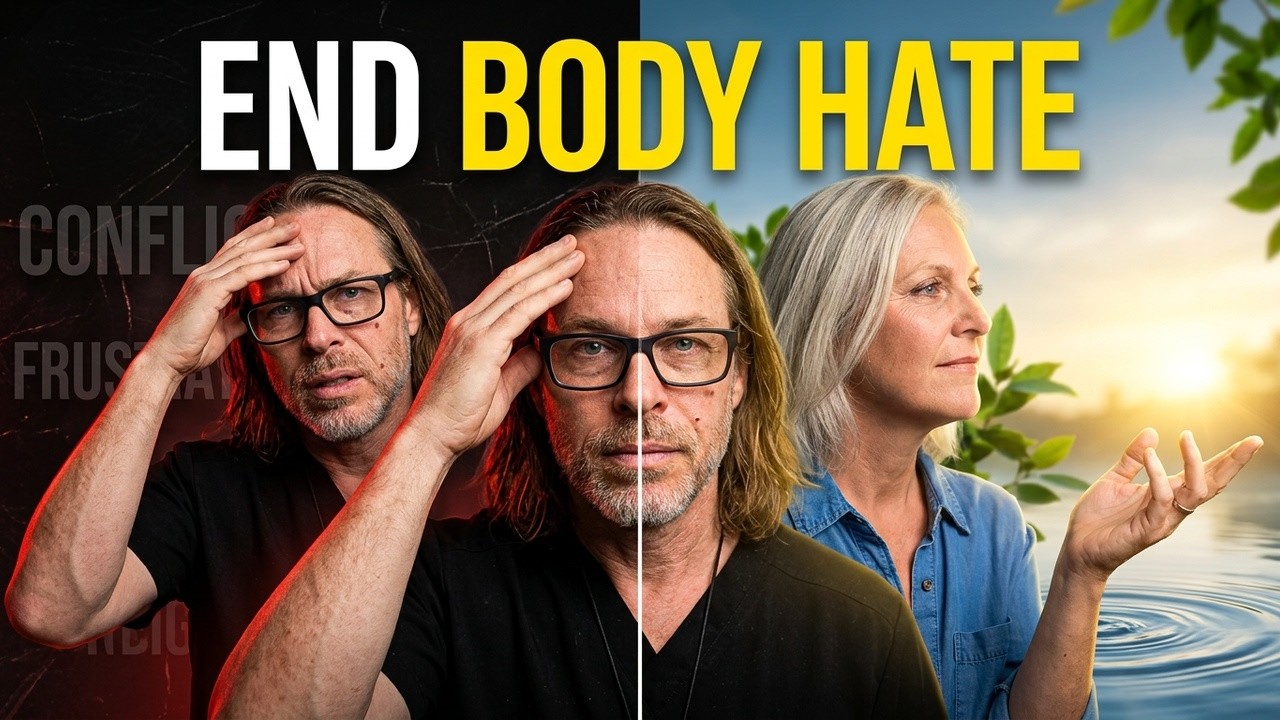
This content was created by Robert Whitfield MD. This content was uploaded by Robert Whitfield MD. This is a YouTube interview titled "You Can't Heal a Body You Hate: Mindset, Nervous System & Recovery After Removal" (posted Aug 6, 2026). It features Dr. Robert Whitfield MD hosting guest Jane Hogan (The Wellness Engineer). The two discuss breast implant illness and explant surgery, mast cell activation syndrome, the role of mindset and the subconscious in healing (somatic practices, self‑compassion), patient support and clinical care, and the effects of social media and AI on health information and clinical practice. The conversation is educational and aimed at patients and providers seeking recovery and trusted guidance.
Chapters
All right everybody, I have a special guest today, Jane Hogan. She, uh, and I were recently discussing breast implant illness, explant surgery, mast cell activation syndrome, and she proposed a great title. And, um, I will let her lead with her title because it's hers, not mine, and it will stimulate a lot of discussion and it's a strong title. So if If you don't or not are terribly interested in a deep, honest conversation, this may not be the podcast for you. But if you are, you want to listen. And Jane, I will let you lead with your title.
Yeah, Rob, we were having this, we were having a conversation and we were talking about, you know, people trying to heal from breast implant illness, but also really heal anything. I help people with chronic pain and I just sort of said in passing, you can't heal a body.
Hate.
And this is where we got the idea for doing this, because I help people a lot with mindset and just creating, uh, the, the thoughts and the— that allows the environment for the body to heal. So if you're obviously— if you're hating your body, it's not creating that conducive environment that's going to support healing. So that's where we came up with it. It's strong. I usually don't like the word hate, but I think it's really, it's powerful because it's true.
Yeah. I feel like to your point, there is a group of patients who really have a difficult time with mindset. And working on themselves. And this is a problem for everybody, all right? So I'm just gonna, you know, everybody can do more work on themselves, end of story, full stop. But there's a small, small subset who we take care of. And for everybody listening, we do not have any, um, psychological counseling as a component of our program, even though we've reached out to different practitioners. And my team is composed of former patients. So many of our staff have had explant surgery with us, and we feel that uniquely qualifies them to go through any kind of programming and test it to see if it's going to help patients who are undergoing explant surgery. So to date, we don't have that program that fits because many of them are focused, Jane, on something maybe like sexual abuse, or they're focused on something about, um, a, a kind of methodology that doesn't necessarily align with what the explant, you know, patient may be experiencing. So today nothing has really fit the bill. And we know mindset's incredibly important, and we try to create this really supportive environment with group programming for patients through our detox program with the Sharp Method and having support through the medical staff who've experienced the procedure. So when you ask a question, you're not getting, you know, an answer back from somebody who hasn't had it done. You're getting an answer back from somebody who's actually gone through the process, including the detoxification program, including all the modalities in the office that we have, including the year follow-up that we do with patients, and beyond that if they need that. So we have a unique set of, you know, providers with experience and everything, but it's still there's a small segment of people that either don't want that help, can't get to that level where they accept it. Well, I don't know what the problem is. But it's rare that we have somebody who's, you know, that way. But every once in a while, you get somebody who's really gets into a dark, dark place and has trouble getting out of it.
Yeah, I mean, I, I think what I see a lot of times, Dr. Rob, is that people just don't really understand how powerful their mind and their thoughts are in terms of what's going on physically in their body. And but if you think about it, the subconscious mind is running the body, right? We don't really have to think about running the body. It's all automatic, automatic. And so, um, and you know, I'm an engineer, not a doctor. Engineer turned health coach. So remember, I'm coming at it from a, like, a different perspective. But I think sometimes it gives me that 30,000-foot view. I'm like, okay, what can make a big difference here? So the subconscious mind is running the body. So if our thoughts that are, that are sending messages to our subconscious mind are not supportive, are negative, then that message goes to our subconscious mind. It starts to shift the nervous system into not feeling safe. And so then there's a whole downstream physiological effect of that, right? The immune system, the digestive system, the hormonal system, all these systems start to not work as efficiently because the nervous system thinks things aren't great here. That, that need to be liked, even by ourselves, is so primal, primally wired to safety, that it, it can actually start to trigger that we're not safe. And so the way we talk to ourselves really matters. It really does matter, and it can have that physical effect. So I, I always see this, that people don't really believe that in the beginning, and, uh, but yet there's so much evidence of that. Absolutely.
I, I feel like it's this— I don't know if it's a complete disconnect, but I liken it to people who, um, and we've had examples of this, people either repress, hide, or don't want to deal with a lot of bad things, and then it comes to, we'll say, the day of surgery, and most people have, you know, reached a level of peacefulness about it, and, and they're ready, you know, to proceed. And then there's some folks who get really— not anxious, anxious is pretty normal for surgery, that's, that's fine. Some people get really emotionally, um, ramped up. And that's, that's something else. And, um, we had a patient wake up one time experiencing a lot of pain in their back and in their pubic area. And I was called by the nurses because she had taken longer than normal to wake up and I was back at my office doing some work, and I came back and saw her, and it was really unusual, Jane. I mean, I've been operating for 30 years, and I had this question. I was like, yeah, this doesn't make a lot of sense. So we ultimately got a CAT scan for the patient, and everything was fine. And I went out and told her mom, who was her caregiver, that everything from an anatomy standpoint was fine. And sometimes people, when they wake up from anesthesia due to either medications or other factors. They just wake up in a more anxious or emotional way than normal. It happens a lot in teenagers. And everything the next day was fine. Patient came to the office as usual, and everything was fine. And then a couple weeks later, I got word back from our nurse practitioner that the patient disclosed that she was experiencing a sexual abuse event as she woke up, that it happened in her past. So, you know, when you're disinhibited, you can't repress those feelings anymore. So to point, like, you, you, you can't love a body you hate. And if there's an event or something traumatic in the passed, then that's part of the reason. Obviously we don't know that. That's not disclosed on, you know, an intake. It's, it's rarely, you know, uh, brought up. And certainly we, I don't ask about abuse events. That's not, that's not my purview.
Right.
But in this case, it was a very important piece of information that if I had I don't, I don't think I would have acted differently because I always have to make sure that everything is otherwise safe for the patient, make sure there's not a problem. But, you know, I've been doing this, um, case thousands of times and obviously surgery for almost 30 years now, and it was quite the outlier for me. But it wasn't a surgical outlier. It was a psychological outlier. That was the, the problem. So I think once again, that person had never gone to or had therapy for that problem or addressed that problem. And to your point, still a problem.
Well, that subconscious mind stores memories and And past events, especially like if they, if they haven't been resolved, then I mean, the brain is so fascinating. Any event that would even seem remotely similar to that could trigger, right, that, that same response. And so who knows, maybe there was something about going into surgery and being vulnerable that, you know, in the brain, it, it was enough similar enough that it, that it re-triggered that. Um, you know, we, we're so used to suppressing, um, suppressing our feelings. We— I think it's kind of— in some ways it's worse for men, I mean, but for women there's a lot of, um, you know, generally we're brought up to be, you know, be good, don't speak, you know. Look good, all of those things. Um, and we, we end up suppressing kind of our true self. And so one of the things that's helpful for a lot of people, if they do wonder, like, do I have feelings that maybe I'm suppressing, is to not think about it but, like, tune into their body. Because a lot of times we do store things It's interesting, you know, like the hips, a lot of emotions. Well, emotions could really be anywhere, but, but the hips, you know, obviously the sexual organs there. But the back is often associated with support, right? Because it's our support and structure. So lack of support could show up as back problems, you know, neck and shoulders. Even our language gives clues like the weight of the world on my shoulders, and then those people might get shoulder pain. So what I, what I see a lot is like, okay, let's not get into the story of that, like why is my, why am I getting pain there, but just kind of go tune into the body, you know, like a somatic kind of way, tune into where you're feeling a little different and see if you can imagine breathing into that area or even giving it loving feelings. So coming back to you, you can't heal a body you hate. Go to the area and the way I try to do this with my clients is to talk about it as if it was like a small child or a pet that was hurt. You know, if you're noticing an area that's got pain or an area where you're just noticing like a tightness or like a lump in my throat or whatever it is, you can say— just imagine it was a small child or a pet that was injured, and you would say, oh my love, you know, here, let me, let me hold you. You're going to be fine. I got you now. Everything's all right. Like that kind of feeling. And what's really interesting, I think it's Harvard University recently did a study where they, they had a, you know, a control group with chronic pain that just kind of did the regular stuff. And then they had a control group that did this practice of sending love to an area that was in pain, and they have reduced pain. But I would say not only reduced pain, I think you're, you're sort of putting that loving intention in an area can help with healing. I mean, obviously, I can't, you know, it's, it's just at the early stages of being studied. But I think this makes a difference. And it kind of makes sense from a brain perspective that if we're saying love this area, then we are saying almost to our brain, prioritize this area, give it the nutrients, blood, whatever it needs to, to thrive and be healthy. And so the way we even speak to parts of our body makes a difference, and how we feel about parts of our body makes a difference.
Yeah, and I, you know, that's definitely, um You know, I think multiple times, and we're all obviously do this from time to time where we view ourselves a certain way, and it simulates us to do something either from how we exercise or how we, uh, what we partake in, right? How much we eat or drink or indulge in, whatever that may be. And that varies at different times, and, you know, as little as a day or a week, or, you know, if we're talking about year over year, however that, you know, changes. Because you'll do things differently because you're a human, and that's what we do. We just do what we do. And some people are a bit more you know, prone to change or prone to the influence of others. You know, obviously things like social media, the advent of social media, have been incredibly— how do you even— I don't even know how to begin to say it.
I mean, disempowering. I don't know.
It's just a bizarre change in society that you can now manipulate the image or see something so, uh, different where everything used to be. Like, um, I'm 56, so it was in a magazine, right? You may have went to the old— for all you old people, you could go to the store or the bookshop and see a magazine And that's how you would, you know, get information. And then there was linear TV is what we have to call it nowadays, Jane, linear, not streaming. And it was very different. Now there's so much more input, all these different options, I guess we should say.
Yeah. And not only that, with AI, you know, and changes in video, you can't— it used to be that you could trust video. But now you can't even believe all the video that you see. So it's sort of like, what, what's real and what's not real anymore?
Yes. And so, um, to your point, it's going to become even more— well, it's certainly going to be more complicated for the patient, the client, the person trying to find the information, because I get asked all the time. Questions that they do have answers, and they're credible, proven answers. But because of the number of ways people gather information, it's very confusing to them to identify a credible source of information because it's coming at them from so many directions, from so many sources, I guess, is what I would say. And, um, it's definitely something that should be, um— and I don't know how to vet these things— it should be managed in a way that's easier for the person who's viewing it to understand the credibility of the source. But even that's really fraught with problems to me.
Yeah, you know, I think kind of with all of that, it's tuning in. A lot of people just aren't tuned into what are they— what they're feeling. And so starting to tune in and have an awareness of what are you feeling. And simplest, I think, awareness is to notice, do you feel expansive or do you feel like sinking, contracted? And so for something like social media, whatever, whether it's real or not, when you're on there, notice, do you, do you feel elevated? It might, like, it might just depend on what, what's in your feed and what you usually click on, you know, depending on what they send you, because they will send you more of what you do click on and what you, what you pause on. And so, uh, just notice how you're feeling. If you— do you feel expanded? Usually that's good. If you feel contracted or sinking or, uh, like almost pushing away from it, then it's probably not good, and it's not, not doing you any good either. So, uh, you know, it just takes that awareness, and then, and then to pull yourself away from it, to change your habits, um, so that you're not getting fed more of that.
That's the— yeah, so that's to me, I think. Because I get the feedback from the patients, like, and the questions. And I sit there and I go, man, this is not as complex. But because they're getting so many inputs, it's confusing. Clouding the picture. It's, it's, it's muddying the picture. And the more people that talk that don't have the experience, background understanding of the problem, the more confusing the problem becomes.
Yeah, plus there's all this, you know, AI, you can search, there's no shortage of information, may not all be true. But there is no shortage of information, so it can get really overwhelming for people.
Yes. And interestingly enough, on the AI front, I had a patient experience a problem with pain in their abdomen after surgery, and they didn't call us. They were speaking to ChatGPT all night. And so ChatGPT had told them they basically have an ulcer. And this is, um, long story short, is they had gas pain, something you can have a Gas-X tab, which is simethicone, and improve, or just pass gas.
But simple.
ChatGPT told them they had ulcers, so I had to spend 15 minutes explaining how they don't have an ulcer and explaining how ChatGPT never took care of a patient.
Yeah.
So that is going to become more and more and more difficult for anybody who provides care. So it's okay. I've been doing this really really long time, so I have no problem talking back to ChatGPT.
Yeah, that's a whole new challenge for, for you as physicians, or really any of us that are trying to help people. Um, you know, they have— they're giving up their power just the same way people have given up their power to a lot of outside sources. They're also giving up their power to you know, AI, uh, and not really learning to trust themselves in what feels right and true and, and really use their cognitive abilities as well to like filter through the information.
Right, right, right, right. So it's thinking, right? Everybody thinks that those models are thinking for them or they're thinking. They're not. You're basically doing a Q&A. Mm-hmm. And as much as you think it has a stream of consciousness, I can guarantee you it doesn't currently. Have that. It's not like that. David, that's all correct. And it's fallible because there's no experience in the database. Just facts. And the fact is, you can't trade that for any experience of taking care of patients. Because ChatGPT doesn't get up in the middle of the night and take care of Susie Smith and her abdominal pain. So I've, I've done that throughout my career, and I know what the causes are predominantly. So that being said, like, that's going to muddy, you know, the picture. You know, yeah, all the social media inputs, we have all of the now, like you said, AI inputs, and Google is going to eventually, I guess, take away the search bar where you would type a query, and it's just going to be an AI response. And so we work diligently to make sure we provide up-to-date information through our websites, my live private community, Dr. Rob Circle, and then on our channels. That may— basically, those are all linked to our content that we're creating now. We don't have this, um, other kind of content that's for clickbait or views or something like that. We provide educational content just to help patients, um, either understand better what they're experiencing, which is the, the game, so that they— oh, you know, they found finally some information that makes sense about what they're experiencing or why.
So that's basically You know, another, another thing just to point out that you have, you and your team, you've got all this experience, but you've also got, you know, human to human contact. And there's other stuff going on in human to human contact that you don't get from an AI, you know, question, right? You've got a certain level of intuition. You're picking up on other things from the patient, their energy, little cues that, you know, you probably don't even realize. Lies, but you're so used to it that you know how to filter those and use those cues. So it could never replace a real person and the years of experience and caring that you have for your patients.
Yeah. The funny part is, you know, people like Elon Musk, he's funny. You know, he's like, oh, Robert's, uh, a robot's going to start, you know, doing surgery. I'm like, yeah, robots have actually been doing surgery for a long period of time with the assistance of a surgeon because. To your point, you have to have some experience in terms of tissue handling and things like that enabled. That's what enables you to do and be a surgeon. Like, now, can the robot eventually learn to do that? Well, we're a bit away from that. So just think of like, have you used a Waymo? Have you gotten in a Waymo?
I have not. I've seen them, of course, but no, I haven't.
So that project, I believe, was launched— autonomous driving was a project launched at Stanford in 2004, and basically it came to fruition 20 years later. So it took 20 years for them to have autonomous driving vehicles that we can on demand get on an app, bring to our homes or businesses, and get a ride.
Yeah.
And how long do you think it will take before they let a robot operate on a human?
Oh gosh, it's gonna be years.
Yeah, so we'll just— we'll give it— I'll even give it a pass. I'll say it won't take 20, maybe we'll take 15, we'll trim it a little bit. But come on, let's, let's be realistic here. Um, and that's with something as dangerous as driving. My job's far more dangerous than driving.
Yeah, yeah, surgery, you're in the human body. I mean, the interesting thing about those Waymos though is that— or autonomous driving in general— is that insurance rates are going down because they're, they're considered safer. And I guess they are proving to be safer in some ways than, uh, ordinary drivers. That is not the same though, as a skilled surgeon. That is completely different. Everybody's a driver. Yeah.
I think there's a lot of room honestly, in, in medicine to really help us with the utilization of AI and certainly things like imaging analysis, looking at radiographs, CAT scans, MRIs, echocardiograms, ultrasounds.
Yeah.
If you look at the visual analysis software packages in AI, they're amazing. So I believe that will really help in the patient care space. I don't know what that portends for radiologists. It seems like that's going to be problematic for that specialty. But, and I've often had like these discussions, like we had to become our own quote unquote, you know, radiologists, especially at night when we were in surgical training, because we had to trust our own eyes with what we were seeing correlated with what we found on on the patient's examination, and that was it. So when you have the ability to put together all that, that's a very powerful tool.
Mm-hmm. Yeah, the, the data scanning, um, or processing is— it is huge. And that's where the strength of AI is really, in handling large volumes of data.
Absolutely. Yeah, I, I think it's— that's how I think of like, there's lots of really helpful parts of it. Um, in-person examination or care, uh, we're a ways off with that, but there are lots of ways to help, honestly, lots of ways to help streamline it, make it more efficient, give patients, um, a better experience, help the, help the providers, uh, have a better experience, and then that will help them provide better experience for the patient. I think there's a lot of upside. I, I don't, I don't look at it as downside at all. I, I look at like how it's going to benefit everybody, especially the information. And I use Open Evidence, which is the AI platform for, um, providers, which is very helpful. Because it keeps things from information. I don't think anybody realizes how much information is actually— if you knew how much information you have to cope with as a provider, that just the, the amounts of papers that are published, and then, you know, that's just like the journals. Yeah. And what everybody needs to understand is Google or Chat or Claude, Claude, any, any of the LLMs cannot scan journals that are behind a paywall. And that's how most journals have existed over time. So the world's literature has been protected by Finance, basically. Like, you're not just going to get access to the world's literature if you're ChatGPT or Claude or Gemini. It's just not going to happen. You'll see the quote-unquote abstract of something, but you'll not see the entire article because that's behind a paywall of that journal, like the New England Journal of Medicine or the Journal of the American Medical Association. With a plastic and reconstructive journal. Like, they just don't give you access because you say you're ChatGPT, right?
Exactly.
That would ruin their financial models, everybody listening. So that's not going to happen. So when you think you have the information, you actually don't have the world's information. That's not how it works.
So yeah, especially the most up to date and the most in depth. Which is what you want when you're dealing especially with health.
Yeah, so if you just looked for MCAS as an overview and I type it into Open Evidence, which is what I have access to and you don't unless you have an MPI number, you don't have access to it. So once again, like, all these things are, are great. There are advantages, there are tools, and how you use them, super helpful to me. Like, I think it's great. I mean, I use them all day. Um, they help, you know, I think more and more streamline things for our patients and providers, all the, you know, the team, so to speak. And then it helps us be, you know, up to date with all the information. So yeah, I, that aspect to me is very, very good. But it's today, I don't You know, the whole Elon Musk of a robot doing an operation shortly is not happening.
It's a ways off. So, you know, for the, the watchers and listeners, it, it still comes back to trusting yourself, having trust in the, the doctor, the team that you're working with. Um, first, you know, paramount, right? Is, is that that trust. But, but trusting yourself and being part of the team. We don't always think of ourselves as being part of the team, but coming back to, you know, the title of this, You Can't Love a— or You Can't Heal a Body You Hate. In between your doctor's visits, even after your surgery, before your surgery, how you think about yourself throughout the day, day after day. No one else can do that for you but you. So that is your part in— as being a team member in your healing is appreciating everything. You know, we just— we can just start with like really simple things, appreciating what your body is doing for you. Our heartbeats, you know, we're, we're walking miracles. The fact that a single cell turned into how many trillion cells in the human body, and each one knows exactly what they are supposed to be doing and can differentiate themselves from the cell that's right next to them. It is a miracle. It is truly a miracle. So we are, we are walking, talking miracles. And the fact that your body knows how to heal, the fact that your heart beats and pumps blood around and the cells know what to do with that, I mean, it's, it's just amazing. So there's so much to appreciate about your body that can then, you know, really be supportive in your healing path. There was a, you know, Jon Kabat-Zinn, he was the father of mindfulness-based stress reduction. He said in one body scan I've listened to, he said, as long as your heart is beating, there's a whole lot more right with you than wrong with you. And just remembering that is, is huge.
Well, I think we'll end there. I think we've just highlighted some things that we want everybody to do, which is I want everybody to have a really positive mindset. This is a difficult step to take if you have this problem or family member or loved one who has the problem. And you have to give yourself a lot of grace and you have to give them a lot of grace and just, you know, know it's difficult, but it requires a positive mindset and a lot of support.
Yeah. And also remembering that we came, we came in as babies, you know, loving ourselves. We never doubted our worthiness to you know, feed me, change me, look after me. The only reason we have less than that full loving feeling for ourselves is messages that we received or interpreted throughout our life. So sometimes what I find is helpful for people to think, you know, coming back to like loving yourself, is just think about a baby, you know, yours or another baby. Like, were they any less than perfect when you saw them? And that's how you were. Can you transfer that feeling to yourself as well? I remember when my son was born, he, uh, I remember thinking he was so perfect. I felt bad for the other mothers that their babies weren't as perfect as mine was. And I just absolutely, like, that was all I saw. And then months later, you know, I looked at the pictures of him when he was first born. I thought he was a little fat and, and, you know, he's like, you know, He wasn't what we call perfect, but in my, in my eyes, he was perfect. And that's how— can, can we like transfer that feeling to ourselves? You know, however we are, uh, in all our imperfections, we are still perfect. So I like to remember that.
Awesome. Well, thanks for coming on the show today. And if folks want to learn more about your methodology or interact with you, where can they get in touch with you?
Probably the easiest thing is my website, which is thewellnessengineer.com. I'm also on YouTube at The Wellness Engineer and Instagram. So, uh, yeah, just follow me there and got lots of resources for you.
Awesome. Thanks for coming on, Jen.
Thank you so much, Dr. Rob.







