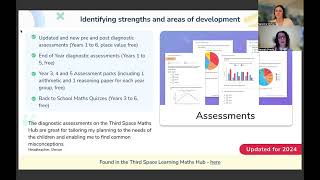
A short video discussion (two speakers) about updated diagnostic assessments for primary maths from Third Space Maths Hub. It explains the purpose and workflow of pre- and post-diagnostic assessments (give pre-test before a teaching block and post-test after), highlights that assessments are multiple-choice with carefully designed distractors and explanatory notes for each distractor, and describes a gap-analysis spreadsheet (pre/post tabs) to compare whole-class gaps. The speakers also recommend using a short formative diagnostic question at the start of each session to keep assessment data current and inform targeted teaching, intervention planning, and progress tracking.
What do we have in terms of diagnostic assessments?
So we have a load of assessments on the maths hub. Please do go and have a look, because I'm not going to go through all of them because we do just have so many. I really wanted to focus on our actual diagnostic assessments and that's because these have been updated this year. We've had them for a long time, but now they are completely updated. We've added a load of brand new ones to the maths hub as well. The idea of the pre and post diagnostic assessments is that you give your pupils the pre diagnostic assessment before you start teaching a block of learning and then you give them the post diagnostic assessment. Once they've finished the block of learning, you can then see what are the gaps that they had at the beginning and plug those during your lessons and then you can see what are the gaps that they still have that you might need to go and recap so they have a good understanding of the entire topic. One thing that I think is really, really brilliant about these is they're multiple choice questions. So we have thought very carefully about all of those distractor answers and in our answer sheet there is an explanation for why a pupil may have picked that distractor answer. So you're not just getting the information of yes, they know it or no, they don't know it. You're also getting the explanation of why they might not understand it if they don't understand it. Or also brand new for this year for the diagnostics assessments is that they have a gap analysis spreadsheet so you can mark things and then quickly go through, put it on the computer. You'll have one tab for the pre, one tab for the post and you can compare very quickly. Have a glance at your whole class, see what maybe the whole class are struggling with before you teach something really good to go back to when you're planning as well so you remember what it is that they didn't quite grasp at the beginning.
Yeah, sounds really great. It's again similar to the interventions. We always start them off with a pre diagnostic assessment, so we've got their starting point. We then do an end of programme assessment and then can map that progress over the term and report it back to the school. But we're also conscious that lots of gap plugging happens in schools, lots of support and normal math lessons taking place, so it can become quite outdated. And that's why we always do that formative diagnostic question at the beginning of each session, so that we get that live and up to date. Information on where the pupil is with a particular topic and then can make sure the lesson is plugging those gaps really accurately and concisely.