Essential free primary maths resources for 2024/25
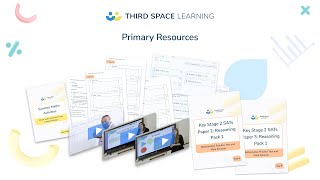
Recorded webinar (hosts: Tash, New Schools team; Hannah, Primary Maths Content Manager) demonstrating Third Space Learning's updated Maths Hub for 2024/25. It explains how to register and use the free vs premium toggle, highlights core resources (Fluent in Five arithmetic starters for Y1–Y6 with editable PPTs and SAT-style PDFs; Rapid Reasoning Y3–Y6 with daily focused-topic questions; Ready-to-Go lesson slides aligned to White Rose with teacher notes, support slides, vocabulary and sentence stems), and describes assessment/intervention tools (diagnostic pre/post tests with distractor explanations and a gap-analysis spreadsheet; times-tables support and MTC materials; SATs practice papers, worked-example papers, and topic-based question sets). The webinar also covers intervention-specific packs and extension questions, editable formats for classroom use, and how school subscriptions or tuition packages grant premium access. Presenters promise slides and recording will be shared.
Chapters
I think we are ready to make a start then. Thanks so much to those of you joining. I can see there's still a few of you joining, but it is being recorded and I'll send out the recording after. So for any latecomers, they can watch and catch up on what they've missed, I'll start by introducing myself. So I'm Tash. I'm a former teacher and I now work on the New Schools team at Thirdspace Learning. I work on the tuition side of things. So if you're not already familiar with how Third Space Learning works, we have two sides to what we do. First of all, we have our one to one interventions that we run with schools, so we have a team of our own, maths specialist tutors, which we connect to pupils via a headset and a shared screen. And we have a range of different programmes designed by our academic team, which Hannah's a part of. Who's on the call today? And then the other side of what we do is our resource library. So we have a really large bank of maths resources which range from year one all the way up to year six, and that's what the focus of today's webinar is on. So we're going through those resources and highlighting some of the impactful ones and how they can be best used in the classroom. So we've got Hannah on the webinar today. She is the beacon of knowledge for the resource library and the brains behind a lot of the resources. So really looking forward to you walking us through them, Hannah, and if you do have any questions for Hannah at any point, just pop them in the chat and we can take a look at them at the end and Hannah will be able to give answers on anything resource related. So do you want to start by introducing yourself, Hannah, and maybe give us an idea of what to expect today?
Of course. Thanks, Tash. So, as Tash said, my name's Hannah. I am a former primary teacher. I was a teacher for over seven years. During that time I was a class teacher and I was acting senco for a bit of that time. Now I work for Third Space Learning as the primary maths Content manager, which is always a bit of a mouthful. But I am also a vice chair of governors at one of my local schools, which just means I still have a toe in the water of actual education in the classroom, which is lovely. I'm also a massive fan of everything to do with maths, which is very helpful in my role. So the purpose of the webinar today is to give you a bit of an update on everything that has been going on with our resources, our primary resources for the academic year of 2024-2025. That is because we have made an awful lot of changes that you will hopefully see as we go through this webinar. If you've joined us before, do please stick around because we have, as I say, got loads of resources that we've updated that we've added to that I want to through. If you're a class teacher or slt, we've got things for both of you. So just stick with us and see what we have to offer.
Thanks, Hannah. Very exciting. So let's make a start then, just with an overview of the Maths Hub and what have some of the key changes been this year.
So, as I said, our team have worked exceptionally hard last year to get our Maths Hub all up to date for this academic year. The Maths Hub, in case you're not sure, is where we host all of our primary maths resources. Before I go into the actual detail of our resources and what we've updated here, I just wanted to give you a little bit of background about how we make the resources because I think that is really, really important. We think very, very carefully about everything that we make. We work with former teachers and current teachers to help us make the best resources that we can. We look at the national curriculum, we use our own experience as teachers and tutors, we use the NCTM and we use White Rose to give us some inspiration and to understand what it is that you might your classroom from a resource. So onto the actual Maths Hub itself, if you have, and hopefully you have joined us before and looked at the Maths Hub, you will notice that it has had a massive facelift. The design is not the only thing that is up to date and we've got loads of other parts of the Maths Hub that are different and new and improved to make search and functionality a lot better for you. One thing I should mention very quickly actually is you might be getting our emails, but that doesn't necessarily mean that you are part of the Maths Hub. You can get our emails, you can download things with a one off click, but that doesn't mean that you are actually in our Maths Hub. We've got a little registration form on the side. If you know you're not part of the Maths Hub, sign up completely free. A couple of seconds to do and you can access all of the free resources that we'll be talking about. Today, if you think you are a member of the Maths Hub, but you're not too sure, go to login, put in the details you think are correct and it will tell you if you are part of the Maths Hub or not. So that's just a little sidebar. One of my favorite functionalities that they've added to the new Maths Hub is a free and premium toggle. This is absolutely excellent because we have got two different types of resources. We have our free resources and we have our premium resources. Our free resources tend to be the first one or two in a collection for each year group and then the premium resources tend to come after that. So you get a bit of a flavour of the collection and then you get the premium resources. But we also have absolutely loads of free resources that are there for you and we will be adding to those throughout the year as well.
Yeah, and I will be sending out these slides as a PDF as well. So if you're not registered and you know that and you would like to register, there's a link at the bottom of this slide that we're on currently. So if you follow that link, it will take you to a page and then you just click register for free and takes a few seconds to put your details in and then you will be a member of the Maths Hub. And in terms of the premium resources, because I know Hannah just touched on the difference between the free ones and the premium ones. If you are wanting the premium resources that gives you access to all of the resources and all the resources we're about to go through today, then there are two routes that you can access those through. So the first one being a school subscription. So you can sign up your school for a paid subscription and then all members of staff in the will have an account and will be able to access all of the resources. No limit to teacher sign ups and no limit to downloads at all. And then the other route is through the tuition. So if you sign up a group of pupils to our one to one interventions, then you will get included with that access to the premium resource library. So you'll have all those same benefits. You'll have no limit to teacher sign ups and no limits to downloads included with the tuition.
Okay, just before we move on, Sorry Tash, I realised that I forgot to explain three parts of the Maths Hub. So we've got our primary maths resources, we've got our daily maths challenge and we've got our videos. I'll go through the primary resources in a moment. But with the Daily Maths Challenge, these are questions for every single day of the year. They are divided into years three and four and years five and six. These were on the old Maths hub, but what we've added is some search functionality so you can try and find if you want questions on fractions, you can now search for fractions within that. Then our videos again, we did have these on the old Maths hub but for this year they are all absolutely free. These are great because some of them are just bite sized small videos that you could use as an ECT or for a TA or if you just want a little refresher before you go and teach something. So lots of great things to come.
Great, thanks, Hannah. Okay, done with sort of the logistics around how the Maths hub works and we'll now start going through some of our favourite resources and how you can use them in the classroom. So we're starting with none other than our most popular resource, Fluent in five. I'm sure there's lots of teachers on the call now who already use this. I know when I'm speaking to schools they often know us because of Fluent in five and is the one that they're most familiar with. So Hannah, what is it and why is it so popular?
Fluent in five is a fantastic resource in my opinion. You will probably hear that a lot, but I really do think that all of our resources are fantastic. So Fluent in five is for years one to six, it is our arithmetic resource. If you have used it before, you can see from the picture on the screen that it has had a bit of a facelift, a bit of an update. One of the major things that we've done in the update is that we have added an editable PowerPoint for every single year and we have also got a SAT style test style PDF for every single year group, which is really good because it then gives you the option of how you want to present it to your class, to your pupils. What we have got, what we've done to try and make arithmetic a bit more accessible and progressive throughout the years is we have tried to add a bit of support to help your pupils. So for Key Stage 1, Years 1 and 2 on the PowerPoints, we have included some concrete manipulatives or some prompts to help your pupils think about what they could use to solve this problem. They're just suggestions. You can get the manipulatives out yourself, you can offer them a range so that they can try and solve these problems themselves. As we then move into year three, and four, we have taken away the images of the manipulatives on the screen. Obviously, you know your class best. If they need to use those, they need to use those. Not a problem. But what we focused on instead is should you be using a mental method or a written method? One of the things I really remember from teaching is you would teach a method and that suddenly be all that the children could remember to do. That'd be every time you did something, they'd use that method, regardless of if it was the most appropriate method for the question or not. So we've added those. You can decide if you want to include those or not, because we do have a slide that doesn't have them. So again, up to you how you present that. And then as we move into year five and six, we remove that so that the pupil has to choose between a mentor or written method, the most appropriate method that they think should be used. But as a prompt on the slide with the answers, we have included that little symbol of a mentor or written method just so you can have a discussion about which method did you use? Was it mental? Was it a written method? How is your method different to someone else's? So you can really start a conversation if you want to.
Yeah, we've got those symbols on our intervention slides as well. Just a nice sort of prompt to make the pupil think about should I be using the written method or the mental method here? And it's nice if you've got pupils who are on the interventions and whose teachers are also making use of Fluent in five, whether it's a starter or whether it's in the maths lesson, because then they get really familiar with that symbol and they know what it means and builds into their sort of routine when they're thinking about maths. And Hannah, I was going to ask. So when I'm speaking with teachers about Fluent in five, they often tell me that they use this as a starter activity. I think that's a really common way to make use of it. Are there any other ways that teachers tend to make use of it or anything you can recommend outside of a starter activity?
Again, as I said, you are the expert in your classes, so you will know how you think your pupils will access this best. One of the things I really love we've done because the editable path PowerPoint, you can use this in a lot of different ways. You can use it as a settling activity. As they come in at the beginning of the day, children know they unpack their bags, they put everything out, they sit and do Fluent in five. You could use it at the start of a lesson, as you say again, a settling activity after lunch. Or if you want to take some of these questions and put them in throughout your day at any point, you can do that with the editable PowerPoint now. So it's just about getting that regular fluency practice, that regular arithmetic practice so they can can be exposed to this all throughout the week that they have.
Yeah, really invaluable skill, isn't it, having good fluency. We'll move on then to Fluent in five's cousin or counterpart. So it's the reasoning version and there's been a big update on this one, hasn't there, Hannah?
There has. And I have to say that I think this is an absolutely fantastic resource and I'm really, really proud of the team that worked on this to make all of the changes that we have this year. So Rapid Reasoning is for years three to year six. We have decided to reorganize it a little bit from how it was previously. So now every single day focuses on one specific topic. So that could be place value and then within place value, it might be numbers up to a thousand. There are three questions for every single day and all of those questions will focus on that one topic. The point being, if you've got five minutes or if you've got 15 minutes to do this activity, all of your pupils are going to have exposure to that same content, that same topic, regardless of how far through the questions they get. So this is really good for helping you to understand. If they only answer the first question, that's the slightly easiest question. If they then answer the second question, it's a little bit more challenging. The third question is the most challenging question. So if your pupil is consistently answering the first question, do they need more support in this area? If they're answering second or third, they need challenge. All about that. Similar to fluent in five, this has also got an editable PowerPoint as well as a PDF. The editable PowerPoint is designed so you can take it and put it in your lesson or you can have it as a quick activity. And then the PDF is more of a test style. It's got those marks that are associated with the question and slightly more in depth answers. So again, you have the choice of how you want to use it with your pupils. We also have a very clear progression document. So if you know that you want to move the time block of questions to somewhere else, you can go onto the document, see where the time questions are and go and use those ones for that week.
Yeah, I really like the flexibility on the use of this resource. So with it being an editable PowerPoint, if you really like the look of one question, you can just go in and take that out and embed it into your lesson PowerPoint and then they've got the question on that topic. Or if you find that your class, they really need a particular focus on reasoning, it's an area of priority for your class, then you could set aside a bit of time for them to just focus on that whole PDF and do all those reasoning questions in one go, rather than just picking certain questions for the lesson. So I like the option there. Depending on, like we always say, you know your class best. So depending on your class's needs. Okay, let's move on then to the ready to go lesson slides. I always see these ones as the ultimate time saver and I know back when I was teaching this would have been my favourite one because this does just save a whole lot of planning time. Yeah, talk us through it, Hannah.
So first of all, it might look a little bit confusing first because we do have two different versions of our ready to go lessons. That is because these are aligned to White Rose. So our version two is aligned to White Rose version two. Our version three is obviously aligned to whiterose version three. So everything I'm going to talk through applies to both. It's just the content is a little bit different depending on what version you're using. First of all, I will admit that I pinch almost all of the idea of the formatting from this from our own tutoring lessons, so I will hold my hand up to that. We have got editable PowerPoints for every single lesson and then as a counterpart to those, we also have worksheets. So I'm going to sound like a broken record, but you know your class best so you can move around the slides. You can decide how it is that you want to teach based on your class and their needs. As I said, I was an acting senko, so send is very close to my heart, very important to me. So we've designed these so they have an off white background, they have an off black text, and they have a Dyslexia friendly font. They also have minimal images on the screen that aren't to do with the question so that you don't have that one child who keeps on asking why is that in the corner rather than focusing on the maths. One of my favourite things that we have on the slides, well underneath the slides I should say, is Our teaching notes, these have got some suggestions of key questions that you could ask to individuals or the whole class. They've got common misconceptions and errors that could arise in that particular part of teaching. And where appropriate, we've got things like extension ideas.
Yeah. Like you said earlier, Hannah, it's a really similar approach to the tuition. And I know all the tuition slides and I know that the tutors really appreciate having those tutor notes, or in this case, teaching notes, because it means that instead of spending hours, hours making the lessons from scratch, they can actually just use their preparation time to go through those prompts, familiarise themselves with what? The miscon. Sorry, the common misconceptions at each part of the lesson. What are some strategies to address those misconceptions? What are some teaching prompts? So some questions that I could ask to tease out understanding from pupils, like I said, rather than just planning the lessons from the beginning and then not having as much time to think about the delivery. So I think both on the intervention side and the. The ready to go lessons, it's great having those notes for tutors and teachers alike.
Yes, definitely. I would 100% agree with that. So, then again, similar to our tutoring, there were two other things that I did pinch from our tutoring slides. The first is our vocabulary list and our sentence stems. We actually have a separate document. If you go on the maths hub, you can find our sentence stems and vocabulary lists completely separate, but the idea being that you can introduce the vocabulary, you can use a sentence stem throughout the lesson, you can expose the children to this fantastic mathematical language, but it is also consistent from year one to year six. So those pupils aren't going to get caught up by a change in language as they go through the year groups. The other thing that I did pinch from the tutoring is our support slides. The idea of the support slides is that you could use them with an individual, a group of pupils before the lesson as pre teaching. These are all prerequisite skills that they need to access the lesson that you are teaching. Or if you're in the middle of a lesson, you're looking around and we've all had it. You look around and you think, everyone is looking at me blankly. They don't understand what I'm talking about. You could just introduce these slides just to see what prerequisite skill have they not quite got, so that we can then go back to the main body of the lesson or go back to a different day if it's not the same day.
Definitely. I'm a big fan of the support slides. The way that our tutors do it, which I'm sure can be replicated in a classroom and I'm sure lots of teachers are already doing. They will ask a formative question at the beginning of each session and then based on the pupil's response, they'll decide whether they're going to make use of those support slides. So if they haven't shown much understanding or they haven't shown perhaps much confidence for tackling the question, the tutors know that they're going to be making use of those support slides and build the prerequisite knowledge and improve that starting point and help them access the topic that day versus if they show lots of understanding or they show some confidence already, then the tutor will decide they're not going to make use of those support slides. They're going to skip over them and embed a bit more stretch and challenge into the lesson.
That actually reminds me of something that I did. Forget about the ready to go teaching lessons. There's just so much that's within them we have at the beginning before all the teaching slides. We do have one diagnostic question for every single lesson. You could take this and you can put it anywhere within the lesson at the start middle so that you can assess where your children are with the learning for that lesson, which I think is a real strength as well.
Yeah, it's really helpful when you can then tailor the pitch and pacing of the lesson based on that initial diagnostic question. I used to always do it with mini whiteboards so you can get a nice big sample size and then decide how you're going to approach the topic and how much support you're going to need from there. Great. Thanks, Hannah. Well, we're sticking on the topic of diagnostics then. What do we have in terms of diagnostic assessments?
So we have a load of assessments on the maths hub. Please do go and have a look because I'm not going to go through all of them because we do just have so many. I really wanted to focus on our actual diagnostic assessments and that's because these have been updated this year. We've had them for a long time, but now they are completely updated. We've added a load of brand new ones to the maths hub as well. The idea of the pre and post diagnostic assessments is that you give your pupils the pre diagnostic assessment before you start teaching a block of learning and then you give them the post diagnostic assessment. Once they've finished the block of learning, you can then see what are the Gaps that they had at the beginning and plug those during your lessons and then you can see what are the gaps that they still have that you might need to go and recap so they have a good understanding of the entire topic. One thing that I think is really, really brilliant about these is they're multiple choice questions. So we have thought very carefully about all of those distractor answers and in our ANSW sheet there is an explanation for why a pupil may have picked that distractor answer. So you're not just getting the information of yes, they know it or no, they don't know it. You're also getting the explanation of why they might not understand it if they don't understand it. Also brand new for this year for the diagnostic assessments is that they have a gap analysis spreadsheet so you can mark things and then quickly go through, put it on the computer, you'll have one tab for the pre, one tab for the post and you can compare very quickly. Have a glance at your whole class, see what maybe the whole, whole class are struggling with before you teach something really good to go back to when you're planning as well. So you remember what it is that they didn't quite grasp at the beginning.
Yeah, sounds really great. It's again similar to the interventions. We always start them off with a pre diagnostic assessment, so we've got their starting point. We then do an end of programme assessment and then can map that progress over the term and report it back to the school. But we're also conscious that lots of gap plugging happens in schools, lots of support and normal math lessons taking place, so it can become quite outdated. And that's why we always do that formative diagnostic question at the beginning of each session, so that we get that live and up to date information on where the pupil is with a particular topic and then can make sure the lesson is plugging those gaps really accurately and concisely. Great. Let's move on to our next resource then, which is times tables. Always a challenge in school, but I suppose even more of a focus now that we've got the year four timetable check.
Yes, I always say we don't teach to the test, that's not why you become a teacher, that's not what you want to do. But actually times tables are a real foundational knowledge that is so important for pupils to have. If you think about fractions, understanding your times tables before you understand fractions is very important because they go hand in hand. So we do have a whole range of resources that you can go and have a look at to try and develop your pupils times tables. Two that I just want to highlight is the multiplication tables. Check. Parent PowerPoint. This is just a very quick PowerPoint that you can share with your parents. It's got a load of information about the multiplication tables. Check. So you can be sure that they understand what it is and they can support their pupil best before those checks if that's what you want to do. And then the one that I think is an absolutely fantastic resource is the ultimate times tables. This is just a whole bunch of games that are eight age appropriate games and activities to help pupils not just learn their times tables by rote, but to actually understand their times tables and understand the links between different times tables.
Great, thanks Anna. I definitely learnt my times tables at school by rote so it's great to see we're moving away from that. Let's look then at our next topic which I am aware we are potentially mentioning quite early in the school year but it is sort of often seen as the main event. So maybe never too early, I'm not sure. But sats, what have we got to help with preparation?
Yes, as much as I don't like to say the S word too early, it is important that pupils are prepared and whether you're starting preparation with them now or later, at least we've got all these resources for you that you can go in and you can use when you get to it. So first of all we've obviously got a whole bunch of practice papers. These are just like, like the actual SATs papers where you've got 1 arithmetic and 2 reasoning. We also last year introduced based on that a worked example paper which takes one of our packs of papers and one of our fantastic authors has gone through and she's answered all of the questions but not always correctly. My classes used to love it when they were the teacher, especially if I told them I was the pupil who got all the questions wrong, they'd go through it. Oh Ms. Sal, I can't believe you got that wrong. I'd say, okay, explain to me why I got it wrong wrong. And they'd love doing that then we've got similar to the multiplication tables check presentation. We do have a SATS parents presentation that you can use. It's obviously a big time for parents. It's getting towards the end of the primary year, they're moving on to other things. So it's all a bit nerve wracking for parents as well as for pupils. So the presentation just helps you to run through what parents should expect. And then we've got our topic based stats questions. These are fantastic because if you know your pupils are struggling, maybe with fractions questions, we've grouped all of our fractions questions together. You can just pick up those and do those fractions questions with your pupils. And then one of my favourites that we updated last year is the SATS Revisions lesson packs. These are very specific lessons, so there's normally two to four lessons in a pack and they will be about very specific things. So it might be about squared and cubed and prime numbers. So if you know that your pupils are struggling with something, it's not just important to focus your learning, their learning on that because of the SATs, it's also helping them prepare for secondary school so they don't go to secondary school with big gaps in their knowledge.
Great, thanks, Hannah. It's just a great time saver, having lots of different resources you can dip in and out of, whether it's for classwork, homework, something you want to send to parents, sort of act as a mock test almost. So lots there. And I particularly like the topic based stats questions. I spent so much time as a teacher going through past papers, looking for questions on a particular topic and then copy and pasting them into my own work worksheet. So it's really great. Just if you know there's a particular topic you want your class to work on that you can just go to one place and they'll all be there. So, yeah, huge time saver. Let's move on to something more light. Touch then. How are we making maths fun? What have we got there?
Hannah? Making maths fun is something that I, I think is really important because if you're making maths fun, then there's less anxiety around it. I'm not going to go through all the resources because we do just have so many, but I wanted to highlight two resources that I think are really, really great fun and I created mainly because I'd use them in my own teaching. So the first one is Tarsier puzzles. You can see these on the screen. They're very simple recap work, fluency work, but the K gets them active, they can do it in pairs. They can make their own as well, which is really good fun as well and can be quite a challenge for some pupils. And then this one is probably my favourite resource that I have ever made and it's because you can see my terrible, terrible sense of humour through it. So I will apologise in advance, but maths code crackers the idea is it's a recap of an entire block of work. You've got a really silly joke. The kids have to answer questions to solve the punchline. And I used to love giving these to my class and saying, oh, but this is one of my favourite jokes. And the kids, they'd be solving the questions, oh, Ms. Sal, you're really not that funny. And it just used to get them really engaged. So I really love maths. Code crackers.
Yeah. What a great motivator. I really like the idea of pretending that it's your own joke. So I encourage all the teachers to pretend that they're your jokes because I'm sure a lot of classes take a lot of joy in telling their teachers they're not very funny. That's a really nice one.
Thanks.
Okay, moving on to support that we can help with outside of the classroom. So we are an intervention company. So we do do this really well and have done this for a really long time, providing resources that are different to what you'd be doing in your normal lessons. They're specifically designed for interventions. Can you talk us through what we've got here?
Yes. So intervention is really our lifeblood. It's what we do all the time. We know it really well. I just wanted to talk through two packs that we have specifically that I think are really, really valuable in your classroom. So the first one is our topic based intervention packs. These are literally taking the lessons that we use when we teach pupils in our one to one tuition. We've got the teaching slides and we've got the tutor notes. You can use these with a group of pupils or you can use it individually like we do with our tutoring. And, and they are very specific. Again, like the SATs revision packs that I said about. These are very specific. So you can really target a need of a pupil or a group of pupils. You can use them in interventions and in little class activities as well. So they're quite flexible in their use. And then one that was new for last year is our extension questions. If the topic based intervention packs are more for those pupils who maybe have gaps, who are struggling a little bit, the extension questions are for those pupils who need just a bit of a stretch. Again, you could use these in class during interventions, but the idea is that they are topic based and they are really there to draw out the knowledge of those pupils who need to be stretched.
Yeah, it's really nice having a separate place you can go to for intervention specific resources. I know that you will have your hands full Planning lessons constantly. So the last thing that you want is to also also be having to plan more intervention lessons when you're already spinning lots of plates. So, yeah, it's great to have resources specifically designed for that. And I do spend obviously a lot of time speaking to schools about their interventions and how they're running it. And I know they're all running so many different things in house and trying to support so many different groups of pupils, but I often hear how challenging it is to target everyone that they want to target with staff being stretched so thin and just only so much you can do with the staff capacity that you have. So that's often where schools will come to us and we can sort of take a group of pupils off their hands, whether that's cuspy pupils, whether that's pupils with really significant knowledge gaps, whether that's some year sixes that you want to have a bit more sats preparation and practice. We've got a range of programmes to target and suit lots of different groups and contexts. So each pupil in that target group will be assigned their own one to one tutor and they meet each week I mentioned at the beginning through a headset and a shared screen screen. And then all those sessions can happen simultaneously. We can hopefully free up some of your staff and relieve workload a little bit in terms of doing additional support and interventions. And obviously one of the benefits is that you'll also have access to the premium mass hub for all staff. So you'd have access to all the resources that Hannah has talked us through today, which can be used to supplement the interventions or just be used by all class teachers from year one up to year six and help them with their plan a bit. Okay. I think we've. So we've been through a lot of the key resources and the resources that Hannah thinks are really impactful and I think are really impactful, but we obviously don't have time to go through every single one because it is an extensive resource library. So do register or log on and just have a browse. Like we've said lots of times, you know your class best. So do just have a look through and see what you think would work for your classes. But yes, thank you very much for joining and like I said, if you do have any questions, just pop them in the chat. I can't see any have come through yet, can you, Hannah?
Let me have a look. There is a question about why do you think ready to go lesson resources are better than White Rose given that they follow the same progression I think that it's, again, as we say, it's up to you which resources you want to use and which provider you want to go with. But in my personal opinion, which is probably quite biased because I do love our ready to go lessons. I think that we do offer a lot in the notes that we have that go with it in the way that we've thought about the way that it's structured, in the fact that you get the vocabulary and the sentence stems for every lesson, you get those support slides, you get a diagnostic question with it. We've also got the worksheets that go with it and the flexibility that you could use it in a ping pong style if you wanted to, if that's the way you want to teach, or if you want to teach all of it in one go and then have the pupils do it. But also the fact that we do have so many other resources that work so well with our ready to go lessons. So if you want to challenge your pupils, we've got those extension questions. If you want to have do some games, we've got the maths code, crowd trackers. A resource that I haven't spoken about is our worked examples. So if you know that pupils are really struggling to identify errors, we've got worked examples. We've got so much I haven't spoken about. That all complement our ready to go lessons as well.
Yeah, definitely. Thanks. There is just such a large range of resources and you can just dip in and out of all of them. But I think today's been a really helpful walkthrough and summary of what we've got. So thanks so much, Hannah, and of course, thank you everyone for joining. I will send out the PDFs of the slides and I will also send out the recording. So if you want to have another look at what we've been talking about today, then you can. And like I said, the links are at the bottom of the slides if you do want to go ahead and register so that you can make use of the resources. But I think that's come to the end of the allocated time, so let everyone log off. And thanks again for joining us and thank you, Hannah, for taking us through it.
Thanks, Tash. Thanks everyone for joining us.
Thank you.
More from Rob





The Top 20 SATs revision topics 2026: A focused revision approach for maximum impact in minimum time

GCSE maths marking 2026 decoded: using examiner insight to improve teaching and results


How To Embed AI Literacy In Your School: Practical Steps To Get You Started [Webinar Replay]


Reviewing And Planning Your School's AI Approach: A Strategic Framework [Webinar Replay]
