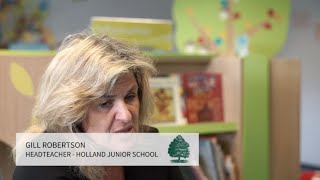
A testimonial-style YouTube interview (uploaded by Rob Langman) in which Headteacher Gill Robertson and another staff member describe Holland Junior School's positive experience using Third Space Learning online one-to-one maths tutoring. They report high pupil engagement, highly individualised lessons (no two pupils on the same lesson), improved confidence and willingness to attempt harder work (example: a pupil attempting long division), narrowing of the pupil premium attainment gap, effective use of Pupil Premium funding, benefits for pupils with ADHD/attention difficulties, and useful reporting for monitoring progress.
Chapters
When I first heard about third space learning, I think what I was sceptical about at the time was firstly, I didn't know whether the children would all be engaged in exactly the same lesson and I was also slightly concerned that do we really want children to be learning from a laptop? I went to a showcase event and watched the children working and was amazed at how engaged they were, but also at the sheer breadth of the lessons that were on offer and they were highly individualised for those children. I didn't see two children on the same lesson at all. So from my point of view, I felt that if something that could be delivered essentially online in a way that children are really used to these days, they're all happy on laptops or iPads or whatever, then what are you actually losing out of that? Nothing. You have your own tutor on the end of the line. The child is totally engaged, they're having a good relationship with them, person, good rapport. There's never a problem with either understanding the other one. And the children are getting their one to one lesson.
I think the magic bullet really is confidence. It's self belief. If they believe they can do it, they can do it. Might take a while, but they'll get there. I really do think confidence is the big thing and being able to talk to somebody one to one. I just wish I could clone myself because if I could be 30 of me, I'd have top set children because that's all they need, they need to talk, whereas in third space they've got somebody who's listening to them. And I think that makes a massive difference, really. And I've seen that certainly. I can think of one little girl in particular that today tried something. She tried long division and she would never have tried something so tricky in a year, five plus. Until she started third space, the gap.
Between our pupil premium children and non pupil premium children was widening rather than narrowing. That's why we brought in Thirdspace learning and it is narrowing and our pupils enjoy it. Me, it's got to be good news and I think a perfect way of spending Pupil Premium funding, that is what it's for. So for us it's been great. We have a number of children with ADHD and similar disorders who find it very hard to concentrate. That laptop, that headset and the voice. Just talking to them all the time enables them just to shut off everything else that seems to be happening and they just go for it. And they are our top performing children in terms of the points that they receive for their focus and attention. The reporting that comes through via email is fantastic, and I find that quite valuable because that enables you to work out, really, whether those children are ready for more of a challenge, perhaps, than they're getting in their classes, or whether actually there's a lot more consolidation still to be done to enable them to meet progress where they are. From a school perspective, if you're able to have 16 children having an individual lesson at the same time, or however many you choose, then surely that's better, and a better way to spend money than having them all taken out one after the other, and they wouldn't have the same value of individualized lessons.