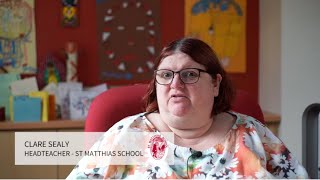
A headteacher (Clare Sealy) gives a first-person testimonial endorsing Third Space Learning’s online maths intervention. She claims it is as effective as one-to-one tutoring but much cheaper, that pupils strongly prefer it and are more engaged, and that it reduces teacher workload through either a hands-on or a minimal (≈5-minute) weekly input option. She describes an initial online assessment, well-trained tutors, algorithm-driven progression, low resource needs (room, devices, supervising TA), and concludes by recommending it as a cost-effective alternative to expensive individual tutors.
Chapters
Before we've had somebody in to work one to one with children and that's worked really well. But it's really expensive and with third space learning's intervention, it's just as effective as having a tutor one to one. But it's so much cheaper, so much cheaper. So therefore you can afford to have more children doing it. The other thing that's really good about third space learning is the reaction of a children when they used to have to work with a tutor. They were fine, they enjoyed doing it, but they weren't mad about it, they didn't love it. When they do third space learning, they love it and they're so enthusiastic about it and they think it's the best thing ever. So what's not to like really? It's cheaper. They do just as well and the children really like it. What's really nice about third space learning is they give the teacher two options. The first option means that the teacher is really hands on each week deciding what each child is going to learn. The second option is much lighter on workload and that's at the beginning of the program. The teacher has to spend about five minutes deciding what each child should focus on. So say place value and fractions or whatever. But then after that, because they do an initial assessment online and because the tutors are good and well trained and because the program has its own algorithms anyway, the progression is worked out without the teacher needing to be involved. So that really cuts down massively on the workload for the teacher and it's really effective as well. The work is pitched at the right level for the child even though the teacher isn't directly involved. When you watch a session, it is really, really interesting to hear all the children having their own individual conversations with their tutor about maths and they spend a lot of time talking to their tutor about the maths and explaining their reasoning and verbalizing what they're doing and explaining an awful lot of time, probably way more than ever. That gets to in class and it's obviously all really individual. There's real buzz and it's really great to watch. In terms of use of our own resources, in terms of personnel, all you really need is a room, some computers, laptops or whatever, and a TA to supervise the children. So it's not intensive in terms of resources, so makes it very easy for us. If somebody else asked me my opinion about it, I'd say, well, what are you doing at the moment? For these children that are struggling and are not where they should be, and generally children that are behind to that extent and need more support, need something quite individualized. And the best way to do that is to use a teacher who can really see where they're at and really hone what they need to the exact level of that child. And that's really expensive. So maybe they've got lots of money, and maybe they have lots of really good tutors that can come in and do that. However, in the real world, that's probably not going to be the case. In the real world, probably they could do this, which is just as good as the tutor, if not better, because the children prefer it, but also cheaper. So why not do that? Get more children done who will enjoy it more, and it's just as effective.