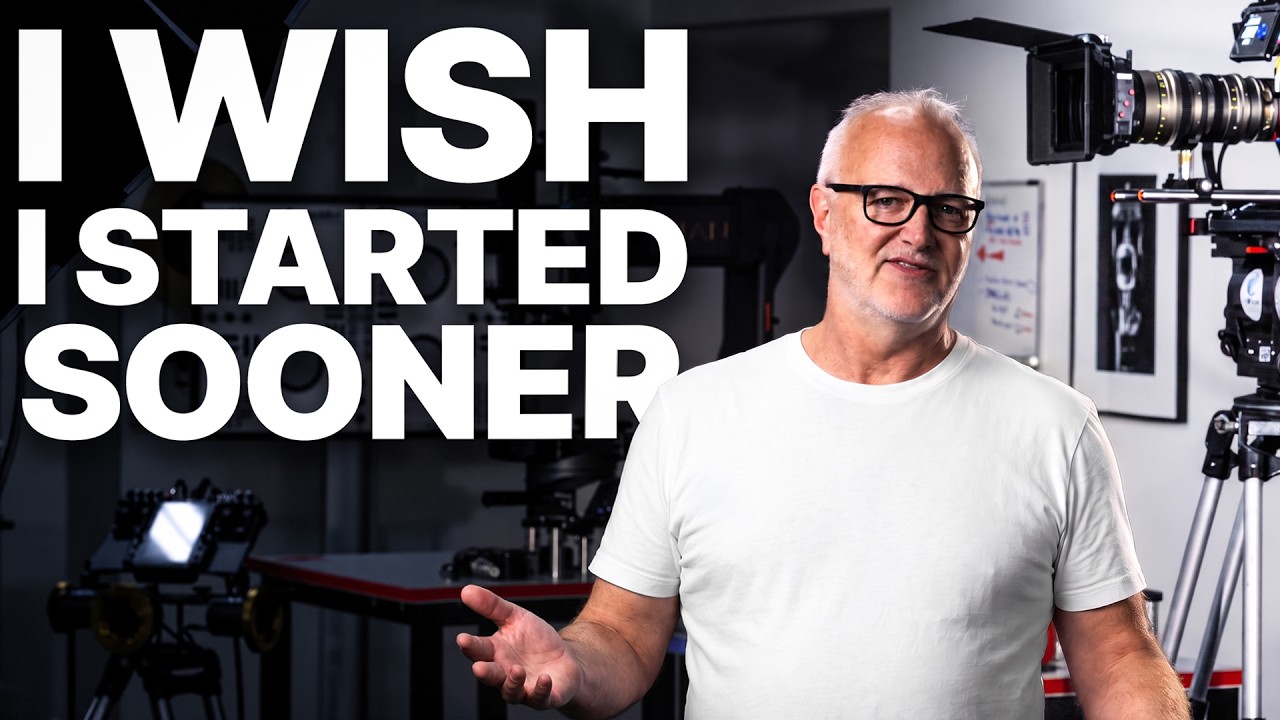
Film Crew Members Who Never Run Out of Work Do This

A producer (Rob Perkins) gives five concrete career strategies for freelance film crew to remain consistently in demand: (1) proactively solve problems on set; (2) build relationships by supporting others; (3) own and quickly fix mistakes; (4) pursue strategic, feedback-driven growth; and (5) combine these habits to become highly sought-after. The video uses short on-set anecdotes (Coca-Cola, Home Depot, Applebee, a top AD named Danielle) to illustrate each principle and closes with a call-to-action linking to a finance-focused follow-up video.
Chapters
After nearly 25 years as a producer hiring thousands of film crew members on everything from Ice T commercials to rock and roll documentaries, I've noticed something fascinating. The most in demand crew aren't always the most skilled. They're the ones who understand what producers actually look for. Imagine, making one critical move and you're booked solid for the next three months. That's exactly what can happen when you use even just one of the techniques I'm about to show you. Today, I'm revealing the five career changing strategies that the most successful crew members use to stay in constant demand. These aren't just tips. They're career cheat codes. The exact things I look for when hiring freelance film crew just like you. In this video, I'll show you the number one behavior that makes producers fight to book you again and again. How to turn one gig into months of consistent bookings. A conversation most crew are afraid to have but shouldn't be. A simple hack that kept one of my crew members booked for eight straight months. I'm on a mission to help 1,000 freelance film crew members gain $1 million in wealth. That's why I created this channel to guide you through. With tools made for our industry and a mindset built to last. Let's take action. Strategy number one. Be the problem solver. On a recent Coca Cola commercial. Something happened that could have derailed the entire shoot. Our wardrobe stylist noticed the craft service cooler was stocked with Aquafina and other Pepsi products. Yes, Pepsi on a Coke commercial. Now, before the client arrived, she quietly helped craft service swap everything out for Coke approved drinks. Crisis averted. Because she saved me from an embarrassing situation with my client. That stylist is now one of my most reliable crew members. I've booked her on like 12 projects since then. Producers don't just want skilled crew members. We want problem solvers. People who spot issues before they become disasters. What most crew members don't realize is that every production has dozens of potential problems that never surface because the best crew members quietly prevent them. Think about it. Every time you prevent an issue, you're saving the production time and money. You see, while technical skills can be taught, this kind of situational awareness is rare. That's why producers keep detailed mental notes of who makes their day smoother versus who just does the minimum. Here's how you can be that person. Before each shoot date, ask yourself, what could go wrong today and how could I prevent it? Look beyond your department. That stylist wasn't responsible for craft service, but she saw a problem and fixed it. When you notice something, handle it quietly. No drama, no looking for credit. But being proactive is just the start. The next strategy is what turns one booking into a steady stream of work. Strategy number two, build relationships through support. Last summer, we were shooting a Home Depot commercial. The electricians were clearly shorthanded, racing to get some gear onto set before the talent landed. They were struggling with a big curtain that they put up to control incoming light. They didn't have time to clip it back properly, so it was creating an obstacle every time they tried to pass through. Just a few feet away, a handful of crew members were talking about their kids, checking their emails, doing non essential stuff. Nothing wrong with that, except they were standing right there while someone on the team was clearly underwater. Any one of them could have jumped in, held it back, making a smooth passageway for them, and instantly stood out. Not just to the electric department, but to me, the producer. But nobody moved, and that was a missed opportunity. Because your moment to shine doesn't always come with a spotlight. How you respond in chaotic moments speaks speaks volumes. The most successful crew members understand this truth. Your reputation isn't built during the perfect moments. It's built during the chaotic ones. The thing to note about film industry relationships is that they compound over time. Every person you help today could be in a position to hire you or recommend you tomorrow. In this industry, people remember the ones who were kind when they didn't have to be. And sometimes that memory turns into a call that changes your career. And there's something else most people miss. The film industry is actually much smaller than you think. Word travels fast about who makes life easier on set and who makes it harder. If you want to be successful in this industry, treat every interaction as an investment in your future. Here's how to build strong relationships on set. Introduce yourself to one new crew person every shoot day. Remember, it's not just the producers. Watching everyone on set can be a referral. One good impression can snowball into more gigs because people love recommending someone reliable and fun to work with. Keep notes in your phone about people, birthdays, hobbies, things you chatted about during the day that you could bring up later. Look for moments to lend a hand, especially during hectic times. Follow up with a crew member or two after wrapping with a quick thank you message. But relationships can crumble in an instant if you don't handle this next situation correctly. Strategy number three, own your mistakes and fix them. I was on a shoot recently and our gaffer, who's normally top notch, forgot to Turn his ringer off. You guessed it. It went off right in the middle of a scene. Cut to everyone's head turning his way. And even the director gave him a look that could melt ice. Safe to say that's a mistake you only make once. Now, most crew members would have either frozen up or worse, started apologizing like crazy. Not this one. Instead, he quickly silenced it, made eye contact with me and the director and simply said, that's on me. Won't happen again. Then he went right back to work. You know what? I hired him again last week because he showed me he. He knows how to handle mistakes professionally. No drama, no excuses. Just ownership and improvement. Everyone makes mistakes, but producers remember how you handle them. What's interesting is how mistake handling correlates with career growth. After producing hundreds of projects, I've noticed that crew members who own their mistakes tend to advance faster than those who don't. Because when you handle mistakes professionally, you show emotional intelligence and leadership potential. It tells producers you can be trusted with more responsibility. And there's another layer to this. Crews are like families. They remember how you made them feel during stressful moments. Your response to mistakes shapes how people feel about working with you long term. Here's how to apply this. When things go wrong, acknowledge it immediately. Take responsibility. Keep it brief and professional. Focus on the solution, not the problem. Just do what is needed to fix the problem your mistake created. Show it through actions that you've learned and that it won't happen again. Now, owning your mistakes is crucial, but what separates the good from the great. It's what they do next. Strategy number four. Seek strategic growth. A few months ago, I was shooting an Applebee spot. During lunch, a brand new PA walked up to me. He was polite and professional and asked how he could get more work. You know how to stand out. I could tell he was serious, so I gave him a simple suggestion. I told him to start asking producers, production managers and coordinators for advice. Not in a pushy way. Just engage. Ask what skills they look for and show them he's eager to learn. He didn't wait. That same day, I watched him start a conversation with the production manager. He asked great questions, paid attention, and showed he was there to grow. What he didn't realize was that the key PA noticed and was very impressed. Before the shoot wrapped, that key PA invited him to jump on another job happening later that week. That's how quickly things can shift. When you show initiative, ask the right questions of the right people, and treat every set like a chance to Build your future. The most successful crew members understand that growth isn't just about technical skills. It's about strategic development. They know when to seek feedback, who to learn from and how to apply that knowledge. After hiring thousands of film crew, I've noticed something mind blowing. The crew that advance fastest are usually the ones who actively seek ways to improve their skill set. They don't wait for feedback, they hunt for it. What's really powerful is how this creates a compound effect. Every time you ask for input, you're not just gaining knowledge. You're building a relationship with someone who can open doors. There's a psychological element at play. When someone gives you feedback, they become invested in your success. They start looking for opportunities to help you grow. That's why, if you want to take this a step further, here's what you do. After asking for feedback, implement what they said and circle back just to share how their suggestions helped you and thank them once again. That's it. Here's how to do this effectively. Start with your department head. Ask what skills they value most. During quiet moments, seek specific feedback about your performance. Follow up to show you've implemented their suggestions. Look for mentors who are where you want to be. Take notes after every conversation about what you've learned. But there's one final level that sets apart the crew members who have so many gigs they have to turn jobs down. Let me show you how to become the person producers fight over strategy Number Be the crew member everyone fights for. Last month, there were three different productions fighting over booking Danielle, one of the top assistant directors in town. The interesting part, five years ago, she was just starting out. But she did something different. From day one, Danielle didn't just focus on being good with schedules. She became known as the person who made every production run smoother. The one who prevented problems before they happened, who built great relationships, who was polite, friendly and a pleasure to be with on set. She constantly grew and helped others grow as well. When one producer friend of mine tried to book her recently and couldn't, he called me. He was very upset. He found out that I booked her first. I told him that Danielle makes everything better and better luck next time.
What most crew members never realize is that becoming highly sought after isn't about any single skill. It's about combining everything we've discussed into a reputation that precedes you. The most in demand crew members have mastered a powerful combination. Technical excellence, emotional intelligence and business awareness. They understand that their real job isn't just doing their craft. It's making the entire production better. What's fascinating is how this creates a snowball effect. When producers fight over booking you, you gain the power to choose your projects, negotiate better rates and create the career you want to become that sought after crew member. Do these look for ways to add value beyond your department. Build a reputation for making everyone's job easier. Develop your unique combination of technical and soft skills. Keep track of how you've helped improve productions. Stay in touch with producers between projects. Now that you know how to consistent work, what do you do with those steady paychecks? Something that I started doing to achieve true wealth allowed me to not only save, but grow my money. Watch this video next and I'll show you exactly how I've gained true wealth, starting with a strategy that has only four fundamental steps that will help you get control of your finances, reduce your money stress, and the one thing that nearly all crew struggle with that keeps you awake the night before a shoot. Thanks for watching. Stay focused, stress less and build wealth. That's a wrap.