How Film Crew are Making BIG Money in 2025
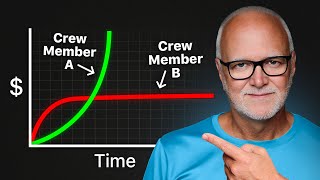
Rob Perkins breaks down a wealth-building system for freelance film crew with irregular income: invest $200 a month from age 25 and you could have $145,000 by 45. Set up a high-yield savings account with 3-6 months of expenses, then move 20% of take-home into a Roth IRA with low-cost index funds. The key is consistency, not timing the market.
Questions this video answers
$200 per month, which he says could grow to nearly $145,000 by age 45 (total contributions $48,000).
Save the first $1,000 in a separate High-Yield Savings account (off-limits except true emergencies).
Shave off 30% for taxes (treat 70% as take-home for allocation purposes).
"$7,000 for those under 50 and $8,000 if you're older" (presented as the target to max out).
At 5% compound interest, $100,000 after 5 years becomes $127,628.16 (interest ≈ $27,628.16).
Chapters
Today, I'm revealing the three part wealth building system that savvy film crew members are using to make serious money in 2025. Even with our crazy irregular income, after hiring thousands of crew members in over 30 states, I've noticed something fascinating. The most financially successful crew aren't necessarily the ones with the highest day rates. They're the ones who make their money work for them. I'm on a mission to help 1,000 freelance film crew members gain $1 million in wealth. And today's framework is just the foundation of that journey. What I'm about to share isn't complicated financial theory. It's a practical, step by step system designed specifically for our industry's feast or famine reality. I created this channel to guide you through with tools made for our industry in a mindset built to last. Let's take action. Part 1 Make your money work while you sleep. The first piece of this puzzle is something that completely changed my perspective on wealth. Making your money work for you through compound interest. Let me explain it this way. As film crew, we get paid when we show up on set. No work, no paycheck. That's the freelance life we all know. But here's what most crew members miss. Your money can keep working for you even when you're not on set. Here's what compound interest means in simple terms. You invest $100. After a year, it earns $10 in interest. Now you have 110. The next year, you earn interest not on just your original 100, but on the full 110. That's that extra $10. It's now earning money too. And every year, it keeps growing, like a snowball rolling downhill. The longer it rolls, the bigger and faster it grows. That's compound interest. And it's the closest thing to an awesome special effect for your money. Let me share something that really opened my eyes to the power of compound interest. Let's say a crew member starts investing just $200 a month at age 25. Nothing fancy, just a simple investment account with steady contributions. No stock picking, no crypto hype, just consistent deposits and letting time do the heavy lifting. By the time they turn 45, that $200 a month could grow to nearly $145,000. Here's the crazy part. They only put in 48,000 of their own money over those 20 years. The rest, nearly $100,000, came from Compound interest growth. And you won't be stuck with just $200 a month forever. As you progress in your career, you'll be able to invest more, way more than $200 a month. And as that happens, compound interest will work its magic, turning your money into truly powerful wealth. Maybe 150,000, maybe 250, maybe $1 million. And hey, if you're like me and started a little later in the game, don't sweat it. You can absolutely catch up. It's all about shifting the money you've already saved sitting idle in a traditional bank account into a system where that cash can start working for you. That's the power of letting your money work while you're busy working on set. You see, most crew members think about money all wrong. We focus so much on earning more. The next job, the higher day rate, how much can we get for our kit? But we completely ignore what our money does after we earn it. If your money isn't growing while you sleep, you're missing out on one of the most powerful wealth building tools available. And the earlier you start, the more dramatic the results. The challenge for us as film crew is our unpredictable income. And how do you consistently make your money work for you when your paychecks are all over the place? Here's what I suggest. First, calculate your average monthly income over the last six months. Then plan to transfer 20% of your take home pay based on that number. But if that's too much now, transfer anything on a regular basis, even if it's just 5% to start. Finally, let that money grow untouched in the right places. Here's what's crucial. This system works even when you're between projects while others are scrambling for any job they can find. Your money is making money 24, 7, weekends and holidays included. So where exactly should you put this money to start benefiting from compound interest right away? Let me show you the first tool most crew members are missing out on. Part two, High yield savings. Your first wealth builder. The second piece of our wealth system is setting up a High Yield Savings account. Your first practical tool to make compound interest work for you. A while back, I checked the interest on my bank of America account just out of curiosity. And I had six figures plus in there. And after a whole year, the bank rewarded me with tens of dollars. Getting any money for doing nothing. Sounds kind of cool, right? Until you realize you could make more money recycling plastic bottles. That's when it hit me. The bank was using my money, lending it out, earning interest, and all I got was lunch money. So I started digging and found better places to put my money that actually paid real interest. We're talking 400 to 500 times more than traditional banks. That same amount at 5%. That's thousands and thousands that year still for doing nothing. But this time with real money. How many days do you need to be on set to earn $5,000, 10,000 or $20,000? Here's where it gets even better. For example, let's use $100,000. If that money is left alone for five years with compound interest, it turns into $127,628.16. That's an extra $27,628.16 just for being smart. Where you put your money. Then after 10 years, you might think that $27,000 would double to 54, right? No. $100,000 for 10 years at 5% interest yields over $62,000 in interest. Well, more than double now. Imagine the possibilities keeping it in even longer. Take all the time you need. That's when I closed my bank of America account and never looked back. Think of a regular savings account like a crew member who shows up, clocks in and just stands around. Technically, they're on the job, but they're not doing much. Your money's parked there, but it's barely earning anything. Maybe 0.01% interest. A high Yield Savings Account. Think of it like upgrading from 1080p to $8k. With a simple upgrade, same footage, dramatically better results. Or finding a PA who does the work of four or five people without complaining. It earns 400 to 500 times more interest than a traditional bank account. Here's why. A High Yield savings account is crucial to people like you and me. If you remember, in a previous video, I shared a story about my location scout whose car broke down. It's worth revisiting here because it perfectly shows why a High Yield savings account is so crucial. I watched one of my favorite location scouts hit a financial crisis when her car broke down at the start of a big project. No car meant no way to get out. And Scout no scouting meant no income. And with no safety net, a simple car repair spiraled into rental car bills, increased credit card debt and three months of financial stress. Fast forward a year. She had built up a solid emergency fund in a High Yield Savings account when her car broke down again. It was just an inconvenience, not a catastrophe. She got it fixed right away, kept working and never missed a shot. That's the peace of mind. A High Yield savings account gives you the ability to handle the unexpected without derailing your career or your finances. Let me walk you through three simple steps to create Your own financial safety cushion. First, start with what I call your quick response fund. This is your immediate financial first aid. Open a separate High Yield savings account specifically for this purpose. Don't mix it with your everyday checking. Keep it separate. Then focus on saving your first $1,000. I call this your quick response because it's enough to handle those sudden emergencies that pop up in life. New tires, a plumbing repair, or an unexpected trip to the.
Make this account completely off limits unless it's a genuine emergency. Not for new gear, not for a night out. Only for those true oh shit moments. Second, once you've got that $1,000 cushion, it's time to build your full safety net. This is going to give you real peace of mind during those inevitable slow periods. Start by calculating your essential monthly expenses. That means your rent, utilities, groceries, transportation, any minimum credit card payments. Just the must haves to keep you going. Take that number and multiply it by three. That's your initial target. So if your essential monthly expenses are $3,000, you're aiming for $9,000 in your safety net. Eventually you'll want to build this up to cover six full months of expenses. That's when you'll feel that incredible freedom to turn down toxic projects or weather, even the longest dry spells. Third, and this is crucial, you'll need to fund this account consistently. The key word is consistently. Transfer 20% of your take home pay each paycheck directly into your high Yield savings account. Now I say take home pay because we can get paid in at least two different payroll and invoice. Payroll is easy. You can take 20% of that amount out of the check. Since taxes have been taken out, that money is yours to keep getting paid on. Invoice though has a catch. You receive a gross amount and you are responsible for your own taxes. Most of us have been there. You do more invoice jobs than you realized and when April comes you end up owing money that you don't have. This is why I shave off 30% for taxes and keep that aside. And that 70% can be considered your take home pay. Some say 20%. Everyone's tax situation is different, but I play it safe and when I can afford it, I put 30% aside. I prefer to be over prepared come tax time rather than underprepared. By the way, if you'd like to see a full video about how to manage taxes from a freelance film crew with irregular income perspective, let me know in the comments. And if you and others are into it, I can make that happen. Make these Transfers before you have a chance to spend it as soon as that money comes in. And when unexpected money comes your way, maybe a tax return, a bonus, or some sort of cash gift, put at least 50% of it straight into this account. It's money you weren't counting on anyway, so let's use it to fast track your safety net. And here's a tip that saved me from a lot of headaches. Don't waste time chasing slightly better interest rates between different banks. Pick a reputable high yield savings account with good reviews and stick with it. The consistency is more valuable than jumping ship for an extra 0.1%. At this point you might be thinking, this sounds great, Rob, but I've heard every excuse in the book from crew members who resist making this simple change. Let's address the biggest ones right now. But I've had the same bank forever, so I like having everything in one place. Oh, that's cute. But it doesn't work. I don't trust online banks. Really? Why not? 4% doesn't sound like a lot. Oh, well, it is. Even at their lowest, they are still a hedge against inflation. That takes away 2 to 3% of your spending power each year. If you do nothing. Here's the truth. These crew objections cost film members thousands in lost interest every year. Don't let nostalgia or familiarity cost you your financial freedom. Now here's what separates the crew members who retire comfortably from those who work well into their 70s. Once you have control over your emergency fund and and you have your quick response fund set, you are ready for the next step. While your safety net protects you from disasters, this next strategy is what actually builds Serious wealth. Part 3 Investing your wealth accelerator. The third piece of our system is where the real wealth building happens. Strategic investing. Let's talk about why investing matters, especially in our unpredictable line of work. Imagine you've been grinding on set for months, working 12 hour days, crushing every shooting, but never turning in a time card or an invoice. You do the work, but the money never lands in your account. That's what not investing is like. You're putting in all the effort, but your money isn't doing anything for you. Now picture this. Every time you wrap a job, you send out the invoice or you fill out the time card and a few days later that payment hits your account automatically. That's what investing does. It works behind the scenes, while you're sleeping, when you're on set, even when you're between gigs. When you invest, you're not just trading Time for money. You're building something bigger in the background. That's how true wealth starts to grow. I've got a crew buddy I've known for 20 years. We've worked together, recommended each other, watched each other climb the ranks. But in all those years, we never once talked about investing. Recently, we were catching up and I mentioned that I've been digging deep into personal finance from a film crew perspective. That's when he casually drops, oh, yeah, I'm retiring soon. I'm like, wait, what? Retiring? You? He says, yeah, I've been investing regularly since I was 20. I'm all set. 20 years old. I didn't ask for his net worth, but I've known this guy forever. And the clues were there. No stress about work, no panic during slow seasons. A certain kind of calm that only comes from knowing your money is working for you. I did some rough math in my head, and I'm pretty sure it's millions. And the wildest part? He didn't do anything flashy. No crypto windfall, no startup exit. He just kept showing up to set, doing solid work and putting part of his paycheck aside month after month, year after year. Here's why I'm telling you this. A lot of people think that investing is for other people, people who make more. People who had parents that teach them this stuff. But this is proof. You don't have to be rich to get rich. You just have to start. And the earlier you start, the better. Even with our irregular income, you. Here's how to start investing the right way. First, prioritize opening up a Roth ira. This is absolutely perfect for freelancers like us, because you don't need an employer to set it up. Unlike those fancy 401ks that staff positions get, we can do this completely on our own. What makes a Roth IRA so powerful is that your money grows completely tax free. That means all those earnings, all that compound interest we talked about, you won't pay a single penny in taxes. We when you take it out in retirement, it's like getting paid your full day rate with no taxes taken out. Your goal should be to max it out each year, if possible. For 20, 25. That's $7,000 for those under 50 and $8,000 if you're older. Now, that might sound like a lot, but broken down, it's less than $600 per month. And if that's too much right now, start with whatever you can. Even $100 a month makes a huge difference over time. Second, keep your investment strategy simple. Trust me on this one. I've seen people get pulled into all kinds of complicated schemes and trendy investments. Start with low cost index funds or ETFs that track the total market, or the S&P 500, which is the top 500 companies in the U.S. it's averaged a 10% annual return for over 65 years. That's average. It's been higher, it's been lower, but over time has always trended up. Think of these like hiring an experienced crew that handles everything smoothly without drama. These funds automatically invest you into hundreds or thousands of companies at once, so you're instantly diversified. In case you're wondering what the heck The S&P 500 is, or the difference between a dividend fund or a growth fund. Or if you need a financial advisor for all of this, spoiler alert. You probably don't. Stay tuned. We'll talk about that in a future video. Avoid the temptation to pick individual stocks or chase whatever's trending. I know it's tempting when you hear on set someone talking about how much they made on some hot stock tips. But remember, for every success story, there are 10 disasters nobody's talking about. Remember, boring investments often build the most wealth. The flashy ones make for good stories, but the steady ones make for good retirement. Third, be consistent. Always be transferring money from your checking account to your investment account. This way, whether you're on a huge commercial shoot or taking a much needed break, you are investing on a regular basis. Start with 10% of your average monthly income. Wait, where do I get this 10%? You're wondering. It's easy. Now that your quick response fund is saved, you can take that 20% and convert it into 10% for savings and 10% for investing. If your average monthly income is $5,000, then that's $500 going straight to investments each month. If you can do more, fantastic. If you need to start with less, that's fine too. Remember what I said. Just start. Ignore the market ups and downs and stay consistent. And most importantly, ignore the market news they are just trying to get. Clicks and fear is the best way to get your attention. The market will go up and down like a dolly on a bumpy track, but over time, the trend is up. Don't panic when it dips. That's just part of the journey. Following these three steps will put you miles ahead of most crew members I've worked with over the last nearly 25 years. While they're still out trying to figure out if they should invest at all, you'll be quietly building wealth in the background. But even the most solid investment strategy can be derailed by a few critical mistakes. Here are the pitfalls I've seen trip up even the smartest people. One mistake is starting too late. Every five years you wait cuts your potential retirement money by 30%. Ten years cuts it in half. Another is selling when the market is down. This is when everything is on sale. And the worst time to sell and leave the market next is following hype instead of proven strategies. Look, if everyone's talking about it, you're probably too late anyway. Now that you understand the three parts of the system, you might be wondering, how does this all fit together? Especially with our unpredictable income. Here's the complete system. First, you'll need four specific accounts to make this work. Think of them like your essential film equipment. Each one has a distinct purpose. Start with a regular checking account. You probably already have this. It's for your day to day expenses. This is where your paychecks go. First, it's like your basecamp. Second, open a High Yield savings account. This becomes your emergency fund, your financial safety net when jobs slow down or unexpected expenses hit. Remember, this account earns you significantly more interest than a traditional savings account. Then third, set up that Roth IRA for tax advantaged retirement investing. This is huge for freelancers like us because we don't have company retirement plans. With a Roth ira, your money grows tax free. Meaning all the earnings you make over decades are completely yours to keep. No taxes on the growth. That's like getting paid your full day rate with no taxes taken out. Then there's account number four. Open a regular investment account for additional investing beyond your Roth ira. This gives you flexibility to invest more when you're having a great year without the restrictions of retirement accounts. Now for the second step. For each paycheck you receive, you'll follow what I call the 50 50, 30, 20 rule. Take 50% of your paycheck and direct it to your essentials account. This covers rent, food, your maintenance, transportation, all the non negotiable expenses that keep you working and living. Next, 30% goes into your Freedom account. This is my favorite. It's your guilt free spending money for dinners out, entertainment, new gadgets, Amazon purchases, whatever brings you joy. And here's the key. No guilt. This money is specifically set aside for you to enjoy. The remaining 20% go straight into wealth building. This is where the magic happens. Split this between your high yield savings and investments. At first, focus more on building up that emergency fund in your High Yield savings account. Once that's solid, shift towards investing more heavily. Our industry is unique. We all know the cycle of feast and famine. So the third step is making sure your system adjusts with the feast and famine nature of our income. During busy periods when the jobs are coming in nonstop, increase your savings and investing percentage. Instead of the standard 20%, bump it up to 25 or even 30% if you can. These are the times to really accelerate your wealth building during slow periods. And we all have them. Maintain your minimum investments. This is exactly what your emergency fund is designed for. Keep your essential expenses covered. Pull back on your freedom spending if needed. But try to keep some money flowing towards your wealth building. Even small amounts add up through compound interest and time. Every six months, take a step back and reassess your percentages based on your current average income. As your career grows, your income will likely increase. Make sure your wealth building increases with it. Step number four is where patience and consistency pay off. Your financial journey will unfold in phases in years one and two. Focus primarily on building your emergency fund. Aim for that full six months of expenses. This gives you incredible peace of mind and the power to say no to toxic projects. In years three through five, shift your focus to maxing out your retirement accounts. Your target is that year's contribution maximum. Just Google Roth IRA the year and maximum contributions. This money will have decades to grow tax free. From year five onward, accelerate your wealth building with additional investments in your regular investment account. This is where you can really start to build serious wealth beyond just retirement savings. The beauty of the system is that it creates consistency out of our inconsistent income. Instead of stressing about the next project, you're building wealth. Even when you're not on set, your money starts working as hard as you do, creating a foundation for real true wealth. Look, I wish someone had shown me this 20 years ago. I would have saved myself countless sleepless nights and built substantially more wealth by now. The biggest myths I had to overcome were that investing is gambling and that retirement is impossible for freelancers. But both are completely false. This system works specifically for Film crew because it's built to handle our irregular income patterns. It gives you both security during slow times and the freedom to turn down toxic projects. Now that you know how to make your money work for you, the next step is making sure that you have a steady stream of projects coming in. Watch My next video 5 easy ways for Film Crew to Get Nonstop Work. Next, where I'll show you exactly how to keep those paychecks coming in consistently. Remember, I'm on a mission to help 1,000 freelance film crew members gain $1 million in wealth. And I'd love for you to be one of them. Thanks for watching. Stay focused, stress less, and build wealth. That's a wrap. Hey, thanks for staying till the end. Just a quick reminder. What I share here is for education and entertainment. I'm not a financial advisor. The best way to learn and succeed is to always do your own research. And, hey, you're in a great place already because you're taking action.