This content was created by Rob Perkins. This content was uploaded by Rob Perkins. This is a YouTube video titled "I Made $300,000 in Film. These Mistakes Cost Me Thousands" (created August 8, 2026). It is a first-person monologue by Rob Perkins recounting financial mistakes he made during a 25+ year film career—keeping $300K in a near-zero savings account, mistaking saving for a financial plan, fearing investing as gambling until learning about the S&P 500, spending ~$120K on a leased Mercedes to appear successful, and receiving checks without a spending plan. He explains the budgeting system he now uses (a checking "base camp," setting aside ~30% for taxes, then allocating the net roughly 50% expenses / 30% “freedom” spending / 20% investing, building a 6-month emergency fund, and regularly investing), and emphasizes the lost confidence and opportunity cost of delaying investing. The excerpt reads as practical personal-finance advice and a lead-in to a follow-up video about getting started with investing.
Chapters
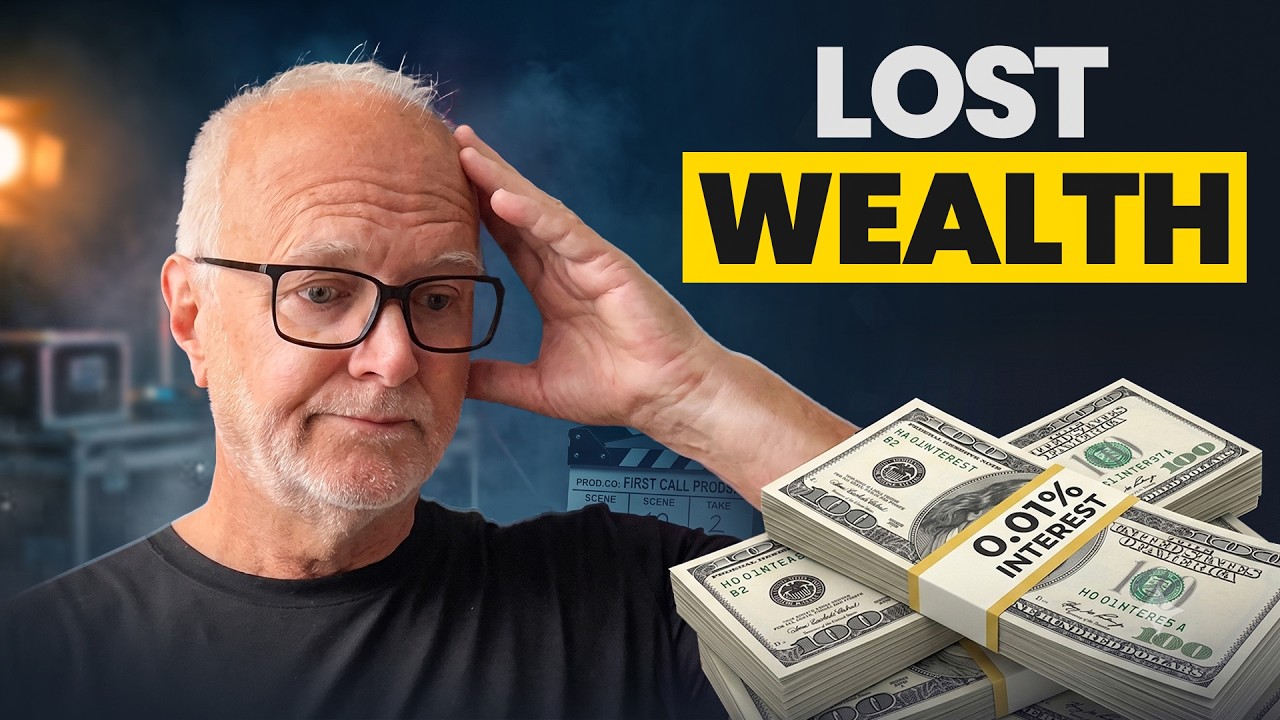
I had $300,000 in the bank and I still did not understand money. For almost 10 years, I had that money sitting in a regular savings account earning me about $30 a year. At the same time, I spent $120,000 driving a Mercedes because I thought it would make me look successful. I was good at making money. I just had no idea how to make it work for me. I knew how to earn money in film. I even knew how to save it. I just didn't know how to give it a job. I've spent more than 25 years in production, first as crew, and then as a producer, and I made every single one of these mistakes. And the first mistake looked completely responsible. Mistake 1: I confused savings with having a plan. About 13 years ago, I managed to save $300,000, and I was proud of that, and I should have been. Saving that much money while working in freelance took a lot of discipline, but there was a problem. Almost all of it was sitting in a regular savings account earning about 0.01% interest. That worked out to be roughly $30 a year. $30 on $300,000. And I left it there for almost 10 years. At the time, I thought I was being responsible. I was protecting the money. I was not blowing it. I was not taking risks. And every time I looked at that balance, I felt safe. But I had confused having money in the bank with having a financial plan, because That money had no real job. Some of it should have been available for emergencies. Some of it should have been earning better interest somewhere else, and some of it should be invested for my future. Instead, almost all of it was sitting in one place doing practically nothing. And when I finally understood that, it was embarrassing. I thought I was doing one of the smartest things I'd ever done. The mistake was thinking that saving was the finish line. It was only the first step. But the bank account was not the real reason I waited so long. The real reason was that I completely misunderstood investing. Mistake 2: I thought investing was gambling. For most of my life, I understood one way to make money. You work, you get paid by the hour, by the job, or by the day, by the project. That made sense to me. What did not make sense to me was my money making more money without me working for every dollar. That felt suspicious. I thought successful investors were either lucky or they spent their entire life studying the companies, trying to figure out which one would become the next big winner. And film work already felt risky enough. I did not want to take the money that I worked so hard to save and gamble with it. So I did what a lot of people do when they don't understand something— nothing. I left the money where it was and I told myself it was the safe choice. But eventually I started learning about the S&P 500 and that changed the way I looked at investing. Because I realized I did not have to have everything on one company. An S&P 500 fund allowed me to own small pieces of hundreds of large companies across many different industries all at once. If one company struggled, it was only one company inside a much larger group. And when I looked at the long-term history, I saw bad years, crashes, and some pretty scary stretches, but I also saw that patient investors had been rewarded over time. That was the first time investing stopped looking like gambling to me. It started looking like a system. So the first thing I did was move the full $300K out of the regular savings account and into a high-yield savings account. I did not invest it immediately. I wanted to understand what I was doing first. After a few months, I moved $100,000 over to the investments. Then I started investing every week, and I have continued ever since. And I still remember how that first investment felt. I felt like an adult, even though I had already been an adult. For a couple of decades. Because for the first time, I was not only working for money, I was finally giving some of it a chance to work for me. But here's the part that makes no sense looking back. I was terrified to invest my money, but I had no problem spending enormous amounts of it on something I could drive. Mistake 3: I spent $120,000 trying to look successful. I leased a Mercedes S500. The payment was $1,200 a month, and that was before insurance, registration, mileage limits, and everything else that came with it. Over 6 years, that car cost me around $120K. And at the time I told myself I could afford it. I was working a lot. I had money in the bank and I thought the car said something about me. I thought the crew would be impressed. I thought the people that hired me would be impressed. I thought girls would notice. And honestly, they did. People like the car. I like the car. Some people also thought it was a ridiculous waste of money. And looking back, they weren't wrong because my life did not improve in proportion to what the car cost me. It did not make me a better producer. It did not bring me enough work to justify the expense. And it didn't make me feel more secure. And once I stepped out of it, I was still the same person with the same financial blind spots. And I'm not saying nobody should ever buy a nice car. That's not the lesson. The lesson is that I spent 6 figures trying to create the appearance of success before I understood what real financial confidence felt like. The car got attention, but it did not give me freedom. It did not reduce my stress, and it did not prepare me for retirement. That $120,000 could have done a lot for my future than it ever did sitting in the parking lot. But the car was not the only reason money kept disappearing. The bigger problem was that every new check arrived without a plan. Mistake 4: Every check arrived without a plan. I could get a $15,000 check from a shoot and still feel broke a few weeks later. Because I had $15K worth of expenses? Nah. But because I was already behind. Maybe $5,000 behind. So the check would hit, and at first I would pay the overdraft, then buy some new clothes, or then something for my apartment, because I'd been working so hard and I felt like I had the money to do it. And before long, it felt like the check had never arrived. I was not carrying a credit card balance. I paid it off, and I actually had an 850 credit score. The problem was not debt. The problem was that I was using today's check to pay for decisions I had already made. Every dollar arrived without instructions, so the loudest expense or the thing that wanted the most attention in the moment usually won. And freelance income makes it even easier to do because when you're busy, the checks can feel like they're coming and they're coming forever. Then when the work slows down and suddenly you are trying to support a busy season lifestyle with slow season income— I thought I needed to make more money, but I was already making good money. What I really needed was a system for the money I was already earning. And that's what changed everything. It wasn't a big job, a raise, or a lucky investment. I finally gave every check a plan before I gave myself a chance to spend it. The system I use now. If you've ever felt like your money was managing you instead of the other way around, this is for you. Today, every production check starts in one place: my checking account. I call it my base camp. That's where the money lands before I send it anywhere else. The first thing I do is I move 30% aside for taxes because that money was never really mine to begin with. Then I take what is left, the real net number, and divide it using my version of the 50/30/20 rule. 50% goes towards expenses, 30% goes towards freedom spending, and 20% goes towards investing and savings. I call it freedom spending because I still want to enjoy the money that I work hard for. I'm not trying to create a system that's so restrictive that I stop following it. The point is not how much money I can spend without stealing from taxes or savings or my future. Then once I have 6 months of expenses saved, I stopped adding that extra 10% and moved it to investing. So now 20% of the net amount goes towards investing. And the exact percentages are not really the point. Your numbers may be different. Your expenses may be higher, your income may be lower. You may need to build your emergency fund faster. The important part is that every dollar gets instructions before I start spending it. Because now when a check arrives, it's not repairing the past. Some of it covers today, some of it covers my freedom, and some of it is building the future that does not depend on me working every day for every dollar. And that's when I finally understood something. The biggest cost of waiting was not only the money that I missed, it was the confidence that I could have had years earlier. The real cost of waiting. Had I started investing 10 or 20 years earlier, yes, I would have had more money today, Actually, a lot more. But that is not the part I think about the most. What I think about are the decisions I could have made differently. A few years earlier, I was offered $17,500 to produce a job with someone that I already knew would make the experience miserable. Earlier in my career, I probably would have taken that job, not because I wanted to, but because I would have felt that I had to. This time, I looked at my bank account and my finances told me that I could say No, that was the kind of success that I'd actually been looking for. Not a car that made people look at me differently. It was the ability to make a decision without fear making it for me. And that is what I missed by waiting. Most people understand they should invest. They just don't know where to start without feeling like it's gambling. And that's what this next video is about. I'll show you the simple way I finally made sense of it.