How To Become A Elite Business Manager Trusted By Celebrities & The Wealthy | With Reggie Gooden
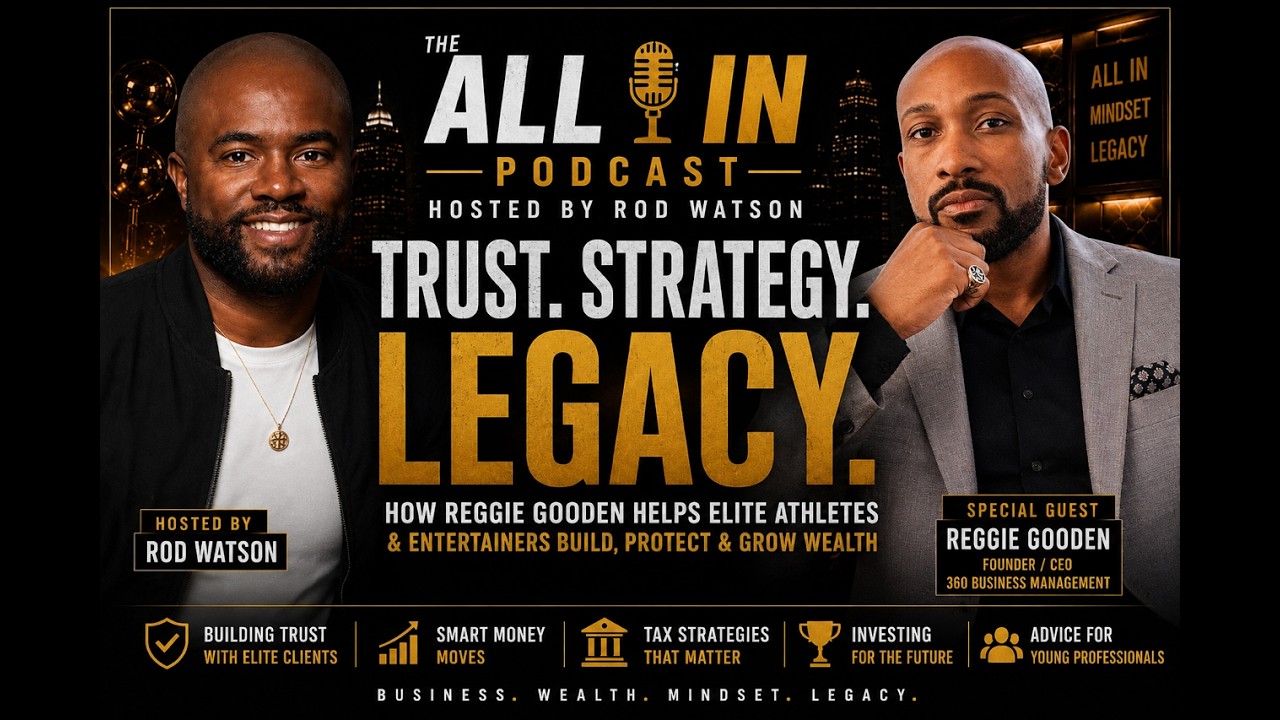
In this episode of the All In Podcast, host Rod Watson interviews Reggie Gooden, founder and CEO of 360 Business Management. Reggie shares his personal journey from growing up in Baltimore, studying accounting at NC State, and working as a music producer and acupuncturist, to discovering a passion for serving entertainers and athletes. He explains how a conversation with his then‑girlfriend sparked the idea of becoming a business manager, leading him to work at a large bicoastal firm, then a boutique practice, before co‑founding 360 Business Management. Reggie describes the firm’s expansion across film, TV, music, sports, and real‑estate clients, emphasizing the importance of stewardship, compounding effort, and trust. He offers concrete advice for aspiring business managers—credentialing, service‑first mindset, networking, and relentless daily commitment. The conversation turns to wealth‑preservation tactics for high‑net‑worth clients, including tax planning, the need to set aside half of lump‑sum earnings, cautious stance on crypto, and the enduring value of real‑estate and retirement accounts. Reggie outlines red flags when hiring advisors—lack of transparency, inconsistent answers, and refusing to share financial information—and stresses the necessity of legal review of contracts. The interview closes with reflections on legacy, the “all‑in” mentality, and personal mantras about perseverance and compounding success.
Chapters
Who is Reggie Gooden?
Well, I am from the East Coast. I'm from Baltimore, Maryland. Go Ravens. Here's the thing. I always had a love from a distance from LA, but I never thought that I would be living in Los Angeles. There I was a music producer. I was a hip-hop artist. But, you know, through working through that process, I also— because it was a collective of guys from the East Coast, I always thought of myself as the producer, kind of business person of our whole group. So I took my time and learned about the business even way back then. And for some reason, that just stuck with me. I was always interested in the entertainment business. And not only music, but music's always been my love. So, you know, fast forward decades later, here I am still working in the industry. I really knew that, okay, I might be doing a little something here is the first time that I was included in Variety, Billboard, and Hollywood Reporter magazine. I realized, okay, I am nationally recognized as a leader in this space, and I don't take that lightly. People Think that you wake up one day and you just have this company with these employees and you have all these great clients and you're in these magazines and it's great. Let me tell you, every day you got to wake up and commit yourself to the mission, right? Thank you for being one of those people in my personal and professional circle that no business manager can be an effective business manager without having a network of people that they trust.
Absolutely.
Not that people that can get the job done, but people they trust. I've been fortunate enough to meet you. and a handful of guys like you that I've been able to connect with, do business with, and hang out with. Yeah. What's up, man?
What's up, man?
How you been?
Good to see you. Tune in, man. Yep, of course. Reggie Gooden, founder and CEO of 360 Business Management. Welcome to the All In Podcast.
Thank you, my friend. It's been a long time in the making. I'm glad I could finally be here with you.
Yeah, man. You know, we've been talking about You know, collaborating and, you know, this opportunity has finally come to fruition. So I'm glad, you know, to actually have you on and really dive into who you are, who is Reggie. And I, you know, for our listeners and viewers today, you guys are going to get a great episode packed with nuggets. So, you know, before we actually dive in, you know, this episode, we're really going to be talking about how you've actually built your career, how you've built trust with your clients, how you've also been able to advise and help your clients protect their wealth, right?
Mm-hmm.
various tax strategies, accounting, and also basically maintaining and growing their finances.
Absolutely.
So before we, you know, we dive into that, you know, I want to talk to you a little bit about who is Reggie Gooden. You know, where'd you grow up?
Yeah.
You know, what was your lifestyle? What was your life like growing up as a kid?
You know? Yeah. Well, I am from the East Coast. I'm from Baltimore, Maryland. Go Ravens. Uh, and I never— here's the thing. I always had a love from a distance from LA, but I never thought that I would be living in Los Angeles. So, you know, I was fortunate enough to make my way here in 2018. But, you know, I grew up in Baltimore. I went to school at NC State. Also go Wolfpack. You know, I had great years there. Played a little bit of sports, but mostly fell in love with music there. I was a music producer. I was a hip-hop artist. I will not say my rapper name so no one can go and find that. Come on, man, you gotta say it. buried somewhere on the internet, never to be found again. But, you know, through working through that process, I also, 'cause it was a collective of guys from the East Coast, and I always thought of myself as the producer kind of business person of our whole group. So I took my time and learned about the business even way back then.
Yeah.
And for some reason that just stuck with me. So even though, you know, I got a degree in accounting and finance, I was always interested in the entertainment business and not only music, but music's always been my love. So, you know, fast forward, Decades later, here I am still working in the industry.
Now I got a question for you. You know, you grew up on the East Coast, you know, Baltimore.
Yeah.
Ravens fan, right? Yep.
Yep.
And then you went down to North Carolina State. What was that experience like actually going to an ACC school? 'Cause you know, you were in a conference that was highly competitive with Duke, North Carolina, Wake Forest, Clemson.
In football.
Virginia Tech.
Florida State. Yeah.
From Charlie Ward.
Yeah, they were just kicking butt all over the place. So, you know, it's interesting and I appreciate that being the first question Because a lot of things that people don't appreciate about the journey is here I am in Baltimore raised by, you know, single mother. My father died when I was younger. She was a teacher and she worked in the Baltimore City Public Schools. Not to say anything wrong with the Baltimore City Public Schools, but, you know, she experienced things firsthand that she did not want me to see. So she put me in a private school.
Yeah.
Which was the best decision that my mother ever made. Very hardworking woman. So having grown up and went to school in private education until going to NC State, it set me up for success when I got down to North Carolina. You know, academics were always my strong suit, and that really shone through more when I was in North Carolina. But the culture difference was definitely, it was extreme, right? I experienced things in the South that we didn't see in Baltimore for sure. Yeah.
Yeah, you know, for me growing up in the South too, I have some memories and, you know, um, some of them are good, some of them are, you know, not so good. But, you know, it's interesting to hear your transition going from a private school because I went from— went to public school and I only had one private school experience. And I think that was like around the 4th grade for me, 3rd or 4th grade. My mom put me in Houston Preparatory, which was a private school, all-Black private school in Houston. That was a really great experience. But then— Unfortunately, I ended up going back to public school. Yeah. Which I really enjoyed the private school at first. So going from a private school education and then directly into basically a secular, you know, environment at the college level at North Carolina State. Let's talk about how did that shape your mind frame and to set you up to be the man you are today?
Yeah. I will say this. I was fortunate enough from the very beginning, especially in a private school environment, to have diversity in school. I would say that in my middle and high school, if not 60/40 Black/white, it was very close.
Yeah.
And that was very, very fortunate for me because I got to experience all different cultures, right? And it really set home for me that underneath our skin, no matter what color, we're just people trying to get from point A to point B. Some of us are good, some bad, some of us are indifferent. When I got to the South, there's a cultural difference, whether Black or white, then obviously underneath that are the racial differences. But the biggest thing I experienced, the positives were they were very warm and very, very welcoming. It felt like you were walking into a family reunion.
Yeah.
Yeah, with a lot of people I met. The downside obviously is there's a segregated element that I did not experience in the North where a lot of Black people and people of color kind of stick together. A lot of whites stuck together and there wasn't a lot of interaction. Yeah, a lot of segregation. Definitely true, a lot of segregation.
Yeah, and that was very prevalent during the times we were growing up. I mean, I'll be 50 this year. Me too.
Well, I'll be 49. Yeah, we both— Yeah, right behind you, brother. Right behind you.
That was something I do remember is like you didn't go across the tracks and there was a certain type of lifestyle over here. So yeah, those things can have a profound shape, but I think also at the same time too, you can learn a lot from those experiences. And talking about your growth, let's pivot and talk about the transition, betting on yourself, right? I think for a lot of people who think about, you know, maybe switching careers or going in a different direction from where they currently start out, and sometimes people can be hesitant about that or have concerns. You weren't always, you didn't start out as a business manager, right?
No.
10 years ago, I saw you made a post where you were actually in acupuncture and running an accounting firm, right? Or working in the accounting space. So what changed? What happened?
Yeah, and I tell people this all the time. I don't think of it more of switching careers, but switching ways of how I serve people, right? I look back at it, and 10 years ago, uh, I was still an acupuncturist. That was a deviation. Like I said, I graduated from school with a degree in accounting and finance. My best friend, his father started an accounting firm when we were both in high school, well, actually both in middle school. And we worked for him during high school. So when I graduated school, I worked for him for maybe 5, 10 years.
Yeah.
And I decided I'd always been into martial arts as a kid and, you know, and Eastern philosophy in ways. So I decided to go back to school and become an acupuncturist. And I found that, you know, being an acupuncturist, it gave me a way to interact with people and not only just treat them as symptoms, but really be able to help them in ways that other people might not be able to. And that experience led me to interacting with all of my classmates and acupuncturists that were in my local community. And not a lot of people understood accounting and finance.
Yeah.
So I was able to help them set up their company, set up bookkeeping, advise them on taxes. And it was really being able to blend those worlds. So, you know, it was— it's more of a natural transition when I got here to become a business manager because I was already being able to serve people in the way that I felt like was— I was destined to do the whole time.
Now, when you made that transition into being a business manager, what was the mindset? You know, what, what gave you the confidence to believe like, I can do this after having this experience that you just shared of being in acupuncture and also having some experience from accounting and kind of picking up some of that, I would say maybe the foundational principles for working with your dad?
Yeah.
Yeah.
So I think Actually, I know my wife, then girlfriend, who was an LA native and I was in Baltimore, different story for a different day. We were talking one night and she says to me, what do you wanna do when you move to LA?
Hmm.
And I said, I wanna do what I'm doing here in a way, except for I wanna be able to help entertainers and athletes. And she being born and raised here, she said, I think that's called business management. So I literally Googled it and I saw there was a whole world of people providing accounting and finance and concierge services for people in the entertainment field and that it was a thing. And that light bulb went off and I knew that I could do it. I just didn't know the details. But I'm someone who likes rolling up my sleeves and digging in and figure it out.
Yeah. Yeah, I definitely understand that. Like, really, you know, figuring out, all right, what's that next move, right? When you're, when you're making a big decision. I think about when we made this move coming from Texas as a Californian, it's like you, I wanted to focus on working with athletes, entertainers. In my mind, I was like, how am I going to do this? But I think it's just about thinking small steps, breaking it down into pieces, like what's the next move? And the next move was like, get here and set up, right?
Right.
Establish it and get to work. So let's talk about 360 Business Management. You know, now you've got the mindset of, hey, I'm gonna do this.
Yeah.
What was the process of actually starting the company? What did that look like? You know, and did you start out by yourself? Did you have partners? Can you, can you kind of go into that? I can.
And before I jump into that, congratulations. I think it's 20 years in real estate for you.
Yes, sir. Yes, sir. Appreciate you.
Congratulations, man.
Yeah.
Wishing you 100 more.
Thank you.
How long you want to do it? Um, and that takes us to, you know, betting on yourself.
Yeah.
So I worked here in Los Angeles for a large bicoastal business management firm when I first got here. I was fortunate enough to get hired. They took a shot on me, uh, and I was at an account manager, an assistant account manager position at a big firm. It gave me a chance to open up the hood and see what business management looks like.
Yeah.
It couldn't really do any damage yet, but I could learn a few things.
Yeah.
Then because I'm an entrepreneur, I decided to leave that firm and go to a boutique firm, small firm, just a few employees, handful of clients. And the principal there, he was mostly focused in film, TV, and maybe a couple content creators. Uh, and then they gave me a chance to be really hands-on with clients, hands-on with operations, assist him. You know, he had a lot going on in his life, but I was able to allow me to manage that practice. And then once I was able to figure out how to manage the practice, Mm-hmm. There was another gentleman there with me at the time, and he was a CPA.
Yeah.
His specialty was more on the compliance side. We decided to partner up, leave, and form 360.
That's interesting.
And I always like to say that I'm the one that will run over the hill and take the arrows and then run back and tell everybody, you know, it's a lot of them over there. But, you know, we're going to do this thing. We're going into new territory. And that's always been my energy. Yeah. So he and I started the firm. Now it's just me. You know, he's decided to go off and do some things on a different level, on a smaller level, which is fine. Yeah. But for me, I wanted to see how far I could take it. I've always been one to bet on myself. So 360 in this version, you know, we've already expanded. We've expanded into sports and we're in film, TV, music, content creators, executives, founders, and real estate guys like yourself.
Yeah.
And, you know, I feel like sky's the limit. I have a great team.
Yep.
Uh, and you know, we're just trying to push forward.
That's, that's great, man. Hearing you share this story, you know, it gets me thinking about my journey as well, right? When I first started out, you know, I wanted to, as they say, break into the luxury space, right? And, and learn how to work and service high net worth, you know, and high-profile clients. And what I hear you saying is, you know, and this is great for our younger listeners that are thinking about starting your own business or, you know, even becoming a successful business manager like Reggie, you actually had to put yourself in an environment where you could learn what it took to service the clients at the high level. And then you also had to learn the systems and the processes to service these individuals at a high level.
Yeah.
So with that experience, my question is, what, what were some of the breakthroughs and what were some of the lessons learned while being at that firm? And then taking that, you know, you know, you went and pivoted and partnered up with someone and went out and launched 360 Business Management.
I'll start with this. We are in the entertainment and sports space.
Yeah.
With high-profile clients, highly visible clients, high-net-worth individuals. And that can be like a moth to the flame for some people. They can get blinded by the lights.
Yeah.
Uh, they can shrink in the big moment. For me, I always just lead with service. If I lead with service and know that I am a shepherd or a custodian And I communicate that I want you to feel completely safe with me having your back. If I move from that space, figuring out how to get from A to B to me is nothing. It might seem tough in the moment, but I'm gonna figure it out.
Yeah, right.
That's the big thing there.
Yeah.
Yeah.
And what would you say was your biggest breakthrough from that experience?
2 moments. One is more of a public moment where I really knew that, okay, I might be doing a little something here, is the first time that I was included in Variety, Billboard, and Hollywood Reporter magazine. I realized, okay, I am nationally recognized as a leader in this space. And I don't take that lightly.
Yeah.
And then the second moment was when— this is very recently— we have our highest profile client who I cannot divulge, but we just signed our highest profile client. And to know that that person had done their research on me and our firm and one of my key employees, and they decided that they— this is a Well-known legend of a name, they decided that they wanted to come with us based on our reputation and my track record, uh, spoke a lot to me.
That's awesome, man. Yeah, congrats on that. Yeah, that's, that's major. I mean, just to hear you share that, even though you can't share the client's name—
Yeah, I wish.
That hard work and sweat equity that you put in and, and really believing and betting on yourself has led you to land some big-name clients, which leads me to the next you know, topic, which is becoming elite. You know, business manager, being a business manager is one of the most competitive in one of the most competitive industries. You know, here in LA, it's, it's cutthroat, right? What do you believe separates you from everyone else and has allowed you to be able to work with some of the biggest names in entertainment like Cedric the Entertainer, which just happens to be one of your big—
That's my guy. What's up, Cedric?
Yeah, yeah, I love Cedric.
Yeah, he's amazing.
Even going back from the original Kings of Comedy, I was hooked on him from that point going forward. He's a great guy.
Great guy. And we have to make sure you're in that tournament this year.
Oh yeah, I'm happy to be back. This time hopefully I'll play a little bit better.
But to answer your question, being elite in an elite space, and I'll let other people make that designation for me, you know, the thing is I started in business management as it were at 40. Okay? So a lot of people come up through business management firms jump out on their own.
Yep.
And they may have a different perspective on how to approach business, might be afraid to take risks, or they may have been locked into a system that they came up within. I decided that I want to know the fundamentals. I want to know how to block and tackle the X's and O's. People can solve that, or you bring in people who are just as sharp, if not sharper than you at their technical proficiencies, right? Other than that, I'm not intimidated on wanting to provide the skills that I was given and bringing that to the marketplace. So to be able to navigate in that space and then be considered elite in an elite space is all based on that for me.
That's one of the things I've always appreciated you from day one, Reggie. You're very collaborative in your mindset and spirit. And you know, you want, you're the type of person, you're open to sharing the game and the knowledge. You know, which leads me to my next question. For a young professional who looks up to you or who may be watching you or maybe even considering getting into the space as a business manager, what does it take to become a successful business manager at your level? Right. And then, of course, for all the young people that are considering entering this field, what do they need to be aware of?
Right. I want everyone to focus on 2 words. The first is stewardship. Right. And that word's been bouncing around, bouncing around in my head a lot lately. To be an effective business manager, not even an elite, but to be an effective business manager, you have to realize that you are a steward for your clients. You are there because they're giving you something extremely valuable, their finances, their career, and their lifestyle. And you might not have all the answers all the time, but you are a custodian for them and you are a trusted advisor for them. So you need to do everything in your power to make sure that you find the answers that they can create, they can stay happy and in creative space, and that they don't have to worry about what's happening behind the scenes. Yeah, right. Not to say that they shouldn't be informed because you always want them educated and informed, but they have to know that They can put their life in your hands and that you can deliver. Right. And the second word is compounding, right? People think that you wake up one day and you just have this company with these employees and you have all these great clients and you're in these magazines and it's great. Let me tell you the power of compounding. Every day you got to wake up and commit yourself to the mission, right?
Yep.
And when those days start to stack, next thing you look up and you're like, okay, I understand this part of the business. Maybe a year or two after that. Okay, now I understand how to run a business management firm. Yeah. Then more days pass and then you're like, hey, I think I want to start a firm. Okay, then more days pass. Now here I am and I'm having clients that are big profile clients and you're being able to provide the services because all those days stacked and the compounding has just happened over time.
Yeah. I like that you use that analogy, compounding, just like interest.
Just like interest.
You know, for young people, you know, there's no shortcuts to success. I know a lot of people hear that, but it's true. You know, myself being 20 years in the business, there was moments where it was a struggle to make ends meet, to pay the bills. There was times I had doubt or fear, but you have to stick with the plan. You have to show up every day as you, as you just shared, and be consistent. And what you'll wind up experiencing is over time, as that interest compounds, right, at that time, That sweat equity, you build up equity. And your name is worth more than silver and gold. That's another thing that I wanna share. And when you talk about your name, someone like Reggie Gooden who's established himself in this space, man, you know, there's just something to be said about that compounding, that compound effect.
Yeah, and I knew that you would understand. And, you know, especially even bringing it back to sports really quickly, dribbling with your left or shooting, that happens over time. Get after it day in, day out, right?
Every day, every day. Got to keep showing up every day. So how did you earn the trust of your clients? You know, what, what qualities does someone like yourself who's entering into this space need to possess in order to earn the trust for these clients to be willing to give you their, their intimate, you know, personal information, right? And details about who they are and their finances.
Yeah. You know, 2 things. Once again, I, A lot of people think that business management, business, business management is an accounting and finance business, but it is a trust business.
Correct.
In order to instill trust in your clients, one, you have to have the credentials, right? And, you know, you can't have zero accounting and finance experience and hope to be an effective business manager, right?
That's right.
You have to have years in the game. Have to have those reps. Yeah. Have to have some credentials by your name.
They're going to fact-check.
They're going to fact-check you. Right. And then from that, just the one-on-one aspect of dealing with a client, you have to be able to look them in the eye and let them know, hey, I am going to be your person and I'm going to make sure that this rocket ship is still going in the right direction. You just steer it. And I'm going to make sure it's still headed where it's supposed to head. Yeah. Look them in the eyes and let them know, no matter what, if I don't have the answers for you right now, I'm going to move heaven and earth to get you the answers, make sure you're taken care of.
Well, that's where that compound effect comes in, right? You know, what I hear you saying is you're, you're, you're taking years to get to that point where you land that, that top client or that first client.
Right.
But until that time comes, you're spending those years preparing yourself, gaining the knowledge, the information, the resources. So when that opportunity comes, like you said, you can look that client in the eyes with confidence and be able to deliver. And it's that, that level of confidence and then also knowing your information, knowing your stuff. Like for me, knowing my market, right? Knowing how to communicate my value. That's where you build that trust and you're able to earn that trust from those clients, right?
Yeah.
And that's something that I think oftentimes people can struggle with. So it is a gift that you possess to be able to win clients over and to allow them to feel comfortable enough to even enter into a conversation with you. Right. And of course, they're going to fact-check, but once they Actually sit down or you get on that call with them, it's showtime at that point.
Yeah. And then you become who they think you are.
Yes.
That's the very, very most important thing. When you show up in front of anyone, are you who the person that they saw that you were when they researched you, when they saw you on social media? Are you that person?
Yeah.
And I do wanna take just one second to thank you for being one of those people in my personal and professional circle that no business manager can be an effective business manager without having a network of people that they trust.
Absolutely.
Not that people that can get the job done, but people they trust.
Absolutely.
And because again, moving here at 40, I came into LA and there's always a million miles a minute. People are always trying to get in front of you. Some people good, some people not so good. But I've been fortunate enough to meet you and a handful of guys like you. that I've been able to connect with, do business with, and hang out with.
Yeah, I appreciate that. And the feeling is mutual, right?
Thank you, man.
Because you, like you said, you have to have that network of people that you can not only trust, but when you're— when you need something or you need to service your clients and those individuals can be reliable, that goes a long way and that helps you in your career. So I'm happy to be able to collaborate with you and continue to build on it.
Always.
Now, you know, another thing when you talk about wealth and investing, right? Um, and serving high-profile clients. You know, when we get into the wealth and investing section, I think that's something that often we hear a lot— generational wealth, clients protecting and preserving their wealth. You know, one of your strong points is tax and accounting. So a question I have, you know, you've seen people build wealth, lose it. What are the biggest financial and investment mistakes you see athletes and celebrities make?
Yeah, and I think that that question is best answered By letting people know that it has less to do with advanced tax strategies, saving strategies, building out wealth programs and wealth plans. It starts with lifestyle, to be honest. What is the lifestyle that you're leading?
Absolutely.
Even if you're making 7 and 8 figures, what's the lifestyle you're leading? Are you open to analyzing what that lifestyle looks like and taking some coaching? Yeah. Right. So there are things specific X's and O's that we work with on each client and client by client, it's different. But when you start with lifestyle and being coachable, that is gonna determine how successful and how wealthy you're gonna be in the long run. To be honest.
This episode is brought to you by Distinct Concierge Real Estate. We specialize in helping professional athletes, entertainers, and high net worth professionals find their home and build their legacy through strategic real estate investments and luxury representation across Los Angeles, San Diego, and beyond. If you're an athlete or entertainer looking to buy, sell, relocate, or invest, or protect your privacy during a move, connect with us at Distinct Concierge Real Estate by scanning the QR code above or clicking the link below. Yeah, that's interesting. You, you, you shared that cuz immediately most people just go overspending and all these other things, right? But what you're talking about is having an open mind and a mindset to be coached or to be shown things that you may not know. Because at the end of the day, you only know what you know.
You only know what you know.
If you don't come from money or wealth and no one's teaching you about financial literacy or how to invest your money or where to invest your money, because that's— that takes information and knowledge, you know. You don't just wake up knowing that information. But to be open to receiving the information and the guidance and the coaching, that is— that is— that's interesting you pointed it out because I would think of it from the other way, like, oh, they're overspending, right? Or they're not disciplined. But it starts with having the discipline enough to be coached.
Yeah.
Having the discipline enough to actually take effective criticism, right? Hey, you may not wanna be doing these things, or let me show you how you actually, you know, protect that investment. Or let me show you how you plan for taxes, et cetera. Especially in the entertainment space. We know athletes, their money gets taken out the minute they get paid.
It gets taken, exactly.
Right? But entertainers, they can get, wired a certain amount of money and now it's on them to actually make sure they hire the right business manager that can help them appropriately, you know, plan for taxes or whatever they're gonna have to pay outta that money that they've earned.
Right. We can talk hours and hours about like the details. You brought up something very, very important. In sports, your pay is regular.
Yeah.
And taxes are withheld. You still have things, you still have to plan, you still have to budget, you still have to do these things.
Yeah.
But you get a certain number of pay periods and Taxes withheld, pay periods, and you get paid.
Yeah.
In music and film, TV, it's complete— and content creation, it's totally different.
Yeah.
Right. And the number one thing I always tell people, if it's just any money fact or any flash fact that I could offer to anyone in the entertainment space specifically, is that when you get money, I don't care what the sum of money is, but if it's a significant amount of money, Half of that money has to go away for taxes right off the break.
Yep.
People hate to hear it. And I only like to teach things that I've also been through. When you receive a lot of money, half of that money needs to go away in taxes.
Are there any strategies while we're talking about taxes in this manner, when you talk about half needs to go away, that maybe you share with your clients to, you know, some of that money can be deferred or offset, right? Out of that half, right? Is that something you talk with your clients about? Does that come up often?
And I say half, half And that is a very conservative estimate because with a, you know, a strong tax team, you can whittle that number down. But I say half when you receive the lump sum, put it away.
And then you can plan from there.
Exactly. And to that point, because, you know, we can go into the details, but anything— the one thing that people can do for themselves is when you get the lump sum, half of that money should go away into a high-yield savings account or something that can generate some interest or some income before you have to pay Taxes, right? And then the rest is get with a solid business manager and we'll help you out.
Yeah, yeah. Well, a lot of buzz going around about crypto, right? I don't know if you saw French Montana recently, you know, was on Earn Your Leisure podcast and he was actually sharing how he lost $5 million, um, um, in the FTX. Yeah, I guess more or less, uh, Ponzi scheme, if you will. Yeah, um, and you're seeing what's happening with crypto, you know, early in the— I think it was end of last year was about $125,000 and now it's like At $63,000, I think it dipped all the way down to like $58,000, almost $59,000.
Right.
You know, for young people that are, that are still considering, does crypto make sense as they come into money? How do you advise your clients when it comes to those types of, you know, assets to consider investing in?
Yeah. You know, as a fiduciary and again, as a trusted advisor for people, you know, as, as a steward for people's finances, my hard and fast is to stay away from crypto. There are success stories, there are not so successful stories. But as a financial advisor, I say stay away from it because one, it's too volatile. Two, it's decentralized and not really backed by anything.
Yeah.
And me, I personally have invested in crypto in my life way back in the day. You know, I think I bought 2 coins for $600, like way back. Yeah, that far. And, you know, I sold them when I got 100% return. You know, but I say that it's just too volatile for people to get involved.
Yeah, I, I can agree with you, especially at this moment. There's so much where you're seeing these cycles and there's, there's experts out there that will track it and say, oh, you get in at this time or buy the dip. But I'm, I'm gonna agree. I think there's better assets that, you know, I believe slow and steady wins the race.
Right. Agreed.
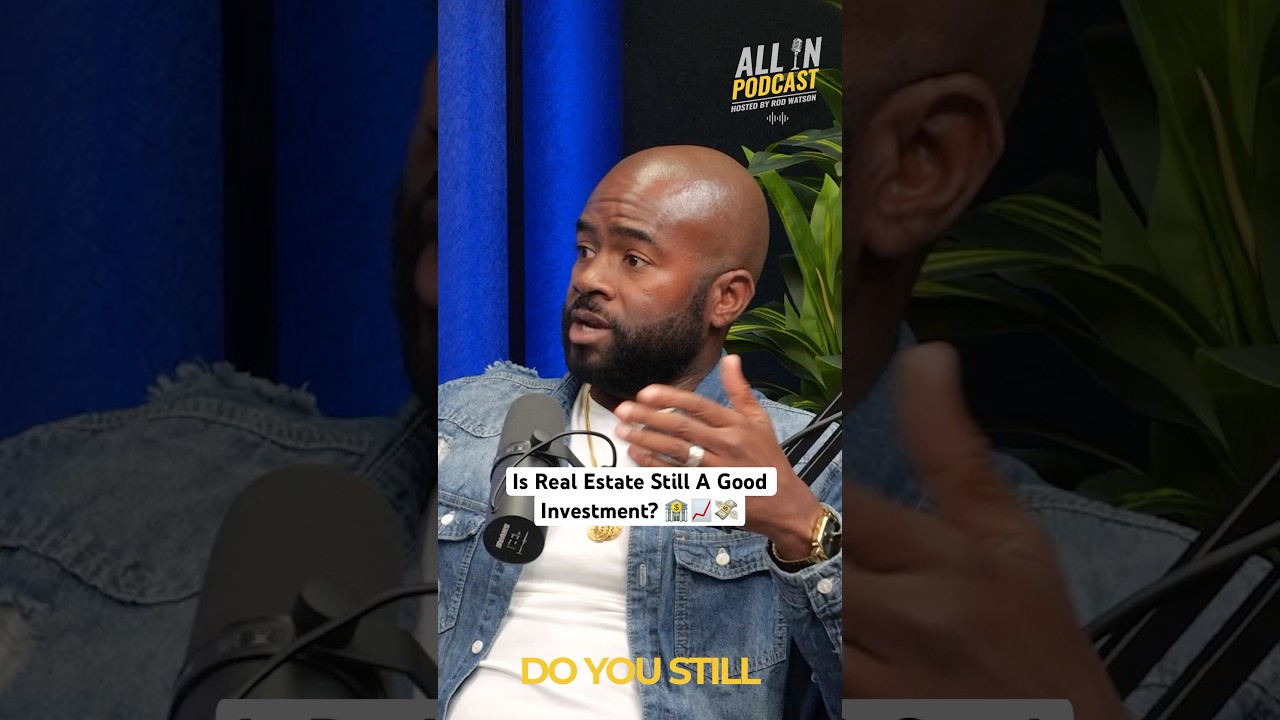
And there's better assets like real estate. Do you still think real estate is a safe, sound investment, both long-term and in some cases it can be short-term where you're looking at cash flow exiting at certain points? Like I advise athletes, if you're gonna buy a home in Los Angeles, for example, First of all, you need to know it's very expensive, the upkeep, the maintenance. But if you can buy in an emerging community where the price per square foot is going up, it may make sense, especially if it's your primary residence. But let's talk about real estate. Do you still see real estate as a sure, tried invest— sure, sure. And like, you know, safe bet to invest your money?
Absolutely. I still think that real estate is a great asset class, you know, on the way to building wealth. I always tell people, first you get yourself a nice high-yield savings account, then you have a brokerage account. Which you might, might or might not include your retirement accounts, your IRAs, your 401s. Yeah. And real estate. Real estate, 2 purposes. One, if you have it and you know that you see something that you love and it's within your means, you're going to have an appreciating, appreciating asset. And more than that, you're going to build memories, especially if you have a family. You're going to build lifetime memories of this thing and you might be able to sell it and move on.
Yep.
One. 2, if you have cash and you're already in the other asset class, you might want to buy real estate to invest.
Yeah.
Yeah.
Yeah.
I think they're both still valuable.
Makes a lot of sense. Best investments and worst investments you see celebrities and athletes make?
Best investments into retirement vehicles, right? IRAs, self-directed IRAs, retirement investment accounts, real estate. Those are all solid, tangible, good returns. Long-term returns, not trying to be get in and get out, get rich quick.
Yeah.
I would say businesses that might be owned by friends or family that have no—
Those old boring businesses.
Exactly. That have no real value or really not going anywhere, that are really hobbies, but your friends or your family convince you to give them $100,000, $200,000 to get this thing off the ground. Stay away. I would rather give them the money, put it into a trust, or you give them the money.
Yeah.
Instead of thinking about it as an investment.
That makes sense. Yeah, that sounds— you know, we hear a lot, man, in industry, the nightmare stories when it comes to business managers. You know, Floyd Mayweather.
Yeah.
He's talking about how his business manager allegedly, right?
Yeah. May have robbed him and stole millions.
Right. And we hear this, all these different cases.
Right.
My question to you is, how should a young athlete or entertainer protect themselves from the wrong advisors and business managers?
Any person who you're hiring to handle your financial wellbeing should be able to communicate with you, educate you, and share with you the details of your finances at all times. And you as the client, it is your duty to make sure that you are seeking that information.
Yeah.
Right. The only way that someone can pull a fast one on you is if you're not on top of your own business. So, you know, I'm not going to go into specifics of any of the cases, but we've seen a million cases where sometimes it's the financial professional.
Yep.
Doing something not so above board. Sometimes it is the client where they've been properly advised and they've still blown the money or not taken the advice. And sometimes it's somewhere in the middle. Yeah. But the number one thing that people can do in order to not have their money and their assets misdirected or stolen in any sort of way is make sure that you are in good communication with the financial professional that you're, that you're hiring and always do your research first.
Yeah.
Do tons and tons of research on the people that you're bringing into your life.
I agree with that. You know, Giannis made a comment recently. Um, where he talked about the business manager, your attorney, and your wealth manager, they shouldn't all know each other.
Right, right, right.
Do you agree with that philosophy, or what's your thoughts around that?
I respectfully disagree.
Okay, why?
As a business manager specifically, um, we talk to and see everyone in your world because out of necessity, not because, uh, we want to. Not necessarily, but because you have to pay these people, they want to know how effective whatever their moves are going to be on your behalf. We always are put in a position where we're the bad guy if you don't want to communicate information to other members of your team.
Yeah.
So for that reason, it behooves a client to make sure that all these people are talking. Again, it also doesn't mean that you don't have to be involved in those conversations. You should be involved in those conversations and you can request, hey, anytime you guys talk, just include me on the conversation.
Yeah, sure.
Any business manager who's an upstanding person is gonna be like, absolutely, I want you to be involved.
Yep. So what I hear you saying is you do disagree with Giannis, but you gave your explanation why.
Yeah, absolutely.
And I definitely can understand that. So here's my question to that. Like, what red flags? should an athlete or entertainer be looking out for? Right. And the other is, aside from those red flags, you know, what questions should they be asking? Whether the business manager, the attorney, and the financial manager all know each other or not, what are the red flags they should be aware of and what questions should they be asking?
Great, great, great, great question. Great question. The number one thing, the red flag is, Anybody who won't allow you to see your financial information or ask you why you want to see your financial information, right? Red flag.
Big red flag.
Red flag.
Flag on the play.
Red flag. And I'm not going to say which clients have come to me, but I've had a few clients come to me from situations where their previous business manager gave them a runaround on why they shouldn't or why they couldn't see information. In a certain period of time.
That's another flag.
Yeah. Yeah. You know, now look, when we get into details of accounting periods and it's not yet the end of the month and you want to see how much money you spent for this month and the books haven't been reconciled, that's all crazy stuff. Right. So, and that is, hey, okay, I'll have this for you at a certain date as soon as possible. Right. Yeah. But other than that, if they're not allowing you to see it or they're asking you questions on why you want to see it, red flag one. Red flag 2 is If, um, you have presented information to another member of the team or all of the members of the team together, and then you're following up about whatever that thing is, and then you're getting different answers along without— all of the members of the group are giving you different answers, red flag. That means something's being hidden from you.
Okay.
Right, right. Yeah.
So what things also following up with these Question, follow-up questions. What shouldn't they, what shouldn't athletes, entertainers sign without full understanding and disclosure? And, um, also what should they never do? Yeah.
You should never sign an agreement without your attorney looking at it. And that's a big one. And I think I want to say it again, never sign any agreement without your attorney looking at it. A lot of times people will send me contracts. I get contracts sent to me all the time. Big contracts and small contracts. Hey, can you look through this really quick and tell me if it's good to sign? Sure, I've looked through this. From my perspective, it looks okay, or from my perspective, I would change this thing. I am not a lawyer and I don't play one on TV, so the next stop should be your attorney, and you can loop me in in the conversation. We could all talk about it, or you can go talk to him separately about it, have him look at it, and then you sign it.
Yep. I tell guys, And young ladies that are professional athletes or in the entertainment space, hire an attorney. They will definitely save you a lot of money. That should be probably one of your first hires, you know, when you're coming into money. But definitely, you know, for the money that you're gonna pay them, it's well worth it. You know, find the best, but they're gonna protect you in the long run.
Yeah.
Save you thousands, if not millions of dollars.
Yeah. And a lot of times the reason that they don't wanna send it to the attorneys because they're saying they wanna save money.
Yeah.
It's gonna cost you a lot more in the long run. Spend the money. Exactly. It's gonna cost you a lot in the long run.
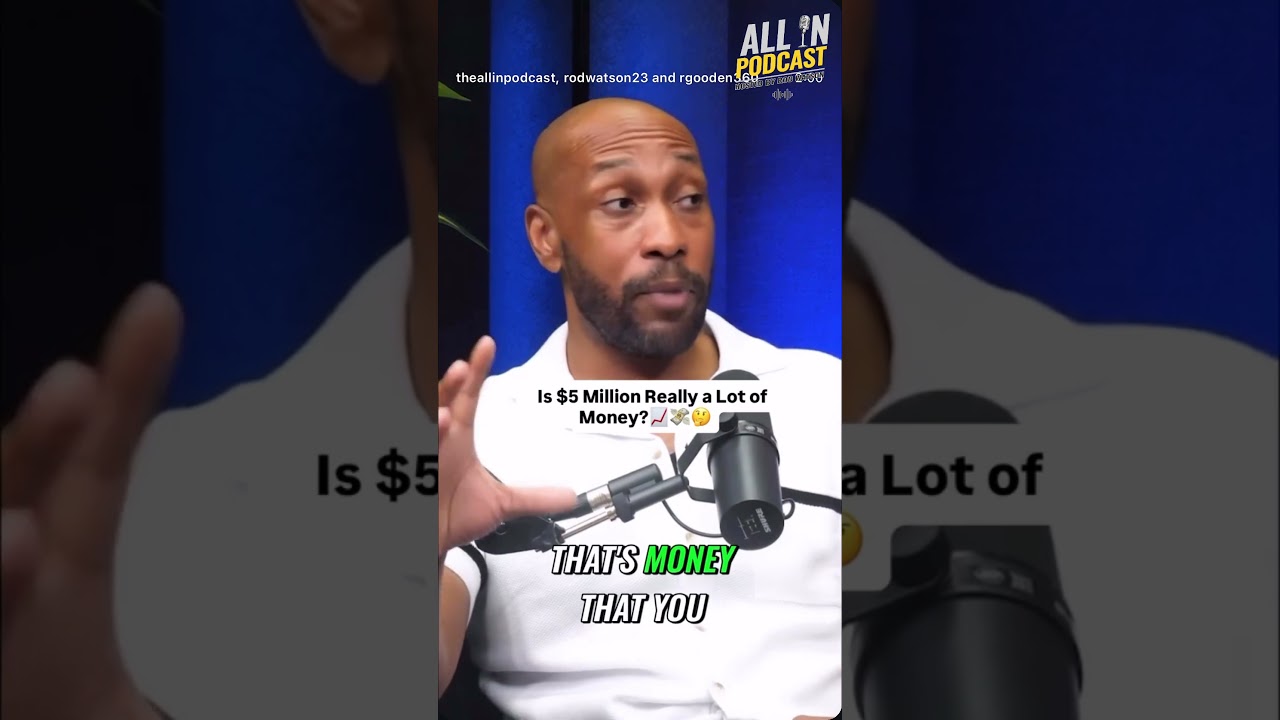
Man, um, before we close out, we have a few minutes here. I wanna talk about a comment that former LA Clipper Lou Will made where he talked about an NBA salary of $5 million isn't a lot of money. What's your response to that as a business manager?
This is an LA— living in LA, I would say Luol is correct and incorrect. $5 million is a lot of money for anybody.
Mm-hmm.
Right? No one should think that $5 million salary is not a lot of money. Even after you chop it in half, taxes, and you have to pay people on the team, you're gonna be walking away with at least $1.25, somewhere around there. To $2 million.
Don't quote me. Depending on, yeah, roughly.
Yeah, don't quote me. $1.25 to $2 million.
Yep. Okay?
That's money that you can put away with— put away and live on. Yeah, right now we know we live a lifestyle where people want things, people need things, and people's family members and friends need things. That's all on you and your financial team to work out the details. But there's no world that exists where $5 million is nothing.
I agree.
No way.
Yeah, I agree. It's all about, like, like you said, setting yourself up for success, having the right team in place. And when you do come into the money, whether it's $5 million, $1 million, or $30 million a year, yeah, you're going to get hit hard with taxes, especially in a state like California. There are other tax-friendly states if you're fortunate enough to play in those states, like Texas, Florida. But at the end of the day, you're still gonna have to pay the taxes. So having a team in place to help you navigate that process and be prepared when you do come into the money is going to help you in the long run see more of your money, right?
Yeah.
And it's about really you know, having the habits to also sacrifice too. You know, if you're a player and you're earning $5 million a year, you don't need to have the Maybach. You know, you don't need to have the, you know, $80,000 chain around your neck.
Right.
You know, forego those things and get with your team and think about, all right, do I need to make these purchases? Right? Who am I doing this for and why? And if those answers don't check the boxes around what you say your long-term and short-term goals are, then you should reserve And we understand family's gonna have needs and they're gonna have wants and desires. But one of the things I share with a young NBA player is the one word you need to learn how to start practicing and get comfortable with is the word no. Or not at this time. Or talk to my business manager.
Well, guess what? And guys like you and I, we understand what real life looked like for entertainers and athletes, right? And we know, you know, there's a lot of things that change. cars, there's the houses, there's all the things. We understand that. And we're not saying that you have not worked hard, so therefore you don't deserve this.
Yeah. You do.
You just have to do it in a smart way. And it comes back to compounding. Once again, take your time. I know you want it right now, but life is long. Life is a long— if you're blessed, life can be long. And you want to make sure that you're well prepared and you're well taken care of for when the lights go off and now you have to think about life after the spotlight.
Yep, that's true, man. And you're right, you know, for you young people that want it overnight, just remember this, slow and steady wins the race.
Slow and steady, slow and steady.
And the other thing to remember too, the roar of the crowd isn't for you, it's what you can do. And that's what one of my mentors, Caron Butler, would say to me.
I like that.
And he's right, right? You know, when the lights go off and it's over, the only person caring about you is gonna be you.
Gonna be you.
And maybe your family, your mom and dad, if you're fortunate, right? And then you got great relationships, but at the end of the day, If you don't make the right decisions during those playing years, it all falls back on you.
Yeah. And you are blessed with an extraordinary ability, whether it's on the court or the field or in front of the camera, behind the mic. You were blessed with an extraordinary ability and you have the opportunity to take care of your family and yourself for hopefully generations. So slow and steady, slow and steady.
Yep. Agreed. Well, Reggie, man, I've really enjoyed having you on, having this discussion. I wish we had more time. I know, man, but we're nearing the end here. But you dropped some great nuggets for our viewers and our listeners, and, uh, there's a lot of value here in this actual episode. Last question as we close out, we talk about legacy, right? And what does that look like for you, right? So looking back at your journey, what legacy do you hope to leave behind?
And I think this is where it comes back to, uh, one of those words, stewardship, right? And I don't know why this word has been floating around for me for the past, I would say probably 2 or 3 months. But, you know, as I'm approaching 50, you know, I think you got a year, you're up on me.
No, I'm this month.
Oh, you're 50?
Yeah, 50 this month, 29th.
So 50 next year.
Okay.
So yeah, you got a little bit. But as I'm, you know, approaching that milestone, I start thinking back like, what do I want people to think about me? What is the legacy that I wanna leave? And I want everyone to remember me as someone who they trusted to take care of something very valuable for them, whether that's their finances if it's a client, whether it's their livelihood if it's my employees and staff members, or their health and their life, whether, you know, my wife and my family. Was I a great steward? And that's what I want to spend my life— that's what I've spent my life doing, that's what I want to spend the rest of my life doing.
That's awesome, man. Yeah, um, I could definitely identify with that, and I I can say you look very young for approaching 50.
So do you, man.
I don't see no gray hairs on you. Nah, man, no dye, bro.
It's all natural.
It's all natural. Yeah, man, it's— you look great, bro, and I, I wish you much success in your journey, your career. One other question: what would you say to your younger self looking back?
Um, that's a great question. The only thing I would tell my younger self is Things that seem like they're going to be the end of the world for you, you're gonna get through 'em. You're gonna come out on the other side much stronger than you are now. Don't worry about it. You're gonna be all right.
Translation, it always works out in the end.
It always—
Just keep the faith and stick with the game plan.
Amen to that.
Well, last question. This podcast is called the All In Podcast. What does going all in mean to you?
Oh, all in. And I love the name of the podcast, by the way. Um, All In to me means you are fully committed to whatever the dream, the goal, the mission is, even if you don't know what the outcome. Back in the day, you used to always hear this phrase, there's no plan B.
Yeah.
And I used to be like, oh, okay, maybe, maybe I should have a slight plan B.
Yeah.
But when I moved to LA, there was no— there was no Outcome that was predicted that I was going to make it. When I decided to start 360, there was no, uh, outcome to know that I would be successful. When, you know, I separated from my partner, there was no outcome to know that we would be much bigger than even we were then. Yeah, right. But what I was always all in and fully committed to— the dream, the mission, and the vision. Yeah. So that's what all it means to me.
I like that, bro.
I really do.
Yeah. Well, this concludes our episode for today with Reggie Gooden. Thank you, brother, for coming on this podcast. I appreciate the nuggets you shared. I continue to build— I look forward to continuing building on the relationship that we've established, and I wish you much more success. I appreciate you, brother.
Appreciate you.
Big thanks to Reggie Gooden for joining us today on the All In Podcast. If you found value in today's episode, be sure to comment, Like, follow, and subscribe, and I'll see you on the next episode.
My name is Reggie Gooden, founder and CEO of 360 Business Management. You're watching the All In Podcast hosted by Rod Watson. Be sure to like, follow, and subscribe. Such is life.
Can't have the black without the white.
More from Rod

Protecting your wealth, peace, and business, with Rod Watson On The All In Podcast

“Would One of the Nation’s Top Business Managers Still Buy Real Estate Today?”
How Do Elite Athletes Really Build Wealth? It Starts With People Like Reggie Gooden!



John Salley: Talks NBA Championship Mindset - What it Takes To Win & Build Wealth Beyond The Game