John Salley: Talks NBA Championship Mindset - What it Takes To Win & Build Wealth Beyond The Game
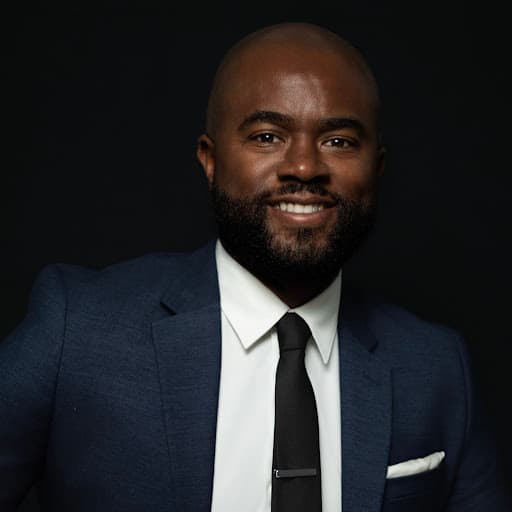
Four-time NBA champion John Salley breaks down the championship mindset that won titles with the Pistons, Bulls, and Lakers, then shifts to how players build wealth after basketball. He created John Salley Financial to teach credit leverage and real estate, and started the Beverly Hills Collective for longevity and health.
Chapters
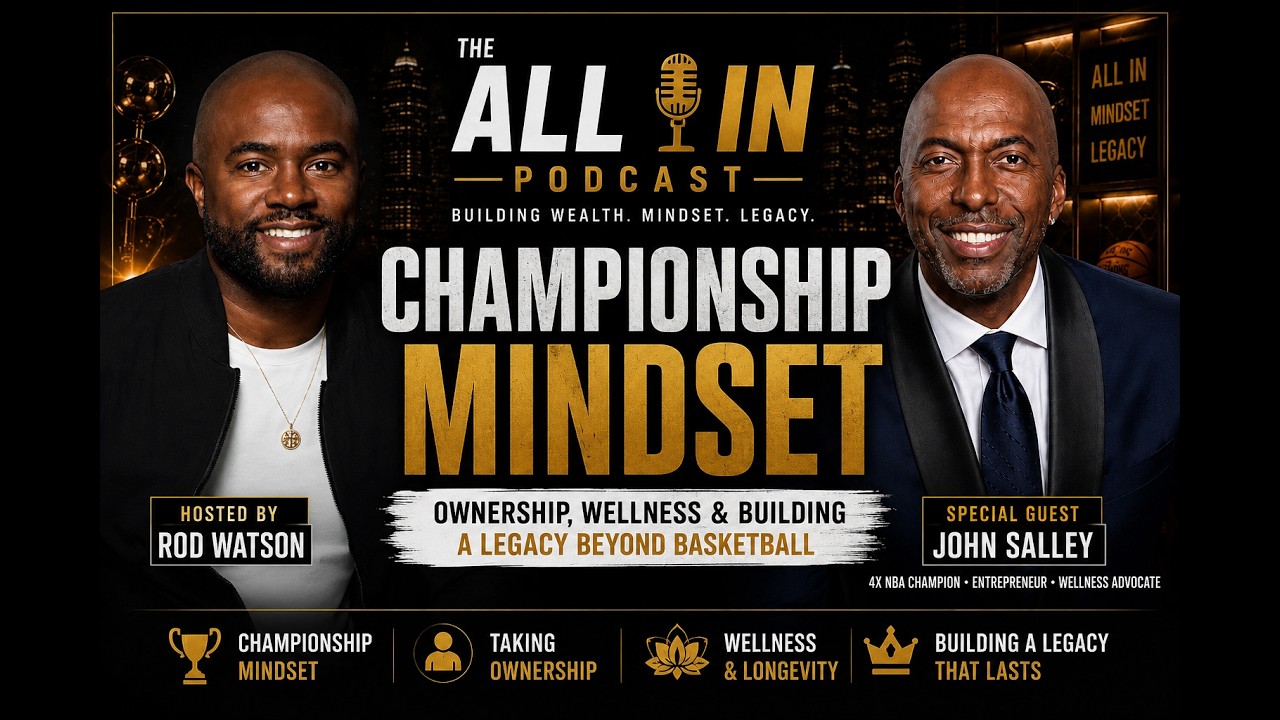
Welcome back to another episode of the All In Podcast, where we talk business, sports ownership, legacy, mindset, and the real stories behind success. Today's guest is a true icon, 4-time NBA champion, the first player in NBA history to win championships with 3 different franchises, entrepreneur, producer, television personality, actor, wellness advocate, husband, father, and mentor. From the Detroit Pistons Bad Boys era to the Chicago Bulls dynasty, and the Los Angeles Lakers championship run. John Salley has seen basketball, business, and life from every angle. Today we're talking championships, ownership, health, wealth, real estate, investing, and media, family, and what it really takes to build a lasting legacy after sports. John Salley, welcome to the All In Podcast, man. It's great having you here for Season two kickoff.
Thank you, man. I appreciate being here. That's a handsome gentleman you have behind you.
Yes, sir.
But I do, and you know what? It was it was long overdue. Not only are we working on having a television show together, I couldn't wait when you talking about what we would talk about financial literacy.
Yep.
And then I met young fella. He reminded me when he. when he first got here, and as opposed to beating him up and telling him, get off the red carpet, I helped him with his lights and how the cameras are set up.
He did, he did, man.
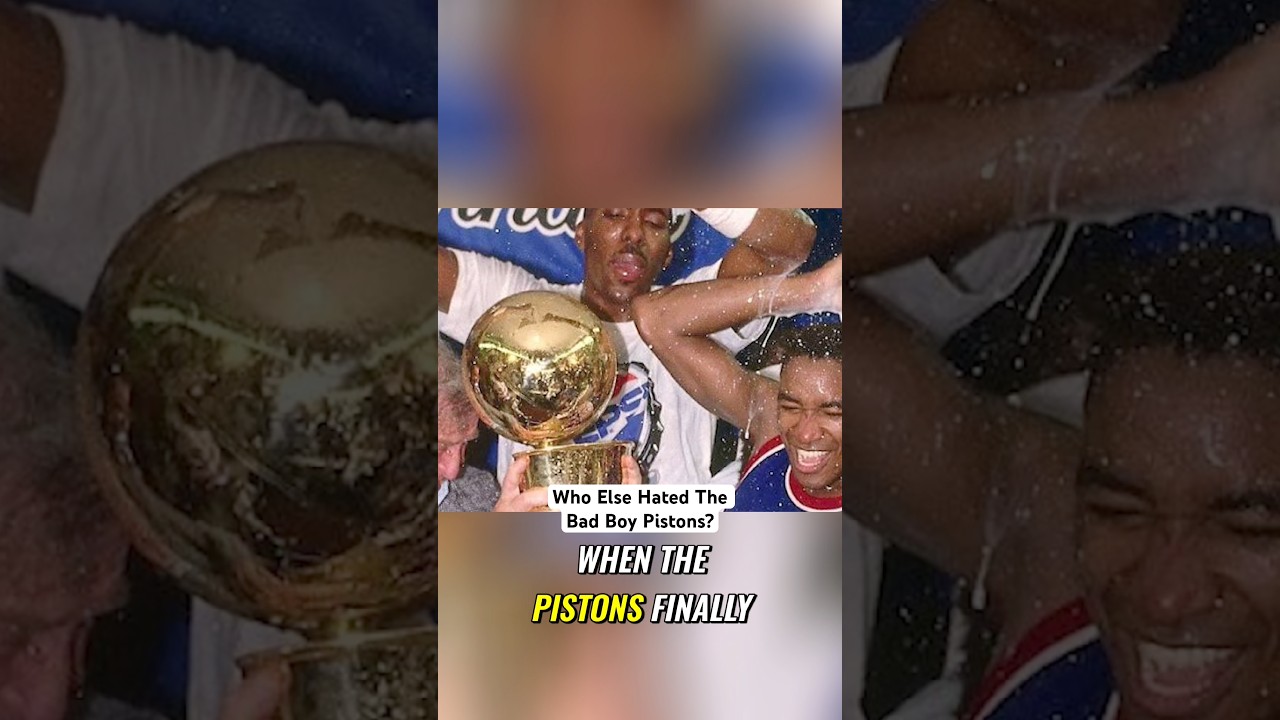
Well, man, you truly are a first-class guy. I gotta tell this story. Growing up as a kid, I literally hated you and the Detroit Pistons' guts in '89, '90 when you guys was kicking Michael's ass. And then '91, I finally had some liberation. But one of the things that stood out to me with you guys, Isiah, Dumars, Rodman, yourself, was that That tenacity that you guys brought to the game was like no other. I mean, I think it really helped Michael become the player that he was because in today's day and age, everything just happens fast, microwave, right? But seeing how you guys approached the game, the mentality, that championship grit, I can tell you, man, as a kid, I could not stand you guys until '96 and you joined the Chicago Bulls. That's when everything changed.
It was funny you say that. I had a manager, still a good buddy of mine named Kevin Parker. Shout out to Kevin Parker, KP, everyone. He was 12 and he said, in 1989.
Yeah.
When the Pistons finally dethroned the Lakers. And all I did is talk smack. I mean, I was just talking so much. And he was like, I hated you. He said, now that I'm managing you, he goes, you know, it's a little bit off. I don't hate you as much.
Yeah.
I looked at it this way, and it's so funny. When I came, it was time to go pro. I thought I was gonna be a Chicago Bull. It was the number 10 pick.
That's right, that's right.
And they took Brad Sellers instead. And I remember telling, Jerry Crossett had me come into Chicago 2 or 3 times. One time was really, really made me feel bad to have me stand in front of, them with just my underwear on and they looked at me from the back and looked at me sideways. It was like, I felt like a thoroughbred being checked out. I didn't like it. But he said, long tall, I had to take Brad. He was a better jump shooter. And I said, every time, I said it to him and to Red Auerbach, every time I play here, I'm gonna act like it's a home game.
Yeah, yeah.
And I did not have a bad game in the stadium. Not at all.
You brought it.
Yeah, I, and then MJ is my frat brother, Omega Psi Phi Incorporated.
Hey. Ruh.
And I wanted, you know, and I would still hang with him. I would still, when I was doing my TV show, my first guest was Michael Jordan. And you know, I'm just thinking like, hey, my boy Michael Jordan, y'all like him, but this is my boy. Not realizing the gold I had by doing the interview. And so it's just, I loved Chicago. And then, you know, Isiah thought he wanted to play back in Chicago. My boy Gary Footlick, who now lives out here in the desert, he was taking me. I knew everything about Chicago, man. I was looking at lofts. I was ready to get a truck for the snow. I just knew I was gonna be a Bull. That's why when I got there, my number was available. And then, you know, Jimmy Butler wore it. But you know, we're not gonna talk about that. Yeah.
That's interesting. When I hear you tell your stories, I watch a lot of your clips and the information, you're a guy that's very still connected to the community of basketball, Hollywood obviously, and you got a long list of success stories. But before we get into that, I wanna talk about being a New York guy, born and raised in Brooklyn, right?
Brooklyn in the house.
Brooklyn! Brooklyn in the house. What was it that led you to believe that you could be great at playing basketball or just have the opportunity to become a player in the NBA potentially one day?
I worked harder than everybody else. And I know that that sounds cocky to some people, but my coach Ted Gustus, who I still talk to, Ted Gustus used to keep me late to practice on Thursdays on purpose and on Tuesdays on purpose.
Yeah.
And I would be there with Ted and I wasn't rushing to leave the gym.
Yeah.
And then I would get up at 6 in the morning 'cause my brothers, we would run our project, which is a complete square mile, Bayview Houses. And, you know, I'm a young cat and, you know, my brothers, we're running, we're doing 35 pushups, we're doing, and then we lived on the 8th floor, and then we would run the stairs back up to the house. So when my brothers are no longer in the house, that's my routine. I had no idea other guys wasn't doing that. And then Coach Reiner, who was a great coach at Canarsie High School where I went, said, if you really wanna work on some things, be here at 7 o'clock in the morning.
Okay.
Not knowing I had gotten up and ran at 6.
Already, yeah.
Dribbled all the way to school, 5 blocks, worked with him in the gym, then took a shower at school. Dead tired, kids don't know that.
All before class.
Before class. And not knowing that other people didn't do it. Not until, you know, in my later part of life, I didn't know these kids didn't do it. I was raised a Jehovah's Witness, so, We didn't have a lot of time. So the time I had was in basketball. My guy Bonnie Davis said, you know, it looked like you really wanna do this. And he goes, 12 years old, he goes, you need to be here and I'll teach you fundamentals. So Bonnie Davis was teaching me the fundamentals, right hand, left hand.
Yeah, wow.
Let me tell you how it paid off. I'm at 5-star basketball camp. Coach Cremins, who became the coach at Georgia Tech, is watching. and they throw the ball to me on the left side and I take a quick move and I dribble and I make a left-hand layup.
Yeah.
And then they catch it and the next time they throw it to me on the right side, I make a right-hand layup. He wrote down fundamentals. And to me it was easier. And that's why I think I understand the triangle offense. It's why I play a game within a game within a game. And a lot of people are playing and worried about the audience and worried. I never, I played a game and a game and a game and I'm focused. Isaiah Thomas used to say to me, we always had, like I said, I didn't start the game. You were never a starter. Yeah, but I was a finisher. Yeah, right, right. I was in the game when it counted. The last 5 minutes I'm in the game. And Isaiah said, you wasn't gonna miss a foul shot. No, I'm not gonna be the reason. I'm only gonna be the reason to win. I practice hitting a shot and hearing the crowd. I practice when I was alone, no time on the clock, you're down 1, just you on the foul line. I practiced that.
That's right, yeah.
And when you, the more you put it into the universe, you practice, you keep practicing, reality will catch up to you.
Yeah, manifesting it, right?
Yeah, manifesting it.
Seeing that ball go through the hoop, going through the hoop, hearing it. visualizing it. I mean, you really, at an early age, you already had it in you to kind of lay the foundation of really leaning into the fundamentals and using that as your unfair competitive advantage.
As Drake would say, put the man in manifest. Yes. That part.
Well, you know, what do you think separates champions from talented players? Because, you know, in today's era, you hear a lot of people talk about, you know, compared to your era, players are more skilled, they're more talented. But when you really look at how the game is being played, it is a faster place. But I see a lot of the fundamentals being missing from today's game. And you look at the Knicks, and we'll touch on that here in a little bit, and you see a young talented team with the Spurs, athletic, future potential face of the league. And then you see a core group of guys who, what I see, guys that have been battle-tested, they're sticking to the fundamentals, they're playing together as a team. What do you think separates champions from talented players?
Well, I think, like I said, Charles Barkley is a winner. He's not a champion. Dan Marino's a winner. They're winners.
Yeah.
But the team concept, this is the deal. I never won a championship by myself. It's a team effort. As Phil Jackson would say, you have to be in this tribe in one breath. We have to breathe the same. We have to have the same mentality when it comes time to work.
Yeah.
And, you know, I was watching the documentary on Dennis Rodman. Everybody should check it out on ESPN. Dennis didn't talk to Scottie in 3 years.
Yeah.
Like, they had a conversation.
Yeah.
And somebody would say, oh, you can't do that. No, he can. One, Dennis was quiet. And 2, he hung out at different, different clubs than most of us.
Yeah.
His friends were different. He was surrounded by a group of people. So Dennis was to himself, and he— no one realized he was trying to— he had recreated himself into Dennis Rodman, the entertainer.
Yeah.
And there's no conversation because Michael is going to have conversation about cigars or about business, and, you know, they had nothing in common. Only thing in common was they were wearing the right jersey. So you're gonna run into guys who wanna do things individually and it won't work. When Kobe tried to go individual thinking when Phil got there, he was gonna let him do what Michael, he did. But he didn't realize Michael was in the system. He may have scored a lot, but he was in position to score a lot.
That's right.
When the triangle wasn't there, I was trying to go to dinner with him after games and he was almost driving past me. He just knocked me over. So it has to be a system. You have to understand the final goal.
Yeah.
Nothing else can be that important. Like I was saying to you, Jimmy, like you said, how do you stay married 33 years? And Chuck Daly used to say, absence makes the heart grow fonder. And not being around somebody, You know, it's a hard thing to do, but it keeps the distance and it keeps the attraction going too. Plus, I'm not a quitter. That's a lot of things. So you have to understand when you come here, you're gonna be around your teammates more than you are your spouse.
Yep.
Or your significant other. So this is where it all is made. And then trust me, the summertimes are better when you're a champion.
Yeah.
I bet they are.
Yeah.
You ain't buying that much. You ain't buying that many dinners.
No.
Shifting gears a little bit, talking about champions, being a guy from New York, I know you gotta be excited about seeing the Knicks win the championship, but—
Which you predicted too.
Yes.
And that's what we're talking about, like 6 months ago, well, less than 6, maybe almost 8 months ago.
Yeah.
You predicted, as Jimmy said, the Knicks were gonna win it. How did you know? What did you see that everyone else didn't see? Because at that time people were like, this guy's crazy. There's no way in the world the Knicks is gonna win it. And even I thought like, what is he talking about?
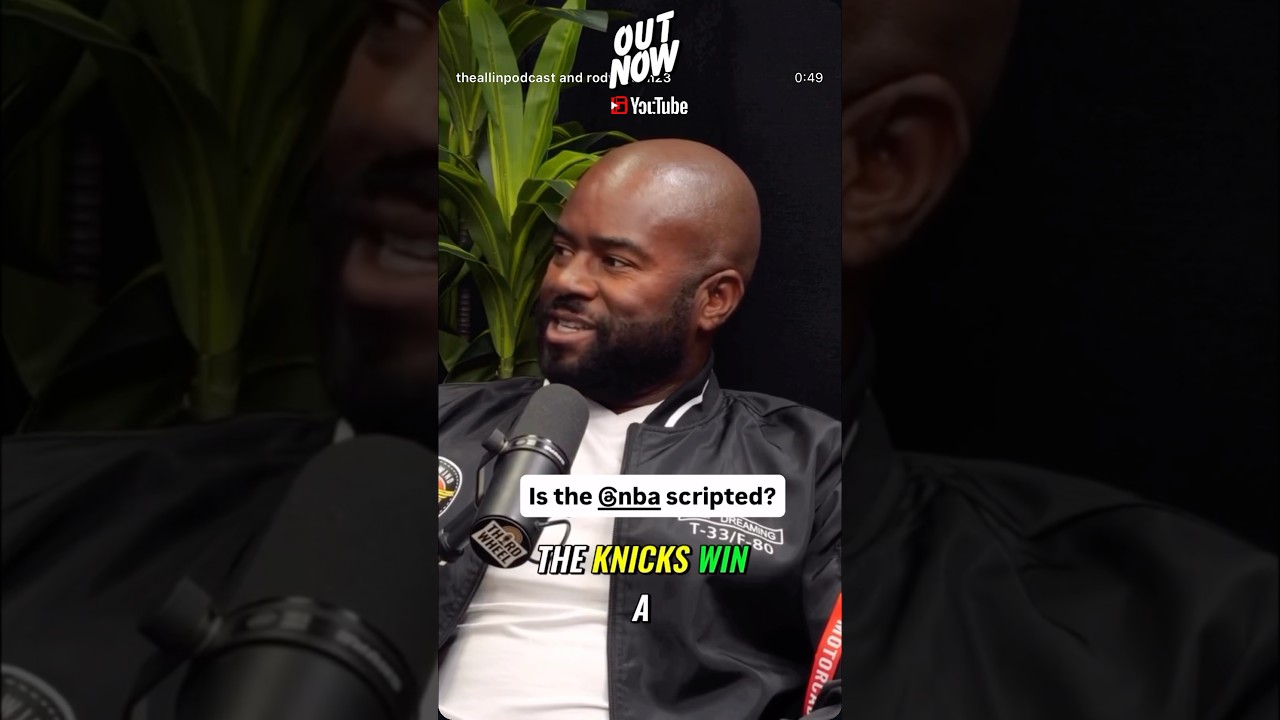
I was like, man, Jon tripping. up here on this talking about that? Well, I read the script and you guys don't know, it's an NBA script. I just happened to be walking by. No.
Hold on.
I'm just joking. I was about to say, skirt! But I'm just joking. This is what I knew. I knew Bronson and I watched the Knicks lose to Portland, I mean to the Pacers. And I'm telling you, I was like, hmm, it wasn't that the coach overplayed them.
Yeah.
They just hadn't been there.
That's right.
And then once you're there and you realize, like somebody said, well, he warmed down, they played too many minutes, la la la la la. Let me tell you, I've never been tired playing basketball. I've been tired doing other things, but only playing basketball. I never been like, I'm too tired to keep playing. I just haven't. So it's what I love to do, so you don't get tired doing it. Then I watched, you know, like I said, JB is, he won in high school, he won in college.
He's a winner.
That's what I mean. And then if you don't change the core of the squad, which they did, and they changed it before that and got to this squad. I remember we lost to the Lakers in '88 and Isiah said, You know what? We get home court advantage, we can't lose. And I remember 2 days after we won the championship, true statement, all the hoopla and all that, I think 2 days, I go to the Palace and when I get there, there's 5 of us.
Yeah.
And they were like, Sal, what you doing here? I was like, oh, I'm picking something up. No, you ain't picking nothing up. I literally thought we had practice. Like, that's how locked in I still was. And it was important because we won the next year too. And then it was, it's like to win 3 championships in a row, you see in The Last Dance.
Yeah.
You're around these guys more and more and more and people start feeling that they deserve more and more and more.
Yeah.
It's just human, this human factor. It's a nature thing. Yeah, it gets in the way. It's hard to do. Like I take my hat off to Golden State. I mean, it's hard to do. It's a hard thing.
No, no doubt. I mean, winning is tough. People look and they see the glitz and the glamour that comes with winning, but behind the veil there's egos.
A lot of them.
There's a lot of stuff going on managing those egos. Players, after you start to win, some players kind of drop off on what it takes to win. You know what I mean? Shortcuts, taking corners, which brings me to my next question. You played with some great Hall of Famers. some guys that really transcended the game. Isaiah, Michael, Kobe, Shaq. What was the takeaway that made all those guys unique? What was it about those guys that separated them from everyone else aside from their talents and their skill set? Because at the end of the day, you had opportunity to see it close up, be there on the floor. Like you talked about your relationship with Michael, it was more than just the physicality and what's between the ears. What was it that separated those guys from everyone else?
I'm gonna tell you guys, and I'm only I'm telling you here on this podcast, those guys are aliens. They're from the— they're the Nephilim.
Yeah.
I'm gonna say this, knowing MJ since college.
Yeah.
When I went to visit Georgia Tech in 1981, it was during the game, 1982, it was, they were playing against, That's when I wanted to visit. 'Cause I wanted to play for North Carolina. And Dean Smith thought I was a thug only 'cause I was from Brooklyn.
But Mike was from Brooklyn too. Yeah, but he didn't have—
He was born in Brooklyn.
Okay, that's a difference there, all right.
But I was, I was hanging with some unruly dudes. And it's because if you not with the thugs, you getting robbed by the thugs.
You getting ran over by them.
That's right. Yeah, so I just told him, I said, nah, man, I'm not a thug. Really good student, you know, God-fearing man, you about to get it though.
Yeah.
So just watching and being around somebody who would wanna be in the gym more than they would wanna be anywhere else, that's what it takes. Like they said to Kiki Vandeweghe, you guys, you know, do some research on who Kiki Vandeweghe was, but Kiki Vandeweghe, they said, man, you from Southern California, you don't have a tan. Sun don't shine in the gym. Yeah, yeah, yeah. So.
It's that obsession with your side.
Yeah.
Yeah, yeah, yeah.
Kobe had it.
Yeah.
You know, I would go shoot foul shots with Shaq late at night and everybody would be like, well, you did a terrible job.
Yeah, 'cause Shaq still ain't.
Yeah, but that's like, you know, like I was telling you, Jay, that's, it's all mental.
Yeah, yeah.
The whole game is mental.
Yeah.
Everything is mental. But it was something else. I found out from the guy who was my shooting coach, um, he said, which I don't— haven't done all the research, he said most of the time the guys who miss foul shots were bedwetters. And I was a bedwetter until I was like 12. And I said, what? And he goes, yeah, there's certain parts of you didn't develop yet. And I thought, I know people are gonna think he's crazy.
Yeah.
But we grew so fast, we are bigger than we supposed to be, taller. You're expecting more because I'm taller. You still have these childhood traumas that you don't realize. Your bladder is not working connected to your brain. So it's this connection of, take the ball from this point, put it up and put it in the basket with the right rotation. And there's guys who can shoot jump shots can't shoot foul shots. Right, right, right. And when he told me that, I was like, wow, Pat, you sure? He goes, yeah. And I never liked having a disability. So when he told me that, I was like, oh, he said, that won't happen again. He goes, what do you mean? I said, I won't miss anymore. And I went from shooting 65% to shooting like, 78 to 80% at times. 100% when I'm in the playoffs. I didn't— You don't miss. No, I'm not missing. And if I missed, something was wrong with the ball. It wasn't me. But when I pay attention to those guys, the most different person was Dennis Rodman. Dennis Rodman was a 26-year-old rookie that seemed to be, seemed to be slower in the development because he started playing basketball later. So his athletic ability is amazing. That's how I know he's an alien.
Yeah.
His feet, I'm sure when we're not looking, they're hooves. And the way he runs and his calves and everything. And he was the most different And I think he changed the game entirely different.
John, you said earlier you play the game within the game within the game.
Right.
Would you say those players as well, they're also playing a game within a game within a game? That's what made them so different?
Yeah, I'm gonna tell you this. I'm glad you brought that back up. The craziest part of that thought is Isiah and Joe Dumars used to call each other while they're watching a game and they can be in the same hotel. They had to watch the game by themselves and they would be on the phone picking things out. And Isiah'd look at the schedule and be like, yeah, we gotta win all our home games, but I see 2 of 'em we might not because we have back— like he was knowing where we were gonna be and how to stay in that point.
Right.
This is how you play a game within a game within a game. All right, we're gonna get in the game. You're gonna get but so many minutes. You have but so many quarters. The referees suck. You gotta think that. You gotta think that. And from what I've been seeing, it's still true.
Pretty much.
There's some of 'em I like.
We've seen it in the finals, but yeah.
Some of 'em I like, but I always picked on the referees. They're doing the best they can. But that mentality is, I remember George Gervin told Michael Jordan, you wanna be the leading scorer, you gotta score 6 baskets a quarter.
Yeah.
And that's it. Not 6 points, 6 baskets a quarter. And MJ was getting his baskets and thinking that way. Oh, I only got 5 baskets this quarter. I gotta get 7 baskets the next quarter to make up for that. This guy's left-handed. Okay, we're gonna put him right, but I can't put my chin too close to him. So when I'm pushing him right, I gotta give this amount of space.
That's different.
Yeah, because if you ever see a left-hander, why they can't guard Brunson is he's on the right side, left side, boom, boom, boom, boom, boom, boom, boom. Can shoot with both hands, but he's gonna put his elbow toward your face. And it's natural to move your head. Now you can't move your head and jump at the same time. So they wonder, how's this little guy doing it? He's literally getting so close to you that makes your energy move back.
Wow.
Even that much. If I can get you, if I could take a step and you don't take a step, and then I take another step and I see you lifting your foot to take a step, I'm gonna blow by you. So you have to practice that. That's a game within a game. And it's not that you don't wanna win, it's just that you have to be the best you can be and do these things and get the ball in the basket. When I was coaching in Puerto Rico, shout out to my boys in Puerto Rico.
PR.
Yeah, man. I said, hey, you guys are making this game very difficult. It's a very simple game. You put the orange thing in the orange thing. and you stop them from putting the orange thing in this orange thing. And then when we switch sides, keep that mentality. And they laughed and giggled. And I was like, I'm dead serious. And then we were doing shooting drills and these guys wasn't shooting 3s, but they were doing 'em in practice. I said, the next guy not to shoot a 3, I'm gonna take you out the game. I said, you get the ball, he's 3 feet off, you shoot the ball. I said, if we get more shots at the basket, we'll have more chances of winning the game. That's analytics.
Right, yeah.
But we thought that too in Detroit. Our big thing was defense, keeping the team below 85. NBA hated that 'cause they want more points and Vegas hated it too. I think they're one and the same. Anyway, they hated it. But our mentality is if we keep you from doing what you need to do, if I keep you out of your average, that's a game within a game. I'm not trying to stop you, I'm trying to make sure you don't get your average.
Got you.
Gotcha. That makes sense. Well, shifting gears a little bit here, you know, you and I, we talk about wealth, we talk about ownership, right? And that's really a lot of what this podcast is about. Of course, you know, I'm an avid basketball lover, former player myself, and I mean, it's an honor just to be able to sit here, sit, sit here with you.
I agree.
And hear the wisdom and knowledge and experience that you have. But you know, you, you, you've been a— you've come out and you've been a strong advocate when it comes to player advocacy around building wealth and also financial literacy. And you've even gone on the record as far as to criticize the NBA by not really having solid systems in place to help these players transition coming into the game when it comes to managing money and exiting the game. Right.
Right.
So how, how have you personally been able to stay on top of, you know, managing your affairs on the business side of things, financially, family? 'Cause that's challenging. You know, you have to be locked in and focused on the game. But then you also have to be able to manage your money and manage your time. So being an advocate for players, if a rookie was coming into the game today and you were mentoring, what would be one thing you'd share with that player that here are the things you need to be focused on and doing?
I recently joined forces with a group called UWE Financial, and they're together with John Sally Financial. And I didn't wanna call it John Talley Financial because, you know, people were like, you ain't got hundreds of millions of dollars. But I got billions of dollars of knowledge.
Yes.
Like, I have done it wrong, done it right, did that wrong, got this right. So I am seriously sitting on a bunch of information that is no use unless you put it to action.
Correct.
This information I have is valuable. So if you go into John Sally Financial or UWE Financial, one of the things we talk about is we've been all taught how to earn money.
That's right.
Right? You know how to earn it. We know how to bring it in, but that's where they think it stops. It doesn't. And there's no room for— I just told you how much basketball I played. there's no room. It seems like there's no room to learn the finance part or how to do it or how not to give it away or how to— they never taught us how to say no.
Yeah.
But it's also in the mentality of one, not just management, but how you— where you put it, How you leverage your credit, how you let real estate leverage your credit to get real estate and have real estate pay for this lifestyle. And what is your lifestyle?
Yep.
My lifestyle as a rookie was to look at a vet and go, whatever he has, I'm gonna get. So the reason there's so many Mercedes-Benzes at my time is because they see the vet with the Mercedes-Benz, that must be the NBA car.
Okay. Yeah.
This episode is brought to you by Distinct Concierge Real Estate. We specialize in helping professional athletes, entertainers, and high net worth clients find their home and build their legacy through strategic real estate investments and luxury representation across Los Angeles, San Diego, and beyond. If you're an athlete or an entertainer looking to relocate, invest, or protect your privacy during a move, connect with us at Distinct Concierge Real Estate. by clicking the link below.
He's wearing this kind of chain. That's what I want.
You gotta give me one. I'm giving you this kind of watch.
Right. But, but that— I remember Vinnie Johnson, whose now company is called the Piston Group, uh, doing auto parts, is a $300, $400 million a year company. Ever since I met Vinnie Johnson, his clothes were tailored different and of high quality. And he had a Piaget watch on. I was like, that's a nice watch, V. What that run you? He said, oh, this right here, man, gold joint, it's like $7,500. I was like, $7,500 for a watch? Dog, you could ask somebody else the time for that money.
Yeah.
That was 1986. Do you know what that Piaget watch he had on, gold from 1980s, it's a 40-year-old watch now, right? Yeah, it's a 50/50.
That bad boy appreciated crazy, I bet.
But Vinny was the one who I watched do that. I watched Joe Dumars make me show up at the gym the whole summer of 1990. And I don't care what you do at night, Sal, you'd be here at 8 o'clock. And me and my boy Michael would be sleeping in the car because by the time we finished the club and the after party and everything else, it'd be 5:30.
Yeah.
I ain't going home and go to sleep. We already had our stuff and we would just drive to the gym. We'd be knocked out in the car. Joe would knock on the window and we get up and we go in there and we practice. And Joe would have me in there for 4 hours doing different drills. And we go back to the Palace to shower and Joe would shower and put on a suit and go go to his office. And I go, what are you doing in your office? And that's why Joe was the general manager of the Pistons, the president. That's why—
He was preparing himself then.
He was always on it. Yep.
Yeah.
But so Vinnie Johnson and Joe Dumars, I watched them do it. Bill Laimbeer one day almost made me a Republican the way he was talking to me. He was like, why do you vote Democrat? I was like, what are you talking about? He said, what? And he got down to it and I was like, yeah, yeah. You know, almost drank the orange juice. But I literally decided to stay out of politics. But he made a really valid reason on paying attention to the people representing you. So I had good people look out for me.
Yeah.
So when I started this, the johnsallyfinancial.com, just make sure y'all see it. It literally gives you a protection plan. It shows you how we could help you get your credit right. We show you how we can literally show you how to budget. You want to walk in and especially Black folks, I tell this to Black folks, you want to be able to say, oh, you didn't think I can do it. Like you care what people say.
Right, right.
Don't do that. Because I mean, there's so many things I have gotten rid of and gotten the use or the joy out of.
Yeah, yeah, yeah, yeah.
I had to learn it. I had to learn, I had to learn that, you know what, showing off in front of people makes no sense. Driving a Lamborghini truck in the hood, it's crazy. Makes no sense. Crazy.
Yeah. On top of that, you become a target too.
Yeah. I mean, Mike Tyson had a Ferrari in Brooklyn. Yeah. I had this beautiful BMW in Detroit and I think my car made potholes because that's all I saw is pothole after pothole. And I'm like this. If you want— and I say this— if you want to drive a Rolls-Royce, it better be a 2-door. Because if you got a 4-door Rolls-Royce, you didn't pick up the driver. Because that's the reason the seats in the back are so much more— you're supposed to be driven.
That's right.
And I said to somebody, I said, don't get a car you have to drive that costs $700 tires.
Right.
Get a driver. Yep. Get, get your Escalade.
Yep. Yeah.
Get a driver, get a, get a retired Teamster to drive you, pick you up. That, that's, that's how you're supposed to do it. You're not supposed to spend $400,000 on a car.
Yeah.
And I'm parking right next to a Beetle.
Right, right. That don't make sense. Yeah.
That don't make sense.
I liked how on your website you guys also have estate planning on there.
Mm-hmm.
And one thing that I learned in our community, we don't even know what that is.
No.
And don't let somebody else try to educate you on the topic, and now they think you want something from them because you're trying to put them on game, right? So giving access to that information is so key, right?
And you got to think estate— it's so funny you say that. They think it's something bigger. Yeah, it is. I, I I first had this idea with my boy Rod. We were doing this, this thing on insurance, right? I said, I'm tired of the GoFundMes for somebody dying. Like, it's for $10,000. This is, it sounds like a lot of money unless you're in Atlanta in a strip joint. It's not. 'Cause I know a dude who was throwing $3,000 a night.
Yeah, every night. Crazy.
That I, he has to be robbing somebody for $6,000. I don't know what he doing.
He needs to get the money.
Right. I said, you know, for $10,000, you could literally put $10,000 down and it's gonna compound. Or if you put it in this insurance, it's gonna pay for your burial, your casket, your, like, you should do that because I know no one wants to believe this, but none of us get out alive.
That's right. And we can't take none of this stuff with us.
No. That part.
Yeah. I just saw a dude, man, talking about he had a client that had $800 million in crypto and died. Yeah. And you know what that means? It means no one can get to it.
No one gets it. Yeah.
Locked 'cause he didn't give away the number, the words that go with it. That's just amazing that people get to that point. And I know somebody who was, yeah, I gotta be a billionaire. And I said, bro, you can't spend a billion dollars. No, no, no. I tried.
No, you can't. I mean, and not only that, it's like, What's— what do you want? What are you trying to accomplish with the impact in life, right? You know, you know, you can have all the money in the world, but at the end of the day, are you enjoying the quality of life that you're currently living while having that money? A lot of people aren't. No, a lot of people really aren't. I know you also, you know, for time's sake, we— I've watched you make a lot of moves over your career, and you, you're doing something very, I think, impactful right now on the health and wellness side.
Yeah.
Right? You just launched a new business partnership. Is it the Beverly Hills Collective?
Yeah. So the Beverly Hills Collective—
Can you tell us a little bit about that?
Which is this wonderful picture behind me.
Yes.
My friend Ashley, who owns the magazine Beverly Hills Living, she just happened to put us all together. And we realized that everybody had something and was out there with their med spas, with their stem cells, with their peptides. But like doctors, if all of a sudden I go to a doctor and he's looking at, hey doc, I got this skin tag. And he was like, oh, let me look at that. Yeah, I got a dermatologist I want you to meet. If you go, oh, my tooth got knocked out. Oh, I have an orthodontist. You know, they help one another.
Yeah.
And I said, if we're gonna do this in longevity, we have to be able to share the wealth, uh, the wealth of information.
That's right.
Um, I'm going on Thursday to a guy who Deontay Wilder, the boxer, partnered with, this Russian, uh, dentist who literally has a mouthpiece that literally makes you stronger. Give you— and the reason I say that is when you bite down when you're, when you're in pain, you bite down when you're lifting, or you grid your— move your jaw when you're throwing up weight. If you learn to bite properly, everything is connected. It becomes easier. And he's going to check and see why my jaw moves forward. He's going to take all these new technologies and figure out how to make sure that my body is straighter. You see, as I'm sitting here now, every time I do this, I do this.
Lie back.
That's just— that's him getting me to practice it. So in the collective, it's like we're all connected. We all want everybody to win and it's none of, I have my spa over here, you're over there, we in competition.
Yeah.
That's not what we doing.
Yeah. So the overall mission is, and what I hear you saying is you guys are collectively working together to service your network, right, of clients. And then of course those individuals are gonna tell other people and you create this ecosystem, right?
Exactly.
And I know you're a big advocate on the health and wellness side and shifting to more African American men because, you know, We're disproportionately impacted when it comes to colon cancer or various other diseases that impact our community.
Sickle cell.
Sickle cell, yep. I mean, prostate cancer, we can go on and on the list. High blood pressure, diabetes, right? All these things that are impacting. For athletes specifically, you see, and I've been watching this, by the way, you look great. You just had a recent birthday in May, you just turned 66.
62.
62, my bad. You look amazing.
I look 51, I'm happily belated, my dog.
What I wanna get at is a lot of the players, once they leave the game, you see their health decline.
Yeah, they look like they've eaten their young, a lot of 'em.
Yeah, and so what message do you have to players? What things can players be focused on to make, 'cause you see guys in the best shape of their life and then it's like after, where did that discipline go?
This is the deal, it's because they were these unbelievable specimens of, of muscle and grit and speed and all of that, but they still think that they can eat the way they were eating when they played. One, some, they shouldn't eat the way they're eating while they're playing. You start seeing these soft muscle tears, that's mental. Once I told you, that is literally a stress trauma when you start tearing things like—
Achilles.
Hamstring pulls, tears, and all that. It's a stress on the inside of the body. I had a stress fracture in my ankle and I was getting married the next summer, so I know where it came from.
Oh yeah.
Okay.
Right, right.
Yeah.
It kicked in. I ain't never had any injuries.
I almost had a few of those, man.
So it's an outside stress. But when I tell this to Black men, they start talking to me about tradition and start talking about their diet, their food. My grandmama ate this.
Yes, right.
But your grandma didn't eat the same food you're eating now.
Exactly.
Your grandma didn't have the tap water full of chlorine. You know, they say taking a shower is like drinking 11 bottles of chlorine water, 11 glasses of chlorine water, which is terrible for your body. There should be filters. We don't have enough time for that.
Right.
But our diet, especially in the Black community, which we call soul food, is not. It's not soul food.
No.
Erykah Badu said veganism is soul food. And because it takes care of your soul and the soul of another animal, of a sentient being.
being.
When I— when you hear so much colon rectum cancer, that's decaying, putrefying, dead animal and foods that have tons of chemicals and, and, and, uh, and sugars inside just sitting in your body, which are feeding cancerous cells, which are known as free radical cells, cells that don't want to join the group.
Yeah.
and be harmonious. So then they put them in a tumor. So we have these tumors and they're filled with just free radical cells. And when they go in and they cut it, they now let it loose in the system. When you should literally just help the system get it out of your body. So I tell these guys, I say, hey, it may be cool. And for a while having that ball of belly, I don't know why they thought that was cool.
Looking crazy.
And I tell them, yeah, if you get rid of that belly, where the blood was trying to go to, to digest the food, would go to the prostate and to the penis, um, where you would want it. So you wouldn't have to take a blue pill.
Yeah.
Or you wouldn't have to give her $3,000 not to say anything to anybody else.
Yeah.
What you know about that? I just hear it. I go, he gave you how much? Uh, yeah, yeah, he So I just tell these cats, Dr. Sebi said it, no one wanted to hear it. Dick Gregory was saying it. Yeah, he was talking about it. Elijah Muhammad was saying it, but even before that. So they run into this thing and they go, I mean, this girl told me, she goes, well, I eat, I don't care what you say, I eat pig, I eat pork, I eat bacon. And I said, right. I said, just know not to go behind you in the bathroom.
Yeah.
So they're gonna fight it because they think it's so good. They're already addicts.
Yep. John, where'd you— you are very educated on this subject matter. Is this something that you just learned along the line or did you take a class?
No, I— dude, I wanted to— I went to college pre-med. At least that's what I thought. And Coach Kribbs was like, yeah, yeah, yeah, we got med.
Just come on, sign here. Yeah, right.
He goes, in order to do that, we gotta— you got to share schools with Emory. I don't know if you can get in that, but we'll see how you're doing biology after the first year. And I knew he— I knew that was a setup because I failed biology my last quarter.
Damn, John.
And I know, but I always wanted to be a doctor, and I always was amazed on how this unbelievable machine was working, especially mine. It was so beautiful. No, I just— just— I'm just saying Some guys have clunkers, and I thought this was a Formula 1 car.
Yeah.
And I, I— my father died of cancer in '97, and I said nobody else I love is going to die from cancer. And when my brother came to visit, my mother sent him, he had so many different cancers going on. He left with one which all men are going to have or die from, it's prostate cancer. So taking care of your prostate Is one, that's where your life source is, and two, it's very important that you take care of that prostate. So I got him all the rest of them out of his system. I helped him get them out of his system, and then they put the radioactive seeds in his prostate, which I can't tell them what people not to do, but there's so many other ways. There's slippery elm, there's sitting in the cold water for a second just to remove the inflammation away. It's not wearing tight underwear, it's not wearing tights. It's taking care of all of these parts of your body, just like you would do your car.
That makes sense.
Wow. Yeah.
Man, this has been a great episode and I appreciate you sharing the value.
The check you gave me was worth it. Thank you.
In closing, best investment, worst investment that you've ever made?
Worst investment was a boat. They said the 2 best days is the day you buy it and the day you sell it. I loved it though. I loved having a boat. I love being on the water.
How big was the boat?
52-foot Bluewater.
That's a yacht.
Yeah, baby, yacht.
It was flat. It had a pink jacuzzi up top. My wife's an AKA, I'm an Omega. So I called the boat Tea Time. It was pink and we have pink and purple stripe. Best investment, Beyond Meat. I got with Beyond Meat in 2009. We went public in 2018. And even before I came up here, I was on a call with the 2 bosses, Drew and Patrick, about what we're still doing. I'm still trying to get done with Beyond Meat.
Yeah. Oh wow.
Well, man, that's great. You know, best investment, worst investment, you know, learning lessons, you know, guys that's listening, don't buy a boat.
Don't buy a boat.
Also build on your relationships and make investments.
If it flies, if it floats, rent it.
Yeah.
I'll leave the last one out.
Real quick, you got some investments in downtown LA.
Yeah.
230 units or so.
Yeah, I had, so I'm in the, we have 200 in Los Angeles in South Central.
Yeah.
We have 36 buildings, 236 apartments. And I went to the city and I said, hey, I wanna do something about homelessness. And we have right now 50 open apartments. Give us people with vouchers. And it's been 3 weeks. So I'm realizing why people are on the street, but I'm a pusher.
Yeah.
Not I'm dope, but I'm a pusher. And Karen Bass is like, we're gonna make sure you get this handled. I love her as a mayor. And so I went down to HACLA, which is Housing Authority, Commission of Los Angeles. And the CEO named Lourdes was like, we're gonna have to— we're gonna give you some— we're gonna figure out the homeless with the veterans first. And then by November, I should have all 236 apartments leased out to homeless people in this homeless situation. The deal is even, it's like 19 pages you have to fill out if you're homeless, which is silly.
Yeah.
You down on your luck, you down on your luck. If you just trying to profit off the business, you ain't gonna be there.
Yeah.
But I had some people in that had vouchers from PATH and the vouchers ran out and I can't put these 7 people out, so I have to get them situated. And the deal is everyone's complaining about the homelessness, complaining about stuff. Stop complaining and be part of the solution. Do something about it. Do something. And what we decided is Yeah, we were gonna rent 'em for as much as we can close to people at USC, but nah, we're gonna definitely help our community by helping the people who need our help.
Well, that's great, man. And I wish you much success with your endeavor in that space. And it's definitely encouraging and inspiring to see your overall body of work. I mean, I could go on and on having conversations about all the things you're doing.
You just can't afford it.
Yeah, we're working on it.
We're working on it.
Well, man, we look forward to maybe hopefully having you back again. Thanks for coming on for season 2 of the All In Podcast. John Salley, guys, 4-time NBA champion, philanthropist, father, husband, investor, entrepreneur, and most of all, good friend of mine. Appreciate you, brother. Yes.
Young fella.
Rod Watson here. I appreciate you tapping in with another episode of the All In Podcast. Make sure you like, follow, subscribe, and share this episode. Big thanks to John Salley for coming through and dropping real game today.
Yo, what's up? This is John Spider Salley. That's right, 4-time NBA champion. And you are watching the All In Podcast hosted by my guy, Rod Watson.
More from Rod

Protecting your wealth, peace, and business, with Rod Watson On The All In Podcast
“Would One of the Nation’s Top Business Managers Still Buy Real Estate Today?”
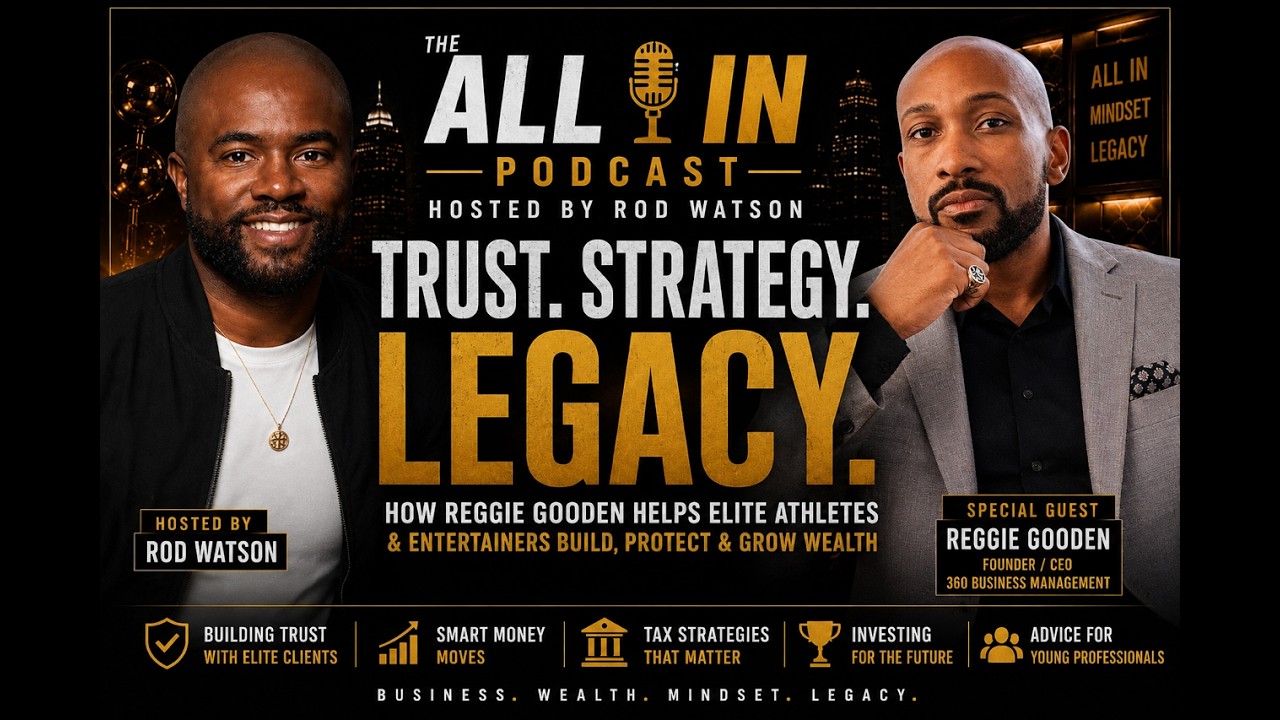
How To Become A Elite Business Manager Trusted By Celebrities & The Wealthy | With Reggie Gooden
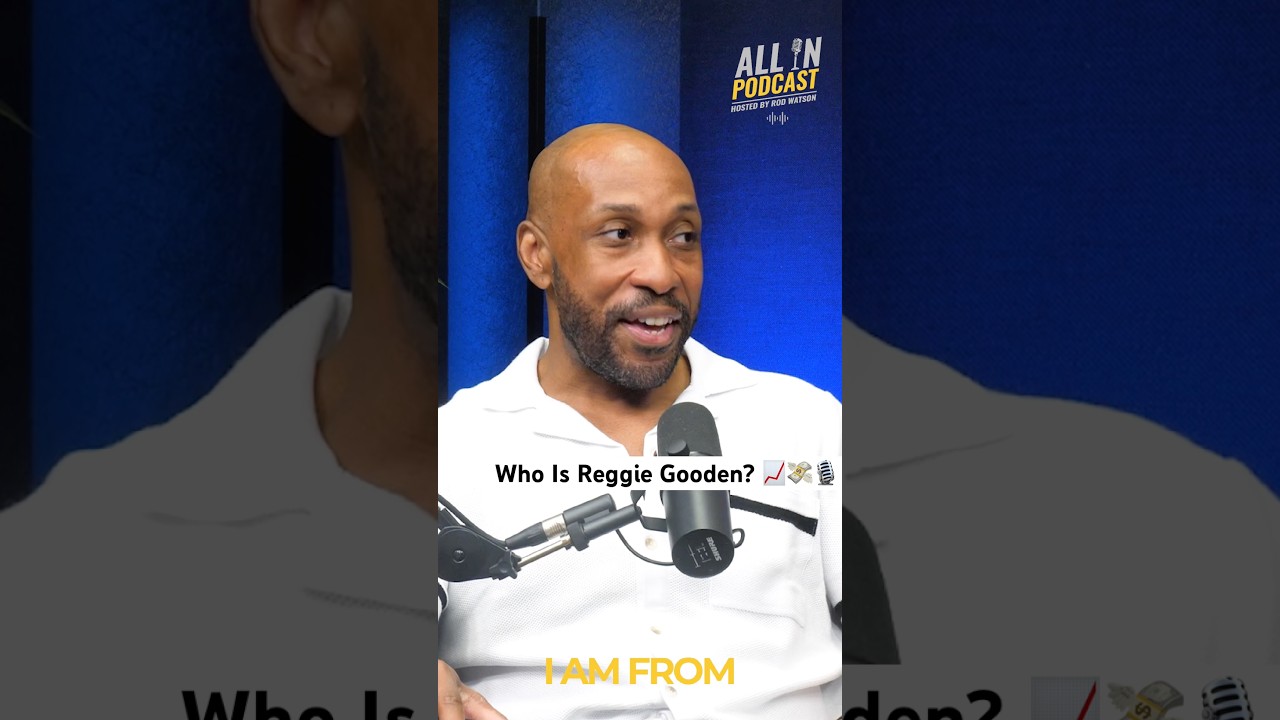
How Do Elite Athletes Really Build Wealth? It Starts With People Like Reggie Gooden!