What Really Makes Skin Glow? Find Out Here!
This content was created by Rozalia Kieliszkiewicz. This content was uploaded by Rozalia Kieliszkiewicz. This is a YouTube video titled "What Really Makes Skin Glow? Find Out Here!" (uploaded 2025-05-04). It is the first episode in a skin-health series featuring a single presenter (a holistic nutritionist) delivering a monologue-style lecture and short product demo. Topics covered include skin anatomy and body membranes (cutaneous, mucous, serous, synovial), how skin reflects internal health, the seven detoxification organs, nutritional recommendations for skin and connective tissue (sulfur/MSM, essential amino acids, essential fatty acids including omega-3/6, and supplements like MSM+glucosamine), a topical MSM face-cream demonstration, and lifestyle/fitness tips (movement, bathing/exfoliation, clean air). The presenter previews that the next episode will address colon health for skin detoxification.
Chapters
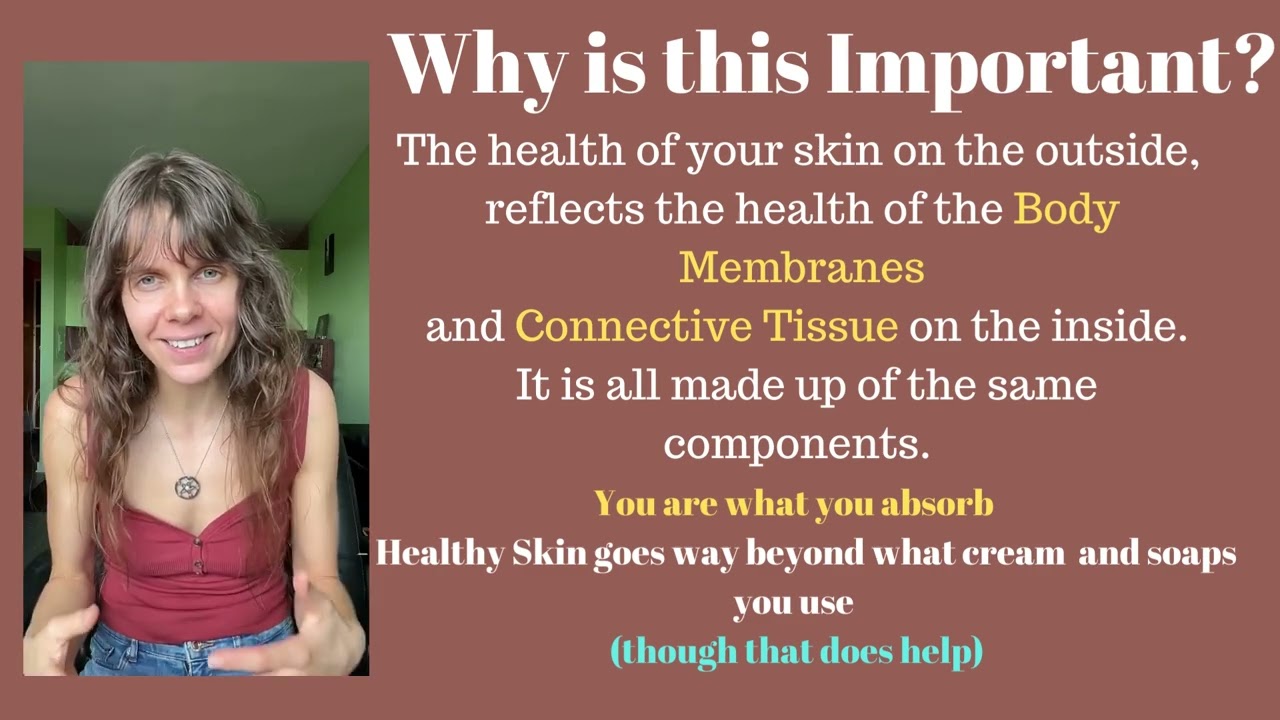
Welcome to the first episode of How to Get Healthy Glowing Skin. Hey there, welcome to the first episode of the skin series. I hope you enjoyed that 30-minute HIIT training that really helped detoxify the glands and get that sweat going for your skin. All right, in this first episode, we are going to speak about the anatomy of the skin To really understand the importance of skin health, as well as we will touch base on the 7 detoxification organs that are important in order to detoxify toxins in the body and thus have healthy skin. All right, there are 2 types of body membranes: epithelial, that is made up of serous membranes, mucous membranes, and cutaneous membranes, and then connective tissue membranes that are made up of synovial membrane. In order to understand the anatomy of the skin, you need to understand that there are 2 types or compounds that are made up of the same things or elements in the body. These are body membranes that line and cover and protect the tissue in order to be healthy. That's inside and outside. And then there is the skin that covers our outermost body parts and protects us against injuries, Flesh wounds, and toxins that come from the outside. Epithelial membranes. These membranes contain an epithelial sheet. However, they are all combined with an underlying layer of connective tissue. So there are 4 types of membranes that are considered body membranes, but it's not in fact considered completely true because synovial membranes are actually connective tissue. But all of the 3 membranes— mucous, serous, and cutaneous— need to have an underlying layer of connective tissue, so something to grab onto. Cutaneous membrane is your skin. That is what is exposed to the air, so it is a dry membrane. It has an underlying dermis, and that is the connective tissue that it attaches to. So that skin that is exposed to oxygen, this is where you find, for example, The example of what's happening in your body, for example, health-wise, you're able to see that on the cutaneous membrane. The mucous membrane is made up of epithelium. It rests on the connective tissue called the lamina propria. This is a very important membrane that lines the body cavity that opens to the exterior, such as the hollow organs of the respiratory, Digestive system, reproductive, and urinary tract. Basically, it is wet. So if it makes mucus or secretes any type of moisture, in most cases that is a mucous membrane. It is adapted or made for absorption for nutrients, for example, in the digestive tract. So it's made to absorb vitamins and minerals and amino acids and things like that. If those walls of the digestive system are not well lubricated, so the mucous membranes that line the digestive system is not well lubricated, then it is unable to absorb those minerals and vitamins that are necessary to have healthy skin. It is also responsible for secretion. So for example, those mucous membranes that you see in the digestive system Secrete iron, for example, secrete vitamin B12, even vitamin C in some cases. It would not be able to secrete those vitamins without this mucous membrane. The serous membranes are probably one of the most important membranes because they protect the major organs such as the heart. They're composed of squamous epithelium. Epithelium. And rests on a thin layer of areolar connective tissue. In contrast to the mucous membrane, which is wet and exposed, the serous membrane-lined body cavities are closed to the exterior, except for the dorsal body cavity and joint cavities. For example, the serous fluid that is found in the serous membrane is secreted by both the pericardial, which is the outer layer wall of the serous membrane that protects the heart, And the visceral layer, which is the inner layer that actually covers the organs. So there is fluid there that allows for secretion, making sure that everything is working in order, there are no toxins that are surrounding the heart, and it makes sure that it secretes the proper nutrients such as, you know, magnesium, calcium for proper contraction and relaxation of the heart, etc. So it protects those major organs. In order for it to work efficiently. The synovial membranes that are actually connective tissue membranes, they are composed of soft areolar connective tissue and they contain no epithelial cell. So these membranes line the fibrous capsule surrounding the joints, providing a smooth surface and secreting a lubricating fluid. Also, they line small sacs of tissue called bursae and tendon sheaths. These structures cushion the organs moving against each other during muscle activity, such as tendon movement across bone surfaces. This is a very important thing to understand, that our skin is able to actually show us the health of our joints simply because the fluid and the connective tissues that surround the synovial membranes that surround the joints need the same vitamins, minerals, amino acids, and elements as the skin does. So if your skin is portraying unhealthy symptoms such as, you know, dry skin, or the wound isn't healing properly, or you're experiencing acne or rashes, this can give a clear indication or reflection of the health of your joints. And if you have proper fluid that is actually secreting in between. So again, why is this important? The skin on the outside reflects the health of our body membranes and our connective tissues on the inside, and vice versa. So if we have unhealthy connective tissues and body membranes, or we have healthy joints, um, and we have healthy, uh, mucous membranes that surround our skin and our digestive digestive system, and if we have healthy serous membranes that surround our heart, then we can trust that this will reflect on our skin. So the skin is a huge indication about what's going on inside. You are what you absorb, and this could not be more true when looking at the skin. So the skin is a form of protection. It keeps toxins from seeping into the body, and it serves as a detoxification organ itself by secreting its oil glands and releasing toxins from within the body. The healthier the skin, the more resistant it is to UV rays from the sun, and the less likely it is to age quickly and form fine lines. Healthy skin and its ability to heal quickly from wounds indicates that the body cell regeneration is working optimally. As a holistic nutritionist, I offer several nutrition tips for healthy body membranes and connective tissue. You need essential amino acids, sulfate compounds, and essential fatty acids for healthy skin. Healthy fats that are essential components of the cell membrane and internal fatty tissues protect the vital organs from trauma and temperature change by providing insulation for the body. There are 3 types of major unsaturated fats: Monoinsaturated that you can get from olive oil or canola oil, given that you do not burn it. You should only have these oils cold in dressings such as salads. Polyunsaturated omega-6s, you can find these in borage oil, primrose oil, which is very good for the skin and your hair, blackcurrant oil, human milk that is very high in enzyme properties that help clean out the blood of toxins and thus promote healthy Some fungi, beef fat, egg yolk. And then you have your polyunsaturated omega-3s that is found in flaxseeds, pumpkin seed, hemp seed, walnut, and fish oil. So we talked about in the previous slide about the importance of sulfur also being in our bodies for healthy skin. Sulfur is responsible for amino acid absorption, but it is, it is most important for tissue healing. It is considered a beauty mineral, and ancestors have been using sulfur for centuries to detoxify the skin. It's not really talked about, it's not common, but it is extremely important for skin, hair, and nails, and body membranes, as well as cartilage, joint health, and connective tissue. A deficiency is not very visible. There are no visible symptoms unless one is truly aware of themselves and their body, mind, and spirit. However, it is extremely critical in the detoxification processes in its ability to escape from oxygen-based damage. So sulfur has the ability to fight against free radicals, and it really speeds up the healing and regeneration processes of the connective tissues in our joints, for example, as well as on our skin, in our hair, and in our nails. So at times it can be really difficult to get the nutrients and the elements that we need from food. We are fairly active as a society, Always in movement. And if you are an athlete, we do deteriorate and use up quite a bit of our vitamins, our minerals, and we tear tissue consistently on a daily basis. If we do not give our bodies the necessary nutrients such as sulfur, for example, to heal our tissues, then it can be extremely difficult to experience growth in our athletic performance, to experience healing in our skin. In order to have healthy digestion, in order to have less pain in our joints, etc. So a supplement that I really enjoy using, and I actually just started using it for my knee recovery from my knee injury, MSM plus glucosamine. This supplement helps protect against cartilage deterioration, but it's also very beneficial for the skin because it's high in sulfate. So it's very helpful for tissue healing, and I really recommend this for anybody who has joint health problems or joint pain or is even recovering from injury, or someone who is extremely athletic and works out consistently. Even just keeping up with this and maybe taking this supplement once in a while will help in prevention. Hi, hey, so I just finished taking a shower. And I wanted to show you guys what I put on my face as a topical supplement. So in the recent slide, you saw that I spoke about sulfate and its importance on, you know, regenerating connective tissue and making sure that you have healthy tissue healing and healthy joints and healthy skin repair and hair and nails. So you can also have sulfate not just as an ingestible but also as a topical supplement. So I recently got this amazing face cream. Oh, let me just show you guys. So it's high in MSM, which is a dimethyl sulfone and a methyl sulfanyl methane. So it's a sulfate compound. It's really thick, beautiful. Goes on the face like so. I recently got this cream because I was breaking out quite a bit on my side. You see here, but the scars are even going away. From my acne. So on the neck, makes the face a little red at first, but then you get this nice soft skin look. It just stays, it gets absorbed into the skin, and then the skin looks really soft and it's very protected against the sun. And all of these things. All right, so this amazing topical supplement filled with sulfate by now. All right, thanks. There are several lifestyle tips and fitness tips to follow for healthy skin. Our connective tissue needs consistent movement in order to regenerate and stretch out and have the space to grow. grow and get stronger. For example, we have fascia that is found all over the body. If we do not move, the fascia does not stretch out and it constricts, and it creates limited space for growth and cell regeneration. It is also very important to bathe every day. You need to exfoliate the skin. You can use Epsom salt that helps take out the toxins that are found in the body and in the skin. You can do scrubbing on the skin in order to clean out dead cells, for example. It is also very important to breathe clean air. If you live in a polluted city, for example, where toxins are very high, then do take the time to go out into nature and breathe fresh, fresh oxygen from plants and forests, etc., in order to get clean air into your body. In order to have healthy skin, you need to consider the fact that the body needs to detoxify these toxins that we accumulate on a daily basis. There are 7 detoxification organs that are responsible for detoxifying these toxins: the colon, the liver, the kidneys, the blood, the lymphatic fluid in our lymphatic system, lungs, and skin. In the next episode of the skin series, we will talk about the colon and the necessary nutrients in order to help detoxify the colon and keep the colon healthy in order to have healthy skin. All right, talk soon. Bye.
More from Rozalia




Alternating vs Bilateral Curls Which Actually Builds Bigger Arms #fitnesshacks #bicepscience