Changing the World with Moonshots? Rahul Rana explains | Hero's Mindset Podcast EP22
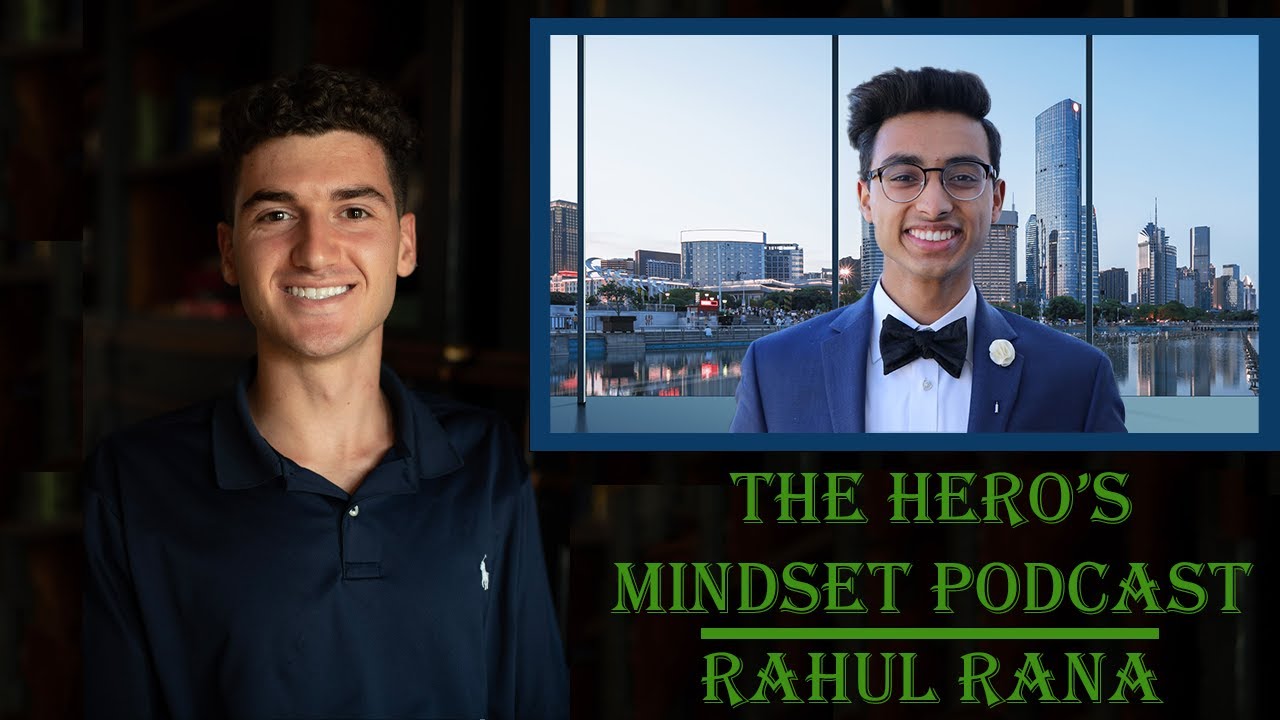
Rahul Rana, a 19-year-old Rutgers student and Lux Capital intern, explains how to build moonshot companies that solve massive problems with radical science-driven solutions. He breaks down the mindset needed: identify your competitive advantage, master cold-email outreach, and think in 10-15 year horizons. Profit and purpose can align if you build companies that consider ethical and environmental consequences.
Chapters
Hello everybody and welcome to the Heroes Mindset Podcast. Today I have on with me Rahul Rana. It's great to have you on.
Thank you for having me.
So Rahul Rana is the author of a book that's coming out this week called Making Moonshots, coming out December 7th. So I'd love to hear more about it and love to hear more about what you do.
Yeah, of course. So, so Making Moonshots, it's a deep dive into the philosophies, mindsets, and strategies that are conducive to building moonshot companies, right? So what's a moonshot company? It's really anything that's, you takes some really advanced sort of science and technology, solves a really big problem in the world, and they do so with this radically creative solution, right? So there's 3 parts of the spectrum. And basically it's just sort of a discussion on how to be like Elon Musk, Sam Altman, Laura Deming, all these names that we hear in the tech industry, but taking that mindset and just making it actionable, right? How any everyday person can sort of harness it. And sort of, I demystify a lot of the myths around these really bold, really seemingly impossible companies and how like really anyone can get started on their journey. So yeah, and I guess like outside of the book, I'm currently an intern at Lux Capital. It's a venture firm that invests in moonshot companies, deep tech startups. So that's really cool. And yeah, I've been there a couple months and currently a sophomore at Rutgers studying finance and astronomy.
So it is really cool. You are a 19-year-old student who has just written a book and you have been able to interview all these incredible people. And in a way you have started what, a moonshot yourself. A moonshot as in, you know, maybe not some crazy company, but you've taken an idea, you've taken, you know, a big step and was able to run with it. So I gotta ask, you know, a lot of the listeners that I have on this podcast are so, you know, they have big mindsets, they really want to go and make a change, you know, high school, college kids. The question is, what is the reason why so many kids are full of potential, full of skills, full of knowledge, but just
It's pretty simple. It's the easier thing to do. You know what I mean? Making moonshots, doing these hard things, it's not easy whatsoever. You have to sacrifice a lot of aspects of your life, take away some luxuries that you have. It's tough, right? And it's risky at the end of the day, so you're probably not even going to succeed nonetheless. So it makes sense why people don't want to, right? They're probably comfortable in, you know, however they live, right? Their current lifestyles. They don't really need to make some major change. And even if they have the energy to do so, it's like, do they have the— you know, they may have the energy, but like, do they have that sort of initiating sort of motivation to do so? Like that sort of like that need to do so that their life depends on it, or that, you know, their life's purpose or life's mission depends on it. So it's It's interesting because, you know, a lot of people I know, and one of the reasons I wrote the book is like, all right, like I know everyone has the energy. It's just that they're misguided, right? Like no one knows where to put it. No one knows where to channel it, right? That's the— that's, you know, one of the aspects of my book that I address, right? Like a lot of people, we want to do some positive things in the world, right? Everyone has that energy to do so, but it's just like where you channel it, like, you know, how you channel it, all that stuff. Like that's basically what I try to get at and You know, it's interesting. It seems to be like, you know, it's some sort of complex level of genius, but it really isn't. Honestly, like anyone can do it. I'm a 19-year-old Rutgers kid. Like, I'm no genius. And yet, like, I realized that, you know, having those right qualities, right philosophies, whatever strategies, whatever it may be, right? Like, it's so accessible to anyone. So yeah.
So it's really funny. You take such a realistic approach of it. You know, it's like, Doing this stuff is hard, man. Being an entrepreneur, taking a risk, being— everyone wants to be like Elon Musk. Let's be real. Everyone wants to be Elon Musk. But at the same time, it's like nobody has the guts to be Elon Musk. Only Elon Musk and a few other people have the guts to be Elon Musk. It's really interesting how you say that there is so many risks that come with it that most people aren't going to end up being like Elon Musk. I guess the big question left is, okay, so what can somebody do to take action and be like, besides reading your book, of course, what can they do to just be like, you know what, I'm going to go and take some big action, the thing I've been waiting on, the thing that I've really been pushing off?
Yeah, of course. So get started, right? Get started on moonshot, company, whatever you want to call it. Moonshot's just a metaphor for just seemingly impossible things, really hard things, right? Yeah. So my book is all in context of startups. So to get started on a moonshot company, it's a lot of things, right? The whole premise of my book, I sort of break it down into, what's the mindset like, right? What's the philosophies that you need, that sort of like the best entrepreneurs use, right? What strategies and how do you take advantage of the ecosystem, right? So to get started, It's a lot of things, right? All right, so, so first, right, you got to realize, like, all right, anyone can do this. What is sort of your personal competitive advantage in doing so, right? Like, what is that impact you want to make? But why can't— why are you the only person in the world that can make it, right? If you don't have that, I would recommend, all right, try to find that out, right? Build the skills, be extremely, extremely resourceful. I know people who at age 12, they, they, you know, cold emailed a professor at a university, ended up, you know, working for them. And now, like, you know what, 10, 15 years later or so, like they're doing insane things. Like they're literally like, you know, this person I'm thinking of, they're like extending people's lives literally. And they're working in longevity. Right. I know another person, he, what I think age 14, 15 or so did the same thing. Right. Cold emailed a professor or whatever. When you, again, 14 years old or whatever. And he was working at a research lab and then he went on to make, you know, billions of dollars. It's just insane. There's so many examples out there, just like resourceful. Right. Maximizing serendipity, right? Doing everything you can do, like, you know, you could do, even if people say, you know, it's impossible, or even if you're not even supposed to do it, just doing it. And, you know, getting started on the process, that's one of the hardest things to do. So you just gotta be incredibly resourceful. It's really intuitive, but like many people just like miss that, right? It's funny
because,
you know, once you get that foundation right— yeah, continue.
No, it's interesting because most people don't do that, right? Like most people— like I had a friend that emailed a Northwestern professor, an entrepreneurship professor, and essentially was his mentee for like 2 years. And it's like, why didn't I think of that? Or at the same time, what was holding me back from doing that? And I think so many people sort of wait to believe that they're going to be, you know, that their time is going to come. But at the same time, you think of somebody 12, 14 years old going and doing big things. It's like we could really, you know, Warren Buffett started investing when he was 13, and his one regret was that he didn't start sooner.
Exactly.
And, you know, that's the big thing. It's like, get started. That's the first one.
Yeah. And you know, it's interesting. Like, like, I'm not saying like, all right, you should pressure kids to like go start early. Like, that's horrible. Like, I'm not saying, you know, don't like, you know, like abuse your kids into like, you know, getting, becoming researchers at age 14. Like, that's stupid. That's, that's counterintuitive. What I'm saying is just like, whoever wants to get started, right? Like whoever wants to, you know, make their moonshot or do whatever they want with it, they just gotta be incredibly resourceful. Right. I'm an outsider in the tech world. Like I, by no means had I had any background. I'm a finance major. Like, by all means, like, no skills, no network. Like, I'm in New Jersey, like, it's the furthest thing from Silicon Valley, and yet I made my way in, right? A bunch of cold emails, right? A lot of, you know, just like jumping on Zoom calls or whatever it may be. A lot of, you know, when we did have in-person events, I'd meet people. Again, maximizing serendipity is so key to just like all success, right? Especially if you're an outsider, you know, trying to get into, you know, startups or whatever you want to get into. You just gotta, you know, whatever it means to maximize serendipity in the context of whatever you're trying to solve, like that's the key to everything.
Explain what you mean by that, maximizing serendipity.
Yeah, it's just making luck come to you, right? Like positioning your life and positioning yourself in a way that luck will just come to you, right? Again, I'll give you an example, right? Cold emails, right? It's one thing that all college kids dread. And yet, you know, the people who are successful, that's literally what they say every single time, right? Cold emails, cold emails. Again, cold email is just a numbers game, right? You send more cold emails out, right? Like really personalized, really concise emails to all the people you want to speak to. You actually add value to their life. Chances are you're going to, you know, get some intention in return, right? They're going to probably answer your email, maybe jump on a call and so forth. You could build a sort of relationship, right? Like a perfect analogy to like, you know, sort of maximizing serendipity, right? Like if you're in a thunderstorm and you want to capture lightning, like you're gonna have a better shot at capturing lightning if you put up a lightning rod during a thunderstorm, right? If you just like sit outside on the ground on a sunny day, you're probably not, lightning's probably not gonna strike, right? It's basically that notion, right? Like just do everything you can for luck to hit you, right? For lightning to hit you and so forth. And at the end of the day, something will hit if you stay persistent. So that's what sort of like maximizing serendipity is to me.
I often think about that. The fact that we often believe in these things known as like fate and destiny and all these things. But at the same time, you usually think of that as like, you believe that you're going to meet some beautiful woman or handsome man, whatever, right? And you're going to meet them and fall in love and that's how it's going to be. But at the same time, you're missing one part of the picture. It's like, first of all, you got to be at the bar. And second of all, you got to have the guts to go up and speak to them, right?
No, for sure.
And those things are the serendipity that sort of come along. And, uh, and if, you know, if we just lived in a cave our whole lives, or if we decided to waste most of our time, then at the same time, we're just not gonna end up maximizing the potential or the opportunities that we possibly could get.
Exactly. Yeah, 100%.
It's scary. It does scare me. So I do need to ask, and, you know, you are, you are very exceptional at this, right? Like, we have I'll be on a FaceTime call with you, and by the way, Rahul is one of my close friends, so I'll be on a call with Rahul, and literally he'll be saying, I just emailed 20 people today and I only got back 5 responses, but those 5 responses were good people and I got to jump on a call with them and all these things. How could somebody actually develop a habit of actually getting and beginning these conversations with these people and also overcoming the barriers of Sending that first email or sending the first 5 emails or anything like that?
Yeah, of course. So the first thing is just getting over the fear that they care about you, right? And it's dark to say that. I know it sounds weird, but like, they don't care about you. So it doesn't matter like what they think of you, right? Like you're never going to see them. So again, if they ignore your email, like whatever it is, like if it just like doesn't go the way you want it to be, it doesn't matter. You know, you just like move on, right? Your life will not be affected by that. Like, It's all good, right? So you just gotta get over the fear of cold email, right? Approaching people sort of, a lot of people I meet, they're just like, damn, how do you have the guts to email one of these managing directors, whatever, right? Billionaires or whatever, whoever it may be. It's just like, all right, I mean, if I could add value to them in some way, why would they not sort of reply with at least one line or something, right? Yeah. And actually adding some sort of tangible value, you know what I mean? So Look, you got to realize, like, all right, like, it's not really that scary to do. So you got to get over that fear, right? You got to, you know, again, you have to add some value to their life, right? In my, like, you know, in my sort of, you know, experience, everyone wants to be in a book. So I was, you know, I just hit them up and be like, hey, can I speak to you for like, you know, 15 minutes, put you in my book? Be kind of cool, right? You'll be on the back cover or whatever it may be. And they're all like, damn, like, all right, like, I'm obviously— I want— yeah, like, it's like, I guess it's an ego thing at that part. But nonetheless, everyone just wants to be helpful, right? They want to see, you know, sort of up-and-coming talent and they want to see people win at the end of the day, right? So just give them the opportunity to help them help you, right? So that's one thing, right? Just sort of that sort of mindset going into it. And then in the actual cold email, honestly, it's just all about being hyper, hyper personalized, yet also really, really concise and just really personable, right? No one wants to, Like everyone's busy doing whatever work they have to do in the middle of the workday. They want a break, right? They want to make friends. They want to meet new people. They want to meet cool people. So be that person, right? Be that person who people want to meet. And so for, you know, have like a solid conversation, you know, sort of like an intro email and whatever it may be, you know, throw in their words and their phrases that they really love using or whatever ideas they like talking about and your thoughts on it. Just like somehow, right? Make it super personalized, really concise and You're probably gonna get a return email. Yeah,
there was one of our mutual friends, his name's Zach, and his uncle is actually the GM of the Eagles right now. And, you know, highly respected. He's like the king of Philadelphia right now. So you gotta ask yourself, what was the way that Howie Roseman was able to become the GM of the Eagles? And I asked him, and he actually said he sent about 1,000 personal letters To, uh, to 32 different football teams, all 32 NFL teams. And after a total of about 1,000 letters, he finally got a callback or a letter back from the Eagles, who gave him a lowly position as, you know, as a research analyst. And he ended up working his way up. And we must ask ourselves the question of how many other people sent 1,000 letters, right? How many other people gave up after the second letter? Or how many other people didn't even get the idea to even try?
No, exactly. Yeah. Like there's just like one saying I heard, it's just like, you're one cold email away from success, right? Like you're one cold email away from your dreams. And it's just like, damn, like what's stopping you, right? Like if you're really passionate about something, I mean, just do it, right? Just like, again, like it's sort of like, you know, you're so close. Like everyone is always like so close with what they want to do. It's just, you know, it's just a matter of like persistence, right? Just a matter of, again, maximizing standard deviation, letting luck come to you. If you want to get in contact with someone because you want to work somewhere, right? Again, letting luck come to you, right? You got to get on the radar, right? You got to get their attention somehow. How else are you going to do that without a cold email, right? So it's just like, all right, just like, again, let the universe— I know a lot of people have paranoia, right? Basically the universe is sort of working against them. I honestly think it's like pronoy, right? The universe is like, conspiring to help you out. You just gotta let it, right? It's an optimistic way of thinking. I know a lot of people aren't, you know, don't have the right, you know, sort of circumstances to be optimistic. Obviously everyone is different, but nonetheless, like, I just feel like take advantage of that pro bono, right? The universe wants to help you, right? Just like let luck come to you and everything else will come in return. So
yeah, there's also this idea that really, really gets to me, and it's true psychologically, which is scary, right? Like there have been research studies which prove it. And it's an idea that goes back to the Bible where it was in the Gospel of Matthew where he says, may the rich get richer and the poor get poorer. And we think about that, and that is the least fair way of thinking ever, ever. But when we really think about it, you know, we could think about it in terms of a financial way. But, you know, this is the Bible. He doesn't really talk— they're not talking about this in a financial way. They're talking about this in a spiritual way. Yeah. They're talking about this in a passion way. And they're talking about this in a universal way. So when you think about it, you know, the rich in this case are the people who decide to really go and make a big decision. And they're going to get richer because they're going to get new opportunities, they're going to get new ways of thinking, right? And they're going to learn from this experience. But for the people who are poor, and as in poor, I mean the people who don't hit up people, who don't go and take any action towards their goals, they get less of the opportunities, they lose their potential, they lose their ability to go and do things because time is ticking clock, you know. Eventually they're gonna hit the point of 24 and they're gonna have to go and get a job. They're gonna lose out on their dreams. And the poor end up getting poorer. And it really does scare me. And the fact that most people say, I'm gonna take action later, I'm gonna take action later, but in reality they're just getting, in our words, poorer.
Yeah, no, no, it's interesting. And you make a good point, like it's by no means financial. Like you mean it just— yeah, I 100% agree. Like Like, if you don't get started, like, it's like, all right, like, it's your loss, right? Like, it's no one else's loss but yours. So it's just like, all right, like, that's what, like, you know, lights a fire in me. Like, all right, like, I don't want to lose, you know. I, like, I want to be, like, you know, mentally, you know, mentally wealthy, right? Mental wealth and everything. Like, everyone talks about that. Like, I, like, you know, you just gotta get started. And, and, and it really is a key to just, like, you know, all sorts of success and whatnot. Yeah. So it's interesting. Yeah.
Well, that's the thing. When you think about, when you think about mental wealth, you know, we think about— I like to talk about this in sort of like contemporary terms, you know, spending 1 hour learning or reading a book or, you know, whatever, right? Like some sort of educational piece versus spending 1 hour on TikTok. You know, like when you, when you think about that, or spending 1 hour just doing, you know, some sort of, you know, time-wasting activity. Actually, um, I'm reading about a philosopher right now called Seneca. And in his works, he says that most— we say that life is short, but at the same time, most of us waste most of our days. Often our day is just wasted.
Yeah.
It's scary. It really is. And, you know, and at the same time, that means you're slowly dying, right? That means, you know, you're getting poorer in this sense. And, um, and you think about it, and 1 hour of growing your information, growing your knowledge, growing yourself, You know, that can make a world of a difference if you end up compounding that. But at the same time, if you spend 1 hour on TikTok, if you spend 1 hour on social media, 1 hour just doing something that's wasting your time, then you end up actually depleting your ability to, um, to do difficult things. And also you're depleting your motivation to do the actual important things. So it really does stand true in the fact that, you know, the rich do get richer and the poor get poorer.
No, no, 100%. And I would be like, I'd be a liar if I didn't admit like that, spending an hour on TikTok. I'm guilty of that every day. I'm always guilty of that. And I'm like, sometimes 2 hours, but nonetheless, no, you're 100% right. And again, it goes back to what we were talking about before, right? Like sort of people who get started earlier, right? Or who just take the initiative, right? Maximum starting degree, whatever you wanna call it, right? They take advantage of compounding and that's like key, right? Like that's like compounding itself, right? It can mean so many things basically, right? Just like doing something, whatever it is, like a little bit every day, like in the long run, it'll be huge. Right. And it'll just absolutely explode. Right. Just taking advantage of sort of exponential growth and whatnot. And like, I see it everywhere. Oh my God. There's so much. So you see it in like, you know, startups, right? You see it in like sort of personal growth. I don't know. You see it in like knowledge, right? Becoming like a, if you want to say, you know, if you want to be considered an expert, like again, those people who, and I actually talked about this in my book, right? Like moonshots aren't for everyone. anyone can do it regardless of, you know, sort of financial well-being or whatever it may be. And that's another thing I want to bring up unless— but like, right, anyone can do it, right? It's just that, you know, they need that, that, that, that initiation, you know, that like initiating energy, right? Like that foundational, right, just like that most basic sort of motivation to like, you know, do whatever they want, right? Pursue whatever they want. But, you know, they gotta just remember, right, like all the people who like really are successful, like They start small and they start it, you know, regularly, right? They're not, you know, they're not like bold from the start, right? They do it like, you know, little chunks by little chunks and just, you know, those chunks just eventually, you know, compound into something exponential, right? And like, obviously I'm talking about career trajectory and whatnot, but nonetheless, right? Like if you want to be like an expert on something, right? Start like, you know, 10 minutes a day, like read something new about that field. Eventually, you know, those 10 minutes will turn into 20 and 20 into 30. And then, you know, if you do it like, you know, weeks and months on end, like, You're gonna learn so much, right? And again, just like taking advantage of that sort of compounding knowledge or that compounding sort of intelligence, and everything will come out of it. And you'll, you'll, you know, you'll be qualified enough to become an expert or whatever you want to, whatever you want to be. Just like if you want to, you know, feel like you're ready to take on a moonshot or whatever it is, right? Like that's how you get started.
And a big thing you're talking about right there is patience, right? Being able—
oh my god. Yeah.
Yeah. Yeah. Like it's, it's so bad in the fact that, you know, when I, I, when I was younger, I used to do this thing. where it would be— I used to do this like 2 times a month, let's say. You know, I'd say, I need to start working out. So I'd start working out. I'd be like, all right, cool. You know, let me do some push-ups right now. Yeah. And now for the rest of my life, I'm gonna work out an hour a day. I'm gonna eat healthy. I'm gonna do all these things. I'm gonna make this drastic change in my life. And then you wake up the next day and it just doesn't work out. You know, you don't get the motivation to do it. Your body doesn't let you do it. And it's because I was so impatient. I was looking for the results right away. I was saying, you know what, if I don't have, you know, my brain was saying this, I wasn't saying this explicitly. If I don't get these, if I don't get jacked within a month, then I'm just, you know, I'm just worthless. Or, you know, I'm just, you know, I'm not gonna be patient enough to get my way through it. I'd rather take the easy way out. So I got to ask, you know, for moonshot companies and for companies in general, do you find that obviously, uh, we've talked about your book a lot and you talk about the philosophy of moonshots. What is really going on inside the heads of moonshots? So do they have this sort of patient game, and what else is going on inside of their heads?
Yeah, no, no. And sort of in the context of moonshots, it's all this deep tech, things that are maybe 10 to 15 years in the future, and you're bringing it now. And this is heroic sort of thing. It's cutting-edge breakthrough, whatever synonym. All the— like everyone gets the point, right? All these sort of advanced things, right? Like it's inherently, you know, on this, you know, 10 to 15 year timeline, right? Because like, you know, making these like, you know, really bold companies and, you know, these like deep tech startups, like you need to be patient because at the end of the day, like that the technology needs to work, right? It needs to develop, right? Whatever it may be, all the R&D, like whatever it is, right? It's operating on this, you know, long-term, sort of this long-term view. And that's what, that's what I realized a lot of the most successful deep tech founders have. They have this long-term vision, long-term view of the technology or science at hand. And also they have this wisdom in time and space. Basically, it is this long-term view, but not only is that, but they also have to consider 2 things. Conventionally, it's called systems thinking and second-order thinking. The way I interpret those 2 as, Systems thinking is wisdom in space. Second-order thinking is wisdom in time, right? So yeah, space and time.
Wait, explain that a little bit more. Yeah, again, I'm getting a little lost.
So, all right, so, right. They're operating in this long-term view, right? 10, you know, 5 to 15 years or whatever it may be, right? To make this company, right? Whether you wanna, whether you're aiming for IPO and a merger acquisition, whatever it is, right? They're like, you know, that's sort of like the end goal, whatever they wanna be. To get started on that, right? When you're starting now, day 0, day 1, whatever it is, obviously, like I mentioned before, the best founders, they're looking 15 years into the future. But not only are they doing that, they're not just trying to predict the future. What they're trying to do is mapping out a really tangible, really possible sort of way to do so, to get to that. Obviously, no one's some sort of clairvoyant. I don't know if that's the right term. No one can predict the future, whatever it is.
Fortune teller. Yeah.
Fortune, I don't know. Yeah, I mixed it up. Anyway, whatever. No one can like forecast that, but like, you know, it's just like having the wisdom and being ready for anything to happen, right? So, all right, so let me get into those 2 things, right? Wisdom in time, right? Second order thinking. Basically it's this mental model that like, all right, based on your actions, right? What are the consequences of those actions? What are the consequences of those consequences? And, you know, the consequences of those consequences of the consequences, right? Like third order, fourth order, fifth order, whatever it may be, right? What are all the possibilities in terms of using this technology in this way, in this manner, in this context, whatever it is, right? What do you have to do to get to that sort of 15 years in the future? Or obviously it's relative, it changes for whatever product, whatever technology, whatever company, but nonetheless, you know what I mean, right? So basically just knowing every single, every possible thing that could happen, preparing for it. My boss, right, Josh Wolfe, he always says failure comes from a failure to imagine failure. Hmm. Like, let that sink in. Like, that was, that was like deep when I, when I first heard that. Like, right, like failure comes from a, you know, a failure to imagine failure, right? Like if you don't imagine it, right, if you're not, if you're not prepared for every single possibility, you're going to fail, right? And basically having that mindset, right, knowing all the second, third, fourth, fifth order sort of consequences and whatever may happen, like you got to have that wisdom, right? Like a perfect example, like, and it's by no means realistic, but it just encapsulates it really well. Like back in what, like 2003, 2004, whatever, right? Like Mark Zuckerberg, like, all right, he definitely never forecasted, like Russia's gonna use Facebook to hack American elections, right? Or Facebook is gonna contribute to some mental health crisis or some privacy issue, right? He obviously never, what normal person would ever envision that, right? But that's the thing. That's what moonshot founders have to do, and then the best ones, that's exactly what they do. And they, again, obviously, you know, it's relative. They're maybe not gonna think as extreme as, you know, Russia hacking, you know, the elections, but nonetheless, right, like, they know every single thing that could happen, right? What's gonna happen culturally if this product, you know, hits a million people, right? What happens if there's one bad actor that uses this product, or, you know, this technology, or whatever it is, right? All these hypotheticals, like, they're ready for that.
Yeah,
they're always ready for that, right? So that's what I mean, right? Wisdom and time, right? Yeah. Um, you're saying something?
No, that's the thing. You're talking about radical changes here, you know, radical changes in, you know, maybe the structures of society, or even, you know, this applies to the radical changes within yourself. You know, every action has a reaction, every action has a consequence. And, um, and the whole thing is, you know, if you're just— what Mark Zuckerberg did, for example, right? Or when you throw in autonomous cars, right? Like, that's a moonshot. What they did was they really re-envisioned the way that we should interact. And by adding a new way of thinking, a new knowledge, something, a new system, you're tearing apart the old system and you're losing the stability from that old system. So I think, I think it really is interesting. I also did love, you know, failure comes from the failure to imagine failure. I love that. That's, that's— I was thinking about that a lot, actually. I'm looking at the movie The Lion King right now. And, um, it's funny. It's, it's so funny because we all know The Lion King, and you gotta ask, it's like, all right, Mufasa was the perfect king. He was the perfect guy.
Yeah.
Yet he was killed by his brother. It's like, how did that happen, right? Like, what did he do that was wrong? What was his fatal flaw? And his fatal flaw was that he said— he said— he tells Simba, he goes, look at our kingdom. Our kingdom is everything that the light touches. But at the same time, don't look over there. Don't look to that place over there. And that's where Scar lived, right? And Scar ended up killing him. And his problem was his ignorance. You know, like, we're often, we're often so uneducated, right? The failure comes from the inability— for the failure to imagine failure is really saying often we are ignorant. Often we don't have enough knowledge and enough wary to really figure out what is going to go on. So, um,
Yeah.
So it's really important. It's really awesome to see. that this idea of not being ignorant, of looking at every single possible option, is used in founders too. That's incredible.
Yeah, no, 100%. Yeah, it's also a discussion on morals and ethics and stuff. In my book, I make this sort of call to action that not only do we need all these innovative breakthrough, whatever, oh fancy companies, we need wise companies. That's huge. We need companies that actually realize the consequences of their action. That the world operates in this complex system that, if they're chasing profitability, all right, there's going to be some downfalls to that. There's going to be some downside, and they got to be aware of that. They got to mitigate that. We can't live in this society where companies are destroying the environment, or treating workers unfairly, whatever it is. Everyone knows all the common sort of complaints and problems that we have in the world. It's just like, we need companies that are wise, that actually consider all the consequences, all the consequences of those consequences, and so forth, right? In terms of, you know, politics and economics and then, you know, technology and sociology and morals and ethics and philosophy, like everything, right? You gotta be ready for it all. And again, the best founder— the best moonshot founders, like I realized that they do that and the evidence is in the work. So it's really interesting. Yeah.
Yeah. So what is the benefit? You know, what is really the benefit of saying, I'm not going to care about profit, but in the end, it's going to bring me more profit. What really goes on there in a founder to be able to say, if for the long term, it's better not to focus on profit now?
It's interesting. I mean, it does come down to personal morals, obviously. I'm not some hard capitalist or whatever. It's just profits at the expense of everything. I'm not like that, obviously. Me personally, I think like, all right, like we can't go down this level of, you know, sort of unchecked capitalism and whatever it is, right? To let companies do whatever they want to. Like that's just not good. That's a recipe for disaster, right? Basically what I'm just saying is just like, we need those, we need wise companies, right? Like I said before, like we need wise companies, companies that actually like, actually give a shit, right? Like they give a shit about things that are not in their purview, right? Maybe the effects of all their operations, but maybe it's not in their, you know, their sort of, first or second degree sort of consequences of their actions and whatever it is. It's so simple. I mean, it sucks when you see companies that are— again, this is the most simple example I can think of— those that are polluting the environment, those that are contributing to some sort of crisis or whatever, or accelerating some crisis or whatever it is. There's so many examples out there. It's just like we need to stop that. We need to take those people out. Like it is this sort of like new age of technology and science and business and whatever. But just like, you know, like everyone used to operate under sort of like, you know, Milton Friedman's like, you know, doctrine that like, all right, like the sole purpose of business is just make profits, right? Help stakeholders and stuff like that.
Mm-hmm.
Not shareholders and so forth, right? Not care about all the stakeholders, but only like, you know, people at the top or whatever, right? That's changing right now. Now we live in this world where not only does, you know, Obviously profitability is huge, like you need to be profitable, but you also have to be ethical, right? You need to be moral, right? You gotta consider all those things. And it's interesting, right? Like I forgot where I heard this, but just like in the last like 20 years or so, right, those— the companies that had like, you know, that engaged in a good amount of ESG work, right, like, you know, environmental, social, whatever work, right, who had like a good sense of corporate social responsibility, right, like those— all those companies, those are the ones whose stocks boomed, right? And the ones who didn't, those are the ones who failed. Yeah. Really? There's like a whole thing. I think it was like, who's the one guy, that one politician who made the movie all about environmental, Something After Tomorrow, I forgot. It's that one politician who like really campaigns on— I totally forgot, I'm drawing a blank. Anyway, he predicted, all right, like the best companies are those who have those, you know, those ECG initiatives, right? And he was right. So again, like, we gotta get rid of that, that sort of like, you know, profits at the expense of, you know, environment or morality itself. We gotta get rid of that. And it's interesting, right? Like, obviously it's interesting because like so many people, it's subjective, right? Yeah. So many people have their own sort of beliefs, their own morals, their own ethics, whatever it is. So I don't know. I don't know. We'll see. It's definitely a fun sort of thought. That's a good question.
So yeah, so I mean, how could we— so I think everyone sort of agrees on a societal perspective that yeah, we should get rid of this slaving away for profit, you could say. But the hardest question is how, you know, like what is the way that somebody could really go in and say it will actually be better for me individually to stop polluting the environment, or to stop accelerating this change? What is the thing that really gets in the brains of the how?
Yeah, of course. How we get companies to do that? Startups, right? Startups, like the newcomers who sort of disrupt that space and get the old guard out, right? Like that, again, moonshots, right? Doing sort of David and Goliath stories, right? That's why I love startups, right? They just like, they just caused like so many, so many problems for like the old guard and whatever. And yeah, I love a good underdog story, you know what I mean? Like, you know, it's on one hand, right, it's like the way to get sort of, you know, take those, those bad actors out of, out of power and whatever, right, is to just, it's to simply, you know, introduce, you know, some sort of solution or some sort of company that takes them down, right, systemically, right, like has that competitive advantage, right, has all those moats. defensible moats and whatever it is, right? And then we can get into business terms and whatever, but nonetheless, right, like it's just people who can overpower them in this profitable and also ethically sound way.
Yeah, of course.
And yeah, again, it's all subjective, right? But nonetheless, that's one way. And if you could prove that, there you go, right? Everyone will be on your side. So I don't know, it's interesting. And I'm saying, I don't mean that in absolute by any way. It's hard to talk in absolutes in regards to this. Like, again, people have different ideologies, right? Like, I'm like, you could, like, people could probably tell, like, I'm sort of like, you know, I'm like, like, I'm as liberal as it gets, right? You could probably tell through conversation, just like, you know, politics, that's all, that's a whole other thing, right? Everyone has different ideologies. Like, it's not like, all right, like, people, people on the right maybe, or, you know, sort of hardcore capitalists, they're probably gonna, you know, argue with everything I'm saying right now. So it's tough. Like, you gotta change the— Social attitude, right? You got to change the social infrastructure, right? Social incentives, like everything. And
well,
that's a whole other conversation.
Yeah, no, I mean, I think, I think it's just wonderful just looking in to see how amazing electronic vehicles are doing, honestly, right? Like electronic vehicles are actually just taking, you know, they're, they're doing a better job than gas vehicles. And if you look at it, in a few years, there's just going to be more electronic vehicles than there are Gas vehicles, you know, and that's just because they were— and nobody's gonna be mad about that because, you know, they're, they're re— eventually electronic vehicles are gonna cost less than a gas vehicle. Like, I think I want to buy a Tesla when I'm older, and I'm not gonna buy a Tesla because it's, uh, because it's, you know, more sexy or more stylish or whatever. I'm gonna buy a Tesla because it is so much more cost efficient to buy a Tesla. Always, always. Because you look at a regular electronic— a regular gas car, its value declines after about, let's say, 150,000 miles, 200,000 miles. But an electronic vehicle, a Tesla, can go like 500,000 miles without ever breaking down. And it's such a beautiful thing because these electronic vehicles are actually just taking over and they're gonna make the space of cars so much more environmentally friendly as well as— Mm-hmm. As well as profitable.
No, yeah, no, you're so right, and that's like one misconception actually I came across in my research, right? Whenever, you know, talking about moonshots, right, you know, all these sort of, you know, societal positive impacts, whatever it is, right? Like everyone thinks, like, you know, maybe like it's sometimes it's called like, you know, impact investing or sort of, you know, social sort of whatever, like social entrepreneurship, whatever you want to call it, right? Like Everyone thinks that those things are inherently unprofitable, right? They're charity work, whatever you want to call it, right? A lot of people sort of look down upon it, right? That it can't beat sort of traditional, extremely optimized manners and whatever it may be, no matter what their external consequences are. But that's changing, right? There's so many companies out there, startups now I would say, maybe not well-established corporations, but they're getting there, right? They're getting there. They're the ones that are really disrupting again, the incumbents, the old guard, but they're doing so in a way that doesn't— that's not charity work. It's not like— it's still profitable. It's still a sound business. It's an efficient business. And yet it also considers all the sort of second, third order, whatever consequences, and it's actually wise. It actually cares about whatever it does to the world and whatnot. So it's interesting. Once we already saw that, we're beginning to see, I would say, that marriage between profit and purpose. And I think it's just gonna be huge and it's gonna be a lot more huger in the future. And I'm actually really excited. That's what I wanna be investing in, right? Like, that's what I— I'm gonna give all my attention to that. So yeah.
Well, that's what's so wonderful about it. You know, like hopefully, you know, I think we all are just inherently optimistic in terms of essentially everything, right? Like we— I can imagine the people in the 1940s in America just saying, I really hope that, you know, America and Britain beat the Germans, right? Like everybody's saying, I hope that happens. But at the same time, there's a chance that we'd all be speaking German right now. Like it's true and it's scary, you know?
It's scary.
And I think everybody's saying right now, it's the same example of everybody saying, I really, I really hope that we're gonna fix this environmental crisis. I really hope that we do. But there's, there's this little inherent optimism that's inside of me, that I'm just like, we'll figure it out, we'll do it, it'll happen some way. And I think that's the wonderful thing, it's going to happen through startups, it's going to happen through some new invention, new idea, new— yeah, we'll go with new idea that just absolutely disrupts the market and changes the way that we think about things.
For real, yeah, yeah. You bring up a good point, optimism, right? That's so huge, and I think about optimism in sort of 2 ways, right? Just in the context of deep tech, every deep tech founder, they're incredibly optimistic. I know one person, I always say this, the boldest company, and my friend Justin, if he hears this, he knows I'm talking about him. The boldest company that I've ever heard of was my one friend Justin. He's trying to build 3D printing factories on the moon. Fuck. He wants to bring the infrastructure up to the moon and the infrastructure will make a factory out of itself, right? Again, 3D printing. And then it'll make, you know, it'll be this factory where you could like just like self-produce sort of, you know, all the things that happen on the moon, right? All the buildings, infrastructure, whatever, right? It's crazy. It's bold like that. That's the boldest thing I've ever heard of. But again, it's just people like that. Those are the people who are changing the world, right? The really, really optimistic people. You know, these are the techno-optimists. Like that's what they call themselves, right? Like those are people that are really going to make all the moon shots, right? Every single person who has ever gotten successful in terms of deep tech and moonshots, that's what they have, right? That crazy, crazy optimism. But it's also being pessimistic enough, like, all right, if this problem, or sort of like, if the solution is not realistic whatsoever, they pivot. They change their idea. They change whatever. They pivot. So you sort of have this balance between extreme optimism and extreme pessimism. So it's interesting. But one thing I did want to mention though, just in terms of pessimism and optimism, I always think there's just like— Yeah. There's basically like sort of like 2 sort of people in the world, right? You know, you have the pessimist and optimist, and, you know, obviously everyone knows that. It's something, you know, sort of grand, or it's not some, you know, new theory or whatever. But what gets me is just like a lot of people, they equate pessimism to realism, and I think that's just so wrong, right? It creates a cycle of sort of like learned helplessness also. I know we've talked about this before, right? It's like, you know, equating pessimism to realism. It's not, right? It's 2 different things, right? Now obviously, you know, there's times where like, you know, pessimism is warranted, right? When pessimism is warranted, that's realism, right? When something might go wrong and then it was proven, right? You have evidence of doing so, all right, you gotta change, right? That's being realistic, all right? But when it's for the better to think something will go wrong, and you gotta be sort of like, sort of, it's almost like you gotta be actually like one term that I heard when I was doing my research, right? Being passionately dispassionate, right? You gotta be like, Optimistic, obviously you have to be optimistic enough to make this moonshot, do whatever it is, but you have to be pessimistic enough, dispassionate enough to pivot, to change right away, right when you can. And even when you see this sort of a quick obstacle or whatever it is in this uphill journey, as opposed to something that's a definite failure, again, optimism, people are gonna get over those obstacles, but they're gonna realize, all right, if you see this thing that is a fundamental failure, all right, you change, you change your course. whatever it is, right? And, you know, it's— they, you know, these optimistic people are there, it's empowering to them, right? It motivates them. Pessimistic people, right, like it's, you know, it's going to turn them away, right? And I know, like, you know, we spoke about this before, right, like learned helplessness. That's like the key to everything, right? It's just like— Yeah. It's having this mindset that's just like restricted to growth. And, you know, whether it's, you know, intellectual, moral, or physical growth, it's just like, you know, any sense of improvement or progress forward, like Again, those people that equate pessimism to realism, and I just think it's just a recipe for disaster. It is learned helplessness and so forth. And it's like changing your perspective is so key. It's just like if you view things in a pessimistic light, then you're also in the cycle of, all right, you think being negative is normal, it's just going to spiral into disaster and whatever.
It's scary.
It's hard to change it. It's scary, but Again, the people who actually win in the end are those who are optimistic and sort of extremely optimistic, but have that little sense of, all right, have this little sense of realism, right? Not pessimism, but realism. So I don't know, it's interesting. But nonetheless, it's pretty interesting, yeah.
There's a great quote that I love. It was actually by Tom Hanks. He goes, if it were, if it were, if, let me get it right. So it was a great quote. Yeah, Tom Hanks, he goes, if it were easy, everyone would do it. It's the hard that makes it great. And when you talk about pessimism versus realism, that's exactly what it is. A realist says, I'm gonna make this moonshot, I'm gonna pursue this career goal. You know, I think so many people end up saying— I see this in my own life, you know, there's, there's the idea between being an accountant and doing what you want to do, being a lawyer, being a doctor, and doing what you want to do. Mm-hmm. And so many people take the pessimistic route and say, there is no chance that I could succeed in doing what I want to do, right? You know, starting up a company, being an artist, right? There's that idea of, you know, quitting your lawyer job to become an artist, you know, and the idea that the pessimists would say that there is almost no chance that I do it. A realist would say, there's a very little chance that I could do it, but I think I could do it, right?
Yeah.
You know, just, just being able to, just being able to put that in perspective and say everything requires risk. It's, it is really interesting to go and sit back and think about the person who decides not to get started, right? Because that's most of the people. Most of the people decide not to follow their dreams. Most of the people choose the accountant over the Over the thing that they really, really want to pursue and the goal that they really want to do or the company that they really want to start. So I must ask, you know, what is it that gives somebody that courage?
That's tough. That's tough. It's tough. But in my— again, in my research, like what I realized is just like, it's the people who let themselves be courageous. Like those are the ones who win, right? It's just like that personal sort of, you know, hindrance. You gotta get over that, right? That sort of, you know, the mental obstacle. Like, it's all mental, right? I say in my book, right, like, think about making moonshots. It all starts with the mental, right? If you don't have that sort of, you know, mindset to some degree, obviously, you know, no one's like perfect or whatever, but just like, you know, you don't have that sort of those qualities, right? Letting yourself be courageous, right? Letting yourself be bold. It's not gonna work out in the end, right? And it's scary, obviously. Like, not everyone is, you know, in the right circumstances, right? Not everyone has, you know, the financial stability or well-being, right? Maybe, you know, the familial sort of, you know, having maybe like a stable family or whatever. Everyone has different circumstances. Like, I totally get that. But one thing that everyone can have, I think at least, I'm no expert, but I just think like if you could, you know, let yourself be courageous, then you will be, right? Yeah. It's so simple, right? It's such a simple perspective shift, but I think like that's key, right? Again, obviously some people can't, right? They have things they gotta deal with, right? Mental health, right? Obviously that's important, right? They gotta feed their family. Obviously that's way more important than, you know, making a company, right? Obviously you gotta worry about that, but it's just like, all right, like if you let yourself be just a little bit more courageous than, you know, than yesterday, like it'll, again, it'll compound, right? Something good will come of it and your risks will sort of turn into reward at some point in time. I'm confident in that, right? So I don't know. It's interesting. Yeah.
Well, that's the thing. I was thinking about this the other day and I was like, all right, what is it that will be like allow somebody to take risks? And you just, you just described it so well. And the fact that, you know, it's this, it's this debate that we have between like, you know, our, our logic and our emotion, right? You know, you think about somebody who really decides to make a change in their life, you know, let's say, let's say, you know, um, that's something that I guess I'm an expert in, right? You know, losing weight. Mm-hmm. For somebody who says, somebody says they're going to lose weight, they're not sitting there and they're like, I was sitting in my office and I was trying to calculate the mathematical probability of me dying if I decided to eat this weight. And, you know, nobody talks about that. Exactly. What most people talk about is, I decided to make a change to, you know, for my kids, or I couldn't take it anymore, or all these answers to to really make positive change in your life lie with our emotions. So when you talk about letting yourself become courageous, you're really saying, I'm going to shift my pessimistic mind, my rational mind that really focuses on the negatives, really focuses on risks, really focuses on what happens if this happens, what happens if this happens, what happens if this awful situation happens that I really am not prepared for. Instead, You let yourself be courageous, you let your emotions take over, and that passion that exists inside of you will really be able to manifest itself and allow you to do the things that your rational mind would never allow you to do.
Yeah, yeah. Now it's also like, it also gets like, it has to be like, you know, said that like there's some things you can control and some things you can't, right? You said you're reading about like Seneca before, right? Like all about stoicism and whatnot, I'm sure. Like, Obviously there are going to be external factors you just have no control over, right? You can't control other people. You can't control, you know, the environment. You can't control whatever, right? It's, you know, it's sort of like, you know, realizing that and letting the internal things you can control, right? Again, let, let the internal like be whatever you want to be, right? Let yourself be courageous, right? Like do everything that is, you know, considered courageous to yourself, right? In whatever context, whatever circumstances you have, like. Again, whatever risks that you can take in a healthy manner, just letting yourself do that, like, again, internally, right? You can't worry about the external and you can't let the external affect you, right? But if you could, you know, again, if you can make the external internal, right? Find some way to control it. There you go. Like, that's one step into the right direction, right? It's interesting, right? This distinction between internal and external and what you can control and what you can't. And I don't know, I just feel like, you know, the most successful people, they, they, they make whatever is considered to be external internal, right? You know what I mean? Like they, they, they, they, they, you know, they're strategic, right? They're resourceful, whatever it is. Again, they let luck come towards them and they make the external internal. I just thought of that on the spot. I don't know if that's true, but yeah.
No, I mean, it's, it's very true. I was actually reading about it right before we got on this podcast actually. So I read this book, it's called The Morning Rituals, just Morning Rituals. And what it talks about is literally just the morning rituals or daily rituals of these amazing people, the successful people. This guy just put together, and it's like one small page each. I just read a page a day of one of my heroes, one of these really important people that have been able to create a daily ritual that has allowed them to succeed. And the one that he talked about was Toni Morrison. Toni Morrison. is a— I'm sure you've heard of her. She's a very popular writer. Yeah. Sold many novels in the past, like multimillionaire, is one of the few successful authors. And it's funny because she, if you were to predict that she would be— if you were to look at everyone's situation out of like a million people, you would say that she's probably maybe the least likely to succeed. Worked a 9-to-5 job her whole life. single mother of 2 kids and was very poor, like struggled and really had very little time to herself. But at the same time, like you could say those were all the things that were outside of her control. And at the same time, she said, all she said was, I got 2 hours today. I got 2 hours of writing to do. I could control that. I could do it, right?
Yeah.
And she got it done. You look at someone like J.K. Rowling. J.K. Rowling everyone knows J.K. Rowling. She was on Social Security right before she became famous. She was literally poor beyond belief, also a single mother, just absolutely so unlikely to succeed. But at the same time, all she said was, I am going to write. I am going to focus on what's in my control. I am going to write the best book series that I could possibly deliver. And that's all she did, right? So obviously, you know, there are so many things that are outside of our control, but—
Yeah.
At the same time, it's, it's so beautiful to look at the people who've gone through these insurmountable obstacles. You know, the last person I had on my podcast, he deals with paraplegics, right? Paraplegics, um, people who suffer from neurochemical disorders. So literally people who don't have access to their arms and legs, People who have amputated their arms and legs. Eric LeGrand is one of the people I had on my podcast, and he's actually one of his physicians. He talked about it. He goes, there are some people who literally don't have access to their arms and legs, but they are so happy.
Yeah.
How is that possible? The most amazing part about it is we can look at these people and say they had such little to control. They had so many things that were outside of their control, yet they focused on the little thing that they could control. And that was what made all the difference.
Yeah. Yeah. You know what's interesting? I was sort of smiling when you were saying that. To bring it back to moonshots, right? Deep tech and everything. There's this one company I really, really love that's literally, you know, fundamentally giving people control of their lives. Right. I know 2 of them actually. I just thought of the second one on the spot. Right. First one, right? CTRL-Labs. I'm probably— I probably told you about them, right? Obviously I'm biased. It's a Lux Capital portfolio company. Nonetheless, I love it. I love it. And I love the founder as well. He's really interesting. He has a really interesting life, but nonetheless, Control Labs, what they're doing, they made mind control real. They literally made it a way where this machine that you put on your wrist, it could capture your intent. It captures the fired neurons, the neurons that carry whatever intent, and it translates that onto whatever robot or computer or whatever it is, right, into the machine, right? So essentially, right, you could control an external object with your hand, right? Or with, you know, with your mind. So, so long as you have the intent. Again, like things like that, that's what I mean. That's what I love about moonshot companies, right? They're literally giving people more control over their lives, right? Think about like paralyzed people, right? So again, so long as they have the intent, they could move whatever, right?
Wait, wait.
They could have like a, you know, an external limb, right? And, and, you know, just like thinking about it, right, having the intent and they could, you know, move, move this, You know, whatever type of machine or whatever it is, right?
You're saying that they could, like, their brain goes to a prosthetic and the prosthetic literally, um, literally goes back to their brain and the brain could actually pretend like it's an actual arm and they could grab something?
Not, not necessarily, right? So basically, right, like, all right, so like, and there's 2 different companies, right? One is Control Labs, another one I was thinking of is called Atom Limbs. So AtomLIMS does something similar to what you said, right? Basically what CTRL-Labs is doing though, right? Like they're sort of, they sort of built the operating system of this whole concept, right? Basically like, all right, like you have this thing on your wrist, right? This sort of, this like, whatever, like this like wrist thing, right? It can capture like each individual neuron that is fired from your brain to your hand, let's say, right? All right, so it's on your wrist, right? Let's say it's controlling, you know, whatever intent you're sending to your hand.
Okay.
Like this machine, right? It captures those individual neurons. translates it, and then you could, you know, it sort of, you know, puts it onto whatever machine, right? A computer, an external limb, whatever it is, right? So literally, right, like if you're thinking about something, like it'll happen on, you know, said machine, and it's just like, all right, like you're literally giving more control to people who, who have no control, right? Like you're— Mm-hmm. That's like, like you're given more control. You're making— you're like, it's crazy. Like I'm jumbling my words. It's just like, it's so cool. Like you're literally increasing human happiness, right? Human control. over people's bodies, right? Over themselves. Like, that's, that's what I love about, you know, the philosophical aspect of deep tech and stuff like that, right? Like, literally, you know, reducing human suffering. And, and, and this, you know, the sci— the most sci-fi thing you could think of, right? Mind control. Like, that's insane. It's crazy, right? And then, you know, another, another company, right, to my point, right? Like, it's called Atom Limbs. I met the founder, really cool guy. I met him on Twitter and stuff. And like, again, like, he has the same thing except it's for limbs, right? So he works with people who you know, amputees and whatever it may be who lost their limbs and stuff. And like, there's like, the technology works. Like I've seen it work. Like he has videos of it, right? And it's legit. Like they think of something, they try to move their arm and it moves their arm, right? Person, like he has like a lot, he's, you know, posted a lot of videos. So you see like this person who lost his arms, right? He's like moving his bionic arm by mind control. Like it's insane. It's just like crazy to think of it.
It's connected to his body. Is that what you're saying?
Exactly. It's just this concept of, you know, Making the external internal, right? Like, like literally fundamentally increasing your control over, over whatever it may be. Technology can do that as well. It's interesting, right? Like sort of philosophy and technology, but nonetheless, that's what you said reminded me about it.
No, it does really freak me out. And just the fact that, you know, we are— yeah, like I love that you're increasing human happiness. Like that is so amazing to see that. Um, that this technology could be used for good. I do worry about companies that are using this technology for bad, like mind control. Obviously, it's a scary thing, right? We worry. I was actually talking to my barber yesterday and just got a nice haircut. Yeah, nice haircut. And he said that he worries that one day we're all going to have a chip in our brain.
Mm-hmm.
He worries that one day, you know, um, we're gonna be under some, some crazy mind control, um, you know, scheme put up by a government, by a company, by anything. And I do, I do worry. Do you think that these, um, these companies, or, you know, these technologies have the potential to do bad? Or at the same time, do you think that these are— this is my point of view— I think that some of these things are inevitable. You know, like Elon Musk says, AI is inevitable. It's just a matter of whose hands it ends up in.
Yeah, no, no, that's 100% right. Like, again, that's what goes— and first of all, like chips in our brains and whatever it is, like that's not going to come within the next sort of, you know, next, you know, no. Yeah, it's, it's a long— it's, it's, it's in a long way. Like actually widespread adoption into that. Like, I don't think we, our generation has to worry about that at least. Nonetheless, right? That's what I mean when I say wise companies, right? People who actually understand the consequences, the 9th, 10th order consequences of making this technology, making this breakthrough, commercializing it, making it into a company, making it widely accessible to everyone. That's what I mean when I say wise companies, right? People got to realize, all right, again, what happens if a bad actor harnesses this sort of science or technology? what's going to happen. And I got to stop that. Again, it's scary, but one thing I say to everyone, don't bet against human progress or human innovation. Don't. I hate it. It's stupid. Why would someone bet against human— I don't know. Nonetheless, the people who do progress us, science and tech progress and whatever it is, those are the people who have to be wise. They got to be cognizant of, like, all right, if someone harnesses this, they got to do it safely. They got to protect against that. So it's interesting. Again, just wise companies, wise founders, and so forth.
Hey, I think that is a perfect place to end it. I have to respect your time, of course. So you are releasing a book, and your book is all about that exact idea, trying to create Wise companies, wise founders, people who are not only going to use, you know, be successful in business, but also at the same time, uh, build, build a company that is good for everybody. So,
Yeah.
I must ask you, you have a book that is coming out. I will be posting this episode on December 6th. Your book will be posted on Amazon on December 7th. And of course the link will be right there. You need to make a pitch for everybody, young people who are thinking about starting up a company, who are thinking about making a big action in their lives, which is making maybe a moonshot that they've been sitting on for a while. Why should they buy your book, Making Moonshots?
Of course, yeah. So, said person should buy my book, Making Moonshots, because basically, all right, look, we lost that innovative edge in the last century. I say in my book, right? Panama Canal, Manhattan Project, Apollo missions, Human Genome Project, whatever you want to say. We used to be capable of such big things, right? Such groundbreaking moonshots, right? Deep tech, whatever, right? These projects that fundamentally progressed human ingenuity, right? The science and tech advancement, science and tech progress, whatever you want to call it. They're all the same thing. But nonetheless, who literally pushed humanity forward, right? We used to make all these things, right? All these discoveries, all these breakthroughs, whatever. We lost that, right? Now all of our best talent is going to maximizing ad revenue and not— it's not going to saving lives, right? Or making some breakthrough that we need in whatever industry and in whatever context, right? The people who do those things that we need, those are moonshot founders, right? We need more of those people and we need them because there's so many problems in the world and they're not going to be solved with conventional ways, right? They're like, we've been hacking at these whatever problems again, there's so many of them. We've been hacking at them for decades. There's no progress. And it just goes to show the conventional way of thinking, the conventional way of doing things, executing, making companies, it's not going to work. We need to get back to that future that we should have been on, the future that never was. We need to build the future and the right future. The people who do that are moonshot founders. I'm giving you the toolkit on how to do that.
It's beautiful. It's like you're going to get so much purpose from building a company, you know, like that inner sense of purpose that comes from building a company that not only drives for profit, but drives for good, drives for societal good. And correct me if I'm wrong, but that's what moonshot companies are all about.
That's what it is. That's what it is. We need more of them.
Hey, I agree. And anyone listening, buy Rahul Rana's Making Moonshots, and you could be one of those people. I think, I think one of the greatest ideas that you put forth in this entire book, in this entire podcast, is that anyone can be a founder. Anybody can do it. You just need to get the guts to go and do it. So first step, first of all, first step, listen to this podcast. Second step, buy Rahul Rana's book. Rahul, it was great having you on.
Thank you for having me here.