Beatanxiety.Me - Episode #2 - Healing Anxiety (what...you kray kray)
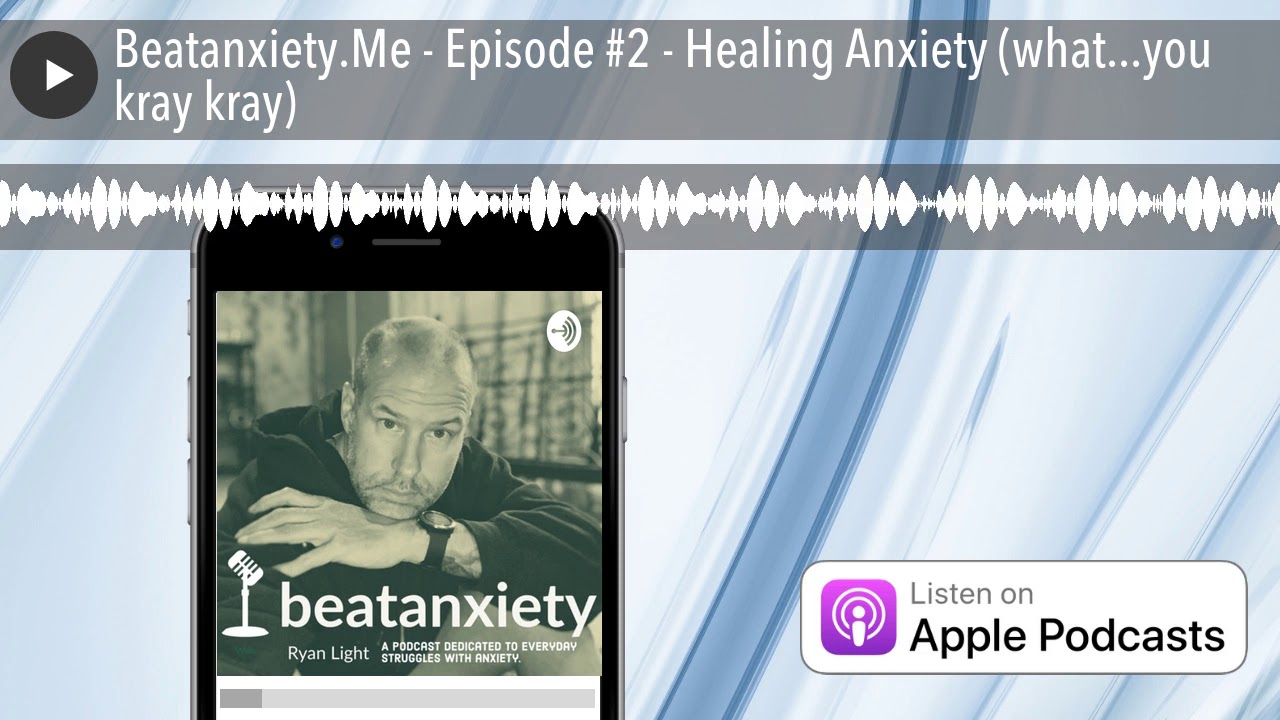
In this second episode of the BeatAnxiety.me podcast, host Ryan Light introduces himself as a former life coach turned anxiety coach with over 30 years of personal experience battling anxiety, OCD, panic, and depression. The episode opens with a brief plug for Anchor, a free platform that lets creators record and publish podcasts across multiple services. Ryan then shares his nervousness about speaking on a podcast, describing how he confronts his own anxiety by simply doing the work of creating content. He explains his core concept that anxiety can be "healed" by shifting the mindset from viewing it as a wound to seeing it as a condition that can be managed through living life despite the anxiety. Throughout, he emphasizes the importance of changing how people think about anxiety, offering a hopeful perspective that healing is possible through intentional practice and self‑work.
Chapters
Hey guys, ever thought about creating your own podcast? I think Anchor is an excellent resource for us to do that. You know, when I was looking to create a podcast, I was looking for a tool in which I could use that would allow me to record and publish to multiple platforms, and I found that by using Anchor. They have some great tools to use. And when you record and publish, it publishes out to all major publications. So it's really a one-stop shop that allows you to create your own podcast and, and then publish it out to all various different platforms, which I just love. Check them out. Make sure you go and download the free app and or go to anchor.fm to get started.
What? What do you mean you can heal anxiety?
You cray-cray.
Hi guys, this is Ryan Light with beatanxiety.me, your host, where we will be going over the struggles of anxiety and learning how to heal the underlying causes. Hey guys, welcome to the BeatAnxiety.me podcast. This is my second episode. So as I'm still learning how to do this, just bear with me as I kind of understand the— how this thing works. And, you know, I'm using new things that I haven't used before and overcoming my own anxieties around speaking and things like that. It's really interesting with me that if you put me on a podium, I I said this in my first podcast, if you put me on a podium in front of 5,000 people, I'm just at home. But as I'm sitting here in my closet with my iPhone and really just talking to no one but maybe the clothes and you that's going to be listening to this podcast, I just got a real, really, I'm really nervous, to be honest with you. I got just an uneasiness about it and a nervousness about it. And, you know, that's the thing about beating anxiety, right? We beat anxiety by doing life. Irregardless or regardless, I still haven't got those two words down yet. Anyway, we we we need to live life regardless of the anxiety. That's how you beat it. And I really wanted to get into this episode around. I really use this concept of healing anxiety, and I always kind of people always kind of reach out to me and ask me, "What do you mean by heal anxiety?" And you can anxiety can't be healed, and it's kind of like they think about it as a wound.
Right?
They got a, you know, kind of a wound in it. And, you know, they think about it in that concept, which is, which is really, when you really think about it, that's the concept in which I want folks to start thinking about anxiety.
Right?
I want to, I want to start changing the mindset of people when it comes to the anxieties in their life, because it can be healed. The problem I've found with most of us Me being one that has struggled with anxiety for years, really decades, to be honest with you. But what I did over that timeframe, if you listen to my first episode, I talked really about who I am, why I do what I do, and why I started this podcast. And just to kind of give you some feedback on me and kind of if you didn't listen to that first episode, who am I? I'm a life coach turned anxiety coach. I've struggled with anxiety for over 30 years now.
30 years.
20 of those years I dealt with it, um, really, uh, just kind of just managed it. And I really want to— I really want to talk about that particular topic in this episode. Um, I really just really learned how to manage it and kind of— I struggled with OCD, with Pure O thoughts, um, intrusive thoughts. Um, I struggled with, with something that's called sensory motor, which a lot of people out there, uh, they call it health anxiety. And, um, it's really— I'm probably going to do an episode on that as well. I don't, I don't Typically believe in health anxiety. I believe that it's it's a form of OCD, and it's called sensory motor. I did I did a blog on that particular OCD, and what that basically is is it's a it's a it's a it's a compulsion of body functions. So blinking, breathing, swallowing—it could be a number of different things that just the automatic body functions that we have. Mine particularly is breathing. So I get hyperfocused on my breathing. And if I don't feel myself breathing, I get real panicky about, about not feeling my breath, which is interesting for us that struggle with anxiety. As we go into my later podcasts, I want to go into some things around what we can do to really start healing the anxiety. But I do struggle with that. That is one of my struggles is the— it's called sensory motor. And again, it's a form of OCD. It's a subform of OCD. And it's more about bodily functions. And again, people use the term health anxiety, which I don't really, I don't really agree with that totally. I think if we can define it correctly, we can actually work on it. So if you have any questions about that particular health anxiety or sensory motor, obviously you can reach out to me. So anyway, my point of this podcast is to really go into my term around healing And what do I mean by that? What did I do? So, for 20 years of my life struggling with anxiety, with panic attacks, with OCD, with Pure O, with intrusive thoughts, with general anxiety, and that led me to depression, what I did over those 20 years is I managed, right? What I did was I managed the anxiety. What do I mean by managing the anxiety? What do I mean by managing the anxiety? What I did was, you know, I went to therapists and I went to counselors and I went to doctors and I went to psychologists and I went to psychiatrists and they had me take this pill and they had me take that pill. And I went to a naturopath and I was eating dandelions off the weeds. I was eating weeds, dandelions. I was eating roses. Hell, I was eating flipping tulips to overcome the anxiety. I went to heart doctors. I went to general practitioners. I went to neurologists. I went to the litany of different doctors trying to manage this thing that was internal to me, right? It was— I was trying to manage this anxiety out of me, and I did that for 20 years. And in that course of time, it only got worse, right? My anxieties only got worse. My OCD only got worse. My depression only got worse. My intrusive thoughts only got worse. They only got worse because I was simply trying to manage the anxiety. And I do believe now that I've been on this healing journey for about 10 years, that for those past 20 years, what I did is I really, I didn't want to get down to the roots and the real causes of the anxiety. What I discovered in my own healing journey is that the anxiety in my life were only the manifestations of deeper-seated issues. Most of us have a lot more deeper-seated issues than the manifestations. For instance, I knew I had trauma in my life. I knew that I had things that were said to me and I had that were done to me, not only physically, emotionally, but also sexually. I knew that those things happened in my life, but I didn't want to confront them. I didn't want to speak about them. I didn't want to talk about them. I didn't want to talk about how I grew up in a in an emotionally displaced alcoholic home. I didn't want to talk about how my father beat me as a young child. I didn't want to talk about how I was sexually molested. And I want to get raw on this podcast, so, um, know that about me, um, as you learn to really learn who I am. I'm, I'm raw. I say it like it is, um, and I'm, I'm, I don't, I'm— my scars now are my— I talk about it freely and openly. I'm not— I don't hide behind the shame any longer. But what I did is I started really discovering those things which was causing the anxiety, right? I had limiting beliefs about myself. I had certain things about myself I didn't like. When I looked in the mirror, I didn't like who I was. I didn't like who I became. I didn't like what was done to me. And I knew these things for 20 years. I knew these things. But the manifestations of those things, right, the manifestations of those underlying issues was anxiety. It was the anxieties in my life. And so what was happening was I was trying to manage the different manifestations. So it was interesting, like, you know, first I'd have general anxiety. I tried to manage that away. Let's say I got that under control, then it would manifest in OCD. I got the OCD under control, then it would manifest in depression. I'd try to get the depression managed, then it would turn back to intrusive thoughts. And then the intrusive thoughts would turn into sensory motor. I had these bodily functions that I needed to feel. And long story short, what was going on was I was not really digging in deeper into those sub-issues of the anxiety. I was too busy trying to manage the anxiety. And I think that a lot of people are stuck there. A lot of people are stuck with Now, don't get me wrong, right? There's modalities that therapists go through. Do all therapists do a bad job? No. Do all psychologists do a bad job? No. Do all the psychiatrists do a bad job? Do all general practitioners do a bad job? No, just the ones I went to go see. Right? No one sat me down and said, hey man, like, okay, you got this going on. What's really going on? Ryan, what, what, what, what's really going on? Um, no one really sat me down and kind of just discussed that. And I finally found a counselor that really sat me down and said, hey, you know, Ryan, I understand you have intrusive thoughts. I understand you struggle with depression. I understand that you, um, get bits and bits and dabs of social anxiety. I get that you have general anxiety. I get all these things and I understand those things and we can work through those things. But what's really going on? Like, what is really— who are you? And I really had to come to grips with, you know, I became my trauma. I, I, I— the things in my life that, that, that were controlling me through the different manifestations, I didn't want to talk about. I didn't want to get into. You know why? Because those things hurt. Those things bring up pain. And they bring up things that people— that we want to forget in those dark crevices of our mind and those deep, dark secrets that we just don't want to talk about. And, you know, she really opened up my eyes to really starting to understand that these different things that were going on with me for the past 20 years were only manifestations of what deeper-seated issues I had. And as I started to discover and unpeel that onion and start unraveling those, again, those traumas in my life and those limiting beliefs and things I thought about myself and my worthiness and my adequacies and those types of things. And as I started unraveling those things and learning who I was and learning that what was done to me was not me and how I can heal and how I can get over those things, forgiveness was so Pivotal. You know the word I'm trying to use. It was, it was a defining moment in my life. How about that? Where I learned to really understand the art of forgiveness and really start forgiving those individuals in my life that caused these different traumas and these different issues in my life. Now, what was interesting is, as I, as I worked on those things and as I started As I start dealing with those things and I start, you know, really starting to discover and talk about them and be open about them and be really raw with what happened to me, the manifestations started to change. The anxieties in my life started to dissipate. The velocity that the attacks would come at me started to decrease. The length of time that they came at me started to decrease. So as I started to heal those underlying Finding issues in my life, how I felt, and started really understanding and healing those things, the manifestations, the anxieties that I was struggling with started to dissipate. Now, does that mean I'm healed? Does that mean I have a stamp of approval and I'm good to go and I'm like, I'm released out to the world and I'm going to never have a panic attack again or have any anxieties whatsoever? No. I'm not going to— I don't promise that. Even when I coach people one-on-one or in a group setting and we talk about this stuff, We don't— that's not— that's not— it's a healing, right? It's something that we constantly do, right? So I have triggers, I have things that come up in my life and I get triggered. And what I have to do is I have to reframe those thoughts around that trigger to understand that I need to work through— that's maybe telling me something that, you know what, Ryan, maybe, maybe that's something I still need to get through. Maybe that's— Maybe that's something I need to get through and still work through. And I found that when When I do that and when I did that, the manifestations, the anxieties, again, they really started to dissipate and I really started to look at the anxieties in my life a little bit different. So I would encourage you, if you do struggle with anxiety, maybe it's not the anxiety that's the problem. Maybe we need to stop managing the manifestations and we need to get real and raw about what is causing the anxiety. And I believe that once we do that, And once we can heal those underlying causes, the anxiety will start to dissipate. And that's, that's so exciting. It's so worth it. It's so worth the work to go through. When you got— when you start to heal and start to get real about those underlying causes, your life can truly change. So once again, you know, I appreciate you guys taking a listen. Obviously, you you can catch me on my social channels at beatanxiety.me. Either on I'm on Instagram, Twitter, and Facebook. Obviously, you can reach out to me directly at my website at beatanxiety.me, and I'd love to help you. So once again, this is episode two. I really appreciate you guys listening in. Obviously, give me feedback on if some topics that you want me to talk about, how the podcast. sounds, those types of things. I'm just gonna really get raw on this and just let it flow and see where it goes. So I really appreciate you guys, and we'll talk to you soon. Take care.
More from Ryan


Your Triggers Aren’t Random — They’re Reminders of Where You Still Hurt #stressdisorders

You’re not drawn to the #narcissist because you’re weak — it's because they feel familiar.
You say you want peace but every time it shows up, you start a war. #selfsabotaging
When the anxious attached explode, it isn’t rage—it’s the protective self stepping in out of fear.