How PodPlay Is Revolutionising Sports Venues with Autonomous Technology w/ Ben Borton - Part One
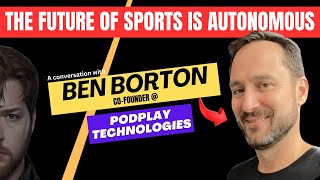
In this Founders Unplugged interview, co‑founder Ben Borton walks host Greg McCallum through his unconventional journey—from a cultural‑criticism master’s thesis on sport as modern ritual, to ghost‑writing a hedge‑fund book, to early venture investing, and finally to building PodPlay (formerly PingPod). He explains the theory that sports serve as shared narratives, illustrates it with a quirky Wrigley Field lighting case, and then describes how he and three other table‑tennis enthusiasts created autonomous, staff‑less venues that could operate 24/7. The conversation covers the pandemic‑driven boost, the $19 million raised (led by Sequoia Heritage), the expansion to 25 locations across the US, UK and the Philippines, and the strategic shift to a SaaS licensing model for other experience‑based activities. Borton details the product stack—phone‑based door access, digital scoreboards, video‑replay clips, integration with the DUPR rating system—and how these features solve labor costs, safety concerns, and the “human‑touch” objection. He also highlights the explosive growth of pickleball (≈300 % participation increase), the broader market opportunity (dog washes, golf simulators, karaoke), and the cultural importance of community‑driven, story‑centric sport experiences.
Chapters
Welcome to Founders Unplugged, hosted by Greg McCallum. Long-form, honest conversations with founders and entrepreneurs from around the world.
This episode is brought to you by Founder Catalyst. If you're raising funds and you need to get yourself SEIS and EIS advanced assurance and you need some help with that, and stick around to find out how you can get 5% off of Founder Catalyst's services.
Hi, Ben Borton. I'm the co-founder of Podplay Technologies. There's a long form of this intro and there's a short form of the intro. I'll give you the short one first. I am the co-founder in charge of the go-to-market motion for Podplay Technologies. Podplay is a vertical SaaS solution for modern sports venues. So we combine a mobile-first kind of modern experience of a booking platform with hardware-enabled features like video and digital scoreboards. We also enable clubs to operate without staff on site, some subset of our clients. So that's a bit about Podplay. That's kind of the short version of this. So the long version, I'm always interested in how kind of people found their way to a business. And my own story is pretty unique. I don't think anybody's going to replicate it. I think if you go back far enough, it would be I would start with doing a graduate degree at the University of Chicago. And the common themes you'll find here are sports, writing, and starting businesses. So I was at the University of Chicago, I did a master's in cultural criticism. I was studying sports. I was under a gentleman named John McEloon, who is kind of the foremost anthropologist of the Olympics. In the world. He was a student of Victor Turner's. And I wrote a thesis there about kind of the role of sports in modern society. And kind of the thesis was that sports play the same role that ritual did in agrarian societies, shared stories, shared narratives, you have kind of constraints on time and space and certain rules that take place within, within that space and time that allow for kind of stories that are understandable to all of us, but enough variation that it's still pretty interesting. I think there's a good reason why sports analogies are so popular, both in talking about business, talking about lots of things in life. And I think that's because it's understandable and explainable. Life, on the other hand, is kind of open-ended. So we need these kind of stories that we can tell each other. We can know that the person across the table we've never met before might, might understand that. So I got done at the University of Chicago, it was time to go get a job. And I applied for a job at a firm, the sort of number 2 at that firm had come out of the same master's program as I had at the University of Chicago. So it was a research position at a hedge fund firm. And I sat down with her and she was interviewing me for this research position. Midway through, she found out that I had edited a newspaper as an undergrad, actually, when I was in England. I went to the University of York for a year and I edited a newspaper there. So I had a background in writing. And it turned out that the CEO of the company had been commissioned to write a book by Bloomberg Press about the hedge fund business. This is late '90s. There was really— there wasn't much out there on hedge funds in terms of kind of books. So he was a busy guy running a business. He was running a database business, running consulting business, hedge fund funds, doing allocations to hedge funds. He didn't really have much time to write a book. She sat me down in a room with him. We ended up talking for 2.5 hours. At the end of the session, this was on a Friday, he handed me a stack of materials. He said, "Well, you know, have a look at this stuff and see if it's something that you'd be interested in working on." It was an obvious opportunity to write a sample chapter. I wrote a sample chapter that weekend, sent it to him on Monday. I was hired on Tuesdays as ghostwriter. So my first proper job, it was as a ghostwriter for the CEO of the company. And I thought this was great. It's kind of in fitting with my personality, which is very curious. I like learning. So the idea that my first job in an industry was to write a book about it was great. And so I spent 9 months where I could basically call up anybody in the industry and be at sort of mid-20s, young 20s, asking questions. And I wasn't expected to know all the answers, but this was great. I could just call people up who are hedge fund managers and say, "You do this and why do you do that? And then you do what? What do you think the results are going to be?" And because nobody had really written a book at that point, everybody was— well, not everybody, but a lot of people were open to those sorts of conversations. And then I got to sit with the CEO an hour every other day and kind of go over what I was learning and kind of get his perspective on this. So it was a fantastic way to learn about the business. And this gets to kind of the writing piece. I've always learned best by writing. And when we get around to talking about Podplay, we have a very distinct writing culture. At Podplay, and we are, in a sense, building in public. And we think that writing gives you discipline. If you're going to write something, you can put it out there in the world. You want to make sure that you understand it. You want to make sure that it's clear to you. And I learned that in writing this book. I mean, there's a certain fear when you're in your mid-20s and you're going to put a book out there with your boss's name on it that you got to make sure it makes sense. It's going to be clear. You know, there's a little bit of imposter syndrome, but it's also kind of vague. Exciting. And I was at a stage of my life where that was exciting to me. So that's how I ended up in the finance business. It's the natural path from cultural criticism to hedge funds. I would tell people that story at the time and they're like, "What do you mean? You didn't do an MBA. You didn't study finance." But I learned the business by doing. Which is kind of my favorite way of learning. And after we wrote that book, we ended up writing a second book. Bloomberg had asked us to write a second one that was more detailed on a particular set of strategies. And then I ended up running the research group at that firm. And in the process of running that research group, my favorite part of the business was working with kind of startup hedge fund managers and people who were kind of going on that entrepreneurial journey. And we were allocating some subset of the money that we were allocating was going to those businesses. And I saw how much we could help them along the way. So eventually, I left and raised a pool of capital myself to be effectively a venture capitalist for startup hedge funds. And the first two deals I did have had an enormous impact on my career from that point forward. First one was a hedge fund run by Mike Cagney, who's probably better known as the founder of SoFi and now the founder and CEO of Figure Technologies, where I worked before joining Podplay. The second one that I seeded was run by Max Kogler, who is the CEO and my partner at Podplay. So those first two deals really have kind of influenced my career. And I think, you know, we're all, you can be very fortunate in kind of the people that you meet early in your career because they really influence kind of where you end up. I ultimately ended up joining the hedge fund with Max. We kind of refer to that as our days of turning math into money. So we were doing a, this was an equity derivatives hedge fund. We were trading options, really fun math problems. It was a little bit like, playing chess and things like that. But it left both of us a little bit empty from a purpose standpoint. At that point, I didn't have kids at that point, but I imagine if I did, it would be a little bit difficult to kind of explain to them that my purpose in life was providing liquidity or price discovery. I mean, these are very theoretical concepts that, yeah, are you really moving humanity forward? Not sure. And I think Max had the same relationship to it. And we both kind of went on these journeys to find our way to a business that is just philosophically positive, technically innovative, and is having a real impact both on kind of consumer behavior and people, but also on economics, you know, providing really, really strong unit economics. So I'll take a pause there. That's a little bit of kind of, you know, the background of how I got to where I am today, you know, spent close to 20 years in finance and then pivoted to technology first with Figure. I went back to work with Mike, ran the digital fund services business unit there, and then joining Max to come on and run Podplay. So I was the first outside investor in PingPod, which is sort of the predecessor business to Podplay. It is our operating business, sort of tech-enabled venues, a network of autonomous table tennis clubs, the technology that we built to kind of run those clubs became the basis for Podplay, which we conceived of, you know, really in 2021, 2022 and launched formally in 2023.
Yeah, great, great intro. And it's awesome to have you here, man. I really appreciate it. There's a lot to unpack there, obviously. And before we get into the Podplay stuff in earnest, I did want to sort of go back to one of the things you mentioned right at the start, which is this thesis that you wrote, which sounds infinitely fascinating. So can you explain a bit more about that? Because if it's— because one thing that I've heard some people sort of theorize about why culturally we're kind of obsessed with sports is also because of some inherent evolutionary— what's the word I'm looking for— proclivity for war, right? And that in a lot of sports, especially those that have some form of violence in them, whether this is American football or as you call it football, or rugby or even, you know, soccer, right? And stuff like that. These team sports where there are tribes, where these, these, these stories and these narratives like you mentioned, that it kind of taps into something quite, quite animalistic within us and all that. But anyway, I'm just sort of throwing out there what I've heard. But just really briefly, I'd love to know a little bit more about that. What are your— what was your general sort of— what was the overall thesis that you came out with? You know, the main sort of points that you were making in that, because that seems really interesting.
Yeah, so that it was a two-part thesis. There's one part was theory, right, um, which, uh, had to do with kind of, again, this role to play it. And I— war might be some aspect of it. I was always more— because maybe I'm a more of a peacetime guy, uh, but I preferred to think of this as, as narrative, you know, that, that a key part of culture is shared stories. So you think of kind of agrarian rituals, you had these things that repeated every, every year, and you had these kind of shared stories that were passed whether they're through oral traditions or through literal rituals, reenactments of stories that became shared things that help people understand the world. And I think the farther you go back, it was harder to understand, right? You needed something to fortify you against the world. And one of the great creations of humans is narrative, right? We fortify ourselves against the world with stories. So I was much more focused on that aspect and what are the particular aspects that allow for shared stories. You know, some of the, some of the conceptions here were, were confined space. So most of the time sports take place in a, an area, whether it's a stadium, whether it's a field, whether it's a pitch, whatever it is, it's a space, right? And within that space, certain rules hold., and there's usually a conception of time as well. And my particular focus, and we'll get into that in the sort of the second half, was around baseball, which has its own very particular version of time. Now, if you think about, you know, soccer or football, you've got a clock, right? That runs out, whereas baseball is pretty interesting and kind of unique in that it is time is events. Time only passes if you get out. And it's a little bit— cricket's a little bit the same way, right? Time can go on forever. It's possible. So it's— these are, these are kind of a little too much for me. Cricket. Yeah. So yeah, I spent time thinking about like, what, what, what does it mean to kind of confine time, have a kind of particular view of, of space and then rules. That hold within that and what are, what is, you know, can't be so tight that the story is exactly the same. You need some level of variation, but it has to be confined enough that the narrative is understandable to everybody. So that was the first half. And then it was just kind of what role does that play in the modern world, in the kind of agrarian world, you were sort of, it was against, you're sort of fortifying yourself against, you know, the conditions, the seasons, the variability. And then you get into kind of an industrial or post-industrial world, and there are, you know, other forms of kind of loneliness and aspects that we are, we need these kind of shared stories to bring us together. I think we are, you know, quite a bit less community-oriented than we were during agrarian times. So these things stand in. So that was the theoretical aspect. Sort of applying that theory, I looked at— I was at the University of Chicago, so I got— and I was looking at baseball. So there was a really interesting court case in the 1980s. Wrigley Field is a very famous stadium where the Chicago Cubs play, and it was the last stadium to get lights in the US. So for a long time, it held out as the stadium that only played day games. They never played at night. Economically speaking, totally made sense to play at night. Everybody else played at night. More people could come to the game. There was this real kind of sense of nostalgia. And what was interesting about the court case is— yeah.
Hi, a friendly reminder to share this episode with your network, like and subscribe. And if you are feeling really supportive, please consider reviewing the show on the podcast platform of your choice. It all really helps support what we do. Thank you.
Now back to the show. In economic terms, no-brainer. You should just do it. Lots of people cared a lot about whether you're going to put in lights at Wrigley Field. And, you know, it was the government, it was the ownership of the Cubs, it was the neighborhood, and it was a huge deal. And so it ends up going to kind of court. And I read the court case. The court case was fascinating because you read the documents and the natural language of a court opinion, of a judge's opinion, is usually melodrama. You know, there's good guys, bad guys. So from a genre standpoint, that is the language of the law. But this guy wrote it, it was completely a comedy. Each of the sections was basically, you know, it was taken from the section titles were taken from the song Take Me Out to the Ballgame. You know, it's just kind of like a silly song that everybody sings at the 7th inning stretch. And so my contention was that this judge, he did not want to be the guy who sent, you know, the Cubs were threatening to go out to the suburbs, move out of Chicago. And I think this judge wanted no part of being the judge who sent the Cubs to Schaumburg and out of the city of Chicago. So The way he went about doing that was he undermined his own opinion, basically set it up to be overturned by using comedy rather than melodrama. So those were kind of the two pieces. Obvious path from there is to go into hedge funds, right?
Oh yeah, very clearly. Yeah, of course. It's just, it's a really interesting, you know, it's a really interesting, I did a bit of sociology back in the day and sports came up quite a bit in um, some of the, some of the stuff I was writing at the time, especially around football and the role that that plays in the UK, around tribalism and around purpose. And, you know, especially as we become more of a secular culture in recent years, how that sort of served to replace a lot of things that kind of went missing as a result of, of, of the church and state being sort of ever separated and all this kind of stuff. So I find it really interesting and what that means for, for society. And of course, baseball— it's interesting you mentioned baseball, you know, obviously being where you are, that makes sense. But I had a guest on a couple of episodes ago, also from the States, and he brought up baseball as being a really important part of his life and, uh, and, uh, growing up and kind of, you know, even to now where he talks about how that's some of the stuff he does outside of work to keep him sane. It's like training, coaching Little League and stuff like that. And it's, uh, yeah, it's just something that we don't obviously hear at all about. It's like, you know, it's, it's, it's very much in the UK there is a a massive wall between us and anything to do with baseball. We just don't hear about it. We get a lot of American football stuff over here, obviously. But now that's— the NFL has kind of gained a lot of interest here, but not baseball.
But do you find a shift in, from a football standpoint, from people supporting clubs to supporting players, and particularly younger residents of the UK?
Yeah, it's interesting. So like my son, he's 10 and he's learning, right? I'm not a massive football person, so that probably doesn't help him. He's at an automatic disadvantage when he's talking with his friends about football because he doesn't have a dad who's into it, right? So his mates learn from their parents and stuff or their dads or whatever. But anyway, but yeah, they all talk about players, really. That's their focus. It's the personality. It's almost like the branding or the story, like to your point about narrative. Of, you know, where, where they came from, the, the, the clubs that they moved to, you know, how much they were bought for, you know, all this kind of stuff that, you know, and the big game, the big matches they had, the big wins, the big losses, whatever. Um, that's definitely a thing. And, and I— and then you find that it tends to be with the older, older generation of football fans, let's say, when they talk of players, it's more of a strategic level discussion about this person brings in with them that skill set. So with, you know, with that paired together with these defenders, it will provide this advantage. And, you know, this is the play that they, they do, you know, stuff like that. And I don't pretend to understand any of it, but that tends to be what I've noticed to be the overall discussion, you know, there. So there is a bit of a difference, which is interesting. But I think it's also because if as kids you're kind of interested in those hero stories, right, they resonate for sure. Have you— are you familiar with Terry Pratchett?
The writer? I'm not, no.
Really? Oh, okay. I highly recommend him, by the way. British writer, very famous here in the UK for writing satirical comedy fantasy. So imagine the comedy version of Lord of the Rings, basically. That's his kind of vibe, right? But he wrote a really interesting book. I think it's actually—
I've got them here.
Yeah, there it is. The Science of Discworld. He wrote it actually— sorry, he wrote it actually— co-wrote it with a biological scientist and a mathematician. But basically he uses the science of explaining the world he created as a way to explain human evolution, right? Or the creation of the universe, and then human evolution, and then society and how it developed over history. But he says one very interesting thing in there which has become kind of notorious. He says how Homo sapiens were misnamed. We should have been called Pan narrans, which translates from Latin into storytelling ape. Because really, throughout our history, that is a key defining trait, is that we, to your point, really have stood out from and succeeded by passing down information in story format, right? More than anything else. I just thought you would get a kick out of that. It's a really interesting term. I'll check it out. Yeah. Anyway, but thanks for indulging me on that one. That's slightly sort of off topic thing, but it's, it's interesting work that you did there. So, okay, let's, let's go to, to, um, to where you are now then. So, so PlayPod. So you, you, you touched on it really briefly. You mentioned about how it started off with, um, and this is really cool. Uh, like you, it was a business that actually you were, you, you created this, this platform to serve. Um, but it was the business first and foremost that you went out to, to, to talk a bit more about it. Cause I'm just gonna do a terrible job of explaining it. So how did it all come about essentially initially?
Yeah. So we got started in 2019. In New York City in the table tennis world. Right. So the state of play in table tennis at that point in New York City, you had a large, what we would call here an edutainment destination at one end of the spectrum. They do food, booze, ping pong, corporate buyouts. They do a really good job with that. We're quite friendly with that group. The other end of the spectrum, you had kind of basement dojo style clubs. So, you know, think of dark, sweaty. It's not, you know, for certain serious players it was okay, but for everybody else there was nothing in between those, those two options. And lots of people who grew up playing the game, but then you move to the city, nobody can afford to have a table in their apartment. And so what's the reason why there were no ping pong clubs in New York City? And it's really just purely economics. You have relatively high rent in New York City, as you do in London, relatively high labor costs. The possibility of running a profitable ping pong club without food and booze to kind of drive the margins was basically nil. So we looked at that cost stack and said, hey, if there's something we could do about the labor piece of this, if we could insert technology, subtract labor, um, maybe there's a third way to, to do this. Um, so that's what we, we set out to do, and we thought if we could do that, you could, A, you could stay open 24 hours, right? So you're increasing capacity. B, you could lower the bar to profitability by taking your labor costs down. If you could do those two things, then you could do smaller format clubs that weren't dependent on food and booze. So the vision was a network of autonomous table tennis clubs spread out around New York. Wherever you are in New York, you're never too far away from a Ping Pong. Nobody can afford to have a table in their apartment, but wouldn't it be great if it was across the street and it was available on demand and we put some cool technology in there to elevate the experience? And then we built some community around it. So that was the vision. People really liked the vision. The problem was none of the technology to do that existed off the shelf. So nobody had stitched all those pieces together. So raised a bit of money to do that from myself and others. So I was the first outside investor in the business before joining to go to help run Podplay. Got the first location open. In February of 2020. It's a very auspicious time to start a consumer-facing business. We promptly closed in March of 2020 along with everything else. We were fortunate enough to reopen in May of 2020. So we're one of the first non-essential businesses in New York to reopen. And that was because we were doing contactless entry, no employees on site, naturally socially distanced activity. We could track everybody who came through the door. So the concept actually took off against the odds during the pandemic proper. There was lots of physical businesses that really suffered during that period, you know, whether it was gyms or otherwise, but ours actually flourished. And we have, you know, a bunch of really loyal customers from that period who, you know, tell us stories about, you know, I was just stuck in my apartment. You kind of saved me. You gave me something that was mildly social and active and healthy to do. So we raised some more money on the back of that to take it to multiple locations. If you roll forward to today, we've raised $19 million at across 4 rounds of financing. Our lead investor is Sequoia Heritage, which is part of the Sequoia Capital group of funds. And on the venue side of the business, we call that our operating business, we're up to 25 locations, 21 ping pods. We have 4 Sharks, which is same concept but for billiards, pool, snooker, as you might think of it in that world. So we're in New York, New Jersey, Philadelphia, Boston, Miami, Chicago, uh, two international locations, one actually in the UK if you ever find yourself in Bristol, uh, the other one is in the Philippines where our monitoring team is. And then we did, uh, in the back half of last year we did our first private installation in the house of Steve Aoki in Las Vegas. I don't know if you're familiar with Steve, kind of music legend but also a hardcore table tennis enthusiast. Um, so that's been a really fun partnership to have Steve be part of the PinkPod family. Now, our ambition was always to build this technology such that we could license it to others. So you could think of this as the AWS model, right? Where Amazon built really top-notch infrastructure for itself and then started licensing that to others. So we pretty early on saw that this technology that we were building had broad applications beyond table tennis. So we want to ultimately support hundreds of ping pods over time, but there are lots of other experience activities that could benefit from this technology. So we got to that point in the summer of 2023, just when we put together Pod Play. What had happened by that time, the technology was mature enough, the team was big enough. And I said the third factor that was really kind of the push was we were getting a lot of pull from the pickleball market. So padel has grown very rapidly in Europe. Pickleball has done something similar in the US. So this is by far the fastest growing sport in the US. I think they just came out with the numbers for the last 3 years and participation is up, I think close to 300%, which is, you know, just massive growth for a sport. And there are nearly as many people participating in pickleball at this point as there are tennis.
Can you explain what pickleball is for non-US listeners, viewers?
Yeah, so pickleball is, it takes place on a court that's about half the size of tennis. It's generally a doubles game. It's a racket sport. It's played with something that looks like kind of a wiffle ball. So it's a ball that, it's a plastic ball that has some holes in it. The attractions of the game, and one of the reasons why it's grown so, so quickly, is, you know, they like to say it's, it's, it works for people 8 to 80. So the barrier to actually getting on the court and playing is pretty low from a, you know, physical capability standpoint. Whereas you take something like tennis, it's pretty, it can be quite hard if you don't have a certain level of physicality to you, particularly if you're playing against somebody who has an overhand serve. So pickleball, you start out with an underhand serve. Um, yeah, an overhand— somebody with a great overhand serve, the game's over, right? For you or me, step on the court with them, yeah, that's not a lot of fun. Whereas with pickleball, you can get on the court and pretty quickly.
Raising investment is painful enough without getting bogged down in legal costs. That's why I'm using Founder Catalyst, today's sponsor, for Peer My Startup's pre-seed raise. We've been lucky enough to have Sam, the CEO of Founder Catalyst on the show before. Go and check out that episode. Their funding round service offers the most cost-effective way to produce funding round legals in the UK. It's just £1,495 excluding VAT, uh, with no monthly fees or hidden extras, no matter how much you're raising. One Founder Catalyst customer recently raised £2.7 million and saved around £10,000 compared to the next option. If you're looking for SEIS, EIS, advanced assurance, they've got 100% success rate over the last 3 years. Founder Catalyst is built by founders for founders, and from my own experience, I can't recommend them enough. You can scan the QR code on the screen around here somewhere or around there somewhere, I don't know, or use the link in the description for 5% off. Thank you to Founder Catalyst for sponsoring this episode.
Now back to it. You can have fun. You can get the ball back, kind of return it. So that's one aspect that's distinct about pickleball is its approachability. The second aspect that I think is one of the primary reasons why it's really taken off is it's, it's, they've done a good job making it primarily a doubles sport. You know, I think in tennis it's probably, you know, I don't know what the numbers are, but maybe 90% of games are singles versus doubles and pickleball is the opposite. So 90% of games are doubles. There's a strong culture of mixed doubles. And even at the professional level, they play these kind of team team versions of this where you have, you know, men's singles, you have women's singles, men's doubles, women's doubles, and then you have mixed doubles, but they play on kind of the same team. And I think they've done a really good job that, you know, from a compensation standpoint, women are compensated as well as men as well. So it's got this kind of egalitarian aspect to them. But it's just a rapidly growing participatory sport. In the US. I think it's been accelerated by the pandemic. There's a great line from kind of a club owner that I talked to recently. He said, I don't think people found pickleball so much as they found each other after this period of kind of like loneliness, that they— this was a way to kind of connect. And that social aspect just kind of goes all the way through the culture of the game. So another aspect that's really, really common is you can go make a booking and kind of play with your friends. But I would say, you know, probably at least 50% of the play is what's called open play. And so there's culture in these clubs. If you can come sign up, you don't have to know who you're playing with. You can find people of similar skill levels and it's a great way to meet people and you just kind of rotate who you're playing with. You change your partners over time. You may not, you know, you may be on the court 50% of the time or 75% of the time or something like that. But there's just these really distinct aspects, the kind of approachability, the social aspect, and kind of the culture around it being kind of a community thing rather than an individual thing has, I think, accounted for the growth. I would say there's also an economic aspect to this that if you think about if a pickleball, if you can fit 2 pickleball courts in 1 tennis court, right? So you've already got sort of like double the revenue per square foot if you can charge the same thing for this. And if it's most of the time it's 4 people on the court instead of 2, you may actually get to like 4 times the revenue. So it's from a space standpoint, it's very, it's much more space efficient than, than, than, than tennis is. So you take that bit and then you take this sport came about with modern technology, you know, and we're playing into that, right? So the— I think tennis, you have kind of country club model, you have membership model. Some of that is just a function of what was possible from a technology standpoint. So you have a lot more sort of like pay-to-play, these organizing things with technology, some of the fun things that we're doing in terms of like augmenting this with video and social. These things were just not possible when tennis came about or even when racquetball had its kind of moment. So you really have a sport that fits the time, that has a business model that fits the technology. And we think that it's actually going to drag all racquet sports with it. I think there's been very little reason for, say, tennis to modernize over time because it's sort of like the the, you know, the king or queen of racket sports. And we do think it's all those kind of legacy clubs are gonna have to modernize over time, which is part of the thesis for the business. But we see pickleball as the catalyst for that.
They're gonna have to keep up essentially is what you're saying.
Mm-hmm.
Yeah. Yeah. So how did you approach this from a concept into execution? Because if, like you said, there was no technology there to, to realize that vision initially in those early steps. So, so, I mean, I'm assuming you had to— well, I mean, how did you go about it? I mean, what was your first point of call? Did you have to go out there and, and start speaking with, um, with people who were running these kinds of businesses already to sort of do a certain amount of research, speak to prospective, prospective customers and clients of this business? Like, or did you just go off and go, you know what, I think we already, we already have a pretty decent handle on this? Like, just Talk me through that. Like, how did that process develop from that sort of early stage?
The three co-founders of PingPod were Max Kogler, Ernesto Edwin, and David, David Silverman. They were all pretty avid, um, table tennis players. Ernesto was six-time Filipino national table tennis champion. Okay. Um, former number one ranked player in the US. He was running a coaching practice, in New York, you know, out of a church. It was, you know, not, not one of the top coaches, but he didn't have kind of the best facility to kind of, um, run his coaching practice out of. Um, Max, uh, our, our CEO, um, prior to, to starting PingPod was the COO of Super Soccer Stars, which is the biggest youth, um, football slash soccer organization in, in the US. So very involved in, in kind of the sports world, but his passion, um, was table tennis. Growing up, he played, he played soccer, had some knee injuries and things like this. Um, he grew up in Austria. There was probably a point where he was on the track to kind of play maybe like national level, uh, but injuries took him away from that. Now table tennis is, is, uh, is a little bit easier on the body, so that became—
not as many red cards in ping pong.
Yeah. Not as many red cards, uh, not as many knee injuries probably as well. Yeah. Um, but, uh, so this became his outlet and he became a very, you know, pretty serious player. Um, David also grew up playing, um, you know, not quite at the level of, of, of Max and Ernesto, but was on that path. And he was an equity research analyst at UPS. David was actually the one— so all three of them were saying, you know, just there aren't good places to play in New York City. And Ernesto and Max were kind of trying to think about a way to put together a new club. David simultaneously was looking to put together a club. It was David that came up with the idea for— he's like, hey, what if we took the labor piece out of this? And Max and Ernesto were initially skeptical, but then they dug in and there's like, hey, there's really something here., and we should all team up and, and do this. And it really fills in the gaps, right? There's a third, literally a third way of, of doing this where by creating that supply, you can kind of, there, there's latent demand, you know? So there was, you could say, why are there no ping pong clubs? Because there's no demand for them. Or you could say, well, nobody's figured out how to kind of profitably deliver the supply. And I think we've proven that out over the course of the last 5 years and 20+ locations that Yeah, if you build it, they will come. And we've kind of created new customers. So I would say, you know, the three founders had very deep ties to the problem that they were trying to solve. They were, you know, customers of their own product, so to speak. I mean, Max was part of this WhatsApp group that was called TT Addicts, you know, so it was basically this group of probably like 500 table tennis enthusiasts who were always looking for places to play. Around New York. So a really good sense of kind of what was needed. And we knew if we could get a venue open, I mean, one of the sort of jumpstarts, we could move Ernesto's coaching practice down there. So there was an immediate kind of customer base that was going to be there. So you open your doors, you knew you were going to have some level of customers from day one. Didn't anticipate a pandemic, but that was a nice jumpstart. And so it's good when you're starting a business, you do have kind of that, you know, small group of passionate fans that you can kind of build this with. We did do surveys initially to kind of like talk to different people, send out surveys. What were they looking for? What were the problems that they were trying to solve? Talk to a lot of people as well before getting started, but a pretty good sense of kind of what the problem was. And I think some of the early Problems were convincing landlords. Um, in initial conversations with landlords, we're like, what do you mean there's going to be no employees here? Um, and I, I actually wrote a post recently about this.
It's so sorry that they were just concerned about the viability of the business model and therefore the security of the, the agreement.
There's a safety, there's a safety aspect of it and a, um, are you going to lose the human touch aspect of this? I wrote a post recently, a lot of, you know, that was also an initial objection of investors, right? Like, will people, will people go to a, to a club with no, no employees with no front desk? Are you going to lose the human touch? And if you think of a lot of great businesses, often that initial objection turns out to be the actual opportunity, right? So if you think of, you know, when Amazon was getting started, it's like, will anybody put their credit card? Into the internet. Like, people are really going to transact on the internet? I remember, you know, people were like, am I really going to type my credit card? It seems like so crazy now that that was the case. But no, we were all scared to like type our credit card in the internet or Salesforce. It's like, what do you mean? I'm going to put my information in the cloud? Yeah, it's not going to be here on-prem. Like, what are they going to do with it? Where is it going to go?
Um, or you think we're having that same discussion with AI and, you know, data around AI. Where's that, where's that data going?
Yeah, where does it go? Uh, I mean, you think Uber, right? You really are going to get into somebody else's car? Uh, Airbnb, it's like you're— somebody else is going— somebody's going to stay in my apartment? Uh, I'm going to trust them to do that? So often initially you have this, this kind of idea like nobody would do that, and it's just because of what people were used to. And that is, you know, I think great kind of cat— category-defining businesses that are really trying to do something innovative, you're always going to have some aspect of that where this is— people are going to question something that doesn't look like what is out there. So yeah, those early ones is like, what do you mean there's nobody's going to be here? Is it going to be safe? You're going to be open all this time? And I think we've proven this out over hundreds of thousands of reservations. But the thesis at the time is like, well, the door is default closed. If I go to most shops on the street, the door is default open. Right? So in order for somebody to open that door, I have to have their credit card. So we have pretty good, that's a pretty good deterrent on its own. We have security cameras there. So we're kind of watching what's happening in these spaces. We've culturally, you know, gone out of our way to try and attract customers who are community oriented as well. So I think, I think you can do things in your messaging to attract a particular type of customer who wants to go to a particular type of fillets. And so that's, you know, I think that has helped as well. But the biggest thing is just people getting used to it. And you think of this aspect of, you know, are you going to lose the human touch? And we couldn't have anticipated the pandemic. And I think this has accelerated post-pandemic, but now we're serving all these pickleball clubs. One of the common complaints that we hear in staff pickleball clubs, it's like really hard to find really good staff, particularly front desk staff. And, you know, you get a good front desk person, they're talented, they're probably going to go do something else, right? So you have this, this, unfortunately, you have this kind of like selection bias where often you end up with the people who are not ambitious and maybe they're distracted and looking at their phone and they might be rude. And there's certainly a kind of version of the world where the human touch can be negative. Uh, doesn't necessarily have to be positive. It's not kind of like a priori. If I see a person there, it's going to be great. If I have a bad experience, then it can be kind of net negative. But if you take that away from a cost standpoint, it's great. Lots of people want to do things self-serve. They would rather not have that interaction. And oh, by the way, if we take that kind of labor piece out, we're now, we've released that constraint from a time standpoint.. So now I can stay open 24 hours because my marginal cost of staying open is very, very little. I don't have that kind of variable labor cost that's associated with it. So, and if you think of a post-pandemic, post sort of world where there's a lot of people working from home, a lot of people have wacky schedules, do we get as many people playing at 3:00 AM as we do at You know, 6 PM? No, but it's not none. So there are people who kind of have weird schedules and they really appreciate that there's, there's something to do at that time of night.
If you are enjoying this episode and want to support the show, please like, subscribe with notifications turned on, and let us know your thoughts and opinions in the comments below. This lets YouTube know we are doing something right.
Back to the show. You also think of it from a pure supply demand standpoint. There's lots of things to do at 6 o'clock. There aren't that many things to do that are available at 3 AM in the morning. So if you're looking for something that's kind of active— not much legal anyway. Yeah. Yeah. If you're looking for something that's not a bar that's active, active, the competition is really, really low during that period.
But it's, you know, it's really interesting because yesterday I was somewhere with the family and I knew this conversation was coming up, which you, and it's funny because I thought of you and what we were going to talk about today because I went to a private swimming pool area, and it's really quite unique. And I remember I was actually asking my wife about it. I was like, how much does this cost and how long is it? Because I'm sat there like doing the maths and going like figuring out how much money they make. But essentially it's two private pools in a really small sort of, you know, warehouse-type building, and it's— you book on online, you get half an hour, you've got a private pool essentially. You can either book out the whole pool, have it for yourself. It's all heated, it's all beautiful, it's all lovely. And, um, you can, yeah, you can either book it private, spend a bit more money, have the whole thing for yourself for half an hour, or share with like 2 or 3 other families. But it's, it's really nice, it's not crazy, it's not, you know, really overly busy. And it's— and when we came in, um, to it, there are people sort of serving coffee and things like that and selling snacks or whatever. And naturally everyone goes there And I watched it because my wife had been before with our youngest son, so she just knew, oh no, no, you don't need to go over there, you just go straight over to the tablet on the thing and check yourself in and go straight in. But other people were going towards there because they just thought that's what you needed to do, and they were just saying, no, no, go and sign yourself in. But what's really interesting is after we did it all, we then came out and we sat down in the sort of seating area, whatever, out the front in the lobby, and I overhear one of the servers behind the the thing, swear quite loudly, swear. And there's kids everywhere. And I remember just thinking, they shouldn't have any people working here. This should be fully automated. I thought back to, you know, to you and, you know, your solution and what you built. And I just thought, there's no need to have those people. All they're doing is selling coffee and they've got a coffee machine. That's something we automated a while ago. And people are just signing in there. And if that's the experience you get as a father, I'm sat there thinking, What are you doing swearing near my, my toddler? You know what I mean? Saying that's a liability. Auto-lock the door, like you said, have it check in. So, you know, figure it out. But that, that they would do so much better, you know, in my view. And like you said, probably also be able to stay open 24 hours a day, although in that location, probably not a good idea. But it's just super interesting. And, and, and I see a ton of applications for it. So I totally understand why you've gone down the route of, of, of licensing out this, this underlying software. When was that? Was that something that was always top of mind, um, to your knowledge in the organization, or did it only become really kind of clear once it was in situ that the—
there was these, these opportunities sort of out there people may be asking for it? It was always part of the plan. Okay. So we raised a seed round in, in 2021. I was an investor in that. I remember very distinctly Max calling me up. Um, so they're doing a $3 million seed round. You know, the question was around Do we take venture capital here? What does it mean to take venture capital? Sequoia Heritage wanted to invest, and I said to him, it's like, well, you know, you need to build a really big business. If you want to take venture capital, you have to say, okay, are we going to play big? Is there a really big business here? You know, and we went through kind of each one of the aspects of the business, like how big could PingPod be? So that was one, right? And then it was like, could we do this in other experience verticals? Pool. You know, we had that one on the radar already ourselves. But the really big one was, hey, we could take this technology and license it to others. And that's what I got extraordinarily excited about because that's very, very scalable. You don't have kind of the real estate component. And these problems exist all over the place. I like to say, well, we're laser-focused on pickleball. There's always this balance, right? You need to be, as a startup that's growing fast, you have to have focus and something that's hitting product-market fit. One of the problems that you run into is you almost always get more opportunity comes your way than you really have the ability to kind of deal with. We're definitely in that right now. So you have to say no to kind of the right things. At the same time that you're holding this long-term vision, in your head. So the long-term vision in my head is like, does it take place in a physical space? Does it require reservation? Could it be augmented by video and social? And would it benefit from a reduction in labor? So a lot of things that fit that framework. I remember we— Brewer Magazine did a profile on us, and I remember the, the, the, um, writer who did the profile came and visited and spent a couple hours with us on site. And I remember she She walked away and she sent me a text 5 minutes later and said, you have to do this for karaoke. It's like, that's a good idea. You know, you have this kind of great idea when people add other things into it.
Yeah, we have exactly the same problem with our startup. But people, you know, whenever we talk to people, we're like, this is what we're focusing on. This is what we're doing. Yeah, but it could apply here. Oh, what about this? What about that? And people get excited and be like, yeah, yeah, we know, but we, but we need to start somewhere.
Yeah. But it's a good problem to have. I mean, it's really, I mean, it's expensive. So we're doing the you know, we have 125 clubs that we're serving, um, uh, today. About 40 of those are operating, um, unstaffed, you know. So we have kind of different levels to our offering. There's just like the, the software-only piece. There's what we call our pro tier, which adds the digital scoreboards and the video replay, which are just kind of killer features from a, um, from an experience standpoint and from generating kind of new lines of revenue. And then the kind of highest level is people who want to do this, this unstaffed model. And so we have, obviously we have table tennis, we're servicing Ping Pong, we have pool, which is Sharks. We have a number of pickleball clubs that are operating unstaffed at this point. We have a, I just went up this weekend to the Upper West Side where we've opened up a dog wash.
Not us, but we have a client that has opened up a dog wash. Yeah, I love those. I think we spoke about those before, in fact, when we've previously spoke. I've been very bullish on that. I've seen a couple, um, in, in the UK, for example, there's a ton of, as you can imagine, lots of big wide open, you know, spaces where, you know, where people can take their dogs and stuff. And they've, they've started to have these little self-serve, yeah, self-serve things pop up. Brilliant business model.
Absolutely brilliant. I love them. Yeah, it was amazing. I mean, we live in the West Village in New York City, small apartment, great, great neighborhood, small apartment. Those two things go together. Have two dogs, you know, you wash them in the shower, it's no fun. It's a pain in the ass. And they're, they're, you know, shaking themselves all over the place. Um, so we drove them up to, to this place called Max and Fluffy's. Um, that's a Podplay client. And, you know, use the phone to kind of access the space. And you have these really cool kind of washing machines that are raised up. It's also a lot better for your back. Um, you have kind of these tools to do it and It was amazing. It was a great experience. And, you know, if you asked me in 2000, would we be, would we be building this for, for dog washes? I would say no. Um, but, uh, it, you know, it turns out it actually fits the model really well and we can kind of service that. Um, another big use case that we're seeing is golf simulators. Um, so golf is an interesting example where if you go play golf outdoors, it's expensive, it takes a long time. And, you know, here in New York City, it's probably going to be an 8-hour commitment, right? Because you have to get there, you play around, get back, and it's quite expensive. So as a response to that, you've seen things like Topgolf and, you know, Five Iron. These are more like social versions of golf. So they've shrunk the space that people need to do this and added kind of the food and beverage component. But now we're seeing kind of this third leg, which is, oh, I'm just going to focus on the simulator experience. There's no restaurant involved. It's just about kind of the golf. And I'm going to offer that in a private setting, right? Say private bays. I can now go with 3 of my mates and go play some golf. And instead of taking 8 hours, you know, we could probably get a round in and an hour, hour and a half or something like that, and we're not sharing the space with others. I think it's a really, really good use case just from a time-saving standpoint, from a cost standpoint, from a particularly during kind of like the winter months when I don't know here, nobody can play golf here during the winter. It just doesn't work. So, you know, people can stay on top of their game.
It's a great, yeah. Again, I just love that model too. It's just, it's just, Yeah, it's the same sort of concept, isn't it, of just a scalable, replicable, self-serve thing. But are there elements in that higher tier that you're providing? Are there elements of hardware solutions you're providing too for some of the more sort of finer details? Like, for example, you know, the entry points and things like that. Surely there must be some IoT element to it as well, right?
Yeah, so we do integrated door access. Right. So you're effectively using your phone, you call up your reservation, if you're within 15 minutes to your reservation, it turns into a button that says press to unlock door. You press that button, it's an API call. Access is kind of the door access. That's how you access the door. It's also checking you in automatically when you kind of press that button. So that's how we handle the door access piece. We then have cameras inside. So there are sort of the aspects that are elevating the experience. So one aspect of this is scoreboards. The other aspect is video replays. If we start with video replays, this has been just a killer feature because, you know, we live in a world where sharing an experience can be, you know, as important as having an experience, unfortunately. So we've created this system where people can kind of clip those best moments and kind of create that content to share without taking themselves out of the, the experience itself. So nobody has to, you know, set up a phone on a tripod. Nobody has to kind of, you know, scan a QR code or log into a separate system. It's just I arrive, I'm on the reservation, something great happens, I press a button, we capture that. We'll actually show it immediately on, you know, you get an instant replay, um, that's up on the screen. So they have their own kind of personal highlight moment. That's pretty exciting. Um, we can talk later. That's like a pretty interesting piece of digital real estate for advertisers. It's very high engagement. It's kind of moment of maximum dopamine, you know, it's exciting. They're looking there, something cool happened. Um, so it's a really unique piece of, of digital real estate. Um, and then it gets delivered digitally. So everybody who's on that reservation will get kind of the digital version of that. So now you get the scale of, of social media. Um, and there's, you know, multiple— there's a sponsorship aspect to that, there's an ad aspect to that, there is also a, a marketing aspect to it. So a lot of the clubs that are working with us are seeing that as a substitute for paid marketing spend. They could go, you know, they could do Facebook ads or they could do Instagram ads or they could give their customers the ability to create that content for them. And, you know, the user-generated content is more powerful, more authentic. We did hundreds of thousands of replays in 2024 and I think we'll do millions in 2025 as we're doing more and more of these installations. The second aspect is scoreboards. So we do scoreboards in table tennis, we do scoreboards in pickleball. Kind of joke in pickleball is that it's really hard to keep score. People have difficulty keeping score, even people who are advanced and kind of experienced at playing the game. So we've created this system where, you know, you have a button that's mounted on either baseline. You have a monitor that's at kind of the midline. People can set up the game at the beginning so everybody's on the reservation. You can place them on teams, you can pick how many games you're going to play. There's different forms of scoring. You pick doubles, you pick singles. You can even decide you want to submit the results to the— for the ratings agency, which is called— agency is probably the wrong word, but the rating system is called DUPR, is the main rating system in pickleball. Stands for Dynamic Universal Pickleball Rating. So if you click that button and say submit results at the beginning, at the end of that match, it just automatically submits and nobody has to pull out their phone. Nobody has to find who they played with. Nobody has to enter a score. Nobody has to confirm. So there's, you know, 5 or 6 points of friction that we've taken out of that process. But the scoreboards themselves, once you've set them up, you know, you score a point, somebody goes back, they just press the button on the baseline. And it's, you know, it's beautiful. It's nice and big. Nobody has to argue about what the score is. You don't have to kind of expend the mental energy to think about what the score is, who's serving, who goes next. So I think there's some mental energy, there's probably some emotional energy, because, you know, we all know people who maybe play a little fast and loose with the score. And then there's actually vocal cords as well. In these bigger pickleball facilities, let's say you've got 15 courts, can actually be pretty loud, and you might be kind of like yelling this thing. Back and forth. So not having to do that is, it's amazing. And again, it's a behavior change. It's kind of one of these things like, will anybody do that? You know, we're used to doing it this way. Like once people do it and they see other people doing it, they don't want to go back because it's a better way to live.
Yeah, interesting. Look, I've got a ton of more questions, but we're going to have to save it for part 2 because it's gone quickly already. Part 1 is gone. And by the sounds of it, you probably need to let your cat out as well. So I'll let you do that. But I do want to, yeah, in part 2, I definitely want to ask you about a few things along this line of, especially the sort of viral, the viral clipping side of things. That's really interesting from a product perspective and a psychological perspective. Also want to hear about the fundraising journey. I know a lot of listeners and viewers are always interested to hear about those. So, so yeah, for those listening and watching, thanks. Come back in a couple of days, click subscribe, all that sort of stuff. And we'll be here for us. We're going to take a quick break.
That's the end of part 1. Thank you for listening and/or watching. Subscribe with notifications turned on to get notified when part 2 comes out. While you wait, please join in the conversation in the comments below.
More from Ryan



Inside PodPlay: Ben Borton’s Game-Changing Pickleball Tech for Court Booking & 27 Hour Club Access!