Inside PodPlay: Ben Borton’s Game-Changing Pickleball Tech for Court Booking & 27 Hour Club Access!
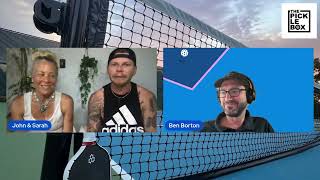
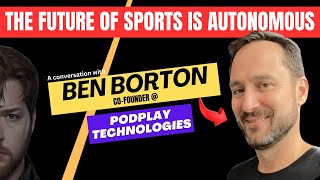
Ben Borton built Podplay to run 24-hour, staff-less sports venues starting with pickleball. The company raised $22 million, operates 25 locations, and licenses its platform to 160 more. Borton explains how smaller venues with contactless booking solve the high rent and labor costs that killed traditional clubs.
Chapters
We are here with Ben Borton, co-founder of Podplay Technologies, and we're super excited to hear what projects you've been working on and what's in store and how you got into pickleball. So thanks for meeting with us, Ben.
Yeah, thanks for having me.
Yeah, you've done a ton of exciting things within the paddle space, right? Going back with start with a little bit of your history. It looks like you've been in the ping pong space and table tennis, table tennis space, and now moving into that pickleball space. How did that come about?
So as you said, we got, we got started in ping pong or table tennis in 2019 in New York City as venue operators. Now with Podplay, we're serving people who are operating venues. In the pickleball space and other spaces, but primarily in the pickleball space. So we started walking in those same shoes. And the setup in New York City when we got started, there was one large entertainment destination, food, booze, corporate buyouts. They do a really good job with that. At the other end of the spectrum, you had basement dojos. There's really nothing in between for people who wanted a quality place to play table tennis. Lots of people grew up playing the game. You move to the city, nobody can afford to have a ping pong table in their apartment. All of a sudden there's nowhere, nowhere to play. And it's really down to economics, right? Rent is relatively expensive in New York City, labor costs are relatively expensive. So the possibility of running a profitable ping pong club was pretty minimal unless you were doing food and booze and doing it well. So we looked at that and said, hey, let's look at the cost stack. Is there a third way to do this? And if we could do something about the the labor component, then maybe that would open up a kind of a new way to do this. We could stay open 24 hours to increase capacity. If you could decrease labor costs, you could lower the bar to achieve profitability. And if we could do that, then we'd use smaller format clubs that weren't dependent on food and booze for profitability. So that's what we set out to do. The vision was a network of autonomous table tennis clubs spread out around New York. Wherever you are in New York, you're never too far away from a Ping Pong You can't afford to have that table in your apartment, but wouldn't it be great if it was across the street, it was available on demand? And we built some great community around that, put some kind of cool technology in there to elevate the experience. So that's what we set out to do. The reality was that the technology to do that didn't exist off the shelf, so we had to go build it ourselves. We raised a bit of money, got our first location open in February of 2020. Very exciting time to start a consumer business. Bump closed in March of 2020 along with everybody else in New York. So there was an initial shock there, but ultimately we were able to reopen in May of 2020. So we're one of the first non-essential businesses in New York to reopen, and that was because we're doing contactless entry, no employees on site, naturally socially distanced activity, and we could track everybody who came through the door. So kind of against the odds, the concept took off during the pandemic proper. Which was kind of a crucial time for pickleball as well. I think pickleball really started to take off during that period because people were looking for things that were fun, social, active, and safe. And so you did see a lot of outdoor pickleball taking off during that period. So if you roll forward to today, we have raised $22 million across 4 rounds of financing on the venue side of the business. We operate 25 venues. We're in New York, New Jersey, Philadelphia, Boston, Chicago, Miami, a couple of international locations, one in the UK and one in the Philippines where our monitoring team is. And then we did our first private installation in the house of Steve Aoki. I don't know if you're music fans, but Steve's kind of like a music legend. He's also a hardcore table tennis enthusiast, so we built him a private PingPod. In his house, which is kind of fun. It's great to have Steve as part of the family. He does a lot of content collabs with us. So that's the venue operating side of the business. But our vision was always, hey, this isn't just a table tennis thing. It's going to be applicable in lots of other experiences. And, you know, it's sort of the Amazon model where you build really good infrastructure for yourself and then to start licensing it to others. We got to that point in the summer of 2023, which is when we put Podplay together. And really, 3 things had happened by that point. The tech was mature enough, team was big enough to go multi-tenant, and pickleball was happening, right? So people were not super satisfied with kind of the existing options in the pickleball space. They'd seen what we'd done in table tennis, those very mobile-first, intuitive, great customer experience, combining hardware and software in a really integrated fashion. Maybe we'll talk later, but the design principles are very Apple-like, right? It's like integrated experience, hardware, software working together, beautiful. We kind of care about aesthetics and things like that. So some of the people in the pickleball space were saying, hey, please do this in pickleball. And that was really the genesis to kind of launch Pod Play to serve that market. We had some really good launch partners. One of our launch partners was City Pickle in New York City. I'm sure you're kind of aware of them. They run the Pickleball at Central Park. That's one of the iconic places to play. They have a permanent facility in Long Island City. They've got one coming in Times Square, one next to the Brooklyn Bridge. So they've been a real prime mover in the New York area. Our other launch partner was Pickleball out in Arizona, which is backed by Steve Kuhn, the founder of Major League Pickleball. Steve's also an investor in our business. So we really work with those two entities to make the necessary modifications for the pickleball use case. And there's tons of similarities between table tennis and, and pickleball in terms of how you run a club. You've got court bookings, you get open plays, you get tournaments, you get coaching memberships. All of these things kind of translate really, really well. So it wasn't a huge jump from one to the other. And then, you know, after working with them to kind of make those modifications, we launched to the outside world in October of 2023, and it's been really off to the races ever since. We're up to 160 locations signed up on the platform now, so it's really, really fast-growing platform. And, you know, we like to say it's really a tech in the service of the game, right? So we want really good technology that gets people on the courts to play the game, gets them to kind of enjoy that experience, can share that experience. But we don't want to make it more work. We want to make it as easy as possible and as seamless as possible. Empower these clubs to spend less time managing their tech and their payments and more time just creating great experiences and great community.
That's great. Was there an industry before table tennis that had a technology similar to this that you were drawing from that you had seen before? This completely—
Yeah, you say that the 24-hour concept has been around in the gym context, so that, that some of the kind of pieces were there in a gym context. Obviously, it's sort of— gym is a little different. It's kind of— there are some different aspects to it, right? Versus a court versus am I going to enter a space where there might be different machines, different people. So there are different kind of like booking mechanics around that. But yeah, I would say the gym world was kind of, you know, ahead of this space in terms of operating in a 24-hour fashion. In terms of kind of integrating hardware and software, video and reservation systems, I think we're kind of at the forefront on that side. There's been plenty of video capture systems that are out there, but they tend to not be integrated integrated with the reservation management system. So we call this like full-stack vertical integration of, of the hardware and kind of software experiences. I think previously most, in most industries you have kind of like a booking engine, and then over here you have somebody else who's working on, on kind of video, uh, and hardware components, and those things don't necessarily like speak to one another or they need to be integrated. You can create these kind of Frankenstein-type experiences, but there's great stuff that preexisted on the video side. It takes me to Hawkeye, right? In tennis, racket sports, that's sort of like the high-end thing. It's what you see at the US Open and things like that where they can do line calling all the way down through these things. Another example I think that's really interesting that was really innovative in terms of combining hardware and software was golf. Right, so if you go from a world where golf took place on golf courses, it's outdoors, takes a lot of space to have a golf course, right? So that's a big, big constraint in terms of where you can put a golf course, particularly in cities, right? You can't put a golf course in the middle of the city very easily, um, certainly not very many of them, and certainly not very, very cheaply. Um, the other constraint with golf is, you know, if you're gonna play around at golf— I don't know, I lived in New York for 16 years, moved out to California recently, but when I was living in New York, it was probably an 8-hour commitment to go play golf, right? It's getting there, there's a 4.5 to 5-hour round, there's getting back. And once I had kids, it was just like, I can't do that, right? You know, it doesn't— this doesn't work from a time standpoint. Um, so, you know, the, the real innovator on that side was, was Topgolf originally, and they had the Toptracer tracking, so you could go. Now we could shrink the space that was required in order to have a golf experience. They also gamified it and things like that, but you're hitting a ball and you can have the tracking technology. You think of what's going on with golf sims now, we're shrinking even smaller, and now I can, you know, if you have a golf sim, I can walk down the street and be playing at Pebble Beach. Anybody can play at Pebble Beach, um, in a, you know, caught 14 by 20 space or something like that, rather than needing an entire golf course. Oh, by the way, you can do it cheaper and things like that. So, you know, it's basically you can insert technology in a way that changes the constraints that have to do with space, you know, and then the same way that we've kind of inserted technology to kind of free people of the constraints that have to do with labor, uh, and that opens up a whole bunch of new, um, new things. Now you want to do that in a way that doesn't worsify the experience, right? So, you know, one of the, one of the challenges or sort of objections when we got started with the, with the staffless model— and it's a subset of what we do, we serve a lot of like staffed facilities as well— but we started with the unstaffed model, and kind of the objection really in the beginning was like, are you going to lose the human touch, right? Yeah. And will people go to a club where there isn't a front desk person sitting there. And our contention was, yeah, you— there are certain advantages to that, right? It opens up, you can put these things closer to where people work and play. From a space standpoint, if you can afford to do a, say, a 4-court facility instead of an 8, 10, 12, 15-court, right? Take New York City, it's impossible to have a 15-court facility in New York City, like the, the real estate just doesn't exist, for one. And if it did, it would be so expensive in terms of finding things— ceiling height, the, you know, the column widths, things like that. Now, can you find a 4-quart space, a warehouse that would work for 4 quarts? Yes. And, you know, the question is, okay, if I have a 4-quart facility, if I'm going to staff it the whole time, is the math going to work, um, from a, a kind of economic standpoint? Well, I don't have to staff it, then it definitely works. But if I have to staff it Now my constraint in terms of how many hours I can stay open is staffing, and it's impacting my margins. So it's by kind of inserting technology, we've now created a space to play where maybe that wasn't possible before. So yeah, golf, I think, is a good example in terms of kind of what all simulator technology has done to kind of change what's possible with that sport.
Now, as far as that 24-hour model goes, how have you— do you have peak times whenever you— with all your facilities, obviously having them in so many locations, it varies off the strategic placement of where they're at. But do you see a lot of people coming to play middle of the night, 1:00 AM, 2:00 AM, or how have you seen that kind of maybe change as well?
Yeah, I mean, certainly not as busy at sort of, you know, 3 in the morning as it is at 7 in the evening, but it's not— it's certainly not zero. And if your marginal cost of staying open is very little, it is— yeah, I can— happy to talk to kind of like the, you know, the PingPod model is our own operating business, so I'm happy to talk to kind of that, that experience without kind of like sharing details about other people's businesses, but Yeah, we're getting 5 to 10% utilization in those, you know, in the late, late, late morning hours. The reality is, you know, some people have weird schedules, particularly post-pandemic with work from home. A lot of people make their own schedules, and what's interesting about those early morning hours is they're in some sense less competitive. If somebody's looking for something active and healthy to do, there aren't a lot of options. Whereas, you know, if you're talking about 7 PM, you're competing against every restaurant, every experience that's out there, right? So there's a lot of— there may be more demand, there's also a hell of a lot more supply. Whereas, you know, it's 3 o'clock in the morning and you're looking for a place to play pickleball, not gonna be a lot of competition if you've got— if you got the only place that's open. So it doesn't take that many people to kind of, you know, get pretty high utilization if you have a 4-court facility. So yeah, it's been, you know, it's really opened things up and it, there are patterns in utilization if we look kind of across the country. It's very common to see peak hours between say, you know, 5 to 10 on weekdays. Weekends are, you know, seem to be busy everywhere. There are patterns even within the week. Mondays are naturally kind of like lower utilization than other days of the week because people play on the weekends, they go back to work, there's a little bit of a lull as a general pattern on that side. I think there are pretty consistently, there are groups of people who play in the mornings, sort of pre-work, and then some of the most successful clubs are the people who can find populations of people who play during the day.. And whether they're creating memberships around that, whether they're creating programming around that, they're finding a way to kind of connect with people during that, you know, that daytime period. And there are some fun, you know, uncorrelated kind of programming techniques that you can do. Like, it seems very effective, people doing after-school programs, right? It's a lower— it's a lower utilization time for adults, but now, hey, we can bring the kids in. Not only are we kind of building the next generation of players, but we've created this set of programming that's taking place in a lower utilization period of time. It's also, you know, I want to say it's a healthy, social, active thing for kids to do. It's also kind of, you know, a form of daycare or, you know, for parents who maybe are working and they need their kids to kind of be doing something that's fun during that after-school period.
Absolutely. I have a question. As the company transitioned from table tennis to pickleball, obviously there are a lot of similarities between the two sports, but there are definitely differences from the culture and business of one to the culture business of the other. What were some aspects of that transition that stood out to you?
The culture around open plays is, it's just such a strong piece of the pickleball culture. It's such a social game. I think it's been brilliant the way that they've kind of leaned into that culturally. I think it's one of the reasons why the game has just like grown so explosively is basically default a doubles game. It is very approachable. So people with limited skill like myself can battle and like have a good time, um, and, you know, be— play and don't feel like, um, don't feel like they're bringing the game down, right? Um, and, uh, so it's, it's approachable in terms of that, and you don't have to have kind of the, um, incredible athletic ability. You know, I think it's the difference between, say, tennis or padel and, and pickleball, I think that this sort of barrier to kind of being decent from an athletic ability requirement is higher in the context of those two sports than it is in pickleball, which is great. So, and then you combine that with this social aspect where I think the culture in some of these other sports, just say like padel, the culture is I'm looking for a fourth. Whereas the culture in pickleball is, I'm gonna go to an open, you know, I don't have to look for a fourth because we've got a fourth and a fifth and a sixth and a seventh and an eighth. And, you know, right, this is going to show up and I'm going to meet a bunch of people and, um, be kind of— so I think that's great in terms of that, that social aspect of it. And then you find, right, if you're not on the court the whole time, now I'm sitting waiting for the next game with with 3 or 4 other people, maybe it's depending on, you know, maybe it's 8 people. What are you going to do? You're going to chat. And, you know, I think this is— that culturally is really feels very unique to pickleball. I mean, it's not totally unique, but just the extent of it in pickleball has been impressive to me. And it's It's a— you could say it's a structural feature of the game, but I think it's also like a cultural feature of the game that the people who have adopted the game have leaned into that, and it's sort of a self-reinforcing mechanism.
Yeah, we've seen— I mean, from our standpoint of playing at a competitive level and then also, you know, doing the podcast and just being immersed within the sport, the beauty of the sport in general is you— I've always called it like the island of misfit toys or punk rock tennis because you just have so many varying backgrounds coming to the sport. And that leads to these amazing conversations off court whenever they're sitting and they're waiting for that next game because they might have played 9 other sports and been a devout lover of those sports, or this might be the first sport that got them off the couch in over a decade or 20 years. And they're getting back into the swing of things and they're meeting new people. You have a plumber, a doctor, a lawyer, a marketer, and they're all sitting there having these wonderful conversations over a game that has really no barrier to entry. So it's an amazing thing to see.
Do you have a story that sticks out in your head? Kind of the most unusual pickleball, pickleball, pickleball person that you, you know, this is the most unlikely person to be kind of like obsessed with the game that you've ended up forming a great relationship with.
So I wouldn't say that it might not be the most— I'd say the most unique one that we've had, and I don't want to speak for Sarah, but from my standpoint, we were able to meet the number one deaf player, deaf pickleball player in the world, and he's actually semi-local to us. And from that standpoint, that was a— he has an extremely unique story and has really fostered a community within the deaf community of deaf pickleball players. And is out coaching them and bringing them into this world and mixing hearing individuals with deaf individuals and really bridging that gap between the two communities, which is amazing to see.
Right.
And he also said that he came from an elite athletic background in many other sports and that pickleball was a phenomenon unlike all his other sports that he had played as a deaf player. He just felt so welcomed because of what you described as the community and the culture of pickleball. So he was the one I was thinking of as well, for sure.
On the same page.
Perfect.
Absolutely. It's a great story.
Yeah. And again, it goes back to that. I've played so many sports my entire life, and this is the first sport that I have ever played that I've seen the community aspect as strong as it is. I, you know, every sport has some community aspect to it, but I feel like it's more pocketed. Um, you know, it's, it's definitely based off skill level. Uh, if you're out snowboarding, like, you can't go down a mountain with somebody who's been snowboarding for 15 years, you know, or who's really put the time and effort into it. You're not going to keep up with them. You can't go out onto a tennis court with a 5.0 player and play singles with them. You're never going to get a serve back. Um, we just actually played padel on Friday. It was our first time, our first time. And that was a very unique community and a very unique game where you didn't— I felt like you didn't have to have the tennis skills, but it was a little more advanced than pickleball, right?
So you needed something to do decently, whether it was tennis, pickleball, racquetball.
You had to have some background. Yeah.
And we obviously have some background, right? But yeah, it was a little trickier than pickleball, but we found it to be just as friendly. Although it was only our first time, we might have gotten lucky with the nicest people we could possibly ask for. They were just so warm and welcoming and inviting. I'm not sure if that's the culture of the sport as a whole. Whereas pickleball, we've traveled around the country and we just keep finding that same culture no matter where we are geographically.
But, you know, and then like, we get to travel all over and we've gone to so many different states. But then when we come back to our home courts, you have heavy equipment operator on the court, you have a banker on the court, you have a sales individual on the court, a lawyer, an 89-year-old and a 25-year-old, right? Yeah. I mean, and even with giving lessons, we had the opportunity to teach a grandfather who's 81 and his granddaughter who was 10.
Yeah, right.
So you just, you don't get to, you don't see that in many other sports. And that's been extremely From our personal standpoint, we feel just beyond blessed to be able to do that and to be able to see and help foster that community. And we definitely take it upon ourselves to try to foster, keep that community going and foster the community that we love so dearly.
Yeah, absolutely. But how does that differ from the previous business model, which was immersed in table tennis? And did that affect the business lands at all?
Yeah, I mean, I would say table tennis is a little less open play oriented, right? So if we look at kind of the schedule, it's mostly like table bookings and people kind of playing. There is a lot more singles than there is doubles. I would say the default in table tennis is to play singles rather than doubles. Um, I would say the difference between sort of, you know, that this— once somebody has a certain level of skill in table tennis, because it's about spin, like, if you, if you can't read spin and you can't hit spin, um, it is a little bit like the overhand serve in, in tennis. I mean, it's kind of unfair. We had a funny example. We, we ran, uh, a— we had a charity event at our Philadelphia location, um, Darryl Morey, who's the GM of the 76ers, is kind of an investor in our business. He's a huge table tennis guy and he's very close with Shane Battier. So they have the Shane Battier Foundation, had an event at our— and we ran a tournament there. And there's this very funny thing after the tournament. We had Mati Eckholm, who's our director of coaching, former top 20 player in the world, multi-time Olympian. She plays MLTT. And we just had Shane try to return her serve and he couldn't. He like could not. She was just serving to him and he whiffed a couple times and he like hit the ball. He couldn't actually get the ball back on the court. Darryl could. He's played a lot more. This is an NBA champion, world-class athlete. He couldn't return her serve. So that's, that's kind of— whereas I think, you know, you get on the pickleball court, you know, you can get your racket on the ball, you get your paddle on the ball, you can get a ball back. Yeah, somebody's at that level is going to chew you up on court, but you can— I think it's not— I can't even get the ball back on the court for— so there's that, that So that feels like a difference between the two games.
And for the next steps of the business, are you going to become more and more immersed in pickleball or is there a whole other vertical on the horizon?
I mean, we're pretty heavily focused on pickleball. I would say the two things that we're doing is we want to be the default provider for kind of premium end of the pickleball market. We're kind of well on our way to doing that. So for people who care a lot about user experience, who care a lot about creating kind of the magical experiences, who care a lot about branding, we've become the default choice for, for those sorts of clubs. And there's, you know, there's a ton of growth ahead in pickleball there. So we, we want to become— we think ultimately there's, there isn't going to be an infinite number of booking platforms. There's going to be one or two that matter.. And we plan on being one of those in the pickleball space. Our other kind of main goal is for people who want to operate autonomously, whether it's in pickleball or table tennis or, you know, other experience verticals, we've become the kind of default technology provider of choice there. So we now have, I think, 45 locations that are operating autonomously on the platform, which includes table tennis, includes pool. We've got a number of pickleball places that are operating autonomously. We've got a dog wash, uh, that's operating autonomously on the platform. We just launched a hockey training center that actually has, um, you know, synthetic ice where people can put on their skates and shoot on goals. Um, and then I think a big category in that space is, uh, golf simulators. Um, so it's a really good use case for golf simulators. You have kind of golf courses at one end, traditional golf course, and then you have these kind of social concepts like, um, like a Topgolf where people go and they drink and they play games and things like that. And then, but the autonomous version is like, hey, I want the privacy to play with, you know, 2 or 3 of my friends, we're going to play a round, I can get— we can do that in an hour and a half, 2 hours instead of 6 or 8, and it's less expensive. And oh, by the way, it might be in my neighborhood. I could actually walk to— I could walk to the club. So we have, um, uh, this club in, in New York City called Ready Golf Club. They're in the East Village. It's been hugely, hugely successful. It's just doing really, really well from a utilization standpoint. It's like crazy level of utilization. Um, and they're, they're probably gonna be expanding. So I expect we're gonna see— that's just such a natural use case for this autonomous model. So our Two goals are win the pickleball market, kind of be the premium player in the pickleball market and become the default provider for anybody who wants to operate autonomously. And it makes sense. I mean, we have hundreds of thousands of hours of experience doing that. We've kind of made all the mistakes. So people who want to operate that model, they're basically where we were in 2019, which is like, hey, I have this idea. I think it would work from an economic standpoint. And, you know, I've had multiple conversations with people like, do I have to build this myself? And then they start digging around on the internet and they're like, oh, somebody's already done this for me. And then they find us, and, and we've become a, a great partner to, to anybody who wants to kind of do that model. So we're— we want to see that model spread. We think it opens up a lot of interesting opportunities, um, from a real estate standpoint, from a— there's a broader trend in terms of what happens with, particularly with urban real estate, where we all get, you know, more and more things online, right? So things that used to sit in stores, used to go out and buy, they're showing up at our house in an Amazon box. And then what is the highest and best use of those, those spaces? Um, our contention is that, you know, it's going to be the things that you can't buy on Amazon. So you'll never be able to buy a game of pickleball on Amazon, a game of table tennis, you know, game of golf. That's not going to be something that's available, right? That isn't an experience. So you see those, those spaces being repurposed towards, um, experiences. If we can, yeah, unlock some of those real estate spaces, uh, in a way that, um, you know, you can subtract some of the labor component but actually redirect it towards things that are more, more community-based. So it's just like you're freeing yourself from the need for front desk, but maybe that's— you're going to put more effort towards coaching or community events or kind of those sorts of aspects that are really about kind of like elevating the community. You can create a different experience, right?
So one thing we like to do with our podcast is help you, our guests, promote your business and make connections with people that follow us. So what would you identify as your sweet spot or your lowest hanging fruit? Because we do have a lot of entrepreneurs in our space who follow us and we'd love to make the connection for you to help grow your business, to help grow their business. So what sort of identifying factors would be the sweet spot for an entrepreneur listening that you might want to be in touch with?
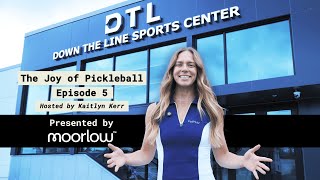
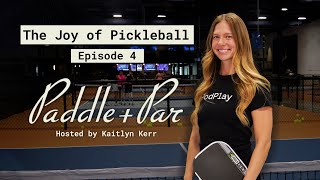
Yeah, so anybody who's starting a pickleball club, I think, would benefit from kind of a conversation with us. And, you know, particularly within that group, people who care about user experience, care a lot about sort of aesthetics and how kind of the technology feels and how it kind of operates. So if you want to be modern, you want to be kind of future forward, I think we're kind of the best choice, but whether that's the case or not, if you're starting a pickleball club, we try and put a lot of effort out there to kind of put best practices out in the world. So we do a lot on the content side. I write a lot of blogs. So, you know, even if you're not ready to talk to us, go check out podplay.app/blog and there are huge number of resources there. One of our most popular pieces of content is called the Pot Play Guide to Starting Your Pickleball Business. It is, I don't know, I think it's like 8 or 10,000 words now at this point, but it's really the collected learnings. And we did an update, we first put it out in 2024, we did an update for 2025 based on what we learned. And it's, these are the experiences that we have both operating our own venues serving other people. So saw a gap in the market. There's like a lot of what I would think of as kind of like fluffy content, things we can all agree on, like you need to build a community, sure, right, of course, you need to— the courts are good, things like that, courts are good, you know, I mean, these are like not very controversial things. So we tried to pack that, that guide with like real information about like how do you think about this decisions that you need to make that are going to determine the success or not success of your facility. And it's been, you know, really, really popular. So yeah, I would say, you know, go find that content. We also do a lot of fun video content, which is a part of our kind of strategy. We're trying to do a couple of things there. It's like show people what great looks like and capture some of that, you know, the joy of pickleball, which is both the name of a long-form YouTube series that we do with Caitlin Kerr and the name of, you know, we met on my LinkedIn group that we just started called The Joy of Pickleball, which we like that name because it really captures what it's all about, right? It's about people, it's about stories, it's about the experience, it's about fun. And so we try and do that in kind of video form. Let's It's the LinkedIn group. We wanted to kind of create a place where it was a space where players could meet. It's not just for kind of, you know, people on the business side. Wanted people on the business side to actually be able to interact directly with players. You wanted people to make connections, you know, job opportunities, a place to kind of like debate views on what's happening. In pickleball to solicit the opinions of others. And it's clearly kind of, you know, hit some sort of nerve because we're closing in on 1,000 members already. I started this thing 3, 4 weeks ago. So, you know, it feels like we're having like 25 people join the group per day at this point. It's just, they're just kind of like rolling in. We're starting to see more more activity within the feed, which is exciting. You just get people coming in, they'll introduce themselves to the group, and yeah, I, you know, it would make me feel great if, you know, people find connections, make business connections, find people to play with, find people to kind of, you know, shape the future of pickleball with within that group. There just wasn't a good version of that that we'd seen out there.. And I thought we were kind of uniquely positioned to do that because we have a lot of connectivity with the club side. And I think we're building in public. So that is kind of a philosophical thing that we do. We put ourselves out there. We basically show people our work. And so that kind of like lends itself to like there's a lot of these things where I'll do a post, I'll say I'll go first. There's always a, and then somebody else kind of like piles in. So we do believe in leading by example. So I thought we were pretty well placed to kind of organize that. And that's been, it's been great so far and I'm excited to see where it goes. That's great. I've already met great people like you. So I mean, this podcast is a direct, direct result of starting that group.
Yeah. So with all the success that you've had across the board with all these different ventures, you know, adding all those users on LinkedIn every day by just starting it. The video content, the actual business side of automating pickleball courts. What is one thing that you wish you would have done differently in the onset?
Well, on the venue operating side of the business, when we're putting together the table tennis facilities, I'm saying that the single biggest learning that we had, we kind of had this thesis where it's okay, if we're gonna operate without staff, we really have to get location right. You know, gotta get location right, location, location, location is gonna be really important. And as a consequence, we took on some spaces that, were really great location, but they needed a lot of build-out. And what you find out is that those build-outs can be expensive. They can take a lot of time. And I find myself giving advice to people who are starting pickleball clubs. It's like, you know, just be aware that if you're going to do— if you have a bunch of structural work that you need to do, whether it's plumbing, whether it's like moving walls, whether it's HVAC, these things take time, they cost a lot of money, and, um, you're into a permitting process. So there's two aspects to that in terms of like getting a return on your investment. It is, um, how much money you have to put in in order to kind of get this, get this thing open. But the other is like, how long does it take before you start getting money out, right? So it's time to revenue. And so I think we overweighted location versus, um, uh, this idea of like, yeah, if I can find a box that works that doesn't need as much work. And, and I mean, just to give you kind of like framework, we had one location that we got open in 6 weeks. It was perfect. We're in, we're out, we can put our— you know, we had another one that took us 16 months to get open. Right. Which is probably—
that's a little bit of a difference.
That's right. Big difference between those two.
Yeah.
Yeah.
Few weeks difference there. So if we had to do it all over again, I would do kind of— I would— we would think differently about that. I think there are, you know, and I think there are real opportunities to fit into the gaps as well. So thinking of the real estate side is you're a solution to somebody else's problem, whether that's a landlord. And if you can find a way to have your offering be, be a solution, uh, it's going to be easier rather than you're just another tenant, um, who's, um— so it's, if you look for situations where Do people who own the real estate or developing the real estate have a problem that needs solving and you can help solve that, then you're gonna be more aligned with those people on the real estate side. So yeah, I would say that's kind of like one of the big learnings. Now the other, and this is like difficult to anticipate, but when you start out, like when we shifted to kind of launching the tech platform, you tend to say yes to everything. You're like, you're trying to build a business, like yes, yes, yes. You know, we want to, we want to kind of like serve, serve, serve. And there is, we've had to kind of like transition as lots and lots of business come in. We've transitioned to a different mindset, which is okay, we've got to say no to things that just don't fit. Like people pulling us in different directions, they want us to do custom work. Things like that. So that's also a learning. It's always really hard when you're starting out to say no. And it's not a human tendency, right? The human tendency is when you're trying to build something, it's like, we're going to say yes, we're going to say yes. And, but if we had to go back and we had kind of, you know, perfect hindsight, there's certain things that we probably would, probably would not say yes to because there is actually a good opportunity, right? Yeah. Yeah. So that's always, I think, part of the process.
That's fantastic. Well, thank you so much for jumping on the podcast with us and giving our listeners a glimpse into your world and what you're working to achieve within the pickleball space. And we're excited to watch it continue to grow and can't wait to see what you have next on the agenda.
Great. Thanks for having me on and keep doing what you're doing.
It's great.
Thanks, Ben.
You too.
More from Ryan

How PodPlay Is Revolutionising Sports Venues with Autonomous Technology w/ Ben Borton - Part One