You Don't Understand Business, Until You Know These Lessons
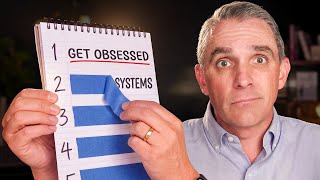
Rya Dice, a founder-CEO, shares five lessons from a year of layoffs and stalled growth despite 24% revenue and 36% profit increases. Owner distributions signal real health. Single-task focus and calendar-blocking raise completion rates. Content creation compounds brand trust over 13 weeks into a low-cost acquisition engine.
Chapters
I'm just going to say it. Last year sucked. We had layoffs, we killed projects, we shut down entire companies, and we had more failures than I can count. And in this video, I'm going to share the biggest lessons that I learned from all of my biggest failures over the last 12 months, so that hopefully you don't have to make the same mistakes that I made as you scale your business from 2 million to 20 million to 200 million and beyond. Because let's face it, at this level, mistakes are measured in millions of dollars and months and months of chewing rocks. Now, in case you don't know who I am, my name is Rya Dice. My partners and I operate a portfolio of companies that collectively generate hundreds of millions of dollars in revenue across multiple industries. But to be clear, it wasn't all bad. Our revenue was actually up 24% year over year. Our profit was also up 36%. That's pretty good. So what's the bad news? I've never had to work so hard and make so many difficult decisions in any single year. And even though we came out ahead, it never really felt like we were winning. More like we were just running uphill. In San, you go up and then you slip back down. And look, as much as I love to win, the best teacher is failure. So with that, I give you the five biggest lessons that I learned after swimming in all my biggest failures and regrets from the last 12 months, I hope you enjoy it more than I did. Lesson 1. Distributions are the ultimate sign of a healthy business. Now, unfortunately, this is one that I had to relearn. I actually did a video on this called the Cash flow Waterfall. You should check it out. So this is something I know. I know all about this. I just wasn't living it. So here's what happened. One of our companies finished the prior year at around 6 million in revenue. And halfway through 2025, it was flat. So no real growth at all. But the bigger problem is there were no distributions in 2024, and it was looking like there weren't going to be any in 2025 either, if things stayed the same. So after a particularly terrible June, the leadership team started asking the typical question, which is, what can we do to generate more leads and sales? Which yielded the typical answers that all just sounded like more expensive, time consuming, random acts of marketing that probably weren't going to work because none of them worked before. So I proposed a different question. What would need to be True to distribute $50,000 a month? $50,000 was less than 10% of total revenue. And it's not crazy, especially considering they were targeting 24% margin. Now, this question, as you might imagine, forced some very different discussions. It also forced some very difficult decisions. But within 60 days, the company was healthier and more profitable, and it kicked out more distributions in the fourth quarter than it had the previous two years combined. If growth is stalled, try solving it through systems and through increased margins instead of just throwing more random acts of marketing at it. Lesson two, I can only do one thing at a time, and the same is true for everyone else. Like lesson number one, this seems to be something that I have to relearn year after year after year. Seems like when I try to do two things at once, I get both things to about 50% and nothing gets finished. It's just this kind of giant waste of effort. But when I commit to doing one thing, it actually gets done, and then I have time and momentum to do that second thing. And what do you know? The same is true for my team. It's like they're people, too. This was proven to be all too true in the second quarter of the year when we greenlit 17 simultaneous key initiatives. That's really stupid, especially when you consider that we have rules for how we do our strategic planning that state that we're limited to just three North Star metrics that we're trying to optimize and five key initiatives with a maximum of seven that we believe, if completed, will optimize those North Star metrics. We managed to get two of the 17 done. That's it. In Q3, we learned our lesson. We kept it to five, and what do you know, we accomplished all five. We literally got more than twice as much done simply by committing to less. Scale creates chaos, so if you want to get bigger, you have to insist on focus and simplicity. It is a bit of a paradox, but the key to scale is actually to do less, not more. Because when you force yourself to do less, you shift the emphasis from quantity to impact. And at scale, output matters a lot more than activity. Lesson three, if it is on the calendar, it isn't getting done. So I carved out a couple of hours the last week of December, and I painstakingly scanned my Google calendar week by week for the entire year. I literally went back every single week for the entire year. And what I found, the weeks where my calendar was scheduled, what do you know? I was productive. Work got done. The weeks that were just open, I literally had zero recollection whatsoever of what I did or what any of my Companies did those weeks either. It's just like they were a complete blur. More than likely, I spent all my time responding to whatever emergency someone else decided was important for me on that particular day. Equally unsurprisingly, my most productive weeks were the ones when I booked meetings with myself to get truly critical tasks done. Show me your calendar and I'll show you what's truly important to you. Because if you don't decide what's important to you, someone else will. This year, I'm making sure that every hour on my calendar is blocked off intentionally. Even if I'm intending to do nothing, I'll schedule a meeting with myself and call it thinking time or walking around. But every Sunday night, before my head hits the pillow, every one of my blocks gets filled with something here. What you're looking at right here is one of my calendars in the future. And you can see I've actually created a separate calendar that I call blocks. It is my job during this meeting that I do between 8, 9 every Sunday, my weekly review and preview, to go in and fill in these blocks with an actual meeting for myself. So I've got a focus block here, focus block here, focus. I got focus blocks here where I'm going to do some kind of meaningful work. So the question is, what specifically am I going to get done here? I do have a couple of, you know, leadership meeting here. I've got a call, client call that I do here, record my podcast here, things like that. But in general, you can see that these times are open. My goal, my job is to be as intense, intentional with them as possible. And if I can turn all of these light blue boxes into dark blue boxes, then guess what? I'm gonna have a pretty productive week. And just to be clear, the goal is not to fill every minute of every day with work. The goal is to fill it with intention so my time doesn't become someone else's by default. For example, my goal is to fill most Fridays with golf. I don't wanna fill that day with work. I simply want you to be intentional about what are you claiming for yourself? What are you, what are you gonna leave open for others? Lesson four, Good content compounds. It just takes time. So this was a year that I finally decided to get serious about my personal brand. And not because I wanna be famous, because, trust me, I don't, but because I believe. In this era of low consumer trust and high social media consumption, one of the highest leverage roles that a founder CEO can perform is to serve as the number one spokesperson for their company. Just to be clear, this isn't just my opinion. According to a study published by G2, 82% of consumers said that they are to trust a brand whose leaders and ideally CEO are active on social media. What I'm about to share applies to you even if you don't think about yourself as an influencer. Again, I don't. I started with YouTube because it's easier for me to produce long form content, probably as my wife would tell you, because I don't know how to shut up. Then I expanded into short form content, both written and video, with a lot of help from people who know those channels much better than I do. And in the beginning, nothing happened. No leads, no sales. When I had a conversation with one of my friends and mentors by the name of Roy H. Williams, easily one of the most brilliant marketers and admin on earth, that nobody's ever heard of. And Roy has this rule, and it's a rule that he makes all of his clients agree to ahead of time before he even starts working with them. And the rule is you have to stick it out through what he calls the 13 week chickening out period. In other words, he's going to do what he does for 13 weeks and you're not really allowed to question anything during that time. Thirteen weeks is the minimum amount of time that it takes for any non direct response marketing related bonding campaign, which is what content, social and influencer marketing is, to actually start seeing an effect. And here's the kicker, it could be as long as six months. Just to know if what you're doing even has a pulse. Told myself I'm not going to chicken out and question anything for 13 weeks. And I wouldn't give up until I'd given it a solid six months. And sure enough, right around the 15 week mark, things started to take off. And they've continued to compound ever since. In fact, just kind of as a test, we turned off all of our paid traffic for all of Q4 and sales just continued to accumulate. And unlike other forms of marketing, this is the one channel that is actually getting less expensive and more effective at scale. I just wish we would have started sooner. Today brands are built on YouTube and other social channels, period. It's why I'm here right now doing this for you. Why? Because that's where consumers are spending virtually all their time. So if you're going to make the investment, make the investment, don't check it out, give it a full six months and don't even start measuring the performance until the 14th week. Also, when you do roll out your first content and social effort, start with just one channel. First, choose the channel where your ideal clients hang out the most. So for B2B, that's probably LinkedIn. For everything else, it's probably Instagram, YouTube, or TikTok. If maybe your market skews a little younger. Once you've chosen your channel, help. Don't try to figure this stuff out on your own. There's thousands of agencies and consultants that can help you get started. Just be sure to pick someone who actually specializes in the channel that you've chosen. If they claim to be experts at all of them, run. Now we've come to it. The biggest lesson of all. Lesson 5 the excuse is the Reason. Now, I noticed something strange about all my biggest failures last year. In each case, there was something that I knew I needed to do. I absolutely knew that I needed to do it. But there was also a perfectly reasonable excuse for why I couldn't do this thing that I kind of knew that I needed to do. So what did I do? I basically did nothing until circumstances forced me to make a decision, at which point I just did the painful thing that I knew that I needed to do all along. In retrospect, had I inverted my excuse for not doing something into the reason I must do something, I would have avoided a lot of pain and I would have saved myself a lot more money than I care to admit at this point that I wasted. So let me give you an example. I can't let go of that person. They're just too critical to the organization. Is that something you've ever heard yourself say? Is that an excuse that you've made to maybe hang on to a team member that you know you should probably part ways with? I know that was the case for us at different times last year. Well, what if that became we must let go of that person? They're too much of a bottleneck. They're too much of a liability. Do you see how we've inverted the excuse for not doing something into the reason to do it? Here's another one. We can't retire that product line. It has way too many legacy clients. But what if it became we must retire that product line? It's holding us back. It speaks to what we were, not who we are today, and definitely not where we're headed. Look, here's the deal. If what you were doing were already working, then you wouldn't be stuck. So by definition, you need to try something different. And more times than not, that Something different is the very thing that you're avoiding. And you're likely avoiding it not because you think it won't work. You're avoiding it because you know it's gonna be difficult and painful to imp. That's the job. I mean, as leaders, it's up to us to step into the gap. It's up to us to make the tough call. It's up to us to have the difficult conversation. It's up to us to be the bad guy. You can't shrink from your responsibility and still expect to reap the benefits of scale moving forward. Starting today, I want you to take every excuse for why you can't do something and invert it into the reason you must do something. Let the excuse become your reason, then model it and pass it down to your team. If you do that, I believe this next year is gonna be best year ever. So that's it. Five lessons I paid for with real cash, real sweat, real tears, and a whole lot of sleepless nights. And if you like learning lessons like these, the cheap and easy way instead of the expensive and painful way, be sure to subscribe and I'll see you in the next one.










