Episode 50.33 Ft Ryan Lee of Chimera Genetics - 16/11/20

Ryan Lee of Chimera Genetics traces cannabis breeding history through key figures like David, Neville, and DJ Short, who collected and distributed classic varieties like Skunk#1 and Haze. The conversation covers feminized seed production using STS, the difference between intersex and hermaphrodite plants, and technical limits of backcrossing.
Chapters
Hello and welcome to the next episode of the podcast, a cannabis podcast for budding enthusiasts. This episode, as always, we're grateful for our amazing sponsors. Seeds here now. Number one seed bank in the game. Guarantee on satisfaction, not just germination. No reason to go anywhere else. Why would ya? On top of that, all the best breeders in the game. Your number one stop. Go hit them up. Likewise, Coppet Biological Systems, best in the business for all beneficial bugs, predators and your feeds and microbial solutions to keep your garden happy, healthy and pump it along to give you the best harvest possible. Get on top of it now so that your garden produces the most primo harvest you've ever had. Also, a huge shout out to the Patreon gang. As always helping support the show, lifeblood and all. We are so, so grateful. Hope you enjoy early access to this episode. And if you want to help support to make episodes happen and get yourself early access to some future episodes and exclusive content, go check out www.patreon.com thepodcast. Hope you guys are ready for an epic part two of our chat with Chimera. Let's get into it. Yeah, it's. It's pretty wild. Just to jump back to some of the stuff about David Sam, because we, we have had over the years a plethora of pretty interesting questions asked about him, which we've never really been able to have answered. I guess one of the ones I was personally interested in is that a lot of the stories around the strains that have come out through David have sometimes portrayed him as not really the active breeder, but more of like a steward. And in that regard, I mean, like, if you look at Skunk, there was often a lot of credit given to Sacred Seed. And if you look at Haze, you know, obviously his neighbors kind of developed that one. Where do you see him in the picture of, like, do you view him as the creator of those strains or more of just someone who brought them to the world?
No, he bred Skunk one from scratch. Anybody that says different doesn't know, like, Dave assembled that from scratch. Hayes, you're right. It was these two dudes that were known as the Hays Brothers. He tried to introduce me to them actually one time in California, and just three circumstances of the meeting, it didn't work out, but they created the haystack. Mel Frank created or collected the Afghani one. And I think he also gave him the Durban poison, which came from Ed Rosenthal, which Ed Rosenthal actually didn't collect in South Africa, which is the common belief of the story. Ed got them out of some flowers at a coffee shop. So that's the truth about where Durban poison came from. It was out of seeds at a coffee shop. The California orange. Dave also brought that one to California, or, sorry, to Holland. But he collected that one from a grower at a harvest festival. And Dave is a member of the Seed Savers Club of America. He is an insane collector of plant seeds, not just cannabis. The story he told me is that he met this grower up at a harvest festival. He had the California orange. Back then, seeds, there was no seed business, and they just didn't exist. But because David was an insane collector, he said, hey, do you mind if I get some of those seeds and can I work with them? Can I breed them out and play with them? And the guy gave them to him freely, and he brought all those things over to Holland. That's how the whole Sam the Skunk man thing kind of started over in Holland. But everybody. I mean, you look at Dutch Passion Scentsy, all their seed catalogs, I mean, it's pretty clear that David was the person that brought all those things. So some of them he created, and some of them he just ushered in. Yeah, and he made a lot of hybrids. I mean, I helped him catalog his entire seed collection, which is, to my knowledge, the largest cannabis germplasm collection on the planet. Like, I don't know anybody that has a larger one. And it's pretty impressive. There's a lot of stuff in there that the world doesn't even know about. Just weird land races and weird plants, you know, just with strange traits that people don't even think about. And it's all. It's all there. But, yeah, I give credit all the David for that, you know, and he's. He's more than willing to, you know, he'll. He'll tell you straight up, no, these ones came from. From Mel Frank. These ones came from so and so the Hays brothers. I mean, Hayes isn't even. Everybody says, oh, Hayes, as if it's one thing. Hayes isn't thing. It's many things. It's a series of plants that were created over multiple generations, being hybridized with one another. And every year they would add in a new cross into the mix. Right. So Haze is really a family of siblings and half siblings and cousins. And there's many different types of the Haze. There's the Purple Haze. You know, obviously the Purple Haze. There's all these red and green Hazes. There's one that was called Christmas Haze. There was New Year's Haze. Right. They were super long flowering ones that weren't ready until the new year. And they all are different variations of hybrids between Mexican, Thai, South Indian and a little bit of Afghani at times.
Wow. I mean, so many different avenues again to go into. The most pertinent question to me is did you ever get to try what some might call the real Haze? Even though you just explained there is no one real Haze. But you know, often people reminisce about Haze but can't exactly vouch that they've been able to try Vector Real Deal. Have you? And what was your experience? If.
So, yeah, I've tried a bunch of different things from being over there, you know, and usually they're hybrids of plants that were David shared with people that were over there. I mean, you know, everybody's heard of Neville's Haze. Those were, those were David's non preferred Haze plants that he gave to Neville with the promise that Neville wouldn't reproduce them pure. Right. He said, take these things and make hybrids of them. Fine, but please just don't make them pure because I'm selling them pure. And as people want to do, they don't like to do that. They'll tell you anything to get it in their hands and then once they've got it, it's a whole different thing when they can make money off of it. But yeah, it's just a family of plants. And really what we know now is the Hazes are mostly like, you know, the amnesia haze. That's really what you find over in Holland. Those are terpinolene plants. They're terpinolene dominant plants. So it's kind of in the same family as train wrecks or I think the DNA guys sell it as, what do they call it, like citrus skunk or lemon skunk. It's lemon skunk, that's what it is. But lemon skunk, actually everybody thinks, oh, it's high in limonene. It's not. It's high in terpinolene. And terpinolene to some people has a little bit of a fresh lemon scent, even though to me it's more piney. So there's those and then there's the pinene plants, which are a little more rare and the limonene pinene plants as well. And they all kind of fall into that hazy family like again, what I call equatorials. Right? Yeah.
That's amazing. I mean, you kind of just quickly alluded to Neville in the mix there. I've always been interested by the fact that he was donned the moniker of like the King of Hazes, despite the fact he got them from David. Do you feel like that was sort of like a misnomer, the fact he got that title? And as a bit of a follow up, do you feel like NL5 Hayes is like a really good poster child for Hayes? Because I think a lot of people suggest that, you know, like the NL tames the haze to the point where it's like you can do it indoors. Do you feel like there was actually a lot better, but it just, you know, it didn't really see the light of day sort of thing.
It made it more accessible for people to grow. But I wouldn't call the NL5 haze like on its own haze. If you inbred it, you could pull out haze like plants from it. But the NL5 haze is way too big for a haze. It's just got way too much biomass and that's the influence of the Afghanica in there. So, yeah, it's. The Hazes are very, like I said, they're very equatorial, they're very long flowering, they're very thin leaves, they're very low yield, small resin glands. They don't have a ton of scent. Like they'd probably fail the 1% chirp test. At least the old ones were. They'd need to be improved. But they did have a nice headspace. Right. They did provide that nice clear kind of effect and what people call the ceiling, where you could. Or ceiling list where you can keep consuming them and getting higher and higher. I think again, it's like because they weren't 25% THC and you could smoke them without burning out, THC is. Got a biphasic effect. So at small doses it's invigorating, but at large doses it makes you lethargic and kind of feel. I don't know. I don't know if there's a better word for it than thud. It just kind of takes it out of you. And if you've ever done large doses of edibles, it's kind of a similar feeling. And we see that not only in humans, but also in rats. If you look at the neuroscience of cannabinoids and administration, at a certain point in time, people, the. You get energetic on a curve and you get to a point where it plateaus and then the more you consume, you're actually going down, not getting up anymore.
Sure. And I mean, how do you feel the comparison between Netherlands and David is given that? I think a lot of the time, and I'm probably guilty of this myself. People hold Neville in a bit higher regard or maybe feel he maybe contributed more. Do you feel like that's maybe inaccurate? And what's your thoughts on Neville in general?
Can I say, don't speak ill of the dead.
Sure, sure.
Yeah. Neville is a controversial person in the cannabis world, let's put it that way. And he took some risks that David wouldn't risk. I mean, remember, David's American, Neville's Australian. And so when David moved to Holland, he knew that the United States was a machine and that there were all these systems in the United States that were part of the machine, and that if you wanted to stick, if you wanted to throw a stick in the wrenches of the operation of the American machine, that they're going to come for you. And so David never did any business. And once he left, he wasn't involved in doing business in the States. Neville did. Right. Neville set up someone in the States and was actually doing distribution. I don't mind saying this now that he's passed, but he actually set up seeds. They were shipping them over from Holland in soup containers labeled soup cans, and they had someone that was actually distributing. So the money would come from the States, Neville would collect the money and then the seeds would be shipped back out of the States. And that's why the DEA went after Neville, because something happened and the plot became known and they went for him. He was a smart guy. Like, I actually didn't know him too well personally. I tried to interact with him a couple of times and he was, let's say he wasn't receptive to it. But same with Scott. I have a really great relationship with Scott. I got a lot of respect for the work that Scott has done. Shanty Baba, I mean, for Mr. Nice seed company. But for some reason, people, people want to be divisive in the cannabis community. So this, like, they kind of put themselves either in the Scott camp or the Neville camp or the David camp. And if you're in one camp, then you can't be friends with everybody else. And I'm not like that. Like, I, you know, I try to be friends with everybody in the space because it's like they're all. They've all got interesting histories and they've all got lessons to teach, and I just want to understand the plant from their perspective because, I mean, they're our elders. Right. And so George Cervantes actually introduced me to Scott and I think Scott was kind of apprehensive of me at first because he was like oh, you're that Chimera guy and, you know, you're in the other camp. And, you know, we got past that pretty quick. He came to realize that I wasn't any threat to him. I had no malice towards him at all. In fact, I respected him for the works that we had done and we developed kind of a mutual respect thing. But he had really been poisoned by Neville because Neville had told him all these awful stories about David that just weren't true. And he. And he used to tell me, oh, yeah, but he works for the DEA and he doesn't like Scott. Dude, that's just not. That's not the way it is, man. Like, you know, so I think that, you know, and truthfully, you know, you probably know Mr. Nice Seed Company, which at one point in time was Neville and Scott, that kind of went, you know, Neville, towards the end, he wasn't involved with it anymore, right? And they had parted ways a bit too, because. Well, just because of stuff that I'm not going to get into. But I think that the Internet, with the Internet especially, you know, the cannabis community, for a period of time existed only on the Internet, right? We couldn't interact with each other one to one on person. And the Internet, the Internet and Overgrow and all these other websites that we used to use, you know, Cannabis World, all that kind of stuff, they provided an opportunity for people to reach out and connect with each other in a way that we couldn't do before. I mean, it just. Those technologies didn't exist and it was a really great thing for that. But the really bad thing about it was that there's become all this nonsense stories that people have made and promulgated. I mean, you can go to Wikipedia and read about a whole bunch of nonsense about David on the Wikipedia stuff. Like it's somehow fact and it's just not. And for whatever reason, those things have really resonated in the cannabis community, right? Because again, we're so, as a whole, we're so anti science, we're so anti Big pharma, we're against the man, right? Because again, we've been kicked in the teeth by the police and the justice system for 50, 60 years. So it's natural that we have all those fears. But I think on Internet forums they really fester into this psychotic, untrusting place of like, really what just becomes mostly lies. You know, I read stuff on the Internet that I know for a fact didn't go down that way because I was there, right? But I'm reading it on the Internet as if it's fact, by some guy posting it as if it's like gospel from God's mouth. So in a way, while the Internet really helped us get the seeds out and spread the message and teach people how to grow and even teaching people how to breed and some more advanced stuff about cannabis, there's been a lot of negativity that's come out of it that's, I think, frustrates. I know it frustrates a lot of the old timers and myself included. And it gets to the point where it's just like you don't even want to do it anymore. You don't want to post and share the information because all you're met with is people telling you that you're a liar and that you work with the DEA or that, you know, it's just all this nonsense. And it's really, it's kind of a shame because it's done a disservice to the history of cannabis.
Right.
And so I've always, when I've been over in Europe and I've tried to meet all these different folks in the industry, I really just want to meet them all and understand what their perspectives are for cannabis, because I'm interested in the history, like, I guess, kind of like we're doing with this talk now, but I'm interested in the history and the reasons why people were doing it and the motivations and how they got their start.
And.
There'S been in the cannabis industry a lot of smoke and mirrors, and I really hope that that goes away. And now we're going to see the next generation of people that are. They're able to be open and honest. They're able to show their work, they're able to teach the next generation how to do it better. And so I really do feel, like, quite hopeful for cannabis and positive for cannabis in the next 20 years. And I really look forward to. You know, I was talking to a friend from England the other day in Guernsey, one of the little islands off in the South Sea or southern. Whatever it's called, the. What is it? The Bay of. Bay of Biscay. They're all, you know, they're talking about legalizing a full adult use model in just off the coast of England. They're a British colony or protectorate or whatever it is, but I'd love to see them legalized. I'd love to see Australia and New Zealand legalize. Really. I'd see the whole Commonwealth just legalized straight off the bat. That would be a Nice quick start, and then the rest of the world will eventually catch on. And I think that that's going to be great for so many reasons. It'll probably lessen the impact that alcohol, the negative impacts that alcohol have on society. And there's just so many benefits that can come with it. You know, all about the medical aspects and everything. I mean, I'm not going to sit here and preach to the converted, but it's, you know, cannabis can do a lot of benefit for society. You know, we've seen this with the, you know, the British soccer hooligans that used to go. You know, they'd go to different countries and there'd always be these brawls and fights with everybody getting drunk. And when they'd play Amsterdam or they'd play Holland in Amsterdam, that wouldn't happen because everybody was stoned, you know, so there's a lot of good that can come from cannabis and society's using cannabis. And it would be great to see a lot of Neville's old work being grown down in Australia. I mean, Australia's got a great climate for these equatorial plants. And it's a shame that it's, you know, they're still throwing people in jail there. It's nuts.
Yeah, definitely, definitely. And many points resonating with what you just said. But I feel like it is such a shame that we do still have this kind of culture in the scene of, like, being attached to one camp and you can't just kind of try to be okay with everyone, you know, because as you've alluded to, that's through being able to kind of float in between the rifts, so to speak. I feel like that's how the truth can come out and you can avoid these sort of issues, like you mentioned, with Scott thinking that Dave was a part of the DEA and whatnot. And it's kind of sad that the three, arguably the three big pillars in terms of, like, Scott, Neville and Dave, weren't able to kind of keep it all together because it's kind of this fragmentation sort of thing you alluded to. But just to. To jump back to Dave for one moment, something which has been asked, probably more so than any other question about him, which I would love to get your perspective on, is did he ever talk to you about his thoughts and whether he intentionally ever changed Skunk from what people would say was like the stinky early version to the suite? And, like, what's your overall perspective on that?
Yeah, he loved the Swede. I mean, that's just what he Loved that was the end of the spectrum. The first few generations. It had some stanky plants in there, but those weren't the ones that he preferred. And so like all breeders do, they select towards the type that they like. Gotta keep in mind the context of the years too. That was going on like late 70s, early 80s, call it mid to late 70s, early 80s. You grown skunkweed back then, man, you're going to jail, right? It's like you're stinking out the whole neighborhood. And so they would. He selected away from that. And that was just part of his choice because he liked the resins from the other, these other plants better, right? They made what he considered a finer hash. David, you know, since many, many, many years ago is not a cannabis flower consumer. He's a, he's a hash and concentrate consumer. And he used to have the finest hash in the world, right? Whatever he called the 50 and it was like 50% plus THC, it would turn to liquid as soon as you put a flame to it. It was the first dabbable concentrate extract that I'd ever seen before dabs were even a thing. And he had that level of quality. So again, he selected the plants that he liked for that purpose. And that's what he did. That's why skunk is the way it is. Everybody talks about the terps and skunk, it's actually not a terpene. There's rare, there's rare volatiles that the plant produce, that the plant produces that have to do with smell or they influence smell. And so terpenes, everybody thinks that terpenes is the whole story, but they're actually not. They're one of the major factors in the scent. But there are a few other chemicals that when they get mixed in with these terpenes, they're kind of like, I call them scent or flavor modifiers. Right. And they actually use some of these compounds in the perfume industry to change the flavors of, or sorry, to change the scents of different perfumes in the.
Community at the moment. There's this really kind of popular drive to find the roadkill skunk. My thoughts are that it's most likely gone. And touching on a point, you just made some of the smells around this sort of quote, roadkill skunk. I've gotta believe that they're kind of more thiol based, sulfur based compounds and maybe not even technically falling under the strict definition of a terpene. Do you think that's the case or do you think that the other point of view might have some credence to it where it's that there's a bit of like rose shade glasses. And maybe it wasn't really like a skunk dead down the road sort of thing. Where do you sit on that one?
Well, I'll tell you a story that might tell you. I've got a plant that is very, very roadkill. Like, I've got a few of them actually, but one of them is a terpinolene dominant plant. So it's actually of the same flavor profile or what we call the flavor class. So flavor class is like they have a general terpene profile arrangement that is kind of a fingerprint. And then there's like all these different plants that kind of fall into that grouping. And so this particular plant is a. Is a terpinolene plant. And so up close, and when you. It's right in your nose, it's got that lemon skunk kind of like. We have a product here called Mr. Clean Pine. I don't know if you have that in Australia, but. But it's a concentrated liquid cleaner that you add to water to wash the floors. And that's got this. That's a terpinolene kind of smell to it. So when you have the flowers and they're up close and you're breaking it up, that's what you smell. But I remember harvesting a couple of rooms of this stuff, and I was moving it across town in my knapsack, and there was something going on with my car at the time. And I decided I was going to get on the bus and go across town with these. These bags of dope in my knapsack all sealed up really well. And I got on the front of the bus and walked to the back, you know, halfway to the back of the bus, essentially got to the backs of the doors. And I remember someone just saying, do you smell that? It reeks like a skunk. And I just promptly got off the bus and walked home across town rather than taking the bus. But the point of the story is that the smell that you smell when it's right up close is different than the smell that you smell when it's in the bag. And yeah, you'd come into room and you'd open it up and it would be like, it smells like a skunk. And it does have a reminiscent nose of a skunk. But when you actually get it out and you grind it up, it doesn't. Right. It's actually different. And now I know there's going to be a hundred people online telling me That I have no idea what I'm talking about and that, know, the stuff that they had, it was those skunk right down to the end of the joint and all that kind of stuff. Fine, maybe it was. Maybe it was just higher in these compounds. But I think that, you know, I know for a fact in having had access to these chemicals to make terpene standards and things, when you have a molecule at one drop versus, you know, one, one. Like, for example, say you've got one microliter of a substance and you put it on a piece of paper, and you take the same substance and you put 10 times as much on a different piece of paper. They smell different. Same substance, right? So there's something to do with, like, maybe with THC and the biphasic response, that we also have these responses in our nose, that one molecule of a smelly compound is enough to trigger a certain effect in your nose. And more, it might elicit a different response. Again, knowing that each of us have different neurochemistry and smell is also based on neurochemistry. It's just a chemical signal that's being transferred to your brain. And so, yeah, I think it's partly something to do with that. And I don't know what the true answer is, but there's something in that whole thing. And then there's always something to nostalgia, right? The weed that you had that one time when you were with your best friend at the lake, it's like those things all influence your perception of the experience, right?
Yeah, hugely. Hugely.
And looking back on it, it's pretty easy to say, no, no, that was skunk weed, man. I mean, it smelled like a skunk. But I bet you if you were able to transport someone back in time and make them smell the same thing, they wouldn't smell the same thing again, like, you know, I don't know if you're interested, if you like beer or anything, but I know when I was a kid, beer, to me it used to smell like skunk. It doesn't smell like skunk to me now. Right. It's because that I've learned to appreciate the different notes that exist within the context. And it's the same with weed, right? Like, part of. Part of smelling things is like knowing how to break apart the effect. Because again, you're not smelling one chemical. You're smelling a symphony of chemicals, right? And the total of those, it like a symphony of musical notes. Like, the totality of the orchestra is what makes the sound. You're not listening to the flute Right. Or the oboe, for example. Right. It's the totality of the whole thing together that you hear. And being able to train your ear in the context of a symphony, being able to train your ear to pick out the oboe or the bass guitar or whatever it is, that takes a little bit of a skill and training in time. And it's the same thing with your nose and cannabis. When we smell cannabis, we're smelling this orchestra of molecules that come together to create what we perceive as an experience. Right. But when you have the individual chemicals at your disposal, and you can smell limonene on its own, or ocamine on its own, or beta caryophylline, or I can list any one of the really 30 major terps that are. That are in cannabis, then we have a language that we can agree on. Like, for example, if we're sitting in a park and we look up the sky, you and I can both point at the sky and say, okay, that's blue. Do we agree? Yeah, that's blue. The clouds are white. The leaves on the grass or the leaves in the grass or on the trees are green. That flower is yellow. Right. And we can have a shared experience because we're both looking at the same thing, and then we're applying a label to that thing that we're looking at. Right. We don't have that ability with terpenes or with scents without having the individual chemicals. And that's why people say stuff like, oh, it smells incensey, or it smells like roses, or it smells like X, Y, or Z. The rose actually smells like geraniol. Right. Or the lavender smells like linalool. But we don't know what those individual components smell like. So it's hard for us to have that consensus where we point to one thing and say, this is this. And only when you actually get the individual terpenes or the individual notes on their own, can you then. We can then both share the same vial and smell it, you know, in a socially distancing manner. We can both share it and say, okay, this is linalool, this is limonene. You know, this is ocamine or whatever terpene you want to choose. You know, people are always blown away when I show them pure limonene. They're like, it doesn't smell like lemons. You're right. No, it doesn't smell like lemons. It smells like orange peels. But everybody assumes it smells like lemons, right?
Yeah, yeah, yeah. I got a bottle of limonene in my fridge, and I do the Same little thing to people.
Yeah, it's great because then. And what's that. That's about is building a consensus of the words that we use to describe these things. Right. Rather than trying to describe them by referring to some other thing. Right. Which again is it's on itself. Like, it's like, oh, it smells like roses. Well, roses are also a symphony of smell. They're a symphony of notes that make up the overall scent that we perceive as one thing. Until you have the ability to learn the individual components of that smell, it's really hard to communicate on things because we don't have a common language like that like we do for colors.
Yeah, of course, of course. I think. Yeah. Just a point you touched on, which I really struggle to try to get through to people at times is how like, like chemicals at different concentrations have different smells and like, I try to make it simple to understand by talking about like ozone, you know, the smell after rain patrol. It's sweet in low concentrations, but if you get a big jar of ozone, it smells horrible.
Yeah.
But yeah, I guess it is a bit of a concept to wrap your head around. I'd love to jump into some more kind of technical breeding stuff at this point because I think that's an area you're going to be able to provide a really deep, great amount of insight into. Something I've always wondered about is. I think it might have been a forum post, but somewhere along the line, Dave wrote an article about how he reversed some males and got female seeds out of. Got seeds out of it, and 25% of those seeds were females. Would you ever consider doing this sort of project if, say, you only had one male and you wanted to like, line, breed it out and get some females out of it, or do you think it's just too much of an effort?
No, it's not too much of an effort. It's actually not that hard to do. It's no harder than, or no different really than making feminized seeds. With sts, there's some challenges in working with the populations. Again, you got to understand about the plant breeding, to be perfectly frank, they need to bring it all to cut around the whole discussion and go right to the end. I think, and this might be controversial to some people, I think that male cannabis plants in the drug breeding world are probably on their way out. If you make all female seeds or gynos seeds, again, I don't like to use the word feminized, but if you use gynosha seeds, right, and you make them Right. They're every bit as good as regular seeds. In fact, they're better than regular seeds for a couple of reasons. The obvious reason that in your next generation you don't have to worry about dealing with a bunch of males. Truthfully, if you're growing out a thousand plants and 500 of them are males, that's a big waste of time and space, the resources to pull them out. Even if you're using genetic sequencing or PCR based method to identify the males at the beginning, that's a, that's a cost, right? Like it's not free to do that. It costs money. It costs money to plant them, it costs time to plant them, it costs money in terms of nutrients and soil and space in your grow room and all that kind of stuff. So to me, males are a big hassle to deal with sometimes. I work with male populations, but if I do, I typically don't do one to one breedings with males unless the plant has some incredible unique trait that I can't do it another way. Usually what I'll do is I'll combine the pollen from a percentage of the population, call it 10 to 15% of the plants that I see, I determined or I believe are the most suitable for whatever that population is, and then I'll mix the pollen or use those plants all together in the same room and that way, because that's really the natural way that cannabis breeds, in a natural stand. Okay? Like if you call it 30,000 years ago, if you're walking through the Tibetan Plateau and you find a stand of cannabis, you're not going to find one female together, you're going to find a group of plants, many males and many females. And the males are pollinating all the females. That natural state of breeding is what we call out crossing, but it's actually called an obligate outcrosser. An obligate outcrosser is a plant that needs another individual from a different genetic type, maybe a brother or sister, but maybe another plant far away to hybridize, to make offspring. That's the consequence of having a dioecious population where you have males and females. So it's a lot more akin to the way that humans breed, where humans also need to have, you know, they need to have sex with another individual to be able to leave offspring. Right? You can't clone yourself. You don't just have kids willy nilly unless you're, you know, the Virgin Mary. Everybody else has to breed together to make offspring. And there's a genetic consequence to that, meaning that the Child is actually a hybrid, right, of two different parental types. So when you look at, you know, everybody's got a mother and a father, and I don't know if you've got brothers and sisters, but if you look at, you know, your family, you don't look like your mother or your father. Like you don't look like your father. If you have a sister, she doesn't look exactly like your mother, right? They have some traits of both the parents, and you don't look like your siblings unless you're twins. And so that state of breeding is really much more similar to cannabis than, for example, tomatoes. Right. If you're growing an heirloom tomato variety, you can plant a seed, grow it into a plant, harvest the fruit, take the seeds out of the fruit, plant those again the next year, and the fruit from that subsequent year are going to look like the year before and the year before. And for 10, 20 generations down into the future, the tomato is going to keep coming out looking the same. Well, cannabis isn't like that. Right? And the reason it's not like that is because when you constantly breed to another type, you're constantly introducing new genetic material into the mix, and you're losing some genetic material every time, but you're also gaining new stuff. And so you don't have this uniformity that, that starts to develop in plants like tomato that are what we call self crossers or self species, selfing species or inbreeding species. And those types of species get to be more homogeneous and more uniform over time because they actually, their breeding system actually purges genetic variation rather than increases the genetic variation. Okay. So from a breeding perspective, it's actually a lot more work with cannabis to make things uniform. And through some of the work that I've done down in the States, and especially having access to the chemical, to the laboratory, where we would grow hundreds of plants and every single plant would go to the laboratory. And so we would get back not only the phenotypic data that we would collect during the growing, you'd also get the chemical data from the laboratory. And so we would be able to take two plants that had a very similar or an identical terpene profile, and we'd cross those together. Whereas if you took plants with divergent terpene profiles and you cross them together, you wouldn't have the same level of uniformity in the offspring. And so because male cannabis plants don't produce the traits of interest or even of import to drug cannabis growers, Right. You don't use male plants in Growing drug cannabis, you only use them for making seed, those, those male plants. We people don't. It's like I use this expression and, you know, some people don't like when I use it, but I'm gonna use it anyway because I don't care. If you're breeding humans for breast size, pretty easy to select the female humans that have big breasts.
Right.
How do you select a male individual for big breasts? They don't have that characteristic. So it's a sex, it's what we call a sex linked trait. Right. Only one gender really shows those characteristics. And so if you were running a human breeding program, which we can't do because of ethics, but if you were running a human breeding program, you would probably look at male plants that had sisters with large breasts or mother with large mothers with large breasts. And that increases the probability that they'll have the genes for large breasts. But it doesn't guarantee it. Right. Whereas when you're selecting two females and you can find a way to cross two females together, like we have done with creating feminized seeds, you can do what I call positive selection for the traits of interest on both sides of the cross. And when you can do that, trust me, because I've done it in the laboratory many times, when you bring two types together that are almost identical, the chances of the plants being more uniform are way, way higher. So what I've noticed is that you make more genetic progress in a generation. When you're doing it that way, you also have the added consequence, the added benefit of not having to remove males from your subsequent population. Right. Like with, like I said, if you've got hundreds or even thousands of plants having to go through and rogue out half your crop or kill half your crop, that really is a pain. Right. It's a real, real inconvenience.
Yeah, of course. And I mean, gosh, so many avenues to go down. Something just to kind of follow on with that is there's long been a discussion within the community about whether there's any significance between say a feminized seed produced from intentional STS application versus one that's just purely a result of maybe a stressed environment, some sort of hermaphroditic event. What's your thoughts on this? Do you think that there is some sort of difference or that they're fundamentally the same thing?
Well, it's both. I can't tell you it's the same one or the other, but it's actually both.
Okay, sure.
Let me put it this way. I'm just trying to Think of how to put it. We have a basic tenet as a breeder, but it applies to plants, but it also applies to animal breeding. And that tenet is like begets, like. And all that means is the plants that you select as parents. It's very likely that the traits that you selected for in those parents are going to reoccur in the next generation. Okay. And so if you're using a plant that goes. Intersects again, hermaphrodite's not a. It's not technically a real world word for plants, because a hermaphrodite flower would be a. Would be a one single flower that had male parts and female parts. And that's not what happens with cannabis. We have flower clusters that have male and single female flowers together. And so that's really called intersex, not hermaphrodite. Hermaphrodite would be if it was half a male flower and half a female flower. So intersex is the proper term for that. So intersex plants, they have, like you said, some either genetic predisposition to have both sexes on the same plant, or in the case that you mentioned, under a specific grow room stress or environmental stress, they produce male flowers. Right. Well, if you use those plants that produce male flowers under that given stress, like begets, like the next generation are going to be more likely to be predisposed to making male flowers, given that stress appears. Right. So by using plants like you said, that are maybe like late flowering, this is the way Dutch Passion used to do it. And Soma kind of does it this way as well. They call it rotalization. When you use these plants that are. Are producing intersex flowers either late in the cycle or due to a ph fluctuation or light cycle fluctuation or whatever it is that throws off the hormonal balance in the plant that makes it produce male flowers, if you positively select those traits, those traits are going to be more likely to be present in the next generation. And so all that says is intersex plants are going to have a higher likelihood of making intersex offspring. Whereas if you select plants that don't have those intersex characteristics and then you create, you use sts or silver thiosulvate, for example, to force those plants to produce male flowers, the next generation of plants are going to be less likely to produce intersex flowers. Everybody wants, well, typically the cannabis community, whatever. Look for the short, easy explanations. And it's like the explanation everybody comes to is, oh, we sprayed this chemical on the plants the next generation had intersex offspring. It's the chemical that's doing that. And that's a wrong conclusion. The thing is that they selected a plant that has a higher likelihood to go intersex and that trait is amplified in the next generation. Right. So, yeah, they are very different things. You don't want to use plants that are likely to produce intersex flowers as parents. Right. Because, again, like, begets like those, the progeny from those. Those parents are going to be more likely to be intersex.
Yeah, sure. And this is something that I long suspected and tried to explain to people that, like, fundamentally, at its core, cannabis is a plant which doesn't have discrete sexes. You know, it's actually both at the same time, and we've just bred it from, like, this manoeuvre sort of plant to try to be more dioecious. So I guess my question is, do you think we'll ever get to a point where we have bred cannabis selectively enough that we more or less don't see any expression of the other sex in the. In the, say, a female plant? Or do you think it's. It's almost genetically impossible?
Well, it's not genetically impossible in any given plant because we have lots of plants that don't go intersex. You know, it's a continuum, right? It's a spectrum. And at one end of the spectrum, there's plants that don't go intersex at all. At the other end of the spectrum, there's plants that are completely. Like you said, Monica's. I would disagree with you in saying that there are discrete genders in cannabis. There's two things. There's discrete genders and then there's females that are intersex. Right? So you can have a female plant that is female, but intersex, and you can have a female plant that is female but not intersex. Right. We do understand the genetic basis now of gender and cannabis, and it's almost, almost. It's almost 100% sure that we're right. But in the plant world, you know what it's like in nature. I mean, there's exceptions to every rule, right? Like there's human children that are born intersex, right. That they have some gender from each. The X and the Y chromosome, they undergo crossing over. So there's genetic material exchange between the male and the female. So you can have males that don't have the. You're not gonna have genetically male people with Y chromosomes that have female reproductive parts. You can have Female people with two X chromosomes and no Y chromosome and they have male reproductive parts. Right. So there's always gonna be exceptions to every rule when it comes to biology. And so I think that, yeah, as a whole, in the species, we'll never get rid of intersexuality because it's part of the thing that's coded into the species. But if you want to grow, one of the easy ways to do it is to grow plants and select clones that don't go intersex and then use those plants for your production. I think over time in a proper breeding program, and now that we're starting to get access to genomics, genomic companies that can support cannabis breeding programs, that we will be able to identify genetic markers related to intersexuality and we'll be able to select against those markers and create populations that are much more resistant to intersexuality. But that's part of our process and part of our learning experience that we're going to have to go through over the next, like I said, however long, 20 years.
Yeah.
Funnily enough, all female breeding is probably going to be the way that we will do that. Right. Because again, when you're selecting males, unless you have genetic markers, it's very difficult to tell whether that plant has, will be intersex because again, the males don't show that characteristic. So how do you select for or against a characteristic in males that you can't see? Right. So in fact, using two female plants that are highly resistant to intersexuality, that might be how we breed out intersexuality. Right. Which is maybe seems counterintuitive to some people. I know that, you know, there's a lot of people, again, it's kind of a trait in our community that it's like everybody wants it to be as natural as possible. That's not the way that cannabis evolved. Well, truthfully, the cannabis that you're smoking today is nothing like the cannabis that humans first encountered. Right. Like the cannabis that humans first encountered was a short little plant that probably produced very little flower and a few seeds and no discernible cannabinoid content or terpene content, certainly not what is comparable to today's modern hybrids. And so if you want to be, if you're like kind of hippie minded and anti science and you want everything to be natural, organic, you know, the way mother Nature intended, you're probably not going to be supportive of female, female breeding. But I think that if you're serious about breeding cannabis for its chemistry, which is what we do as drug cannabis breeders, that it's really kind of undeniable that the effects that you can get, the progress that you can make using female plants or only female populations is. It's pretty significant. If you actually use a lab and screen the samples from male female crosses and female female crosses, I think most people would be surprised of the differences in the amount of genetic gain that you can make in a generation. Truthfully, some female. Female crosses don't work. I mean, a lot of females, they contain intersex genes and when you self them or when you cross them to other female plants. Yeah. You get a lot of intersexuality in some lines, Right. It's not everywhere, but it does happen. And you just either do your best to pull those intersexuality traits out or you don't use that line. I mean, and I said this last week on or a couple weeks ago on Shango's podcast, but you don't, you know, in the plant breeding world, not every. You don't step up to bat every time and hit a home run. Right. There's a lot of failures. You might fail 90% of the time, right. And that's okay because breeding plants is about taking the best of the best of the best. Right. You're taking the cream from the crop and using those to forward the next generation. And so it's okay if things don't work out. It just means that you don't work those lines. Right. Or you work them a different way. Right. And you focus on the ones that do work. Right. Another one of David's quotes, he's like, I love killing plants. You know, I love killing cannabis plants. And I was like, really? And he's like, yeah, of course. Like that's how you make them better. You got to get rid of all the junk.
Yeah, 150% on that one. I think people are sometimes a bit too attached to plants to realize when maybe they're not worth keeping around. Just to extend on a kind of idea you touched on. I remember one of the ideas DJ mentioned when we had a chat with him was that he always had this sneaking suspicion that males, which showed intersex traits, might be of more value than just what you would call a male that doesn't. Do you have any sort of speculation on maybe where that might come from or if there's any maybe validity to that, if you've seen that or toyed with intersex males at all?
And David also has talked a lot about this with Hayes, and apparently Hayes is, you know, throws like he claims, up to 75% of the population are females. It's a much higher sex ratio, which is bizarre because it doesn't really fit our scientific understanding what DJs talking about. I think there's probably a scientific basis for what he's noticed, right? So I don't know if you've looked into how the silver thiosulfate chemical that we use for creating male flowers on female plants, what it does is it blocks a receptor in the plant called the ethylene receptor. And ethylene is one of five major plant hormones in humans. We have. You'd probably know more than I, but with your background. But we have lots and lots of hormones, many hormones that do many different things in the plant world. There's really five major ones, and one of those is ethylene. People might heard of this trick with either avocados or bananas. If you had a green banana and you take it and you put it in a paper bag and cinch the top of the paper bag, the banana will go ripe yellow more quickly than say, one open sitting on the counter. And the reason is, is that when bananas mature, they give off this gas called ethylene. Ethylene causes the banana ripen. It also causes plants to. It also causes plant flowers to open and bloom. If you're able to block, block that receptor, the ethylene can't do its job. So think of it like narcan or naloxone, the anti opioid drug, the drug that all the police carry now to give to heroin, people that are overdosing from heroin, that molecule blocks the heroin receptor or the opioid receptor, and therefore the fentanyl can't bind to the receptor and cause all the downstream problems that it does. Shortness of breath and blah, blah, blah, right? And so when we do that with the silver thiosulfate or silver nitrate, the silver molecule actually blocks the ethylene receptor. And so we shut down that biological pathway, okay? We're turning off the effect of that hormone, okay. And when we do that in cannabis, the plant produces male flowers rather than female flowers. It's just a simple one, one hormone receptor pathway, right? Conversely, if you take a male plant and you spray it with a chemical called ethephon, Ethephon is a chemical that is absorbed by the plant and it breaks down into ethylene. So if you spray a female plant with this ethafon chemical, you're introducing more ethylene into the plant. And the male plant will produce female flowers. And that's what you were talking about when you asked about David making selfs or hybrids or reversing males, as you call it. So really it's about playing with this one pathway, coincidentally. I mean, we were talking about flowers opening and maturing. And really there's this arc in ethylene production over the flower cycle. Cannabis probably goes through that too. I don't think anybody's really measured that. And it's actually quite hard to measure ethylene because it occurs in such minute quantities in the plant. But, yeah, ethylene probably cycles. The levels of that hormone probably cycle throughout the hormones. And that actually could very well be why we have males or some plants that are predisposed to throw male flowers at the end of the cycle. Because there's a change in ethylene expression in the plant. Right. So anyway, it's just interesting to know that that's how it works. And it's likely that what you're talking about with DJ is that like humans and like cannabis does and all these other traits, there's variation in the levels of these chemicals that the plant produces. Some plant, some genetic backgrounds might have low levels of ethylene, but some plants, maybe they produce a lot of ethylene. Right. So if a plant produced a lot of ethylene, you might have a male plant that would show a female flower, because again, excess ethylene to the plant changes the phenotype a little bit and makes it produce female flowers. So that could very well be what DJ is talking about, is that he's actually unconsciously selecting plants that have a really high ethylene load and as such they're more feminine males.
What a brilliant answer. Because you also answered my next question, which was going to be about breeders claiming that their seeds have a higher proportion of females and things like that. So perfectly answered that the following question was going to be. I've always kind of thought that this idea that I'm about to talk about was kind of incorrect. But you would hear some breeders talk about how, you know, germinating seeds in hot environments will give you more males. Things like that seems counterintuitive to the idea that the sex of the plant is largely genetically based. I mean, although there could be some sort of, like, epigenetic change, I guess. What's your thoughts on, like, after the seed's been produced, factors which could contribute to the ratio of sex upon germination or something like that?
Okay, well, let's just put the sex conversation just to the side for a quick moment and have a conversation about population sizes and statistics. If you have a population of 100 people, label them 1 to 100 on any given trait. Say that they're tall to small. The smallest guy is 1, the largest guy is 100, and there's one of each. So there's literally 1, 2, 3, 4, 5, all the way up to 100. And you then go into that popular. You put them all in a paper bag and you reach your hand and you pull out three at random. You might get, like, say, whatever. You don't shake up the bag very well. And you put your hand in and you pull out numbers 96, 97 and 95. Right? So you add the three up and you take the average and you decide, okay, 96 is the average of this population. Well, you're going to be wrong, because the small subset of the plants that you've looked at doesn't match the overall population. And that's something in statistics we call sampling error. And people can Google that if they want, but there's a whole field of math about that. And I think a lot of the results that we see in the cannabis world is that people are actually not doing proper sampling or they're not growing large enough populations upon which to make the conclusions that they're making. Right. Like when we do this kind of stuff, when you talk about males and females, there's a really basic science thing that we use, and it's called the chi squares test. It's spelled C H, I dash square, and you can look that up. But the chi square test essentially is your observed result minus your expected result over your expected result. Okay? And that, that gives you a number that you can look up on a table and you can base on the number of plants that you're growing and seeing. Like, for example, you know, we would expect that 10 regular seeds, five of them are going to be male and five are going to be female. Okay? And if you grew out a population of 100, you'd probably end up seeing, like, oh, look, there's 47 males and 53 females, or vice versa, or something close to that. Okay? And the larger the population you grow, the more close to 50, 50 you're going to get. Okay? But if you grow three plants each, it's like flipping a coin three times. You might get heads three times by flipping a coin. Well, does that mean that every time you flip that coin, it's going to be heads? No, it just means that you didn't flip enough time to get an accurate sample of the population. If you buy 10 seeds and you only grow three of them and they're all males, you might conclude, well, all the seeds in the seed line are males. But that wouldn't be a correct population. It would be an error that you're making in your conclusion because you didn't grow enough plants. And so I would argue that most cannabis breeders, again, working in small spaces and closets and not working in fields and not keeping proper records, that they're making these conclusions based of observations that they've made. But the observations that they've made have been on too small of a population to actually say it's true. So when you hear a breeder say, yeah, well, the plant, you know, this population produces 70% males, well, it's like, what, so you grew seven plants or you grew 10 plants and seven of them were males? Right. Like that's, that's not a statistically significant conclusion. Right. And plant breeding happens to be heavily stats based. It's a lot about math and numbers and measuring traits and looking for population means and outliers and all that kind of stuff. And it's really boring and not exciting to talk about when you just want to get high and smoke a bunch of weed and talk about terps. But again, there's a science that goes on behind all of the dance. It's like there's a genetic dance, there's a biological dance that goes on under the scenes of plant breeding. And you really have to understand that science and apply those scientific methods to be making conclusions that we're making. And again, I'm not trying to talk bad about anybody else in the scene for not having that set of knowledge. But you got to understand, people just need to understand that you can't make conclusions like that off of small populations because many, many times with small populations you end up having this artifact called sampling error. Right?
Yeah, yeah, A perfect, perfect description of that sort of situation. And I remember when I was having a discussion with James Bean, the owner of Seeds here now, he mentioned to me that someone contacted him and was like, I got 10 males in a regular packet and this person's obviously pretty upset. And James was like, congrats, you won the lottery, dude.
Like, yeah, yeah, yeah. Well, it's true. It could happen, right? You flip a coin 10 times, you can get 10 males. It's rare, but you can happen.
Yeah.
And you know, I just. When you have that kind of stuff with people, you just give them more seeds, man. Like, why? People freaking out, they're just seeds, you know, give some, hook somebody up. If somebody has a problem with your seeds, why you try to drag it out? I mean, sure, there's people that take advantage. It happens. But you know, what, what does it cost you to give a customer another 10 seeds? Not.
Yeah, And I think that was his, his resolution to that. And he also even made the point of saying, you know, you should feel good because there's probably, you know, a bit of a, like an assumption, but, you know, there's probably someone out there who got a 10 female pack because of you.
Everything has to balance out in the end, right? It's all about probabilities. And so for every, it's, you know, these things are all graphed on what we call a normal distribution or a bell curve, right? And so for every one person, that's what, one end of the bell, there's also somebody that's at the other end.
Of the bell, of course. So something I've always been really personally interested in is many moons ago, when I was a wee lad, I remember reading your article on a forum about how cubing is a myth. And this blew my mind because I, up until that point I was, you know, very devout to the idea of the cube. And I guess the question that I always wondered when I learned a little bit more about genetics was I might be misunderstanding maybe some of the points you wrote about in that little article. But, but essentially what I took away was that you could get to where you want to be in like a BX1 more or less. Would that be a fair kind of statement to say?
Okay, well, so a first backcranics generation, you can get as far as you can in a third backcross generation, but there's other plants in that generation are still going to be the equivalent to the F1 hybrid. Right? So the point that soil was making, and you got to remember soil was a is or was. I don't know if he still is, but he's an engineer, he's not a biologist. If you don't understand how biology works and how meiosis works, specifically, meiosis is the way that cells divide to produce germline cells or sex cells that become female eggs or male sperm or male pollen or female ovules on a plant. If you don't understand that, it's kind of hard to, you know, if you're making conclusions as an engineer on biological processes and you don't understand those things, you're probably going to make a mistake. And so, yeah, in the third backcross generation or Even in the first backcross generation. Yes. You're going to find plants that are like 99% like the mother plant. Say that the mother is the recurrent parent in the backcross generation or in the backcross scheme. Sorry. The truth is that you're going to find another plant in that same generation that still has 50% of the genetics from the male as a whole in the population. Yes, the population as a whole only has 25% of the genetics from the male and 75% of the genetics from the female. But that doesn't mean that every individual in that population is going to be like that. And so if you're using a male, if you're selecting again, if you do this poor kind of breeding practice in Canada where you use one plant that you select from your first backcross generation, you might choose the plant that is still 50% of the male genome and you cross it back again. You actually haven't gained any genetic progress over time. To move it over time, you have to do that backcross and you're essentially trying to drag the entire population towards the female, the genetics of the female. Now look, that female in and of herself might be a hybrid plant. Like if that Female was an F1 plant. Back crossing. And I think I was talking about grapefruit and the sweet tooth, you know, in context of this, the grapefruit blueberry hybrid. When you, when you start crossing back to a hybrid, you don't actually ever get towards 100% like the parent because the parent is already a hybrid. It's already segregating every generation. And so, yeah, you might get to a point where all of the genetics came from that one plant, but they're just, the population is still segregating for all the traits that are in that plant. Like you don't actually get close to a true breeding nature. Right. And so in the real plant breeding world, you don't use backcrossing in the way that we use it or that people have traditionally used it, that have professed cubing. You don't do it that way. What you do is you use a line that is already true breeding. And then the reason that you would backcross to a line is you cross it. You take that true breeding line or true to type line where all the plants look the same and they come up the same with the same smell. And you might want to add, call it autoflowering to that trait. So you cross it to an autoflowering plant, you grow up the offspring and you back cross it to what we call the recurrent parent, or in this case call it grapefruit or princess or whatever the plant that they were chasing. In C99, you only want that one trait, the auto trait from your pollen donor. You want to take the rest of that plant's genome and throw it away. Right. You want to get rid of it. And so that is something that you can do, then that's the way they do it in the real plant breeding world. It's like, it's called Trait Introgression. And I wrote about it in Jorge Cervantes the Marijuana Horticulture book. I think it's the medical bible is what they call it. But I wrote the breeding chapter in there and I kind of explained that breeding program on how to do that. And so trade introgression through backcrossing is something that you want to do with an already true breeding population. Right. If you took like an OG Kush, which is a little bit of a hybrid plant anyway, on its own, and you kept back crossing to it, you're not going to get a true breeding plant from it because again, that plant's a hybrid and those, those traits are going to keep segregating over time until you are able to actually find the true homozygous parents and cross them together. Right. So this idea that you can cross back to a plant three times and all of a sudden all the offspring are going to look like the mother plant is wrong. Right. If the plant is a hybrid plant, then it has heterozygosity or a lot of genetic diversity in its own genome. Yeah. All the plants that come from that plant might have the collection of traits from the genome, but they're not all going to look the same and they're not going to breed true.
Yeah. What a great explanation. I think the one question above, maybe what you'd already answered, that I was kind of wondering, was that given that there are so many different genes and alleles and chromosomes within plants, is it fair to say in your mind that by doing additional backcrosses you could potentially lock in additional traits that were maybe in the original mother, in the Princess, for example, which, because maybe in the first back cross you lock down like 70% of the traits you were looking for. And I get what you're saying where, like, you could find one with like 99, but if I'm understanding this correct, you'd have to run more seeds to find that one. Whereas would you like, agree that if you did more back crosses, you could theoretically lock down more of the trait so that they're going to express more consistently, or have I misunderstood that?
No, you can't. Because again, the condition that the parent has, is it already like so your recurrent parent, let's call it, let's just use C99 and we'll use Princess as the recurrent parent. So Princess herself was a hybrid plant, okay? And so if you were to self. If you were to cross princess to itself, forget the outcross to a new type to backcross for a second, let's just self Princess. If you self Princess, she comes out looking like an F2 more or less, right? Because again, she's a hybrid for almost all the traits that are in the plant. In her genome, she's got heterozygosity across her chromosomes, right? I mean, let me simplify this maybe for your listeners a little bit. Like let's everybody think in terms of themselves and their family. You have half of the chrome in your genetic complement. Heavenly. You've got half of your chromosomes from your mom and half them from your dad. You've got 22 from mom, you got 22 and an X from mom, and you got 22 and a Y from dad. Okay? So in your mind, let's make mom's blue and dad's red. Okay? Well, if you cross those two types together, like if you were able to somehow breed with only yourself, there's going to be three possibilities for every chromosome. You can either have two red ones, you can have two blue ones, or you can have one red and one blue. Now let's add in the parent that we're going to introgress and we'll do a back cross population. Now we're putting in pollen from, let's assume in the best case scenario a completely hundred percent true breeding plant. And let's label all the chromosomes in our mind as black. So when you cross the black to the possibilities of either red and blue or red and blue, you get two possibilities. You can have black and blue or black and red. Well, when you back cross either of those types to the red and blue again. Now we've just got a mass of three different types all segregating together, right? And to make it uniform and true breeding, you have to have two of one type. Like you want to have blue and blue or red and red, right?
Yep.
Sorry, maybe that's a terrible way of explaining it, but I'm with you. The point is, is that we all have chromosomes from our mom and our dad, right? And so somehow we were able to backcross to ourselves. It's still a 50, 50 shot. Whether you get the chromosome from mom or the chromosome from dad.
Right.
And it doesn't matter how many times you backcross to yourself. If you've got one of each type of chromosome, you're never going to get there. The only way that you can get there is if the plant that you're backcrossing to is either red, red or blue. Blue. And then if it is, over time, you'll eventually get to all blue or all red. Right. But as long as that initial plant that you're using as your recurrent parent has what we call heterozygosity, or is a hybrid plant, it has different chromosomes. You know, every plant has. Your cannabis plant has 10 chromosomes, nine, what we call autosomes, and one pair of sex chromosomes. If those plants have different chromosomes, it doesn't matter how many times you backcross it. You're never going to get any closer to your goal. Right? Yeah. So cubing with the idea that, yeah, after three generations the offspring look exactly like mom, that's just not true. Yeah, after three generations, the vast majority of the population has genetics only from moments. But that doesn't mean that those plants are going to breed true in any way.
Yeah, great. Thank you so much for clearing that up. That does make a lot of sense. And I suggest the listeners, if you got lost at any point, feel free to go back and listen to it a few more times. But hopefully you will be able to get there. I just wanted to mention, we're obviously so lucky to have you on the show and I wanted to chat about some of your personal breedings that you'd done. Before we jump into maybe some of the sort of intellectual property and patent work you've been involved in, which is very, very interesting to a lot of our listeners. But I first just wanted to give you a quick kudos. My buddy Green and Gold Farms, when I was at his house on the weekend, I told him I was going to be interviewing you and he pulled out a jar of some of your sour diesel cross to Sweet Skunk that he grew probably about five years ago, I think he said, but he's really good at curing and storing things. And so that's been the inspiration for a lot of these questions. When I was writing them, I was was puffing away on that one from you. And I tell you what, it's a phenomenal smoke. It's almost like pithy in a way, like very up, like more uplifting than you would have expected either of the parents to kind of be.
Yeah, that's Great. Well, it's probably kudos to him as well. I mean, all we can do is put the genes together. It's the grower that brings it out. There's other plants, like Sweet Skunk. Like, for example, there's one over here called. It's a seedsman. It's a plant that came out of the seedsman haze. Which seedsmen were just seeds that. That they were buying in bulk from David. And if you grow the. And so they. I don't know whether it was. They were this. This seed came from ones that they had bought directly from David or they had bought from David and repopulated them, and then this seed came from those. But I'll tell you, this plant came to me as a clone, and I had them in the grow room and they would continually get mixed up one for the other. And from veg clone flower bud, you had to have a really trained eye to be able to tell the two of them apart. Same with the grapefruit and the soulshine. They both have, like, their set of traits are so similar that you have to know the plant intimately and be like, oh, this one has a slightly wider leaf and a different curl to the serration and the leaf. That one is this one and this one is the other one. But otherwise you can't tell. I mean, my friends used to grow the grapefruit and the soul Shine in greenhouses, and they would mix the bud and nobody ever knew that the bud was mixed. Right.
Yeah. Okay. There you go.
So that's when I talk about a flavor class that's an example of that where we're not going to push this in. So I'll use the kind of more crass analogy. It's like. It's kind of like saying, well, all Asian kids look the same, right?
Yeah.
It's not true. There's a variation in them. You might find two kids that almost look identical.
It's just. You're not familiar, so you can't see the difference.
Exactly.
Yeah.
But within any family, there's groups. Right. So the. You know, and that's one of the things we learned again when we did these large populations grow with all the chemical analysis that you can identify these unique types and that it's not every plant is not. While it might be a unique individual, it's not necessarily a unique chemistry. Right. Like the buzz, you couldn't tell apart from between them. So.
Yeah, there you go.
Sweet skunk in the. And the seeds and tays are the same. And again, we can talk about that later. With Napro. But again, we learned that these terpene profiles, they're characteristics. It's a trait that gets inherited. While the plant might not be identical to the parent, oftentimes the terpene profile is you can end up with plants that smell exactly like the mom or the dad. When. When Steve found this sweet skunk plant or his friend that found it. Found it, whatever the story is. And who cares? Yeah, he found a plant that was neat, but he just found a plant that was a subtype of this terpene profile. Right. It's not really a unique plant. The sweet skunk kind of fits the description of what you're talking about. I mean it really is a kind of pithy equatorial plant that has that really what we would, you know, it's classically use. I'm gonna use the word, I hate using sativa. But it's, it's, it's got that profile and it's got like you said, the foxtails and the kind of staggered calyxes or the staggered bracts on the flower structure. It's not a big beefy plant, which is kind of odd because the mother was right. Like Sour Diesel is not huge. But it does have quite dense, modern looking flowers. Right. Highly resinous, very, very fuel y. And in a lot of individuals from that family, they kind of got stomped on by the sweet skunk side, which really was not expected. But it might have added a little more intensity to the high. I like that hybrid. There's some really great plants in that family.
Yeah, look, I'm certainly keen to try some others based on this experience. We had a viewer ask a of are you releasing seeds that they would be able to purchase and if so, like, where can someone pick up some of your work?
So breeders retail is really the main bank that's over in the uk Because I'm working in Canada right now. Mainly the work that I'm doing in the regulated market can only be sold through the regulated market in Canada. One of the things about the legal aspects in Canada. Canada is that we've created this legal system, but in order to respect international drug law, of which we're still beholden to the eu, we don't export recreational products, we can only export medical or scientific products. So a lot of the work that I'm actually doing right now won't actually be able to leave the Canadian system until we can start exporting it. All of the old work is still available. I actually pulled everything off the market a couple of years ago when there's this Big pubco frenzy. And we're just reopening Breeders Retail, which is a site that will be up soon. It's an old friend in the UK that's going to do it. And all the stock is produced over there in Europe many years ago anyway. It can be sold internationally from there. There probably will be a way at some point in time for some other work to be done in Europe legally and then those seeds can be sold onto the international market through that. But it's not a current thing. Right now we're kind of trying to get this new iteration of the business within the Canadian market to be able to supply climate clones and improved genetics to all the new licensed growers that are coming online. And we've got many now in Canada. I mean, it started with just a few, but we have well over a couple of hundred licensed growers and some new small craft growers they're calling micro licenses that are allowed to grow. You know, I think it's 250 square meters, which is good because it's enough for a family to a family run business for people to make enough money to make a living and probably make a good living. And it also allows them to focus on a smaller footprint. So we have a higher quality product than what was coming out of these very large grows that are producing hundreds of thousands of square feet worth of flowers. When you start producing cannabis on that scale, it's actually quite difficult to maintain the level of quality that people have come to expect from the high quality cannabis that you can find on any given market around the world. Really. Our new project is really bringing in the genetics. We've got the ability to legally import genetics from other countries. We've been bringing in a lot of work that was done in Europe under license over there, bringing it into Canada. And we're going to be re screening large populations of all the old goodies and bringing them to life and making them available in the new system.
That's really exciting. I wanted to specifically ask, I want to talk about some of your older strains in just a second. But before we do, I've noticed that some of the more newer ones and by new, you know, relative term, you, you were working with Sweetskunk and obviously you had involvement with Sweet Skunk in the past and Steve, so that might be the simple answer to the question that it was just like proximity, but were there any specific characteristics about the SW skunk that you really liked which kind of made you want to work with it a little more?
Yeah, well, one of the reasons is it reverses easily. It makes a lot of pollen. So when you're doing a seed crop that's going to be sold, you want it to produce as many seeds as possible. So that was one of the drivers behind it as an initial feminized release. It's also a great plant. It's a really hazy, pithy type, as you were saying earlier, and it's enjoyable. It leaves this beautiful, I want to say sweet, perfumey, incensey nose in the air. And it's kind of bizarre. It's one of those things that I've had with other types as well. Typically, if you're lighting the joint, you don't smell it, but if you light the joint, you smoke a little bit and then you pass it to somebody and you leave the room for a few minutes and then come back in, you're immediately hit by this very sweet, incensey, kind of unique, exotic smell. And it's hard to describe again, because we don't have a common set of knowledge or common set of words to describe it, but it's really quite intriguing. So from that perspective, yeah, I just wanted to see how she came together and interplayed with some of the other plants that I had in the collection. And it's a part of a breeding program. Those are not finished breeding programs by any means. But, you know, I kind of like to release. Release small batches out of those so that other people have the same genetics that I'm working with, and they can create parallel lines or. Or backcross them to, for example. I mean, that would be a great candidate, for example, to back cross to Sour Diesel or to Sweet Skunk. Right. You can kind of start different breeding programs with it. And that was really one of the reasons that I did that with the blueberry lines as well. You know, blueberries, a great population. It's an really interesting plant with the colors and some of the shapes and things, but it also has some weaknesses. And so when you're using a population like that, sometimes you want to. We were talking about backcrossing earlier. Sometimes you might want to take one of those traits from the hybrid plant and use that to introgress or incorporate into the blueberries line. Right. And so a lot of these. These things are part of projects that are ongoing that I kind of just share along the way so that they don't get lost. If, you know, something happens to me, they end up in other people's hands. I think that's part of responsible plant breeding is to share things with people, you know, which is Kind of funny, given the conversation that we're going to have in the future about intellectual property and cannabis development. Development. But yeah, those are fantastic plants and I really like those populations. They're a lot of fun.
Yeah, I mean, the proof's in the pudding, right? And you just touched on my next question perfectly for me, where I was going to talk about how you had some notable experience working with some of the earlier versions of Blueberry. And notably in your Fighting Buddha cross, you used like an F2 blueberry. And I think the part which struck my curiosity the most was that this was back in the generations where people often regarded blueberry as like, more blueberry back then. Like, you often hear comments about the blueberry muffin or the blueberry syrup terpenes that the earlier generations had, which are often said to not quite be present anymore. Was that your experience that there was those sort of expressions? And what's your thoughts on blueberry now?
Okay, so one little correction. I think the blueberry that we. We actually used was an F4. Those were seeds from DJ, but maybe it hasn't publicly been known, but I don't think it's terrible to say that those seeds, they came to Canada from, someone arrived them here, whatever, with DJ or without him? I'm not sure. But when I saw them, they all came and they were in a container or they were in one piece of corrugated plastic, and there was all these different lines in it. And my understanding was that those were seeds that had come back from. From Dutch passion after DJs experience with them. And these seeds were returned to him, and they were the pure seeds that he had originally brought over from which Dutch Passion started their programs. And so they came back, and when they came back, I think that they'd been a little bit mixed up to a certain degree. But from DJs notes and information that we had, and he was there at the time as well, I believe they were actually an F4 plant that we. That we. Or the plant that we selected was from the F4 generation. And so that work that was done in Canada was done at a friend's grow. And it wasn't a huge grow, but it was, you know, like 12 or 15 lights or something like that, enough to grow a bunch of really small plants and screen them out. And we think grew like. Or the grower grew. I kind of went over and helped with the selections and babysat them a little bit, but it wasn't my grow, to be clear. And the grower there grew all these plants, and then our Friend Red from Legends and DJ would come up and we would go through the plants and look for different candidates. And so I was part of the group that got to do all the selections on those plants. So we looked at a few hundred of each type. The Flow, what was supposed to be the Blue Moonshine, the Blueberry, and they all got renamed The F number 13 or flow number 13 became F13. There was a plant called no, it was B25. It was in the blueberry line. And that plant became the mother of Great Crush. And it actually was a plant like you're talking about, like she was in the blueberry muffin side of the Cross. But there's also a lot of stuff on the other side which is more of like, I don't mean spicy in like a hot exotic way, just like kind of a dry, kind of a roasty flavor with a lot of chocolate influence to it. Like a lot of chocolatey notes to it that is really, really prevalent in both the Flow and the blueberry lines. I think at this point in time. Well, this was an F4, so it was earlier than most generations that have been on the market. But even they were a bit blue or a bit more chocolatey than the blueberry flavor. I had previously grown quite small populations because getting DJ seeds in Canada was pretty expensive. I couldn't afford to grow 500 of them, but I think we grew 150 of them or something like that. And I found a couple of plants that were quite in that blueberry syrup sweet character, sweet side of the cross. DJs plants are, like I said, they've been bred for multiple generations, usually using one plant as the parent of each generation. And so they, in my opinion, they suffer a little bit from inbreeding depression, which is corrected when you hybridize them to another plant. But it's something that's present in the line if you're trying to grow it pure. And there's also this characteristic that I call the crinkle or the leaf. Some people call it the twisted leaf, but it's a, it's a. Or variegation. It's not really a form of variegation, but it's a genetic anomaly that the plant has where the leaf kind of grows like really weird shaped it. It doesn't look like cannabis. I mean, it looks like cannabis, but they're all kind of gnarled and twisted rather than having these long beautiful straight lamina like the fingers of the typical cannabis leaf that everyone knows. So from a breeding perspective, you can grow a Lot of those and throw them away. DJ liked to think that he had an idea that maybe those plants were the more desirable ones. And so I think that he's selected for that trait a little bit in past generations. And that's why, again, we see it reoccurring in future generations. Like, again, like, begets, like, if you select those plants in past generations, there's a higher probability that those plants are going to be seen in the future generations. And so I try, actually, personally, I tried to stick away from those plants because I saw them as a negative characteristic in the population. I mean, from a grower's point of view. I actually worked in a seed shop, a head shop, when I was in university. And I remember a guy coming in, he had spent 250 bucks on 10 of the DJ Blueberry, and he came back in with the plant. And, you know, this was back in the day when it was like, if you brought a plant into a public store, you were pretty much crazy, right? And so this dude walks to the store with these plants, and they're all twisted. They've got this really ugly variegated leaf, and they just didn't grow very fast, and they were suffering from inbreeding depression. And he was demanding his money back because he thought he had paid so much money that he shouldn't be going. And it's like, dude, that's what the seeds do. I mean, we're not making the seeds here. You kind of get what you get. But I think we gave him another pack and sent him on his way.
Yeah. As you do, right?
As you do. Yeah, that's right. So I really like DJs population. It's, for the most part, when he was doing all that work in Oregon, he never crossed it. The one thing that he did that was so cool is that he never just crossed it to everything else. I mean, there's kind of this weird thing in the cannabis community where the way that people breed weed is they breed cannabis, or was the last at least 20 years, it's like you'd grow out last year's Cannabis cup winner, and you'd find a new plant, and then somebody would win the Cannabis cup the next year, and you'd get seeds from that, and you'd cross that to your old plant, and then the next year, somebody has another plant that wins the Cannabis cup, and then you just go out, cross it again to the next plant, right? And nobody really took the time to start stabilizing or trying to stabilize and make anything uniform. It was always about Just crossing it to the next best thing. And DJ didn't do that. Right. Like he made his initial crosses and then he didn't go outside for germplasm. He only worked within the families that he had, that he had created. And so to me, flow and blueberry and, and F13 and grape crush and all these ones. To me I look at those as like they're really all one family, but they're like cousins or they're what we call half siblings or half brothers. Right. They share a mother or they share a father. And so to me it's really all one family rather than a bunch of different types. And yeah, there are different phenotypes and genotypes within the family. Like the Blue moonshine, yeah, is stocky in its skull, its shorter stature, it's got wide leaves and frosty buds. And then the Blueberry soria is a little bit taller and the F13 has its own thing and they've all got kind of their own thing. They're all like a little bit different flower structure, scent, all that kind of stuff. But they also do have all these characteristics that are quite shared amongst the DJ family. Like the really purple leaf stems and the really purple striped leafs or sorry, stems, the main stalks, the underside of the leaves have that kind of purple color. So yeah, the fact that he had all that stuff and bred it in line and kind of kept it isolated from the rest of the drug pool, it really makes it interesting for actually using as a hybridization tool to cross back to other parts of the drug pool. And that's why I think that we've seen such an incredible, incredible spread of those, those genes. I mean we see it on all sorts of lines from like bubble berry to blue dream. And that's like over, you know, 15, 20 years, right? There's not many breeders that have had a kind that kind of influence. So yeah, you gotta, you know, you gotta love dj. He's also just a great guy, right? He's a really, really nice guy. Um, so yeah, yeah, I wholeheartedly agree.
He's always been very, very lovely to me. So big ups, dj. And I guess as a follow on question to that, what's your favorite dj, short cross or cultivar that you've come across? And I guess as a little follow up, do you currently follow his more recent work? Because he's actually digging into some of his really old stock, trying to pull some cool unique stuff out. I thought maybe that might be interesting to you.
Yeah, we kind of lost touch. I mean he was. When we were working together and doing all that stuff, he was living in Canada, and he was actually trying to move here during the. Or he went through a period of trying to move here during the bush years, and it didn't work out in the end. And he eventually moved back down to wherever he is in Oregon and California. But when he was in Vancouver, I had just moved to Vancouver right before then. And he coincidentally lived, like, three blocks from my house, Right. So we used to go over to Deej's house. He and the lady he was with at the time, Carla, she was just a super lovely lady as well. And we'd have these epic parties. They took over an apartment in that area of town that another friend of ours used to have. And it was like the place must have been like a 1970s cocaine palace. Like, it was all. Had this big shag carpet and mirrors all over the place. And they were on the top floor, and there was an elevator that you'd get in, and it would go up to the top floor, and nobody else could get there. They'd have to buzz you up, and the elevator would open and there'd be this big mirror bar, like, right in front of you. So it was kind of like a great entrance place to have these parties. A really nice balcony overlooking downtown Vancouver. So during that process, that was when I really got to explore DJs stuff because, like I said, we were growing all these seed lines for selection of what became True Blueberry, F13, Grape Crush and so on. And so I got to see the plants that he liked. I got to see the flowers that he liked. And I spent probably. He was actually, at the time we were doing the growing, he was actually still down in the States. So I spent a fair amount of time in the garden kind of just looking over it and learning, you know, learning about his lines and watering plants and stuff like that. And that was really. I really got to see a large. Because I've honestly never grown large populations of DJ stuff. Aside from that, like I said, we did some smaller grows, but nothing with. On any kind of scale delving into the entire genetic. Genetic diversity. Right. So the things that I didn't like about those plants were, again, the curl. I thought that was a really trait that it wasn't a great thing for growers. Right. It was kind of a pain in the butt to deal with if you were a grower. The plants with the curl, they were very sensitive to nutrients, and you couldn't push them very much. They didn't yield a Ton. They kind of grew a little bit slowly. When we were doing the hybrids, I kind of shied away from those plants and I really went more towards plants that were better growers. So from that perspective, from the better grower plants, my favorite plant from that whole family was B133, which became the Old Time Moonshine and Old Time Moonshine. It was a great plant. It didn't have the curl, it grew really well. It had all the rest of the stuff that you'd expect from a DJ line, like the purple underside of the leaves and the purple stems. And it had a really nice flower, like a good commercial dense flower structure and scent. It had that blueberry kind of flavor scent. Unfortunately, we went to make the seeds from those crosses. They all shared the same parental plant. So really we, we selected the winners, cloned them up and then they went in a room, kind of in a multi grid section with many copies of the same male plant that DJ had selected. And all the plants set an incredible amount of seed, except for the Old Time Moonshine. And the grower was really choked because they thought they were getting paid based on the seed. And this one section of the room that was like 15% of the room or whatever, it barely set seed. Like the one plant, one plant would make maybe, I don't know, 50 seeds at the most, whereas a plant that size would normally produce well over a thousand seeds. So it was almost insomnia. There was something about, there's something called self incompatibility in plant breeding. And that just means when you, you know, when you, when you breed plants that are out crossers too closely together, they don't make seeds. And for whatever reason, whether it was self incompatibility or it was just something to do with this plant, this plant was almost sterile. Not quite, but almost right. And so in a bud you might have one seed rather than, you know, 30, then a lot of buds that had no seeds. From a seed making point of view, it kind of sucked because you had this great plant that it wanted to make seeds from, but for whatever reason, genetically, it just didn't make seeds. Those things became really rare on the market. And that was why the Old Time Moonshine kind of disappeared more quickly than any of the other ones. They just didn't make enough seed. I've got a bunch of those in the library. I also took that plant and I reversed it it and had it produce male pollen. And it produced copious quantities of pollen. And so that was one of the ones that I used when I Did my work with D.J. we used the same males that he was using and I took a few of my favorite of his female plants and I reversed those as well and threw them in the pollen mix. Probably, I don't know, I want to say up to 30%, but that's probably being generous. It was probably closer to like 10 to 15% of the plants came from the female pollen and the rest of it came from the males. And that's borne out if you look at the sex ratios and the offspring, that they are pretty close to regular seeds. You grow 100, you're going to have only slightly more females than males. I really like that one. I like the F13 for the nose. She's a bit of a quirky grower. Again, she's got that curl. The Grape Crush was really interesting plant. It had this kind of neat trait where it had kind of a rounded top Cola and all the leaf, the subtending leaflets, the little leaves that stick out of the bud rather than being triangles. They were rounded at the tips and they had a nice little purple stripe that kind of ripped. That kind of went around the edge of that subtending leaflet as well. So, you know, they were pretty plants. Like, they were pretty nice looking plants. Some of my favorites were the menthol floss cross with that bee 133 plant. They really came out quite well. Those are my favorites. I didn't love the true blueberry. I mean, it was neat for the most part. It was a little bit too leaning towards the chocolatey side for me, not the blueberry. Having said that, I met a grower in the last year and a half here in Canada and he bought those seeds from the group that made them back in 2005, I guess it was. I met him a year and a half ago, maybe two years ago, and he showed me his blueberry. And it's everything that you'd want in a blueberry plant. I mean, it's completely blueberry muffin smelling. It grows really well. And it came from that kind of inbred mom. So it might just be that those blueberry muffin phenotypes that you're talking about are still in the line. It's just they're a little more rare, right? You'll have to grow a bunch of them a bunch to find it. This guy actually only grew a 10 pack and he found this really nice plant. So, you know, you can hit it. It's just. But again, like with any plant breeding thing, it's. It's numbers so if you're growing three seeds, you're gonna have a hard time finding it. If you're growing 10, 20, you'll probably have a better shot.
Yeah, sure. So you got that one in a million. That's. That's awesome to hear. I wanted to ask you about how you had done a grapefruit cross to Blueberry. And this is a cross which has been done in many forms. It's almost a bit of a redux of Sweet Tooth. But also, you know, BCGA did their own vers it. I guess my question is, do you feel like there were components of maybe Sweet Tooth or the BCGA cross that you thought could be improved? And the reason why I ask is because in a lot of your work, there's like, progeny of Sweet Tooth being like Sweet Skunk and other things. So obviously you like the line, I guess. But did you feel like there were parts of it that could be improved, or did you do that cross for other reasons?
No, I did the cross for other reasons. And to be perfectly frank, those were done really out of a goodwill gesture to Steve and Spice Life. When he left Switzerland, he was in a pretty rough shape. He had been busted by the cops, and things weren't really going his way. He had moved back to Canada and was trying to get into the wine business. And we had contracted this room to be produced for those crosses. And I said, you know what? They had made a very small batch of The Sweet Tooth 1.1, which is the same cross. I label it Grapefruit Blueberry, because I don't want the drama. But it's, you know, they were produced for Steve. Right. They were supposed to be sold on the Spice of Life seed catalog. And through Life circumstances that they stopped being sold to Steve, he kind of just, I don't know, whatever. He stopped selling seeds for a while, let's just put it that way. And so I put them under my catalog and just called them what they were. So that's the deal behind the Grapefruit Blueberry. They were never intended for my catalog. Yeah.
Okay. And did you ever get a chance to try the BCGA version? And if so, did you have any thoughts on that one?
Well, it's more or less the same, right? I mean, Vick High gave me the grapefruit clone, Right. The guy from the bcga, you know, rest his soul. Yep. Gave me the parent. He brought it to me one day. I met him in Montreal for a meeting. He had gone down to meet his seed supplier down there, and I was not far down the road, a couple hour drive. So I wanted to go meet him because he was a pretty smart guy. And, you know, he was a, you know, he was cantankerous, like we all can be at times. But, yeah, when I showed up, he was like, I brought you a gift. And he tossed me a Tupperware container. And it had that clone, and it had the AE77 California orange clone, which I don't know if you know that one, but that was a big thing back on those old boards. Everybody wanted it. The funny thing that nobody realized about it was when Vic gave it to me, he said, okay, here's the grapefruit, you know, because you want that for flavor. And this is the California orange. This plant is a 5 on 10 on every tree. So it's a 5 on potency, it's a 5 on flavor. It had a unique flavor. It had that orangey terpeness. And that's where really a lot of the orange stuff came from. We're descendants from that one. But Subcool used it. I used it. A whole bunch of people used it for different things. Vic used it for the Orange Crush. But the real reason that he gave it to me, he said, this one's a five on ten on everything. And now we have a scale that we can use to compare things. We can compare notes from across the country, because I was living on the more eastern end of Canada and he was on the west Coast. But it was his way of kind of calibrating the scale. Do you know what I mean? He was saying, this is a 5 on 10. So now you got something that's a 5 on 10 on everything. And so when we talk about stuff, if this is a 5, then you can now assign whatever values to any other point plant, right? And that was kind of a nice thing of him to do because it was just a very genuine gift. At that point in time, Steve was over in Switzerland, and when he came back, I returned the grapefruit to him along with the sweet skunk as well.
Yeah, okay. That's actually quite full circle there, isn't it?
What goes around comes around, right? It's kind of one of those things with plants. And I think it's really poor form if you find a plant or select a plant or a plant comes to you and then you lose it, but you've given it to somebody else. It's kind of lame if they won't give it back to you. In fact, it's completely lame. But people do that kind of stuff with cannabis because they think that they have something that's unique and it gives them a commercial advantage. But the truth is, when it comes to plants, especially in a prohibition market, the only way to keep it is to give it away. Right? Because if you get a bad bug or a bad police visitor or someone, you can lose things and stuff happens, plants just die in the grow room, things go wrong, the watering systems fail, or your backup plant or your plant gets pythium or something, stuff dies. And really the only way for it to really survive is if you pass it around. And if you pass it around and it survives in everybody's garden, it's probably a good plant. Right. If you pass it around and nobody keeps it, that's probably not a good plant. Yeah, right. It's kind of a good way to get like external validation on plants.
Definitely, definitely. And look, this is a perfect segue because I had a question I wanted to ask and I was wondering how I was going to slot it in. But in relation to, you mentioned the, the Cali Orange, the AE77, that's an interesting one because I remember one time I was at Bodie's house and he was telling me, you know, it's such an old cut, it was dotted. And it was the first time I heard that term dudded. And then more recently we've had the news come out that like, the virus responsible for that has been categorized as the hop latent hemp virus. I'm sure you've probably heard about this. My question is, A, what are your thoughts on that virus? And B, do you think we might ever see a virus emerge which actually happens, has a beneficial effect kind of in the way that Pinot Noir came out of Pinot Gris sort of thing? Or do you think that that's too hard to predict?
So Pinot Gris and Blanc came from Pinot Noir. Pinot Noir was the original archetype. And the other ones were somatic mutations of those. I don't know that that was a virus induced thing. You know, plants, when cells divide, you gotta remember, it's like, it's like you're, you're. The terrible analogy is like if you're photocopying DNA, right? So the DNA copies itself, and it's got a whole set of genes that are simply required, that are simply their. Their whole purpose is to make sure that when the DNA is copied, it's copied robustly and reliably and accurately. But the truth is, is that like every set of biological machines, they make mistakes. And mutations do happen over time. So there's something called a sport. And a sport is a. Excuse me, it's a shoot on a plant, like a new branch that comes out, but it's different. Like you might have. We can use the Pinot Gris or Pinot Blanc analogy. The original grape was purple or Pinot Noir. It's a dark skinned grape. And the farther south you grow, it really produces a lot of, a lot of pigments, right? Especially like down in California, they call Pinot Noirs. From down there they call them fruit bombs because they're so dark and intense. If you hold them up to the light, you can barely see through the wine glass. Whereas if you take that same clone Pinot Noir and you grow it, say in Canada or in France, which is at a higher latitude, that their what we call claret, or you can actually see through the. It's not as opaque, put it that way. It's more translucent. And so Pinot one, somebody noticed, hey, there's a branch on this Pinot Noir plant, but the grapes are more gray colored. And someone else in another part of the world found one that they were white colored. And what happened was the gene that was responsible for the pigment color accumulated the mutation and that mutation. So what they did is they cut off the branch and they rooted it and they created it into a whole plant. And then they took a whole bunch of cuttings as a mother plant and they started planting out sections of this new grape. And you can actually get. So that branch would have been called. It was a sport. It was a sport of the Pinot Noir plant. But you can take a cutting of a sport and if it's different phenotypically from the plant that it came from, as you can tell in this case we're talking about the skin pigment. You can actually take that plant and go to the plant breeders rights people and say, hey, I found a new variation of Pinot Pinot Noir and I want to get, you know, this arose under cultivation in my vineyard. I want to claim intellectual property rights for this. And you can actually get. Get the commercial rights for a new variety by cloning a sport from an old plant. Because it's changed. It's not the same plant anymore. When we describe Pinot Noir, part of the thing of having a cultivar or variety registered is you have to do a full description of the plant. And when you get protection on that plant, it means that you get the protection on that whole set of characteristics taken together. Well, one of the major characteristics, like the fruit color changes It's a different plant, so you can actually register it as a new plant. Right. And so Pinot Gris and Pinot Noir, or, sorry, Pinot Gris and Pinot Blanc are both versions of. You know, they're mutant versions of the Pinot Noir grape variety.
Yeah. Do you have any thoughts on the Hoplite Clayton virus?
Yeah. Sucks. It's like the COVID of the plant world, right? It's decimating whole greenhouse productions in California. It's getting passed around in cuttings. You know, I know people down there that are good friends of mine that have totally changed their production systems. People are getting way into tissue culture. Now, again, for growing that stuff again, you got to remember. Well, let's think. Let's think of it again. The terms of the wine grapes, I mean, Pinot Gris is like. Or Pinot Noir, I'm sorry, is hundreds of years old. That clone is hundreds of years old. Right. Well, cannabis is an annual, right? It's supposed to grow. It grows and makes seed every year. You can't leave it in the ground, and it'll grow back in the spring. Like, you got to get new plants and plug them into the ground. So the natural life cycle of that plant is a year. Right? So when we start having plants that have been around for many, many, many more years, the longer a plant is alive in a production system, the more likely it is to be to interact with other forms of biota. Like, you know, like, for example, aphids, for example, or thrips. Right. And a lot of these bugs. I don't know if you know about Lyme disease, but Lyme disease essentially is a bacteria that's carrying, buried in the mouth of a tick. And if you get bitten by the tick, the bacteria lives in the saliva of that plant. And so the bacteria can actually infect you, and that's what causes the disease. Right. So the virus is much like that with cannabis. It might be transmitted in the mouths of thrips or aphids that are biting the plant. And when they bite the plant, that virus transfers over. So these crops that are typically grown by clone, a lot of the times the propagation ends up making it into tissue culture or propagation in vitro, where they grow little plants on petri dishes rather than on mother plants. There's challenges to that whole technique. That's a whole show that we could do on its own. But, you know, maybe for the people that want to grow these plants from clone, that. That may become the standard in production systems where, you know, you're not mothering Plants, you're not taking cuttings from other plants, right? Because again, it's like when you, when you cut a branch off a plant, you're wounding the plant like that, so it's an open spot where it can get infected by bacteria and viruses, right? And so when you're taking. And then you take that same razor blade and you run around your entire greenhouse cutting, shoot after shoot after shoot after shoot, you're spreading the virus, right? Everybody understands this in a Covid world, right? Viruses spread. That's what they do. They need to live in another organism to be able to, to replicate themselves. And that's all that they want to do, right? Is replicate themselves. And that's how they, that's how they, they, you know, that's how they, they live, right? How they, how the species lives. So, yeah, like horticultural practices, man, are super important. Keeping bugs away, super important. You don't want to be having bugs, you get bugs. And they're potentially bringing in viruses on there, you know, in their saliva or on their feet or whatever, however they transport it. So, yeah, hop virus, man, terrible stuff. They found some tissue culture ways to remove it through tissue culture processes. Like I think they're probably using like a heat treatment and meristem culture. But that takes time and they charge you big bucks. You know, they're asking like 20 to $50,000 a plant to. If you want to give them your own cutting, they'll clean it up for you and return it to you clean. But, you know, then there's the possibility that they keep your cutting. So you might, you know, you might not want to be handing out your genetics to a competitor in a legal market. It's. And the long term solution is plants that are bred to be stable seed lines so that you can grow, you know, when you eat. When we grow corn, we plant thousands of acres of corn and the plants all come up looking identical. Why? Because they've been bred by plant breeders that know what they're doing. Right. And cannabis, again, using tools like genomics. Right. And that's why when you plant corn, they all come up like clones. We can get there with cannabis, but it's going to take a lot of breeding work done by people that really understand plant breeding. You don't just cross your OG to next year's cup winner. That's not going to get you, you to a stable seed line.
Yeah. So, I mean, brilliant segue into the next question I wanted to ask, which relates to how you were mentioning that, you know, some cultivars have been around for, you know, 20 plus years. And I guess the longer something's been around, the more chance there is for it to accumulate these, you know, what I like to refer to as plant STDs. But the question I wanted to ask you was there's a lot of discussion around, for example, the chem dog. It's very focal topic of our show and a lot of the people who are familiar with it comment that it has lost vigor compared to when it was first around. And the debate exists around, is that a sort of genetic drift? Is that just a molecular biology whereby there's some sort of vigor but not necessarily a change in the genome? What's your thoughts on these sort of more grandfathered plants, which are older, are not as vigorous as they used to be? What do you suspect might be going on under the hood?
Well, it could be all of those things, except for genetic drift. That's not what genetic drift means. Genetic drift means the change in the frequency of alleles in a population over generations. So that's specifically the meaning of genetic drift. The cannabis community uses that word totally wrong. Everybody kind of uses that word wrong. It's funny that people have learned that that's what that word means. It's likely not genetic. Also I've got some friends that have quite serious tissue culture companies and PhDs in plant whatever. I don't even know what it is like plant pathology, I guess, but they do tissue culture and they have companies that multiply large amounts of cannabis clones for propagation. It's becoming a more relied upon part of the industry in the legal cannabis world in Canada, and it probably, probably will be in the States as well over time. It will be in any market over time, to be truthful about it. But one of the things that they learned doing this tissue culture, and they were also trying to find a way to validate the genetic identity of a given plant. So just like how you can identify a criminal by the DNA that they've left at a crime scene, you can do the same thing for a plant or any person or any organism. They all have unique, unique genetic fingerprints. And so in the process of establishing these genetic fingerprints, they noticed that some of the plants had different DNA markers. They're not different, but additional ones. And we're able to tease it all apart and figure out that what happened was there was bacteria that actually had colonized the plant on the inside and they were living in the cells and in between the cells of the plant plant. And so, I mean, think about how that could affect phenotype Right. You've got a whole other organism that's living within your system. And again, the likelihood that like you said, these are grandfather plants that have been around for a long time and the likelihood is that they've been exposed to some kind of either bacteria or viral vector that is compromising either their growth phenotype. And I think that that is more likely than saying that a mutation happened that said mutations like we were talking about the sports, you know, just a minute ago, mutations do happen. Right. In plants. It's really low probability that they'll happen twice at the same part of the chromosome. But it can happen happen. Right. And so yeah, it's also possible that there was a genetic change in a gene that led to some kind of genetic weakness or inability the plant to grow as fast as it was. You know, just one one of these general housekeeping genes that kind of keep the plant healthy. Maybe it got mutated in a way that it's not quite as functional. So yeah, all of those things are possible.
Yeah.
Are they inevitable that they're going to happen to any given plant? Like not. Probably not. You know, and you can do things, like I said, good cultural practices to minimize the chance of it happening. If you're really serious about it, then you've got a nursery where it's a one way thing. You know, things only come out of the nursery. Nothing goes back in that way. You're not adding bugs or any kind of disease vectors. You clean your hands, you sterilize your gloves, you use new tools every time you cut the plant or you get serious and you start propagating them in tissue culture, maybe that is the way. But I think honestly the way of the future is that the tissue culture will have its heyday. And then finally when the real plant breeders get a chance to run free in these big fields with large breeding opportunities, and we're using genomic techniques that we're going to be able to make these plants quite uniform and quite chemically uniform. And then you'll be able to grow them from seed as if they were clones. Right. And they're not going to be clones, but. But every plant will look more or less the same to the point where you can either use it all for a true to type extract or you know, eventually we'll have the flower morphology nailed as well and you'll be able to grow them from seed and they'll look like clones and then you won't have to deal with any of the problems of keeping mothers.
Right.
You'll just buy your seed and plant it and harvest. And the next year you'll buy more seed like they do with corn.
And there. There we have it, guys. Part two of three done. Two thirds of the way there, one third left. Make sure you get back in to join us for that last part. That informational hitter with chimera. Big shout out as always to seed tier. Now number one seed bank in the game. They got all the best beans. Go hit them up, buy some Lucky Dog seeds. That's my pick. Likewise, go hit up Coppet Biological Systems, your number one stop for beneficial predatory mites, bugs, microbial solutions or the bad guys. Or keep the bad guys away. Keep the good guys in. All the best beneficial bugs, beneficial mites, beneficial predators, all the best microbial solutions and feeds to keep that positive army in surplus. Get on top of your problem before it becomes an issue. Coppet Biological Systems. Go check them out, guys. They'll help you have the best harvest you've had to date. As always, huge shout out to the Patreon gang. We appreciate you guys so very, very much. Thank you for all your support. You guys are truly the lifeblood of the show. If you're interested in supporting the show, Please check out www.patreon.com. the podcast, exclusive episodes, early access and priority on asking questions. It's all there and more. I'll see you for the next one, friends. We'll see.
It. Sam.
More from Ryan
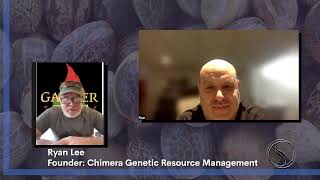






Shaping Fire Ep. 64 - Feminized Seeds and Female-Only Breeding with guest Ryan Lee