Humboldt Legacy Project - Host Kevin Jodrey - Guest: Geneticist Ryan Lee
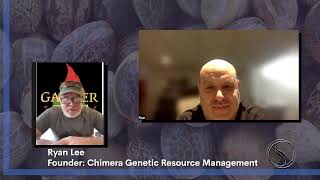
Interview (recorded Apr 9, 2024) with breeder/geneticist Ryan Lee about his 30+ years in cannabis breeding (education at University of British Columbia; moved to BC ~2003). He describes early releases (Frostbite, Schnazzleberry, Mental Floss, C4 ~1996), his science-guided breeding approach (inbreeding for uniformity), and involvement with US-based patenting efforts. Major themes: differences between US plant patents (useful for clones; chemistry can be considered) and global Plant Breeders' Rights/cultivar registration (morphology-focused; requires sharing material for breeding), the role of lab databases/COAs in establishing uniqueness, risks around public-domain releases, essentially derived varieties and royalty obligations, and concerns about genetic bottlenecking in commercial markets. Also discusses practical breeding work (population sizes, selfing vs using males, trait segregation), plans for an educational course in genetics, and the need to catalogue cultivar chemistry and morphology for consumers and breeders.
Questions this video answers
University of British Columbia.
Early 2003.
Frostbite; Schnazzleberry; Mental Floss; C4 (first ones ~1996).
Around 17 years (varies by system).
Chapters
You're listening to the Pace Radio Network here@paceradio.net.
The views expressed by the individuals during this broadcast are their own opinions, and they may not be the same as those of their group or other organizations they may be involved with. All medical advice during our broadcasts is not a medical opinion and should be checked with your medical physician.
I know, I know who you are, but if we could get some background on, on, you know, your story, because you, You've been, you've been working in genetics for decades and you have a legendary reputation through all the work you've done. But for people who aren't familiar with it and would. Would benefit from that, you want to, you know, kind of take us through your. You pass.
Yeah, I mean, I'm kind of like everybody else. I love cannabis. I've been playing growing cannabis for, you know, 30 years, 30 plus years now. But I also have a background in like, neuroscience and, and a little bit of pharmacology, neuro, like genetics kind of stuff. So I, I did, like, the whole biology and genetics training when I was in university around the same time. I was kind of getting into breeding. So it gave me a little bit of a different perspective to look at, like, really falling back on the science or trying to fall back on the science, which I think was something that was a little bit different in the cannabis space. You know, everything was really results driven and forgetting that the science really does dictate how the plant behaves. Right. Like it is just. Just breeding another plant. So having those skills and learning to be able to recognize those genetic patterns is, you know, really quite valuable. And along the way, I, you know, met some groups and ended up doing some, you know, some intellectual property development down in California for some other groups. And so I got exposed to, you know, the kind of the ways that intellectual property rights with regard to plants work around the world, which is obviously fundamentally different than how we're currently working with cannabis. Right. So, yeah, like, I just kind of try to let science guide me and I've, you know, learned a fair amount of chemical analysis how to break apart cannabis plant into its, you know, constituent components and look at those components on a plant level and then how to use that information for breeding decisions and, you know, with the intention of creating custom cultivars or custom flavors or scents and, and pushing the plant in ways that it hasn't really gone yet. So that's kind of in, in a nutshell, a little bit about my background. Yeah, I don't know. That's.
Where were you where were you going to school?
University of British Columbia. I did my undergrad.
Is that where you were born and raised?
No, I'm born and raised in Ottawa, Canada. So the capital, kind of think like north of Syracuse, New York kind of area, little east of there. And you know, I started growing back when I was going to university. I started growing and just, you know, pay the bills and have better quality, better quality product. And that just became an insane passion. So I eventually moved out west to B.C. and kind of switched out of the neuroscience medical stream and into the plant genetic stream. And I was quite serious about it. I was doing some post grad work and they wanted me to do these work with these other plants. And I was already selling cannabis seeds globally and had a growing concern. So it wasn't worth it for me to switch off and start growing tomatoes or something else because I was just so down the path of cannabis a little bit ahead of time, ahead of, you know, that world's ability to be accepted of cannabis before legalization really happened. It was about 15 years too early. But, you know, it kind of set me up to have a certain set of knowledge and I just kept down the path despite the legality. So.
What was some of the earliest stuff you started to work with? Like what, what year would that have been when you were in BC?
Well, I moved to BC in early 2000s, like 2003, early 2003. But I'd been collecting from all over before then. You know, it's funny, we get these, you know, we, we get this. There's kind of this mentality that like the PNW or BC or California, they're the hotspots. But the seeds travel. There's nothing special in the water, right? The seeds travel. You can kind of do the work wherever. I think it's just more. The average level of cannabis is higher in those areas. Right. But you can really do the work anywhere and still compete in those areas.
What were some of your first releases?
Oh, Jesus. Like Fry, a couple called Frostbite and the original Schnazzleberry line. And I did some work producing some seeds for some other seed companies as well. Sweet Tooth and Sweet Blue, those things ended up being renamed and put into my catalog elsewhere. And then Mental Floss. You know, those are a couple of my old classic lines. C4, I think you, you even work with that one at one point, didn't you?
Yeah, way back in the day.
Yeah, ages ago. Those were, I think those were like pre. Those are around 1996. I think those first Ones came out. I was doing drops for a little Compassion club that had been raided here in Canada. So I started releasing those seeds to, through a local head shop. And the feedback from those was better than a lot of the professional, you know, professional seeds that had been brought in from Holland or wherever. And it was just really about finding these guys and getting their lawyers billed paid, lawyers bills paid. And then, you know, when the results were good, I just started releasing them. I think a lot of the early reason is that I was using lines. You know, everybody has this tendency to just get whatever plant and cross it to the next thing. And that's, you know, it's an interesting way to kind of sort and do the shuffle, the sift. But you're never. It's not really a directed breeding program, right. And so I really chose plants that were, that had been a little bit inbred or I'd inbred a little bit. And I just try to stay away from poly hybrid parents and just those two things on their own, like, really does a lot for uniformity in the offspring, which is what people want. Right. When you're buying a product, you expect that they're all going to be the same. So just little things like that kind of help me get, I guess, a little bit ahead. And. Yeah.
So you, you went on from there and then you started to go in. Did you maintain your autonomy as a, as a breeder and, or did you start to work with other groups? Like, what was your.
Yeah, I've always maintained my autonomy. I've had a few offers just to be bought out, but doing this work and collecting this, you know, thing I've put together in this diverse cannabis collection has never been about making money or, or at least looking for a sellout, right? You're not, you don't do this looking for an exit point. You do this looking for a place to get to work, right? And all the, you know, during this crazy period of the bubble and all this green rusher money that's come into cannabis, they all want to take and own everything. But it, like I said, it's not, it's. It's about looking for a place to be and work, not looking for an exit, right? Because I didn't collect all this stuff to, to sell it off, package it up and sell it off, right? It's, it's. They're building blocks for breeding programs, right. So it's just part of this crazy thing that we've gone through over the last few years and. But yeah, you know, I met A couple of groups through. I did the, the, the neuroscience, the cannabis neuroscience, like the cannabis receptor world research circuit for a few years and got to know people there and ended up meeting a group out of California that wanted to do some real breeding. And so I, I helped them start a breeding program. I started a breeding program for them, created a breeding program that, you know, has yielded some pretty decent little fruits. We won a couple of emerald cups, and they've patented a whole bunch of plants and stuff that came for it, which is kind of where this world is going, right? Like, cannabis has been this. In this weird, just confused state where people, you know, people don't realize when you sell something out into the world, it becomes public domain, right? And so whenever a seed company puts something on the menu and then they release that to the world, that can't be patented or protected for intellectual property. It's like that act of selling something into the world, you're essentially releasing it into the world, unless you're doing it under a contract or some kind of, you know, some kind of thing where you're maintaining the plant rights. So it's just kind of the way it is. So, you know, cannabis has been left out of this intellectual property system for, call it a hundred years. You know, people weren't developing plant varieties, or certainly not cannabis plant varieties, registering them and getting, you know, you stick your head up out of the sand, you're obviously gonna get taken out like a mole, you know, kind of whack a mole style. So everybody that we were kind of just subjugated from the system or like, you know, not allowed to access this system. And so everything that was released was released into the public domain. And that's just kind of strange for an ag crop or for any crop, right? Any kind of ornamental crop or whatever. People are usually quite protective of the things that they've bred because, you know, when you're breeding plants, it's an invention, it takes resources, it takes time. You know, like anybody that, like, if you're an artist and you're producing artwork or music work or even, you know, authorship, you're. You're writing books and stuff, you deserve to be able to protect and benefit from the work that you've done, right? And so that's really where the. You hear a lot of people get all upset when they start hearing intellectual property. Like big corporations are going to come in and take everything. Intellectual property rights are for the little guy too, Right? And it's just a way that you can, you can put a marker in the sand and say, hey, I made this. I have this at this timestamp, It's a result of my work. So other people can't just come along and take it and profit from it without you getting your little piece of the pie. So we're kind of in this phase now where the cannabis world has been forced to grow up. The intellectual property rights are a mess, right. Because again, everybody's released everything into the public domain and now we're kind of resetting this score, right? And people are thinking about going back and getting intellectual property phrase for the things that are unique or they have, that are unique that haven't been released. And how do you tease apart what's, what is public domain, what is, you know, available for everybody and then what's owned? Right. And how do you tease apart those two things? And, you know, just having a little bit of experience going through this with this group that patented all of the work that I'd done, you know, I kind of got to see, okay, well, this is how the system works. And there's different systems around the world, right? The United States has something called a plant, a plant patent, which is respected in Australia, but nowhere else around the world really do they use that type of thing. It doesn't, it doesn't have any validity in other parts of the world. In other parts of the world, we have variety and cultivar registrations through something called plant breeders rights. And there are positives and negatives to each system. I think, really in the United States, if you're in the United States because of the way that cannabis breeds, the plant patent is actually the most useful way to protect a clone or a plant that you have selected from a population. But people just need to be aware that when you seek that type of intellectual property protection and you're granted that protection for your cultivar in the United States, it's only good in the United.
States, so it doesn't work for you. If you were. Even though we can't export, technically, it wouldn't allow you any protection if you say, moved it into the UK None.
None at all. You'd have to reapply to have that variety registered as a, as a cultivar through UP or whatever the. And that, you know, it would be through you pub. You actually don't even have to do it through UP you can actually do the application through the United States and then kind of, you just file by paperwork in these other countries.
Gotcha. So that's what you would do it. They would, they would have the U. S. Based patent and then they would reapply for a global.
Yeah, except it's not a global patent. It's actually a different. Like you're applying for a plant breeders rights registration for usually a cultivar registration. A cultivar really is just what the community describes as a clone only plant, right? It's a plant that when you take cuttings, it repeats the type. So the particular smell or scent or growth profile or flower characteristic that makes it unique comes back every time you take a cutting. As people probably know, or some people know. Everybody that's breeding should know when you take that same plant and you either cross it to yourself or you cross it to another plant and then you look at the offspring, if that type doesn't come back again, then it's, it's. That's really what defines that single plant as a cultivar. So a variety would be. If the plant is bred to itself and that type of the described type comes back in the, in the further. The, the resulting generations. So that's really. Those are the, those are the two things that really decide whether you're getting a variety registration or a cultivar registration. I think for the, for the most part in cannabis, unless we're talking like seed crops, like oil seed crops and things, it's. The majority of registrations are going to be for cultivars. So for clones that have been selected from a family and then, you know, described in terms of their morphology and their yield and their chemical composition and unique chemical characteristics, you know, that's when we're going to start getting to the point where we're. Cannabis becomes more like the wine world, where, you know, you've got like a Pinot Noir and a. Whatever, you know, Pinot Gris or Merlot or whatever the grape type is, right? And then people will get to know the different types. Right now it's like everybody kind of says, oh, I got the strain right? And it's like, well, what do you really have if it's not described right? Because how do you know that's what intellectual property rights becomes about? It's like somebody puts a marker on the board and says, hey, I've got this thing. We'll call it a limonene dominant type 2 CBD and THC plant. That's how we know that plant and plants that are like it. So if you come along with another limonene dominant THC and CBD plant, like, how do you, how do you say that it's different than that other one that's registered, right? Because two people can't own two groups, can't own intellectual property for the same thing, right? And so it's kind of. It's kind of like first to score, right? Who gets on the board first is the person that really has the foothold of the registration. And if, if your plant is also, you know, it doesn't mean you can't register another plant that is like another one. It just has to have enough other differences that make it also unique from the other ones that are registered, right? And. And that's really where we're going to get to eventually with cannabis. We're going to have all these different types and everybody knows kind of which category they fit into. Right now it's a bit of a mess because we haven't. We just haven't done these things, right? We haven't cataloged them, or at least the public hasn't cataloged them. And, you know, through things like this auction, I think what we're really learning, or it's kind of a model to teach people to say, hey, when you're selling something, to be able to describe it and say it's more than just a name and it gets you really high or it grows really well up in the triangle. It's. Right. It's like, what is it? Do you have lab tests that show the compounds that make that plant interesting, be they like terpenes or unique cannabinoid profile or some other compounds related to scent, like thiols, Right? And those things become, you know, it's kind of like a report card or like a, you know, like a trading card for a baseball card or a hockey card or whatever, right? You get the picture of the player on the front and all the statistics on the back, right? And that's the way that other plant species are described. Like, you decide you're going to get into the chrysanthemum game, you call up the nursery and you say, hey, I want a plant that does X, Y and Z. Right? And you describe the things that are important to you and they go and they choose the right. Or together, you choose the cultivar that matches that need. Right? You don't just start growing things and decide. You go one by one through everything until you find one you like, right? You have a targeted set of characteristics that you use to guide your selections. And so, yeah, this auction is actually a good way to do that because it allows people to learn about, hey, I'm putting this hockey card or this baseball card up for auction. Here's the picture of the plant. This is what it looks like, and here's all the statistics that back up why this thing I have is different than any other plant that you could buy.
On some of the plants that you worked on that were patented, what were those unique characteristics that allowed that to be a patent?
So that patent that I worked on or the plants that I bred that became patented, they were a chemical class based on the utility of the plants. And so some of those individual plants later were granted plant patents, but the patent was actually related to having specific terpene profiles, I. E. Non Myrcene dominant. When we did this work, all the, all the CBD plants and the CBD contained like the one to ones and the full CBD plants, they were all mercen dominant. So they were, they didn't have very nice taste or flavor profiles. They were kind of had this hempy, kind of weird, I call it sweet hemp smell. It's just, it's not, it's not horrible, but it's not like drug cannabis. It's not as appealing as I remember.
All the first generations that came out and it, it was, you could cover it up because you could call it medicine.
Exactly. It didn't, it wasn't. The important part wasn't the scent, right. Because it was all about, hey, you gotta have these people need cbd. But you know, the next step is how do we make these things that have CBD more pleasant. And so, you know, it was really decided by the lawyers, right? We made all these different plants and the lawyers came in and said, hey, anything above 3, 3% THC and 3% CBD and non myrcene dominant terpene profiles that are, that are, you know, both CBD and THC are present that hadn't really been documented in the literature. And we had some basic preliminary research that showed these things, you know, had medical efficacy for various treatments. Right? And so that was the kind of the genesis, I guess of the patent is they said, hey, this is. These plants that you've made are different from everything else. And so we're going to go and file on that. It's not necessarily how you would do it like that. That I think is kind of an extraordinary sample. And I think it's why the community was upset was because it was. That's a broad patent. That's a patent that applies to like a whole class of plants. The way that the type of plants that we're talking about here is really about finding a specific plant and then getting a protection on that one plant. Right? It's like here's the work that I have. I want the protection on this one thing, and that's the way that they do. Like raspberries or, for example, like even lilac, right? Or not, maybe lilac is a good example. But like lavender, for example, you know, someone will be growing or they'll be searching lavender that they've propagated or made their own crosses, and they'll find one specific plant, and they notice that that one specific plant is high in linalool acetate or linalool or something like that. And it's, you know, it's much higher. It's a much larger expressor than anything else in the population. And so you get some chemical analysis done on that plant, and you describe the color of the leaves and the shape and the habit of the plant growth. Is it grows like a bush, is it more upright? You know, you just describe all the, all the characteristics, and then those become, like I said, the statistics kind of on that baseball card thing. Like you, you go and you submit all those statistics to, you know, the plant. The USPTO and the USPTO will look at your. Your plant, and then it'll look at a set of reference plants that are kind of known for whatever species you're working at. And then they'll say, they'll, they'll. They'll grade the plant and they'll say, yes, your plant is significantly different enough that we're going to say it's its own thing, right? And that allows you to. One, to name the plant, but also, you know, decide about the ownership of that plant. Like, you know, you own the plant, you can lease the rights, you can, you can license the rights out to other growers, you can sell the rights if you want, but it's really the act of registration that gives you the right to say, hey, this is my plant, right? And if somebody comes along and takes it and starts stealing, starts growing it, you can actually go to them and say, hey, I got the piece of paper that says that I own this plant. You, you know, you either got to stop growing my. My work or you got to compensate me, right? There's a, there's a legal mechanism behind this system that we use that essentially, you know, allows you to go to court and say, this is mine. Right? And if you don't have that and you haven't done that, you can't go to court and say it's mine. Because the court, you know, the court. Court's job is not to sort out stories that were told on the hill, right? Like, that's just not the way that this, the legitimate plant world works. Right? Legitimate business is not done the way that we did business over the last 60, 70 years. But if you're putting the time and effort into truly develop something new and unique, it kind of does behoove you to then do this little bit of work to, you know, to protect yourself. Right.
And is there a reference? So if someone was a breeder and they wanted to go and, and say, chase a route that they thought was unique, is there a way for them to reference existing work to see where open lanes are potentially? Is there like a database that you can go into through the patent office? Is it that simple or is it a much more convoluted process?
It's not actually. And that's kind of one of the funny things about the patent office is that the patent office, they have what's called an examiner. So you do your application and an examiner gets your application and he'll read it over and say, okay, well now I have these guys are claiming that, you know, this new plant is high in Linal, for example, right? They'll go and look at every piece of documented, you know, scientific literature and all these, all these places to try and hunt for places. They've described this characteristic in other plants, right? In, in the PBR world, in the plant breeders rights world, this system that's more global, this non US specific system, there's what's called a reference set. When you're, you know, when you're trying to register a plant, they look at a reference set of varieties or cultivars from that species. Well, again, cannabis has been kept out of these systems for 70 years. So like, is there really even a reference set? Right. And, and so these are all ways that like, you know, we can shape the development of this system. Right? But currently, right now, I mean, what happens if you got, you know, you got people like SC Labs, for example, in California, they're testing for the regulated system. As they go about doing that test, they're building a database, right? And so is Napro research. So is Workshop. The smart ones are, are monitoring their database. Some people aren't. Some people are just cataloging it and dumping and, you know, just putting it in a database, not even sorting through it. That database is what you're talking about. I mean, it is the reference set. Like you can look at, you know, you run 10,000 samples through a lab, now you've got a sample set to say, hey, are there any plants that are osamine dominant and CBG dominant. Right. And so just by looking in the database about the things that exist or are common, you can also infer the things that are not. That don't exist, that are not common. And that stuff, unfortunately, in cannabis isn't public domain. Right. And so there is a need, I think, you know, the point you're making pretty clear is there's a need for this so that more people can access this kind of database. Right now that kind of database is. That kind of data is owned by the people that have taking the effort to collect the database. And there isn't really something that's public domain. So it really is kind of a rife a time that is like, you know, a moment in history where nothing's really set in stone. Right. Like, even if you did go and say, hey, I found this new plant and I think that it's unique, you might go to the patent office and somebody might come along, like the patent office might even grant you a patent and say, hey, we looked, we couldn't. The examiner looked through everything. He couldn't find anything that showed that your plant isn't unique or granting you the patent. Right. And then the patent gets granted and published. Six months or eight months later, somebody comes along and says, hey, look, we found a sample in our SC Labs database going back five years that has the same chemical profile. Obviously your thing wasn't unique. Right. And that would. That would cause essentially a loss of the patent. Right.
Patent. I was curious about that because when it comes to, like, coas, the. The view is small. You're looking at a couple of cannabinoids, you're looking at a couple of measurable terpenes, but really no other volatiles and no other miners. And, and that's what kind of got me interested was the, the we. We would use these current systems to mark. But if you had a larger essay, that could then almost be competitive with it because you would be able to say, hey, this is this. But when we, when we looked at it on a deeper dig, these are the things we want to work on. And so it's. It's almost like, where's the safety where you know when you're trying to work on this and you create something, how do you know that? Is it normal that patents get invalidated in other industries? Is this stuff like a norm? Is there a frequency it occurs?
Yeah, a patent. You gotta remember a patent. When someone grant you a patent, it's not like a gold ticket. It really is a flag that says you've been granted the Right. To put this flag in the ground on top of this pile of earth. Do you really own that pile of earth? That is a matter for the courts. Right? Because anybody can come along and challenge your patent at any point in time. Not for no reason, but if, you know, if they have, if you make a claim and say, hey, I have this thing that's unique and it's X, Y and Z and somebody comes along and says, have this other plant that has the same thing, that's enough to show that it's not unique. Right. And that's really what these systems are about, is granting rights to people who have done the work or the first to do the work. Funnily enough, in the PBR world, there's, there's a whole bunch of reasons why you can lose your PAT or your, your plant breeders registration. So one of those being one of, in the PBR world, when you get a registration, you have to make your plant available to all other plant breeders and people that want to use it for home use, that is non commercial use for free. Right. And the reason behind that is, is it's got this mentality that plant genetic resources of any species are not for one person or one corporation's use. They're a gift to all of humanity. If you want to put ourselves on the top of the chain, they're for all humans to use. And therefore, yes, we're going to give you the right to this new plant that you found or created for commercial purposes for a period of say whatever, 17, 20 years, whatever it is, depending on the registration.
That's, that's typical of there. So I knew there was a lifespan, but we would say 20.
It's usually 17, but it varies a little bit.
And what happened the, the termination of that, that patent expiration? Are you, is it just open source.
Now or you it's public gamer? Depends. If it's a patent or a pbr, it's kind of done. But there's, with patents, there's ways to extend that time period. You might release a new version of the plant that is updated. Kind of like a software update.
Yes, yes. Subtle, subtle, subtle shifts. So you maintain the kind of like a pharmaceutical drug.
Right. But for example, I mean, let's talk CBG dominance. Right? Like CBG dominance is a mutation that knocks out the THC or CBD acid synthase and CBG backs up in the plant. So somebody registers a CBG plant and let's say that it's mercene dominant. I want to come along and say, yeah, well, I'VE got an osamine dominant CBG plant. I can actually take the registered CBG plant, even in its first year. I can cross it into my line, Myosamine line, and do the work for a couple of years. And say at year three into their patent, I come out with a CBG plant that is derived from this other CBG plant. Well, that's called an essentially derived variety. And although the plant breeders registration people might give me, they might recognize and say, yes, it is a unique plant that you've developed. However, it's pretty clear that it came from this. And it's actually, it's not just pretty clear. I have to document in my, my application what the plants were that went into the creation of this work. Right. And so I have to reference, say, this other CBG plant that I used. My plant is then what's called an essentially derived variety. And although they may give me the, the right to registration, I owe a portion of my royalties to the original creator. Right. And the idea is that it pays homage. Not only homage, it pays royalties to the person that created the thing that's allowing you to have something unique. Right.
How does that work? Oh, before I just, before we get too far, I, because I, I just wanted to get some filler. So I understood you were laying out about when you have a plant that has been approved, you then have to provide it free of charge to other commercial entities and non commercial entities so that they can work with it so that it's in the breeder. Yep. How does that, how does one monetize a product if they're providing it for free? Is, is the free so that the people can grow it and look at it and assess it or like, is there stipulations in usage? What, what is the, what is the.
Let's go back, let's go back in history and, and kind of use the introduction of CBD as a way to, you know, look at that model. Right. Nobody could find cbd. Right. Everybody in the labs in California was searching for CBD plants from 2007 on. Right. And back then, CBD hits were really rare. Right. And, and so a few people brought in plants from Spain or seeds from Spain or whatever it was, and they found the cbd. Well, they found, sure, they found cbd, but it was all like we were talking about these crappy Mercene dominant plants. Right. In the meantime, those people would be able to go out and, and put their products on the market or grow all their CBD plants and they were getting high prices for it back in the day because they had the monopoly on supply. Right. And so it's kind of like that same thing. It's like, sure, you can release a version one of a plant and other people are developing versions two, three, and four. Theoretically, you get 17 years of market product protection, but your variety might only be. Be significant for three of those 17 years. Right. Like after three years, then the limonene dominant ones roll out or the beta caryophylene dominance start rolling out, and those other CBD plants eat into your market share. But that is really one of the main differences between this PBR system that is more global and the plant patent system, which is really more US centric, is that if you file a patent, you don't have to share your plant with the other guys to do the work. Right? Because that plant is your intellectual property. Like, you don't have to, you don't have to share it with anybody. The PBR system, you do have to share the plant with everybody else. Because the idea is that the system wants better plants for humanity.
Right, Gotcha. Because you improve the gene pool in some measurable way or you've identified a specific direction, they want to see that entered into the world so that, that can become a new. A catalyst for greater development.
It's just. Yeah, it's a greater development. That's what it is. Because again, like, you know, what are we putting it? What are we putting? We're balancing the interests of the private individuals doing the plant breeding and seeking intellectual property. But we're also trying to balance the needs and does and needs of humanity to have better plants. Right? Better plants for agriculture, better plants for, for, for medicine, for, for therapeutic uses. Right? So it doesn't really. That kind of goes against the system. We say, okay, you found CBG plants. You've got that locked up for 20 years and nobody else can develop CBD plants. Well, then we're stuck with that level of innovation from that one group, Right? And it doesn't really serve humanity.
You're listening to the Pace Radio Network here@paceradio.net Camelford Lifestyle Shop open Monday to Friday from 10 till 7pm or by chance, check out our flags, our T shirts, plus our hats and look of that supply of rolling papers, plus much more. We've got bongs and your favorite purple vaporizers. Look at all the incense we have. As well as for those who collect nothing, check out these knives in our collection. And while you're here, stop in to see Shay at the piercing room where you can get poked by Shay daily deals. Check them out. Camel for Lifestyle Shop 17 Bridge Street West, Camelford, Ontario.
When you have a pain that's reached its peak. Legacy for 20. It's so unique, it's organic. Cannabis is what you see. Here's your trusted partner. Seven days a week. Suppository. Salves, vapes and drops. Topicals, edibles, infused pop. Just when life seems like it ain't easy at Legacy420, enjoy a Bob Freezy lab tested products make them the goat Legacy 420 out on your road. Legacy 420 in Tyendanega, Mohawk territory. Indigenous organic cannabis at its finest.
What do you find@paceradio.net people advocating cannabis education. Limestone City Hydroponics is Kingston, Ontario's hydroponic shop. Take your growing to the next level and create the optimal environment with a tent kit or maximize your yield with an ebb and flow flood table kit. Either way, Limestone City Hydroponics has more sizes and options to fit your needs. Are you looking for the power of the sun? It adopts to the European budget. Then look no further as they have professional grow lighting. They have indoor grow systems that are easy and cost effective with many options to fit your living space and lifestyle, cultivate your growing potential. We have everything you need to succeed. And if you can't make it to the store, they offer local delivery to the greater Kingston area. Remember, when you're looking for experts to help you grow, then look no further than the local locally owned. Limestone City Hydroponics, 105 Sunderland Drive in Kingston, Ontario. Call them at 613-548-0420. You're listening to the Pace Radio Network here@paceradio.net.
There'S another really interesting thing about this whole deal which is really quite unique for cannabis. This PBR system was developed out of, hey, I found a new flower, right? You can think of like the Dutch rose craze, like, oh, I found a new red rose with a white stripe on it and that's commercially unique and therefore I can make more money in the marketplace with this different variety, right? So the system of registration, you know, that recognized this problem was based on morphology, right? It was based on, hey, I've got a flower with a yellow petal, or I've got a leaf with a new strange shape that is pleasing or a variegated leaf or whatever, right? So all of these characteristics that we're talking about were related to the morphology or the structure or the physical appearance of the plant. So to kind of put that in context, I can't make a new rose that smells 10 times stronger than any other rose and try to get it registered based on the chemistry of the plant. Right. Like the PBR system does not actually recognize those as criteria for differentiating plants. Chemistry isn't one of these differentiating criteria. Now, as a plant breeder, you can submit the chemical data and say, hey, look, our rose is different from their rose because it smells ten times as much or has different chemical compounds. They don't actually have to consider those things. The plant patent in the United States, on the other hand, does consider chemistry. Right. And so in the United States at least, I think the argument can be made that the plant patent is actually the preferred route of protection because it protects. You don't necessarily have to be a breeder. I mean, you can make some crosses, but even like the selectors can get into the game as long as they've made the crosses themselves. A plant is really. The ability of a plant to be registered is really based on its performance, not how well it breeds. Whereas, like, you know, with plant breeders rights, it's like you're trying to get that plant to be stable from seed as well. Whereas that, so that's not really, you know, a plant to get a plant patent, the plant doesn't need to be stable from or to be able to grown from seed. Right. A clone is enough. Right. So it kind of gets the selectors into that intellectual property game as well, as long as they're making the crosses.
Where, where would you like to see cannabis go in in regards to this type of, like, registration protections? Is there a, is there a system in your mind that is optimal for cannabis? I mean, because I know that we're sorting it all out and it's confusing because to me, the, so many of the issues are your, your lab analysis is so minor. When I, I have some friends in Israel that I work with and when they send me analysis from their labs in Israel, it's like, it's at a level so much more profoundly deep than we look at that I laugh and I'm like, it really means nothing to me because I don't actually have a clue what any of this means because we're not, we're not at the educational level to see it unless we're diving deep into that, that chemistry. And so it's, it's, you know, who, what's the, what's the system to use today? Because I know it'll be an evolution, you know, where do we start? What's the. That was like with the Auction. We were trying to figure out, you know, how do you create a system that. That can be challenged, you know, so that what you have is. Because everything is really oral history. It's the story of, this is where I got it, this is what I have, but who actually owns it? And, and the concern we had with it was if I went and got a clone from you and I knew it was valuable and I raced and time stamped it and put it into the system, you're, you know, effectively stealing someone's ip.
Yeah, well, and there's a, there's, that's a good reason why we would use the existing system. I mean, we've kind of had to create our own systems in cannabis over the past 60 years, right. Because we couldn't play in the other sandboxes. But the truth is, is that the plant IP sandbox, it ha. I mean, there's all, it has all the systems of rules and enforcement attached to it, right? And so I know people are like, I don't want to be part of the regular system. It's like you kind of have to be part of the regular system. Right? And, and, and getting cannabis into being part of this system allows us then into those forums where you can debate ownership and contest ownership. Right. And contest the rights. That's what the plat, the plant patent system is about, right? There's a whole system and process. Somebody gets a, you know, like I said, somebody gets the patent. The they're granted the patent that allows them to put their flag in the sand. Now, do they really own the dirt under that flag? Right. And there's a whole court system and process with many levels of. Right. Like, you know, like you can appeal. Like if there's a court, if there's a court case about your plant and you lose, you can appeal. Right? And so there's a whole system that's built into this. And I think really people need to grasp and kind of come to terms with the fact that we really need to have cannabis in this system that allows us to have the forums to argue who owns what. The other thing that you mentioned about this database is really, I mean, this, this is something that the community needs. I think we need from some people, the, the consumers to actually understand what it is that makes the cannabis that they prefer different. Right. I mean, it's kind of like, you know, going into the grocery store and buying a bottle of Gatorade. Like, you might like the blue stuff or the yellow stuff, right? But right now that's kind of how people know Is like, they know the cannabis they know by name. Why do you like that type of variety? Well, I don't know. Right. But if you do know, oh, this one has got like, beta caryophylline, limon, limonene and little linoleum. If you go and look for other varieties that have beta caryophylline, limonene and linalool, you might like those ones too, right? And so it just helps people, it helps everybody straighten out what is what. Philos was the first version of that, you know, collect your. Your star on the galaxy. Right. But it was just a point in. In space, Right. The idea is that we build a new cloud and every point in space will have, you know, it'll be like, oh, this is the blue dream, you know, the Santa Cruz blue dream. It's like mircene and pinene, right? Like, that's what makes that plant that plant. And over time, we're going to build this variety cloud, or really, which is no different than a database. And it has all these unique chemical signatures of the plant and it allows us to do. I mean, you and I were talking a couple weeks ago about how, you know, certain plants, you run in one environment and it has a chemical signature, and then you take that plant to a different environment and it doesn't have the chemical signature. Right? Like, these are all part of the. We need to understand these things about these varieties, right? Is cookies grown in. Up on the Hill in Mendocino, does that result in one chemical profile? Whereas when it's grown in New York State in a greenhouse, it results in a different profile, Right? Like these things that we know about plants, like, for example, the hardiness, right. Like, you know, like certain apples are hardy and, or varieties or even ornamentals, they're hardy in a specific region. We know those things because those plants were grown in those regions for years and years and years, right? And we're able to say, oh, these plants work in this environment, not this environment. We haven't done any of that work with cannabis because we haven't been allowed to. We haven't been allowed to move the plants from state to state to grow them into all these different environments. So, like, really, we got a lot of data to collect before we're going to be at the point where we know. But it's important to start putting these plants, you know, so it, like, I think it's important to start generating these column playing cards for the individual plants and then putting them up into the world or onto some kind of database somewhere, right. And it'll help consumers, but it'll also help people. It'll help the people doing the intellectual property development because like you said, you can see the things that are common. And you can also see, hey, there's holes where these other varieties could exist, but they don't. Right? And do we need to breed those things? Maybe it just could be that those things don't exist in nature and we have to breed them. Right? So.
Interesting. We're right now.
Pause one second. I've got a couple of messages. Sorry. Yeah, yeah, I gotta, yeah, I'll be back in a second. Sorry.
Yep. Go move my dog. I'll be right back too. Come here, sweetheart. Yeah, I have an old rescue dog that's getting, she's like ready to die, but she's still functional, but she's blind. And so she gets, she gets lost in the house and gets like stuck under a chair and stuff. So I just had to go fetch her up and move her life. I always say, hey, maybe when we get old, someone be kind to us too.
Yeah, well, it's definitely hard when you can't see, man.
No, it's rough. What, what's interesting you right now in, in the, the world of weed in terms of like just development, new technologies, what's, what's exciting to you?
I'm still trying to figure out how things go together, right? Like I, I've always been the type of person that's like, oh, this is broken. Let's take it apart and see how I can fix it. And then you can put it back together. And when you have that kind of understanding about how it goes, how it comes apart, you might be able to put it back together differently, right? And so for me, really in, you know, part of the, it's because it's part of the, the process of learning how to put things back together is like, howdy is how do we, how do we take these things apart and put them back together, right? And how. So like essentially learning how traits are inherited, right? You have plants that are, have unique characteristics, cross into themselves, grow at 100 of the offspring, and then can we figure out the genetic switches behind the appearance of those traits, right? And can we make those traits true breeding so that, you know, they either appear every generation or not? Because again, learning how to, learning how things go back together allows you, like I said, allows you to assemble them in different ways, right? So understanding how they come apart and what their pattern of inheritance is, is really important for the long term goal of putting things back together. So I think I Mean for me, I kind of find we're still at that, at that stage. Right. Like for example, I just got these, I'm doing a little old dominant kind of cookies type hybrid. It's fantastic scent. But the files, the, the skunky thiol compounds, what it's a, the Pranal file I think it's called and it's, it's, it's, it's what gives that off scent in, in beer, that light struck beer. But in cannabis it gives the skunky flavor. Right. And so you know, we've got these terpenes they're segregating and you get you know, one plant that's linal dominant, another one that's line limonene dominant and then independently we have this thiol trait that either shows up or it doesn't. Right. And so I'm trying to figure out is there a, you know, is there a switch? What's the switch? Can I isolate it and make it true breeding so that then you know, once you have it true breeding then you can go and start putting that into other lines. Right. And how does that affect, affect the overall scent? Because as you know, I mean the scent is like, right. It's an orchestra of all these different notes and you know, the sound with or without the oboe is. It changes the whole scent of the, of the flower, right. Or the, the sound of the musical piece. It's really quite a good analogy and scent, you know, it has, it plays such a huge role for appreciation and enjoyment that it's an important one to understand how it works.
So when you're, you're doing work like that and you're trying to, you know, sift that out. Is there a minimum population size you like to work with personally? Do you, do you see, I mean, I mean obviously the gene frequency. If the lines were more true bred, you'd have less population needed. But in your work, do you notice any kind of patterns where you have to go to a certain size to begin a look? Certain number of males you use to define recessive and dominant traits?
Yeah, for this work I don't use males because it's like a male's. When you're using a male and a female, then you've got, you're by definition using two genotypes, right? Those.
Okay, so you'll work on end of it so you can narrow that population to.
And it's kind of the only way that you, it's kind of the only way to do it or the only way that I find that reliably you can do it. More is always better. I mean, I wish I could give you a perfect answer for that. But Kevin, personally, it's. It really comes down to stuff not related to genetics as comes down to stuff like how many plants is the facility going to let you plug. Right. I mean, unfortunately, yeah, nobody really unders. Yeah, nobody really understands the breeding, the truly importance about the breeding. Right. And prioritizing that above any other business plan, it's kind of something that currently gets done as like an extra thing along with other business plans. We'll give you a little bit of space to do this. So you're trying to work your programs into the, under the constraints of, you know, nonsense that have nothing to do with plant breeding, you know, you know, nursery trails, a nursery tray. You can usually start 72, right? 72 is not a great number for statistics. You know, I'd prefer one or 500. But the truth is, even with one nursery tray, you can often start figuring out, at least from a solid cross, you can start figuring out the patterns of, of inheritance. If you know those, those, you know, those key ratios that you're looking for, nine to three, three to one, all that kind of stuff. Right. Because those ratios do hold true. It's just you have to kind of re. Shift your mind to what is a trait. Like for example, we were, I was looking at, one of the things I was trying to figure out was how that train wreck scent comes about. And so I self. Train wreck and then look, looked at the offspring. I think we only looked at like 72. And you've got all these different terpene profiles that show up. But you kind of step back for a second and you realize, okay, look, there's the terpinoline dominant ones. They make up roughly three quarters of the population. And then you've got these limonene dominant ones that come about one quarter of the population. Well, that fits the three to one model, right? The Mendelian three to one ratio. And it turns out that that's what it was. But so essentially what you're doing is you're just growing these populations and then kind of stepping back and recording the data and seeing how you can shuffle the data around to see if you can see any of these existing patterns that we know. Right. And from, you know, from seeing those patterns, you can kind of elucidate what's going on. Like for example, we were doing that CBD work in all these different terpene classes across the CBD plant into, you know, we had like, whatever 10, 15 different flavor class profiles across it into everything. And I think in like, call it 15 lines, 13 of those lines, all of the CBD plants that came back were 2 to 1 CBD. But in two of the CB. In two of those lines, one half of the plants were THC dominant over cbd. Right. And that was. Well, it was unexpected, right? It was, it was, we. It was different from the rest and it was rare. So it was like, well, let's try to figure out why. Right? And it turned out that one of the CBD alleles, or it wasn't a CBD allele, it had a THC allele variant that was producing. It was more efficient at producing thc. And we were able to again, go back. It was like, you know, you're looking at essentially the grandparents or you're looking at the grandchildren, and you have to go back to the grandparents and breed them to make sure to make those. That special trait breed true. Right. So that you can then reliably. Yeah, so you're keeping, you know, you end up keeping live plants. It's like you've got, you've got the parents, you've made the crosses between the parents, you've done a selections on their, their offspring, you've made seeds from that offspring, and you're keeping those clones and then you have to grow the next generation again. So you're keeping like three generations of cuttings. It's a pain in the ass, right? But if it's an important trait that you're trying to figure out, you do it, right? And kind of, it's kind of one of the, One of the unfortunate things that we don't have a lot of real people that are looking at plant breeding from scientific way is that they're doing it. They're not doing it like that, right? They're. They're taking a plant. It's like, oh, it's got something neat, let's cross it to something else. Well, as soon as you take something unique and rare and you cross into something else, you lose it, right? So it's like, there, there is. As much as we don't do it, there is something to be said for inbreeding.
Is there for people who are aspiring breeders, is there books, courses, information that people can take without having to go through a full collegiate program? So like, I saw a program with Cornell that was a hemp reading program where it was like, I think it was like four grand. But it allows you to go and do a program online through Cornell and help you understand the premises of breeding specifically for the direction of hemp. But I didn't, when I looked at the, the situation, they didn't really provide any information that, you know, I could share to anybody other than here's a program. So for people who wanted to be involved in breeding and wanted to understand it from a scientific method and understand better how to apply Mendelian genetics to cannabis and start to, you know, really refine their process, is there, is there any literature that, you know, you recommend that you used in your life?
Unfortunately, there's not really anything cannabis specific. I mean, Rob's book, Marijuana Botany is still kind of, you know, the foundational basis. That was written in 91 or 81. Right. So I mean, it's 40 years old. Right. Like, it's kind of outdated. I, if you, if you have to start today, get that book and get a, like a Intro to Genetics, Intro to Plant Breeding, Genetics textbook, look, and you'll get there. We're put, we're starting to put together a course. It's kind of one of those things though. It's like the Cornell course. It's like you have to have all these prerequisites to really get. Not you have to have those prerequisites to get into the course, but it's like that's the base level of understanding that you need to have to get the most out of the course.
Yes. You know, prior. So you understand some basic science before you touch the tool.
Yeah.
And you're putting course together, you said, or with a, with a group.
Not. Well, it's just going to be like a zoom thing really. And I'm just going to start weekly from, you know, what is DNA and try to teach these concepts and, and basic cell biology just to give people the foundation of what they need to understand. Because it's like you said, if you don't have the foundation, when you get to the more complex stuff, it's hard to, it's hard to grasp. And our, you know, within our community, a lot of the people that have ended up in plant breeding through, you know, no fault of their own, they just didn't ever acquire that knowledge set going through school. And listen, it's not like this stuff is incredibly hard. It's just you got to take the time to learn it. Right. And so really that's what it's going to be about is like, you know, the basic concepts and try to teach people about these basic concepts so that when they, when they are interpreting, because it's all about like what, you know, you need to have all this knowledge so that when you grow your. Call it 72 plants or your hundred plants, you're not just walking into the field blind and grabbing a plant that looks the best. Like you, literally, in plant breeding, you care as much about recording this, the characteristics of the worst plants as you do recording the characteristics of the best plants, right? You have to characterize everybody because it's only through doing that characteristic, that characterization and analysis of what the. How the population is changing or how it varies that you can start to make hypothesis and conclusions about. Hey, this is how these traits are inherited, right? And that's what we have to do, right? Because again, like, unfortunately, prohibition has led us to this situation where we've done nothing but hybridize for the last 50 years. Cannabis is already an obligate outcrosser, but even within a population, like, there was a lot less variation. All we've done over the last 40 years is cross Africans to Mexicans to Afghanis to every, you know, every Colombians. Like everything has just been mixed up and mixed up and mixed up, and it's like putting it in a big martini glass and just like shaking it all up, right? We've got this insane mixture. And what we really need to do is start putting that deck of cards back into its constituent suits, right? Just by. By sorting them by their traits and figuring out how those traits are inherited. And then we can go about really building back the next generation of super plants that are going to found the basis of the industry, right? Because right now we're stumbling onto those plants, right? And sure, we find excellent plants that are really good flower or whatever, but often the ones that have the best flower or the best resin, they're not optimized for cultivation, right? They're not optimized for production. And so it's like you got a great plant that sells like fire and it's. Everybody loves it, but it's not the greatest plant to grow. I mean, it's a win for the consumers, but it's not necessarily a win for the growers, right? So we need to kind of go through a period of refinement.
When do you think you'll start your series?
Oh, geez. I wanted to start it over the past few years. Months. We just keep running to these family stuff that's taking up more time than anticipated.
You start to, you know, when you're able to. When life smooths out and you're able to sort it out, let me know so I can promote it if you want.
Love to. Yeah. And I'd like. I'd love to do it weekly and, you know, have different people on the show to kind of talk because it's all about. There's all these great examples in our community, right, of things that have been done. And I think that especially for this new generation, it's like, you know, even. Even on the science development that we've had since, call it 1995 to today, that's 30. Call it almost 30, approaching 30 years. That's been a long, slow drive, right? And we really added these pieces at the time. I think if you came into the space today and you don't understand where we've come from, it's kind of hard to appreciate, like, where we're going on this journey, right? And so as part of the, as part of this program, I kind of want to document some of these old groups and the work that they did and show, hey, here's a genetic technique that they were using in 1995. And this is how that genetic technique works, and this is why we don't use it today. And what we use instead, because there's value in learning all those techniques and how to think about, you know, things like DNA, because it's kind of an esoteric concept, right? But it really is the, like, if you don't understand DNA and you don't understand meiosis, there's no way that you can really understand plant breeding. It doesn't mean that you can't make some gains, but it's kind of like, you know, picking up a guitar, electric guitar, and expecting someone to say, you know, you might be able to plunk out, like, smoke on the water, but you're not really writing any magnum opuses, right? Like, and that's what we need at this time in Cannabis is, is that next level, we need to stop stumbling upon plants that are good, right? We need to take those ones that we know are good and make them better. Right? And that takes a directed approach.
So, man, that was a great. I mean, it's a great conversation. No, I feel you, because it really does it. It's just that the, you know, some of the issues are, is that there's this sense of desperation. So it's, It's a collaboration is in limited form. And then. And you do have, I call them vultures. They're coming in to circle the carrying and gobble it up. And so you can't work with any of those groups safely without fear of losing all your. Your, your IP and in your faith, because once you lose faith, then you Become bitter and, and it's hard to, it's hard to be creative when you're pissed off.
Yeah, that's true. That's very true. You know, it's interesting in the context of this auction, right, like, all of these things seem like separate pieces of the puzzle, but really they are all the same puzzle. Right? And so plant breeding, lab analysis, patents, registration, licensing, it's all the same topic. It all comes under the same umbrella in this. And really that umbrella, like what's under that umbrella is really the basis of the entire industry. You can't, you can't innovate new products without innovating new plants. Right. Like, so this is the center of innovation of the species. It's the center, it's the center of innovation for the community in a way. Right. And I would say maybe I'm biased, but I think you'd probably agree with me. I think that like, up until this point in time in the cannabis world or, or of this repeal of prohibition, the people doing those, that innovation are kind of getting raked over the coals maybe more than other people are in the industry. Everybody's getting raked over the coals, but it's like the breeders are really having a hard time because it's just, it's hard to monetize, it's hard for these end product consumers to understand the value of the genetics. And if we're gutting kind of the soul of the industry where all the innovation is happening or not encouraging it to grow in the right way, we're really doing the whole industry a disservice. Right. And so for me, like this auction and helping teach people about what is a cultivar of variety, how do you document your variety to show that, hey, the thing that you've created is unique and different. These really all part, are part of the same conversation or this major, this bigger conversation that, you know, as we're trying to figure out this whole industry, it's a puzzle piece that really needs to be sorted out as well. Right?
Yeah, that was. We, we realized when we were doing the auction that that's really so much of it was. You're starting to get a public conversation about how do we really move forward as a industry and as a culture simultaneously and not negate the work and the credit that was basically being swept away. And for me, a lot of it was so that you can attract new talent. How do you bring new people into an industry and give them incentive? And, and that was, I think that was, that's the hard part is that it's, it's so turbulent when you look at cannabis that it's discourages people from wanting to participate, which then completely compresses the pool who does and the choices that they use. So I, I get all the clone lists for everything in California and, and I get them just so I can show people the lack of diversity in the market where every nursery fundamentally has the same selection list. And I said, listen, when you go back just 10 years, there was, you know, 300 different plants being utilized in California, being spread through the system. When I, when I got, when I got to Humboldt county in 92, every single, almost without question, every single farm, every single hill, every single little group had their own line because it was still seed driven. And so when we talk about like, you know, legacy genetics, I said, oh, that ended about 25 years ago. That really what we went into after that was branded named cultivars Train wreck was like, really one of the first ones that had a name. Then we go, then we go into, you know, OG and purple and sour. And then it goes into the world of sherbet and gelato, where if it isn't this thing. And so, so the issue though is that anything that's popular becomes woven like a. Threads through every single thing you touch. And, and it's, and it's, it's a tribute to the individual who discovered it because at the end of the day, if it wasn't attractive, it wouldn't be so highly used. But it just keeps compressing this, this pool of material into a smaller and smaller box.
Yeah.
And as consumer, from like a. Just a consumer perspective, it gets boring.
You listen, it's incredibly dangerous from like a production system standpoint.
For scientific purpose. Resistance. Yeah.
Yeah. In the, I can't. I think it was the 30s, they started using a technique in corn called cytoplasmic male sterility. And what it meant was that you grow these plants and the males would be sterile. And so you could grow a row of these plants and plant a different pollen line beside them. And that second planted line would pollinate your first line and you'd end up with F1 hybrid seed. Right. And so it was an easy way to make F1 hybrids. And so everybody in the United States started using these cytoplasmic male sterile lines to make F1 hybrid seeds. So they plant the seeds. Next year, this blight comes through. It turns out that this blight, that the gene for this male sterility was next door to a gene for susceptibility to this blight. And the entire corn harvest in the country was destroyed. Right. And I mean, that's not.
Same thing with banana where they started to bottleneck the pool. And all of a sudden a single pathogen wreaked havoc in an entire industry. And that's what I, you know, that's what we see here is that you have extreme susceptibility. So when you go into operations, you notice that if it's like an aphid issue, which is pretty prevalent in most large operations, it's hammering everything because everything seems to have a similar profile. And so it's, it's, it's this, there's lack of safety, natural safety. You don't have a back door to escape when everything's in the same gene pool.
Yeah, yeah. And we've done it through all sorts of different, I mean, in corn, they didn't even realize it for like 15 years, but they bred this super sweet corn in the States, super high sugar corn for glucose or for fructose production. And they didn't realize, but they actually bred out beta caryophylline from being produced in the roots. There was some mutation linked to the sweet corn profile that knocked out the beta carryophylene. The roots. Beta caryophylene is like a bitter compound, right. And so if you get like root feeders that are coming along and chomping on the roots with that bitter compound is gone. But acting as an anti feedant for the pest, the pest was able to just rip through everything. Right? And so we, we, this happens in, in, in breeding programs. Every trait that you select for comes at an opportunity cost, right? You're, you're accepting something else, but you're, you're, you're getting rid of something else. You're getting rid of something else. And, and often we don't know what that other thing that we're accepting in return is until, until you're down the road, right? You're down the path somewhat. So it's dangerous, that practice that you're talking about. All I'm saying is it's a, it's, it's a, it's a path that is fraught with dangers. And you know, we've kind of been buffered by some of these consequences because like you said, everybody had their own line. Right now we're going through a period of time where it's all being shuffled and then it's going to get thinned down even more than it is. And you know, we need to have all these backups because everybody's putting their eggs in one bag. I mean you see it in the California seed market too. It's right like seed business used to be people would go and find their own plants and breed with them and then release them on the market. Well now everybody just looks. Hooks looks for Cam 91 and and train wreck or you know, whatever plant any cookies or whatever plant that is sherbert and crosses it into everything else. So it's like you'll look at five or 10 California breeders. They've all got the same plants on the menu, right? They're all crossing in things that aren't even theirs that they've gone and found. Why? Because the market wants them. Well, that's great. And they sure they produce decent plants, but we're also creating a huge bottle there, right where so you know there's consequences to these.
You're listening to the Pace Radio Network.
Here@Paceradio.Net the opinions of the individuals during this broadcast are their own and may not be the opinions of their group or other organizations they may be involved with. All medical advice during our broadcasts is not a medical opinion and should be checked with your medical physician when you.
Have a pain that's reached its peak. Legacy for 20 it's so unique. If organic cannabis is the what you seek, here's your trusted partner. Seven days a week Suppository Saps, fakes and drops topicals, edibles infused pop Just when life seems like it ain't easy at Legacy420 enjoy a pop freezy lab tested products make them the goat Legacy 420 out on your grow Legacy 420 in Tyendanega Mohawk Territory Indigenous organic cannabis at its finest.
Enjoy the buzz of legalization with Campbellford Lifestyle Shop. From lights to plant nutrients, books, consumption, accessories and more, we've got all your basics. To grow or consume cannabis. Visit our info center or take a look at our piercing services and body jewelry now available in store through Campbellford Lifestyle Shop, 17 Bridge Street West Campbellford.
Limestone City Hydroponics is Kingston, Ontario's hydroponic shop. Take your growing to the next level and create the optimal environment with a tent that kit or maximize your yield with an ebb and flow flood table kit. Either way, Limestone City Hydroponics has more sizes and options to fit your needs. Are you looking for the power of the sun that adopts to your budget? Then look no further as they have professional grow lighting. They have indoor grow systems that are easy and cost effective with many options to fit your living space and lifestyle. Cultivate your growing potential. We have everything you need to succeed. And if you can't make it to the store, they offer local delivery to the greater Kingston area. Remember, when you're looking for experts to help you grow, then look no further than the locally owned Limestone City Hydroponics, 105 Sunderland Drive in Kingston, Ontario. Call them at 613-548-0420. We are people advocating cannabis education here at Pace Radio.
More from Ryan


Shaping Fire Ep. 64 - Feminized Seeds and Female-Only Breeding with guest Ryan Lee