BETTER FINANCIAL DECISIONS by Understanding Your Financials
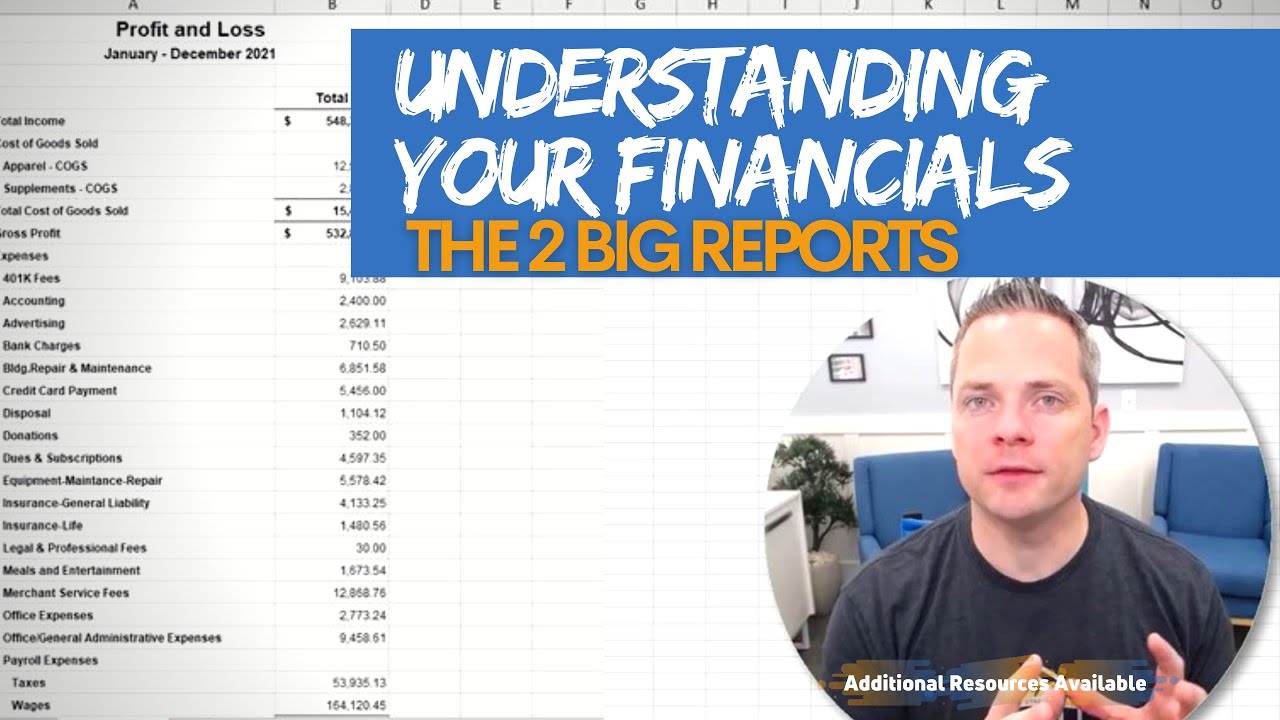
In this instructional video, John Briggs—author of Profit First for Microgyms and owner of Insight Tax—guides gym owners through the fundamentals of business financial statements. He demystifies the balance sheet by describing assets as the "uses of funds" and liabilities plus equity as the "sources of funds," explaining how each line item (cash, receivables, inventory, fixed assets, debt, owner contributions, and net income) fits into the equation Assets = Liabilities + Equity. Briggs then moves to the profit and loss statement, outlining the flow from revenue to cost of goods sold (real revenue), to expenses, and finally to net profit, emphasizing the need to view expenses as investments with measurable returns. He stresses the importance of benchmarking—both against industry peers and against a gym’s own historical data (year‑over‑year and month‑by‑month)—to generate actionable questions that drive better decisions. Throughout, he encourages owners that financial literacy is attainable, offers practical mind‑set advice, and points viewers to additional resources such as insightstax.com and his book.
Chapters
Hi, I'm John Briggs, author of Profit First for Microgyms and owner of Insight Tax. We work with more gym owners than any other accounting firm. I want to do this video to share some insights into understanding your business financials. I know that most people, specifically gym owners, don't really go into business because they love accounting or they love their profit and loss statement. And sometimes because of that, they almost put this cap on their head, a cap as far as like limiting their own potential, and they just take this attitude of, I'm never going to be able to understand this. Well, it's actually not that complicated, and I think through this video you're going to be able to understand better than what you currently do of how the financials work. And hopefully then the goal being, once you understand what I'm about to explain, that then you'll be able to use your financials in a way that helps you lead to good business decisions, or better business decisions if you're already making good ones. So to start off, I actually want to first talk about the balance sheet. It's often an overlooked financial statement, But it is a financial statement. So let's, let's dive in and figure out what actually is this balance sheet. One way to think about it, or in your business in general, is like a tree. The tree trunk would be the assets of the business, and the assets of the business can drive revenue, which would be the fruit that comes off The tree. Or another way to think about it is the business has funds, there's a source of the funds, the funds are used for something, and then the funds can drive value creation. So what I want to talk about is the structure of this balance sheet. We start with the asset section. Every set of Financials, and every time you look at a balance sheet, it's going to be in this order because the math equation is that assets equals liabilities plus equity. So I have my asset number here, 65125. That means asset 65125 will equal my liabilities, which is this number. $4,187 plus my equity, $60,937.52. And as you can see there, it does in fact add to that. That's the common formula and therefore the layout of the balance sheet. But what does each of these things mean? Let's start with the liabilities and equity section. This entire section, the one half of the equation, Think about this as your source of funds. The money that's coming into the business that then allows you to buy assets or spend money. Where is that coming from? What is the source of where that money is coming from? It could be coming in from the form of debt. Maybe there's lines of credit, there's credit cards. Maybe there's some EIDL loans or other SBA loans or just traditional bank loans. Maybe there's equipment loans. All of those, those liabilities are saying, and we're keeping track of it, when money came into the business from those sources, that lets us know as a liability that I will eventually owe that money back. But it's capturing, this is where some of the funds came from. It came in the form of debt. So if liabilities are the, the one Number of this side, then equity is the other number of this side, right? Assets equals liabilities plus equity. Liabilities is debt, and so when we get that source of funds, we owe it back. Equity, on the other hand, is what we do as owners. Are we putting our own personal money into the business? If we are, we keep track of that. here under the owner's draw or shareholder's draw or shareholder's equity or owner's equity or member's draw. There's a lot of different names that businesses call it, and to be technical, S corporations is typically a shareholder contribution or distribution, and partnerships, you have members in LLCs and partnerships, and so usually member's draw on that side. But the truth is, if you're using different language— contributions, distributions, draws— we're all talking about this portion of the balance sheet, equity. And what we're saying and what we're tracking and why it's in this section of the balance sheet is because we're saying the money that's come into the business, the source of that came from the owner. Or sometimes We have this source of cash and the owner took it personally. You'll also notice the other aspect which we'll get into, and this is how the balance sheet ties to the income statement, which I'm going to talk about. We track the net income of the business. So net income is basically we look at the value-generating activities that you're using and doing, and we're comparing that to the value-taking activities in the form of expenses. And the net number of that, if it's positive, means that a source of funds that the business has is from Basically the remainder, the leftover of value-generating activities compared to value-taking activities. So that's what we look at on this side, liabilities and equity. These are the sources of funds. This is where the cash comes into the business that then you as the owner are allowed to use those funds to to the best of your ability to grow the business the way you want to and to support your lifestyle the way you want to. So balance sheet liabilities and equity side, sources of funds. The top part of the equation, remember assets equals liabilities plus equity, the asset portion of the balance sheet tells us uses of funds, right? So money can come in here And a very common one in a gym is that we buy equipment, and usually it's a big upfront cost, so we take a loan out to do that. So the source of funds comes in from a lender. I then use that funds— I used it to buy equipment. And you'll have a section under the assets that is fixed. They're called fixed assets. So these are Things like your, your rig, rowers, bikes, technically yoga mats, things like that, barbells, bumpers, dumbbells, kettlebells. This is where we track the use of the borrowed money. So the source of funds is the liability, and we then used it to buy equipment, and that gets tracked in the asset section. Sometimes, let's say my source of fund is an EIDL loan, and I'm not quite sure how to use it or if I was going to use it. And so maybe that money is sitting in my bank account, which is also an asset. So again, right now the use of that fund, right, the source came in from a long-term loan, and the use of it right now is just sitting in a bank account. The use of funds is tracked in the asset section of the balance sheet, and you'll notice in this section there's current assets and then other types of assets. Current assets refer to things that can easily be turned into cash, which is why always the cash balance, because it's already cash, is listed first. It's not very common for a gym to track accounts receivable, but if you did, Those are considered to be easier to transfer into cash because you just need the client to pay you. And those are usually underneath bank, the bank accounts. Then you have inventory assets. If so, if you're selling things, you could be tracking inventory. Or if you're like most small gyms, you're actually just expensing the purchase of things that you're going to resell as cost of goods sold directly. And then of course I mentioned the physical fixed assets that are going to be around for a long time, like the rig, bikes, rowers, those types of things. So again, that's the balance sheet. We have the liability and equity section. This is going to tell you the source of the money that's in the business or that the business has used in the past. Where did that money come from? Where did the funds come from? Some of those funds are used to purchase assets, some of those funds sit in a bank. The asset section tells us the use of those funds. Now this is an important distinction because your income statement is going to track the income that you receive, which is the exchange of value that you've offered your members. You offer the world value, in exchange people pay you some money. That's your profit and loss statement. Especially in a gym, you actually don't necessarily need equipment to generate that revenue. So I want to make sure that we're specifying The use of funds, so it's either sitting in an account, some of the clients owe us some money, we have some inventory, or we bought some equipment. The use of funds to the separate idea of value-generating activities, because by creating value, that should be generating income. And that's what the profit and loss statement is for, not the balance sheet. Balance sheet is telling us the use of funds and where those funds came from. Which is the liability and equity section. So again, as I now transfer over to the profit and loss statement, remember one of the sources of funds is the money that's left over after all the value creation that we do and then spending the money on stuff. If we have money left over, that money is a source of funds and it came from creating value. Okay, so now profit and loss statement. You have your income always at the top, right? We know this, especially if you're familiar with Profit First. The profit and loss formula is sales minus expenses equals profit. So that's the format in which you're going to see. We start with income, which is telling us how much value, uh, have you generated from activities that your gym is doing. Then we subtract expenses, and from an accounting standpoint, we always start with the cost of goods sold. They like to do it at the top because it allows you to calculate gross margin. We like to do it because we use a different term called real revenue with Profit First. Because like in this example, this gym did $548,000 of revenue and they had $15,000 of cost of goods sold, which means they had to spend this $15,000 to get some of this money. And so the actual revenue that they have, we call it real revenue, is $532,000. Then underneath that, we have all your expenses and your expenses. Some people call it value sacrificing activities. I don't like that, so I don't even know why I told you that. But I don't like that term. I want you to think of expenses as productive or not productive, or another way: Is this an investment? Because if the money we're spending, if the money that's leaving our bank account. Doesn't give us a return, then really why are we doing it? Um, and I mean, that can go down as simple as I'm paying someone to clean my gym. Well, is that really an investment? Yeah, because the return you get is more hours available for you to then spend on value-generating activities which increase your income numbers. But you could have spent money on, I don't know, something silly, right? I don't even— I can't even give you an example because I don't— if you spent the money on this, I don't want you to feel bad because we all make decisions that are silly sometimes. But the point being, we want to be able to go through our expenses and have confidence that it is an investment and we're going to get a return on that. A positive return. If I'm spending $100 and my return on that's $50, I'm better off not spending the money. Yeah, my revenue might go down by the $50, but my net income also is going to increase. And ultimately, we want your net income to increase. We want your profitability to increase because we want you to be able to take money home and live off of it and have a sustainable life. without getting burnt out. Okay, so the profit and loss statement— we have value-generating activities, which then leads to the income, and then we have the value-taking activities or investments, which require cash up front to then hopefully get more money back in exchange. So that is the simplest way that I personally have learned how to understand The financial statements. We have the balance sheet. I'll go back to that and show you. Balance sheet. Sources of funds. Where did the money come from? Did I borrow it? Did I put the money in? Did the business generate it from value creation? How did we use those funds? Is it sitting in an account? Is it in some sort of physical asset that we're hoping returns stuff to us. And then of course the profit and loss statement, which is capturing revenue received from value-creating activities, and then it's capturing the attempt at investing in expenses to then hopefully get a return later on. So now that you see that, the last thing I would just add as far as understanding your financials now that you have those kind of foundational concepts in place is you have to compare your finances to something else. And in my experience, um, there's 2 methods of comparison. One, to people in your industry doing what you want to do at a higher level than you're currently doing it. It's good to benchmark yourself against The financially fit gyms. It doesn't mean you need to get upset with yourself or frustrated or less motivated because someone else is doing something out there better than you're currently doing it. I mean, I can tell you this from experience as a gym owner. Our gym has just not done well when it comes to getting leads in the door, and because of that, we've suffered financially. The service level is great. Our retention is great. The coaches are amazing, but we're lacking something, right? And so when I look at these other gyms, it could get depressing to say, gosh, what are they doing that I'm not doing? Maybe it's not worth it for me because they're just better. There's nothing wrong with saying, what are they doing that I'm not doing? And then maybe seeing, you know, I could do that. Let's do that. The other more important benchmark to compare yourself against is yourself. So if I look at this, uh, in this example, this is for 2021. What if I compared this to 2020? COVID year or not COVID year, pandemic or not pandemic, how did we compare to the previous year? Is my revenue going up? Are my expenses going down or at least staying the same even though my revenue is growing, going up? Is the ability to increase my net income improving? Those types of things. Another way to understand your financials is to also look at your profit and loss statement on a month-by-month basis. Like, oh, January was really great. How come February wasn't as good? Or February, March were amazing, but the rest of the months were terrible. See, because by comparing it, whatever the difference is, whatever the comparison is, that can lead you to questions. And those questions are what lead you to the insights that you need as a business owner to really understand the health of your gym and to figure out where you could go, right? But the comparison is what tells you what the question is. So there's not— in my mind, there's not a simple list of questions I can just tell you. It's like, here Here are things that you should be asking yourself because it really depends on your situation and it depends on what your financials are showing. If I have a really great February and March and the rest of my months are terrible, of course I'm going to ask, what did we do differently in February and March? Maybe then by asking that question, I realized we did an extra group class. We had a couple extra Saturday sessions. We did an 8-week camp. I don't know what the answer is, but asking the question will tell you what the answer is. But it could— maybe it's another thing, like all the months are great, but February was terrible. What did we do in February that made it so bad? We added— maybe we added another class, and now that class actually doesn't have high attendance. And so we increased our expenses without increasing our income. Right, it could be a bunch of things. You also could have opened up a new program that ended up not being successful or wanted by your members, and you invested in that, you paid the extra coaches to do that, but you didn't have a lot of participation. And I know the balance sheet often gets overlooked, but if you're doing your accounting the right way, the balance sheet is super important because I also would compare my balance sheet to previous periods. Did my cash balance go up? As of December 31st, I got $2,800 in the bank. And based on those numbers, you know, if I'm doing $540,000 in revenue, $2,800 in the bank makes me real nervous. But maybe last year was $1,000. So while I might be nervous because it feels like a low cash balance, I still improved compared to last year. So I'm trending in the right direction. Uh, did my inventory assets go up, go down? Did it change? Did I buy new equipment? By doing the comparison, you realize, oh man, I do remember 11 months ago I bought that new piece of equipment, and you know what, revenue didn't go up because of it. Uh, so it, it allows you to reflect on things as you do comparisons as well. So not only can you ask questions about What happened here so that in the future I can make a decision whether good or bad to improve that or to continue doing something good. It also lets me reflect and say, oh yeah, I did do that. I did borrow that money. Did I put it to good use? Oh, my credit card balance. How does it compare to last year? Am I borrowing money to stay in business or was I able to pay that down? And which would reflect being A little bit more financially fit. So I hope that helps. I think every gym owner that I've ever met is capable of understanding enough so that they can put themselves in a position to use their financials in a way that allows them to have more facts and insights into their business decisions. I would hope that everyone listening If you have the tendency to say, I don't understand this stuff or crap or fill in the blank with whatever word you want to use to describe accounting, I hope that that can at least be changed to, I may not understand it yet, but I'm certainly capable. Because it is a myth that you can't understand this. I mean, it's the same approach when you have members coming in and maybe they Maybe you're trying to teach them a complicated Olympic lift. And so there's a lot of moving parts and they just get down. Well, you know that they can get it. So you walk with them, you know, every step of the way. Let's work on just one motion right now, one of the mechanics, and then let's— so the other stuff, we'll work on it. It's the same concept here. I know that you can get this stuff. Whether you're already doing it good or you don't feel like you are. Whatever level you're at, I know that you can improve it. And when you improve it, you're going to find that you have more facts at your fingertips to make better decisions so that you can stay in business for as long as you choose to stay in business. I don't ever want you to have to go out of business because of circumstances. I want— if you're going to go out of business, I want it because you're choosing to do it. You found another passion project and you're able to exit with your head held high. So that's what I got for you today. If you guys want any other further advice or help on this, insightstax.com has a ton of resources. There's also a contact us form. You can reach out. We'd be happy to jump on a call with you. Or if you're wondering how what I just described, understanding financials, relates to cash flow management, Profit First for Microgyms, you can go to that website. The book is amazing too. You can buy that on Amazon. Technically, you can buy it on any— all other websites like Barnes& Noble and things like that. But feel free to reach out if you need additional help. If not, I hope you take this information, empower yourself, keep serving others, keep improving the health of humanity. I do believe you're saving the world. Thanks again for watching, and we'll see you around. Bye.










