CliftonStrengths with Darren Virassammy | Incite Tax
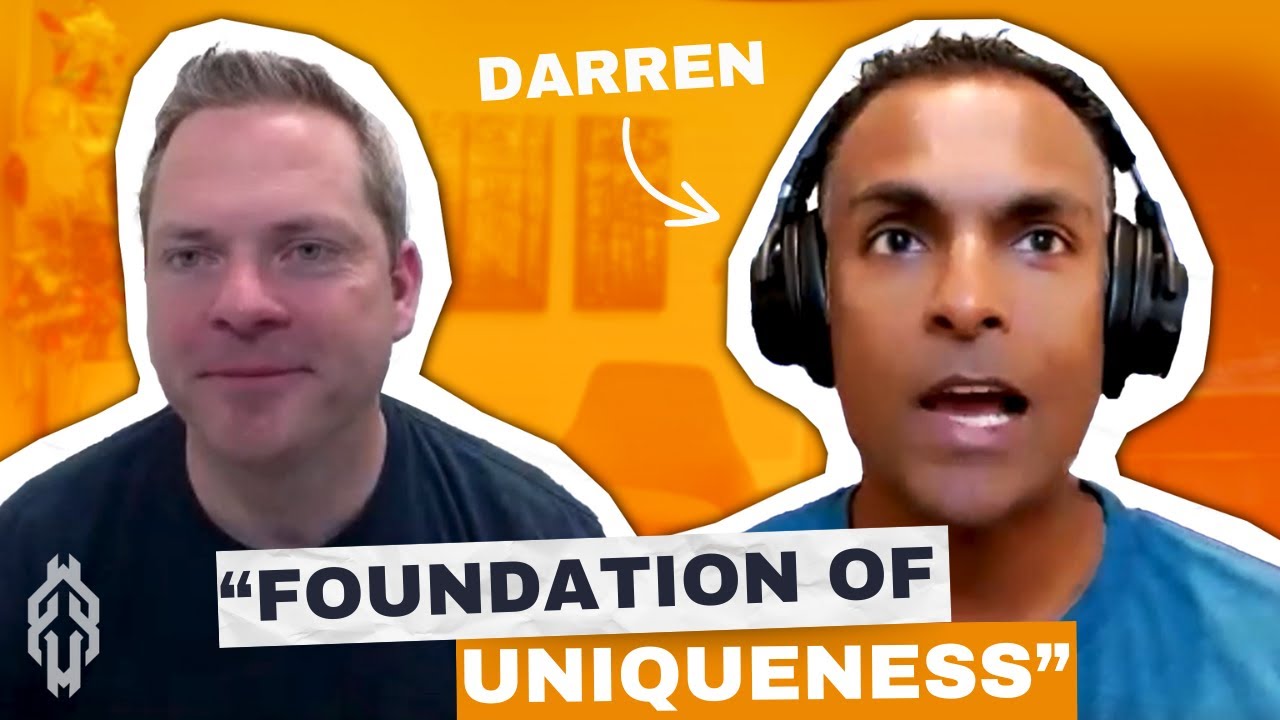
In this Insightful Podcast episode, host John Briggs interviews Darren Virassammy, founder of 34 Strong, about the CliftonStrengths assessment and its role in building engaged, high‑performing teams. They begin by explaining CliftonStrengths—an evidence‑based tool that measures natural patterns of thought, feeling, and behavior across 34 themes—and how Insight Tax uses it for every new hire at the 90‑day mark to create a shared language. Darren illustrates how strengths can be both assets and liabilities, using examples like Deliberative versus Activator, and emphasizes the importance of context for interpreting behavior. The conversation then shifts to 34 Strong’s evolution from pure strengths coaching to broader workforce development, especially in the public sector, where they help organizations improve employee engagement, safety, and retention. They describe their methodology: using Gallup’s Q12 survey, conducting engagement focus groups, analyzing vertical scores, and co‑creating action plans that prioritize one key improvement area per year. Practical cultural practices—daily huddles, tracking smiles, fostering friendships—are highlighted as drivers of happiness and productivity. Darren shares how listeners can connect with 34 Strong (website, LinkedIn, TED Talk) and ends with an African proverb about collaboration, urging solopreneurs and growing businesses to leverage each other's strengths to go farther together.
Chapters
All right, everyone. Welcome to another episode of the Insightful Podcast. I have a great guest with me today, Darren Birasami. We've been friends for now at least 5, almost maybe 10 years. It seems like a long time. So we, in our company, every team member who reaches their 90 days, we have them fill out an assessment and Part of that assessment is the CliftonStrengthsFinder, which is the initial thing that we hired Darren and his company to do for us to help us understand what this is. I'll let Darren talk about it, but we're also gonna get into a lot of other stuff because Darren's company's grown a ton and they've also got into a lot of workforce development situations. I think all this stuff is super applicable to us, whether you are a one-person shop solopreneur or you're looking to grow a team. This episode's gonna serve you really well. So Darren, first of all, thank you for being here, man.
Hey, John, great, great to be here. It's an honor to get to serve you and your audience. You guys have been a big part of our growth as well at Insight. So thanks for that.
Yeah. So let's, let's start with the stuff we started with. CliftonStrengthsFinder. What is this thing? Why, why is it important?
Yeah, so CliftonStrengths, many decades ago, Dr. Donald Clifton asked the question, what'll happen when we focus on what's right with people instead of fixating on what's wrong with them, John? And what he realized is there was nothing that was out there that actually measured talented people. And we're not talking about how talented you are, you know, painting, at shooting free throws. I mean, those are really important talents. I think we can all agree. But he was talking about talent in the ways of measuring people's natural patterns for thought, feelings, and behaviors, which could be productively applied. So maybe you find that you naturally go towards a state of calculating risk. So before you act, you need some time to really see the risks, evaluate what they are, overcome those, those pieces before you act. That's, that's in line, for instance, with the strength called Deliberative. John, I think you have that actually in your top 10, if I'm not mistaken, right?
Right.
Is that one of your strengths? Or perhaps maybe on the flip side of that, you're a person that just naturally sees something and feels this sense of urgency, like we gotta get started and you're gonna learn by doing. And sometimes you might get burned in the fire a little bit, but you're okay with that because that's part of your learning cycle. Those 2 on their own can be very productively applied. They can also cause us a lot of heartaches, right? As we can imagine from, from both of those sides. On the risk side, we can just camp out thinking about risk, doom and gloom too long, not act. But at the same time, the value is That strength can really open us up to consider things that we didn't think of. That deliberative strength, that activator strength could get us moving too fast and get us into trouble. And, and, and the bigger we are and the more that we grow, it could get us into trouble. But yet at the same time, it can help get us unstuck and create movement where it's needed, and that creates forward momentum. So CliftonStrengths is a way to measure these natural patterns of thought, feeling, and behavior that can be Productively applied. It's an assessment that's offered through the Gallup organization, and and there's 34 buckets, these 34 themes, if you will, that exist in a naturally recurring order for all of us from one through 34. It's all the same 34, but we have them all. And the interesting part, the last thing I'll say on this is the likelihood of somebody having their top ten in the same order as us is one in six. billion. So our results are almost as unique to us as our fingerprint. And this has been through decades of research on the Gallup side, um, for actually measuring this and, and evaluating how it grows and how it, how it impacts us and, and, uh, and where those results lead.
That's awesome. What I have loved about it is there's 34 talents that have been identified, skill sets, approaches to things. And just because maybe you, like, for example, My 34, number 34 is winning others over, or Woo, as the CliftonStrengthsFinder calls it. It doesn't mean I necessarily suck at winning others over. It just means that of all the ways I can approach things, that one likely is gonna cross my mind last. And so I love that it celebrates everyone's uniqueness and gives people permission to be themselves. Now, I don't wanna, I kind of have beef with the phrase like, you do you. Like if you're a jerk and an a-hole, like you do you is not good advice, right?
No.
But I love how we need to be comfortable with who we are and the way we approach things. And just because you see someone else approach things differently to say like, oh, maybe I'm not as good of a person because I'm not doing it that way. I have always loved the uniqueness that it's added. And for us as a team, we share like on all of our desks, I could pull it right here so everyone can see. I have my top 10 sitting on my desk and all of our team members do. So that it helps us understand when we're talking to each other. But like, it helps us understand, like, if I'm going to someone, they're not approaching things intellectually like I normally do. I mean, I remember one conversation with a guy, I was getting a little frustrated with him prior to understanding the 34 Strong CliftonStrengthsFinder stuff. And I'm like, dude, we— it just seems like all you want to do is make excuses and like You're just trying to get out of things by asking a bunch of questions. Well, come to find out, context, contextual— well, I don't remember the exact phrase.
It's context.
It's context. Yeah. Context was his like number 2 strength. So for him to really latch on and have behavioral change, he needed context to help him understand the why of what he's doing. And once I understood that, I could approach the whole conversation like, oh, he's not trying to be a jerk. He literally is trying to understand so he can implement this for himself.
What's so fascinating about that story too, John, is when people understand that about themselves, they understand the knife edge of where those strengths can live because they can be our greatest assets or our greatest liability. See what I did there for you, Mr. Accountant, Mr. CPA? See, they can be our greatest assets or our greatest liabilities, right? So it's those pieces that we have to be aware of. But the self-awareness growth of figuring out how to apply that, how to utilize that is critical. That a great tool for that gentleman that you spoke of in your company that we've coached many people through with my whole team has, has done a lot of coaching sessions with folks, whether it's leaders or frontline employees, when they can take that and an employee can take a strength like Context, which really needs a little bit of the backstory, the historical framework.
Yeah.
before it acts. And it's looking for that. So as it moves forward, it doesn't make the same mistakes we've done in the past, or it figures out past successes and knows exactly how to leapfrog us forward because sometimes we've missed those pieces. So serves us huge in the long term. But if they've been perceived as the question asker that is then received as, why are you asking all these questions? You sound like you're not trying to get things done. They can actually lead the conversation saying that if they're working with you saying, hey, John, my context has a couple of questions. I just need to understand this so that I can contribute. They can speak in terms of their needs that need to be fulfilled for them to contribute effectively to the shared goal that you're actually both aligned on. So it actually creates a pathway for goal alignment and how people are gonna show up differently. And how we can get there.
Yeah, I love this. It's interesting, as you're saying, I'm, I'm actually imagining you and I, our companies have grown drastically since we first met. And when we hired Darren to come in, we actually had the meeting in my basement. We just surrounded some couches and there's about 15 of us that met and now we have like 160. But between then and now, we've believed in this so much that every single new hire at their 90-day mark gets this assessment because it does give us that shared language now that we can use. But to your point of, you know, you guys have grown, as you mentioned before we jumped on, and you are now doing some additional things. The 34 CliftonStrengthsFinder is just a foundation. Ultimately, that's— it's actually just a tool that helps us now develop ourselves and each other. Tell us about that journey. I'm, I'm curious, as a business owner, how did you guys even make the switch from like, Hey, we're coaching people on CliftonStrengths Finders to full-fledged workforce development. What did that look like?
Yeah, it's, it's a great question. And it's a, it's a function of with a lot of our clients, John, over the years as we've evolved and throughout the pandemic, this was a huge growth area for us. We actually, we still do some private sector work and whatnot. We have definitely worked with small business owners over the years. But we are doing more in the government space than ever before. And we've really figured out that that is a core niche for us because we understand it, we speak it, and we understand that it's a longer process of generational transformation, basically, that you're going through as people are coming along. People were seeing the impact of not strengths alone— again, that's just a foundational tool— but of actually transformation in their workplaces. So what do I mean by that? They went from scores where employees were highly disengaged, right? They were, they were disengaged in their work to a point of where, you know, there were things in different teams that could become very costly, right? Safety issues would arise. You're more likely to have safety issues. You're more likely to have lawsuits, different things like that, HR disputes, all that. So we went from bottom tier where you're in the bottom 10% in engagement with some of our teams that we, we worked with. up to the top 20th percentile. And this is the part that I always say, it's not us. I want to make that very clear. It's not 34 Strong that did that. It was the ownership that was taken by those respective leaders. And that was true in the government space. And it's been true with small businesses, with corporations that we work with. Your company has taken this, John. You guys have run with it. You figured out how to integrate it in. And a big part of what we're doing is, as it's integrated in, Then you're actually— it's kind of like going in for your physical, right? Hey, how's my heart rate doing? Is my CrossFit game and my diet working out well for me? And I'm getting these, these general metrics. Employee engagement is kind of like your organization's health checkup on how are we doing on keeping our people engaged? Are we staying strong in the areas that we were strong in last year? Have we continued to invest in those areas? And then maybe we've identified some areas that we're not doing as strong. So we have used that process to really unlock what it is and create that transformation. Strengths, when people have that, they can become more engaged. But, you know, there's that old saying, John, you gotta, you gotta inspect what you expect, right? Inspecting what we expect in terms of how effective is the strengths-based approach comes in the form of measuring how engaged is our workforce. How are we doing? How's that coming along? Are people's perspectives being heard and it's transformation taking place. And the key piece that I'll share with you is when we do engagement, you know, measurements for our clients, and we've done this private sector and public sector, a big part of the value that our team brings is kind of a conduit. After that information is taken, we actually have what are called engagement focus groups. So we end up then working with, you know, maybe we're working with your operations team, John, And they scored at one level, your CPA team scored at a different level, right? Your sales team scored at a different level. So we have the whole organization score, but then you actually get these subsets of scores, these verticals. We might work with that operations team and figure out, hey, we scored really well on these ones. We scored a 5 out of 5 on these particular indicators. Tell us why that is. The other things that maybe we've got some room for improvement, we didn't score as high, maybe we scored at a 4.3. Or maybe we scored it a 4. We're gonna ask them, tell us what a 5 looks like. Define what a 5 looks like. What would be different if you were rating this a 5? What would be different in the company? They're able to do that with us in a space. Maybe it's something that they wouldn't tell to their leader, to their boss, but we then take that and we're able to facilitate that conversation, take that information that we get from that ops team. And then we go to that leader. And we're able to say, guess what, John, you're crushing it in employee expectation setting. You do a great job of setting clear expectations. The team that you lead constantly feels like that. Recognition— this is an area that maybe we could grow. And here's 3 key areas that we can focus on from that. And going through, we give that team of employees the chance to actually pick out of— maybe there's these 3 areas that we scored a 4 that we'd like to score a little better on. We ask them which is the most important one, because if we try and work on everything, we work on nothing. And if your employees feel the momentum tilting, guess what you end up having? A lot of times you'll have movement in those other areas because your razor-focused on— If I brought it to you and say, hey John, I know we scored not as well on 2 other areas and you crushed it on these 8 areas. There, there's 3. So we pick one area that we want to maximize, and we pick one area that we want to really grow in, and that's it for the year. And then that's something that's really tangible for that leader to be able to work on with feedback. And they got to do the work because you got to maintain what's good. What you don't want to do— last thing I'll say on this is what you don't want to do, and we've seen this— oh, we're doing great here, we can stop doing that, and then go and focus on all the bad stuff. And it's like, no, no, no, keep doing the good thing. You gotta, you gotta keep that good habit, right? You gotta keep that good habit going and then just pick that one thing, get that working. And a lot of times that ends up dovetailing into some of the other areas that we want. And that's how we've seen that progression and year-over-year growth in engagement scores. And the teams end up seeing my leaders actually listening to what I've stated here, what I've shared. That alone by default creates momentum. And that's what we're trying to do, especially when we're in companies like yours and 34 that are on these significant growth tracks, right?
Yeah. So if I understand what you're saying, workforce performance development that you guys are doing, the result ends up being a higher engaged team.
That is definitely one of the, one of the things that we get into. We, we also help out with creating, and, and this has been more government based, with creating communications plans for recruitment, this and that. There's a whole level of other things that we get into. But when we're talking about with the workforce that you have and really specific to your audience with what we're doing, that's how do we attract the A players? I know that's a term that's used a lot. How do we attract those A players? How do we make sure that we're retaining them? How are we getting feedback from them, growing them, developing them, treating them so well and training them so well that they can leave, but treating them so well? that they won't leave, right? Got it.
Can you give us an idea of some of the other factors that go in that you're looking at when you're trying to help a company improve? Like, are you going off of like the Q12 questionnaire?
Q12 is one of the tools that, uh, that we have utilized. Yes, that, that is one of the tools that we've utilized. And for those of you that aren't familiar with that, that's a Gallup tool that's— there's 12 engagement indicators that are on there. It ranges from statements like, I know what's expected of me at work. You know, I've received recognition or praise in the past 7 days. That statement that I just shared, interestingly enough, does not state explicitly from my boss, but sometimes that gets added in. People mentally add that in. It's actually how are we doing to create a culture of praise and recognition?
Hmm.
So it could be from coworkers. You're also going to have things like, I've, I've had room for growth and development over the course of the past year. I have a best friend at work. That's always an interesting one. People are like, why does that matter? I don't really care if you have a best friend at work. And the— all of the studies have shown that that's actually critical. It doesn't need to be your best friend that you like go hang out with every weekend or anything like that, but you have somebody at work that you feel strongly connected to, that you've developed a friendship through work. If you have that person, people are more likely to show up for those people. They're going to show up that you and I are good friends. We're going through a rough patch at work. John's going through a really, really tough, challenging time, and I'm supporting him. I'm going to show up because I got your back, because I'm your friend, and because we have that. So the fact that there's actually friendship and camaraderie That also Gallup has actually started measuring how much smiles people are having, because that's actually— workforce happiness is actually becoming a critical indicator in how often are people smiling at work. And they've taken measures of this sort of stuff and then find out, like, they just ask that question to people, it goes silent, and then people start tearing up and breaking down crying, saying they don't remember the last time they've smiled in their job in years. Because it's that miserable. And you think about that for a moment, because you're smiling right now, for those of you that can't see me. And that is something that's a huge tell. Think about it. We were talking about parenting before we got on here. Think about if you ask that question to your kids and they were to give you a response, well, I haven't smiled in a long— how would you feel as a parent? How would you feel as an entrepreneur? And going through that and knowing that You know, we're not creating an environment that creates some level of happiness in people. And because people spend so much time at work, they don't need to be playing ping pong and drinking beer all day long or anything. We got to get the work done, but we can also have some fun together and have some laughs and genuinely enjoy the company of the people we're around where we can have a moment of smile and laughter. And those pieces are pretty critical.
I love that. We, we have a daily huddle and we as a leadership team, we're always paying attention to like How many people laughed during the daily huddle? Like, that's awesome. There's literally no technical benefit to having this daily huddle, but from a cultural standpoint and building what we want in the environment, it's been super critical. Uh, Darren, as we get to the end here, um, first tell us what, uh, how can people find you? Who do you guys work with? What kind of, like, what's the whole gamut of things there?
So you can find us at 34strong.com. You can find us, uh, on LinkedIn at 34 Strong. You can find me at LinkedIn, feel free to just reach out. Darren Beresami, you'll have my profile dropped in there. If you're a TED Talk lover, I have a TED Talk as well. So if you just YouTube search my name, you'll find it. And the gamut of what we do, as has started here, John, is we are doing a lot in the space of workforce development. And that comes in very, very large forms. We're doing a lot more work these days with with government agencies that are going through. That being said, please don't be scared by that. If you have a question, just reach out. Insight and John, as he mentioned, our friendship started years ago. I think it was at one of Mike Michaelowitz's Author Up conferences here, and and we got to connect and got to chat. And and we've connected as Insight has grown. They've been an integral part of Thirty Four Strong's growth. So having an incredible CPA team has been an integral. part of our business. And I know that that starts with you, John. So that's what I can say. Feel free to reach out, even if you might be thinking, oh, you're doing government, this and that, we might, might not be the right fit. Just reach out. We've got some nuggets we can share with you. And again, if you have any insights into your client base, maybe you're working with the government and you hear something here, feel free to reach out and say, hey, can I get you connected with the contact that I have in government agency X or Y for wherever you're at? We might be able to help out.
Yeah. And I can tell you all from personal experience, because we're not a government agency. In fact, if you know how we feel about the IRS, right?
Right.
Anti-government agency.
Right.
I believe in paying taxes. We pay them. I appreciate having roads and all that stuff, but the IRS still sucks.
Yes.
They, they've provided a lot of— 34 Strong and Darren have provided a lot of golden nuggets for us as a company. Darren, final words to you. Anything that, uh, you haven't been able to say yet that you want to leave us with?
Yeah, I'll leave everybody with this. So 11 years into the 34 Strong journey, a proverb that we lived by in our early days, because I know many of your listeners might be solopreneurs, might be just getting started on this entrepreneurship journey, or might be just, you know, 5, 10 employees in, in that vein. This was critical for us in the early years and it still resonates. Because it's magnified and it's become true. And the African proverb is simply this: if you want to go fast, go alone, and if you want to go far, go with others. If you want to go fast, go alone. If you want to go far, go with others. There's a lot of others that are out there that are willing to go with you. And if we all actually spend the time to identify each other's unique strengths, we don't have to be everything to everybody. We can actually find out what our genius zones are and how to interlock that and actually create some pathways forward. And others might be able to do things that you can't do quite as well, and you might be able to do things that others can't as well. And we can go a lot further that way. I'll leave it at that.
Awesome. Thank you so much for sharing with us today. Everyone remember 34strong.com or check out Darren Virasamy on LinkedIn or Google his TED Talk. Find that. It's definitely going to be worth your time. So thank you everyone. And remember, profit is a choice. Have the courage And wisdom to choose it.










