Invest In The Health Of Your Team With Bryce Anderson & Gutless | John Briggs, Incite Tax
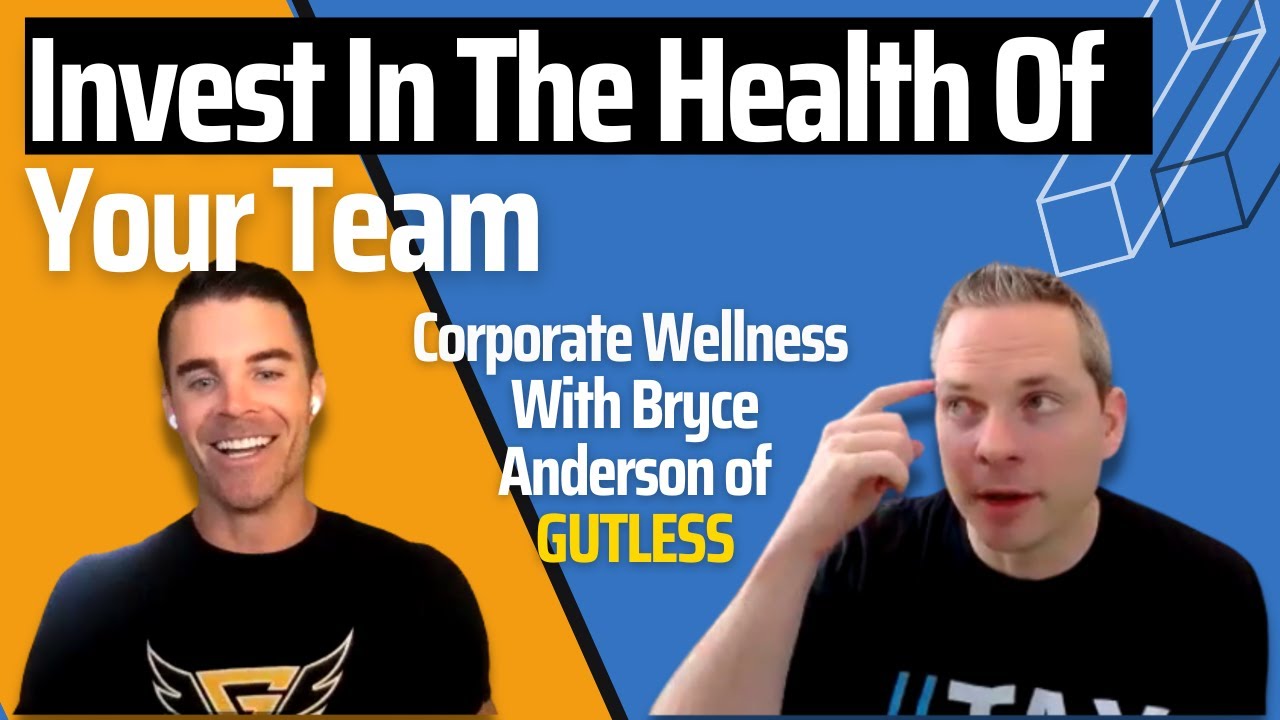
In this interview, John Briggs hosts Bryce Anderson, founder and president of Gutless, to discuss the company’s 8‑week corporate weight‑loss challenge that was run for John’s tax firm. Bryce explains that traditional weight‑loss programs often ignore the hormonal drivers of excess belly fat, especially low testosterone, high estrogen, and visceral fat‑driven aromatase. He outlines Gutless’s three‑pillar approach—dietary (phytochemical estrogen blockers, insulin‑sensitivity foods, cortisol‑friendly meals), supplementary (the T‑Force stack plus vitamin D, magnesium, zinc) and behavioral (exercise, sleep, stress management, alcohol moderation). The conversation contrasts natural testosterone‑boosting methods with testosterone replacement therapy (TRT), highlighting the health risks of TRT and arguing that 90 % of low‑T symptoms can be resolved naturally. Bryce then details how the program is adapted for women, emphasizing cortisol control, moderated fasting, adequate dietary fat, and the same core supplements. He shares program outcomes: participants lose 10–30 lb (up to 64 lb) in 8 weeks, achieve a 93 % completion rate, and see health markers improve (blood pressure, pre‑diabetes reversal). John adds corporate‑level benefits—higher productivity, morale, reduced cliques, better cross‑department collaboration, and even spill‑over health gains for spouses. The interview also touches on habit formation, noting that 66 days are needed to cement new behaviors, and explains how Gutless structures weekly education, challenges, and team pods to keep participants engaged.
Chapters
All right, everyone, we have a special guest today. Um, our company over the last 8 weeks has been doing a corporate weight loss challenge, and Bryce is the brains and genius behind what we did. Um, I'll first tell you, we didn't force anyone to do it. Those who did participate were super grateful that they did. And I don't wanna give away any secret sauce, but it was freaking awesome. I personally lost 25 pounds and 5% body fat. But so I'll start with Bryce. Welcome. And why don't you give us a little bit of an introduction?
Hey guys, thank you, John. That was a very nice introduction. My name is Bryce Anderson. I'm the president and founder of Gutless, which is the number one weight loss solution busy dads and men above 30 who have excessive belly fat and low T symptoms. Recently, we moved into the corporate space, and so now we're working with both men and women, and we're launching a Gutless for Women, which is a different animal because the female anatomy and the female endocrine system is different than men's, so there are different needs. So we've kind of changed the program up a lot to fit the needs of corporations that have both men and women who want to take advantage of Gutless. But at the core of what we do is address the hormonal component behind weight loss that most weight loss programs are missing. So one example of this is you could lose a lot of weight as a man, but if you don't address your low T and your high estrogen and your balance between those 2 critical sex hormones, you'll still have things like man boobs. it'll still be very hard to get rid of your gut fat. There will be things missing from your ideal physiology, physique, etc., that cannot be addressed by just weight loss. So what we do is address the hormonal piece of health and wellness, which is something that's unique from what I've seen in our marketplace and something that was missing. So we, we decided to address And since we launched about 4 years ago, we've helped thousands of busy dads, men primarily, now women, lose weight even when, you know, they had tried everything under the sun— keto, paleo, slow carb, uh, you know, CrossFit, marathons, even starving themselves— and just couldn't seem to lose the weight, lose the gut, get rid of the man boobs, and achieve their ideal physique. So as John mentioned in Our last conversation, which was excellent, he had been working out for a long time consistently, and he thought his diet was pretty clean, yet he still had 25 pounds that he couldn't get rid of, which is pretty common, uh, with those who decide to sign up for Gutless. They've tried just about everything, and they're missing a few things that they did not know were negatively impacting their results. But they come through the Gutless gates and they get some results that they've not been able to accomplish up until the point that they've come across our, our path. And so that's, that's an overview of what we do.
So, um, one of the first things that I found fascinating, because I mean, not only did I lose the 25 pounds and the 5% body fat like you just mentioned, I have more of a chest, like, uh, one of those like strong-looking chests. It's like you see actors and you're like, how come my chest doesn't look like that? I'm doing push-ups, I'm doing bench press, I'm doing flies. Am I not doing the right amount? So you spend a lot of time in the first couple weeks talking about the science. What, what was that like? What is it? It, how does the testosterone work? And then, I mean, you mentioned how belly fat then also it kind of makes the cycle even worse. So can you talk to that point?
Yes. So in a nutshell, there's 3 ways to naturally boost your testosterone. You have dietary, you have supplementary, and then you have behavioral. So we'll talk through all of those, give you some broad strokes, and we can't dig into all the science behind what we do today. We don't have enough time, but it's really critical for men to understand what's going on with their testosterone after the age of 30. So after the age of 30 years old, as a man, your testosterone output starts going down by 1% a year, and by the time you're 40 years old, it hasn't gone down by just 10%. when compared to what you're producing at 30. It's more like 12 to 15 because that 1% becomes 2 and then 3 and gets bigger and bigger with each and every passing year as a man. So when you look at dad bods, this is kind of funny, but dad bods, quote unquote, happen in the 30s. And statistically speaking, men have kids at 30 years of age. The average age of a firstborn for a man is 30 years of age, which is the same time that a dad gets a dad bod. So that's exactly the same time their T decline, testosterone output decline, starts to happen. So we see these changes, as John was mentioning, in the pectoral region, for example. And so when you have less testosterone, your relative estrogen is much higher. And then estrogen is the reason that women have breasts or boobs, which are primarily comprised of fat, fatty tissue, fat cells, and men have muscle in their chest. But after the age of 30, they start getting more fat in their chest because of this testosterone to estrogen imbalance, which starts to happen after the age of 30. Another thing that happens is as your testosterone goes down, your estrogen goes up, your gut fat starts to go up. And a lot of people don't know this about gut fat, but visceral fat is what men tend to put on in their guts. You see a lot of guys, some of them have the spare tire and they have subcutaneous fat that can be pinched and grabbed, but a lot of men just have a big bulging gut and they have a lot more visceral fat or fat underneath their muscle than they do subcutaneous fat, which is on the other side of your muscle.
Ah.
Abdominal muscle sheath. And so visceral fat produces something called aromatase. Aromatase is an enzyme that takes the remaining testosterone that you're still producing, which is going down by 1% every year, then 2%, then 3%, And it produces— excuse me, it converts it into the female hormone known as estrogen. So the more gut fat you have, the less testosterone you have, and the less testosterone, the more gut fat. So what Gutless does is breaks the low T gut fat connection and restores your natural hormonal balance. So you can finally get rid of your gut fat, get rid of the man boobs, get your sex drive back, start to gain muscle in your chest, and start to see what John's talking about, which is a a more muscular appearance rather than kind of a squishier, softer chest region, which most men do not want. So that's, that's the basic, the basic science behind it.
Okay.
And then you wanted to— did you want to talk about the 3 ways that you can boost testosterone naturally?
Totally.
Yeah. Okay. So dietary, there are foods that you can eat that will help you with your estrogen levels. Meaning there are phytochemical estrogen blockers that can be found naturally in a well-balanced, well-balanced diet. There are also foods that can cause your estrogen to go up. So there are foods that are pro-testosterone, anti-estrogenic, and they also help with your insulin sensitivity. Insulin responsiveness or insulin sensitivity is responsible for something called food partitioning, which is what your body decides to do with food when you put it in your mouth, reaches your stomach, and it's broken down. So that's a dietary piece of boosting testosterone. There are foods that boost your testosterone, foods that kill your testosterone, and foods that increase your estrogen levels. And then you also have cortisol. So cortisol is super important. It can also be addressed through diet to an extent, but that more— that lives more under the second 2 houses. So we have behavioral. Behavioral is going to encompass things like Are you exercising, right? So if you're not exercising at all, you're going to be getting heavier. It's not just about exercise, but in general, exercise helps with cortisol reduction. It also helps with testosterone production for that reason and some other reasons. You also have to look at sleep. How much you're sleeping impacts your testosterone and cortisol significantly. So if a man's sleeping less than 7 hours a night, that's a problem. You need not just 7 hours of sleep, you also need REM sleep, rapid eye movement, stage 4, stage 5 sleep in order to produce testosterone. So with morning wood, for example, men get that as a result of having adequate testosterone levels, but also getting REM sleep. So making sure they're getting the right amounts of sleep. We produce a lot of testosterone, the most testosterone in our sleep. So that's why in the morning men get morning wood or they do not. It has to do with whether or not they're producing adequate levels of testosterone they go to sleep and then what their baseline testosterone levels are in general. And so alcohol is another big one. You can drink some alcohol and still produce adequate testosterone, but the problem with alcohol is it kills your REM sleep. It'll keep you out of REM sleep. And so if you have a lower quality of sleep, it doesn't matter if you slept for 7 or 8 hours. If you were drinking heavily, you could sleep for 10 hours and you're not going to get restorative, restful testosterone producing sleep. And then in addition, your cortisol levels are going to be higher. So from an overall weight loss standpoint and a testosterone standpoint, higher cortisol levels mean you're more likely to engage in behaviors that are going to continue making you fatter, overweight, eating the wrong foods, having more hunger, being more uncomfortable. So psychologically wanting to reach out to that Snickers bar or whatever it is that's going to make you feel good in the moment, but only make you— feel worse later. If you're underslept and your neurochemicals and then your hormones and everything is off, you're going to be more likely to overeat and make bad decisions and your cortisol levels are going to be higher. And then with alcohol, alcohol also produces aromas. So alcohol is estrogenic in essence. And so we won't get into the ways that we recommend drinking alcohol. strategically, uh, to avoid some of these things, uh, but there are ways to do that. And so then we have supplementary. So we have a product called T-Force. Uh, you need 5 essential supplements to keep your testosterone up, your estrogen down, and keep your cortisol levels in check, which helps you with sleep. And these things will in turn help, help with testosterone production and keeping the estrogen down, keeping the cortisol levels down. So we have dietary, we have supplementary, and then we have behavioral ways to boost testosterone. The other way that most people do it, which we do not recommend, and the reasons we don't recommend this, because most men come to Gutless with fears about premorbidity, dying young. They're worried about their blood pressure. They're worried about having high blood pressure, high triglycerides, having high cholesterol. They're worried about having a stroke. They're worried about cancer. They're worried about a lot of the things that TRT or synthetic testosterone puts you at high risk for. So a lot of men feel trapped and they're like, oh shit, I've tried everything, nothing works. I know this is kind of dangerous and it's expensive and inconvenient. I don't want to take shots, but at the same time, I don't want to be overweight for the rest of my life and feeling tired and sluggish and like I'm, you know, 20 years older than I am. So they resort to taking TRT, which we sell against. sell against. We're persuading the masses to not go down that road because we can cure about 90% of low T symptoms naturally with our, our 3 pillars of Gutless. And so it's unnecessary in most cases, uh, to go down that road. And then not to get too much into sexuality, but a lot of these testosterone clinics, they don't have qualified doctors, they just have practitioners. They have a doctor who owns the, um, the clinic, and then they have a bunch of knuckleheads who are not qualified to be sticking needles in people and playing with your hormones, monitoring your results. And if you don't have the right amount of estrogen to testosterone balance, you need both for optimal sexual functioning, not just erectile ability, but also for performance ability. Meaning, you know, not to get too graphic, but to finish the job, meaning, you know, for the job to be complete. If you're missing estrogen, you actually, you can't do that. And so men still have sexual problems even when they take TRT. They think that it's going to be their end-all be-all solution, but they end up bloated with red faces, skin looking leathery. They put on some muscle, yes, but they also have their testicles shrink. They have sexual problems. Their heart enlarges. They have a risk, a higher risk for prostate cancer. They have higher blood pressure, higher risk for stroke. And so we are, we really are trying to get the message out that before you go down that road, try a natural solution like Gutless because it works for 93% of our guys in curing the majority of their low T And we want to make sure that, you know, people are aware that there are options for them aside from what's being mass marketed and has been, you know, popping up on our Facebook feeds and on TV a lot in the past 10 years. It was legalized in 2013. Before that, it was illegal to sell, you know, testosterone. Testosterone cypionate is a steroid. And so, you know, this is what athletes use to get humongous. Somehow it was legalized. There was a loophole, and now it's being marketed as a safe solution for men with low T symptoms, etc., and it simply isn't.
Wow. So you guys can imagine 8 weeks of this type of information, obviously spread out. It was super valuable for us. We— I mean, the structures, you have a weekly meeting, right? And during that meeting, we get educated, we get motivated. And then you have some fun challenges for us to do. So like you were talking about blood pressure, I can tell you guys, 2 of our team members, one male, one female, both of them were able to report that due to the benefits of losing weight through the Gutless program, their blood pressures are both lower. And one of them came back. On top of the blood pressure, she was pre-diabetic before this happened and now she's not anymore. Like, there are some massive benefits, health benefits that happen. From a business owner standpoint, I think it's important you understand when your team is healthier, they produce better for the company. We are certainly seeing that. I've always known that. I mean, I noticed this early on in my career when the team members who still found time to exercise during tax season also correlated to be the team members who produced the most and highest quality of work. And so you take that health aspect of what, you know, our hormones do when we exercise regularly. You add in the more important component, as we are taught, is the diet, right? Certainly there's, you have both, but someone can work out and eat like crap and they're not gonna look the way they want to or feel the way they could. So keep all that in mind, Bryce. So we had half our group was females. You just talked a lot about testosterone and I know that some of the females were like, well, how come? Like, what do you, you know, so none of this information applies to us. Obviously they had the exact same amazing results we did. Um, can you talk to that a little bit with the, the hormones and how they're a little bit different, but how they're also maybe the similarities with women?
Yeah, so Coach Jenny, I brought her on because she specialized in female hormones. Um, one of the things that women have to be a lot more careful about is cortisol. So exercising too much as a woman and fasting for too long, or fasting at all and restricting calories, is actually terrible for your cortisol levels. And so if your cortisol goes up, your body's going to store fat. And so regardless of what you're doing, if you're not aware of that, you could be torturing yourself, um, you know, on a restricted caloric intake and fasting, doing extended fasts and working your ass off in the gym, and you're still going to be holding on to fat. So one of John's— Um, one of the females in Cohort 13 Inside Tax was really going, you know, pardon the— pardon my French, but balls to the wall. Um, she was, she was all in, and we love that. But me and Coach Jenny had to check her a few times and explain the science there. Like, hey, you are restricting your calories much more than we're recommending, and you're counting calories, which is not something that we do. So we want you to eat more food, we want you to fast less, and we want you to chill out a little bit on the workouts. And she was like, you know, it's counterintuitive. But she finally did. And so once she did that, her cortisol levels corrected. She was tracking her sleep religiously too. So what's cool is, even though we weren't measuring cortisol from a day-to-day blood test standpoint, you can tell by sleep behavior, right? So she— her sleep onset and quality of sleep improved as soon as she started listening to us and making sure that she was eating enough. She wasn't overdoing it on the workouts, and she— I think at the beginning we dropped fasting altogether until her cortisol reset. So with women, fasting can be counterproductive. It does— it can raise your cortisol levels because it's putting stress on your body because you don't have food, right? So it's, uh, it, it can have a negative impact on women to work out too hard, fast for too long, and not eat enough. So there's a fine balance that you, you need to fine with time. And so with Gutless, there, there's no calorie restriction, right? And we have carbs with every meal. Having a carbless diet is also bad for cortisol levels, right? So with women, you have to realize that, that, that is actually the main thing you want to look at is cortisol. With regards to estrogen and testosterone, actually, aside from D-aspartic acid, a lot of the supplements we recommend are the same for women. to help with hormonal optimization. So we have vitamin D, critical. We have magnesium, we have zinc. Those would be the core 3. And then, you know, that's— those are good places to start for women. And then watching that cortisol level, super important. And then watching what happens when you make these slight adjustments to your weight, to your energy, to your sleep. Women also can't eat fat like men can. So there's no fat portion controls or there's no recommended meats to eat in Gutless until later in the program. Because I have always said it is more dangerous to be fat than it is to eat dietary fat in the beginning of Gutless, which is what we recommend. Because if we're taking sugars and simple carbohydrates out of your diet, what's going to happen is the pleasure reward center of your brain is going to be screaming. It's going to be like, give me something. Where are my treats? You know, where's my relief? that's a little addict, right, that you've built in that reward center of your brain. So what we do is we hit it with a bunch of fat, and we hit it with fat until your blood sugar levels stabilize and you're not, you know, you're not blood sugar spiking and hunger cycling all the time. Once that's discontinued in week 3, week 4 of Gutless, you don't get as hungry, and that pleasure reward center of your brain has, has died down. Its power has been diminished. And then once that has happened, Then we can switch over to leaner meats because, you know, there, there is an impact that eating bacon and steak every day is going to have on your cardiovascular health that we don't want. But in the beginning, we know for a fact that it's more dangerous to be fat than it is to eat dietary fat so you are no longer obese. Another interesting fact, if your gut circumference, guys, is more than 40 inches, then you are at a 50% increased risk of dying young. 50%, right? And then so also you're looking at blood pressure, risk for cancer, low testosterone. Obesity is making you— putting you in a position where you're way more compromised from a blood pressure, cholesterol, triglyceride standpoint just by being overweight. So we address the weight first and then we will dial back on fatty meats and ensure that the diet is more balanced and our people aren't eating bacon every day. But in the beginning, we don't care because we just want— there's a systematic process step by step through which we're addressing each and every one of not just the physiological needs of our clients, but their psychological needs. Every week it's going to be different. Every week their body's going to change. Every week their disciplines are going to harden. Every week they're going to be different, a different person week by week. So that's what we're really good at, is knowing exactly where our clients are going to be not just from a physical and physiological standpoint, but a psychological standpoint through each step of the journey, so we can prepare them in advance for what's about to happen, right? And then with plateaus, for instance, that's another thing that, you know, we're like, we're moving into plateau season. So when you hit your plateau— and it's not if you hit your plateau, it's when— this is what we do, okay? And then so people aren't surprised. And then, you know, there's a lot of things we do. To get people through the 8-week challenge. Last thing I'll say, and then I'll stop, is it takes 66 days on average to take a new set of habits or disciplines such as a diet or exercise routine and turn it into something that has a shot at sustainability. So a true lifestyle change cannot happen in less than 66 days. So Gutless gets them to right about the 60-day mark, and then at that point, uh, you continue going and there's additional support. But it is so immersive and full on that we get those habits and those changes, those routines fully baked before that 66-day mark. But that is why people yo-yo all the time, because they only go on a diet, whatever they are doing, for a month. They lose the weight and they go straight back to what they were doing. But their disciplines, their habits and everything else are not concretized until 66 days or right around that mark. And most people quit after a month and they get enough results. Like, I am good. Now I can go back to what I was doing before. It's not the way it works, right? So if you want a shot at sustainability, you got to make it through at least 8 weeks. And that's what we're really good at, is the psychological and behavioral component of what's going on with our people mentally as they go through the program. What are good— what are their trigger points going to be? When are they going to want to quit the most? And then what do you do to ensure that they don't quit? So we have a 93% completion rate. And if people complete Gutless, then they lose 10 to 30 pounds in 8 weeks and as much as 64 But that is where you get the 93% success rate and not just the weight loss being 10 to 30 lbs., but it is 93% adherence. If people stay with us for 8 weeks, they are losing at least 10 to 30 lbs. and then as much as 64 lbs. As we have seen, we have people lose more than 40 lbs. in 8 weeks in every class. Some of our results are so crazy that I wouldn't believe them if it wasn't me. It is not even a joke. Some of our pictures before and afters, I am like, Did you Photoshop this? And they're submitted by clients, but they're hard for me to believe. I'm like, and from a marketing standpoint, the challenge is how do I put this out there and have people not go, this is bullshit, right?
I know, sometimes it seems a little bit too good to be true. I know. And I know that for us as a corporation, that was one of the biggest benefits is you guys with all your past experience already knew what we were struggling with. And so the topics for that week always felt spot on because it's like, yep, that's exactly where we're struggling right now. And cuz look guys, we, I mean, think about it. A lot of us put ourselves in a situation from having decades of bad habits. Well, that decades of bad habits, that's hard to break in an 8-week cycle. So like there's work that has to happen and there is some willpower you're gonna have to exert. But man, all of our team members on the back end are just super excited with their results. We even started an internal Slack channel. We use Slack for communication. So people like me, we still have some more weight we want to lose. We're still supporting each other. Like, the benefits have been really good. I want to circle back to complete the story of the team member you're talking about who was going balls to the wall. And she actually was a little hesitant to even join because, I mean, most people would look at her and be like, why would you join this? You don't necessarily need to lose weight. Like, she looked fine, but she went ahead and did it anyways and she cut like 4.5% body fat.
And 6, she ended up with 6. Yeah, yeah, 6.
Yeah, 6% body fat in 8 weeks. And obviously she is even happier with the way she looks, which is Right? We have to be happy with ourselves. Um, and, uh, so even for my team members who maybe didn't have the weight to lose like I did, or some of our other team members, uh, it was still super beneficial. And, and here's where I will kind of— the last part we'll talk about, um, because you wanna— I think everything that we do as a business owner should help our business grow. And I love supporting our team members. And I mean, it's one of the things that gives me joy in life. That's why I'm an employer. But I also want some sort of return on investing. Obviously, it's not free to do a corporate challenge, um, but I'm easily going to make back my investment in the corporate challenge because I have team members who are healthier now. They have more energy, which means they produce more. Um, and I'm not saying they can stay longer hours because our company doesn't believe in that. Uh, they're just more efficient and focused in the time period that they were already working. Their happiness level in life has increased drastically. So now my employee retention percentage will continue to increase because they love being part of a company who invests in them. They also, we have had, I mean, of the team members I know for sure, 5 of them had their spouses do it with them. It's like, hey, I'm doing this. You know, they weren't necessarily sitting in the meetings with us, but they were benefiting from the knowledge that our team member was gaining. And now their spouses are healthier too. So now outside of work, they're happier. And because they're happier outside of work, that also means they're happy coming into work. So there's a lot of profitability benefits that happen just because we went through this 8-week challenge, not to mention the camaraderie that we now have as a company, because this is hard. It was not easy, totally worth it. And when you do things that are not easy with a group of people, you automatically have a stronger bond. And so we now— there, um, we talked about this in our last interview, there's less cliquish. There's nothing more damaging to a culture than having cliques. So we had team members from different departments in the, these pod groups that you assigned, right? So you're kind of in a group during this course with 6 or 7 other people, and you're doing, you're competing against another team, you're challenging other teams. You're so, those are the 6 to 7 that you're trying to support the most. And so we had a cross of roles that happened in that pod. And now it's just the environment here is even happier than what it was before. And all this is from benefits thanks to doing this Corporate Gutless Challenge. So I, I couldn't recommend Bryce and his program enough. We will definitely have a link in the show notes so that you guys can check out his program. Um, you, you work with individuals as well if anyone doesn't necessarily want to do it with the group, is that right?
Yeah, we have a business-to-consumer line, which is the core of our business. So we do run challenges every 8 weeks, and B2B is a newer focus. And then we have Gutless for Women as well, which is kicking off soon. And yeah, what was really cool to see, and the benefit— the biggest benefit that I thought you'd receive, which you did, you talked about it on our last call— was the breaking down of departmental divisions.
Yeah.
So I know this from being a businessman. I haven't been like a— I've been pretty fit my entire life, but I worked at Gartner. You know, I come from advertising marketing background, corporate background, and a sales background. And, you know, the sales teams typically don't like the marketing people, and it's like, ah, they're not doing their goddamn jobs. And marketing's like, hey, we're sending them leads, they're not closing them. And at the end of the day, you know, all the, all the departments are pointing fingers at each other because the CEO's like, hey, we need more revenue, what's going on? And everybody's kind of like, it's their fault, it's their fault, right?
Right.
And then like same with, um, designers, developers, or senior accountants and junior accountants, um, controllers, all that. So John, you brought up a good point, which was it broke up the clickiness, any intercompany cliques that existed, and then The departmental divisions, which are part and parcel to, you know, running a business and being a part of a corporation, are broken down because we take people from different departments and divisions and we make them less divided by putting them into teams. And then they're invested in the challenges and the goals that they, that they've set and the things that they're going to go through together, bring them together, and they force them to work together throughout the course of the program. And then it's also It's personal, so it's something you go through together with your coworkers, but it's a personal journey and you see people getting vulnerable. You start to see people as humans instead of just, you know, your coworker, person that you go to work and show up to work every day and see and you know nothing about them personally. You all struggle together, and I think that brings some uniformity to humanity, to a workplace. And then, like you said, at the end of the program and on the other side of the challenge was more collaboration, openness, better communication, which is something that you spoke about too, which is critical for a business. Because if communication breaks down and people aren't talking because they don't like each other and there are divisions, or they don't trust each other, they don't feel comfortable with each other, or, you know, they're not comfortable talking to John because he's the CEO. And they see him as like, he's on this pedestal, we're not on the same level, which you're not to an extent, but you want the communication to be, you know, the company to be a safe place where people can communicate and feel like they can approach John. They now know him as a human because, you know, John posted his shirt-off pictures at the beginning of Gutless and at the end, which was awesome, you know, because it was like, hey, I'm a human, here I am, and we're all going through this together. So I thought the departmental divisions being broken down, the cliques being broken down, That seemed to be something that was very helpful. And I think that is a major benefit to having your employees go through a challenge like this together.
Yeah, totally. And you hit on it, that last part, like, there is always going to be a perceived hierarchy in any business. I would want my newest employee at— with the least expensive role to feel comfortable to come in and talk to me. But I know that that's hard just based on the perception the world puts on. I'm a new employee at an entry-level position and he's the boss, uh, where, you know, in my mind I still feel like the 16-year-old who's making a bunch of screw-ups, you know. Having a competition like this, they could— it makes all leaders more human, which is a great benefit to have because now your team is gonna be willing to talk to those leaders and those supervisors in a different way that will be more productive for your business instead of holding back. It's like, well, look, I struggle with eating Reese's Peanut Butter Cups. So do they. Great. You know, like little things like that that came up. It's like, wow, he has the same struggles I do. Like, yep. So super valuable. Again, we'll have the links in case anyone's interested. And I'll just end you guys with my saying, because this applies: profit is a choice. Have the courage and wisdom to choose it. Thanks for listening, guys. Talk to you later.
Thanks, Jeff.










