Scaling Smarter with Mathew Park | Incite Tax | InciteFUL
Matthew Park, a fitness entrepreneur and natural bodybuilding champion, built the Trainer Revenue Multiplier, a CRM and automation platform for gym owners. His core advice: slow down, master one operational system at a time, and deliver quick wins within a week to keep clients motivated rather than chasing fast growth.
Chapters
Welcome to another episode of the Insightful Podcast. I have another great guest for you guys today. His name is Matthew Park. He is everything you want to know about the gym space and how to make gyms better. He's going to help us out here. If you're not a gym owner, still stay tuned because a lot of stuff we talk about is still going to apply equally to you. So Matthew, thank you for being on the show. And let's just start with your, your background, like gym owners, you have a software, like how did you get to where you currently are?
Okay. So first of all, John, you're amazing. You're a legend. John the Great Guy. So if you guys haven't looked at him, he's got a new book out called 3.3 Rule. Check it out. Game changer book. Because actually he came in our Platinum group a couple of weeks ago to present on his book and literally had all of our members like rethinking their recharge, their refocus time. The recovery time around being more productive. So I'm looking forward to sharing my thoughts, but John, just so you know, you're a rock star. So that's it.
Thank you.
Here's my short story.
Okay.
I grew up on a farm and in the middle of absolutely nowhere. 100 people was my town. The, the close city is about 2 hours away called Medicine Hat in Alberta. So we had cows and chickens and pigs and 9 cats and 4 dogs and all that good stuff. So I grew up with my hands. Like I just, we worked on the farm. -40 to +30. That's kind of the 4 seasons of life, you know, in Alberta, Canada. And I had this immense passion for training. So at 12 years old, I was a picked-on kid. I was maybe 75, 80 pounds. I was skinny as a rail. So I use weight training as my means of building confidence and not being picked on in school. So I worked out of a gym in a farm with combine tractor parts. And, you know, all built out of like, you know, the bench was made out of steel rails. It was just all made on the farm. And I did weight training almost every day on the farm from 12 years old to 18 years old and just fell in love with bodybuilding. And that's where it started. And I had a vision of wanting to, as every guy wants to go to California to pursue his fitness career, saved up $500 and went to California cold turkey from a small town to Glendora, California. And walked in this skinny kid and talked to a guy named Cam King about, hey, might I work your gym as a personal trainer? He looked at me, 6'5 tall dude, and said, uh, who the heck are you? You know, literally like, where did I come from? So I literally said, I'm the Canadian guy that emailed you 2 months ago about coming here. He says, thought a second, he's like, oh, oh, you're the guy that emailed me. I never thought you were ever going to come down here to the gym. So that was my first in for his trust, was I actually committed to my word. 18-year-old kid coming from Canada to in Northern California with $100 in his pocket. And I had my first client. That's where I began my, my, my PT training was in a gym in Glendora. And he actually gave me some more clients at $18 an hour. And I built my first client, like 5, 6 people there under the table. IRS. And then came back to Canada about a year later. I couldn't of course get my visa, so went to school, Nate, full-time as a personal trainer and, and full-time study. And that's where my personal training started for the first 8 years. And I grew to, uh, 6 figures as a personal trainer, also in a studio as well, uh, with no social media marketing at all. Just pure, you know, growing out of my own process, right? And then of course learning from mentors and reading books and making mistakes. So I didn't have any money when I first began. I was literally working off of trades and, you know, helping off of here and just learning what kind of way I should get leads and build a business. And then from there, I kind of basically started a natural bodybuilding and fitness federation at 21 years old, um, in Canada. And over nine years, I ran forty-five shows with my team of promoters. So that was kind of my bodybuilding fun time. In the middle, I won a WNBF bodybuilding pro card. Twenty-five years old, I competed in about nine shows before I won a pro card. So I've been through the bodybuilding and the natural scene. I'm not taking steroids, just to be very transparent. Okay, very natural at thirty-eight years old. And at that time, I was also starting with my uncle a health beverage company that we got into Walmart, Safeway, Save On Foods. 3,000 locations across Canada and a few in the US, but we got full distribution. I basically worked my tail off to get this beverage at 26 years old across Canada. So I was running multiple things, you can imagine, in fitness, right? Health beverage company. So from there, I ended up selling my shares in the beverage company. Wasn't my thing anymore. I had passed the torch of the Bodybuilding Federation over to Lou and Charlotte King, who were just awesome people, and didn't compete any more bodybuilding shows. I did 2 world championships, didn't do very well. I wasn't the guy who was like really built for bodybuilding, but I just absolutely was obsessed with training and the eating and the lifestyle. So I just do it for myself nowadays. And that led me to— I'll use kind of like a low point. 30 years old, I was a guy that had all this success in my mid-20s and all of a sudden was hit with all this— I'll use the word failure, John, you know, because I was like, sold my shares, had this massive peak, we had awesome success, and then I sold the shares, and then I used that to invest in something else. And of unfortunately lost that and had to start all over the base from scratch again at 30 years old. And I traveled from Alberta in my car 4,000 miles to Quebec to be with my wife full-time, Geneviève. And that was in 2015. So fast forward to 6 years ago, I started TRM, Trainer Revenue Multiplier. And I only began this because I had been a coach for so many years and I had these trainers when I was teaching at Nate emailing me Text me saying, "How do I get clients?" So I was helping them for free just for two years. Then Jen says, "Babe, why are you doing this all for free? You're like you you pay the bills. I'm I'm kind of helping you pay right now." It's like, "Let's get your shit, you know, crap together." Excuse my word. So I started TRM as a one-man show. You know, I was still kind of paying off some debt back in the day. You're the financial expert, of course, John made some bad mistakes, and I was really kind of getting myself back on my feet again. Mid-twenties, I was flying like I was peaked, right? And I made some bad choices. Boom! That's fine. And now TRM came above. So I was taking all my university. Years of learning from success, failure, success, failure, failure, failure to like, here's what not to do, ladies and gentlemen, personal trainers and gym owners, and here's what you should be doing. So fast forward to now, we've got a core team of 5 people who are all fully invested in the company. We have 9 leaders. We have helped over 1,000 coaches who come into our program as trainers and online trainers who advance into gym owners or studio owners in their businesses. So we've been able to help them systemize their business, build more freedom in their business, build marketing and sales techniques to help them grow their business. But more importantly is having a life beyond their business. And that's why when I heard about your book and the way you do business, John, that's why I would ask you to come back on TRM Platinum like 3 times now, you know, and you're probably gonna come out 3 more times. Is when you, when I first met you and heard about you and I read your first book, Profit First for Microgyms, I was like, this guy's, he knows his stuff. He's the man. And I find a lot of coaches are all about, I don't wanna use people's names, but like are so on the hustle and grind mode and they burn out and don't understand how to build a life around their business. And when I saw your presentation on Platinum, I was like, where has John been in our lives? So, um, we preach to our clients is freedom. You optimize your business so you can scale smarter, you can build freedom and have a 6-figure or 7-figure business and actually create impact That creates legacy with your business.
Wow, that's great. There's a lot of that I didn't know. So that, man, that's awesome. Sometimes those schools of, school of hard knocks are the best educators, right? So as you're talking, I'm thinking, you know, I've met a lot of personal trainers and if you're not, again, if you're not in the gym space, met a lot of people who are good technicians, right? If you use a phrase from The E-Myth, what are some challenges that you've seen Where the one person is now trying to do more. And some, like you and I have learned, like in order to do more, a lot of times that involves adding team. And sometimes people don't want to add the team, but like, what are some of those challenges from just me to, I don't mean this disrespectfully, but like, it's just me isn't an actual like full-fledged business. You're, you're a business, you're defined business on IRS standards and you have some business expenses, but you know, you're a systems guy. I love systems. You can get away with a lot of lack of systems if it's just you. I know I certainly did when I was just me doing the tax firm. So what are some of these challenges you've seen people run into when it's like, it's me and now I think I want to make this into a business?
They want to grow too fast. So they want to go into marketing and sales, right? And they start getting—
Sexy. It's sexy, right?
Exactly. It is, John. Exactly. I think it's why what you teach connects with us so much. is because, um, you know, what we do in TRM isn't, isn't sexy, but it works. It's been proven to work with over 1,000 coaches. But the other thing too is, is that when you grow systematically, right? And I also put myself around some experts like Laurent is our systems engineer and he's a fricking pro. And then we've got like Jamie and Isaac over in the coaching who are also pros in certain niches in our audiences. So I've learned to put myself around others who are better than me, or we develop them better in their skills. So I think what the coaches end is they wanna grow so quickly, they wanna be at 6 figures in 6 months, right? And then they wanna be at 7 figures in a year. And it took me years to build to 7 figures, you know? And I realized I wouldn't want any other way because when you do that, you actually grow as a human being. You grow a foundation that becomes solid and then your income becomes consistent. And then all of a sudden you actually kind of build this character that actually has resilience when you do have peaks and valleys in your business.
How do you help someone who is like, hey, I just, I've swallowed the pill, I've drank the Kool-Aid, I wanna grow super fast. How do you help them change their mindset or what are you doing to help them realize like, no, we gotta, we gotta create systems, we gotta go a little bit slower. Promise it's gonna be better. Like, what do you, how do you do that?
So whenever we bring a coach in for the first time, and we always go over offer and database and control sheet, which means getting all their data together first. And what's funny, John, is we can usually grow a coach's income off of a database in a month or 2 months max by doubling their revenue just by working on those basic principles. And that's not even no marketing at all. So what we do is we, when I mention those things to a coach who wants to go here and here, like, I can grow an income without Facebook ads? I was like, of course you can. You can double your business if you just do these steps. They almost don't, they don't believe it's possible, right? And that's where we take them. We, we kind of pull them back and paint a picture of what we do and how we do it. And then from there, when they grow, then we show them the steps. So the biggest thing we have with our coaches is we kind of keep them honed in to a few things and we keep honing them in. We keep refining the engine. To build their Ferrari.
Would you say, uh, with those 3 things, and you don't have to share 'em if you don't want to, I don't, I don't know what that looks like, but like in those things, how quickly are they seeing results?
In a week.
In a week. So yeah, that actually, I had a hypothesis. I, I was leading you with that question. Um, I think it's important for us, like it, look, if you're coaching clients in any capacity, In your business, whether that's a gym member or whatever, or other business owners, we as human beings need quick wins. It does help maintain the motivation. I believe in the long term, everyone who has true success has found internal motivation, but I, it's okay if, you know, we follow the carrot a little bit in the beginning. And so I just think that's an important note because it sounds like you're giving them really, really quick wins. So it's like, You can trust, like, look, within a week you're seeing some positive ground. And it, I'm guessing it's not like massive changes, right? It's just like the one guy who's like, I want to do a pull-up. Okay, let's start with the ring row. You're struggling with that. Hey, after a week, look at your ring row. Now you can do 5 in a row. Like, right? Incremental improvement helps. But we do need that as humans sometimes. Like, not only do we need the win, We need to stop and pause and acknowledge that there's a win that is there, however small it may be. Does that resonate with what you guys do?
100%. 100%. So once we finish the first coaching call and we build their offer and they can see clearly how they can sell a prospect with a very clear map, they're like, oh my gosh, I can make a sale tomorrow. You can. The other part is too, is now you can go reintroduce your coaching to your database. Because they all know you, right? Most of them already know. So it's like you go talk to 5 a day and get on 3 more calls this week and you get 2 more sales. That's a quick win because you're clear on exactly what it is, how you're going to present and what you're going to give them to bring them back into your coaching program.
That's good. Sounds like a system, if you will.
Yeah.
What, what would you say are the main systems that gym owners— and I'm assuming this, I'm confident this is going to apply to all business owners, but gym owners specifically, like what are some of these common systems that you're helping them get set up?
For sure. So when new people sign up as members in the gym is how they're onboarded in the business. So if clients can't become new members and be onboarded in it, for example, we had a client who was selling a lot of day passes, okay? And, you know, 50 a month. And I'm like, okay, so how many do you have those converted into new members? Uh, 2. I'm like, there's an opportunity, right? Are the sales process when they first sign in is literally a goldmine of opportunity. So a gym owner, I would say the first thing you look at is that process, is how they come in as a new member and as a day pass member or a free pass member. Because if you can get them converted within a couple of days into your membership, massive win. And also, if coaches or gym owners aren't doing that, they're losing a lot of money.
Yeah, and I, I'm with you. Like, Uh, it says this is equally applicable to our tax firm, to clients that we work with. Onboarding your clients is one of the most important elements of consistent long-term growth. If you do it the right way, you have more than increased your chance of getting good referrals later down the road because of the experience that they get. Okay. So onboarding, that sounds like one of the first ones. What are some of the other ones?
How well your current members are getting nurtured. And the communication points between them every week. So most times, gym owners, when they first onboard a member, they kind of forget about them for a bit. No, you want to keep nurturing them with an email, with an SMS, with things at the front desk, with how they're being talked about in classes if you have classes, or at the gym on the front desk. Using their first name when they walk in the door from the front desk is a huge like, oh, they know my first name. Oh my gosh, I should bring my friends here. All these subtle things In the first month of NowThem will actually generate revenue if done properly.
And this is one of the reasons why I love the like boutique fitness, what we call them micro gyms, right? I love that model because you're not looking to have 2,000 members. You're looking to have higher quality services with a higher quality relationship, right? Like, can you imagine walking into a Planet Fitness or 24 Hour Fitness or Gold's Gym or something and like, Oh, hey John. You know, it's like, you know, you know, like, oh, oh, you have a membership here though. That's cool. I, I love that. And anytime there's a service-based element, man, that personal relationship is super critical. Okay. So tell me, you, you have the software that helps gym owners. What does that even look like? What, what is that?
So our engineer in systems is Laurent and he heads this whole backend systems thing, right? So what he does is our software, he built the software 3 years ago and what we do is we don't offer it to public only when you join our CRM program. It's very intimate. It's almost like going to the Ferrari dealership. When you buy a Ferrari, you're gonna get all the things with it. You can't buy it separately.
Okay. Someday I hope to experience that.
And you will, John, 100% is when we come through our systems, our engine does literally everything on the CRM side. So customer relationship management, all the billing, all the communications in one place, but even building out the SOPs can be generated in the backend. It's funnels, it's the website, it's the landing page, it's all the follow-up systems, onboarding systems, and the list goes on. It literally does everything on the backend of your business. And Laurent, he's amazing because he keeps innovating every week, every month and making it better because he's asking our clients, he's looking at what they're needing and what us as coaches are going through. And we always communicate to him, he is developing. Right? Isn't like, oh, this is done. No, he continues to make it better. He's been here for 2 weeks, 2 weeks actually in Kima with me, and we're literally just brainstorming innovative ways to enhance systems. He just finished developing an SOP process to develop SOPs almost automatically in the backend of the engine, which is super cool. Wow.
So here's a business decision question for you because there's Mindbody, Watify, Zen Planner, and you can go down the list, thousands probably of softwares that are sold to gym owners to help them manage CRM, process flow, inventory. Why did you make the choice to keep it private to just your members?
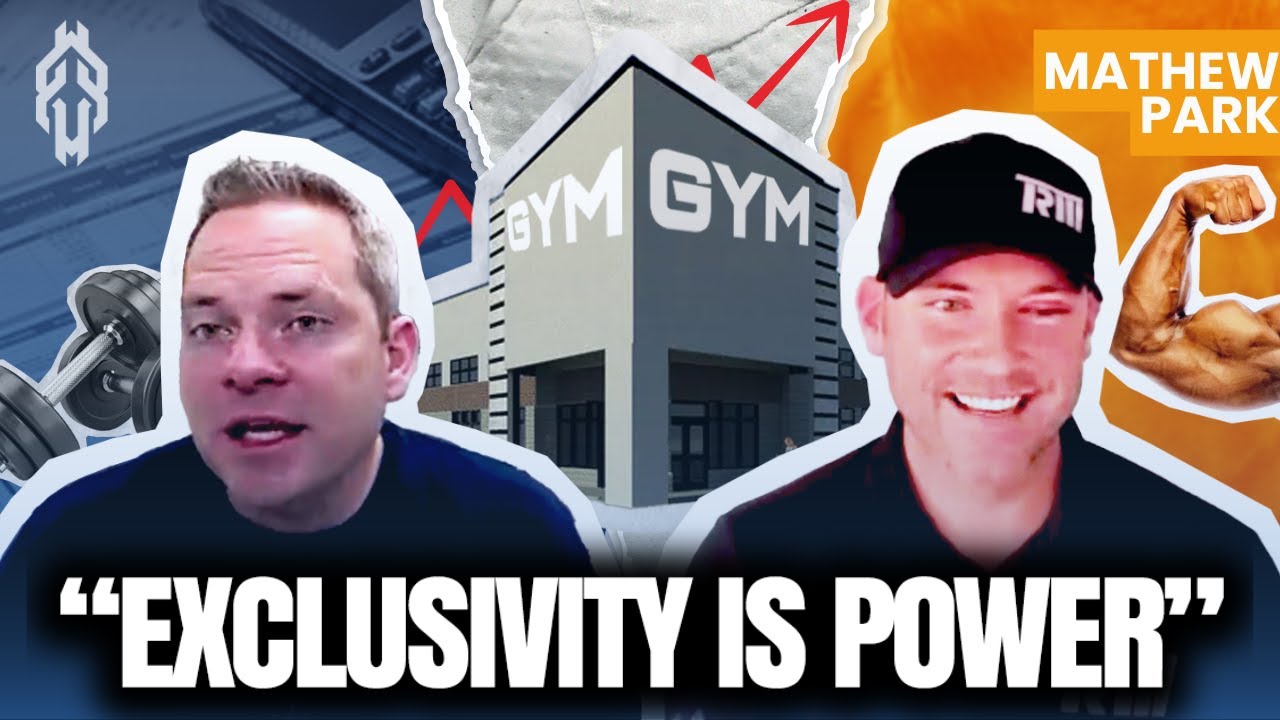
Because exclusivity is, is power. Exclusivity is, it has more value. And I've seen and researched all the other softwares. And the biggest problem I heard from every one of them was I have no support. They never get back to me. Oh, I'm talking to somebody 7 days later. I don't like that. See, we throw on customer support. So we sort of have less intake but give a high furry experience. So when they come in, they're getting 24-hour, if less, support. They're getting customized funnels from our team.
Um, and how does that translate on your end from profitability to like comparing yourself to what you maybe think of these other software companies?
We have only, I would say we've only lost 2 people in a year and our retention is literally unbelievable because we, we go in a very step-by-step process. So we have like, we had 1 person, I think, in the last 6 months fall off.
That's, that's amazing. So there's a lot of stuff unsaid in what Matthew just shared, but retaining your clients is one of the most important ways for long-term growth. The cost to acquire a new client, the cost to onboard them, the cost to get them involved in your community where they're, you know, like a fit. It's real and it can be really expensive. And you think about, again, I'm not, there's nothing wrong with the model they're doing, but the Whatifies, the Zen Planners, and the Mindbodies of the world, they're spending tons of money to get a bunch of people upfront because they have to keep those people going in order to even just replace the number of people dropping off. So if you can control and reduce how many people are dropping off, but you still have a way to add a bunch of people, that's like, it's a math and the math is mathing to be growth. And so keep that in mind when you're, when you're thinking about your, your different models. So anyways, we're getting to the end of our time here, Matthew. Let's start the 2 more questions. These are gonna be easy for you, but the first one, where can people go to learn more about you?
trainerrevenuemultiplier.com.
trainerrevenuemultiplier.com. We'll get those in the show notes as well so you guys can just click over there.
Yeah.
Yeah. I've been on his Platinum Group now like 3 times, which is an honor every time. What a great group of gym owners and personal trainers. Like you can tell that the stuff that you're teaching is landing and they're implementing it cuz the, the level, the quality of questions that they ask is very high level. It's, it's awesome. The last question, Matthew, is any parting wisdom or advice that you'd like to share with us or something that we didn't quite get to that you really have a burning desire to share with everyone?
Slow down to work on one thing and get really good at it to speed up and scale smarter in your business.
I love that, you guys. There is a point I remember over the course of a 6-year period in my business, there were 2 years So I had growth. And then if you looked at my business numbers, you would think, what the heck did John do this year? Right? It's like you made $100 more than you did last year. What are you doing? I took time to like stop and build systems to get ourselves ready for the next jump. And so then the next year we had a big jump and then the next year we plateaued, if you will. So I, I can tell you from personal experience what Matthew just said is true. Like you got to slow down, build the systems, You can't just keep going and hoping that you're going to have massive growth 10 years in a row. I mean, look, people can do it. I'm not saying you can't do it, but there are smarter ways to do it, ways that allow you to maintain the effort instead of burning out. Don't, don't feel bad if you feel like I got to pull my foot off the gas a little bit to maybe reinforce the wheels or the frame of the vehicle we're driving here because I'm about to go faster and I need— right? So our businesses have different stages and they're becomes different levels where we do definitely have to stop and have a different system. I'm telling you right now, the size we are, if I was still trying to use the systems when I was just me and we were $500,000 in revenue, there's no way we would've even gotten to this point. So Matthew, thank you so much for being on here, guys. Check out his website again. It'll be linked in the show notes. And remember, profit is a choice. Have the courage and wisdom to choose it.










