John Briggs walks through the first step of wealth building: setting up accurate accounting in QuickBooks. Link all bank and credit card accounts, categorize every expense, reconcile statements, and ensure your balance sheet shows all assets and liabilities. Without clean books, you can't analyze finances or build real wealth.
Chapters
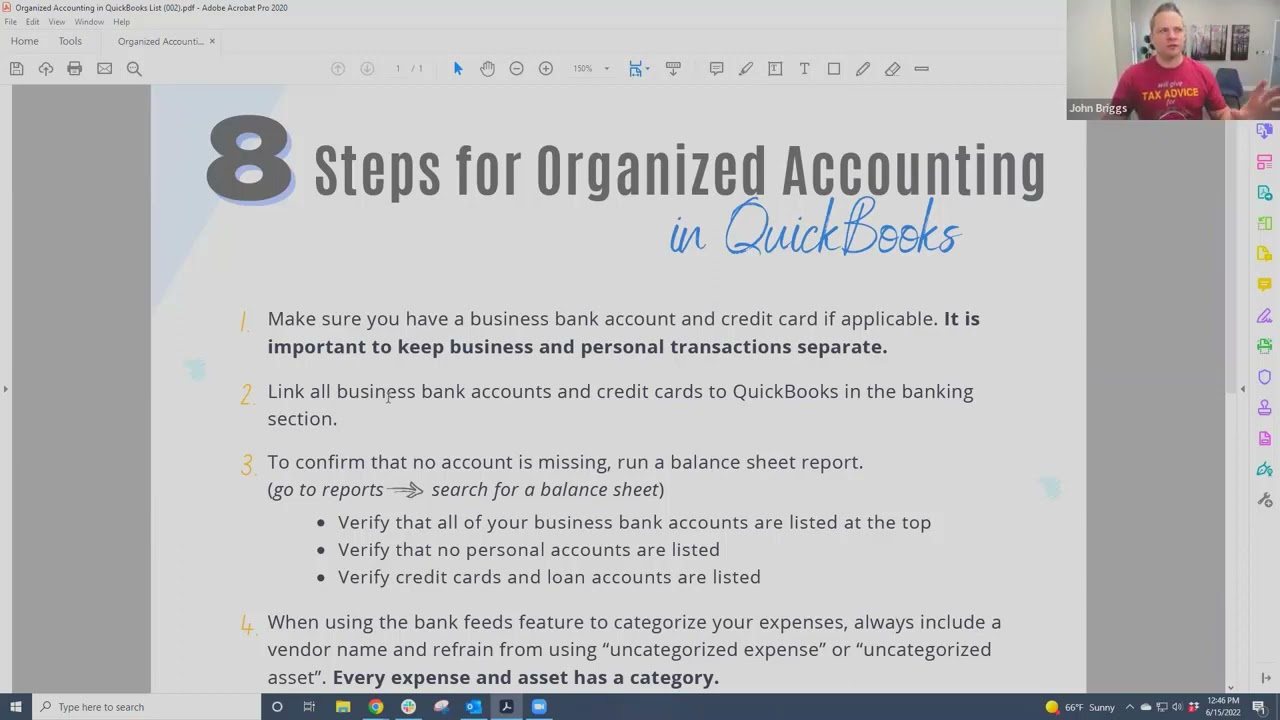
Welcome everyone to the Wealth Building Framework. I just want to get into this so that we can cover all the great things that this has to offer, because the truth is, regardless of what you want to do in your business, whether that's to grow it, take care of your team, add team members, pay yourself more, maybe, uh, you want to crush your why, maybe a philanthropic plans, you want to be charitable, all of those things are funded through cash and wealth. So let's get into building it. Here's what the framework is going to look like that we'll cover over the 4 sessions. And, and it's stepped up on purpose. You have quality accounting as the first step, because everything else that we're going to do, the financials that we create, the analysis we do on the financials, Those financials turn into KPIs and metrics that we then use to manage the business. We make sure that we're doing it consistently. All of that's leading us to the freedom that we're looking for. All of it could be irrelevant if our base level of accounting isn't correct. So we have to make sure that we have that lined out first. We are going to email this to you, so you don't have to worry about writing it all down. And in the email we send you, you'll actually be able to— there'll be links. So I'm going to go through these steps, but we've done really quick videos for every single step. So maybe some of them you're like, oh, I know how to do that, and others you're going to say, I'm not sure. The video will walk you through the specific nature of that specific step. But we're just going to cover this checklist real quickly to see if there's any other questions that pop up. But this will be your first commitment. By— you're going to run through this with your bookkeeper, or if you're your bookkeeper, you're going to do this by the time we meet next week. So step 1 is first just a reminder, make sure that there's just business accounts and credit card accounts. Keep all personal stuff out whenever possible. Certainly things happen, and then there's ways to account for it in a way that doesn't mess up your books. So we want to make sure we link all the accounts and credit cards. We use QuickBooks. You're going to confirm that no account is missing, so you're going to want to run your balance sheet report. You're going to look at all the— it's going to start with your bank accounts at the top. Make sure every bank account you have is listed there. If you have any personal accounts there, you're going to want to remove them out of your books. Then you're going to— I mean, the next section underneath your bank account would be equipment. So if you have equipment, make sure it's listed there. That includes Office furniture, if you have any office furniture. So make sure your assets are listed there. Then the next section is going to be credit cards and other short-term liabilities. Make sure that those are all listed. If they're not, again, add them. Same with loans. If you have a business loan and it's not on your books, you're going to want to make sure you add it. So there'll be videos there as well to kind of show you how to add some of those that don't link like bank accounts and credit cards can in QuickBooks. When you're using your bank feeds, you're going to make sure that you're classifying every expense. We strongly recommend never using the uncategorized categories. Those are defaults in QuickBooks, and if you don't fix them, it's an automatic trigger for the IRS because they're like, oh, you Don't know how to categorize its expense? Well, then maybe it's not a business expense. A reminder to be consistent. Once you finish your categorization, you're going to reconcile all your statements. Again, this is a critical component of having quality books because we eliminate duplicates. We make sure that we've added every single transaction that actually happened. And a lot of times too, you end up coming across checks that were written a really long time ago that haven't cleared yet. You don't want those hanging over your business forever. And so sometimes it makes sense to do a stop check payment with the bank and then update your books to reflect that. So then your accounts, once they're reconciled, you're going to go through some of these steps that we're explaining here. And then you're going to pull a report and look at it to see if there's any inconsistencies. Again, there— we're going to send this to you and there will be links to walk you through this. But I knew that for the sake of what we wanted to do here in session 1, my thought currently is it didn't make sense to go into the nitty-gritty of this because ultimately most of you probably already have a bookkeeper and this step will be as simple as, hey bookkeeper, Please go through this checklist. Let me know if you have any questions and let me know when you're done. And you need to have it done by, say, Friday.