Win the Trials of Franchising with April Porter | Incite Tax | InciteFUL Profit
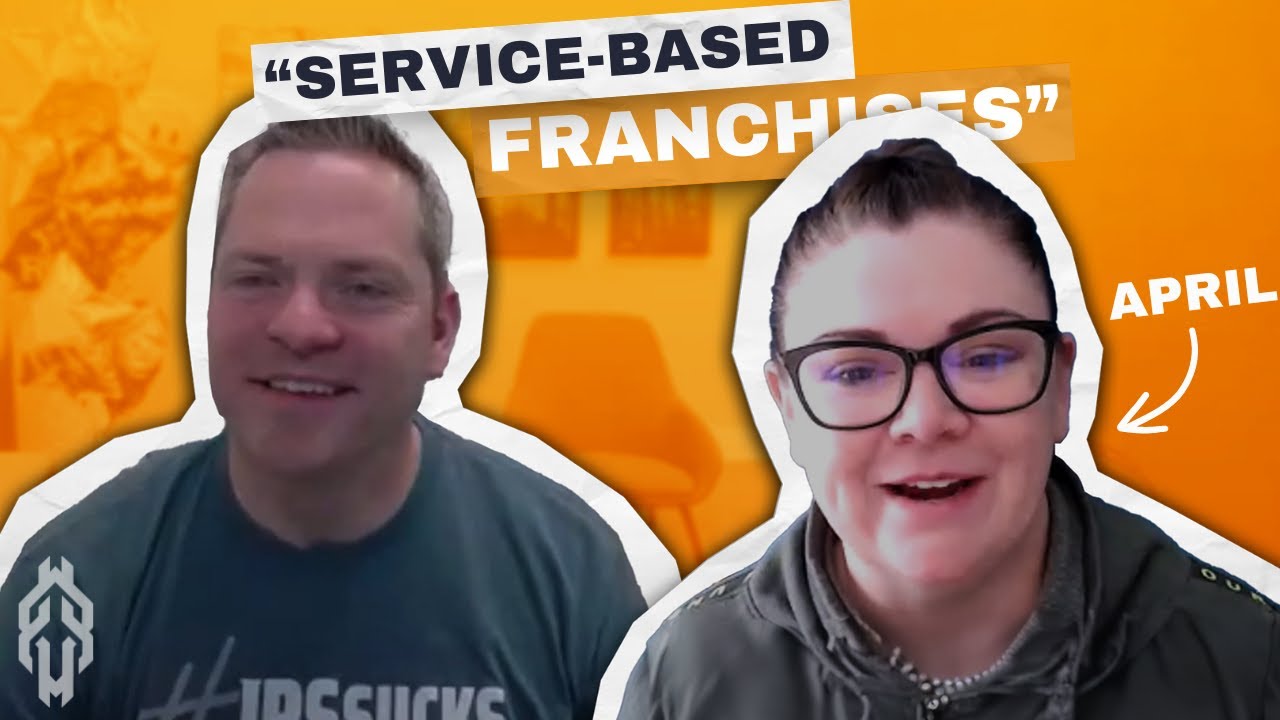
In this episode of the Insightful Podcast, host John Briggs interviews April Porter, a former prosecuting attorney, municipal judge, and kick‑boxing franchise founder who now runs a consulting firm that helps small‑business owners and franchisees scale without sacrificing personal well‑being. April explains why the common "turnkey" promise of franchising is often misleading, especially for service‑based or newer concepts that lack mature systems. She describes the typical pitfalls franchisees face—operational gaps, lack of KPI awareness, and the difficulty of replicating success across multiple locations. April outlines a strategic framework for growth: test the concept in varied demographics, build robust, location‑agnostic systems, and consider alternatives to physical expansion such as licensing, virtual delivery, or franchising with a strong support model. She shares concrete criteria for deciding when a business is ready to become a franchisor, emphasizing the need for at least three proven locations, solid training manuals, and clear KPI dashboards. Throughout the conversation she weaves her "SWAG" philosophy—sanity, wealth, and gratitude—arguing that entrepreneurs can achieve all three simultaneously with the right knowledge and partners. The episode concludes with resources for listeners (askaprilporter.com, The Infinite Franchisee Show) and a final inspirational note encouraging listeners to view profit as a choice.
Chapters
Welcome to another episode of the Insightful Podcast. I'm John Briggs, and I have an amazing guest with us today. Her name's April Porter. I'm gonna thank her and then let her just start in with what's a bit of her background so that she can tell you why it's gonna be really important for you to listen to her. So April, thank you for being here. Go ahead, tell us what's your background.
Well, I mean, John, as you know, there's a little bit of a surprise in my background because I've done a lot of things that seem not related at all, but it all works together to make me really good at what I do now. I started out my career as a prosecuting attorney. I did that for 10 years and I was a, what we referred to as a trial dog, you know, like constantly in trial. Yes. I've even had the Perry Mason moments, you know, where it's like, ah, yes, I caught you. And, and And those are fun. But so I started that. When I left that, I went into 2 things actually. One, I bought a franchise and it was kickboxing gyms, which people were shocked. They're like, this is a joke, right? When I gave my resignation to the elected prosecutor, he thought I was kidding. But no, I went to open kickboxing gyms. But at the same time, I accepted an appointment as a municipal judge. So if you think Night Court, that TV show, yes, that was me. It's at night, small-time criminal Criminals, but I was presiding over that. And then during the day, kicking butt as a kickboxing instructor and owner. And then I grew that business to multiple locations very quickly, became one of St. Louis's 50 fastest growing companies 3 years in a row, and then ultimately sold that and opened my consulting firm where now I help small business owners and franchisees really learn how to expand and build empires while being out of the business so that they can enjoy a life of sanity, wealth, and gratitude.
That's great. Now, I actually— when you're a prosecuting attorney and kickboxing, those feel very similar to me.
Like, that's what I think too. But, um, I guess when I do remember very specifically, I went into my boss's office and said, you know, I need to tell you I'm resigning. And he's like, well, what are you going to do? And I said, I'm going to open kickboxing gyms. And I think it was the gym part that it was just kind of like, what? Like, what do you mean?
Oh, that's too good. Now, obviously you have a consulting firm and you grew your first franchise to multiple locations. I'm guessing there's some story there as to why you felt the need that consultant— like there should be consultants in that space. Is it all it was cracked up to be? I mean, franchises are kind of sold like, hey, it's turnkey, and then boom, you turn the key and it's perfect.
Yeah, that's not true. You'll hear phrases like business in a box, turnkey, you know, you get to paint by numbers. And that is really clever packaging that is true in very specific franchises. So, you know, people look to McDonald's as having been the first franchise. It actually wasn't. There were franchises actually in, in the early, like, 1800s, but of a different type of nature because the feudal system was very much like a franchise. But McDonald's is our modern-day franchise. Now, McDonald's is pretty paint-by-numbers because they have had such a system in place for so long that the corporate office really does dictate every move inside the establishment. And because it's a product-driven business, you know, when the hamburgers arrive, they're the same hamburgers at every single McDonald's across the US, right? Of course, if you, if you visit a McDonald's in Europe, you're going to see a completely different menu. But here, that's what you can expect. So if you were to buy a franchise like that, chances are it would be paint-by-numbers. But when you're talking about a service-based business, or when you're talking about a newer franchise, Many times they don't have their systems in place. When a franchise first starts out, they don't have the volume. They can't buy hamburger patties at the volume that McDonald's can. So as they grow, they end up sourcing from different manufacturers and different things like that. So quality isn't always the same. But the biggest difference is that franchisors early on in their careers, they're worried about selling more franchises. Not about helping you learn how to be a business owner so that you can grow your individual unit. And that's what I learned. And I think part of it was that I was an attorney and I was really strategic and I was always looking for like, okay, where is the other side going to try to get me in trial? Right? So I was always trying to think 3 steps ahead of the person on the other side of the table. And so when I was a franchisee, I recognized right away, like, Okay, I see what the franchisor is giving me and that's important and I need that information and resources, but I see that it is not going to fill in all the gaps in my knowledge from a business perspective. So I started to put in the work and I went out and I found an executive coach and I filled in all the gaps myself. And what happened was that we had about 800 units in our franchise when it was all said and done, and I was receiving calls from franchisees like at least 5 to 7 different franchisees a week calling me saying, what is it you're doing differently than we're doing? And that's when I realized, oh wow, everybody is kind of having the same experience of the franchisor getting them to being operational and profitable, but not wealthy.
Right.
And not in a place where they had the skills to expand into multiple locations. And many of them would try, but the minute they went to their second location, the first location would start to fail. And then they jump back into the first location to, to bring back their own personality and all of the standards that they would operate it with. And the second one wouldn't take off and wouldn't grow as fast. Yeah, it was totally whack-a-mole. And so, and so that's why I was like, okay, Somebody needs to be teaching, like, the actual how-tos, not just the big picture, like, oh, this is what you should do in your business. I think we get a lot of that.
Too much, maybe.
Too much, right? And it's like, no, let's just sit down. Here's the actual— here is a worksheet. Here is how you complete this task in your business. And when you do these activities, it actually changes your mindset. If you That's what I work on with my clients is we gotta expand and start thinking differently about your business so that your activities will mirror your thoughts. And then that's how we grow and it's all interconnected. So that was a long, that was a long answer to your question.
No, I love that answer. So it reminds me here locally in Utah, there was a, I don't even know if they still exist. Maybe they do. I think it was called Sub-Zero. They took cream and then used like the liquid nitrogen to freeze it real fast. And they had a couple of locations in the area and they made their way onto Shark Tank. So of course, I always— I'm already watching Shark Tank. I love it. And then here's this local connection. I'm like, oh my gosh, how is this going to go? And they ripped him apart for the same thing you just said. Like, what's the profitability of your locations? We're not profitable. How are you staying in business? Well, we are selling franchises and I need your help so that we can sell franchises. And like, People don't want to buy franchises unless you can prove that they're profitable. So it was like this interesting thing that it sounds like is a lot more common because to our mistake, we look at the McDonald's and the Chick-fil-A's and these like really established franchises that, by the way, require a massive amount of net worth to even like apply. And then you're in a long waiting list because rightly so, they actually have a plug-and-play system. So it's interesting as you were talking about it, whether it's a franchise or not, what you just described is super similar that we experienced. With small business owners who aren't part of a franchise, right? I have some knowledge gaps. I'm listening to all these people and saying I should do this in my business, but I don't understand what this is. Like, why isn't there somebody giving me the actual tactical steps? Sounds like you figured that out. And with that, I think I'd like to take the questions to— because you figured it out and then you opened more locations. But for maybe another small business owner, whether they're tied to a franchise or not, like, if you figured out the one location, what What should I do next?
Right. So one, you're absolutely right. We use the word franchisee, but franchisee is just a small business owner who has actually more rules that they have to operate by. That's, I mean, they have more restrictions, right? So about half of the people that I work with are actually not franchisees. They're small business owners, and it's the same across the board. So when you are in that situation where you're feeling Like you're having some success. One of the biggest mistakes I see people make is that they get a taste of profitability and they're like, oh my gosh, this is working. Well, I need to open up number 2. And they wanna dive into that second one thinking the— it's gonna be the exact same experience and double those profits. And in that situation, it may be better to slow down and say, okay, now that we're profitable here, how do we 10 times that? How do we do more of what we're doing right? How do we tweak what we're— what still has some gaps? And let's 10 times that. That might actually be a better avenue to growth than another location. And there might be even strategies that you could put in place that allow you to open or to extend your geographical reach without extending your overhead or your actual footprint. And I think those are some of the things that people don't realize because what we believe is whatever got me to what I believe success is. So I, I put in the work and now I'm profitable and I, I wanna duplicate that. We tell ourselves, well, I have to do it again. I have to start from the bottom and do it again. That's the dupli— that's how to duplicate that level of success. And it's like, well, no, you just need to learn the next level of success. And it actually will be much easier than what you did the first time around. Most, most often.
That's so interesting. I remember the first time I learned that concept, I was in a program called Goldman Sachs 10,000 Small Business. And one of the guys in my cohort and specifically group assigned to me, he had a property management company and they're talking about expansion and all this stuff. And I thought it was interesting where he's like, I'm not interested in expanding right now. Like, I have a thing going on. It has some profitability. I'd like to figure out how to make it more profitable because he said the challenge is if I expand, I have to take on another property and that means I have to buy trucks. He's like, I know that I'm half a million dollars into expenses to do that just in resources to even take on the extra capacity. I'd rather maximize this. And so we're so impatient as entrepreneurs. We see this with gym owners all the time. Like, I have one class that's completely full. I better open up a second location. Okay, but your other 10 classes are very unfull. Okay, so let's say we've identified we want to expand, we've maximized the one location. What then are the next steps?
Well, again, there's really a buffet of opportunity that you may or may not know about. A lot of people are thinking, okay, I've— if I can't grow anymore in this location, let me just duplicate it and open the second one. And that makes sense. And that can be if you have all of your systems in place, if you have a, a really solid training system for employees so that you can acquire aligned employees that are gonna operate at the same standards in the next one, that could be a really great option. You could have 2 what I would refer to as corporate-owned locations. But there's other opportunities out there as well. You might be able to license your concept. You might be able to franchise your concept. You may even be able to, to modify your concept and take it online and operate it out of that first location, or do a remote version of it that would allow you again to keep that smaller blueprint or footprint and expand your customer reach. So there's a lot of different options and opportunities, and I've heard many, many times people come to me and say, well, we've thought about franchising, but I'm just not sure that we want to. Like, it just seems like so much work and we don't want, you know, we'd rather do— we'd rather just open another corporate location. And when I look at franchising, I'm like, at the corporate location, you're going to have a manager who you're paying, you know, probably a decent wage.
Mm-hmm.
But you're paying a manager who is it? Do they, do they want their career to be the manager of an ice cream store? Right? So how often are you gonna have to replace that person? How driven is that person gonna be to increase your profits at that location? You can find good people out there that are, and you can train and develop good people that, that works. But when you have a franchisee, I mean, they're making a very major investment to buy into not just the operations and the profitability of your brand, but usually it's, it's an alignment thing. They, they are very passionate about whatever your brand stands for. And now you have someone with real skin in the game who's contracted to be there for 10 years and has agreed to play by all of your rules and is legally bound to do so. So Sometimes if you know how to be a franchisor and you can be a good franchisor, like franchisees are doing the lifting, they're, they're doing all the work. So it's not as big of a task as sometimes as people think.
Is there a, in your experience, a percentage where it's like out of this many successful businesses, X percent probably makes sense for them to be a franchisor where the other ones it doesn't?
Not a percentage. I would say there are some criteria that I, that I think are important. I do believe that the best franchisors are going to do testing. And what that means is don't franchise after one location. Open a second location, open another location in a, you know, somewhere else in the city or even in another town in your state so that you're getting different demographics. You're testing, is this a Great. It's viable in my neighborhood that I grew up in where I know everybody, and you know we have a great business. But when we move it to other areas, other demographics, is it as well received? So you want to do testing. You want to also be able to have systems in place that don't just work in a single location, but that work across owning multiple locations. Why? Because as a franchisor, it's Just like any other business, you'd rather acquire one customer, one franchisee who opens 3 locations than have to go out and find 3 franchisees. So if you want one franchisee to open 3 locations, you need to be thinking big when you put your systems and operations in place that they cover operating multiple locations, and that will allow your franchisees to ramp up faster. So usually what happens is people have that one location, it's successful, and they pull the trigger on franchising. And they don't have all of these other tests in place. And then when their franchisees come in and their franchisees are ready to open second, the second and third location like I did, there's nothing in the training manuals to tell them how to staff it, how to manage people at that level, how to develop people to be leaders who could run a store independently. And that's just on the HR and labor side. I mean, there's a million other things you have to take into consideration and all the other aspects. But, um, Yeah. So I would say definitely have 3 locations, have managers in place at some of them, understand what KPIs are. I can't tell you how many franchisors don't understand that the letter KPI means key performance indicators and that that's how your employees should be looking at their workday and driving to hit those key performance indicators. And that puts every location on a path to growth. So those are, those are some main Criteria, I would say.
Yeah, I love that. Big fan of KPIs personally. Yeah, we, we talk about all the time and every book I've written, there's been a chapter on KPIs. I think it's so important. And I, those of you who are like, ah, KPIs, I either I don't like it or I don't understand it or feel like I can understand it. Look, it's literally nothing more than a scoreboard. And we see scoreboards, whether you are into sports or not, you know that sporting events happen. And that there's always a winner and in this case a loser. But with businesses, you just need the scoreboard to know if you're winning. You gotta have KPIs. So it's, it's interesting as you're saying that, I was thinking about this gym owner. He had 2 successful locations and then within a very short amount of time expanded to 6 and he branded them the same name. But I had the opportunity to go to a couple of his different locations And each location was completely different because he's basically buying someone else's gym and putting his name on it and trying to get efficiencies from economies of scale, right? And all that stuff. But it's like, yeah, like, but are you setting aside money for a rebranding budget so that like they're all painted the same color at a minimum? I mean, all that stuff. So I, I, it's such sound advice. Like, don't just think the one means that you're automatically successful. I love the idea of Testing it in a completely different demographic to see if the concept really sticks. And that's franchising though, cuz you mentioned there's some other options. I'm wondering, the one that really interests me is, have you seen, can you share some of the success stories you've seen with the, I have one location and I'm gonna modify the concept and take it online? What does that look like?
Yeah, actually there's a really interesting company I just worked with last month and they have 9 locations. Here. They have established 9 locations. They're not even here in St. Louis. They have them in Ohio. They've got them around the Midwest. Very successful multimillion-dollar company, 9 locations. And they hired me to come in and to say, okay, we're ready to now go from $12 million to $20 million and we want to think about how to do that. We're thinking franchising, but also licensing. What do you think? And so we got into a conversation about what did they do during the pandemic? Right? Because they have all these locations, and it's in a field that's kind of like a medical weight loss type business. And so they started having appointments over Zoom, virtual appointments, and now even now they have tele-doc appointments with their patients and the doctors. So I'm like, well, let's think about some of your expansion opportunities. An opportunity might be to obviously. Not open a physical location and instead just start advertising in a new area, like a new geographical area. And so that's one of the things that we're testing now. You know, they're going to pick a city that's about 4 hours away from here and they're going to be again doing billboards and radio and doing all of this advertising. But it's totally virtual back to the footprint they have now. Another option might even be to allow to license it and allow gym owners, like you were saying, gym owners to license this process and pay them to have this as an added benefit or feature of the gym and do a revenue share.
Mm-hmm.
So, so these are just a couple of examples where, I mean, that they could save hundreds of thousands of dollars if any of these work. So first step is let's test it and then let's make some decisions because it doesn't— they could still franchise, but now they could give their franchisees all these options for expansion and show profitability at a different— in a completely different way.
Oh, I love that. Well, we're running close to the end of our time. So your last 2 final questions. First one, where can people find out more about you?
www.askaprilporter.com. You can pretty much search Ask April Porter and find me on any platform under that moniker.
That's great. And then the last one, last question for you. Is there like words of wisdom from you? Anything that we didn't get to that you wanted to share? Advice or inspiration you want to provide our audience?
Inspiration. Well, Here's what I would say. In the very beginning of this episode, I mentioned that with my company, what we're really trying to do is help people attain a life of sanity, wealth, and gratitude. And that's something we talk about all the time. We call it SWAG. And I believe that every person, when you have that vision of where you want your life to go, it involves aspects of that, of sanity, where you're not having a mental or physical rat race in your life, wealth, Both financial wealth but also health wealth and the, you know, being surrounded by friends and family and people that lift you up and that you love. And then gratitude, just basically eliminating fear and worry. But my inspirational note would be that the word and in SWAG is probably the most important word because it's a signifier that you really can achieve All three simultaneously, and you don't have to sacrifice your sanity to chase financial wealth. You don't have to sacrifice your wealth because you're burned out and you just want to reclaim a little little bit of your sanity, right? So you can have it all, and it's a matter of just getting with the right people to learn how to do it. It's not a defect in you if you're not experiencing that right now. It's just a lack of knowledge.
Oh, I love that. Thank you, April. As you guys heard, check her out, askaprilporter.com or Google it and you'll, you'll find it. April also has her own podcast called The Infinite Franchisee Show Podcast. So check that out as well. We'll have links and stuff in the show notes. So thanks for being here, April. And remember everyone, profit is a choice. Have the courage and wisdom to choose it.
Thank you.










