Writing Your Own Book and How to Market It with Steve Kidd
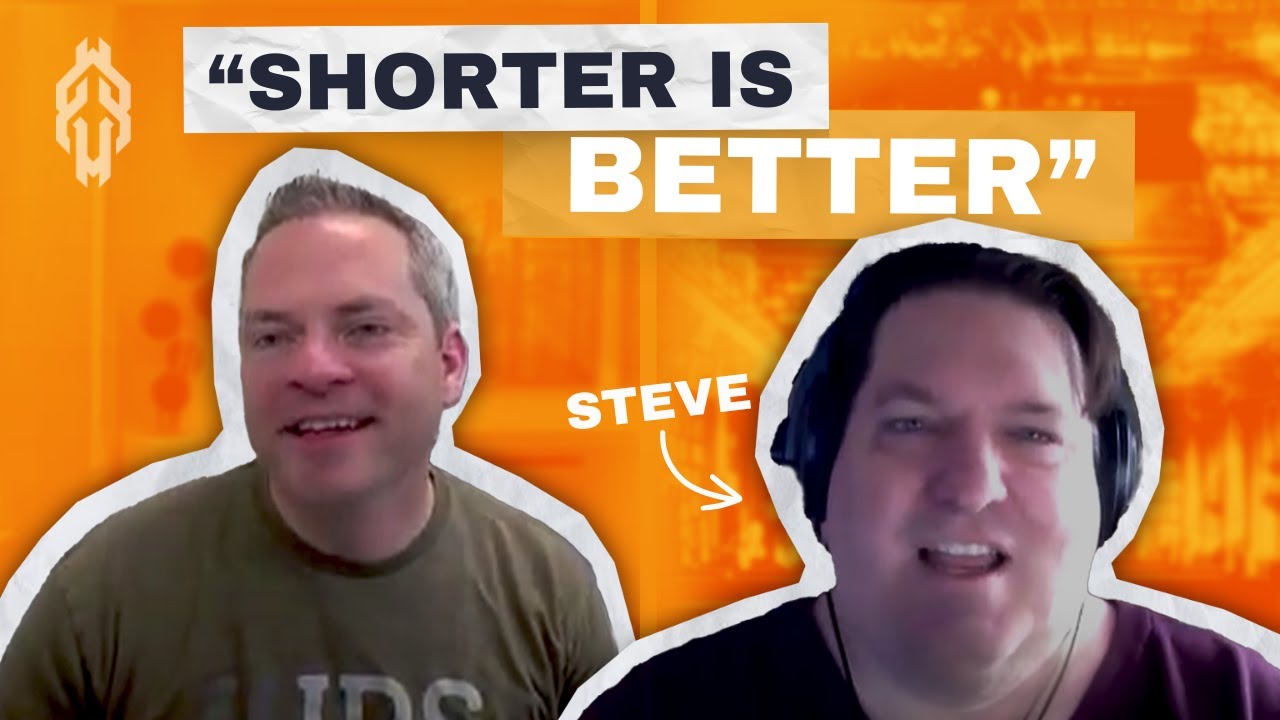
Steve Kidd, who has helped over 4,000 authors hit bestseller status, explains his launch strategy: record a Zoom conversation, transcribe it, shape it into a book under 100 pages, and push hard on Amazon for 2-3 days to land on the bestseller list. He frames a bestseller as essential credibility for any business, and notes that Amazon accounts for roughly 95% of book sales.
Chapters
All right, everyone, welcome to a new podcast, the Insightful Podcast. We have a great guest here today, Steve Kidd. He is going to talk to us about things that you might not realize you should be thinking about. But I'm going to let him do his own introduction because he has a lot to tell you about why he's great at why and why you should listen to him.
Hi, my name is Steve Kidd. I'm a third-generation minister, an international bestselling author of 22 books of my own, um, and I've had the privilege of working with more than 4,000 authors to help them in the process of writing, publishing, and marketing their books to bestseller. I have 100% success making folks bestsellers, um, and what I really love doing is helping share people who they are and the core of what they do with the world.
Awesome. Well, I am really grateful you're here today. Let's start with a softball. What is the number one most foundational part of marketing?
Interestingly enough, actually, the word bestseller and a bestselling book or bestselling author is the foundational element to marketing. Think about it, if you will, like graduating from medical school. You know, if you want to be a doctor, you got to go to med school. But when you walk across that stage and you're now officially Dr. So-and-so, nobody's going to give you a pen and a pad until you go start writing prescriptions. You know, that's when you literally become a medical student. You know, you're literally actually learning at that point to learn how to really do doctoring. Being a bestselling author is really like that. My personal 20th book is called Bestseller Is Only the Beginning, and I use that analogy to help people understand that's the foundation that we're going to then build everything else we do in our business and even in our own personal lives on.
Can you elaborate what you mean with that title, Bestseller Is Only the Beginning?
So bestseller really these days is a day one launch strategy. It's where your book should start out. It is about setting up the SEO and the initial launch marketing. You know, in other words, having a marketing launch rather than just putting your book out there and saying, hey, guess what, I've got a book, but actually having a strategy. And with that set up, properly, your book really should be on Amazon's bestseller list on the first day. Day 1 is kind of a misnomer. It's actually a 2 to 3 day process. But, you know, quote unquote, day 1.
Yeah, cool. I definitely want to talk about some launch stuff, but I think help, help us understand. I've written 2 books. I still don't consider myself an author. And I know we have a lot of people listening. It's like, yeah, I don't want to write a book or, you know, I'm not really an author. What do you say to those types of people? What should they be thinking about?
I usually say to most people, very few people that I've met are writers, but everyone needs to be an author. In other words, you need to be known and credentialed as an expert at what you do because let's face it, there is nobody that is better at being you than you. And so, when we put, you know, in written, in ebook form, or even in audio form who we are and what we know and what we're passionate about, you know, that's integral in doing what we do. But then it's also a validation that it really is more than enough.
Yeah, I have always heard from others kind of in your area or they like, look, everybody has a book in them. There's something of value that they can share, some, a different way they look at things. So there's that. Do you have an example, like a client you walked through who was super skeptical that they should even write a book? And how did that look for them with you, like coaching 'em through, you need to do this, this is why it's important, and then having a successful launch?
Oh yeah. My favorite authors actually are the ones that when we go to the writing session, and we can talk in more detail about how that looks, but they, they try to convince me, please, let's not do this yet. I'm not ready. I don't know if I have the right kind of thing. You know, I think of Forrest and Anthony, for example. They had a fairly successful gym and personal training business prior to having written their book.
Yeah.
We intentionally strategized what the book should be about and used it as the launchpad for a whole new division of their company that they created, which grew to about a quarter of a million dollars in the first year, all based again on that foundation of it was based from experts in the bestselling book in that field.
Oh, that's great. That's a great success story. Wow. Do you have like Prompts to help someone think about what they should write about?
I do have a series of videos and worksheets that go with it, but honestly, the best way to do it— I love doing writing via interview. It's even how I write my own books. And I like to just hop on a Zoom call similar to what you and I are right now and just get the person talking. You know, I run— I have the transcription running while it's going, and we glean the content of who you are and what you do from that. The best best, really honestly, is when in the middle of the interview you say, does any of this even make any sense? And then I can be like, yeah, I got you. We're, we're, we're on track. And those are really in the end actually the best kind of books.
Yeah, I can see why. Because then it's, if I'm a non-author, which I am, it's different. Like if someone asks me a question about my expertise, it's so much more natural because I'm used to just answering verbally and coaching people through whatever their question is. So that's, that's really smart. I could see how that is beneficial for them. So they get, someone has the prompts. Okay. This is kind of the idea of where we're gonna go with this. What does a writing session look like then?
So what we do is, like I said, we, we get on Zoom. So prior to that, we're gonna have done a strategy session to kind of figure out who are you writing to and what do they need? And then from there, we just hop on Zoom. There is a formula and a format for books. And I am in the background in my own mind because I've done it so many times following that format. But I want it to feel like a casual conversation. I want to just ask you questions and have you then answer those things. The best kind of things are the things that you know so well that often you haven't created a course. You maybe don't even have the core of your business being that because you assume, well, everybody must know how to do that. You know, everybody knows what good nutrition is. Everybody knows how to invest properly or whatever the thing might be. And yet The truth of the matter is, is that though it's super easy and seems so matter-of-fact to you, um, it really is a thing that somebody that's reading your book really needs and is struggling to be able to find.
How many pages, like, on average are these books looking like?
Um, so according to Amazon statistic, um, a book that is 100— this is print pages— 100 print pages or less, um, About 60% of the people that read it will read it and finish it. If it goes between 101 and 200 pages, that drops to about 20% that finish the book. And if your book goes over 200 pages, it's actually less than 3% of people that will ever finish the book. So in these days, actually shorter is better. I've even done 25-page books with folks. It really is about taking a single point, giving them a clear step on that one point. And then there is always a step 2. Step 2 is actually should be book 2 versus being a chapter 2 kind of a situation.
Interesting. Walk me through some of the ideas and thoughts and the way you approach these launches. Like having launched 2 books, man, I've read all sorts of stuff. So what are, what are things for people to consider?
Well, you know, number one, Amazon's selling about 95% of all books that are sold these days worldwide. So you really want to be Amazon's BFF. And a lot of people get caught up in Barnes& Noble or Google Docs or any other of the kind of places you can put your book. And not saying that you can't put them there, but it's kind of a lot— much ado about nothing, if you will, You know, to use that phrase. Really, it's being Amazon's BFF that's really important for you in order to be able to, you know, really effectively market your book. And then I would say secondarily to that is going back to kind of really the previous question, and that has to do with, especially for our first book or even our first couple of books, we tend to want to tell everybody everything rather than just helping them take the first step. You know, again, I'll use working out as an example since we talked about Forrest and Anthony. You know, if a person has a completely sedentary life and they don't work out at all, giving them a 30-minute workout routine probably is going to be overwhelming. But maybe getting them to do something simple like taking 5-minute breaks between meetings and physically getting out of your chair and walking across the room, maybe even adding to that walk across the room to this certain space and get a glass of water so that you're adding hydration into that. You know, and I don't want to put myself out as being a nutrition or fitness expert, but just from things that I've learned in books that I've done, you know, that would be kind of an example of and a way to get the person started and get them to begin to start making wins so that then they can really truly make an impact in somebody's life.
I mean, that makes sense. And I think a lot of people, whether you're in the fitness space or not, can resonate with examples related to the gym though. Like I remember I actually owned a gym for 3 years and I write about it in my book, Profit First for Microgyms. Yeah, you'd get someone come in and it's like, yeah, my goal is, they might have a crazy goal. And so then we, okay, that's a great goal. Cool. Let's break that up a little bit. So based on the goal of doing, I don't know, a muscle up, let's have the goal as a, a pull up, one pull up. Let's start with that. But even to do the goal of one pull up, you're doing an exercise with ring rows. 'Cause if you can't do one pull up, then what, what do I do? Like I could use a band or I could do ring rows. And so yeah, I saw that all the time as far as application and instead of Focusing on just the end goal. I, I like that because it also is a general principle of marketing in general, right? Like if I'm talking to someone, the first thing I am gonna say is not, hey, you should sign up for my services. Let's get to know each other first before I ask you to go home with me on the date, you know, take me out for a drink, buy me something. Yeah. Good. All great points so far. This is great. What are some of the challenges you have found authors run into, into this launching their book?
It's so fun, uh, you know, launch day, the day before versus the day after. All of us, myself included, um, and you know, I've got a couple other books that are coming out here shortly. The night before, we have that, well, what if this one doesn't? You know, yeah, sure, I'm working with Steve and he's done thousands upon thousands of them with 100% success rate, but what if I'm the one who doesn't make it on the bestseller list? And we go through that and it's, it's kind similar to bringing a child into the world. You know, you're giving a part, a piece of your, you know, the very essence of who you are out in the world and allowing other people to judge it. And there are going to be some people that are going to say, you know, hey, this wasn't blah, blah, blah, you know, that kind of stuff. Um, and so that's very difficult. And, you know, and then you transition to that day after you've become a bestseller. Um, and it's just such a night and day difference. Um, same person, same amazingness that they were, but just that outside third-party credential, that third-party, um, approval of their stuff, it makes such a huge difference.
Yeah. And then with your idea of that's only the beginning, then it— I mean, at least with the one example you've already shared, then that turns into a nice— was that a quarter or a year? The, uh, $250 grand, was that over a quarter or the year?
That was a year for their particular one. Yeah.
Yeah, but for a gym-related business, that's great. I mean, we, we have lots of gym clients and I know a lot of them that would love to have $250,000+ in revenue. So you have something called ongoingwealthguide.com. Tell me a little bit about that.
So ongoingwealthguide.com, first of all, I suppose I should probably define a little bit what I mean by wealth. Wealth doesn't necessarily have to do with what is your bank account today? Because maybe you bought a brand-new car and paid cash for it yesterday. Your bank account would be very much less today than it was yesterday. Or if you put down that down payment on a house or those kinds of things. And if we judge who we are based solely on our bank balance, we'll be sadly lacking in it. But when we talk about true abundance, which is really what wealth is, that ability to be able to make money, generate it, and have a process for rinsing and repeating and doing that over again. That's true ongoing wealth. And it's a real basic 5-step system that walks you through how to, you know, and it is included in that, the concept of framing it in a message and even into a book that goes into print and how to market that. And then just rinse and repeat 5 steps right straight through it, and you can create ongoing wealth in your own life in whatever the thing is that you do in this world.
That's great. And I, my guess is the focus though is utilizing writing books and being a bestseller as part of that.
That is part of it. I mean, most of it is really based off of marketing because ultimately I really am a marketing company and that's kind of where my brain always goes.
I mean, that's great. Oh, there's a concept I learned in marketing called the long tail, which is actually Amazon's model when they initially started and Jeff Bezos was looking at it and there was these I mean, he was going against just behemoths in the industry at the time. It's hard to think that at some, at one point Amazon was a small guy, but he's like, man, look at the inventory you have to stock. I could just have an online thing and if I can sell all, instead of selling 100 units of one product, I can sell one unit of 100 products. So I get a long tail. So I, the more things I offer, it's okay if they only sell a few. And so that's actually how he started. He started offering a platform for authors who weren't published or had behemoths behind them to start selling their books. And that is the long tail concept. And writing books is one of those, or just having multiple services, which my guess is really good to credibility, to add yourself credibility, having the book right with the service you're offering. So I could see how that this would play out in ongoing wealth strategy of like creating multiple, I think, what'd you say, 22? How many books have you personally written?
I personally have 22 that are published and I've got several others that I'm working on right now.
Yeah, I mean, it's like a long tail, right? You have 22 different options and if you get 1 sale a month, that's 22 book sales, which is more than maybe like someone who has 1 book. Am I going to sell that 22 times? I don't know.
Well, in fact, statistically, the average book sells 40 copies ever in its lifetime. So if we went with your example, that would be about half as many as, as a person would ever sell.
Yeah, great point. Okay, so as we're winding down here, was there anything I didn't ask or that you wanted to share that I didn't ask you about?
I mean, I think the only other piece of it is, you know, somebody is waiting on you. Somebody needs exactly who you are and what you do and the way you do it. I love using the example. All my kids are grown now, but those of us that have had kids, we know what it's like When we tell them something over and over and over again and they kind of roll their eyes, you know, like, oh yeah, sure, whatever, you know, and then they come running home someday excited and they're like, guess what the teacher said and told us today? And they tell you that exact thing. And, you know, we want to roll our eyes and be like, oh yeah, right. You know, we of course don't. We want to encourage them and we're excited that they finally got it. The same thing is true with what you do in the world. It doesn't matter if a zillion other people have said it before over the course of all of history. The way that you say it and the who that you are, it's going to make all the difference for that one person. And that's more than enough.
Oh, I love that. Thank you so much. So everyone, you can go to ongoingwealthguide.com. We'll have the link in the show notes. Check out his guide, check out his STEP program, look him up wherever you want. Steve Kidd. And thank you for being with us today. And everyone remember, profit is a choice. Have the courage and wisdom to choose it.










